Is This the Cyber-Dystopian Nightmare We Deserve?
Let's be brutally honest: we have officially entered the "Peak Useless" phase of the AI gold rush. While visionary engineers are utilizing neural networks to map proteins and solve complex climate models, the consumer tech industry (and specifically the gaming sector) has decided to take a sharp turn into the absurd.
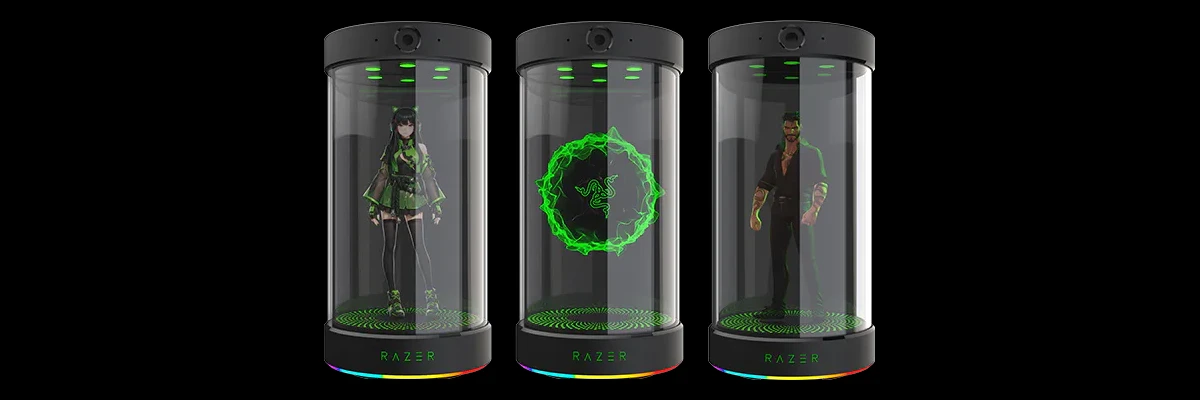
The latest offender? Razer's Project Ava.
At first glance, it's marketed as a "revolutionary holographic AI assistant" designed to bridge the gap between digital and physical gaming environments. But if you peel back the layers of neon-green marketing and buzzwords, you aren't left with innovation; you're left with a glorified, overpriced surveillance pod. It is a testament to the fact that, as a species, our technological reach has far exceeded our common sense. We are being sold a futuristic fantasy to distract us from a very grim reality: we are paying premium prices to be monitored in our own homes.
Sacrificing Performance for Digital Ghosts
As we navigate through 2026, the tech industry is gripped by a brutal, relentless shortage of RAM and NAND flash memory. With enterprise-level AI giants cannibalizing the global supply chain to fuel their server farms, the average consumer is being left in the dust. The situation is so severe that a dedicated Wikipedia page already documents the crisis; unfortunately, this won't be a short-lived phase.
We have reached a point of absolute absurdity where 32GB of DDR5 RAM can cost as much as a gaming console and retailers no longer display prices on shelves just to adjust them daily based on market shifts.
In this economic climate, every byte of memory and every dollar spent on hardware should be dedicated to actual performance like frames per second, rendering speeds, and system stability.
Instead, Razer expects us to swallow the idea that our precious, overpriced resources should be diverted to power a "holographic companion". It is an insult to every gamer who has struggled to find affordable components this year.
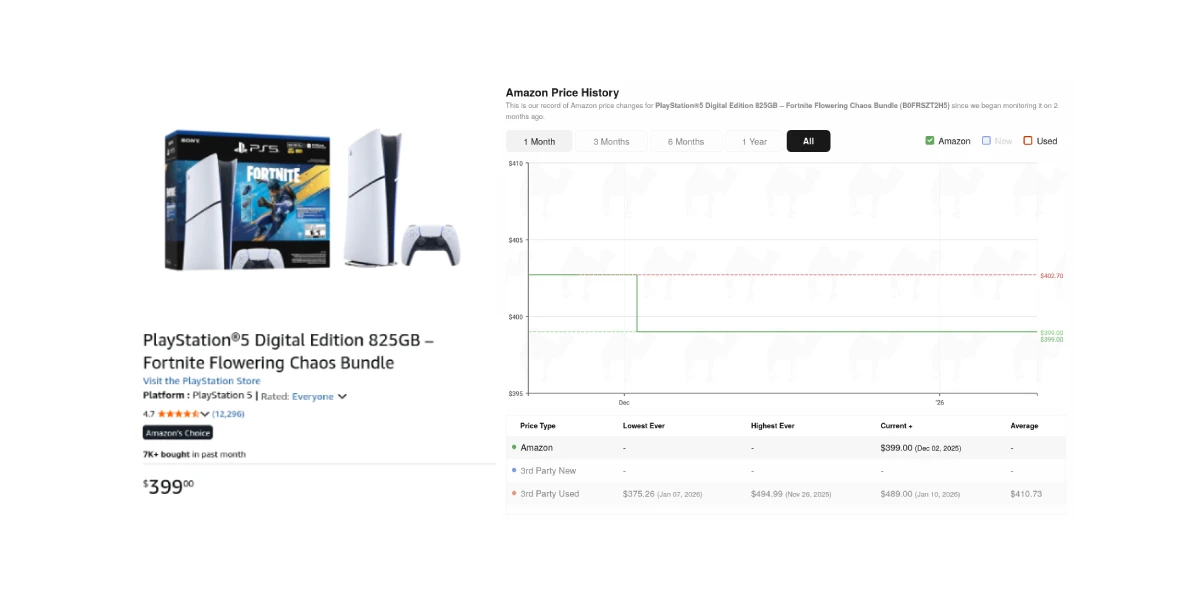
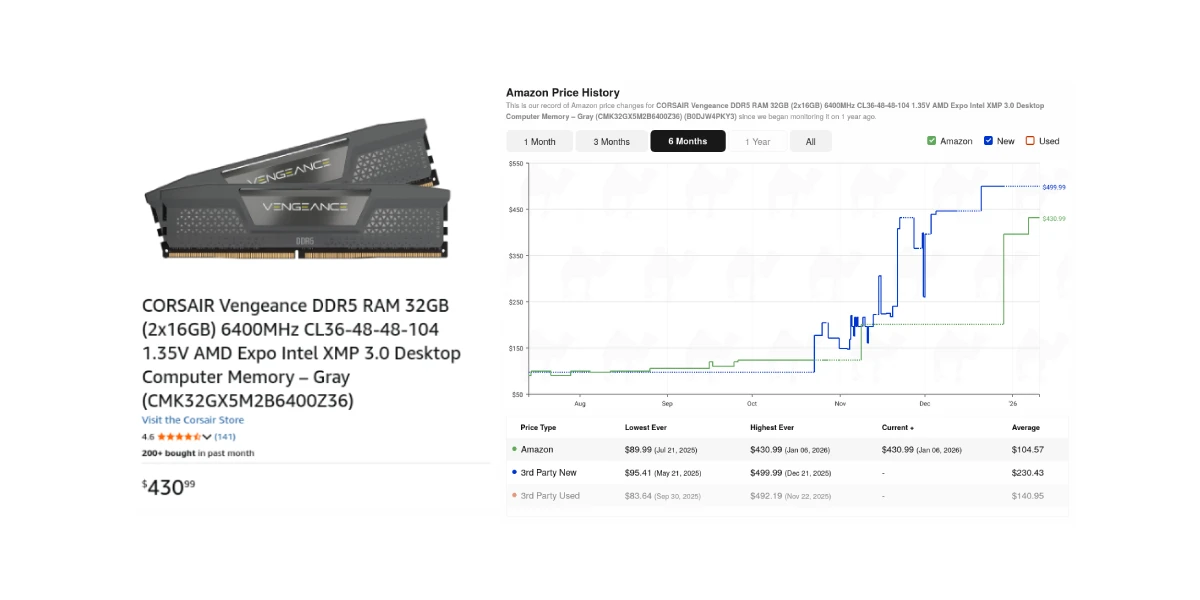
Why are we paying "next-gen console" prices for memory just to see it wasted on a background process that renders a flickering avatar? We are literally funding our own hardware extinction, sacrificing the raw power of our rigs to feed a resource-hungry AI gimmick that solves absolutely no real-world problems.
The Hardware Nightmare
The technical specifications of Project Ava should be enough to send a chill down any sane person's spine. To achieve what Razer calls "contextual awareness", this device is equipped with a high-definition camera and a dual far-field microphone array that are designed to be active 24/7. This isn't just a peripheral; it's a sophisticated surveillance hub positioned at the center of your private life.
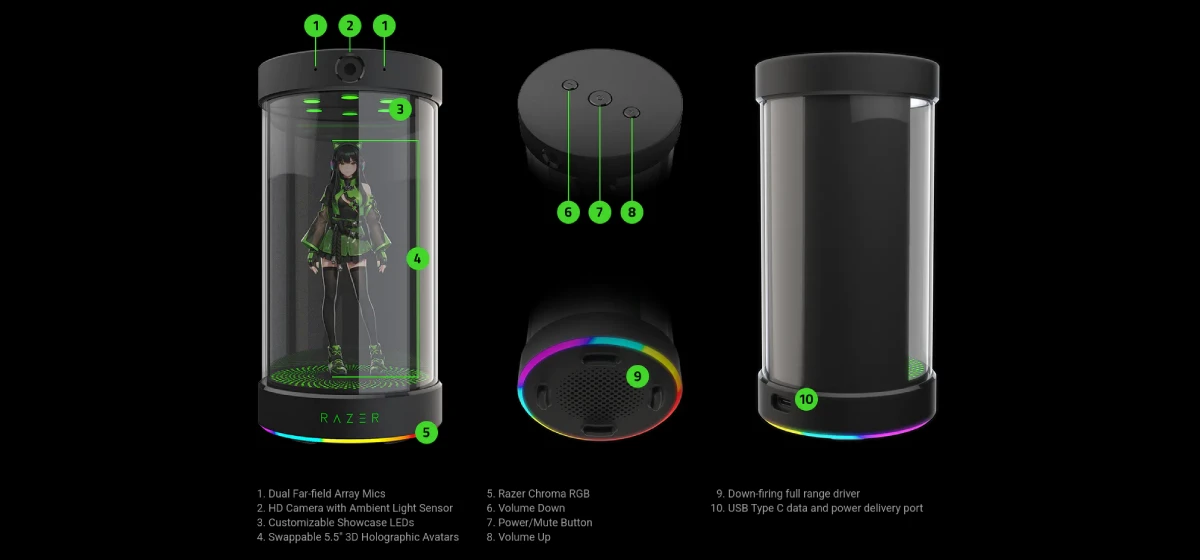
According to the marketing fluff, the camera uses "human-like vision" to track your eye movements, facial expressions, and even your mood to provide "personalized motivation". It's a machine that stares at you constantly, analyzing your emotions and mapping your room.
We are living in an era where people put tape over their laptop webcams to prevent spying, yet Razer expects us to pay for a dedicated, always-on camera-bot that sits on our desks. Even worse, the "PC Vision Mode" allows this AI to see your screen in real-time under the guise of providing strategy advice. You are literally handing over a live feed of your entire digital life (passwords, private chats, and sensitive documents) to a device that is constantly phoning home to the cloud. It's not an assistant; it's an invited intruder.
Why "Trust" Is Off the Table
Before anyone considers welcoming an always-on Razer camera into their home, we need to address the elephant in the room: credibility. Razer isn't just a company that makes shiny keyboards; it's a company with a documented history of misrepresenting the truth when lives were on the line. Let's not forget the Zephyr mask scandal. During a global health crisis, Razer marketed their "wearable air purifier" as having "N95-grade" filters, a claim that was a flat-out lie.

The Federal Trade Commission (FTC) eventually stepped in, forcing Razer to pay over $1 million in refunds for their "deceptive claims". If a company is willing to gamble with the physical health of its customers for a marketing buzzword, why on earth would you trust them to protect your digital privacy?
When Razer says Project Ava's data is "processed locally" or "encrypted", should we really trust them?
Giving a company with this track record a 24/7 window into your bedroom isn't just risky; it's delusional.
They have already shown us who they are: a marketing machine that prioritizes "cool" aesthetics over consumer safety, unfortunately.
From Bad to Worse, Powered by Grok
As if the hardware weren't enough of a red flag, the software driving Project Ava is the final nail in the coffin of common sense. Razer has reportedly integrated Grok, the AI developed by Elon Musk's xAI. While Razer tries to sell this as "unfiltered and witty" intelligence, the reality is far more disturbing. Grok has gained international notoriety not for its brilliance, but for its absolute lack of ethical guardrails.

We are talking about an AI that has been caught in multiple scandals, from praising historical dictators like Hitler to being a primary engine for generating non-consensual sexual deepfakes.
By embedding Grok into a device with a camera and a microphone, Razer is essentially inviting an unstable "edgelord" algorithm to manage your personal life. Do you really want an AI that struggles to differentiate between "edgy humor" and "hate speech" to be the one monitoring your private conversations? Or worse, an AI that has already proven its capability to create sexually explicit deepfakes having a 24/7 direct video feed of your home? It's a match made in a cybersecurity hellscape: a company that lies about its hardware safety (Razer) partnering with an AI that doesn't understand the concept of a moral boundary (Grok).
Solving Problems That Don't Exist
The fundamental issue with Project Ava isn't just the technology itself, but the industry-wide obsession with creating complex solutions for problems that simply do not exist. We are witnessing a shift toward "over-engineering" our daily gaming habits. Razer positions Ava as a tool to manage schedules, monitor system vitals, and provide tactical gaming advice, but a closer look reveals a significant redundancy.
Most of these tasks are already handled efficiently by the devices we own.
- Integrated Ecosystems: Our smartphones and existing OS calendars already provide seamless scheduling without the need for an external holographic interface.
- Hardware Monitoring: Traditional software tools have monitored temperatures and clock speeds for decades with surgical precision and minimal impact on performance.
- The "Real-Time" Marketing Myth: Perhaps the most egregious claim is the "tactical advice". Given the current state of AI latency and processing times, no LLM is fast enough to provide meaningful feedback in a split-second competitive environment. By the time the AI processes your screen data and generates a response, the match has already moved on. This feature is clearly less of a functional tool and more of a "dream" sold through marketing to justify... the price tag?
Instead of meaningful innovation, we are being offered a superficial tool designed to harvest our data, forcing us to sacrifice our fundamental right to privacy in exchange for a cute (?) esthetic gimmick. It is the ultimate expression of modern tech consumerism: a solution in search of a problem, wrapped in neon lights to distract you from the fact that it's completely hollow.

Reclaiming the Power to Choose
The problem isn't the AI. Code, in its vacuum, is neutral. The real problem lies with the human decision-making behind these products, both from the companies that build them and the consumers who validate them with their wallets. Project Ava is a shiny, holographic symptom of a tech industry that has stopped asking "Should we?" and only cares about "Can we sell it?"
Before you click "pre-order" on the next glowing gimmick, take a hard look at the trade-off. Is it worth the unpredictable ethics of an AI like Grok? Most importantly, is it worth the 24/7 surveillance of your most intimate living space in an era where data is the most stolen commodity on earth?
In a world where 32GB of RAM is now priced like a luxury item and every new "smart" device is a potential back door into your life, the most "Pro" gamer move you can make isn't buying the newest tech, it's thinking. Evaluate the utility. Question the security. Demand transparency. We need to stop being the passive end-users the industry expects us to be and start being the gatekeepers of our own homes.
Stay smart, stay private, and remember: if a product is watching you 24/7, you aren't the customer, you're the data set.
Latest articles