Ray Tracing: The Most Overhyped Tech Since 3D TVs
Remember 3D TVs? Of course you do. They were the "future of entertainment". You were supposed to wear silly glasses in your living room and watch things pop out of the screen. Marketing departments burned billions convincing us it was the next evolution.
Then, we all collectively realized it was a headache-inducing gimmick, and the tech died a quiet death. I’m going to say something that will probably get me banned from r/nvidia, but it needs to be said: Ray Tracing is following the exact same trajectory. It is the most overhyped, resource-hogging, diminishing-return technology the gaming industry has forced down our throats in the last decade.
The only difference? You didn't have to mortgage your house to buy a pair of 3D glasses. But today, you are expected to drop $2,500 on a GPU just to see a slightly better reflection in a puddle. Here is why your expensive graphics card is being wasted on a lie.
The "Puddle" Fetish: Welcome to the Uncanny Valley
If you believe the marketing hype, Ray Tracing is about "realistic lighting simulation." In practice? It’s mostly just really shiny puddles.
Since the dawn of the RTX 20-series, developers have fallen into a trap I like to call "The Puddle Fetish." To justify the technology, art direction has shifted towards making every surface look like it was just waxed by a professional detailer.
- Post-apocalyptic concrete? Mirror finish.
- A dirty sci-fi hallway? Reflective glass.
- A dry desert road? Somehow wet, just so the neon lights can bounce off it.
Real life isn’t this shiny. Go outside. Look at the asphalt. Does it reflect the skyline perfectly? No. But in the world of Ray Tracing, art direction is sacrificed on the altar of tech demos. We are trading artistic intent for physically accurate reflections of things we aren't even looking at.
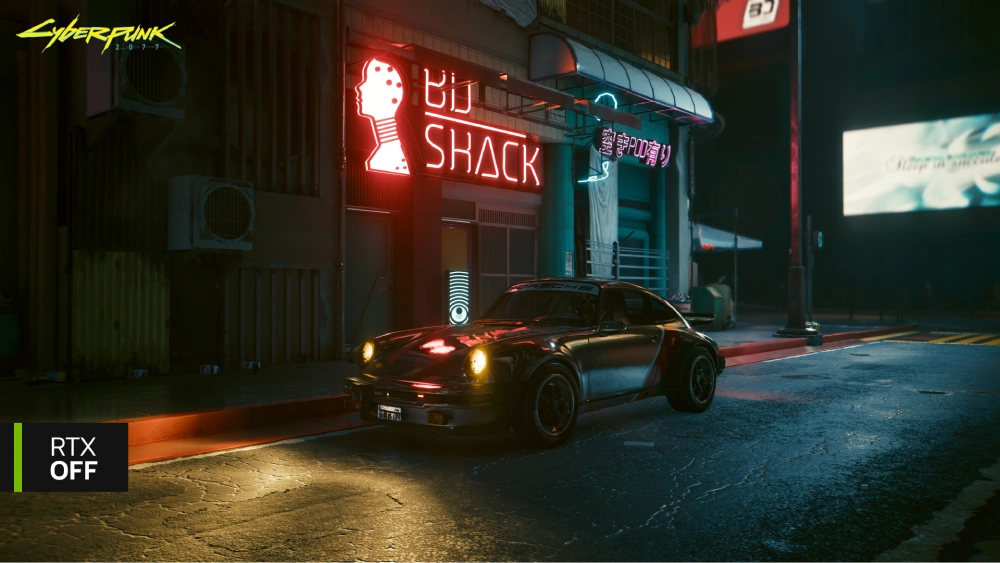
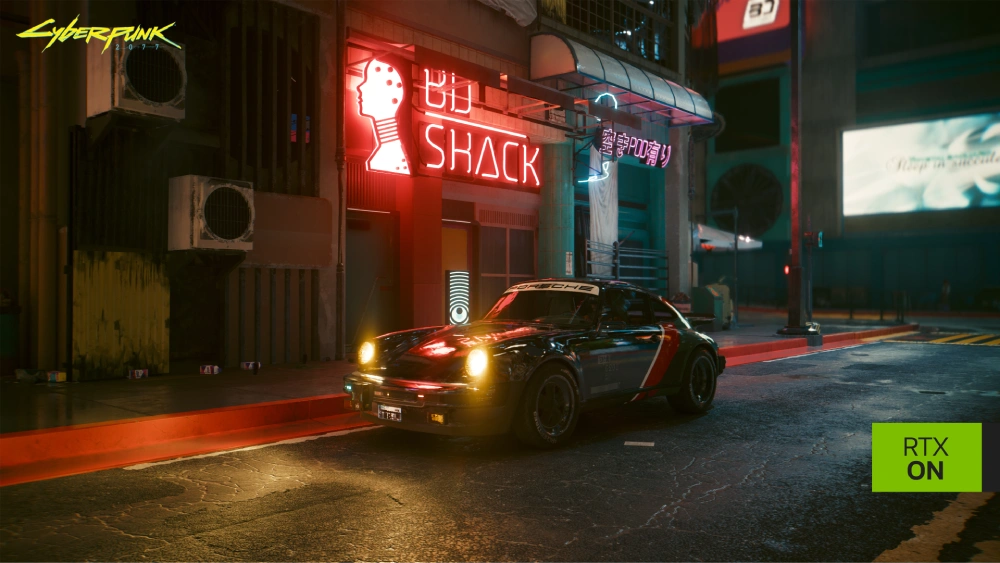
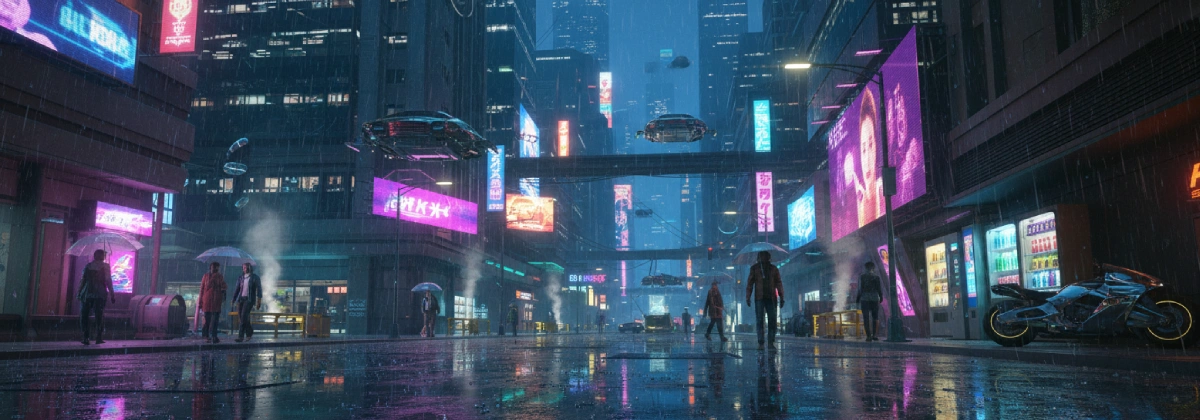
When Cyberpunk 2077 launched, everyone fawned over the neon reflections. But ask yourself: while you are sprinting away from Arasaka security at 100mph, are you looking at the accurate light bounce in a shop window, or are you looking at the enemy trying to kill you?
The Performance Tax: 30 FPS on a $2,500 Card
Let’s talk about the elephant in the room: The cost of doing business. For years, PC gamers fought the "consoles vs. PC" war with one main argument: 60 FPS is the minimum, 144 FPS is the goal. Smoothness was the priority. Responsiveness was king. Then Ray Tracing arrived, and suddenly everyone is okay with low framerates again? Here is a cold, hard fact: If you take an Nvidia RTX 5090 (the most powerful consumer graphics card on the planet, which costs around $2,500) and you try to run Cyberpunk 2077 in "Overdrive Mode" (Path Tracing) at native 4K resolution, do you know what framerate you get? Skip @ 21:44 and see it with your eyes.
That isn't a game; that is a PowerPoint presentation.
"But wait!" the comments section screams. "What about DLSS? What about Frame Gen?"
This is the biggest trick the industry has pulled. If a technology requires an AI to downscale your image to 1080p and then "hallucinate" fake pixels and fake frames just to run at a playable speed, the technology isn't ready. Upscaling (DLSS/FSR) should be a tool to help budget cards survive. It should not be a mandatory crutch for flagship hardware to barely function. We have normalized buying Ferrari that can only drive 30 km/h unless you let the autopilot take over.
Rasterization Looks Fine (Actually, It Looks Amazing)
The marketing machine wants you to believe that without Ray Tracing, games look like potato graphics from 2005. This is nonsense. Rasterization (the "old" way of doing graphics) has been perfected over decades. Talented artists and lighting engineers know how to bake lighting, use screen-space reflections (SSR), and cube maps to create breathtaking worlds that run smoothly on modest hardware.
Look at Red Dead Redemption 2. It was released in 2018. It does not use hardware Ray Tracing. Yet, if you ride your horse through the forests of West Elizabeth at sunset, the lighting is arguably better than most "Next-Gen" RTX titles.
Why? Because it was hand-crafted by artists, not calculated by a brute-force algorithm.
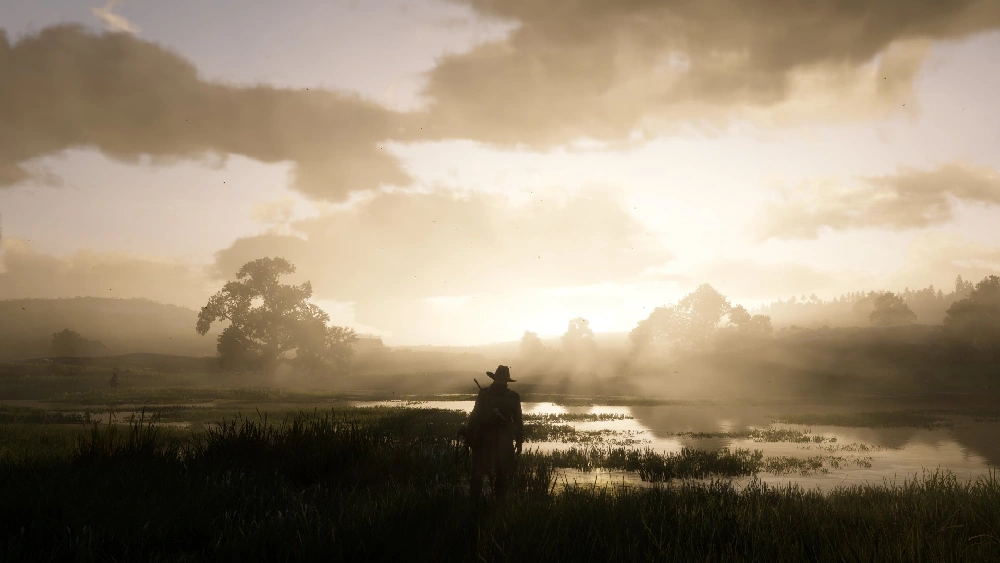
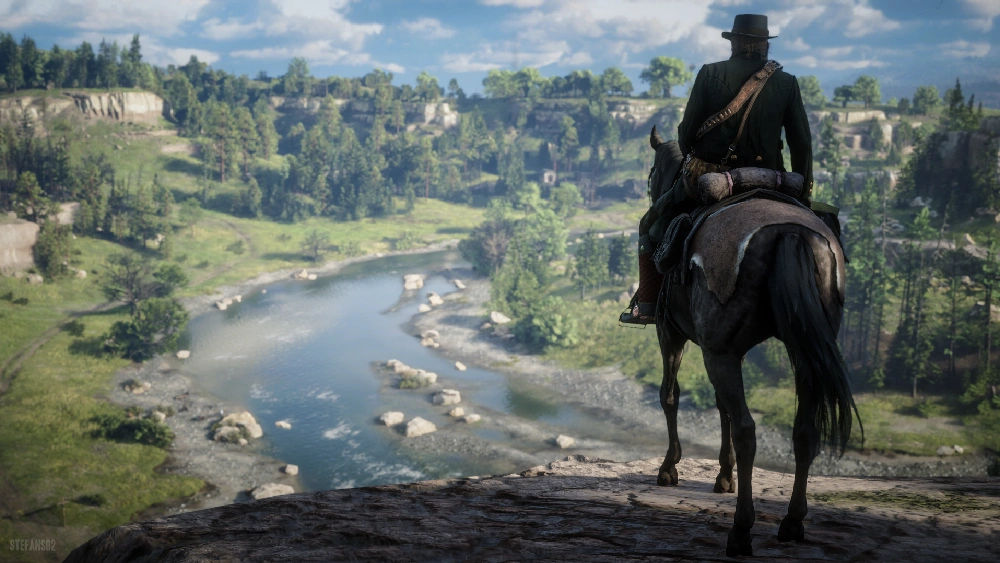
We are spending thousands of dollars on hardware to simulate light particles that our brains barely notice during gameplay, while neglecting the art techniques that actually make a game look good.
The Hardware Paywall: Class Warfare for Gamers
The 3D TV failed because it was expensive and inconvenient. Ray Tracing is failing the average consumer for the same reason: Exclusivity. According to the Steam Hardware Survey, the most popular graphics cards are not the RTX 5080 or 5090. They are the RTX 4060, the GTX 1650, and the RTX 4060 Laptop. These are the cards that 90% of PC gamers actually use. Take a look at the Steam Hardware Survey.
And guess what? Ray Tracing on these cards is a joke. Turning it on is essentially a "Lag Switch".
- The Elite (1%): Can afford $2,500 cards to enjoy Path Tracing with decent FPS.
- The Rest (99%): Turn Ray Tracing on once, see their FPS drop to 25, turn it off immediately, and never touch it again.
We are segregating the PC community into the "Haves" and the "Have Nots", driving up the development cost of games for a feature that the vast majority of players will immediately disable in the settings menu.
Stop Buying the Hype
Is Ray Tracing (specifically Path Tracing) the future? Yes.
When a PlayStation 7 or an RTX 8060 can do full Path Tracing natively without breaking a sweat, it will be the standard. It saves developers time and unifies lighting pipelines. It is a better technology on paper. But right now? It is a paid beta test.
It is a luxury tax designed to sell new graphics cards to people who are obsessed with benchmarks rather than gameplay. It forces us to accept lower frame rates, higher input latency, and rely on AI upscaling, all so we can see a slightly more accurate reflection of our character in a puddle. My advice? Turn off Ray Tracing. Crank up your textures. Enjoy the high frame rates. Let the "shiny puddle" enthusiasts beta-test this tech for another generation until it’s actually ready for prime time.
Latest articles