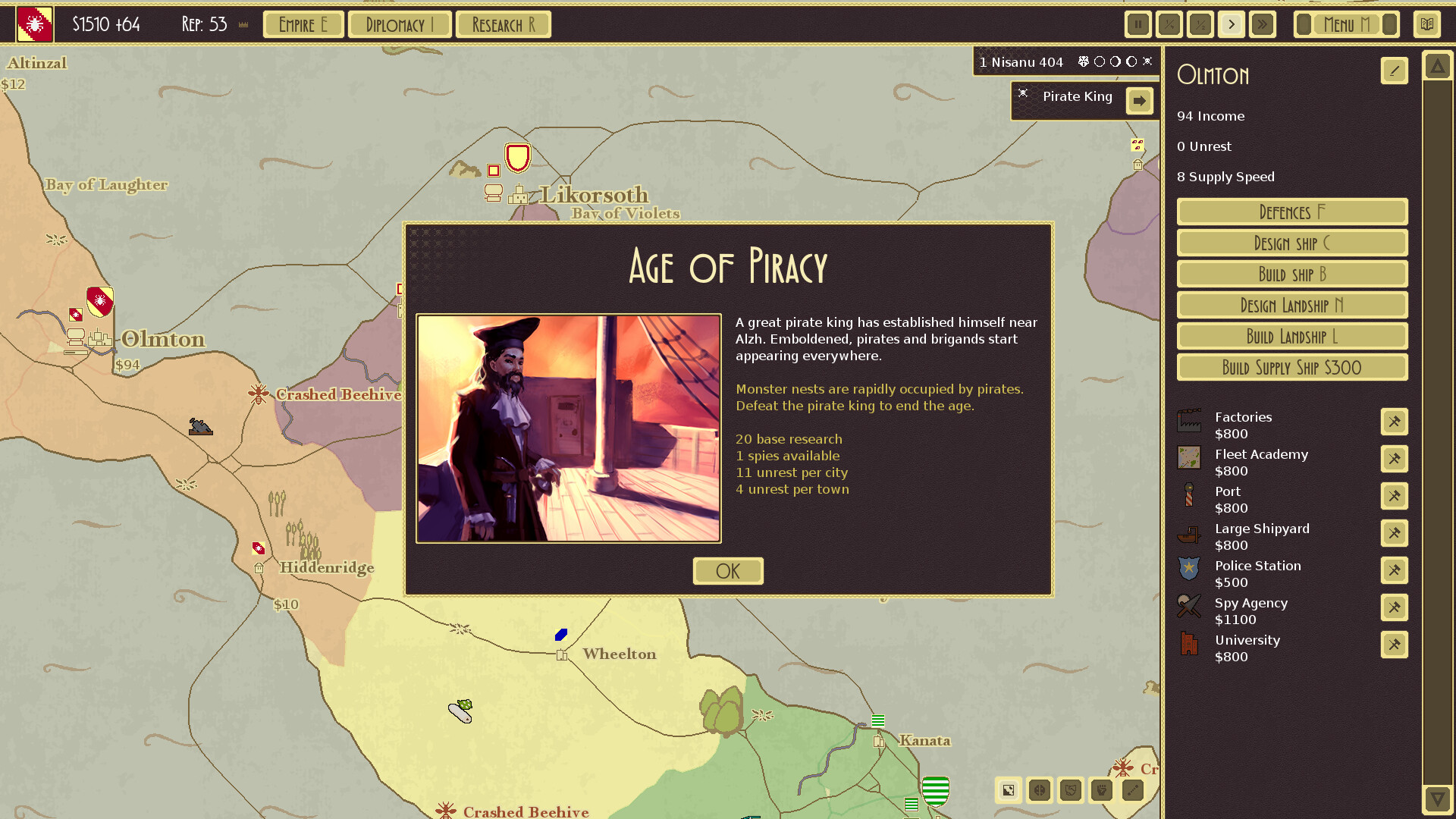
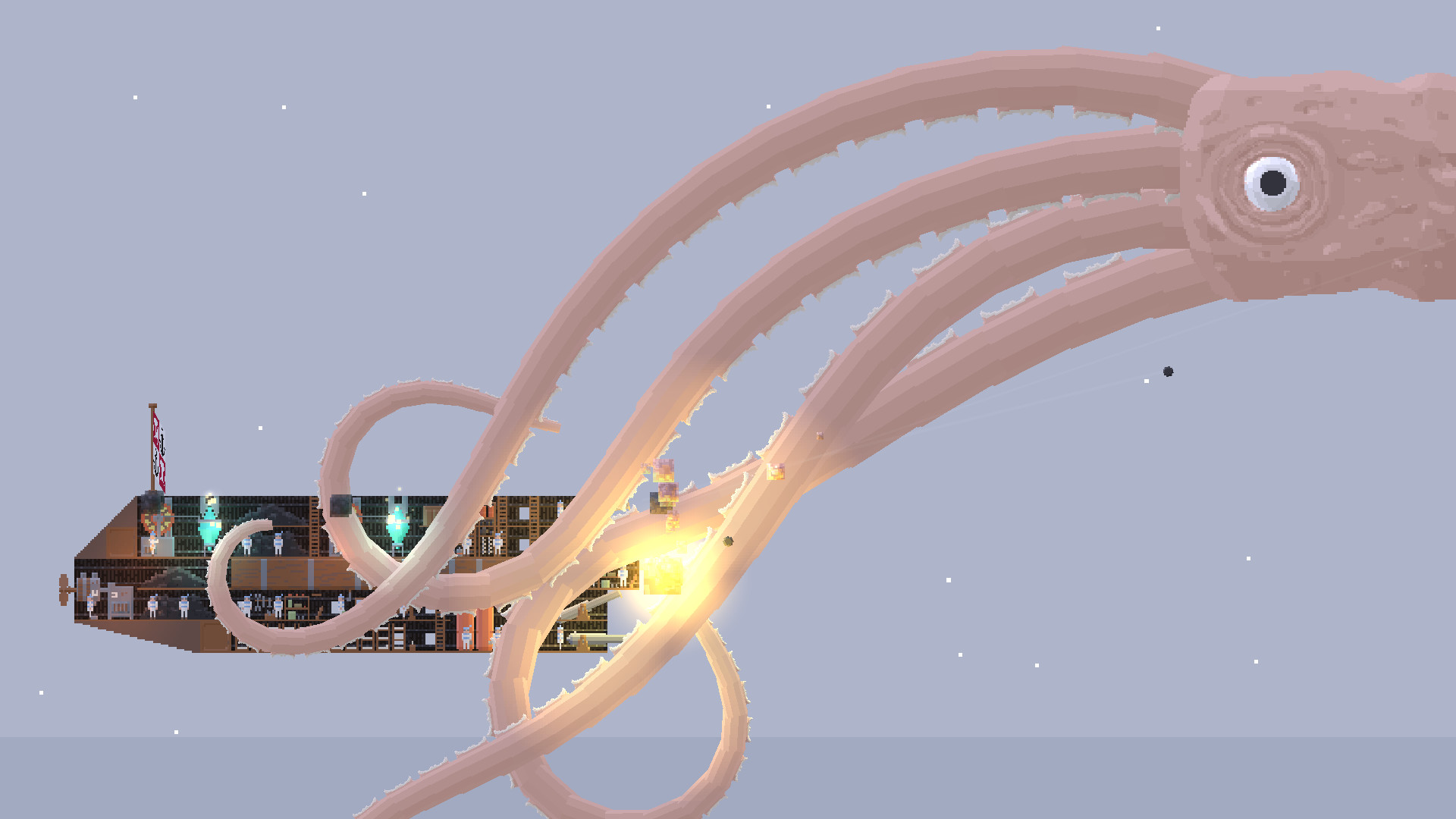
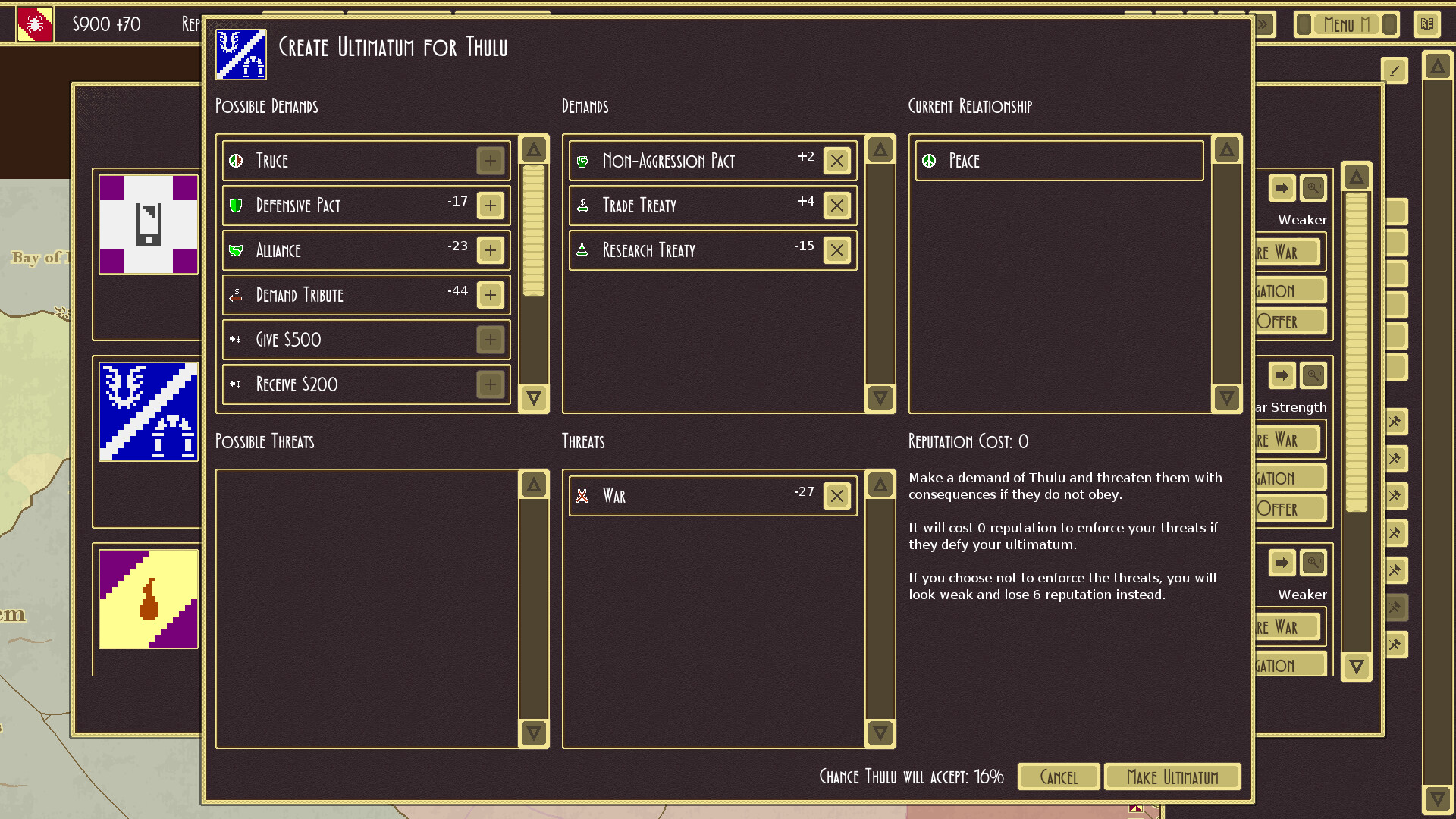
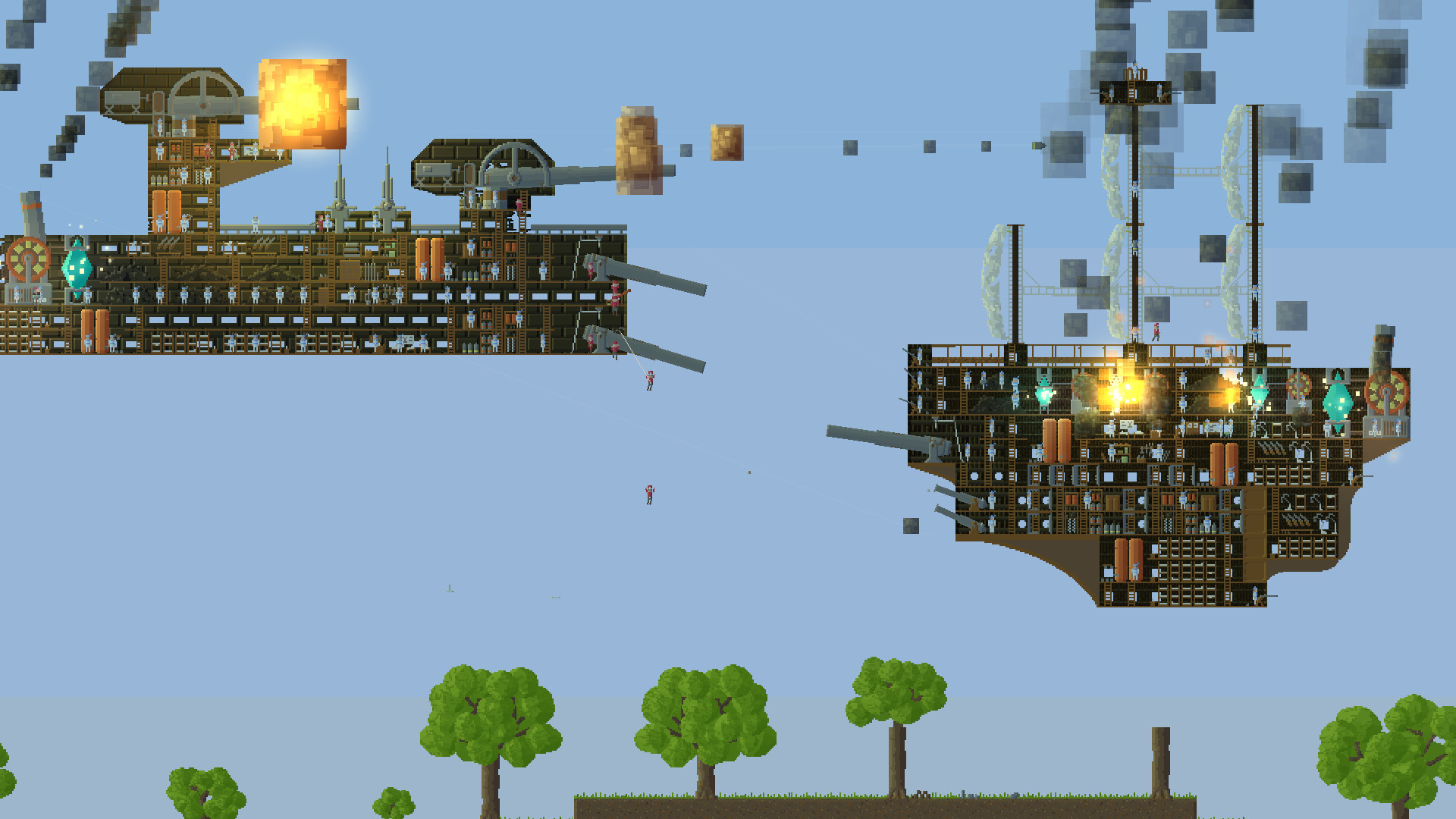
Airships: Conquer the Skies is a remarkably creative steampunk strategy game that combines engineering, tactical warfare, empire management, and sandbox experimentation into an experience unlike almost anything else in the genre. At its heart, the game is about designing enormous flying war machines and testing them against enemy fleets, fortified cities, giant monsters, and rival empires across sprawling battlefields. While its visual presentation may initially appear simple, the incredible depth hidden within its construction systems and strategic gameplay quickly reveals a highly ambitious project driven almost entirely by player creativity and experimentation. The most compelling feature of the game is its modular shipbuilding system. Players construct airships and land vehicles piece by piece using engines, armor, corridors, weapons, ammunition systems, crew quarters, suspendium chambers, and countless support modules. Every design choice directly affects how the ship performs during combat. Poor weight distribution can cause structural instability, weak armor placement leaves critical systems exposed, and badly designed corridors may slow crew movement during emergencies. The game constantly rewards thoughtful engineering and experimentation, turning ship design into the true centerpiece of the experience. What makes the construction system especially satisfying is the sheer amount of freedom it offers. Players can build gigantic floating dreadnoughts packed with artillery, nimble attack craft built for speed, heavily armored fortresses, or bizarre experimental machines that barely function at all. Some designs become devastatingly effective, while others collapse into flaming wreckage moments after battle begins. Even failures remain entertaining because the destruction systems are so dynamic and unpredictable. The game creates a constant cycle of experimentation where players refine designs after every battle, gradually learning how to balance firepower, mobility, durability, and efficiency. Combat takes place in real time across 2D battlefields where airships, ground vehicles, and fortifications exchange cannon fire, rockets, bombs, flamethrowers, and boarding parties. Despite the relatively simple visual presentation, battles become surprisingly tactical because positioning and ship architecture matter constantly. Weapon angles, armor placement, altitude, speed, and internal layout all influence battlefield performance. Watching carefully designed vessels slowly break apart under sustained fire is consistently satisfying because every explosion and structural collapse reflects weaknesses in the original engineering. The destruction mechanics are easily one of the game’s most entertaining elements. Fires spread through corridors, engines explode, ammunition stores detonate, and entire sections of ships can separate during combat. Even massive warships can collapse spectacularly if a critical suspendium chamber or internal support system is destroyed. These chain reactions create battles that feel dynamic and chaotic while reinforcing the importance of careful ship construction. Few strategy games make destruction feel so directly connected to player design decisions. Beyond tactical battles, the strategic campaign mode adds another layer of depth through empire management and world conquest. Players control nations across procedurally generated worlds filled with rival factions, cities, diplomacy systems, trade, research progression, and territorial expansion. Managing an empire requires balancing economics, military production, infrastructure, and technological development while constantly preparing for war. The campaign successfully transforms the game from a simple sandbox simulator into a broader strategy experience where long-term planning becomes just as important as battlefield tactics. Technological progression also feels rewarding because new research unlocks increasingly advanced weapons, armor systems, engines, and support modules. Early ships built from fragile wooden structures gradually evolve into enormous armored sky fortresses capable of devastating entire fleets. As new technologies become available, players are encouraged to redesign older vessels and experiment with more advanced engineering concepts, giving the campaign a satisfying sense of growth and escalation. The game’s atmosphere is another major strength. Airships: Conquer the Skies fully embraces its steampunk setting through floating cities, industrial machinery, giant cannons, mechanical walkers, and strange airborne technologies. The world feels imaginative and playful rather than strictly realistic, allowing absurd designs and bizarre combat scenarios to feel completely natural. Giant sky monsters, floating islands, and impossible mechanical inventions give the setting a unique charm that separates it from more grounded military strategy games. Sound design supports the atmosphere effectively. Cannon fire, explosions, collapsing structures, and mechanical noises all reinforce the chaos of battle. The soundtrack carries a dramatic adventurous tone that matches the steampunk setting well, helping battles feel exciting even with the relatively minimalist visuals. Combined with the dynamic destruction systems, large-scale engagements often become visually and mechanically satisfying despite the game’s simple 2D presentation. The active modding community also greatly extends the game’s longevity. Players have created countless custom ships, campaigns, weapons, factions, and gameplay modifications that add enormous replay value. The game’s flexible systems make it particularly suited for player creativity, and browsing community creations alone can easily consume hours. However, the game is not without flaws. The learning curve can feel intimidating for new players because many systems are complex and only lightly explained. Building effective ships requires understanding multiple interconnected mechanics, and early designs often fail catastrophically before players fully understand how the engineering systems function. The amount of experimentation required may overwhelm players looking for more straightforward strategy gameplay. Artificial intelligence can also behave inconsistently during large battles. Pathfinding occasionally becomes awkward, and certain campaign systems lack the depth found in more specialized grand strategy titles. Diplomacy and empire management mechanics are functional but relatively simple compared to the incredibly deep construction systems. The visual presentation may also divide players. While the art style has charm and clarity, the simplistic 2D graphics and interface can appear dated compared to larger modern strategy games. Players expecting cinematic visuals or high-end graphical effects may initially underestimate the game because of its modest presentation. Despite these limitations, Airships: Conquer the Skies succeeds because of how effectively it combines strategy with unrestricted creativity. Few games allow players to engineer completely custom war machines and immediately test them in large-scale tactical warfare within a living campaign world. The constant process of designing, fighting, rebuilding, and improving creates an addictive gameplay loop that remains engaging for countless hours. For players who enjoy sandbox strategy games, engineering systems, steampunk worlds, and tactical experimentation, Airships: Conquer the Skies offers one of the most unique and rewarding strategy experiences available. Its depth, creativity, and dynamic destruction systems make it a standout title that rewards imagination just as much as strategic thinking. Rating: 9/10