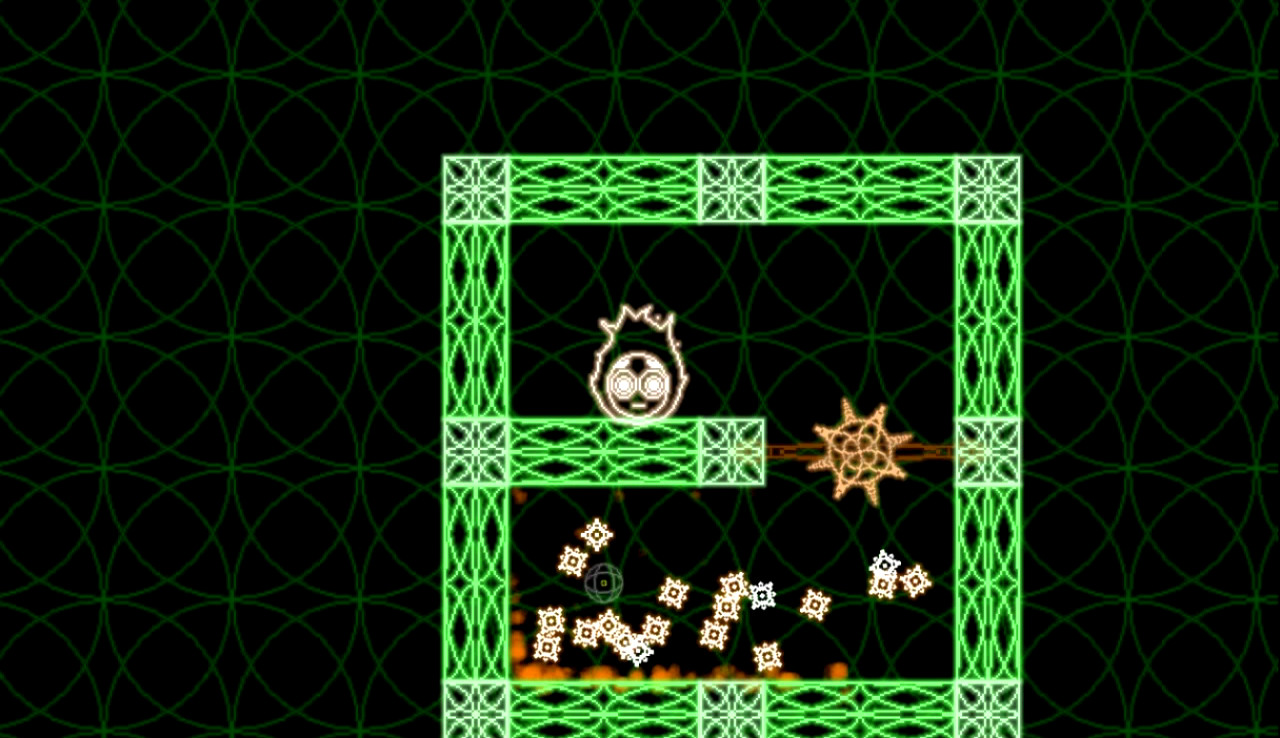
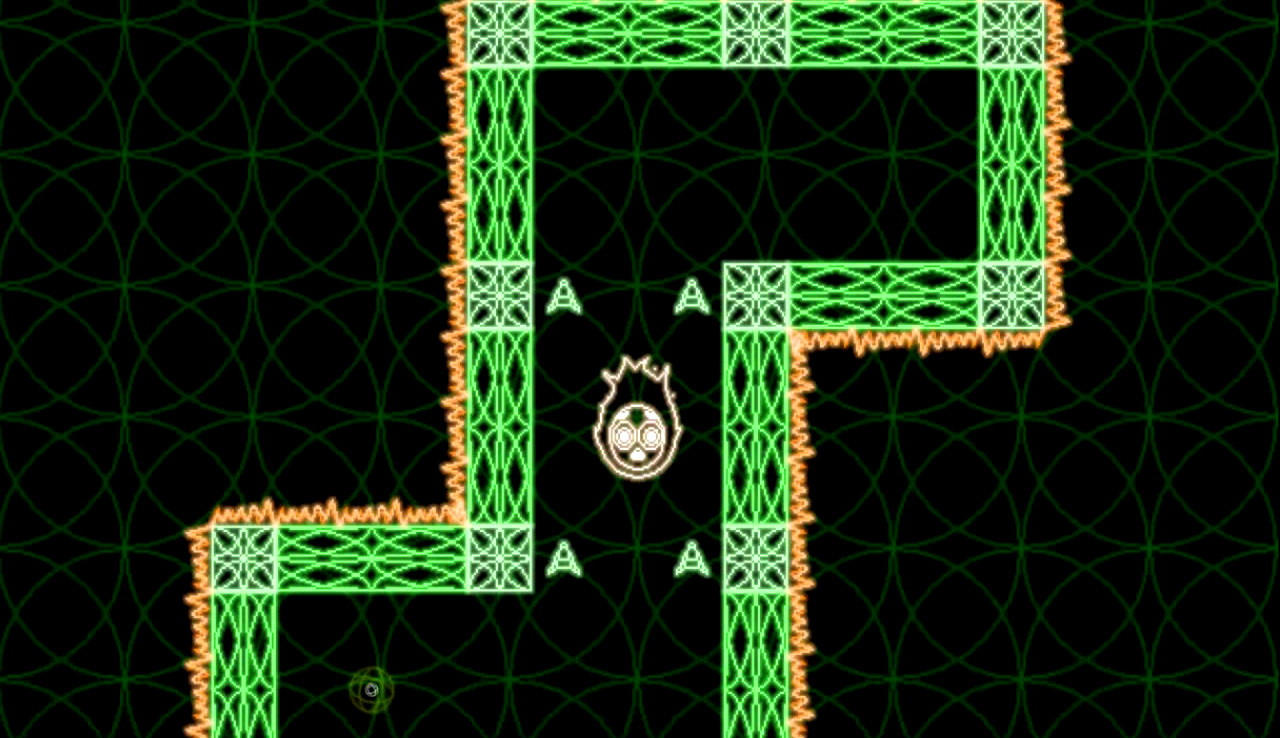
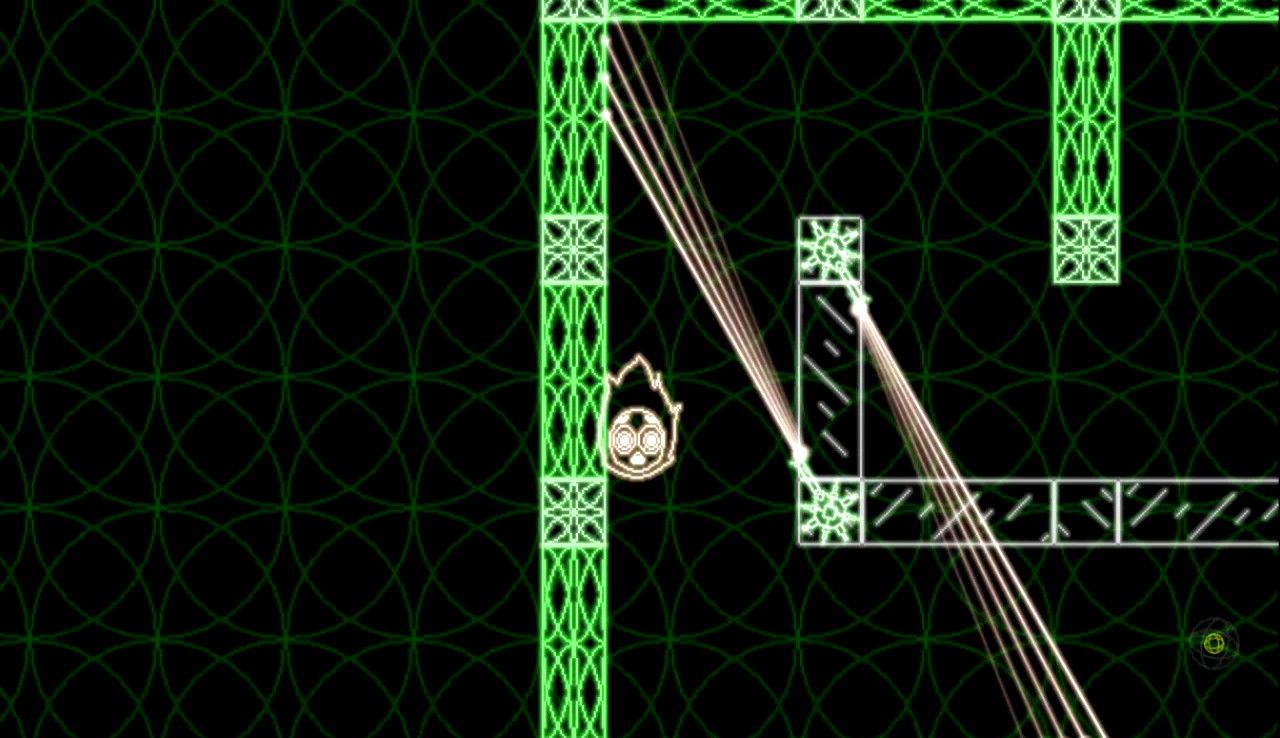
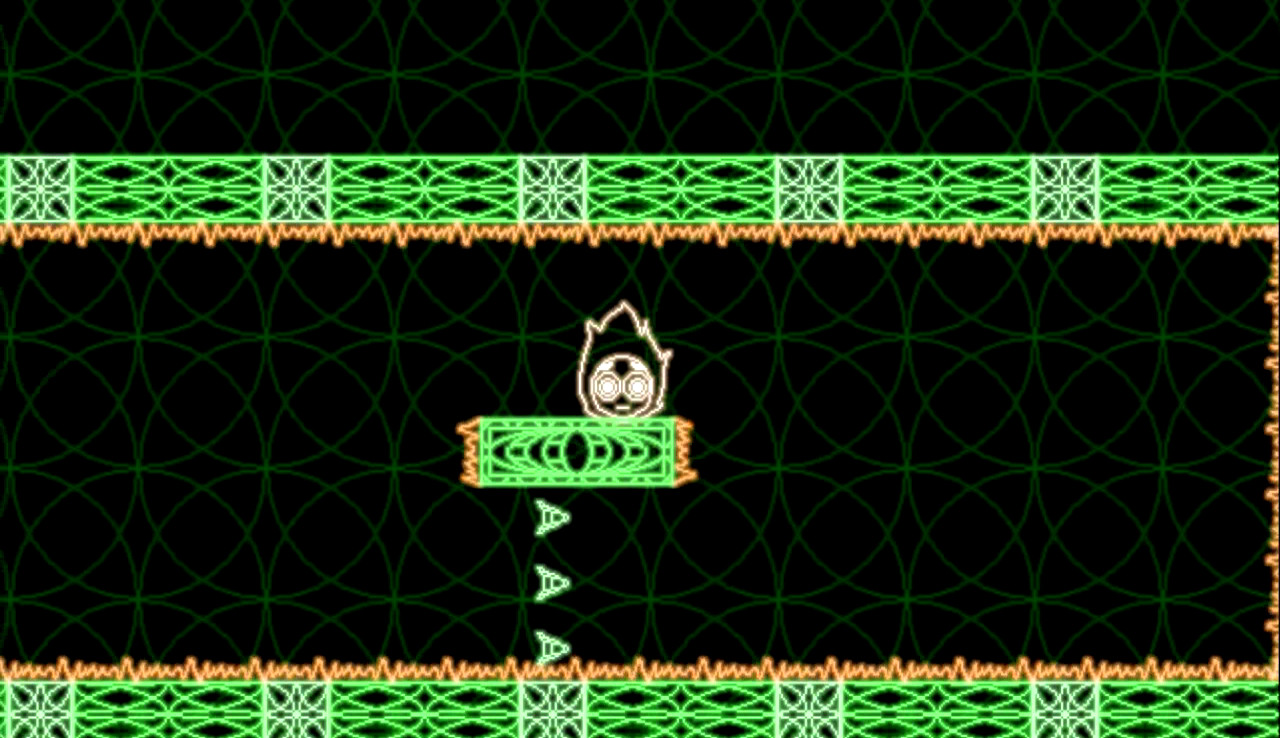
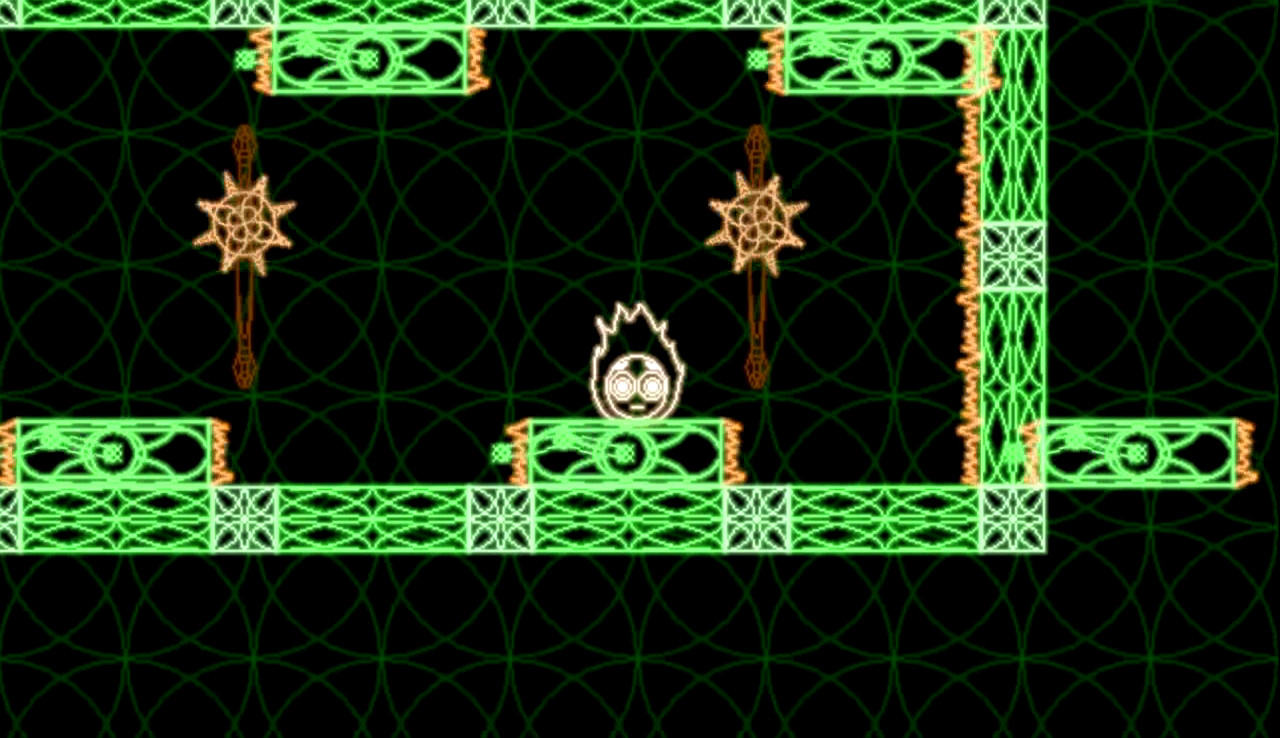
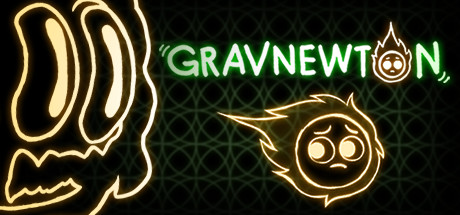
GravNewton presents itself as a small but fiercely concentrated platforming challenge built around a single, clever idea: movement is governed entirely by gravity. Instead of running and jumping in the conventional sense, you guide Newton, a tiny orb-like creature, by flipping gravity and allowing him to fall in whatever direction you choose. This simple mechanic reshapes every moment of traversal into a puzzle of angles, timing, and momentum. The game wastes no time easing you in—within minutes, it becomes clear that each stage is a tight, precision-driven obstacle course where one mistake sends you back to the start. The sense of vulnerability created by this gravity-only movement gives the otherwise minimalistic world an underlying tension, as if every direction is simultaneously a risk and an opportunity. As the game unfolds across its dozens of stages, its design philosophy becomes increasingly apparent. GravNewton follows a traditional escalation model, with new hazards layered steadily on top of one another: spinning saws, active lasers, timed bombs, conveyor belts, and moving traps complicate your trajectory in ways that demand quick thinking and even quicker reactions. Falling upward or sideways into danger feels counterintuitive at first, but once you begin to internalize the rhythm of flipping gravity at the exact moment a trap clears, the game becomes intensely satisfying. The levels often give you just enough room to execute the correct action and no more, turning the experience into a constant dance of micro-adjustments. Even when frustration creeps in, the snappiness of the reset and the clarity of the stage layouts make it easy to keep retrying. The overall tone of GravNewton is built from minimalistic elements—flat backgrounds, clean pixel art, and straightforward hazard placement—but this simplicity reinforces the game’s laser-focused mechanical identity. There’s no narrative pushing you along, no worldbuilding outside of the visual theme of its segmented environments, and no stylish flourish competing for attention. Instead, everything serves the immediate function of readability. The clean visuals make it easy to interpret distances, timing windows, and danger zones, all of which are critical in a game where survival depends on split-second intuition. At times, this minimalism may feel overly bare or sterile, but it also ensures the platforming remains the undisputed centerpiece of the experience. Difficulty is a defining characteristic of the game, and it rarely lets up. Many stages require a practiced sequence of moves, and even a momentary hesitation—flipping gravity a fraction too early or failing to anticipate a trap cycling back into position—can derail an attempt. Yet the game generally avoids feeling unfair because each failure provides immediate feedback. The hazards are consistent and predictable, allowing you to refine technique with each new attempt. The sense of accomplishment after conquering a particularly tight stage is enormous, especially when the game grades your performance and gives you an incentive to chase cleaner, more efficient solutions on replay. Players who enjoy precision platformers will likely find this feedback loop addictive, while those seeking a more forgiving experience may find the game’s relentless nature overwhelming. Audio plays a lighter role but still supports the gameplay’s intensity. The soundtrack is serviceable, leaning toward rhythmic loops that frame the action without drawing too much attention. Sound effects, such as the audible snap of a trap activating or the subtle cue when Newton falls into place, help reinforce timing discipline. The presentation may not be memorable on its own, but it complements the kinetic pulse of the game, allowing the player to stay fully focused on executing maneuvers with accuracy. Despite the polish in its central mechanic, GravNewton carries a handful of rougher edges common to small indie projects. Some players may notice that the input response can feel slightly delayed during sharp directional switches, which can be problematic in a game that thrives on exact timing. Repetition can also creep in during long play sessions, as the game occasionally leans too heavily on familiar combinations of traps and layouts instead of introducing more radical variations on the gravity-shift idea. Still, the overall experience benefits from the developers’ clarity of vision: this is a game that knows exactly what it wants to be and doesn’t compromise that identity with unnecessary filler. Taken as a whole, GravNewton is a compact but challenging entry in the precision-platformer landscape. It offers a fresh mechanical hook, an escalating sequence of mechanical tests, and a satisfying loop of failure and mastery. Its minimalist approach to aesthetics and storytelling means it won’t appeal to players looking for narrative depth or atmospheric worldbuilding, but those who crave mechanically pure platforming challenges will likely find its gravity-flipping system both compelling and addictive. The game’s appeal lies in its ability to turn something as simple as falling into an unexpectedly demanding skill, and that singular focus gives GravNewton a distinct charm that sticks with you long after you clear its final stage. Rating: 7/10
Expand the review