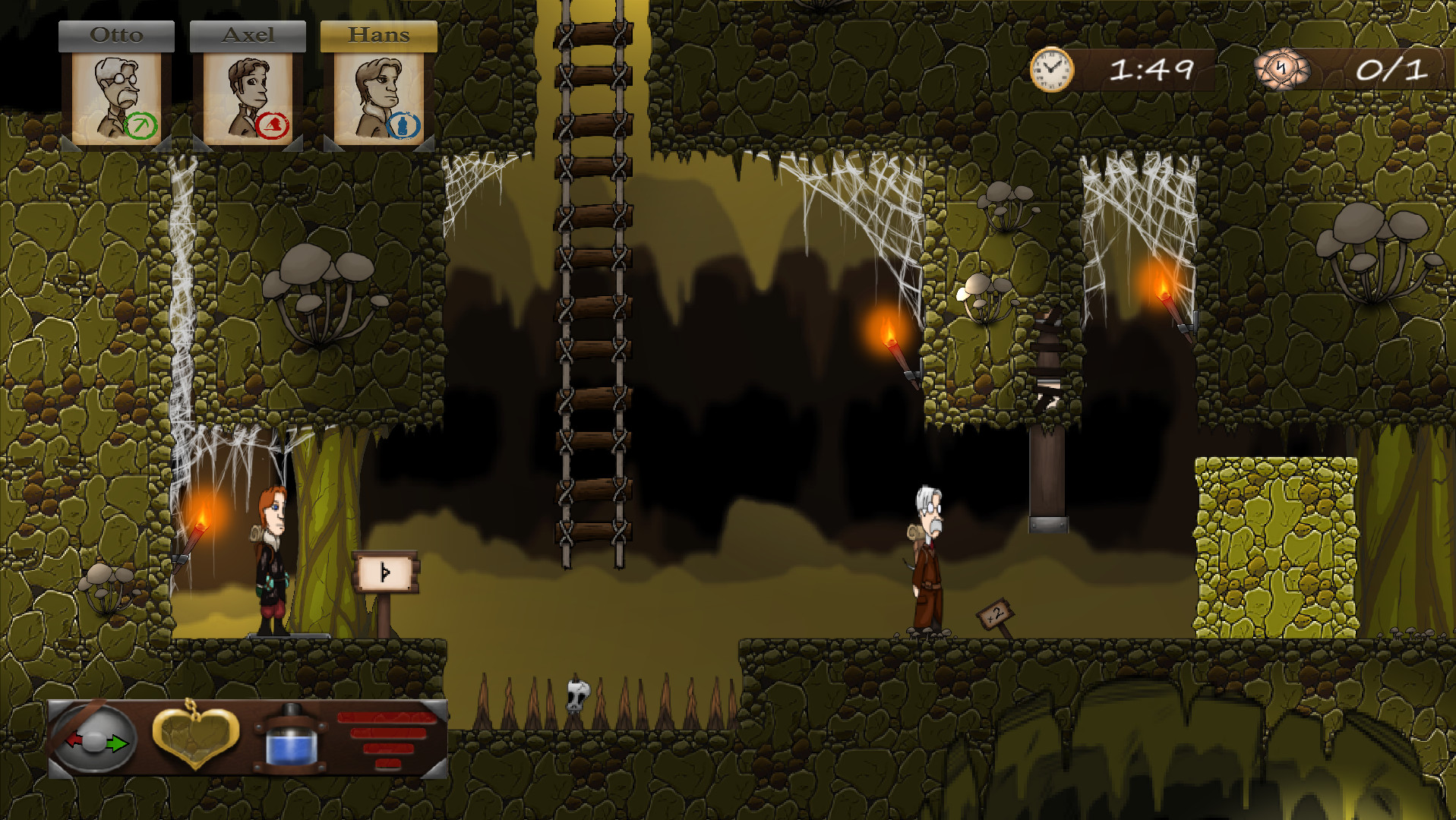
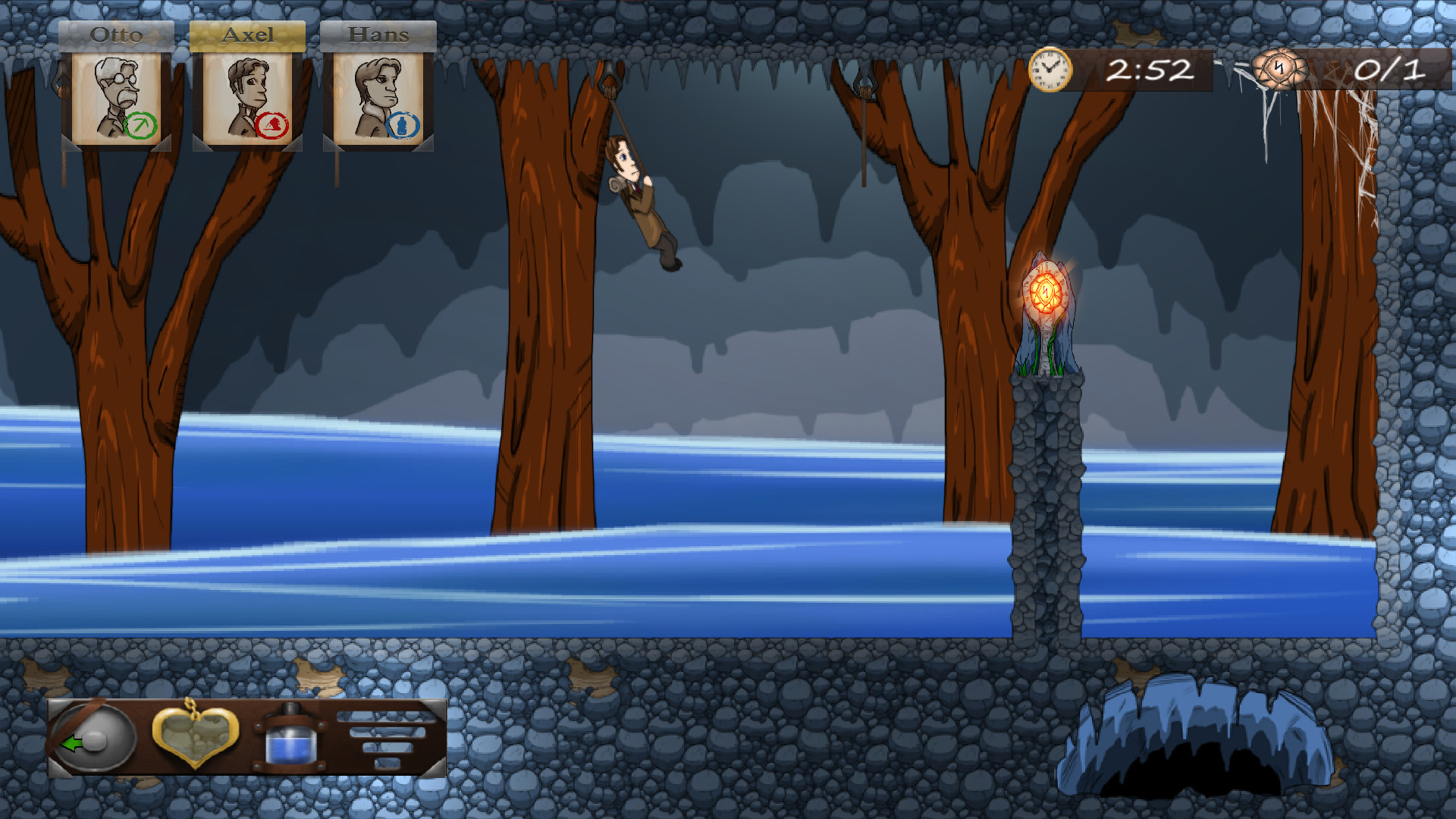
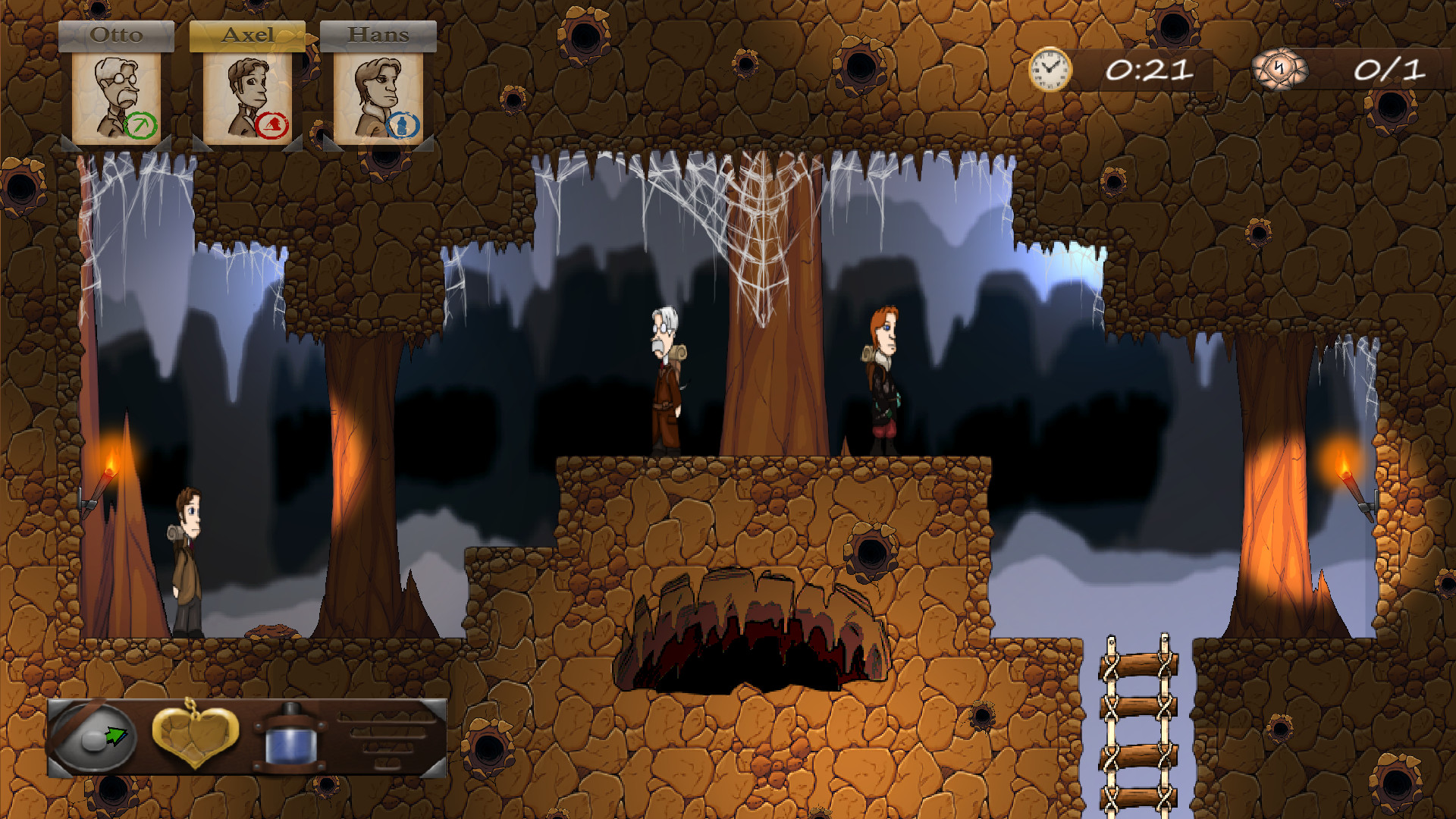
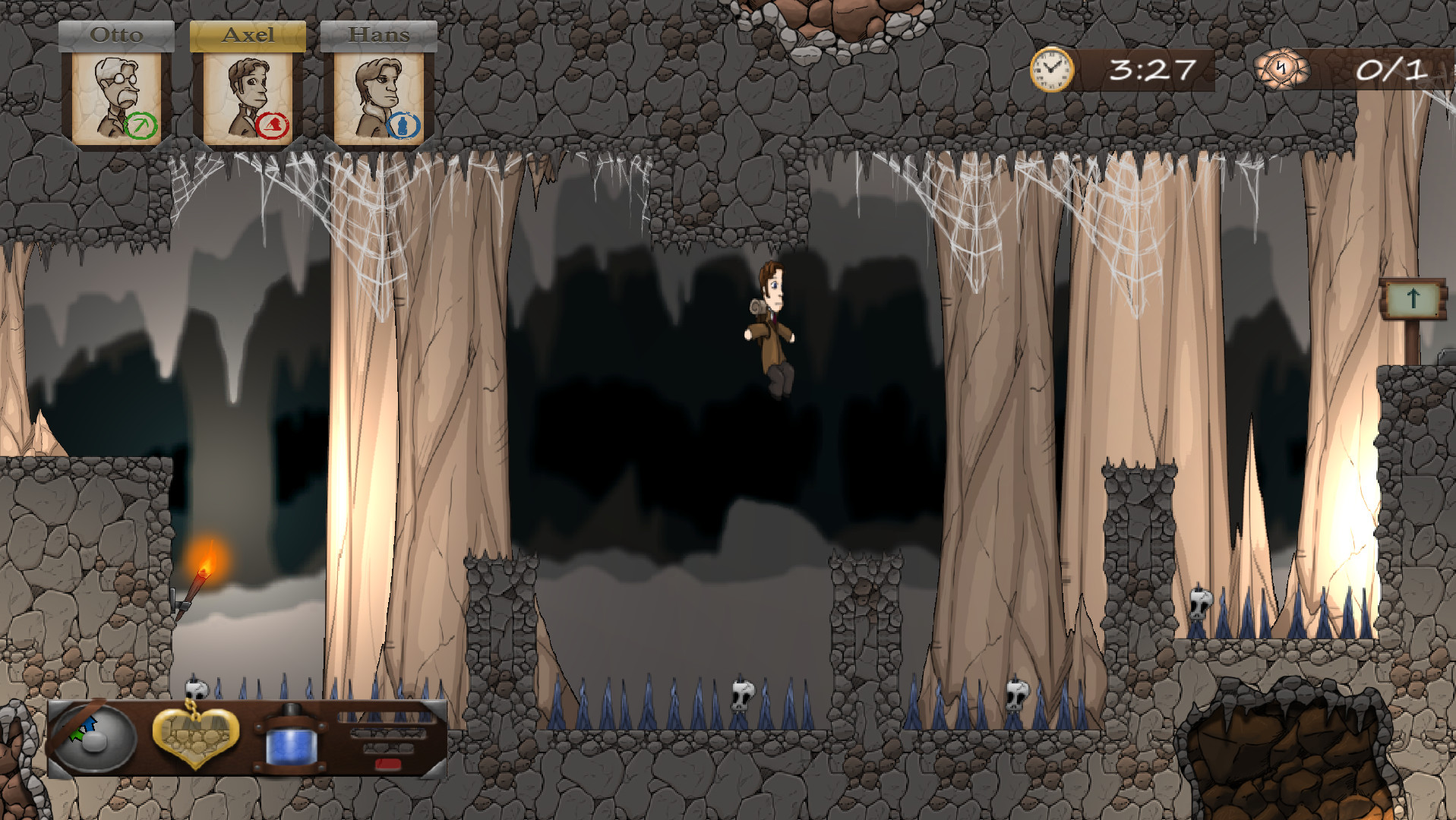
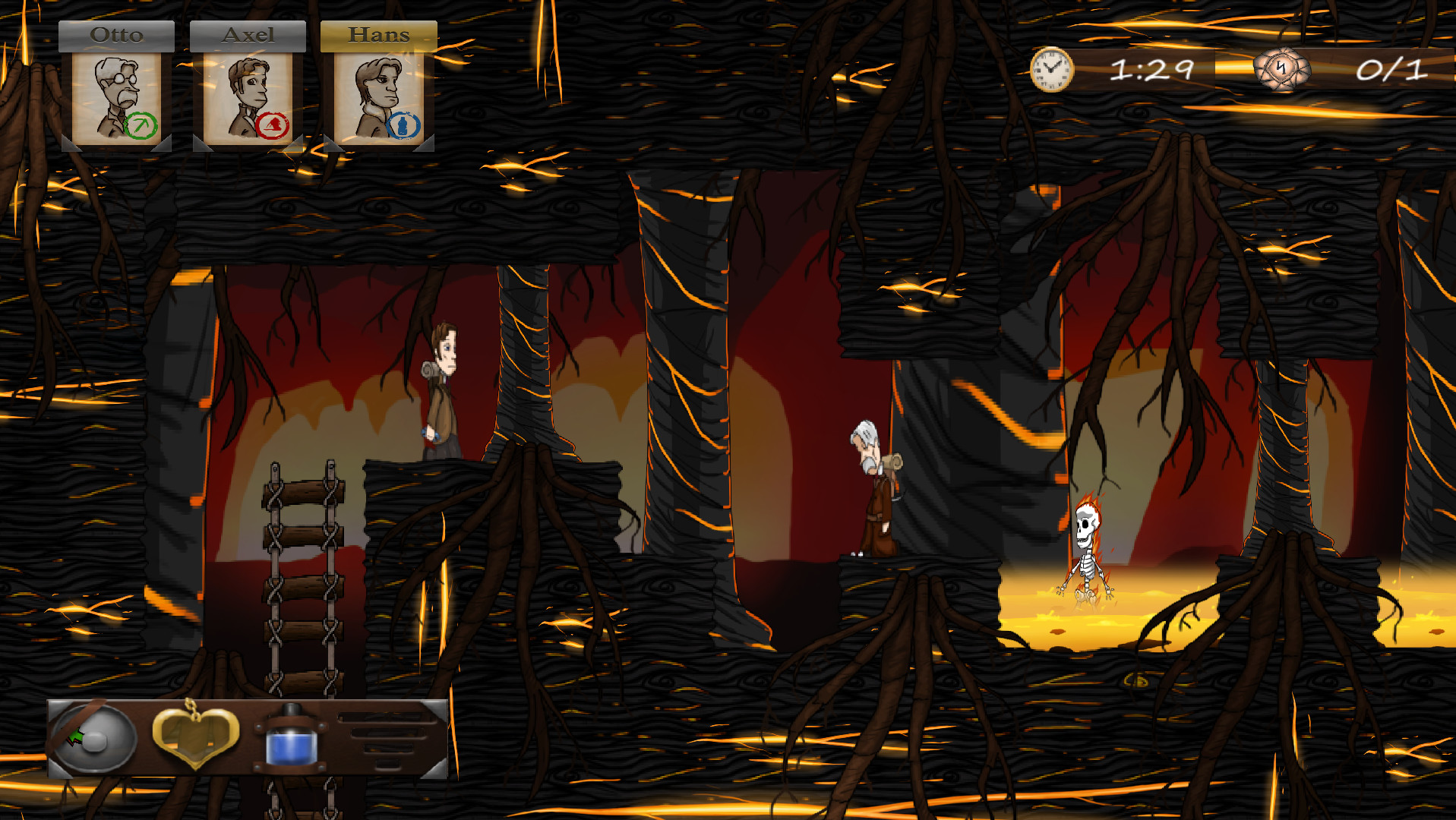
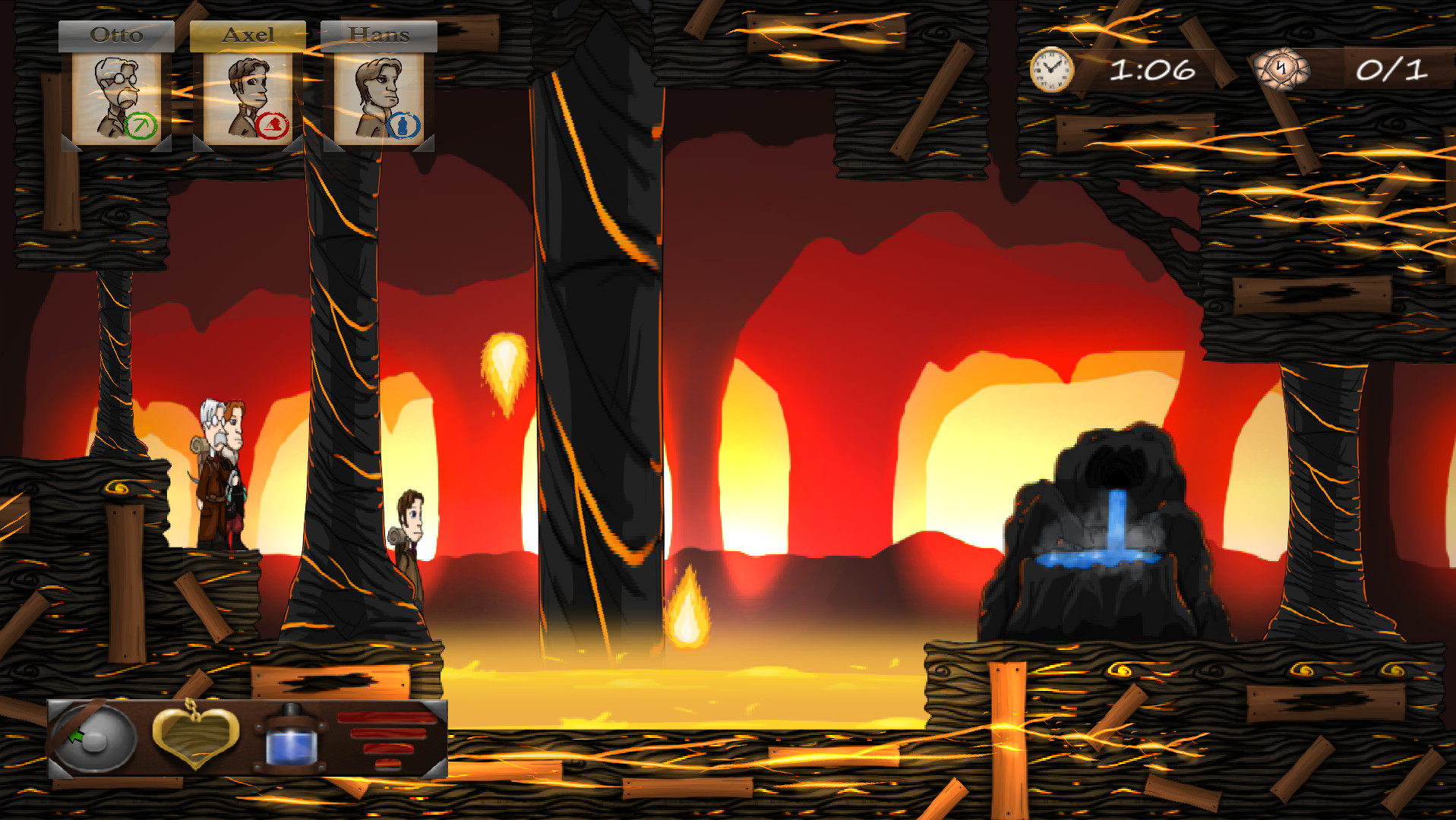
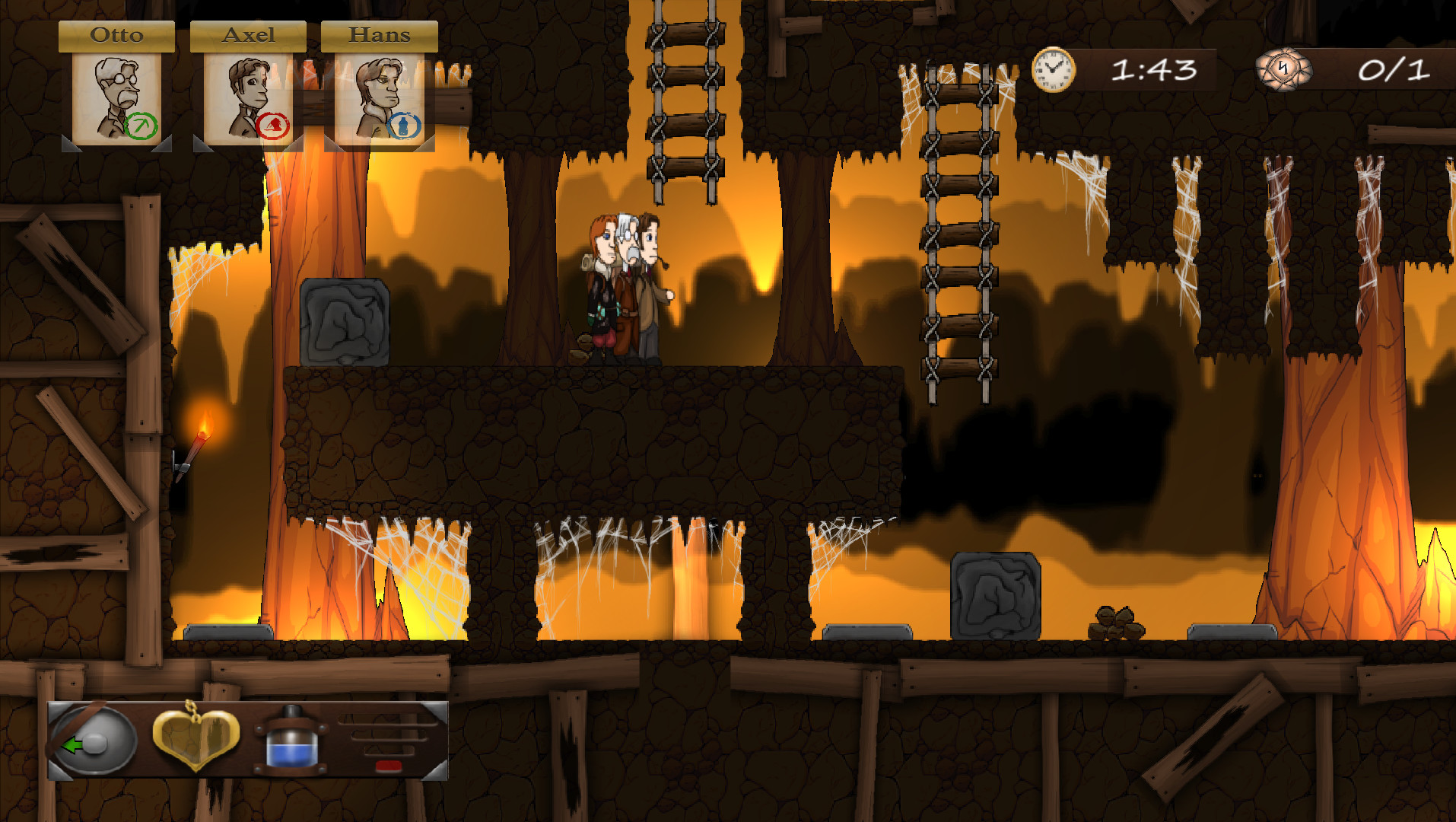
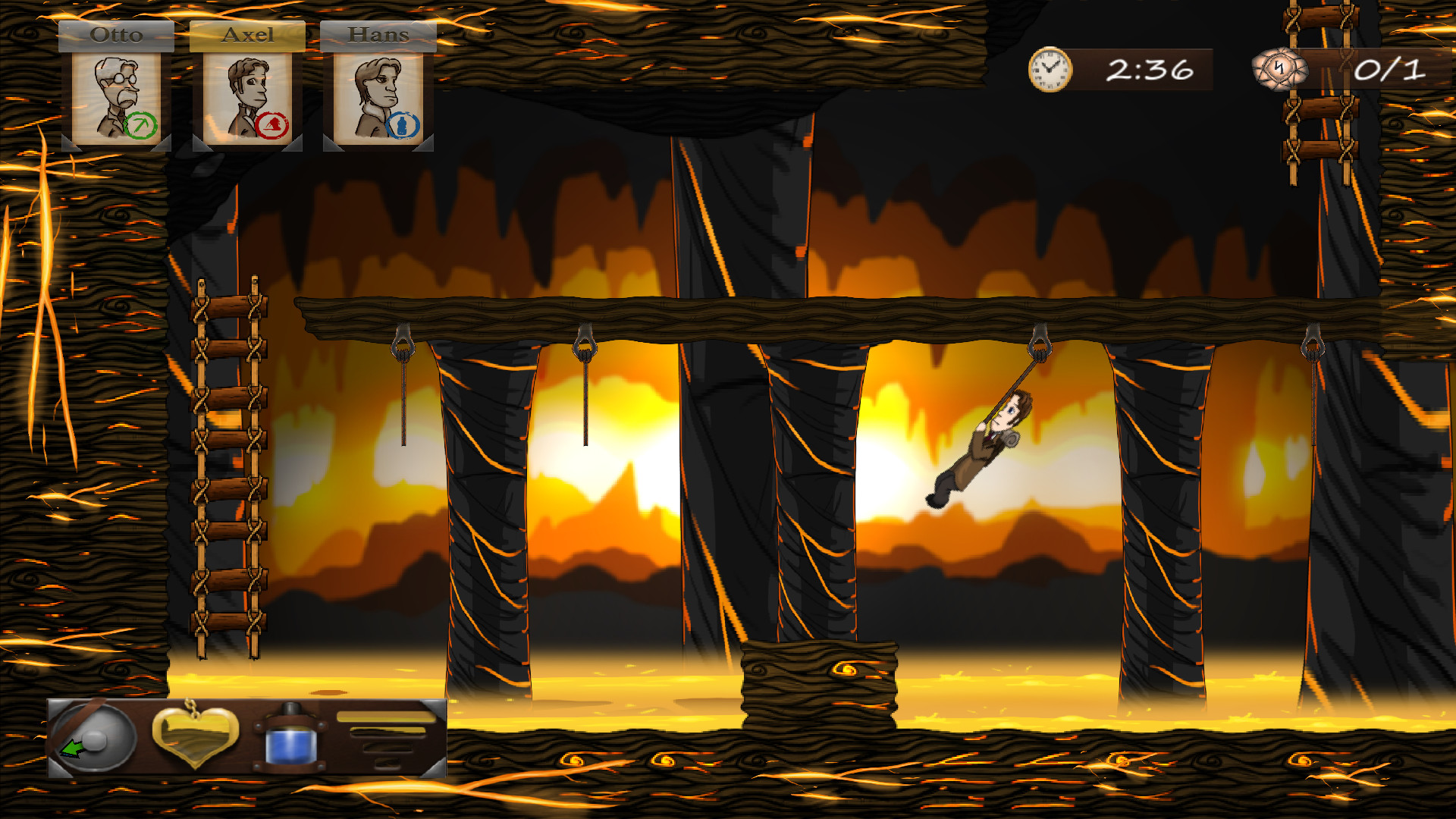
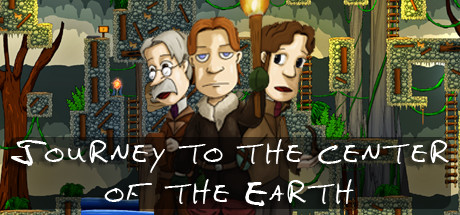
Journey To The Center Of The Earth is a puzzle-platforming adventure developed and published by InSayn that takes inspiration from Jules Verne’s famous story while approaching the material from the perspective of an independent game. Rather than attempting to recreate the novel scene by scene, the game concentrates on the fundamental appeal of an expedition into an unknown subterranean world. Exploration, environmental hazards, logical challenges, and survival form the foundation of the experience. It is a relatively modest production, but its decision to emphasize puzzles and cooperation instead of combat gives it a more distinctive personality than a straightforward action-oriented adaptation would have provided. The central mechanic revolves around controlling three adventurers as they descend deeper beneath the surface. They can travel together, but the player can also separate them and control them individually when circumstances demand it. Each character possesses different abilities, transforming the group into a collection of specialized tools for overcoming environmental obstacles. Progress therefore requires more than simply reaching the end of a platforming sequence. Players have to examine the situation, determine which adventurer is capable of solving a particular problem, and figure out how to position the entire group so everyone can continue. This character-switching structure is easily one of the game's strongest ideas. It creates situations where solving a problem for one explorer is only the beginning because the remaining characters still need a safe route through the environment. Successful progression often feels like assembling a sequence of interconnected actions. One character may have to move ahead and perform a task before another can reach a previously inaccessible location. The concept fits the expedition theme nicely because survival feels dependent upon cooperation rather than the abilities of a single overwhelmingly capable protagonist. The adventure is divided across 18 large levels containing platforming challenges, traps, puzzles, secrets, and other environmental obstacles. These stages provide the main framework for the descent and gradually test how well the player understands the game's mechanics. There is a deliberate emphasis on observing surroundings before acting. Running forward without considering what each character needs to do can quickly create problems, while patient experimentation is generally rewarded. The levels also contain secrets that encourage players to investigate beyond the most obvious route, providing an additional incentive to explore rather than simply rushing toward the objective. One particularly notable design choice is the absence of conventional combat. Journey To The Center Of The Earth does not build its challenge around fighting underground creatures or defeating enemies. Instead, the world itself effectively becomes the opposition. Dangerous terrain, traps, difficult jumps, puzzles, and the need to manage the explorers provide the tension. This gives the game a slower and more thoughtful rhythm than many adventure platformers. Players who enjoy solving environmental problems may find the approach refreshing, although those expecting regular battles or action-heavy encounters may consider the experience lacking in variety. Survival also plays a role through the characters' need for water. Thirst adds another consideration while traveling through the underground environments and reinforces the idea that this is a dangerous expedition. The characters are not simply moving through abstract puzzle chambers; they are explorers attempting to remain alive in an inhospitable place. This mechanic introduces additional urgency and prevents the journey from feeling completely relaxed. It is thematically appropriate, although combining survival pressure with puzzles can occasionally make experimentation more stressful, especially when a player wants time to understand a difficult situation. The Jules Verne influence works best as an atmosphere and premise rather than as a promise of a literal interactive version of the novel. The idea of traveling farther and farther beneath the Earth's surface naturally supports exploration and discovery, while the search for what awaits at the center provides a clear motivation to continue. The game also presents the destination as containing a well-hidden secret, adding an element of mystery to the expedition. This sense of discovering something unknown helps connect otherwise separate platforming and puzzle sections into a larger journey. Secrets scattered throughout the levels strengthen that exploratory element. Optional discoveries provide reasons to examine unusual corners and experiment with routes that may initially appear unnecessary. Because the player has access to three characters with different capabilities, exploration can become another puzzle in itself. Finding something is not necessarily the same as figuring out how to reach it. This interaction between character abilities and environmental exploration gives the game's relatively straightforward presentation additional depth. Visually and technically, Journey To The Center Of The Earth reflects its origins as a smaller independent title from the mid-2010s. Its presentation is functional rather than extravagant, placing gameplay concepts ahead of cinematic spectacle or highly detailed graphics. The extremely modest hardware requirements reinforce this lightweight approach. It was designed to run without demanding powerful hardware, making its complexity primarily mechanical rather than technological. Players comfortable with older indie aesthetics are more likely to appreciate what it attempts, whereas anyone expecting the refinement of a modern high-budget platformer will notice its age. The game's greatest strength is how consistently its different systems serve the concept of an underground expedition. Character switching creates cooperation, puzzles reward intelligence, platforming produces physical danger, thirst introduces survival pressure, secrets encourage curiosity, and the lack of combat keeps attention focused on overcoming the environment. Individually, these mechanics are familiar, but their combination produces a recognizable identity. The game asks the player to think about how the expedition survives rather than merely how quickly one character can reach the next checkpoint. There are limitations to this formula. Managing several characters can become cumbersome when everyone needs to be moved through the same complicated section, and challenging puzzles may occasionally turn careful problem solving into repetition. The absence of combat, while refreshing in principle, also means that much of the game's variety must come from environmental design. Its presentation has aged as well, and players approaching it today should expect a comparatively simple indie production rather than a visually spectacular interpretation of Verne's underground world. Despite those shortcomings, Journey To The Center Of The Earth remains an interesting puzzle-platformer because it commits to its central ideas. InSayn created an adventure where teamwork, observation, exploration, and survival matter more than defeating enemies. Its 18 levels, three-character structure, environmental puzzles, hidden secrets, traps, platforming, and thirst mechanic provide enough interconnected systems to make the expedition feel more involved than its modest presentation initially suggests. It will appeal most strongly to patient players who enjoy methodical puzzle-platformers and do not require combat to remain engaged. Rating: 7/10