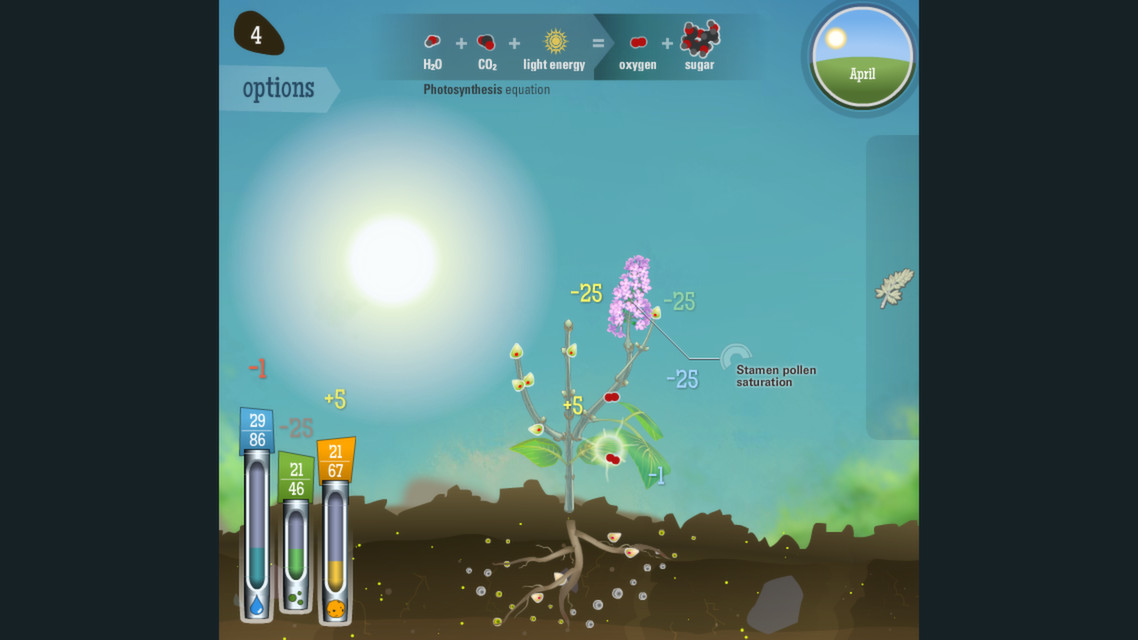
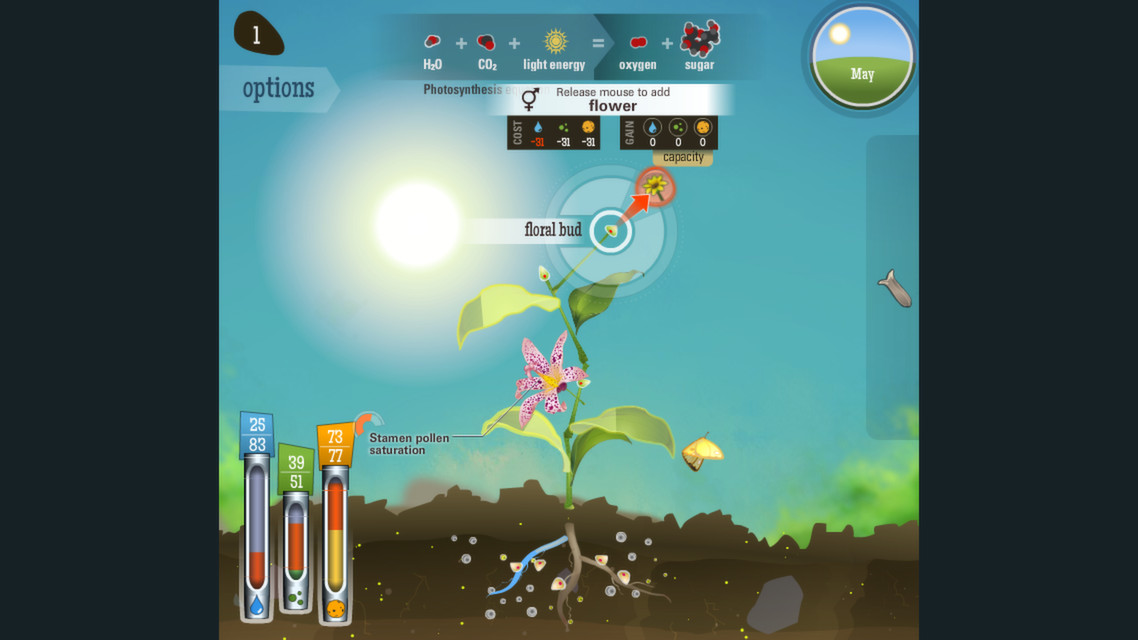
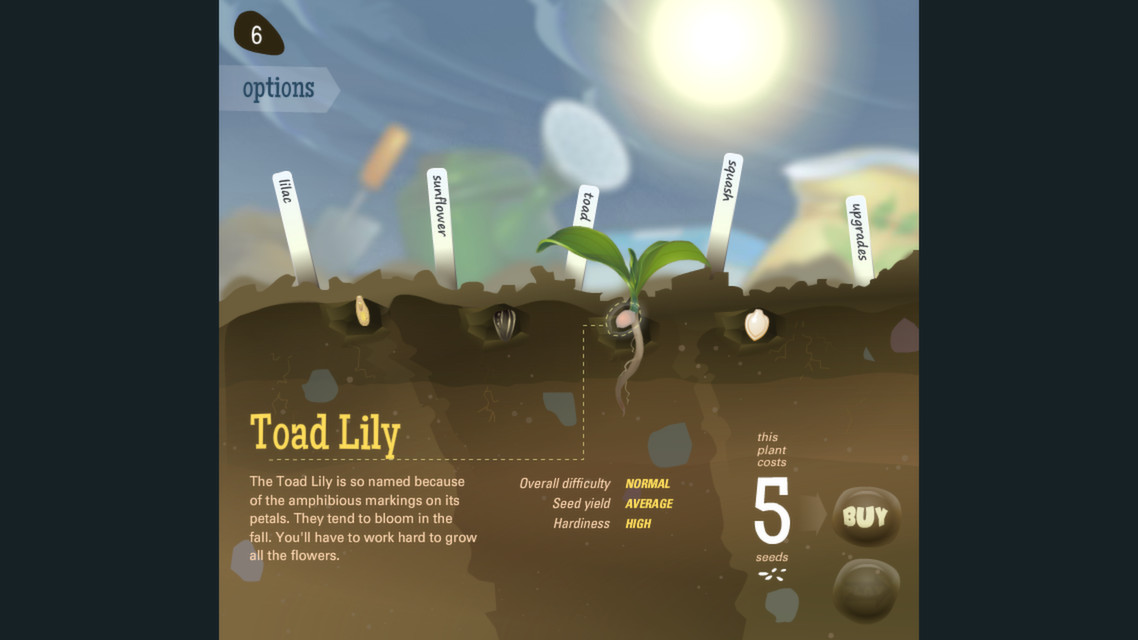
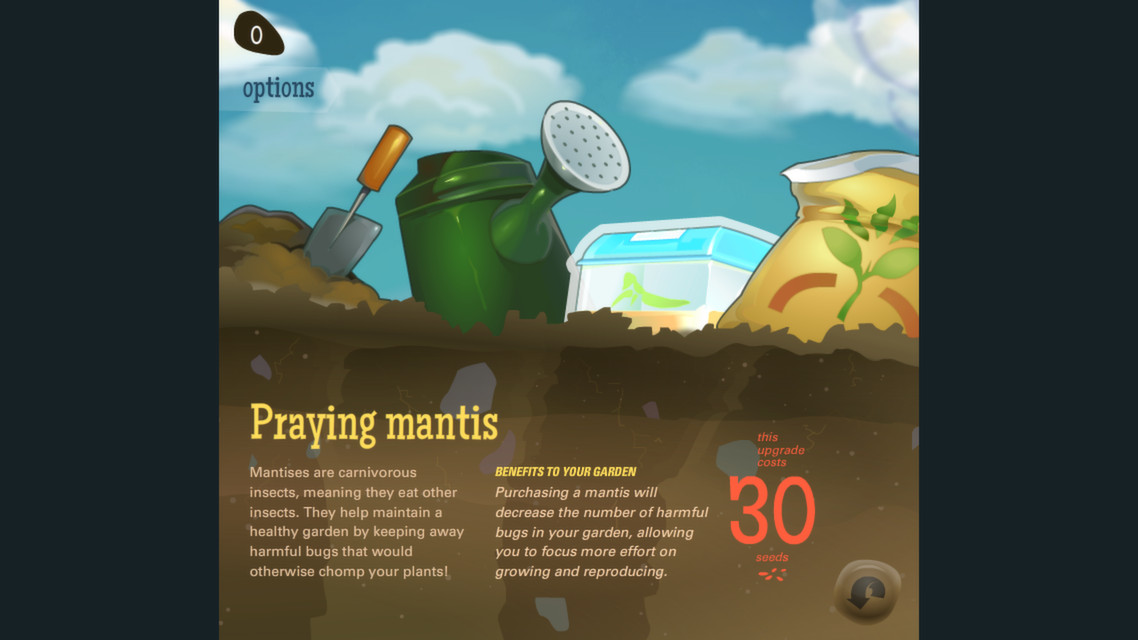
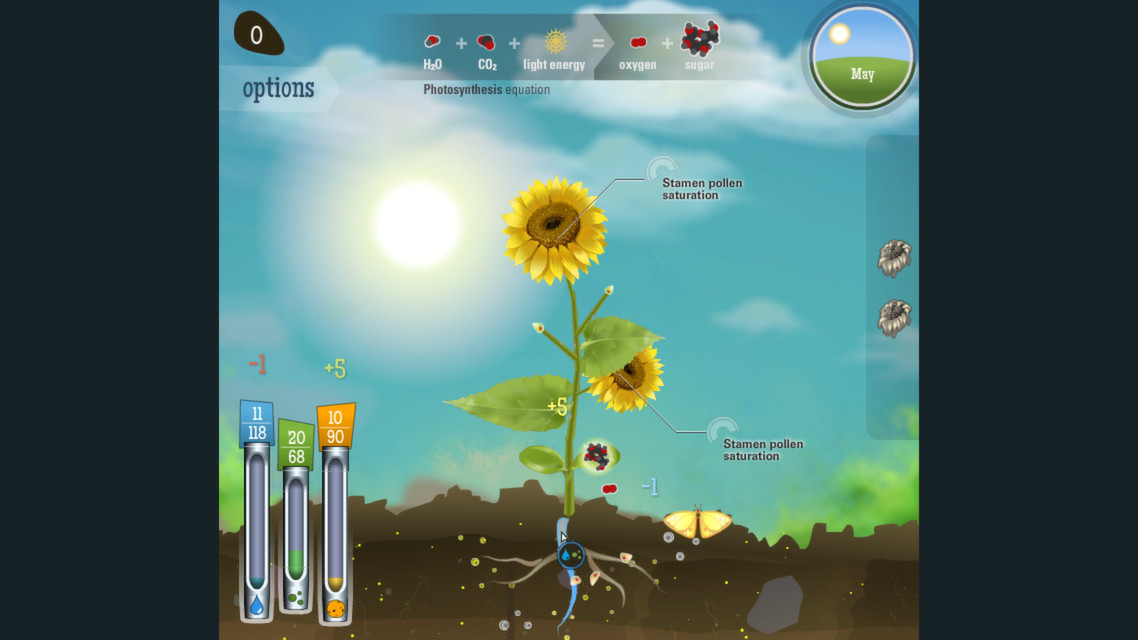
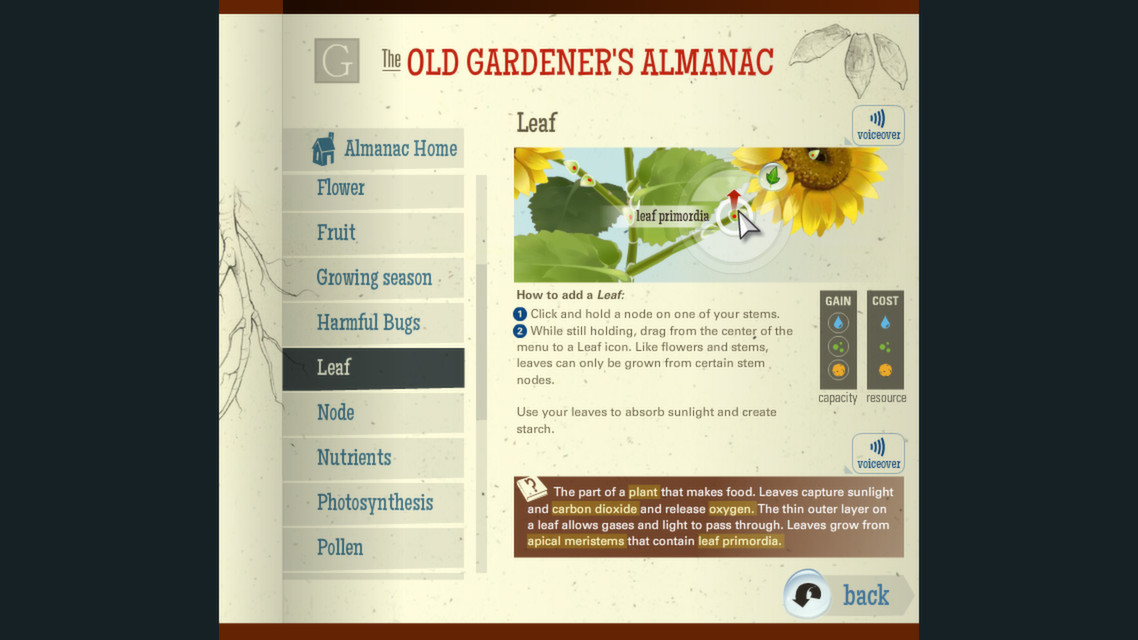
Reach for the Sun, developed and published by Filament Classic, is a distinctive blend of strategy, simulation, and education that manages to turn the quiet life of a plant into a surprisingly tense and engaging experience. At its heart, the game challenges players to guide a single plant from a tiny sprout to full bloom within the span of a single season, balancing survival, growth, and reproduction before the inevitable arrival of winter. What seems on the surface like a calm gardening game quickly reveals itself to be a study in resource management and biological systems, capturing both the beauty and fragility of plant life with striking simplicity. The gameplay revolves around three key resources—water, nutrients, and starch—which together form the lifeblood of your growing organism. Roots dig deep into the soil to absorb water and nutrients, leaves generate starch through photosynthesis, and every new branch or bud you create changes the balance between consumption and production. Every decision carries weight: expanding too quickly depletes your reserves, while growing too cautiously might leave your plant too weak to reproduce before the season ends. The game turns photosynthesis and resource allocation into an elegant puzzle, forcing you to think several steps ahead as you juggle competing needs. You’re not just playing a game; you’re effectively managing an ecosystem in miniature, where every root, leaf, and flower serves a purpose in the grand equation of survival. As the weeks pass, new challenges emerge that test both reflex and strategy. Pests burrow into your roots, blights attack your leaves, and sudden cold snaps threaten to freeze vital structures. These hazards arrive unpredictably, and while they can be frustrating, they add an element of realism to the simulation—nature is not a predictable system. The time pressure is constant: each in-game day ticks away, and every action must be chosen with care, since the cycle of life only allows so much time for growth before the frost arrives. For players who prefer a more deliberate experience, the developers included a “Strategy Mode” that turns the real-time flow into a turn-based system, allowing more careful planning and consideration. This small adjustment expands the game’s accessibility, catering to both quick-thinking players and those who want to analyze their decisions in detail. One of Reach for the Sun’s greatest achievements is its ability to blend educational content seamlessly with engaging gameplay. The mechanics are deeply rooted in real-world botany, translating scientific principles like nutrient uptake, photosynthesis, and energy conversion into interactive systems without ever feeling forced or overly academic. The cause-and-effect nature of the game—grow a leaf to gain starch, use starch to expand roots for water, spend water to produce seeds—teaches through doing rather than lecturing. Filament Classic designed the game with classrooms in mind, and it shows in the clarity of its systems and feedback. Every visual cue, from the color of the soil to the glow of a leaf in sunlight, communicates something about the health of your plant. As an educational tool, it succeeds in fostering curiosity about biology while keeping the experience playful and intuitive. Aesthetically, the game embraces warmth and clarity over complexity. The art style is clean and colorful, focusing on functional beauty rather than hyper-realism. The plant’s growth is rendered with smooth animations that make each stage of development feel rewarding to watch. The music is gentle and ambient, encouraging focus rather than excitement, which fits the tone of the experience perfectly. Together, the visuals and audio create a meditative rhythm that mirrors the natural cycle of growth. The interface, while occasionally cluttered during later stages when your plant expands rapidly, remains mostly intuitive, giving players clear access to their resources and decisions. The presentation is humble but cohesive, reflecting the game’s theme of simplicity and natural harmony. Despite its many strengths, Reach for the Sun is not without its limitations. Once players understand the core mechanics, the experience can start to feel repetitive. Each plant species introduces slight variations in growth patterns and challenges, but the fundamental loop remains the same: gather, grow, protect, and reproduce. The pacing can also be uneven, with early stages feeling contemplative while late stages ramp up the pressure sharply as multiple threats appear at once. Some may find the hazards overly punishing, especially when random blights or freezes wipe out hours of careful planning. And while the educational aspect is commendable, players seeking a deeper or more open-ended simulation might find the game’s scope too narrow. Its design encourages mastery rather than endless exploration. Yet these shortcomings do little to diminish what Reach for the Sun accomplishes. It succeeds in transforming something as ordinary as plant growth into a dynamic, thoughtful, and even emotional experience. There’s a quiet satisfaction in seeing your plant thrive under your care, each new bud or bloom a testament to careful balance and planning. The game manages to make you feel connected to the natural processes it represents, turning abstract biological systems into something personal and tangible. It’s a rare example of a game that can teach, challenge, and relax all at once, blending entertainment with education in a way that feels natural rather than contrived. Reach for the Sun stands as a gentle but intelligent title that bridges the gap between learning and play. It’s not a grand spectacle or a long, complex experience, but it delivers something more enduring: an appreciation for growth, timing, and the quiet struggle for life. Whether played as an educational tool, a puzzle game, or a contemplative simulation, it offers an experience that is as enlightening as it is soothing. In a market crowded with noise and spectacle, Reach for the Sun reminds players that sometimes the most compelling stories are the ones that unfold leaf by leaf, root by root, in the steady rhythm of nature itself. Rating: 6/10
Expand the review