
FULFILLMENT
Exciting Adventure About the Joys of Working at an Amazin' Fulfillment Center! Short, social commentary game that is 100% free, no micro-transactions.
Sync your Steam wishlist to find the lowest game prices instantly. No login required, just paste your Steam profile URL!
⚡ Try Wishlist Radar!
Sync your Steam wishlist to find the lowest game prices instantly. No login required!
⚡ Try Wishlist Radar!
Close

Return. on Steam
Quick menu
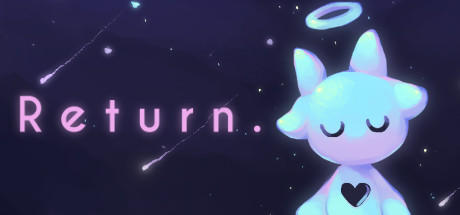
Take the lost soul to its home.
Return. is a indie, casual and action game
developed by
and published by PsychoFlux Entertainment.
Released on August 03rd 2018 is available only on Windows.
It has received 957 reviews of which 867 were positive and 90 were negative resulting in a rating of 8.6 out of 10. 😎
The game is currently priced at 1.09€ on Steam.
The Steam community has classified Return. into these genres:
Media & Screenshots
Get an in-depth look at Return. through various videos and screenshots.


System requirements
These are the minimum specifications needed to play the game. For the best experience, we recommend that you verify them.
Windows
- OS *: Windows XP or higher
- Processor: Intel Pentium 4 Series
- Memory: 1 GB RAM
- Graphics: CPU-integrated or on-board graphics
- DirectX: Version 9.0
- Storage: 30 MB available space
- Sound Card: DirectX-compatible sound card
Steam Price & Best Deals
User reviews & Ratings
Explore reviews from Steam users sharing their experiences and what they love about the game.
Cute and short platforming game, with some strange visuals and trippy music. The way you jump is a bit finicky, but that's part of the challenge. I guess you could technically beat it in under 5 minutes, but I was stuck on a certain jump for probably 20 minutes. Also, you can play it for free!
Return. is a small but memorable 2D platforming experience built around an unusually straightforward objective: take a lost soul back home. Developed by Breadmeat and published by PsychoFlux Entertainment, it embraces the philosophy that a game does not need enormous environments, complicated progression systems, or hours of exposition to establish an identity. Instead, it combines pixel-art presentation, side-scrolling platforming, an atmospheric soundtrack, and a gradually demanding journey into a compact adventure that feels more emotionally suggestive than its simple premise initially implies. The gameplay revolves primarily around navigating increasingly dangerous environments while maintaining steady progress toward the soul's destination. Movement and timing form the foundation of the experience, and the mechanics are deliberately easy to understand. The difficulty comes from applying those fundamentals successfully when obstacles become more demanding. Precise jumps, careful positioning, and learning from failed attempts become increasingly important. This creates an effective contrast between the seemingly gentle premise and the harsher reality of the journey. Players expecting an entirely relaxed casual platformer may therefore be surprised by the amount of patience required. Difficulty is arguably both one of its strengths and its most potentially frustrating qualities. Challenging sections make successful progress feel meaningful because reaching the next area often represents genuine improvement rather than simply moving through scenery. Repeated failures, however, can interrupt the emotional atmosphere when a particular obstacle demands numerous attempts. The game works best for players who appreciate trial-and-error platforming and are willing to treat mistakes as part of learning the environment. Those seeking an effortless narrative experience may find certain sequences more demanding than expected. Its visual design makes excellent use of pixel graphics without relying entirely on nostalgia. The environments possess a restrained appearance that complements the mysterious nature of the journey, while the cute qualities of the character design contrast with darker atmospheric and psychological elements. That mixture gives the adventure an unusual personality. It can appear charming at one moment and lonely or unsettling at another. The presentation is not technically extravagant, but the artistic consistency allows its small environments to carry considerably more emotional weight. Sound and music are equally important to the overall presentation. Music credited to Chris Zabriskie strengthens the reflective tone and helps compensate for the intentionally limited amount of conventional storytelling. Rather than constantly explaining what the player should feel, the game allows its soundtrack, environments, and movement through the world to establish the mood. This understated approach works particularly well because the central idea of guiding a lost soul home naturally invites interpretations involving isolation, mortality, belonging, and closure without forcing a single elaborate explanation upon the player. The minimal narrative is consequently one of the more interesting aspects of the experience. There is enough context to establish a purpose, but not so much information that every detail becomes explicit. The journey itself becomes the storytelling mechanism. Moving forward means bringing the soul closer to where it belongs, giving otherwise conventional platforming obstacles some emotional significance. The concept is simple, yet it creates a surprisingly effective connection between gameplay and theme. Instead of completing stages merely because they exist, there is always a recognizable destination motivating the player's progress. Its short length suits this design. Stretching the same concept across a much larger campaign could easily have weakened its impact through repetition. The compact structure allows the experience to establish its mechanics, increase the challenge, explore its atmosphere, and reach its conclusion without unnecessary padding. The disadvantage is naturally limited mechanical depth and replay value. Players looking for extensive exploration, customization, elaborate combat systems, collectibles, or dozens of hours of content will not find those priorities here. This is fundamentally a focused experience rather than a large platforming adventure. Steam Deck compatibility requires more qualification. The Steam data for this specific app lists Windows as its supported platform and does not provide an official Steam Deck Verified or Playable rating. Therefore, it should be considered officially unrated for Steam Deck rather than assumed to have guaranteed compatibility. Given its lightweight 2D nature, running it through Proton may be possible, but this should be treated as unofficial compatibility, and individual results may vary. Players purchasing or installing specifically for handheld use should be prepared for potential configuration or compatibility issues. The experience ultimately succeeds because its different elements support the same central idea. Pixel graphics provide simplicity and character, the music establishes melancholy and mystery, difficult platforming gives the journey resistance, and the minimal story provides just enough motivation to make reaching the destination matter. Its limitations are largely consequences of its intentionally narrow scope rather than signs of an unfinished concept. The mechanics could have been deeper and the narrative more developed, but adding too many systems might also have undermined the quiet simplicity that gives the project its personality. For players who enjoy short atmospheric indie games, retro-inspired platforming, understated storytelling, and challenging obstacle navigation, this is an easy experience to appreciate. It delivers a focused journey that understands its boundaries and avoids bloating a modest concept into something unnecessarily complicated. Its combination of charming pixel art and darker emotional undertones gives it a distinctive character, while the platforming provides enough resistance to keep the trip from becoming passive. It is not particularly expansive, but within its limited scale it manages to turn the simple act of helping a lost soul find its way home into a surprisingly meaningful little adventure. Rating: 8/10
Similar games
View all


Pink Heaven
A certain office lady is back!!


Nice Jumper
Ready to test your reaction?
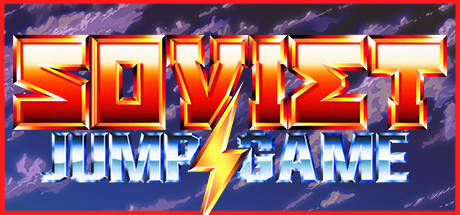
Soviet Jump Game
Snag powerups, collect coins, and battle against 49 other comrades in this 2D sidescrolling free-for-all. Together, we are one--but will you be the one who is held above all others?
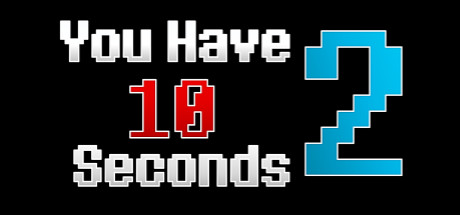
You Have 10 Seconds 2
You Have 10 Seconds 2 is the sequel to the popular Free to Play game "You Have 10 Seconds". You have 10 seconds to get from the start of each level to the end before time runs out and without dying.

Super Crate Box
Vlambeer's SUPER CRATE BOX is coming to bring back the glory of the golden arcade age, when all that really mattered was getting on that high score list. Grab your baseball cap and loosen your pants, it's time to fight endless hordes of enemies and collect every weapon crate you can.
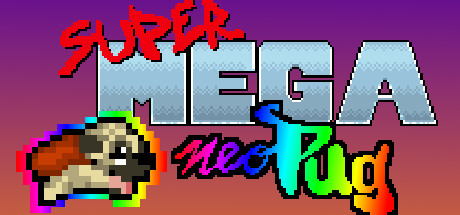
Super Mega Neo Pug
Turbo Pug is back! and this time, he's airborne! Fly through deserts, green fields and more stunning environments. Dodge an onslaught of enemies and go head to head with giant bosses! Unlock new costumes for Turbo Pug and new creatures to play as. Please try not to squish your pug!
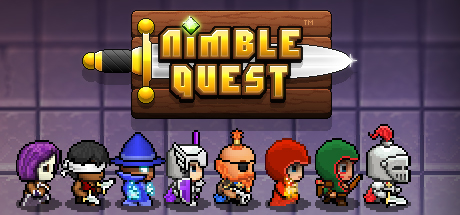
Nimble Quest
Nimble Quest! Lead a conga line of heroes to glory against hordes of enemies across an endless number of stages. How many enemies can you defeat? Steer your unstoppable (seriously, you can’t stop) party as they cut a path of destruction through levels filled with different enemies and power-ups.

Surfingers
Surf as far as you can. Through the oceans, caves, snowy hills and deserts full of sand.
Frequently Asked Questions
Return. is currently priced at 1.09€ on Steam.
No, Return. is currently not on sale. You can purchase it for 1.09€ on Steam.
Yes, Return. received 867 positive votes out of a total of 957 achieving a rating of 8.55.
😎
Return. was published by PsychoFlux Entertainment.
Yes, Return. is playable and fully supported on Windows.
No, Return. is not playable on MacOS.
No, Return. is not playable on Linux.
This information about Return. is not available yet.
This information about Return. is not available yet.
No, Return. does not support VR.
Return. is a single-player game.
No, Return. does not currently offer any DLC.
No, Return. does not support mods via Steam Workshop.
No, Return. does not support Steam Remote Play.
Yes, Return. is enabled for Steam Family Sharing. This means you can share the game with authorized users from your Steam Library, allowing them to play it on their own accounts. For more details on how the feature works, you can read the original Steam Family Sharing announcement or visit the Steam Family Sharing user guide and FAQ page.
You can find solutions or submit a support ticket by visiting the Steam Support page for Return..
Data sources
The information presented on this page is sourced from reliable APIs to ensure accuracy and relevance. We utilize the Steam API to gather data on game details, including titles, descriptions, prices, and user reviews. This allows us to provide you with the most up-to-date information directly from the Steam platform.
Additionally, we incorporate data from the SteamSpy API, which offers insights into game sales and player statistics. This helps us present a comprehensive view of each game's popularity and performance within the gaming community.
Last Updates| Steam data | 25 September 2026 10:12 UTC |
|---|---|
| SteamSpy data | 23 October 2026 04:37 UTC |
| Steam price | 26 October 2026 19:22 UTC |
| Steam reviews | 18 October 2026 17:57 UTC |
If you'd like to dive deeper into the details about Return., we invite you to check out a few dedicated websites that offer extensive information and insights. These platforms provide valuable data, analysis, and user-generated reports to enhance your understanding of the game and its performance.
- SteamDB - A comprehensive database of everything on Steam about Return.
- SteamCharts - Analysis of Return. concurrent players on Steam
- ProtonDB - Crowdsourced reports on Linux and Steam Deck Return. compatibility
Game modes
Features
Online players
0
Publisher
PsychoFlux Entertainment
Release
03 Aug 2018
Platforms