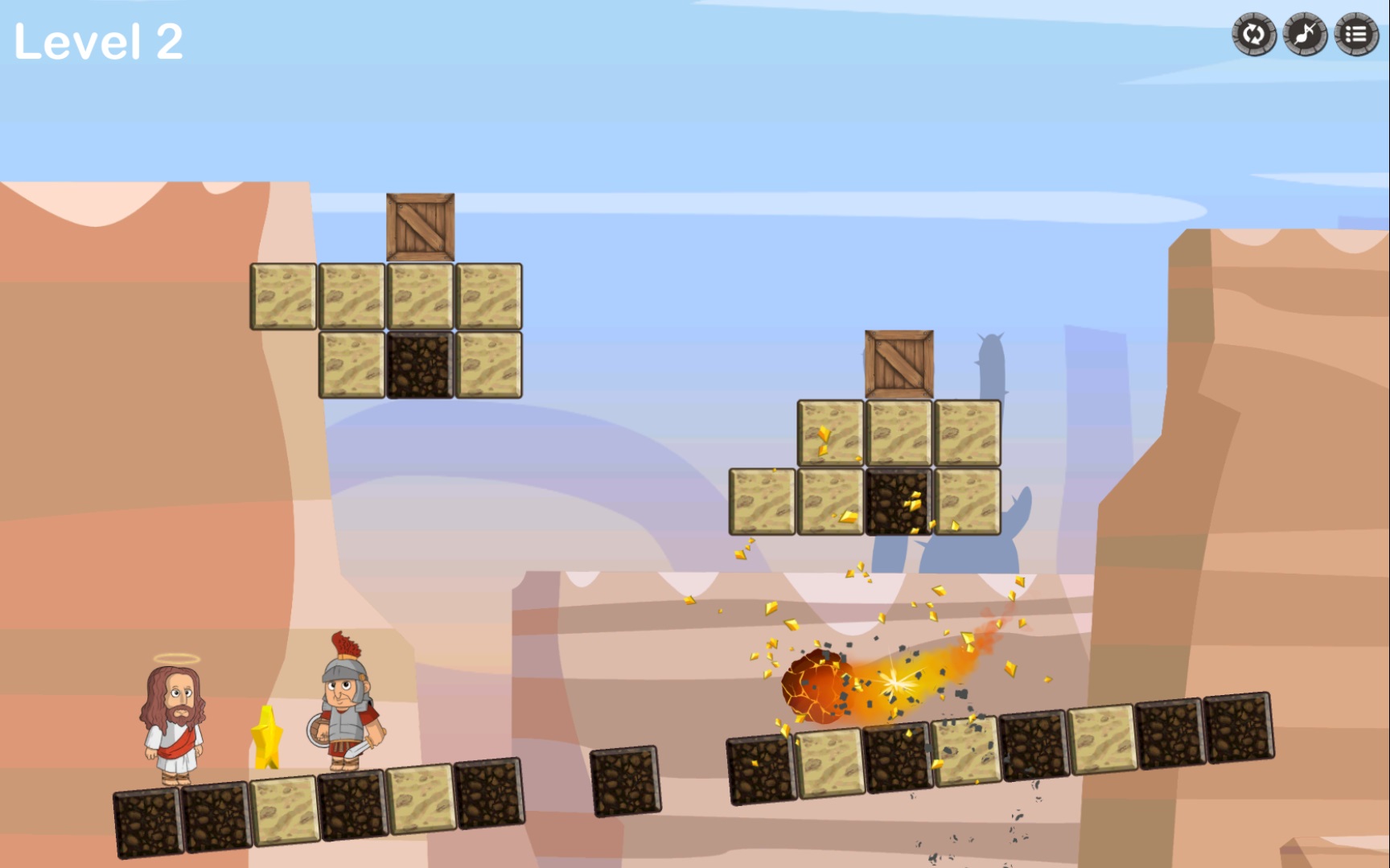
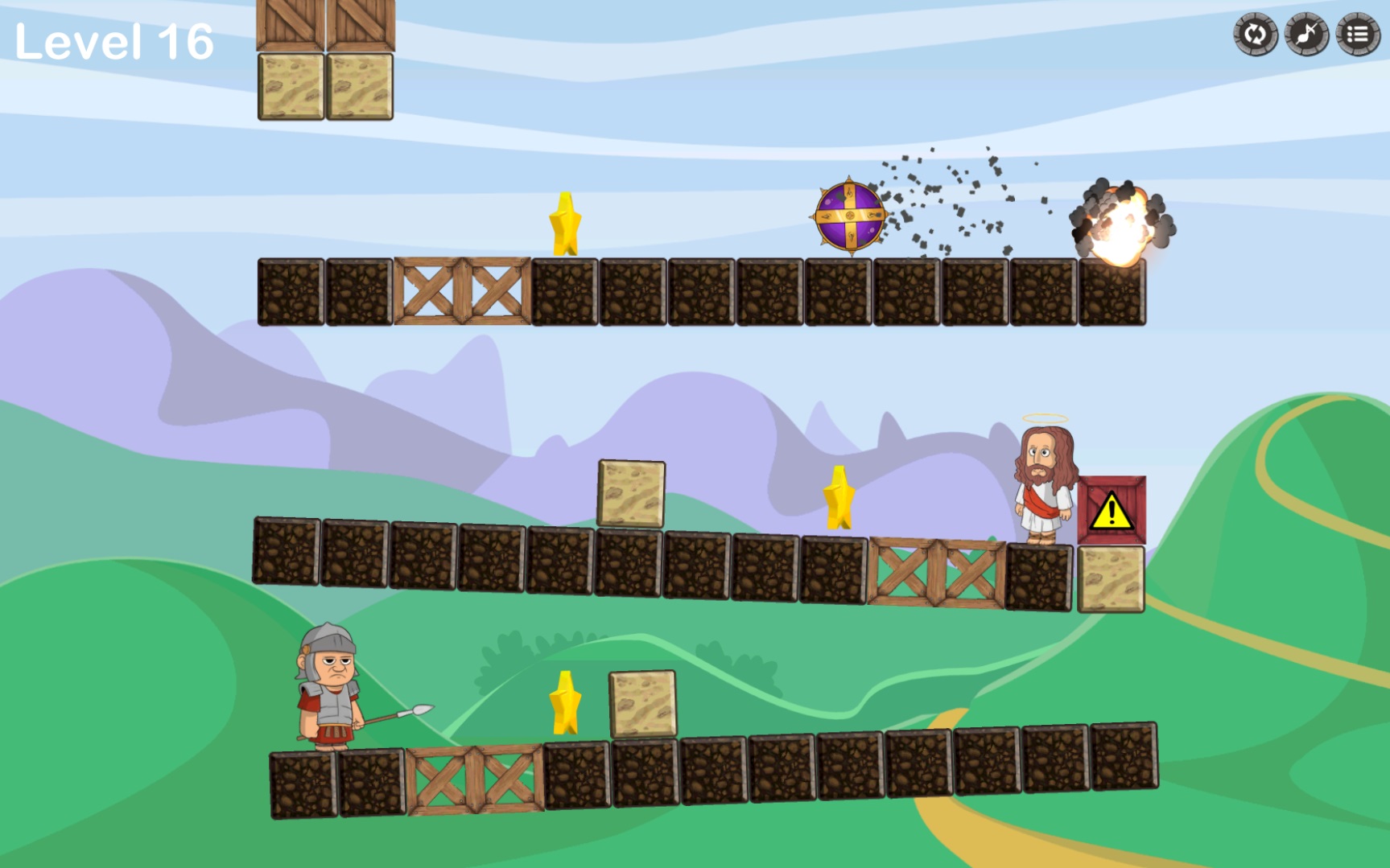
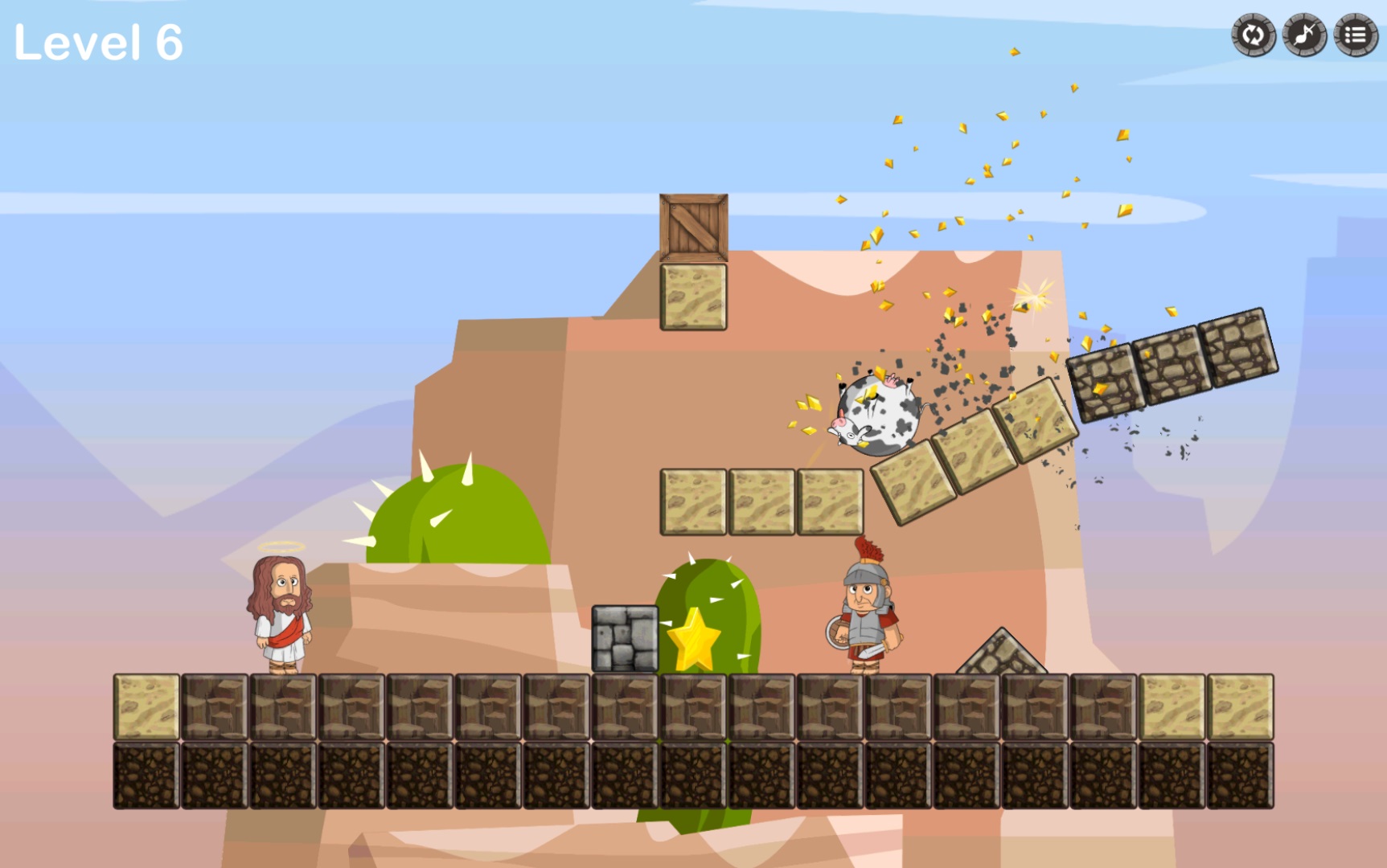
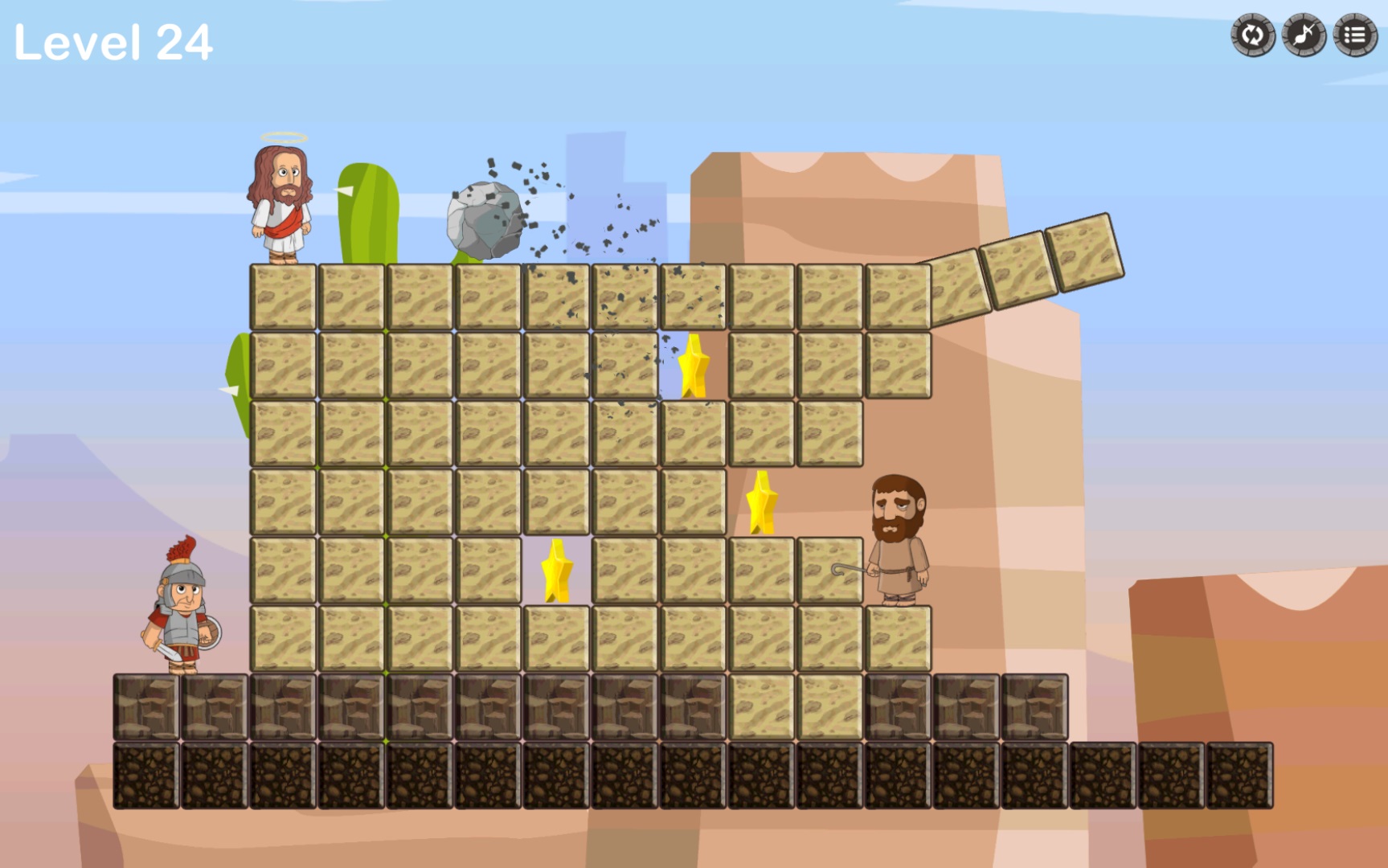
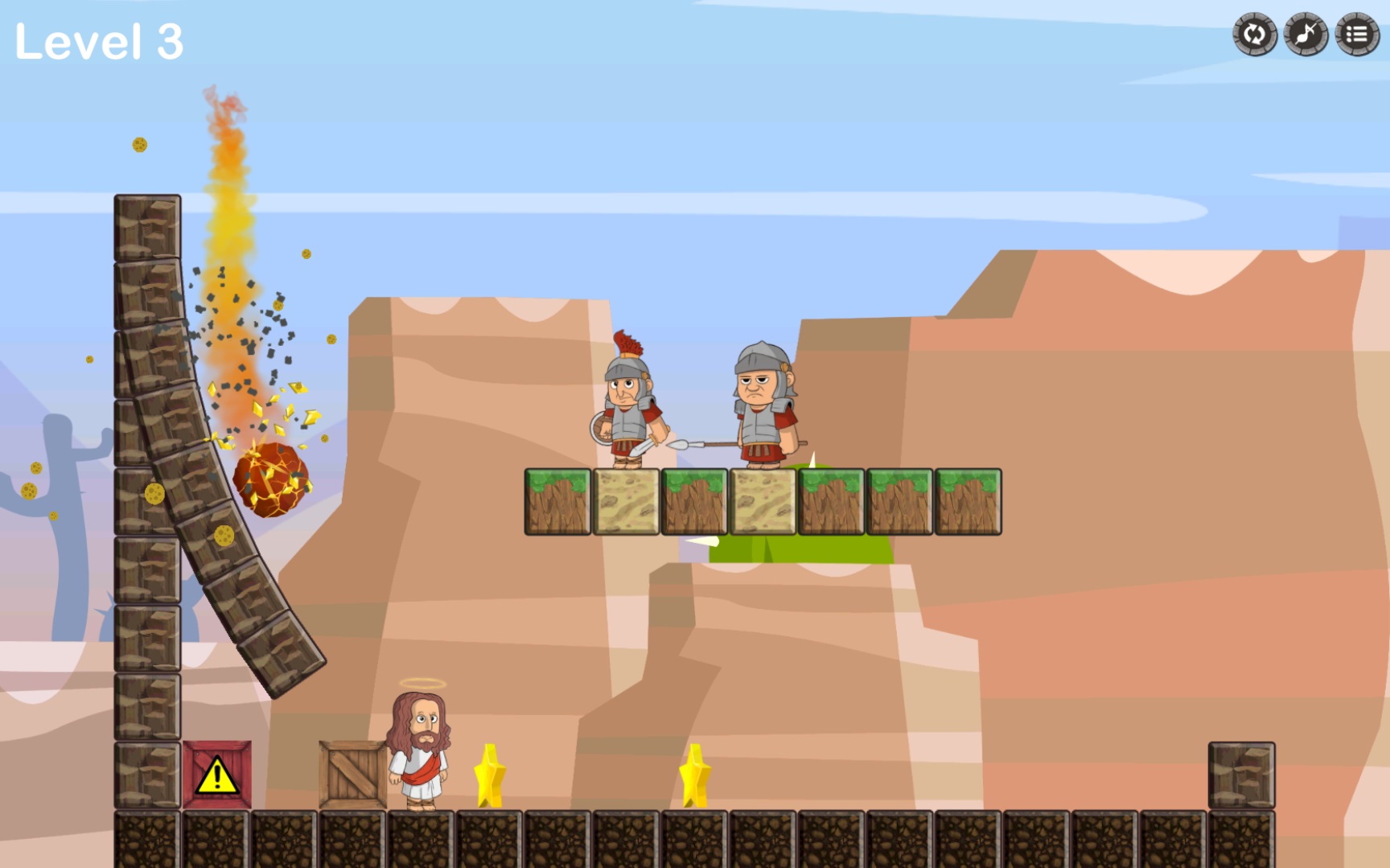
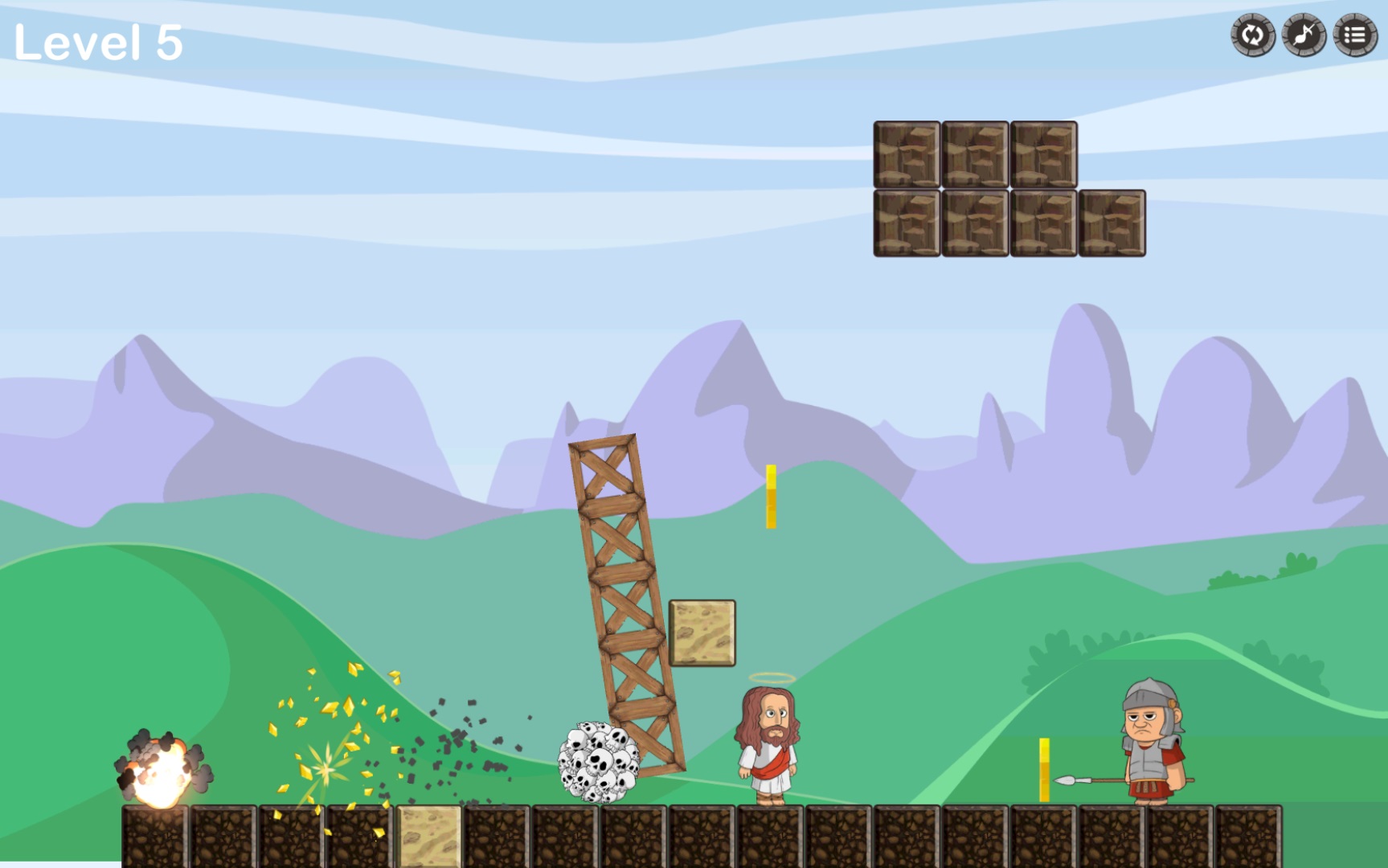
Save Jesus is one of those indie releases that immediately signals its tone through its title alone, blending irreverent humor with straightforward physics-based puzzle design. Developed by Almighty Games and published by My Way Games, it takes a deliberately absurd premise and builds an entire gameplay loop around it. Rather than attempting historical authenticity or theological storytelling, the game embraces parody, constructing a cartoonish alternate scenario in which you must prevent a series of deadly contraptions and Roman soldiers from eliminating Jesus before his destined time. The setup is intentionally ridiculous, and the developers lean fully into that tone, presenting the narrative through tongue-in-cheek dialogue and exaggerated scenarios that frame the experience as satire rather than serious commentary. At its core, Save Jesus is a physics puzzle game that challenges players to manipulate the environment in order to achieve specific outcomes. Each level presents a compact arena filled with platforms, obstacles, soldiers, and environmental hazards. The player’s primary tool is the ability to release or redirect rolling objects—often stone spheres or other weighted items—that obey gravity and momentum. The objective is typically to eliminate enemies or remove threats without harming Jesus or triggering a failure state. Success hinges on understanding angles, timing, and how different surfaces influence movement. While the mechanics are easy to grasp within minutes, mastering them requires experimentation and careful observation of how objects behave once set in motion. The level design gradually introduces more complexity as the game progresses. Early stages function almost like tutorials, guiding players toward simple cause-and-effect solutions. Later levels layer in additional obstacles such as moving platforms, tighter corridors, or multiple hazards that require sequencing actions correctly. There is a subtle satisfaction in watching a carefully planned chain reaction unfold—seeing a rolling stone ricochet off surfaces and knock down enemies exactly as intended provides a small but consistent reward loop. The structure encourages trial and error, and while some solutions can be deduced logically, others demand repeated attempts to fine-tune timing and positioning. Visually, the game adopts a simple, cartoon aesthetic that matches its comedic tone. Character models and environments are stylized rather than detailed, favoring clarity and readability over visual complexity. The art style ensures that important interactive elements are easy to identify at a glance, which is essential for a physics-driven puzzle experience. Animations are exaggerated for comedic effect, particularly when enemies are dispatched in slapstick fashion. The presentation may not rival larger-budget titles, but its consistency and clarity work in its favor, supporting the gameplay without unnecessary distraction. The sound design reinforces the lighthearted atmosphere. Sound effects are punchy and intentionally over-the-top, accentuating impacts and environmental interactions. Occasional voice lines or narrative interjections add personality to the experience, contributing to the parody framing. The audio elements do not aim for subtlety; instead, they enhance the game’s comedic energy, making each successful puzzle resolution feel more dynamic. While the soundtrack itself is relatively understated, it serves as a functional backdrop that keeps the pacing lively without overwhelming the player. One of the more divisive aspects of Save Jesus is its thematic framing. By centering its premise around a religious figure in a humorous, physics-based context, the game inevitably walks a fine line. For some players, the irreverence adds novelty and distinguishes the game from the crowded puzzle genre. For others, the concept may feel uncomfortable or off-putting. Importantly, the tone remains firmly in the realm of parody, avoiding direct commentary or theological debate. The focus remains on gameplay and absurd scenario-building rather than satire with a sharp edge, but audience reactions will naturally vary depending on personal perspective. In terms of longevity, Save Jesus is structured as a relatively compact experience. With dozens of levels and optional objectives such as collecting stars or completing stages with optimized solutions, it offers a modest but respectable amount of content. The replay value comes primarily from refining strategies and achieving higher ratings rather than discovering entirely new mechanics late in the game. Players who enjoy quick, contained puzzle challenges will likely appreciate its focused design, whereas those seeking deep systemic complexity or evolving mechanics may find it more repetitive over extended sessions. Ultimately, Save Jesus stands as a quirky example of how indie developers can combine simple mechanics with bold thematic choices to create something memorable. Its physics puzzles are accessible yet occasionally demanding, its presentation aligns cleanly with its comedic tone, and its premise ensures that it will not be easily forgotten. While it may not push the boundaries of the genre in terms of innovation, it succeeds in delivering a consistent and entertaining puzzle experience that knows exactly what it is and never pretends to be anything more. Rating: 8/10
Expand the review