Space Run Galaxy on Steam - User reviews, Price & Information

Quick menu

Space Run Galaxy is the sequel to Space Run, the game from one-man studio Passtech, which seduced hundreds of thousands of players with its dynamic and original gameplay. By twisting the tower-defense game style, Space Run offered an addictive real-time spaceship construction strategy experience.

Space Run Galaxy is a strategy, indie and tower defense game developed by Passtech Games and published by Focus Entertainment.
Released on June 17th 2016 is available only on Windows in 5 languages: English, French, German, Spanish - Spain and Russian.

It has received 997 reviews of which 638 were positive and 359 were negative resulting in a rating of 6.2 out of 10. 😐

The game is currently priced at 9.99€ on Steam, but you can find it for 0.79€ on Eneba.


The Steam community has classified Space Run Galaxy into these genres:

Media & Screenshots

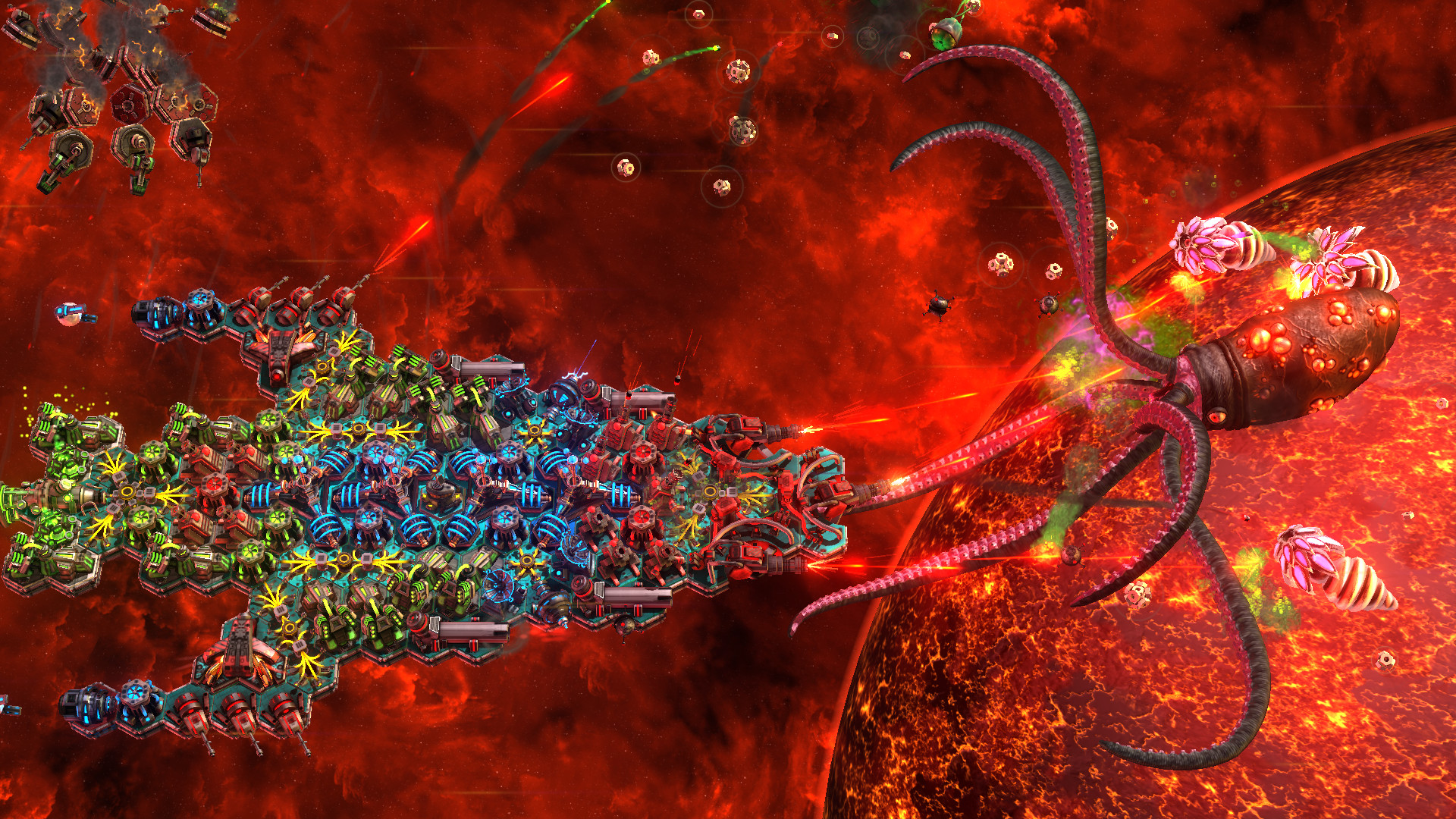
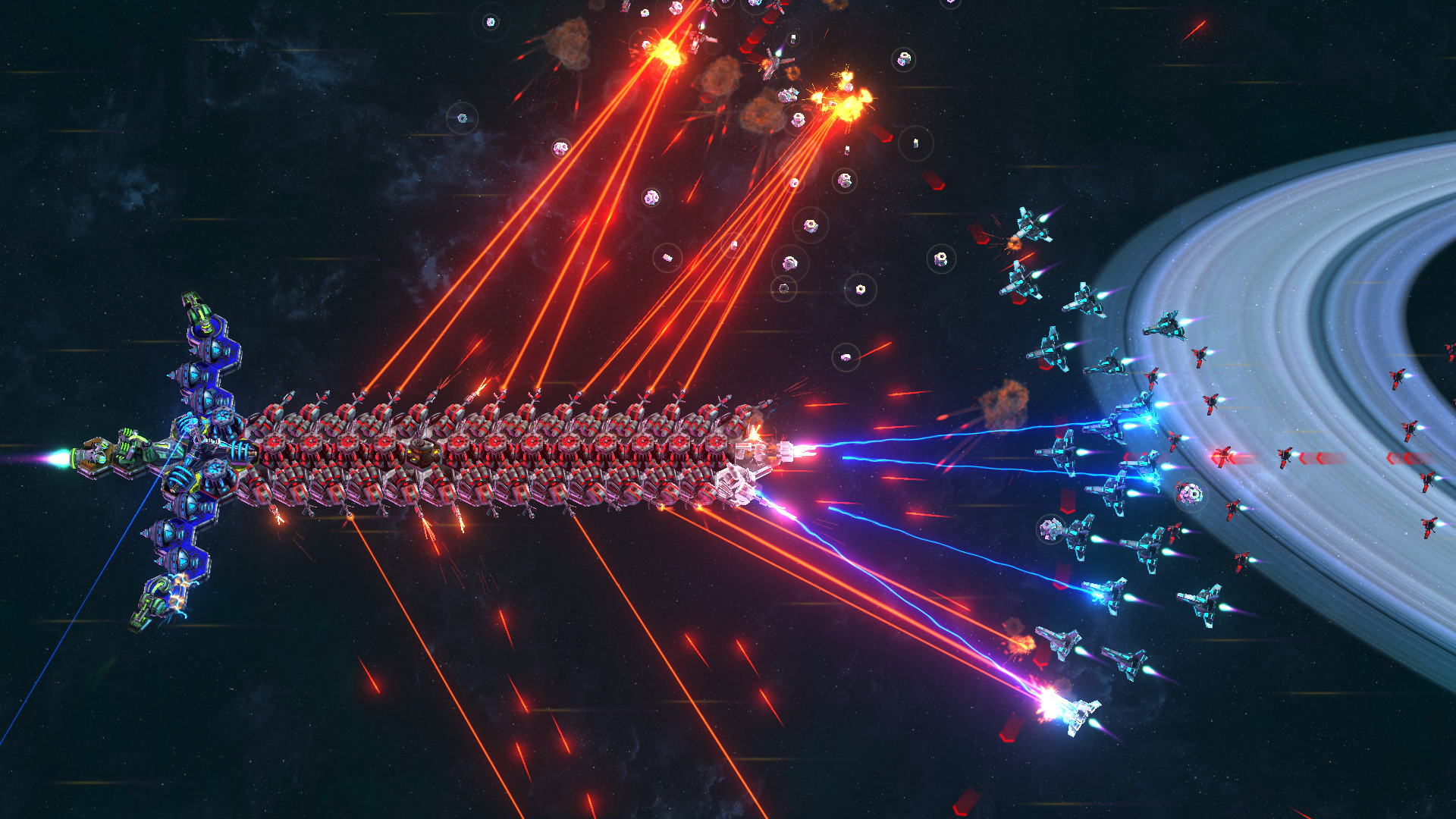
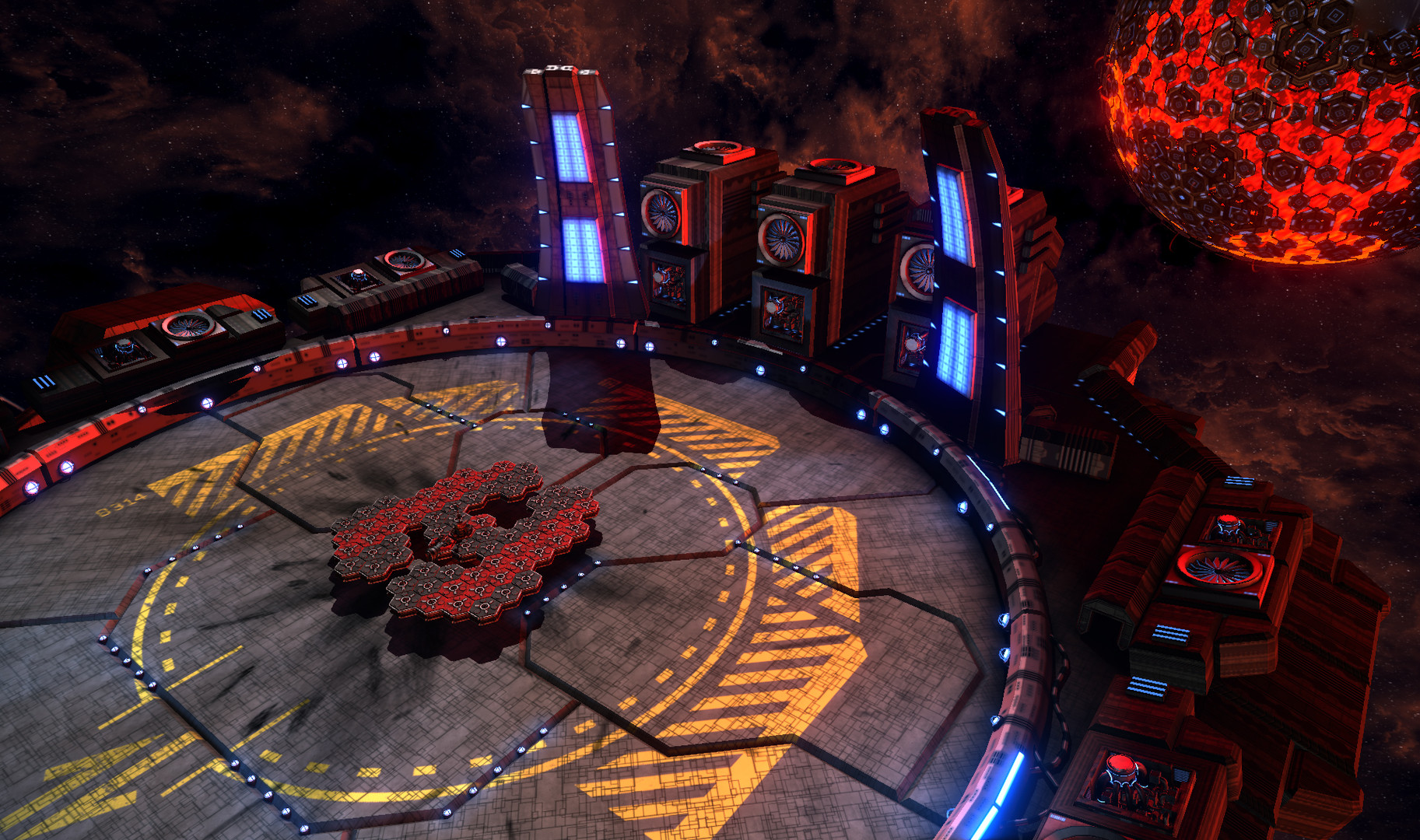
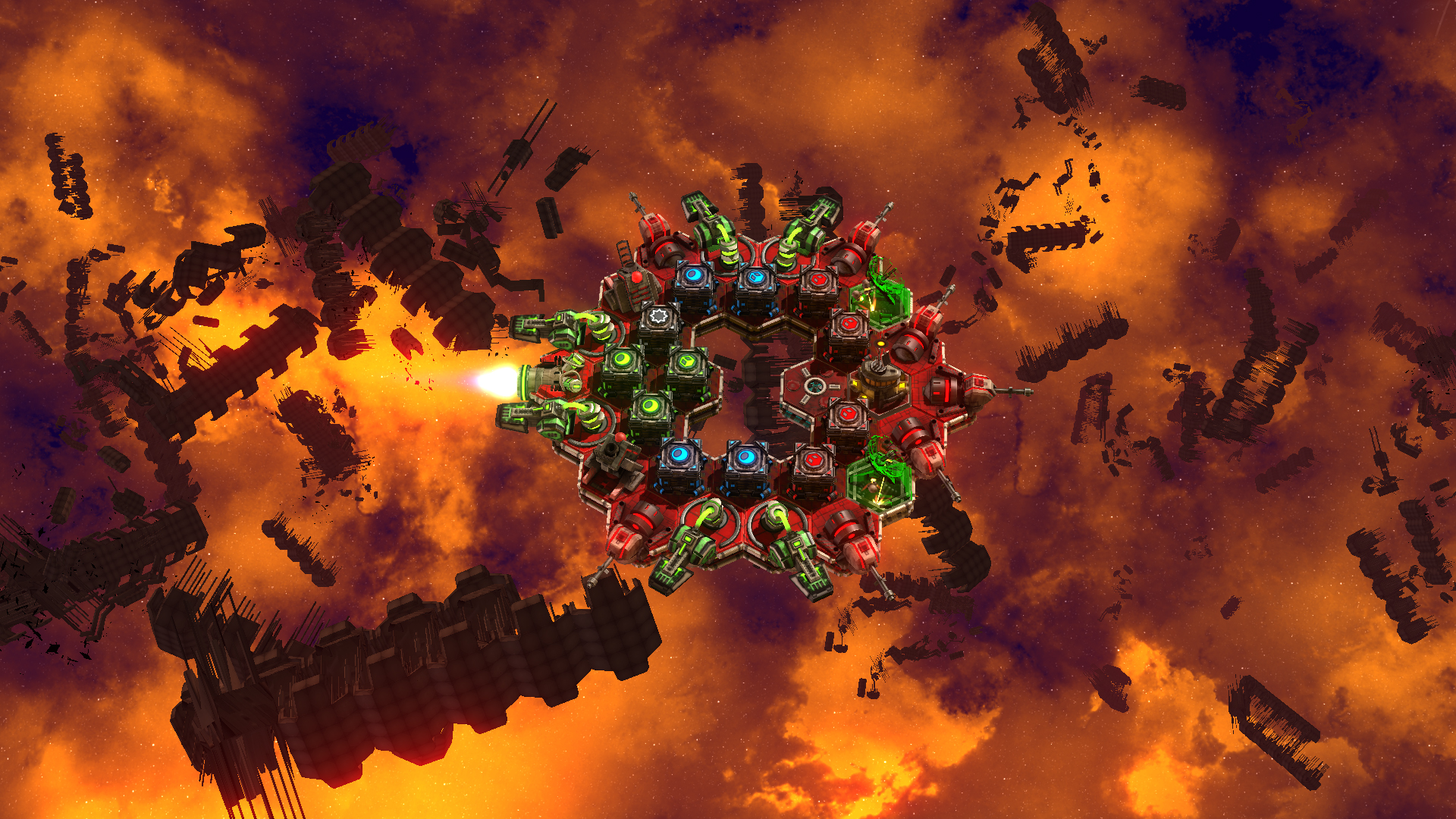
Get an in-depth look at Space Run Galaxy through various videos and screenshots.
System requirements

These are the minimum specifications needed to play the game. For the best experience, we recommend that you verify them.

Windows
  • OS *: Windows Vista, 7, 8.1, 10
  • Processor: AMD/Intel Dual core 2.4 GHz
  • Memory: 3 GB RAM
  • Graphics: 1 GB, OpenGL 3.3 Compatible NVIDIA Geforce 9800 GT/AMD Radeon HD 3870/Intel Iris 5100
  • Storage: 3 GB available space

User reviews & Ratings

Explore reviews from Steam users sharing their experiences and what they love about the game.

Sept. 2025
Space Run Galaxy, developed by Passtech Games and published by Focus Entertainment, is a unique blend of tower defense, resource management, and space-trucking, wrapped in a high-speed, hex-based strategy experience. It expands significantly on the foundation set by its predecessor, Space Run, and aims to deliver more content, more challenge, and more customization for players who enjoy planning under pressure. The core of the game still revolves around constructing and managing modular spacecraft mid-mission, but this time, the world is larger, the stakes are higher, and the systems are deeper. At its heart, the game tasks you with building and piloting modular space freighters across a galaxy plagued with pirates, meteor storms, space anomalies, and aggressive rival corporations. You’re not a space warrior, but a cargo hauler, and your success hinges on being efficient, fast, and smart about how you load your ship. Each mission is essentially a delivery run, but with a twist: your ship is built on a hex-grid in real-time, and during each trip, you must add and upgrade modules like turrets, shields, thrusters, and power generators on the fly. The more cargo you haul and the faster you deliver it, the better your rewards. But the more space you dedicate to cargo, the less room you have for defense and propulsion. This constant push and pull is where the tension—and most of the fun—lives. The game introduces a persistent galaxy map, expanding the scope far beyond what the first title offered. There are multiple solar systems, each with numerous zones, vendors, and characters offering missions. The inclusion of a player-driven market and user-generated contracts adds a dynamic layer, letting you choose how and where to earn your reputation. You can take risky contracts for better rewards or stick to safer routes for a more predictable experience. Missions come with various complications, like fragile cargo, dangerous enemies, or narrow delivery windows, which force you to think about each run as a fresh puzzle to solve. What works in one system might fail in another, so planning ahead becomes just as important as reacting quickly. Customization is far more robust than in the original game. You're no longer limited to a single ship design—multiple ship templates are available, and you can expand and tweak them as you progress. Each ship starts as a blank canvas of hexes, and your choice of layout can drastically impact how a run plays out. Do you favor a compact, well-shielded craft for high-risk runs, or a sprawling cargo beast for slow, safe hauls? The flexibility allows for real strategic diversity, and the modular design rewards experimentation. Over time, you unlock new modules, gain access to better blueprints, and can upgrade your arsenal, giving a satisfying sense of progression as the missions grow more demanding. While the visual presentation isn’t groundbreaking, it’s clean, colorful, and full of personality. The art style leans toward the cartoonish, with exaggerated characters and lively environments that match the game’s tongue-in-cheek tone. The UI is generally intuitive, though the sheer number of options and systems means there’s a learning curve, especially when managing multiple ship components in the heat of a run. The sound design complements the chaos well, with satisfying weapon effects and a spacey soundtrack that keeps the adrenaline up without overwhelming the action. Despite these strengths, Space Run Galaxy does have its shortcomings. One of the most commonly cited issues is the difficulty spike in later stages. Early on, the game does a good job of easing players into its systems, but as the galaxy opens up, missions can become punishingly hard. A single misplaced module, a moment of hesitation, or an unlucky asteroid barrage can derail a perfect run, and because missions often take several minutes, failure can feel particularly costly. Adding to this is the fact that missions are tightly timed, and there’s no pause function during active runs. While this creates a thrilling pace, it can also lead to frustration when you need a split second more to make a critical placement. Another potential weakness lies in the game’s repetition. Even with a wide variety of missions, many of them boil down to variations on a theme: get from point A to B with cargo intact, defend against waves, and manage your ship layout under pressure. While the ship customization and escalating difficulty keep things engaging for a while, some players may find that the novelty wears thin after many hours. The user-generated contracts and trading system inject some freshness, but these features feel more like side content than core pillars of the experience. Still, for its price, Space Run Galaxy offers substantial value. The campaign is lengthy, with dozens of missions and side activities, and the depth of its mechanics allows for replayability. There’s a rewarding sense of mastery as you learn to optimize your routes, refine your ship builds, and react to increasingly complex scenarios. For fans of real-time strategy, tower defense, or games that reward quick thinking and adaptability, it offers a satisfying, fast-paced challenge that stands out from the typical genre fare. In the end, Space Run Galaxy delivers on its promise to expand the original concept into something bigger, bolder, and more dynamic. While it may not appeal to everyone—particularly those who prefer slower, more contemplative strategy games—it carves out a unique niche as a fast-paced space hauler that demands sharp thinking and split-second decisions. It’s occasionally overwhelming and sometimes repetitive, but it’s also clever, full of character, and packed with gameplay variety. For players seeking a different kind of tower defense experience with a twist of sci-fi and strategy, it’s a galaxy well worth exploring. Rating: 6/10
Expand the review
Aug. 2025
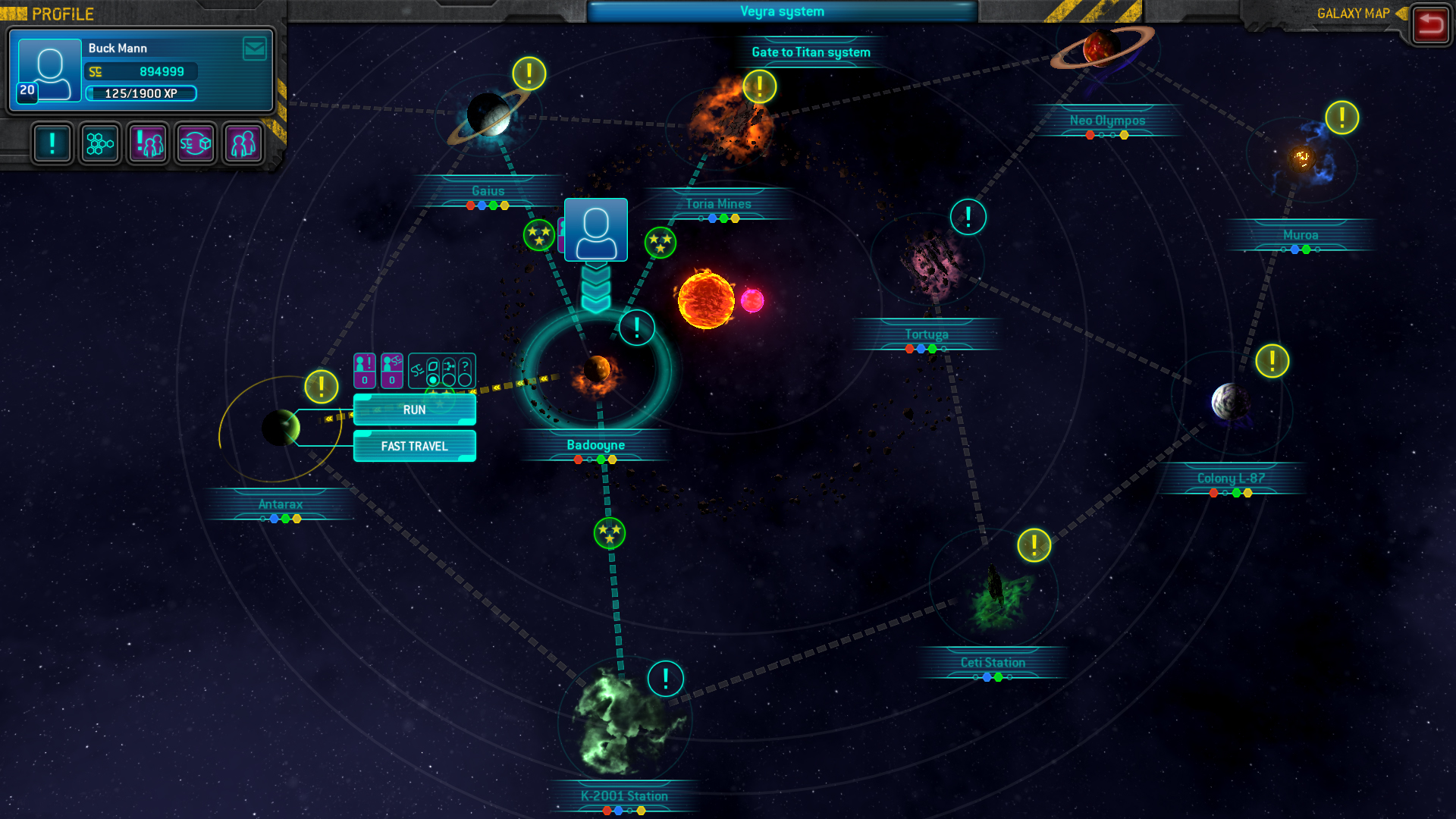
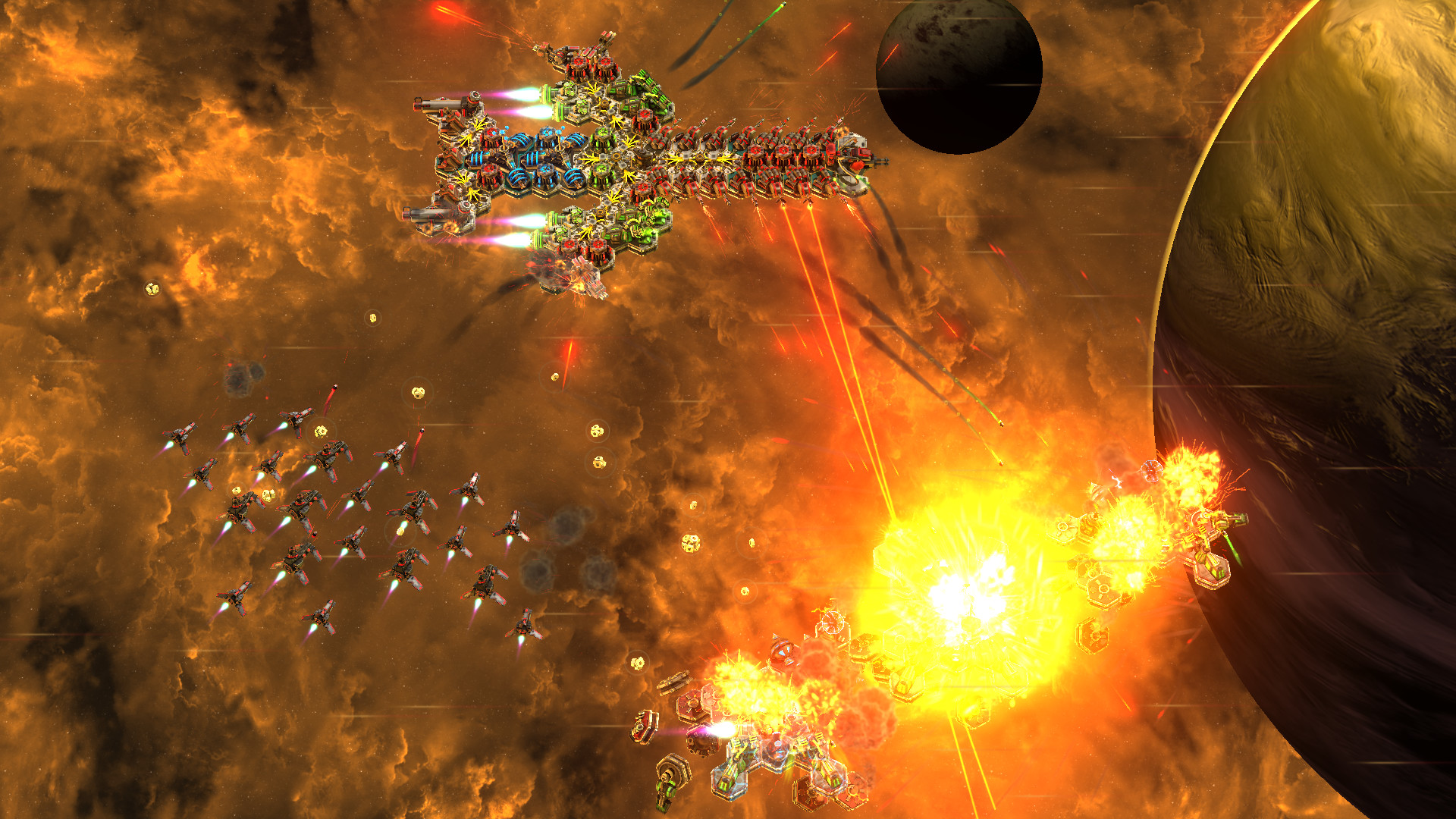
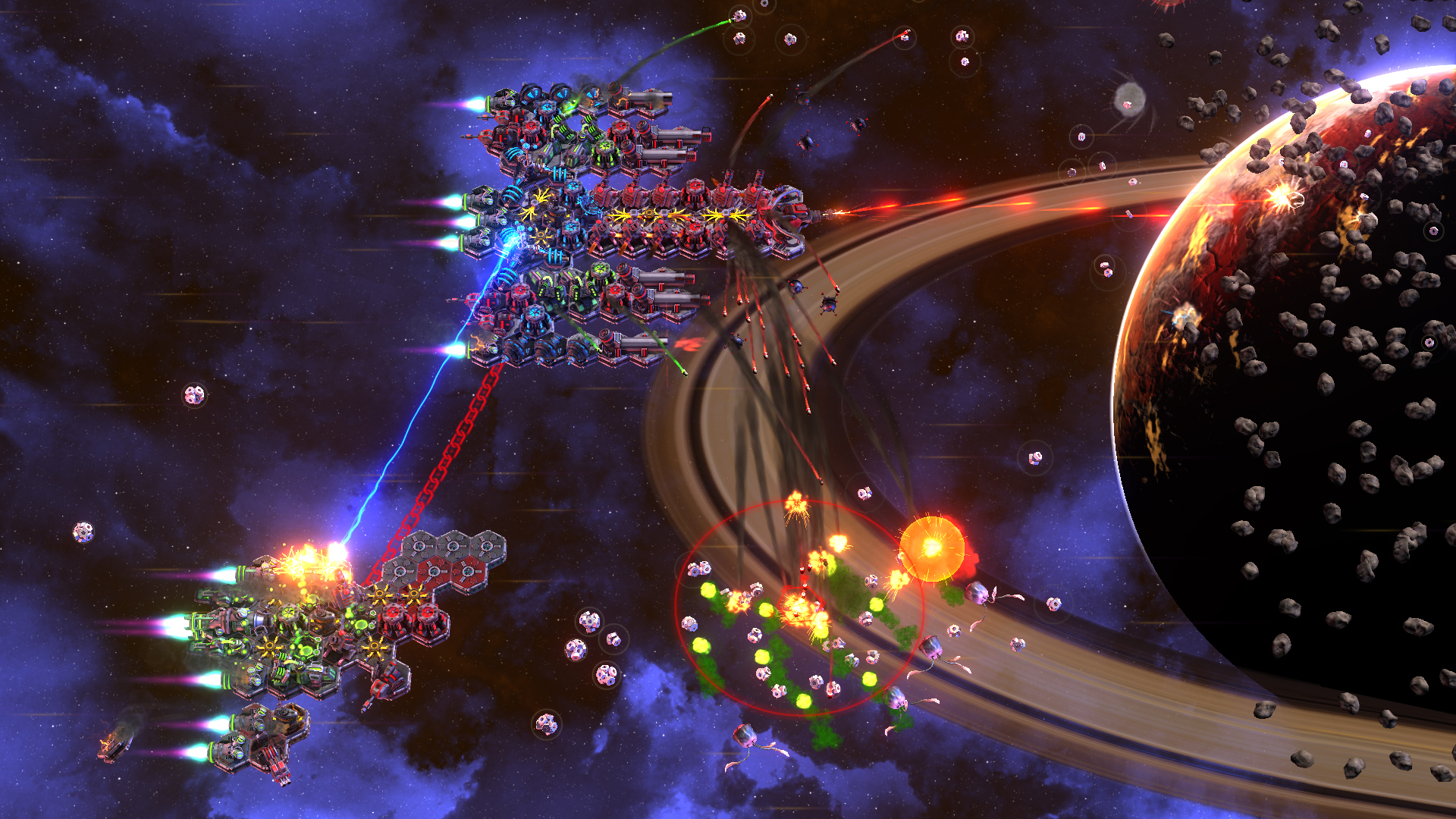
Space Run Galaxy is the sequel to Space Run, a rather unusual game that combines tower defense, fast paced combat and inventory management. The unique gimmick in Space Run Galaxy is that it's not the enemies that move along a path, it's you. You are a Space Runner, essentially a delivery guy in space. But space is a dangerous place full of aliens, asteroids and pirates, so you have to defend yourself against the never ending assault until you reach your goal. The gameplay centes mainly around the deliveries. Your spaceship flies along a linear path automatically until it reaches the next space station. As you move along the path, enemies will spawn in one of 8 different locations and start attacking you or, in the case of asteroids, will simply ram you if you do not shoot them down first. Your ship can build various weapons and other useful modules on its surface to defend yourself. The ship is made up of multiple hexagon tiles. Each module covers one or more of these tiles and has to be fit in a specific way so that it can work. Turrets nmeed to be at the edge of your ship and point in the direction they fire, shields and repair modules have to be placed next to other modules and thrusters have to be placed behind the ship. Modules each have their own HP and can be shot down by enemies but you can easily replace them. Many enemies will also be made of the same hexagon tiles with multiple modules on their ship that you can shoot down. Destroying enemies gives the player hexanuts which can be used to buy more modules. If you are short on money you can also turn off your thrusters for a moment so they can produce a small amount of hexanuts for you. This however is risky because your clients not only want their stuff, they want it fast. Each mission has a time requirement and if you want to fulfill it you need extra thrusters to get more speed. More speed can be however be risky since you now move faster along the path which also attracts enemy waves faster. It's a clever risk vs reward system, I always love these kind of things. The game features three types of modules that are color coded for convenience. Red is for offense, blue is for defense and green is for utility. These modules can be upgraded with their respective colored booster. Boosters are special modules that don't do anything on their own and instead boost adjacent modules of the same color. Each module has two upgrade levels that improve their abilities. To make connecting modules easier you can also build connectors, which spread effects across the ship. This allows you to apply a single booster to multiple turrets. Most modules also have active abilities. These require energy to be used but are very useful to have more control over combat. Usually your turrets attack what's closest to them but laser turrets for example have a manual shot as an active ability that deals massive damage, ideal to take down a single harmful module of the enemy. You get energy from your thrusters, they generate energy over time and also act as storage unit for energy which gives you even more reasons to buy more thrusters. One big change compared to Space Run is that the game now features an overoworld map. The game world is divided into multiple space stations that are connected with paths, you can now select freely where you want to move and even can take alternate paths if you don't want the direct route. But these space stations not only act as waypoints, they also feature different kinds of shops. You can buy materials, new ships or craft new modules that you can use for your next missions. You can pay these merchants with credits and materials which you get from missions. But these materials are only aviable on the space station where you obtained them unless you move them somewhere else. And this brings me to Space Run Galaxy's multiplayer economy. The game is hosted on official servers and allows players to generate contracts for other players. You can put up a contract to ship your materials to another station. Players who take on contracts not only get money but also have a chance to get the same materials they just carried. If you have too many materials yourself you can also sell them directly to other players. Or you could just gift them to a friend, this also is possible. This however brings me to a negative point of the game. When the game was still new and the playerbase big, you would see many contracts and a healthy marketplace. Now, many years after the initial launch, there are not many offers open anymore. Most of the players that still play the game have moved on to late game space stations which makes it harder for new players to get money and materials they would need. You can technically just replay the contracts from npcs but these are not as valuable to do in my opinion. This should be considered if you want to buy the game. Another negative aspect is the grind in general. Materials and credits are not rare but it's annoying that very single module you craft gets increasingly more expensive and crafting a module allows you to only place it once per run which means you have to craft many of them. This is of course designed to encourage the player market but its a hindrance now that most of the playerbase is gone. Expect to spend a lot of time in this game if you want to progress at all. And the most annoying aspect of Space Run is still relevant in Galaxy: No pause function during combat. Since you can issue active commands on your modules it would be helpful if you could pause and use multiple at the same time, especially against those bosses with their massive ships that launch an entire barrage of lasers and rockets at you, given you barely any time to react before your modules are gone. Repeating a mission multiple times because you lost a single turret and are now stuck in a cycle of rebuilding and losing modules feels also very bad but this is more of a minor issue since missions last only around 5 to 10 minutes at best. Would be nice however if we could speed up some of the animations. Overall, the game is really fun if you can live with the grind and are willing to put more than just a few hours into it. The difficulty can sometimes feel unfair but there always is a solution to any mission, you just have to find it. My only regret is that we never got a third game in the series and likely never will since the devs moved on to new games.
Expand the review
June 2025
play the old single player game . this ones had weird ideas that are very grindy and unfair spawning. both have suboptimal controls
Expand the review
May 2025
Compared to the first game, Space Run Galaxy is two steps forward one step back. There is a bit more variety and some improved AV elements but I had about as much fun with this game as I did with the first one. The problem is that the fun in the first game was condensed into a tight 10 hours and in this game is thinly spread over 50+ hours. Still, both games offer a great twist on tower defense and are worth checking out.
Expand the review
May 2025
I've decided to play it again after many years seeing a message about server wipe due to some hacker attack. Back then there was no steam reviews, so I'm giving it now - cool game, good sequel. Would be a bit better if it would be a bit less about management of resources between planets, but core gameplay still great. Would love to see 3rd installment in series. And many thanks for developers keeping online feature available after all those years.
Expand the review

Frequently Asked Questions

Space Run Galaxy is currently priced at 9.99€ on Steam.

Space Run Galaxy is currently not on sale. You can purchase it for 9.99€ on Steam.

Space Run Galaxy received 638 positive votes out of a total of 997 achieving a rating of 6.22.
😐

Space Run Galaxy was developed by Passtech Games and published by Focus Entertainment.

Space Run Galaxy is playable and fully supported on Windows.

Space Run Galaxy is not playable on MacOS.

Space Run Galaxy is not playable on Linux.

Space Run Galaxy offers both single-player and multi-player modes.

Space Run Galaxy offers both Co-op and PvP modes.

Space Run Galaxy does not currently offer any DLC.

Space Run Galaxy does not support mods via Steam Workshop.

Space Run Galaxy does not support Steam Remote Play.

Space Run Galaxy is enabled for Steam Family Sharing. This means you can share the game with authorized users from your Steam Library, allowing them to play it on their own accounts. For more details on how the feature works, you can read the original Steam Family Sharing announcement or visit the Steam Family Sharing user guide and FAQ page.

You can find solutions or submit a support ticket by visiting the Steam Support page for Space Run Galaxy.

Data sources

The information presented on this page is sourced from reliable APIs to ensure accuracy and relevance. We utilize the Steam API to gather data on game details, including titles, descriptions, prices, and user reviews. This allows us to provide you with the most up-to-date information directly from the Steam platform.

Additionally, we incorporate data from the SteamSpy API, which offers insights into game sales and player statistics. This helps us present a comprehensive view of each game's popularity and performance within the gaming community.

Last Updates
Steam data 09 March 2026 00:12
SteamSpy data 11 March 2026 08:37
Steam price 15 March 2026 04:46
Steam reviews 14 March 2026 12:06

If you'd like to dive deeper into the details about Space Run Galaxy, we invite you to check out a few dedicated websites that offer extensive information and insights. These platforms provide valuable data, analysis, and user-generated reports to enhance your understanding of the game and its performance.

  • SteamDB - A comprehensive database of everything on Steam about Space Run Galaxy
  • SteamCharts - Analysis of Space Run Galaxy concurrent players on Steam
  • ProtonDB - Crowdsourced reports on Linux and Steam Deck Space Run Galaxy compatibility
Space Run Galaxy
Rating
6.2
638
359
Game modes
Features
Online players
1
Developer
Passtech Games
Publisher
Focus Entertainment
Release 17 Jun 2016
Platforms
Clicking and buying through these links helps us earn a commission to maintain our services.