
Kiosk
Kiosk is a horror cooking game where you prepare orders for late-night customers who visit your cozy, rain-soaked kiosk. The eerie atmosphere clashes with the mounting tension as you serve your mysterious visitors.
Sync your Steam wishlist to find the lowest game prices instantly. No login required, just paste your Steam profile URL!
⚡ Try Wishlist Radar!
Sync your Steam wishlist to find the lowest game prices instantly. No login required!
⚡ Try Wishlist Radar!
Close

Tostchu on Steam
Quick menu
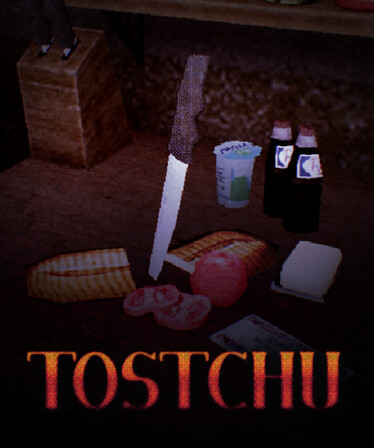
A slow-burn atmospheric horror game about managing a toast shop in a desolate location in Central Anatolia, Turkey. Make toasts for customers, cash in, buy more ingredients, and witness strange events unfolding.
Tostchu is a psychological horror, lore-rich and cooking game
developed by Ravenscape Collective
and published by Mars Bacon LLC.
Released on October 28th 2024 is available on Windows, Steam Deck and Steam Machine
in 2 languages: English and Turkish.
It has received 593 reviews of which 498 were positive and 95 were negative resulting in a rating of 7.9 out of 10. 😊
The game is currently priced at 5.06€ on Steam with a 35% discount.
The Steam community has classified Tostchu into these genres:
Psychological Horror
Lore-Rich
Cooking
Job Simulator
1990's
Immersive Sim
Multiple Endings
Story Rich
Old School
Choices Matter
First-Person
3D
Singleplayer
Mystery
Stylized
Time Management
Resource Management
Thriller
Atmospheric
Simulation
Here is the detailed breakdown of supported languages for Tostchu:
| UI | Subtitle | Audio | |
|---|---|---|---|
| English | |||
| Turkish |
Media & Screenshots
Get an in-depth look at Tostchu through various videos and screenshots.


System requirements
These are the minimum specifications needed to play the game. For the best experience, we recommend that you verify them.
Windows
- OS: Windows 10
- Processor: Intel Core i5-10400F
- Memory: 8 GB RAM
- Graphics: NVIDIA GeForce GTX 1060
- Storage: 500 MB available space
Steam Price & Best Deals
User reviews & Ratings
Explore reviews from Steam users sharing their experiences and what they love about the game.
Tostchu is a distinctive indie horror experience that successfully combines food service management with psychological suspense, creating a game that feels refreshingly different from traditional horror titles. Developed by Ravenscape Collective and published by Mars Bacon LLC, the game transports players to rural Central Anatolia during the 1990s, where they temporarily take over their family's modest roadside toast shop while their father is away. What starts as a seemingly ordinary responsibility slowly transforms into a deeply unsettling journey filled with unexplained incidents, strange visitors, and an ever-present feeling that something is terribly wrong. Instead of rushing into supernatural encounters, the game carefully builds tension through routine, allowing the ordinary to become increasingly disturbing as the narrative unfolds. The management mechanics form the backbone of the gameplay and are far more engaging than they initially appear. Players are responsible for preparing customer orders accurately, handling fresh ingredients, keeping supplies stocked, maintaining cleanliness, and ensuring the business continues to generate enough income to survive each passing day. Every shift requires balancing speed with precision, making the restaurant simulation feel rewarding rather than repetitive. The inclusion of ingredient freshness and inventory management gives the gameplay meaningful depth, encouraging players to think ahead instead of simply reacting to customer requests. These everyday tasks create a comforting rhythm that becomes increasingly effective as the game's darker elements begin disrupting what once felt familiar. Rather than relying on loud jump scares or relentless monster encounters, Tostchu focuses on psychological discomfort and environmental storytelling. The isolated roadside setting naturally creates feelings of loneliness, while conversations with customers, television broadcasts, radio announcements, and subtle visual changes gradually suggest that events beyond the toast shop are becoming increasingly abnormal. This restrained approach allows suspense to build organically, keeping players constantly questioning whether what they are witnessing is real or merely the result of growing paranoia. The horror emerges through uncertainty, rewarding careful observation and attention to detail rather than fast reflexes alone. The mystery develops at a satisfying pace, encouraging players to piece together the larger narrative through clues scattered across each passing day. Visually, the game embraces a nostalgic low-polygon presentation inspired by the original PlayStation era. Instead of chasing photorealism, the retro graphics reinforce the unsettling atmosphere by making the environment feel both familiar and strangely dreamlike. Simple character models, muted environments, and intentionally rough visual details work surprisingly well alongside the minimalist sound design, where long periods of silence are interrupted only by ambient noises or unsettling audio cues. Together, these artistic choices create a lingering sense of dread that remains effective throughout the experience. The game's aesthetic demonstrates that creative direction and atmosphere often matter more than technical complexity when crafting memorable horror. The narrative is another standout feature because it trusts players to uncover its secrets naturally. Rather than delivering lengthy explanations, the story unfolds through interactions, environmental details, and subtle hints woven into everyday life at the toast shop. Each customer may reveal another small piece of the larger mystery, while random events and multiple possible endings encourage replayability by ensuring that every playthrough can reveal something different. This structure rewards players who enjoy exploring every conversation and paying attention to seemingly insignificant details, making the experience feel more immersive and personal than a straightforward linear horror story. Although its slow pacing and repetitive work routines may not appeal to players seeking nonstop action, those elements are essential to the game's identity. The repetitive nature of running the business reinforces the sense of realism, making the gradual descent into psychological horror considerably more effective. The limited environment also serves the narrative well, emphasizing isolation and creating an intimate setting where every unusual occurrence feels impossible to ignore. Players willing to embrace the deliberate progression will find that the game's strongest moments come from its ability to transform ordinary daily responsibilities into sources of anxiety. Overall, Tostchu succeeds because it confidently blends management simulation with atmospheric horror instead of treating one genre as secondary to the other. Its thoughtful pacing, immersive setting, engaging restaurant mechanics, and carefully constructed psychological tension combine to create an experience that feels original within the indie horror landscape. Ravenscape Collective demonstrates a strong understanding of suspense by allowing fear to emerge gradually through routine and uncertainty, while Mars Bacon LLC delivers a polished release that stands apart from more conventional horror games. For players who appreciate slow-burning mysteries, environmental storytelling, and immersive simulation mechanics, Tostchu offers an experience that remains compelling long after its final moments. Rating: 8/10
I think your enjoyment of tostchu will depend on whether or not you are affected by the type of horror it goes for. It's a lot of small things that build up in the back of your head. It's looking behind you even though you know there's nothing there because, even if you won't admit it, might not even realize it, you are terrified and alone. If that works for you, you might have a good time. if it doesn't, then you'll find this game to be a nothingtost, having you waiting around for nothing O'clock. The payoffs were underwelming and left me wanting more. it didn't ruin the game, but ending on a wet fart is never a good thing. The gameplay itself is alright but very barebones. I found myself treating it like a real job, keeping the place clean, doing my mise-en-place before starting my shift, throwing out unused ingredients at the end of the day. I was getting in a little rythm by the time the game ended. however, you will have done everything there is to do by the end of the first day. There are only 4 recipes, you can give a customer a full sandwich with a single slice of rotten cheese and salami and they won't say anything. It could use a few more ingredients, recipes and interactions and it could be enjoyable longer. I recommend giving it a shot if it seems interesting to you. I don't regret my time with it but it needed more. 6/10
Similar games
View all
Frequently Asked Questions
Tostchu is currently priced at 5.06€ on Steam.
Yes, Tostchu is currently available at a 35% discount. You can purchase it for 5.06€ on Steam.
Yes, Tostchu received 498 positive votes out of a total of 593 achieving a rating of 7.90.
😊
Tostchu was developed by Ravenscape Collective and published by Mars Bacon LLC.
Yes, Tostchu is playable and fully supported on Windows.
No, Tostchu is not playable on MacOS.
No, Tostchu is not playable on Linux.
Yes, Tostchu is playable on Steam Deck, though it might require a few minor tweaks. Make sure to check the Steam store page and community feedback on ProtonDB for exact compatibility details.
Yes, Tostchu is playable on Steam Machine, though it might require a few minor tweaks. Make sure to check the Steam store page and community feedback on ProtonDB for exact compatibility details.
No, Tostchu does not support VR.
Tostchu is a single-player game.
No, Tostchu does not currently offer any DLC.
No, Tostchu does not support mods via Steam Workshop.
No, Tostchu does not support Steam Remote Play.
Yes, Tostchu is enabled for Steam Family Sharing. This means you can share the game with authorized users from your Steam Library, allowing them to play it on their own accounts. For more details on how the feature works, you can read the original Steam Family Sharing announcement or visit the Steam Family Sharing user guide and FAQ page.
You can find solutions or submit a support ticket by visiting the Steam Support page for Tostchu.
Data sources
The information presented on this page is sourced from reliable APIs to ensure accuracy and relevance. We utilize the Steam API to gather data on game details, including titles, descriptions, prices, and user reviews. This allows us to provide you with the most up-to-date information directly from the Steam platform.
Additionally, we incorporate data from the SteamSpy API, which offers insights into game sales and player statistics. This helps us present a comprehensive view of each game's popularity and performance within the gaming community.
Last Updates| Steam data | 13 October 2026 21:17 UTC |
|---|---|
| SteamSpy data | 16 October 2026 06:46 UTC |
| Steam price | 26 October 2026 19:49 UTC |
| Steam reviews | 19 October 2026 21:59 UTC |
If you'd like to dive deeper into the details about Tostchu, we invite you to check out a few dedicated websites that offer extensive information and insights. These platforms provide valuable data, analysis, and user-generated reports to enhance your understanding of the game and its performance.
- SteamDB - A comprehensive database of everything on Steam about Tostchu
- SteamCharts - Analysis of Tostchu concurrent players on Steam
- ProtonDB - Crowdsourced reports on Linux and Steam Deck Tostchu compatibility
Game modes
Features
Online players
1
Developer
Ravenscape Collective
Publisher
Mars Bacon LLC
Release
28 Oct 2024
Platforms