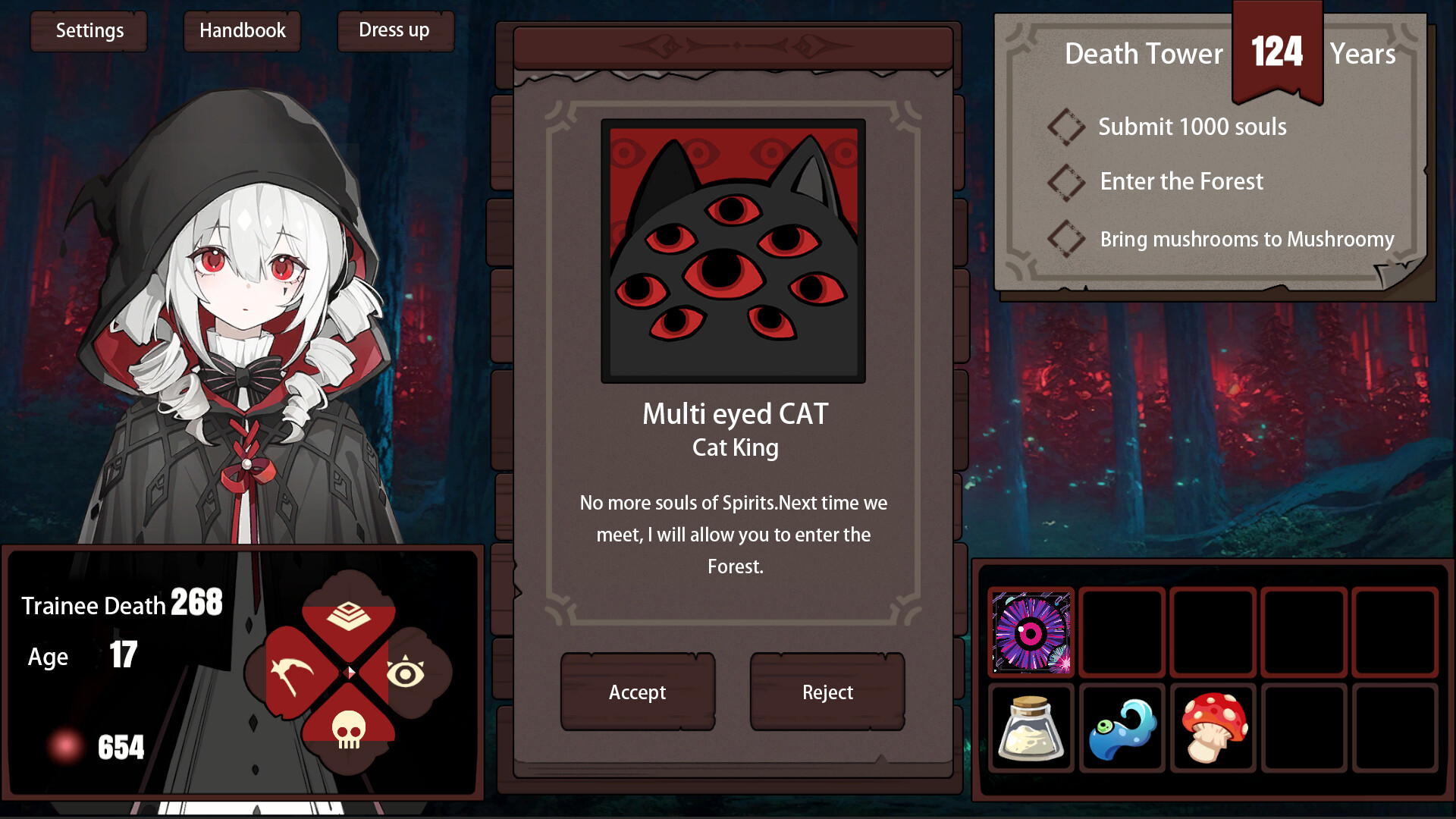
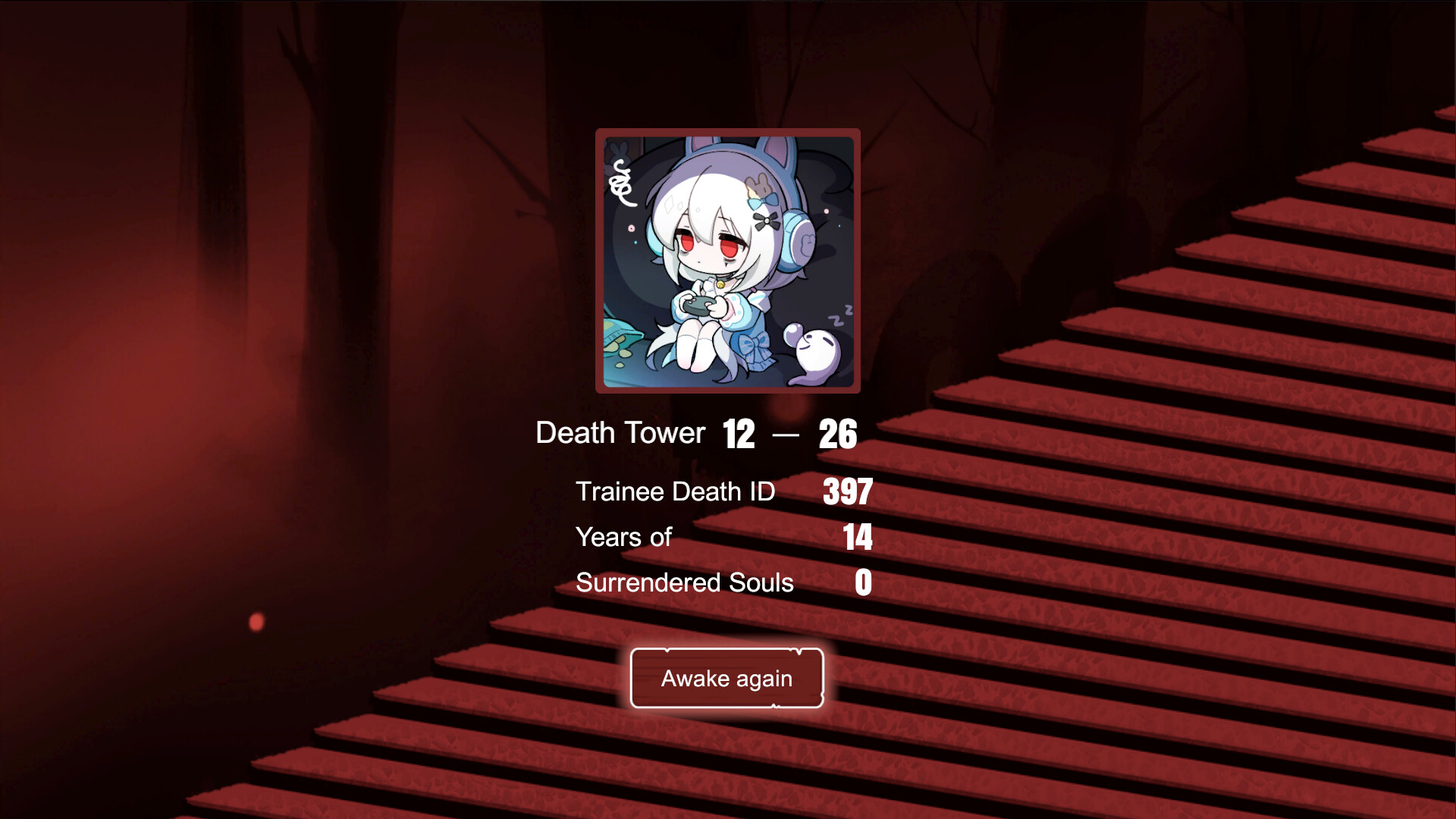
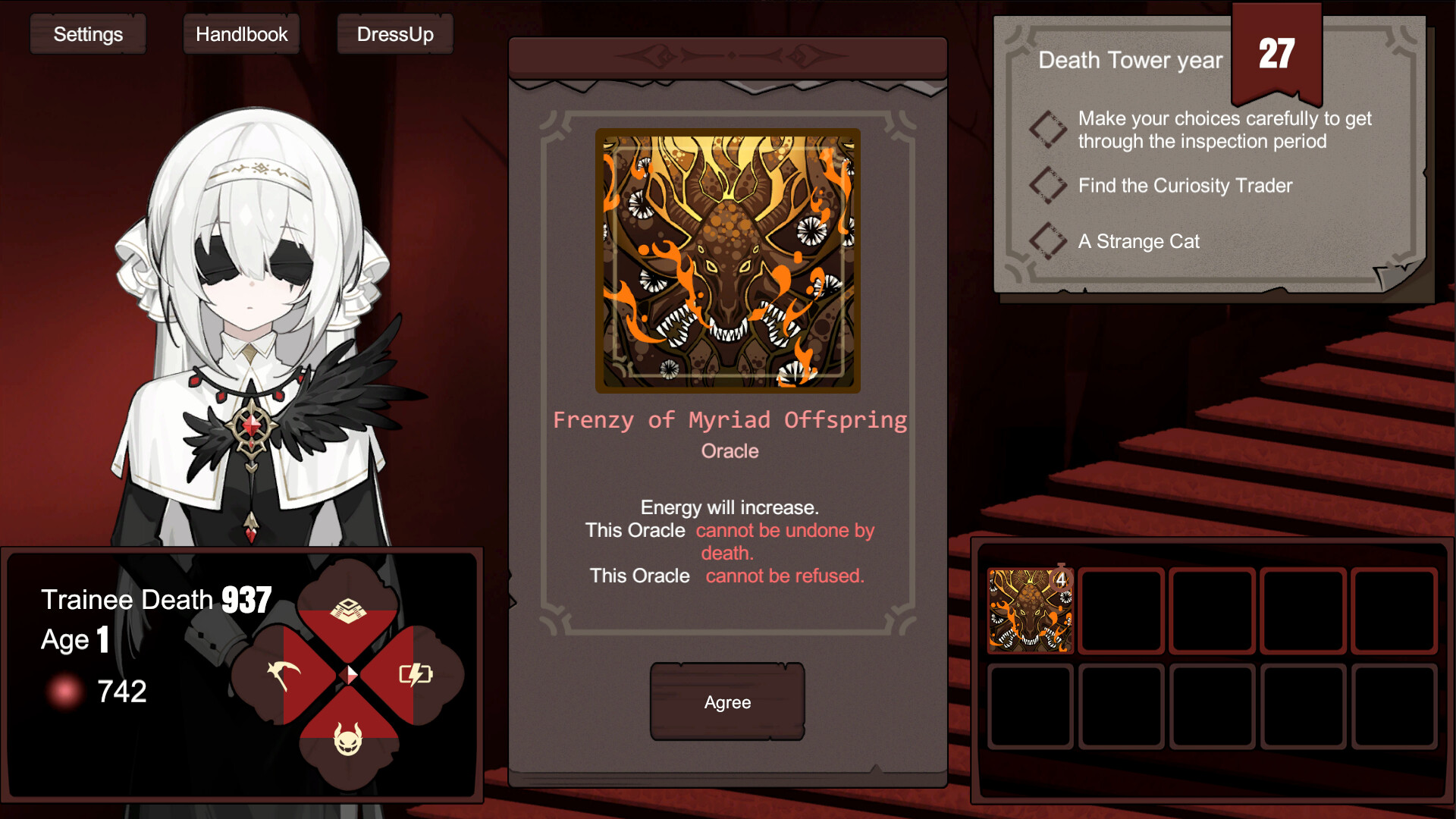
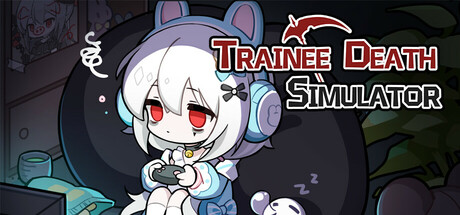
Trainee Death Simulator, developed and published by Bone Nail, is a darkly humorous indie simulation that takes a morbid concept and turns it into something unexpectedly entertaining and thoughtful. Instead of playing as an all-powerful figure of death, you step into the shoes of a rookie reaper—an apprentice learning the ropes of soul collection under the oppressive weight of cosmic bureaucracy. The game combines stat management, branching decision-making, and light roguelike elements to create a fast-paced yet oddly reflective experience. Its premise may sound grim, but it uses irony and wit to transform the idea of death into a story of persistence, failure, and self-discovery, all framed within a delightfully absurd afterlife. At its core, the game revolves around a series of event-driven encounters where each decision you make affects four core attributes: Faith, Energy, Strength, and Evil. Balancing these stats is the key to survival, as pushing any of them too far—or letting them fall too low—can result in sudden demise or transformation. Every turn presents you with a choice, and like a supernatural trainee on probation, you must decide how to act when faced with various scenarios that range from mundane office politics in the underworld to absurd confrontations with celestial beings. The branching paths and random events keep each playthrough unpredictable, and because death is frequent, the game encourages experimentation. Every mistake teaches you something, whether it’s about how to balance your stats or how to interpret the darkly comedic world around you. The design philosophy behind Trainee Death Simulator draws clear inspiration from minimalist decision-based games like Reigns, but it builds upon that structure with a greater sense of narrative identity. Each choice feels like a small step toward shaping your character’s fate, and while there’s no traditional combat system, the tension comes from watching your stats fluctuate with every decision. The interface is straightforward and intuitive, with each encounter presented through clean visuals and card-like events. Despite the simplicity, the pacing of the choices and the gradual accumulation of consequences create a satisfying rhythm of risk and reward. You’re constantly balancing your curiosity about new outcomes against the fear of triggering a bad end—an elegant reflection of the game’s theme of learning through failure. Aesthetically, the game’s 2D art style and darkly charming visuals give it a unique personality. Rather than aiming for gritty realism, Bone Nail embraces a stylized, cartoonish design that enhances the absurdity of the premise. The environments are spare but atmospheric, with muted colors and bold character designs that feel like something out of a gothic comic strip. The soundtrack supports this mood perfectly—haunting yet playful, with just enough quirkiness to remind you that this isn’t a horror game but a dark comedy. Together, the visuals and sound design make the experience feel cohesive and immersive, even without heavy animation or elaborate effects. Narratively, the world of Trainee Death Simulator is clever in its construction. You begin as a lowly soul bound by debt, forced into servitude as an apprentice reaper. Through the course of your training, you encounter gods, demons, bureaucratic officials, and fellow souls who all exist within a world that blends divine myth and corporate satire. The writing leans into irony, poking fun at the absurdity of divine hierarchies and the monotony of afterlife labor. What could have been a grim existential tale instead becomes a satirical examination of morality, responsibility, and the cyclical nature of failure. The humor lands often because it’s self-aware, acknowledging how ridiculous your situation is without breaking the immersive tone of the world. Replayability is one of the game’s strongest qualities. There are numerous endings to unlock, each tied to the choices you make and the balance of your stats. Some outcomes are darkly tragic, while others are absurd or even strangely uplifting. Collectible outfits and customization options give each run a small sense of progression, and completing multiple routes gradually reveals new layers of world-building. While individual playthroughs may be short, the combined experience of discovering every possible fate creates a satisfying sense of completion. It’s a game that invites you to fail repeatedly, but in doing so, it rewards curiosity and persistence—perfectly in line with its premise of being a “trainee” learning through trial and error. Despite its many strengths, the game isn’t without flaws. The translation, while serviceable, occasionally falters with awkward phrasing or missing nuance, which can break immersion during longer sessions. Some of the random event outcomes rely heavily on luck, which can make certain runs feel repetitive or unfair. Players seeking deep narrative development or complex mechanics might find its systems too lightweight compared to larger simulation games. Still, these issues are minor in the grand scheme of things, as the game’s humor, creativity, and personality more than make up for its rough edges. Ultimately, Trainee Death Simulator succeeds because it understands its own limitations and plays to its strengths. It’s concise, replayable, and packed with personality. Rather than overwhelming the player with mechanics, it focuses on delivering a sharp, witty experience that balances light strategy with dark comedy. Beneath its humor lies a subtle message about learning from mistakes and embracing the inevitability of failure—ideas that resonate far beyond its supernatural premise. For fans of quirky indie simulations, it’s an easy recommendation: an imaginative and strangely charming journey through the bureaucracy of death, where every mistake is just another step toward mastery. Rating: 9/10
Expand the review