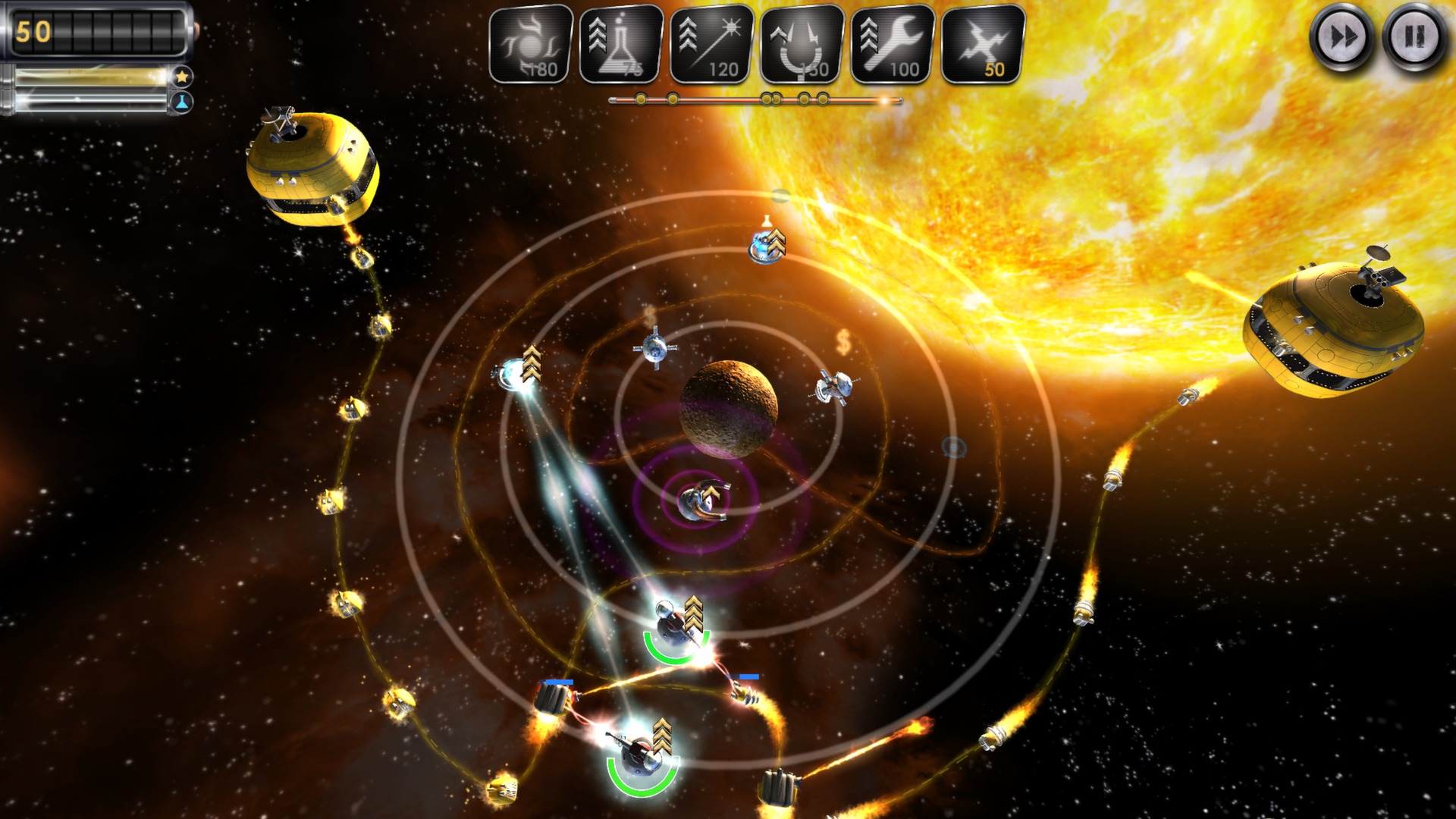
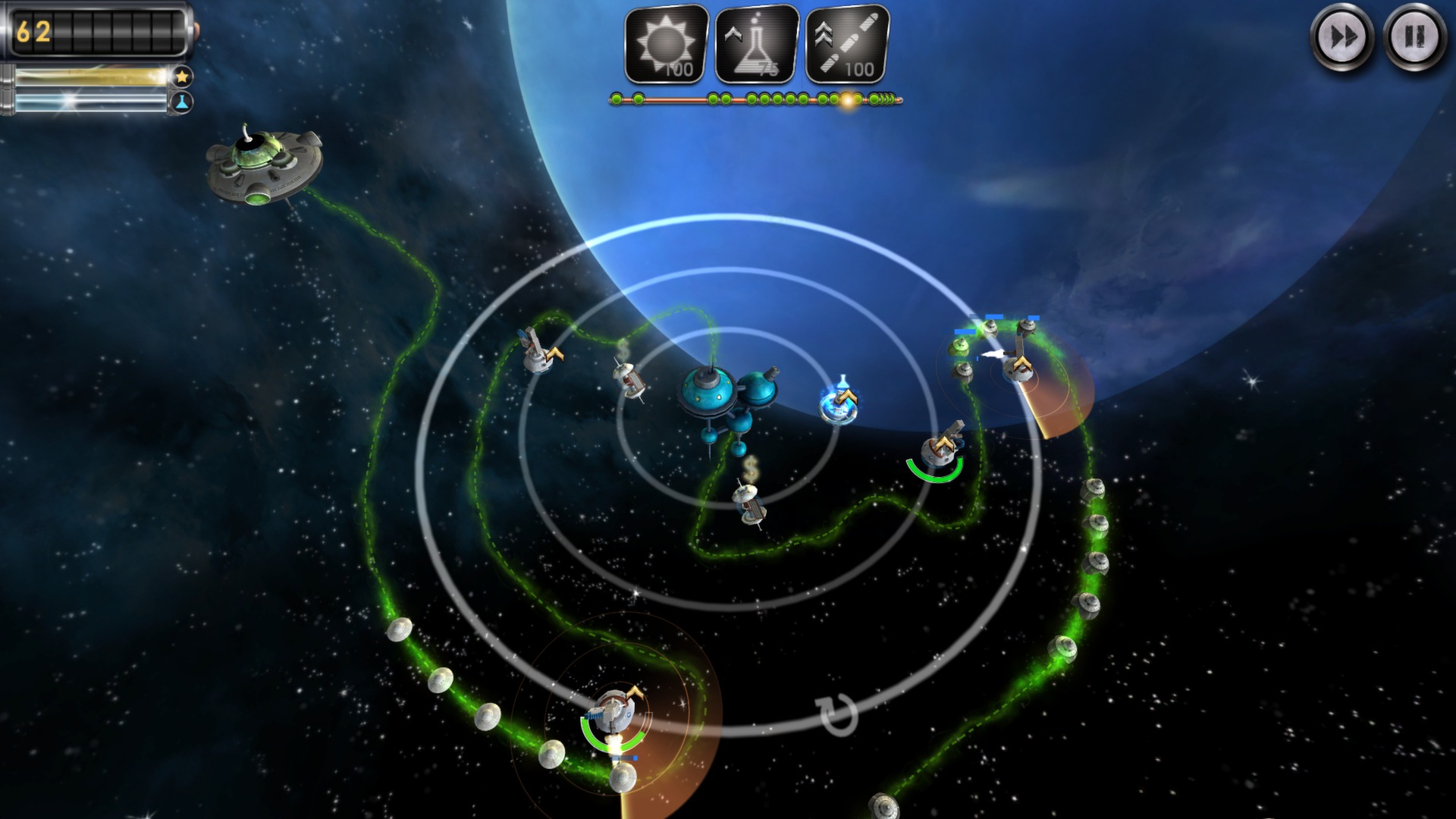
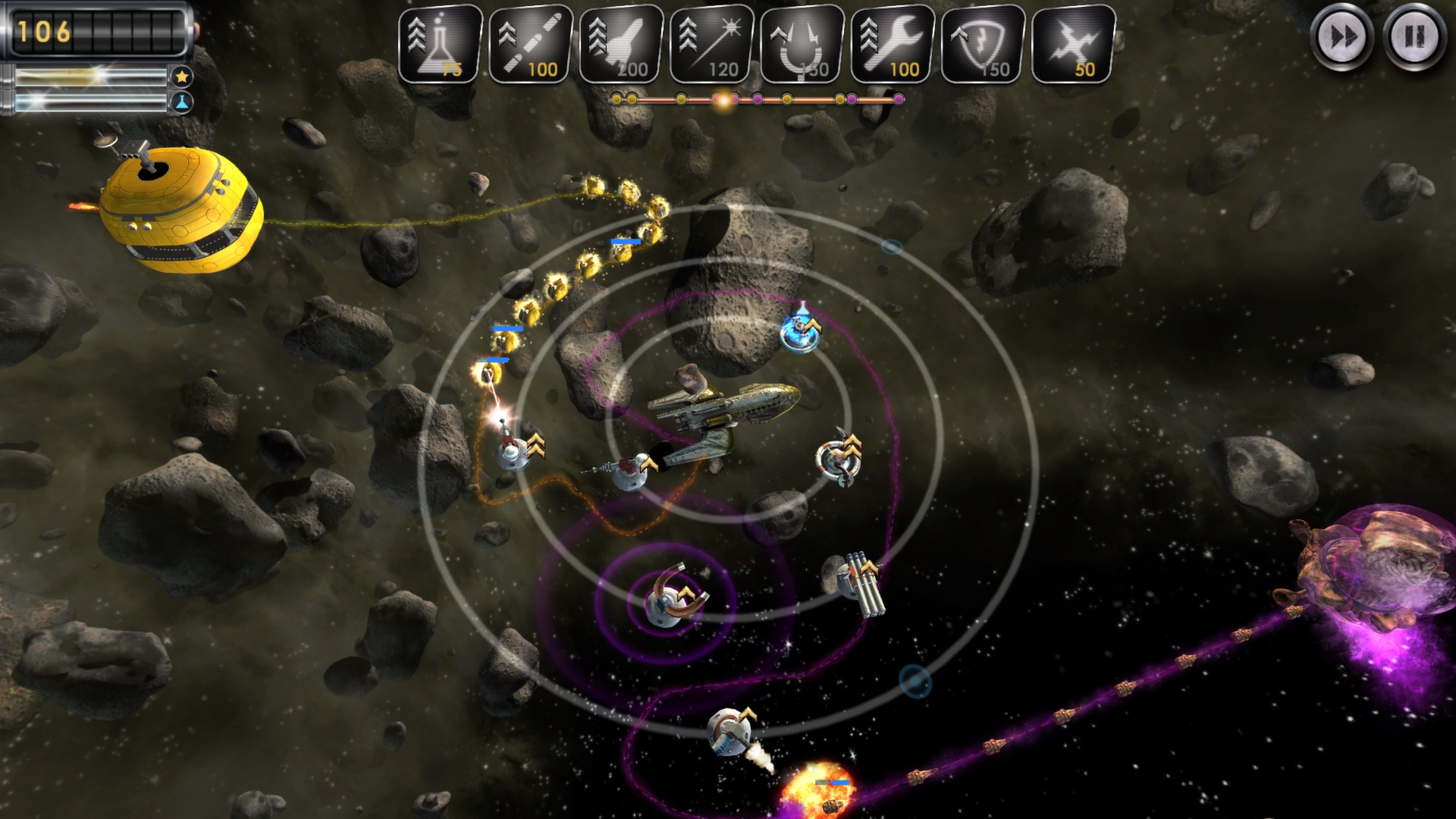
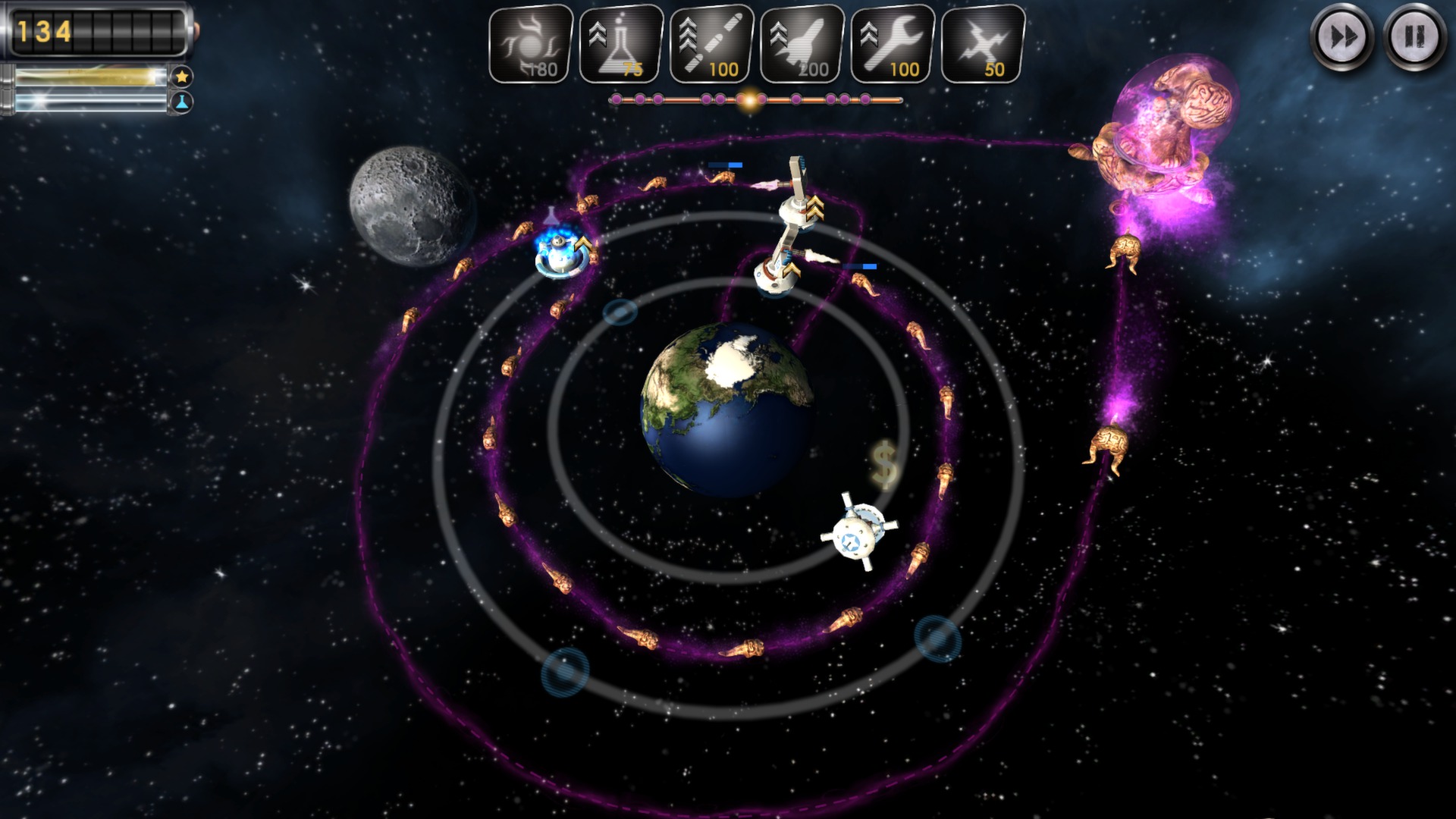
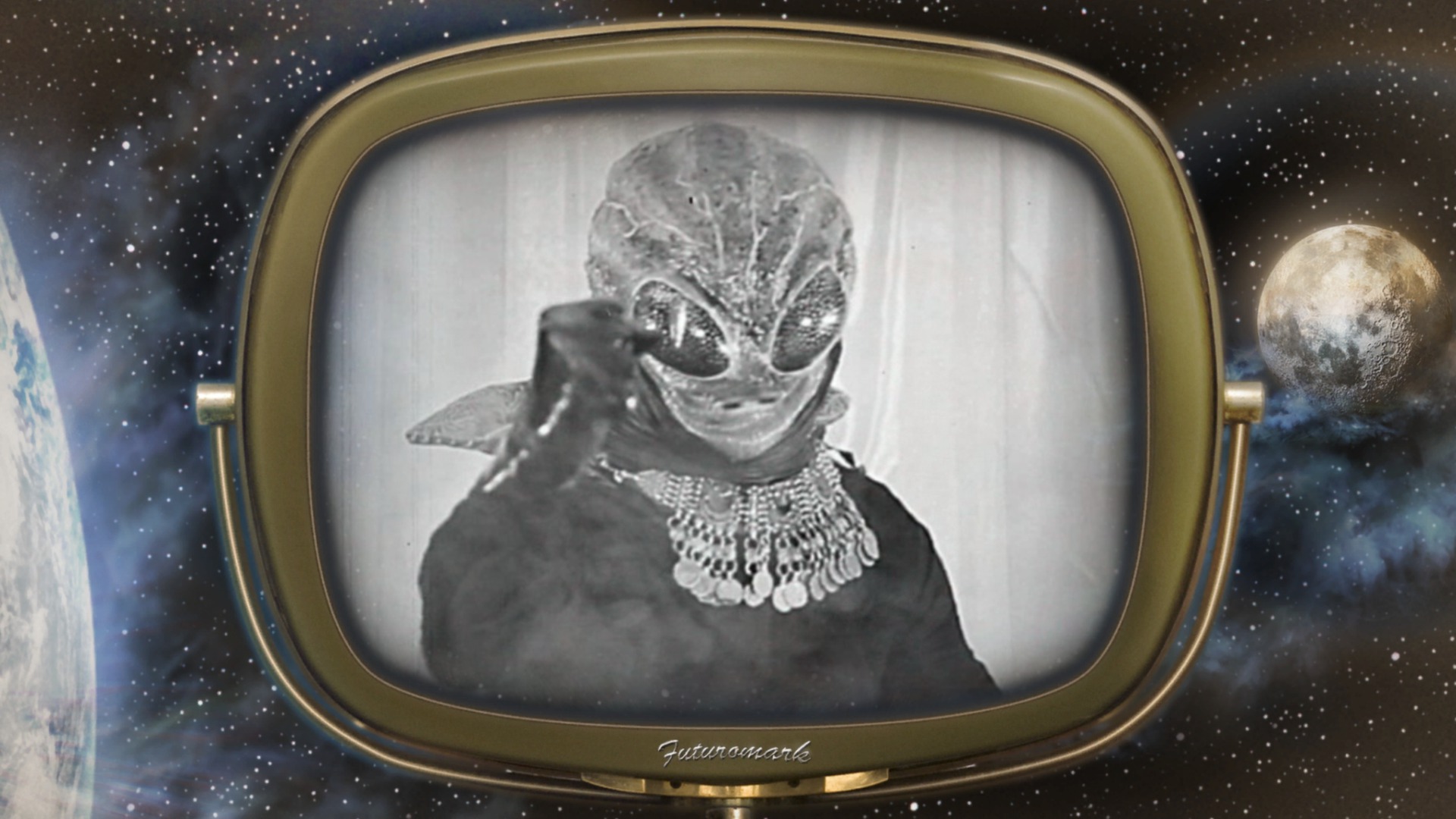
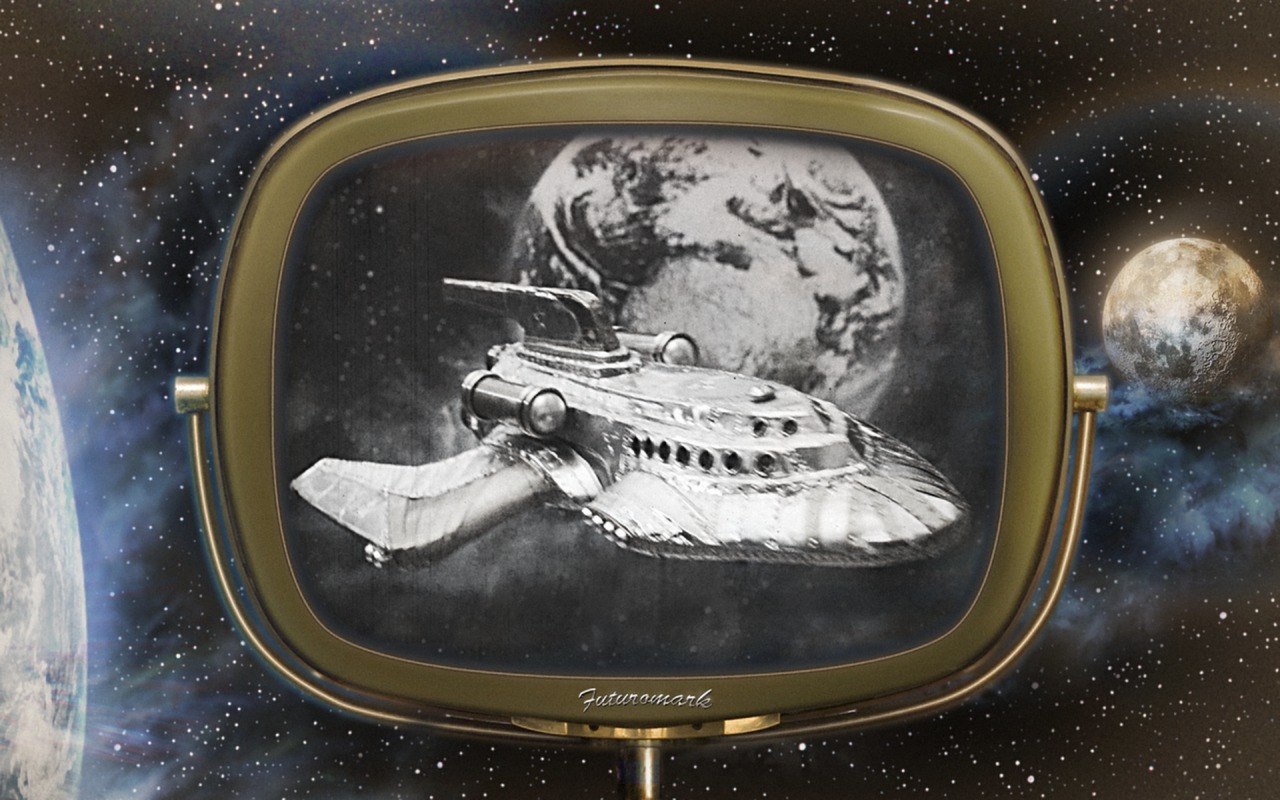
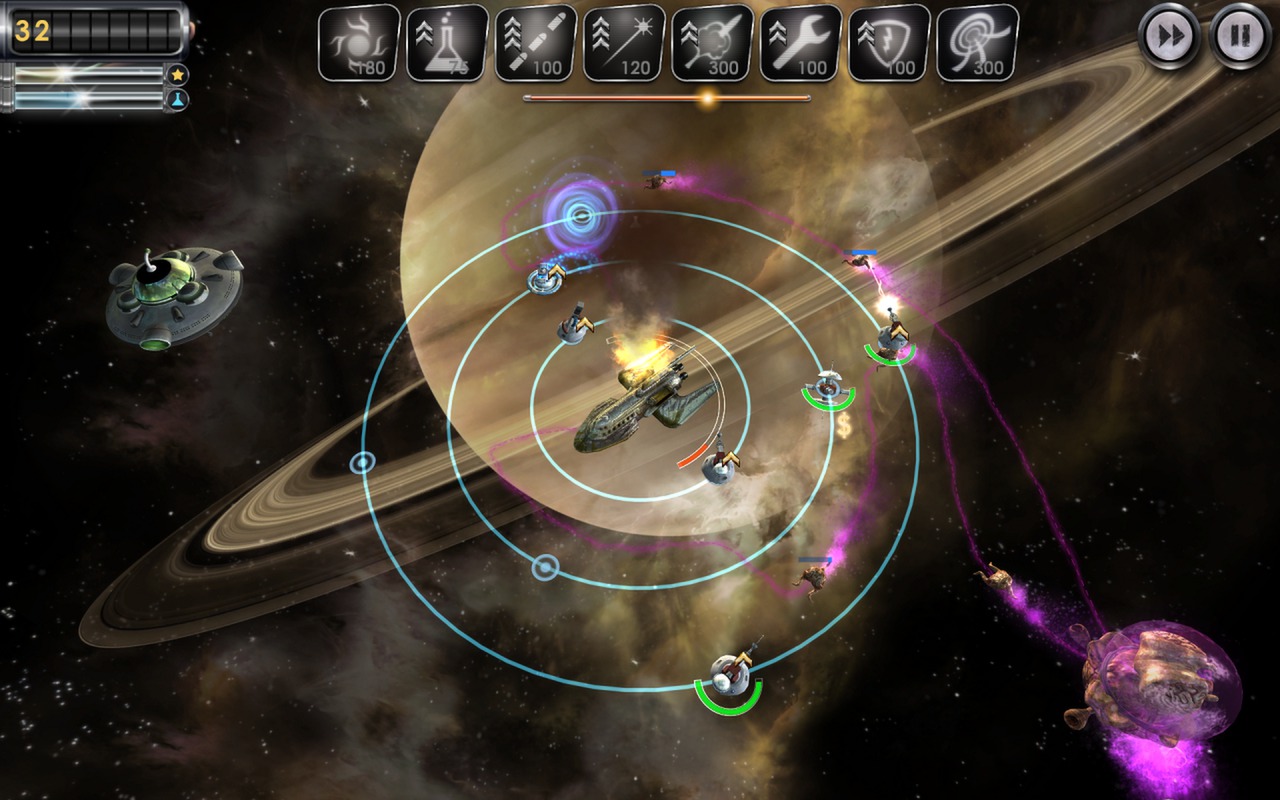
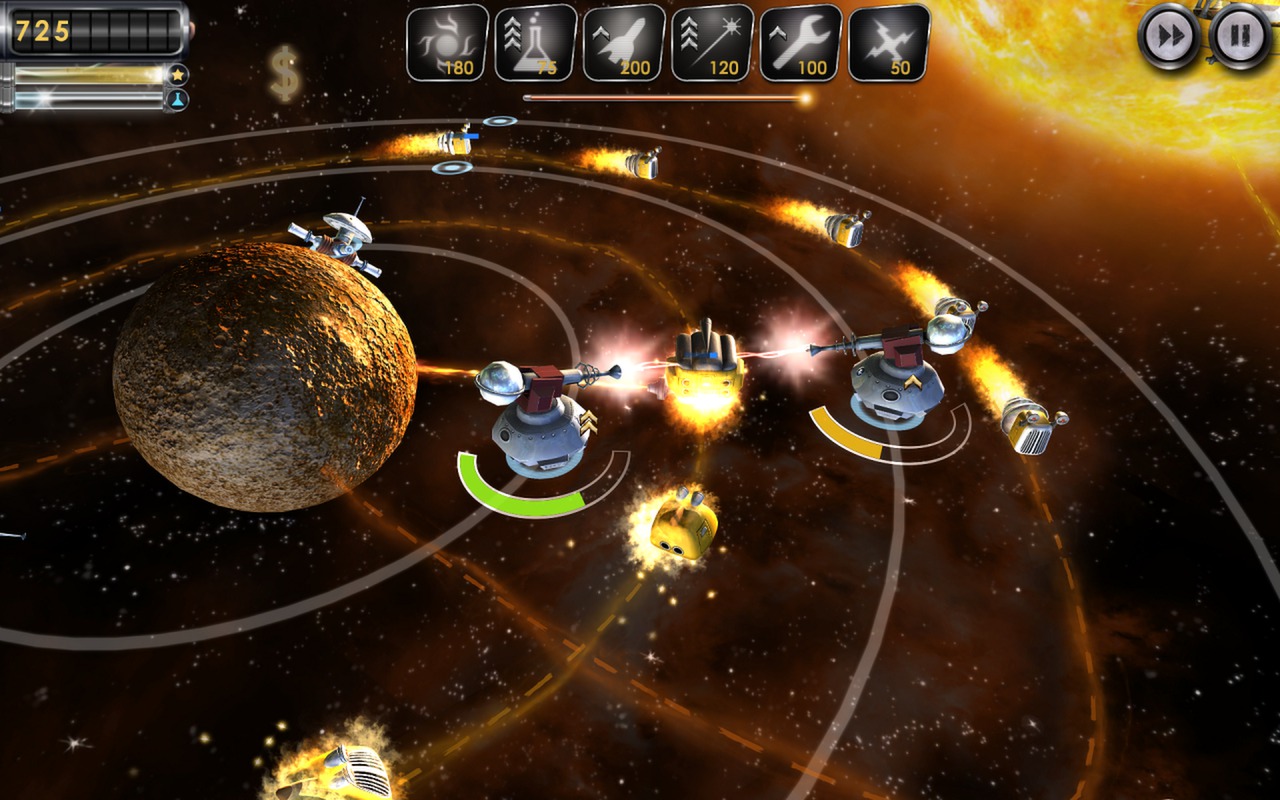
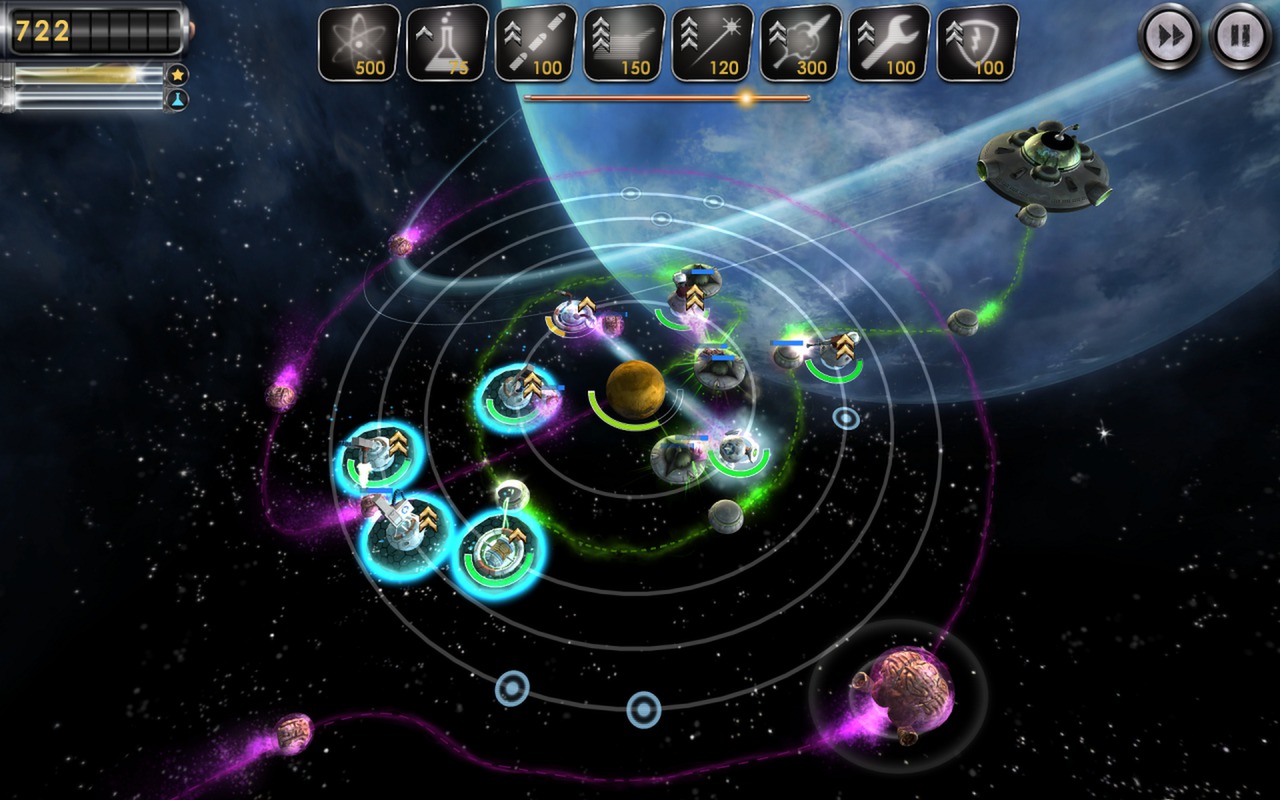
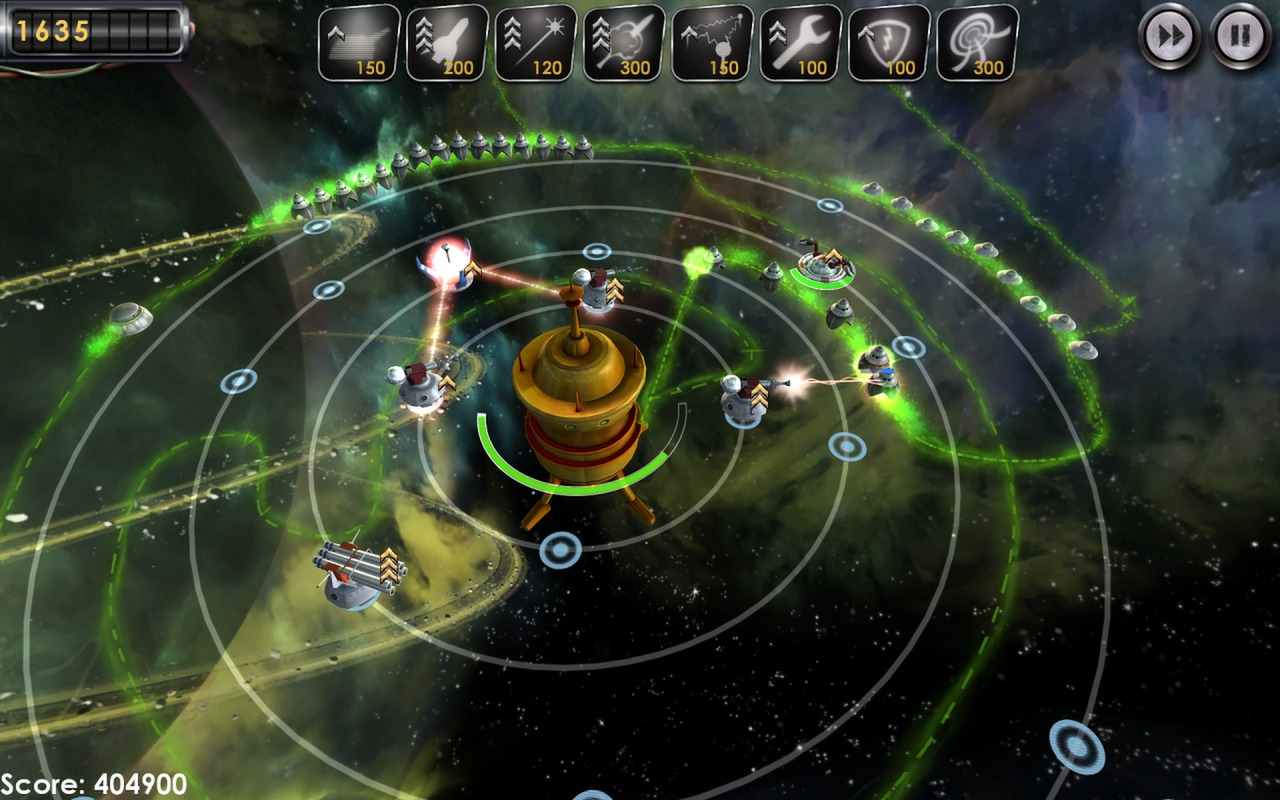
Unstoppable Gorg, developed and published by Futuremark, is a clever and stylish reimagining of the tower defense genre that blends retro science fiction aesthetics with inventive gameplay mechanics. It immediately sets itself apart through its distinctive 1950s-inspired presentation, capturing the spirit of old black-and-white alien invasion films with campy humor, practical effects, and grainy film textures. The game opens like a forgotten B-movie, complete with overacted live-action cutscenes featuring rubber aliens, cardboard spaceships, and dramatic narration. This theatrical tone gives Unstoppable Gorg an identity that feels both nostalgic and refreshing, turning what could have been a standard defense title into a quirky homage to mid-century sci-fi cinema. The charm of its presentation goes beyond visual novelty—it establishes an atmosphere of lighthearted absurdity that contrasts beautifully with the surprisingly challenging strategy beneath. At its core, Unstoppable Gorg retains the traditional foundation of the tower defense genre: waves of enemies approach, and the player must strategically deploy defensive units to protect a central structure. What makes the game unique is how it redefines spatial control. Instead of building towers on fixed grids or along predetermined paths, you position satellites along rotating orbital rings that encircle your base. These satellites function as your turrets, generators, and support modules, and you can rotate entire orbits to reposition them dynamically during battle. This means that defense isn’t just about placement but also about timing and movement. The constant rotation introduces an element of real-time strategy—anticipating enemy trajectories, adjusting defenses on the fly, and managing the flow of resources all require quick thinking and precision. It’s a brilliant twist that transforms what could have been a static experience into something fluid and tactile. Each type of satellite fulfills a different tactical role. Some generate energy, which acts as your currency for deploying and upgrading defenses; others specialize in direct attacks, long-range sniping, or slowing enemy craft. There are also defensive satellites that can repair or shield your base, forcing you to balance offense and support systems carefully. The orbital mechanic ensures that positioning always matters—one poorly timed rotation can expose your defenses or leave key sectors vulnerable. This sense of constant motion adds tension and excitement to the familiar tower defense rhythm, demanding awareness and adaptability. Even after several missions, the novelty of turning orbits and watching your satellites realign never fades, giving every encounter a satisfying sense of control and chaos. The campaign structure is straightforward but engaging, presented as a series of escalating missions across the solar system. The story, while intentionally absurd, maintains the campy energy that defines the game’s tone. Between missions, you’re treated to delightful full-motion video segments that look like they were lifted from vintage sci-fi serials. The over-the-top dialogue and theatrical acting lend personality to a genre that often relies purely on mechanics. Each new planet introduces new enemy types and strategic wrinkles—shielded ships, faster fighters, or large capital vessels that demand different configurations of your orbiting defenses. The difficulty ramps up quickly, and later stages require precise rotations and careful energy management to survive. Though the curve can feel unforgiving, the challenge makes victories deeply satisfying. Aesthetically, Unstoppable Gorg is one of the most distinctive tower defense games ever made. The combination of black-and-white live-action sequences, stylized comic-book art, and the clean design of its orbital interface creates a perfect balance between nostalgia and functionality. The soundtrack reinforces the retro mood with a mix of space-age orchestration and pulpy sci-fi motifs that could easily fit in a 1950s adventure serial. Sound effects are crisp and deliberate—the whir of rotating satellites and the thump of alien ships exploding create a satisfying rhythm to each battle. The visual clarity of the orbital system also makes it easy to track the chaos, ensuring that even when the screen fills with ships and projectiles, the action remains readable and engaging. While the game’s creative approach and presentation are impressive, it’s not without flaws. The fixed number of build positions on each orbital ring can make some battles feel restrictive, especially when compared to the freedom of movement in other strategy titles. The steep difficulty curve in the later stages may frustrate players who prefer a slower or more forgiving pace, as success often depends on trial and error. Some critics also noted that while the rotating orbit mechanic is innovative, it can occasionally feel clunky or disorienting in the heat of battle. However, these shortcomings are balanced by the game’s strong sense of identity and mechanical depth. For players who appreciate learning through repetition and strategy refinement, the challenge becomes part of its enduring appeal. Beyond the main campaign, Unstoppable Gorg offers additional modes that extend its replayability. The Challenge and Arcade modes provide opportunities to refine your tactics or chase high scores, giving the experience longevity beyond the story missions. The variety of satellites and upgrade paths ensures that different play styles can emerge—some players may prefer aggressive, offense-heavy setups, while others lean on defensive fortifications and support systems. This flexibility encourages experimentation, making each session feel distinct. The satisfaction of perfectly aligning your orbits and repelling a wave of enemies is immense, and the moment when a chaotic battle suddenly clicks into harmony captures the essence of what makes the game so rewarding. Unstoppable Gorg stands as a testament to how creative presentation and thoughtful mechanics can revitalize a familiar genre. It manages to be both a love letter to the absurd optimism of 1950s science fiction and a genuinely clever strategic experience. Its combination of humor, charm, and depth ensures that it’s more than just a novelty—it’s a well-designed, challenging, and memorable game that still feels fresh years after its release. For fans of tower defense games seeking something different, or for anyone who grew up loving campy alien movies, Unstoppable Gorg is a delightful surprise. It’s not just about defending a base—it’s about orchestrating a cosmic ballet of spinning defenses and gleefully embracing the chaos of an interstellar B-movie brought to life. Rating: 7/10
Expand the review