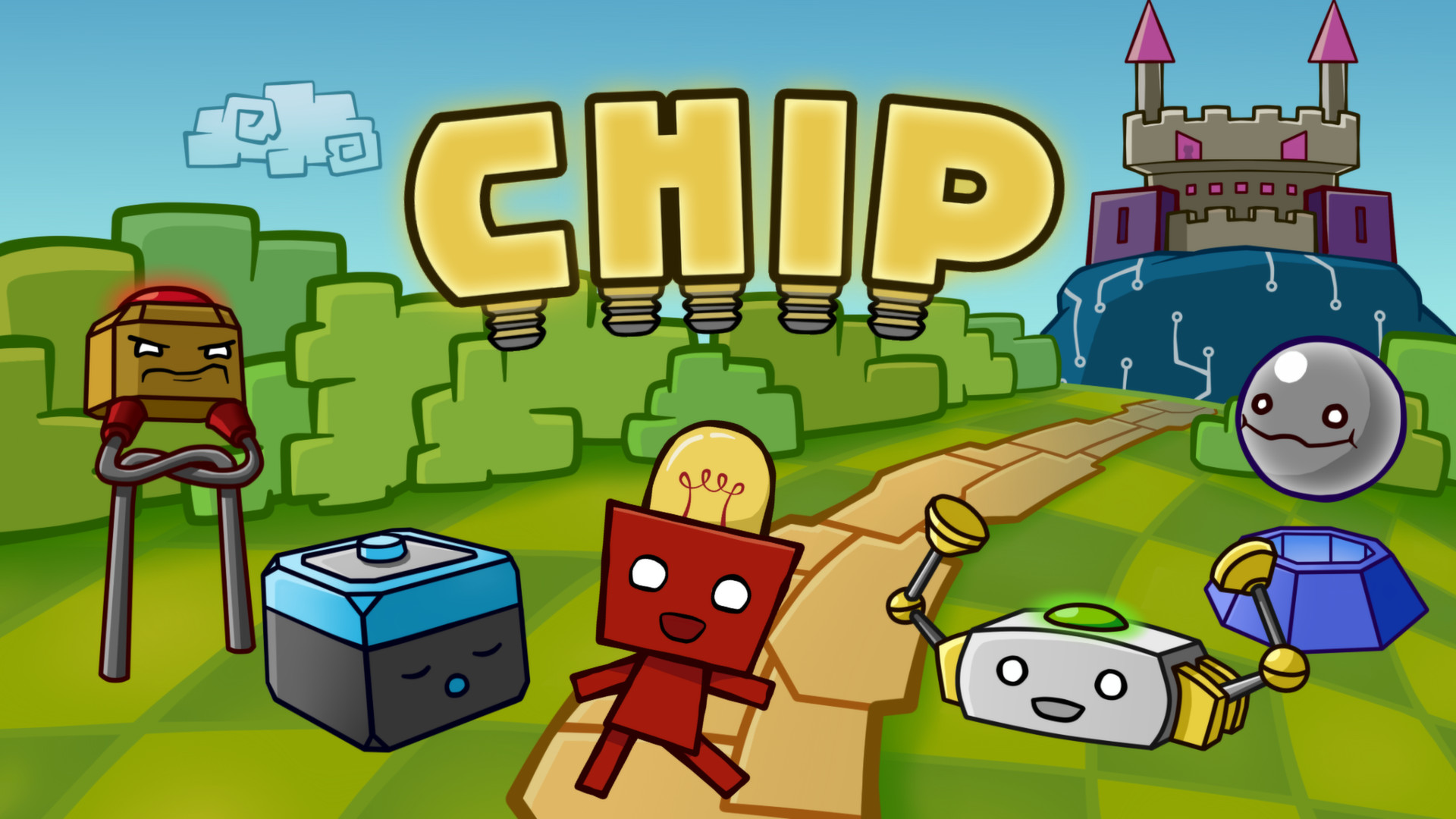
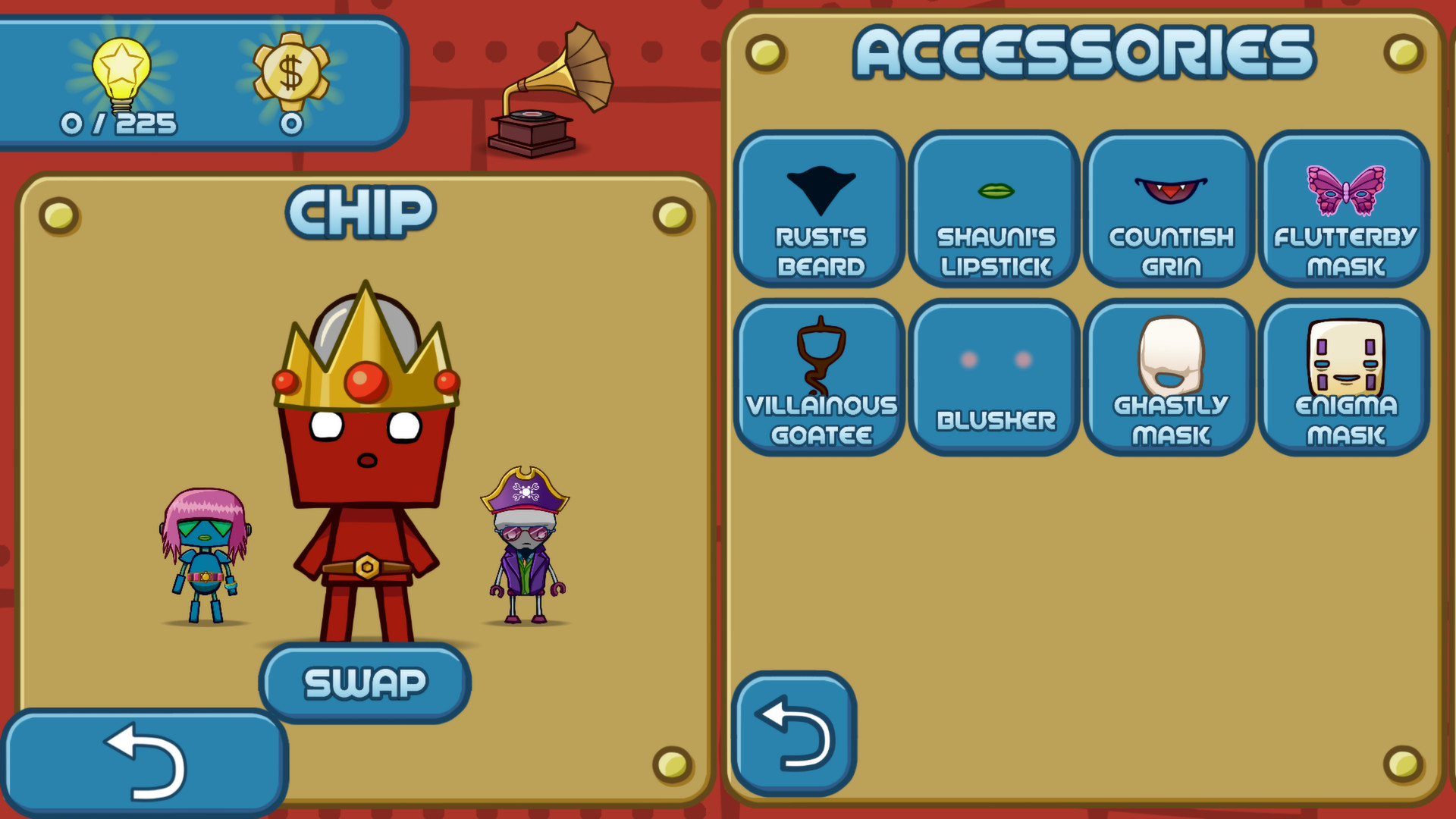
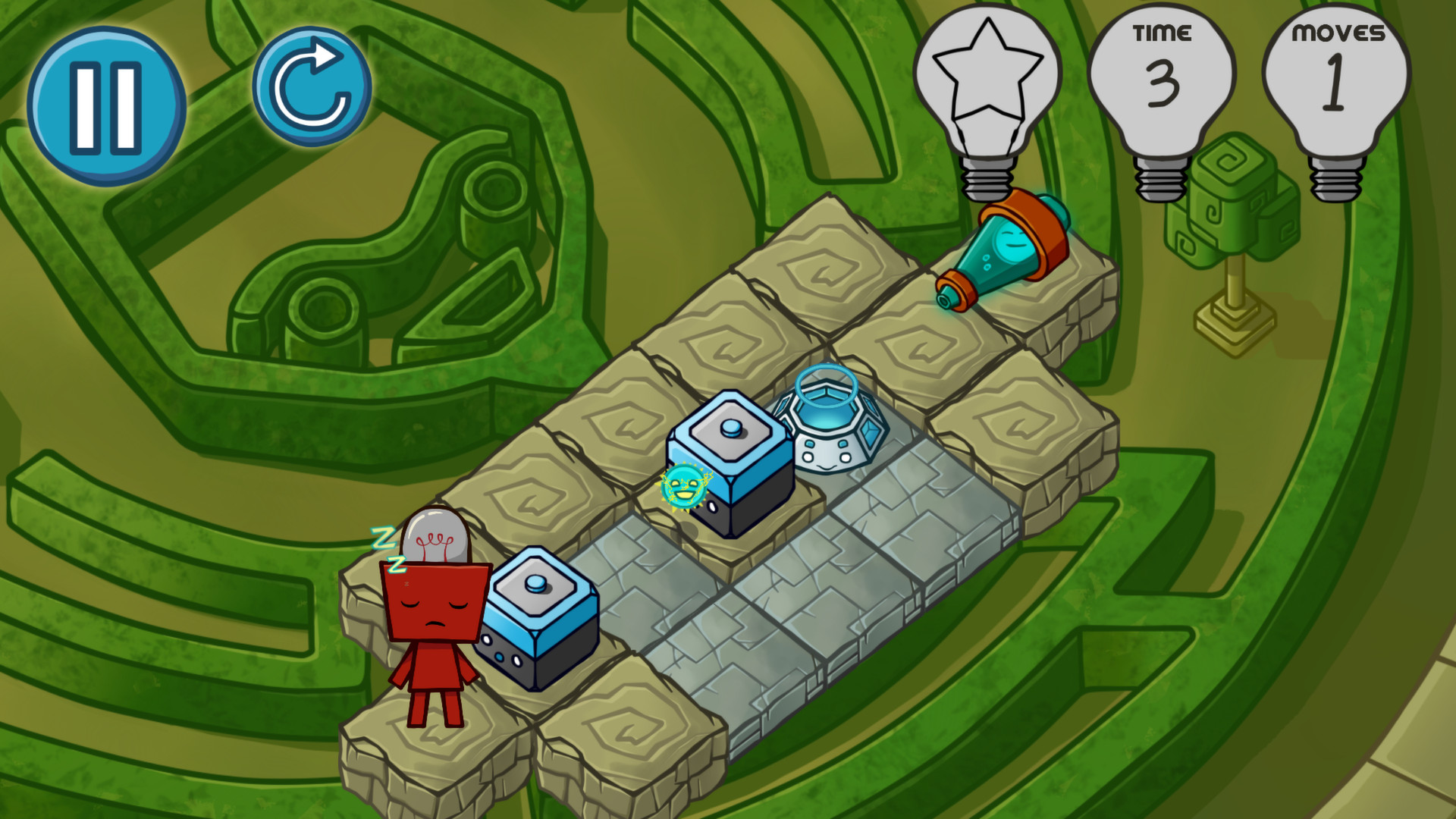
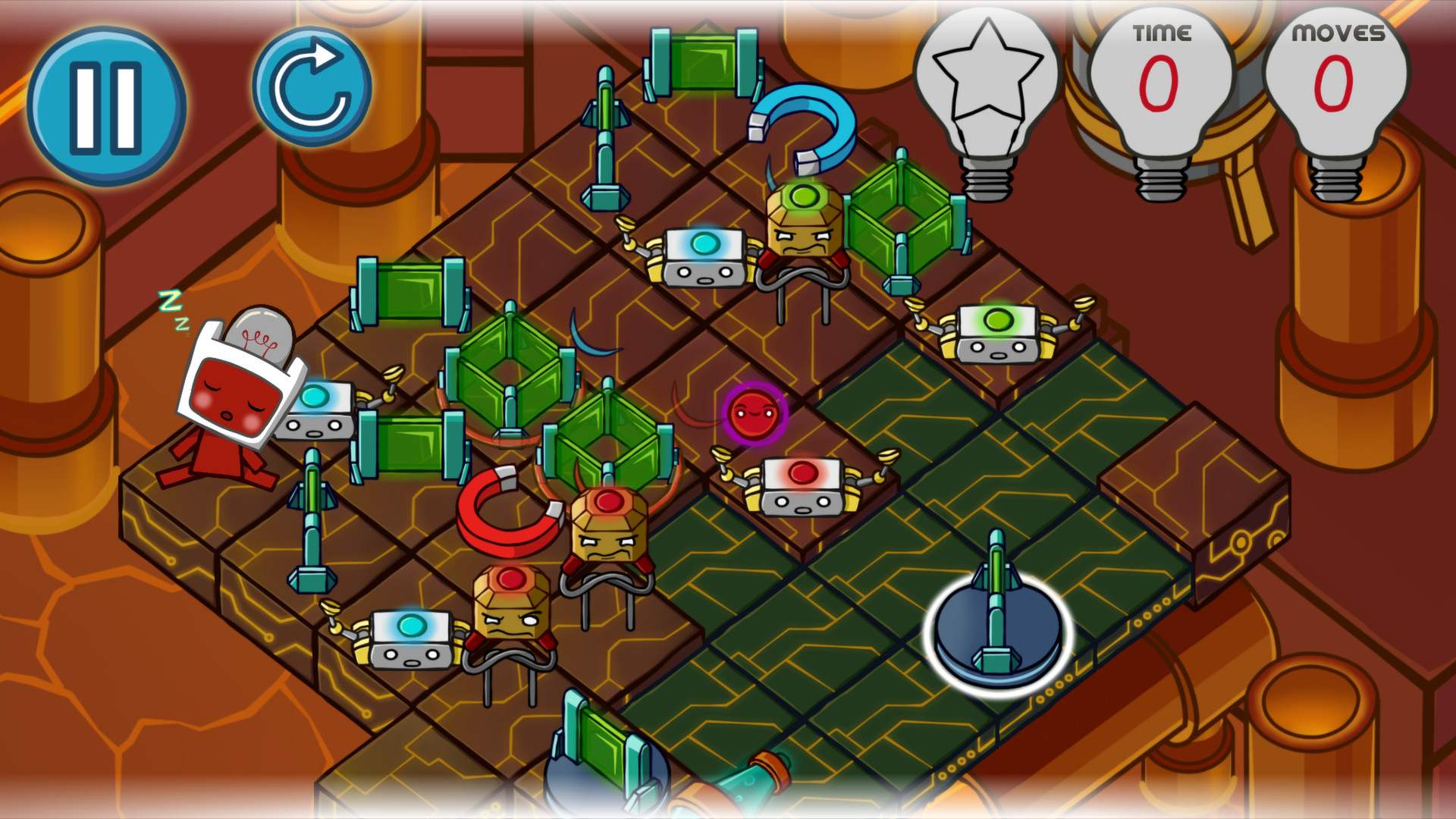
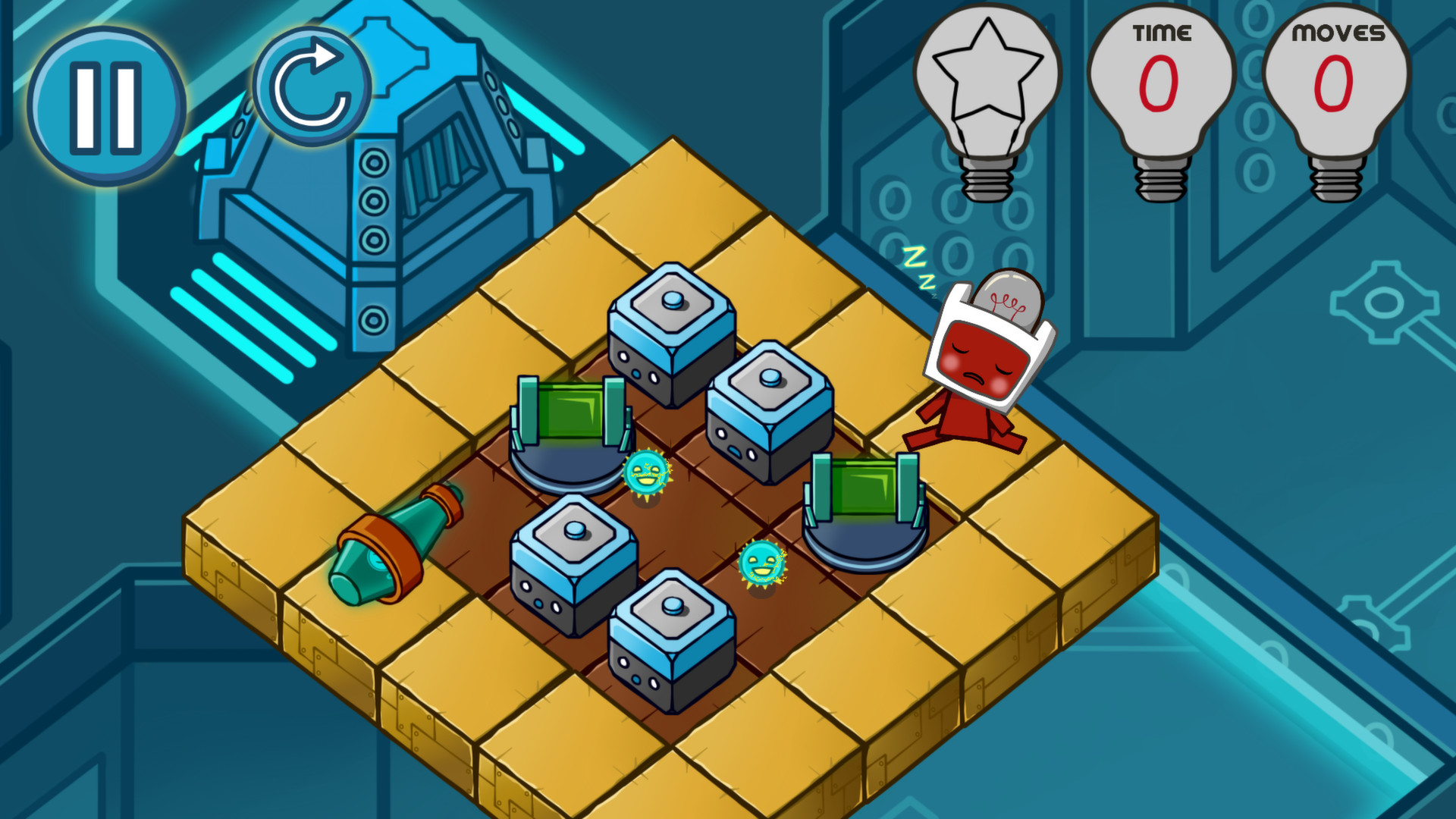
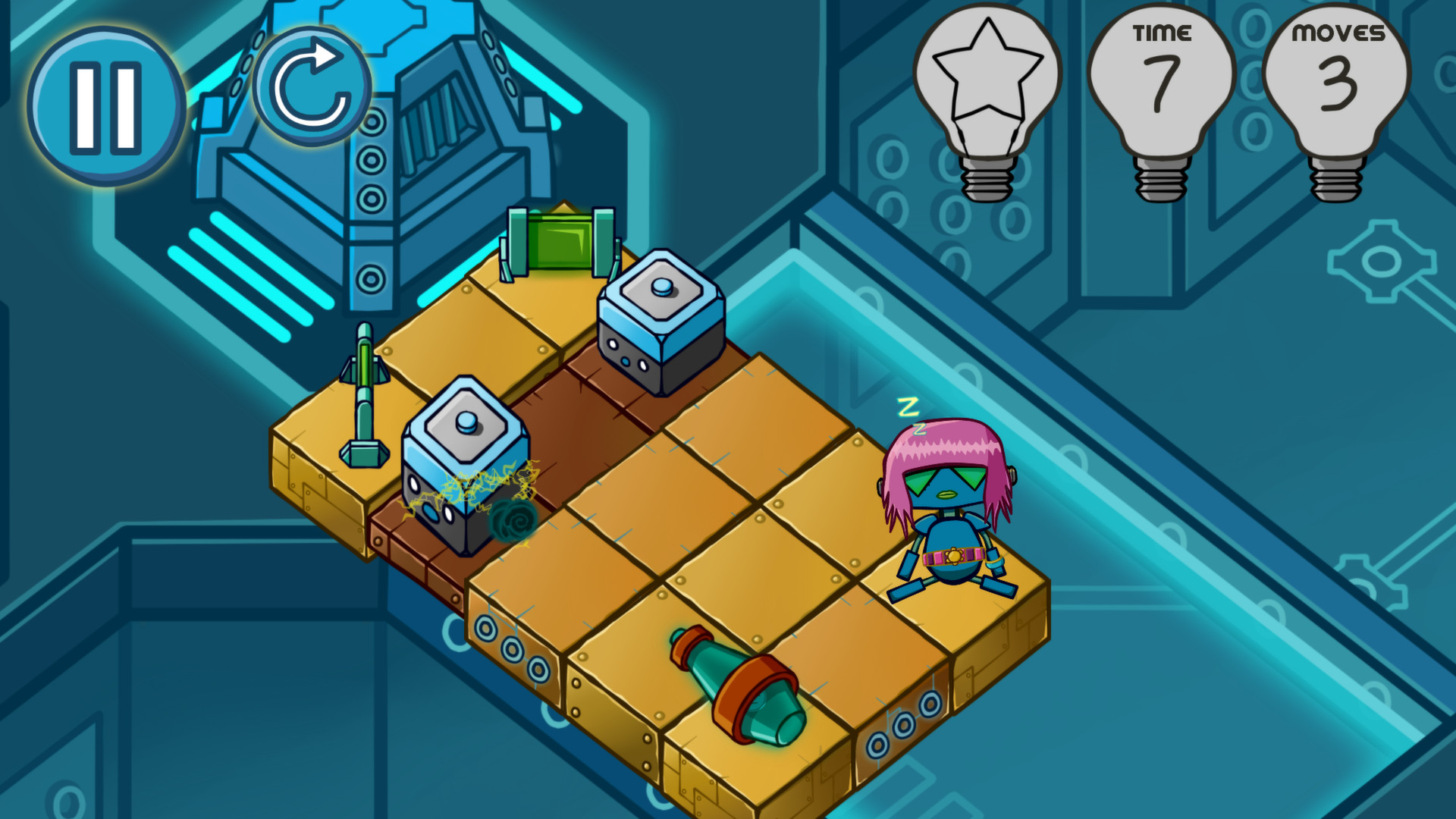
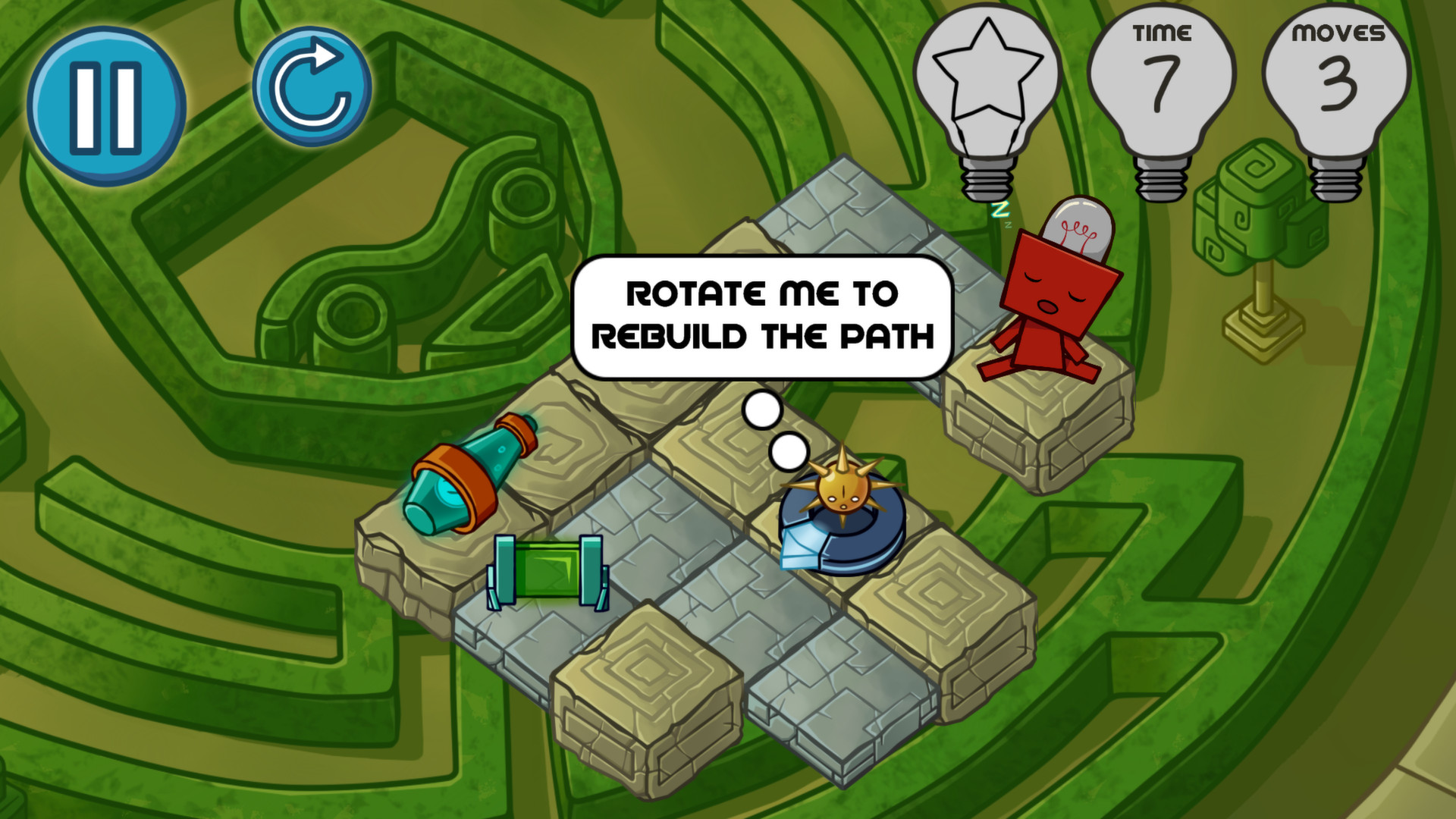
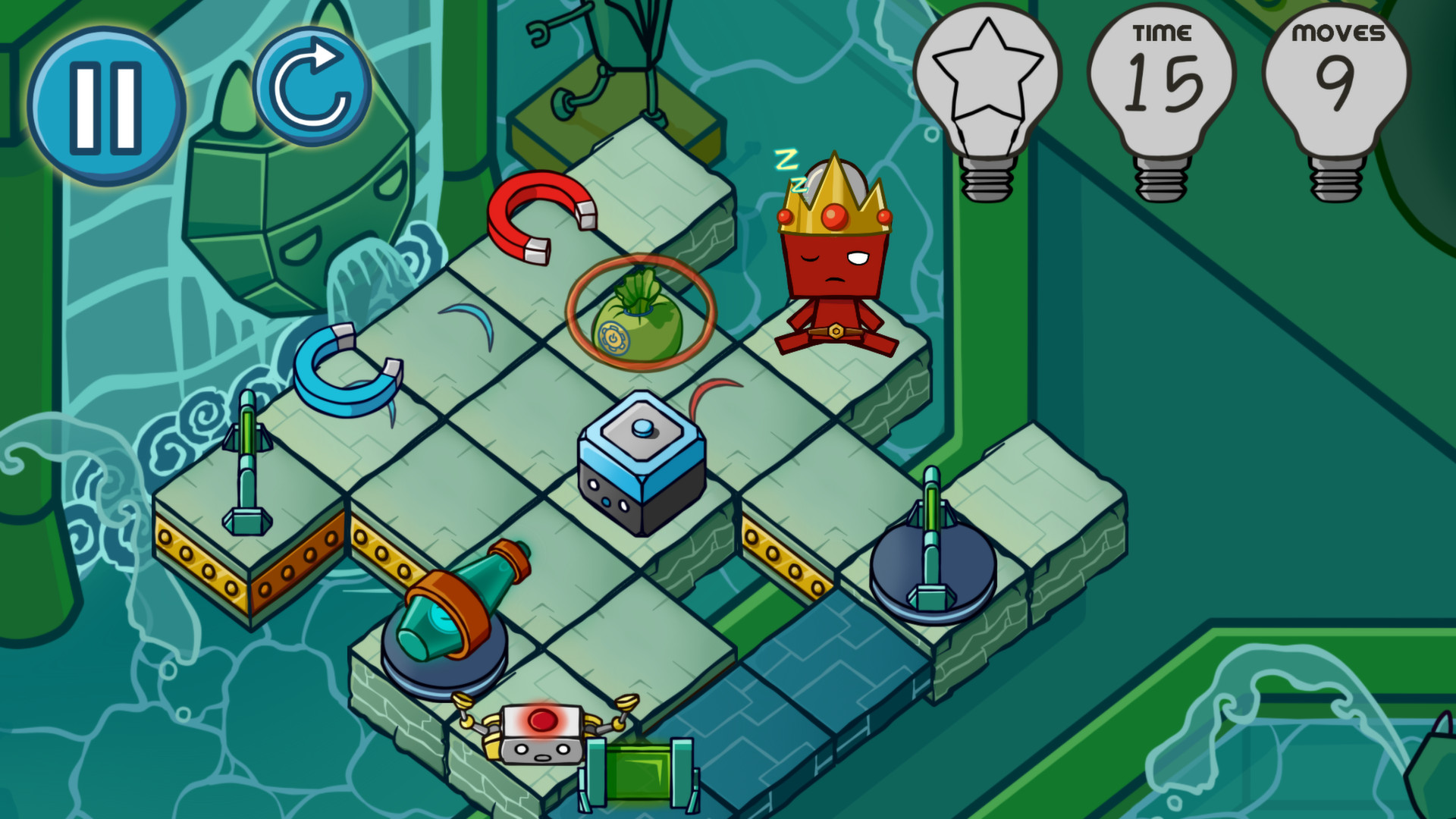
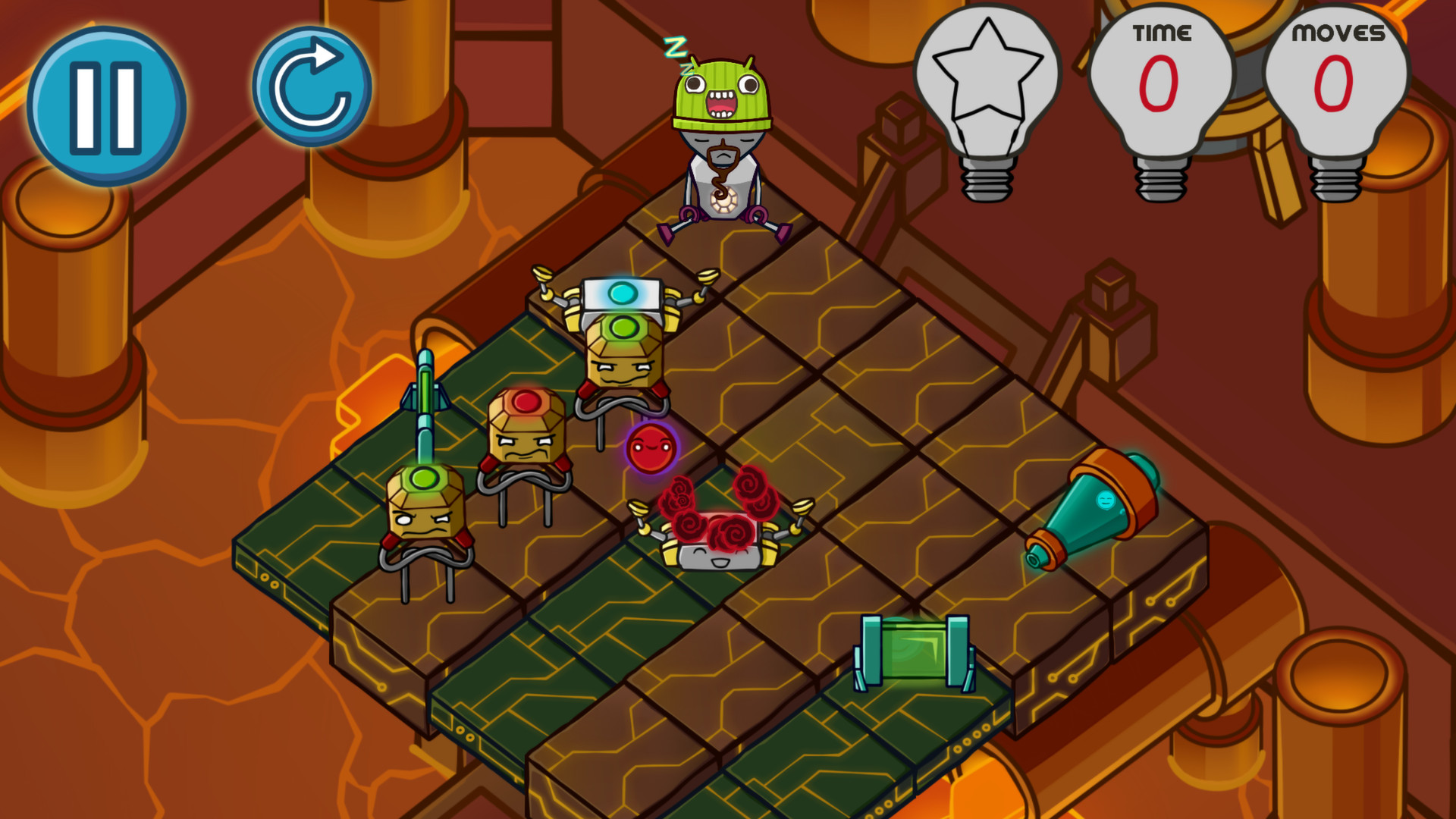
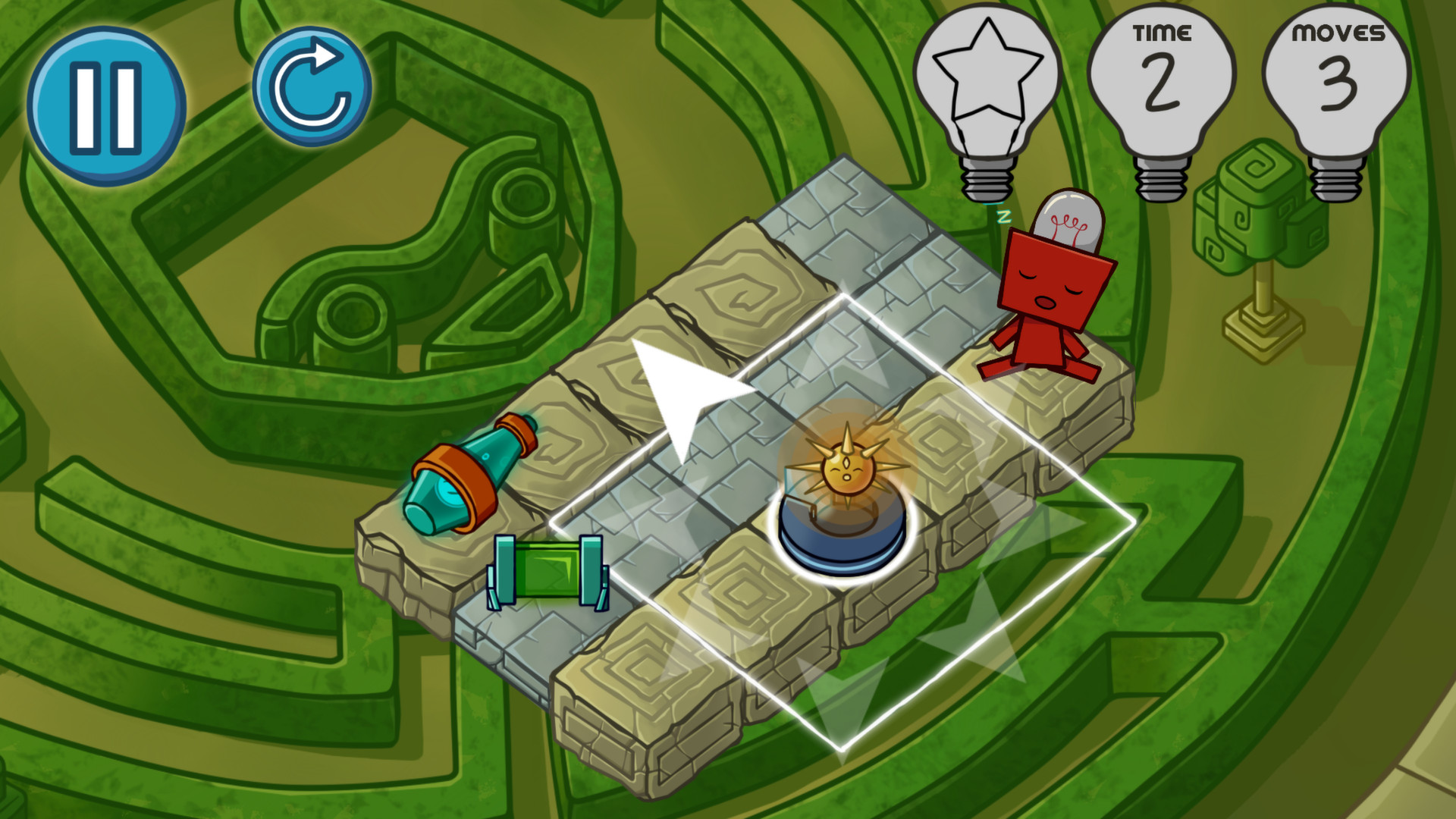
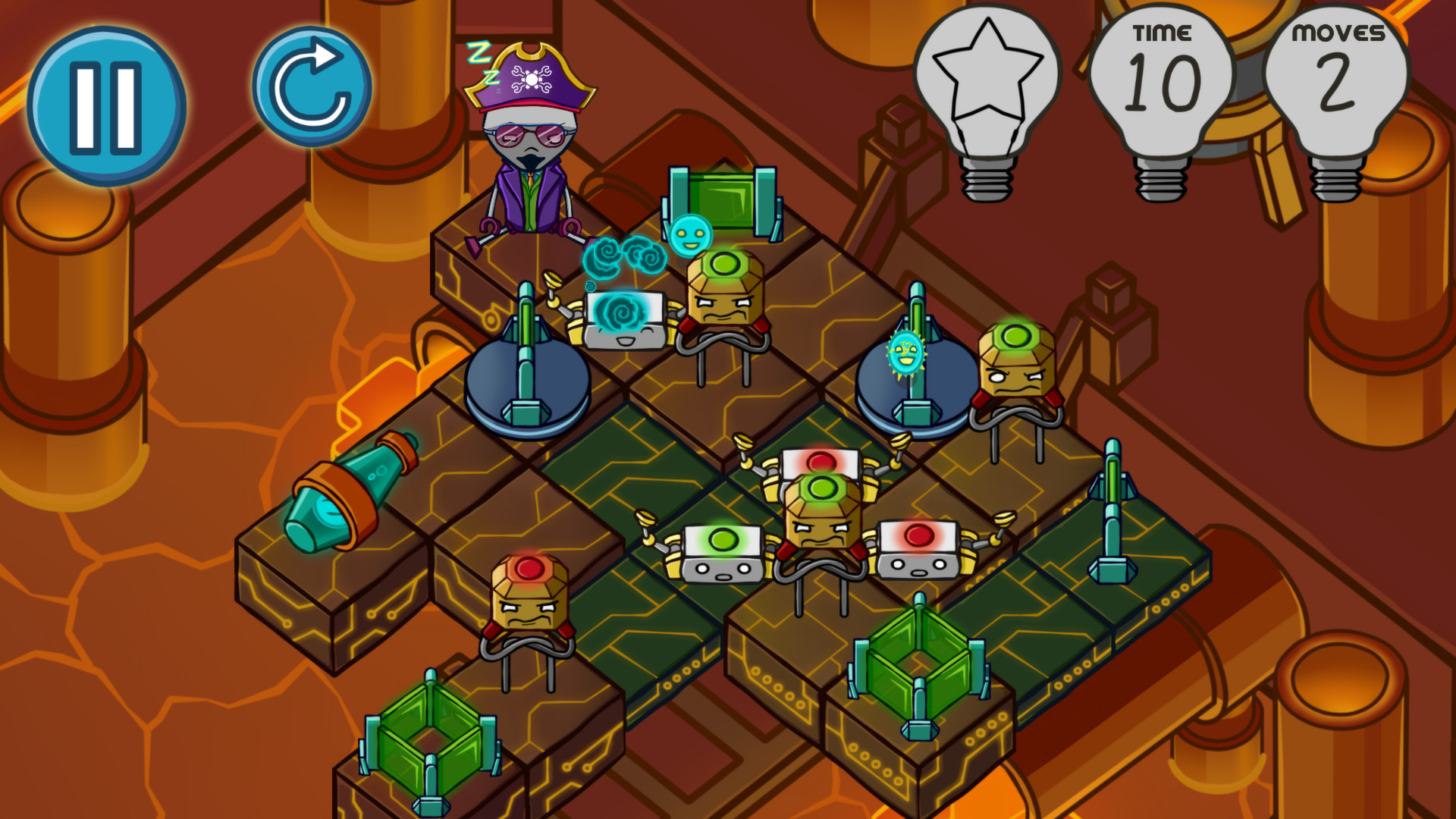
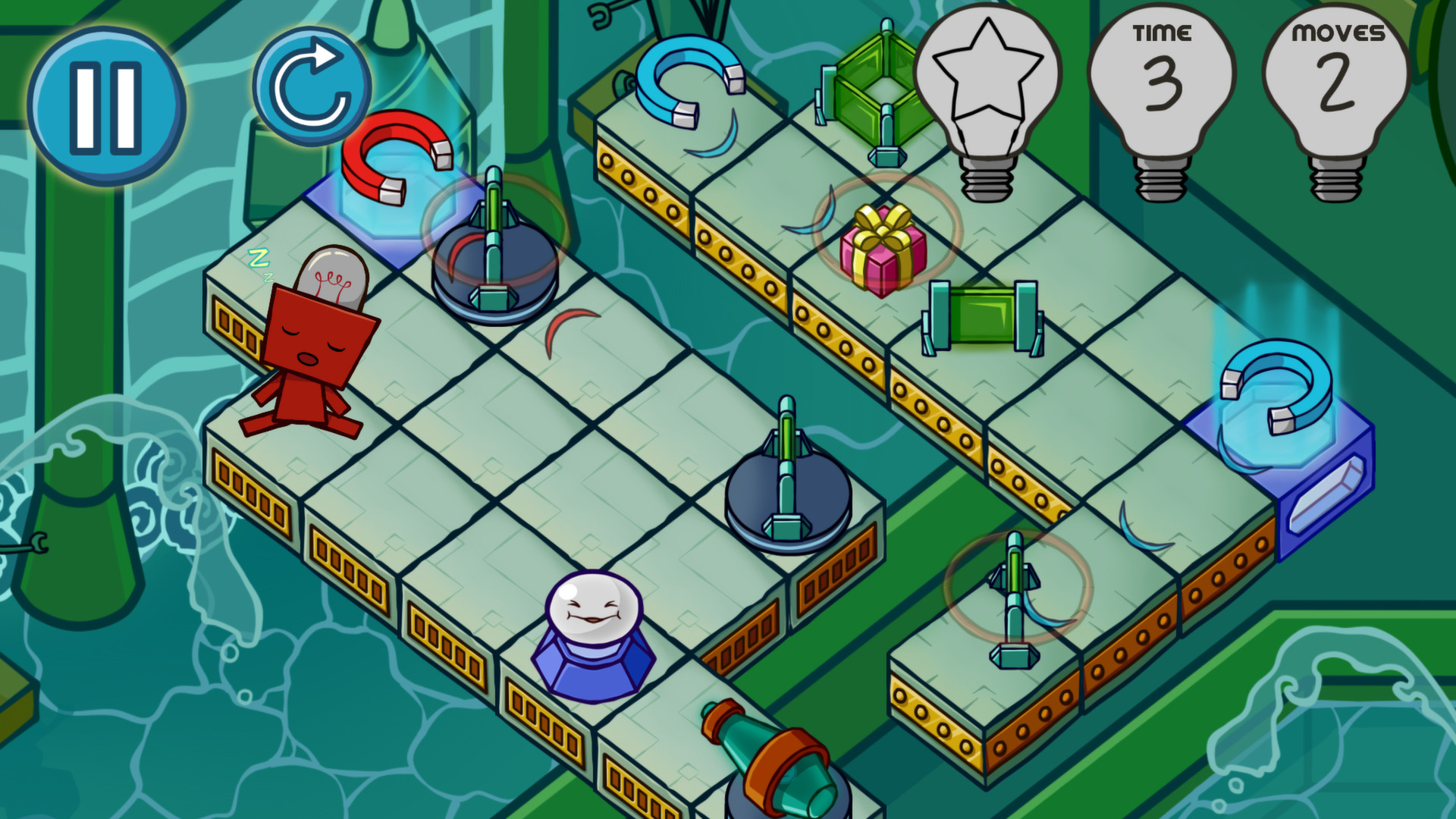
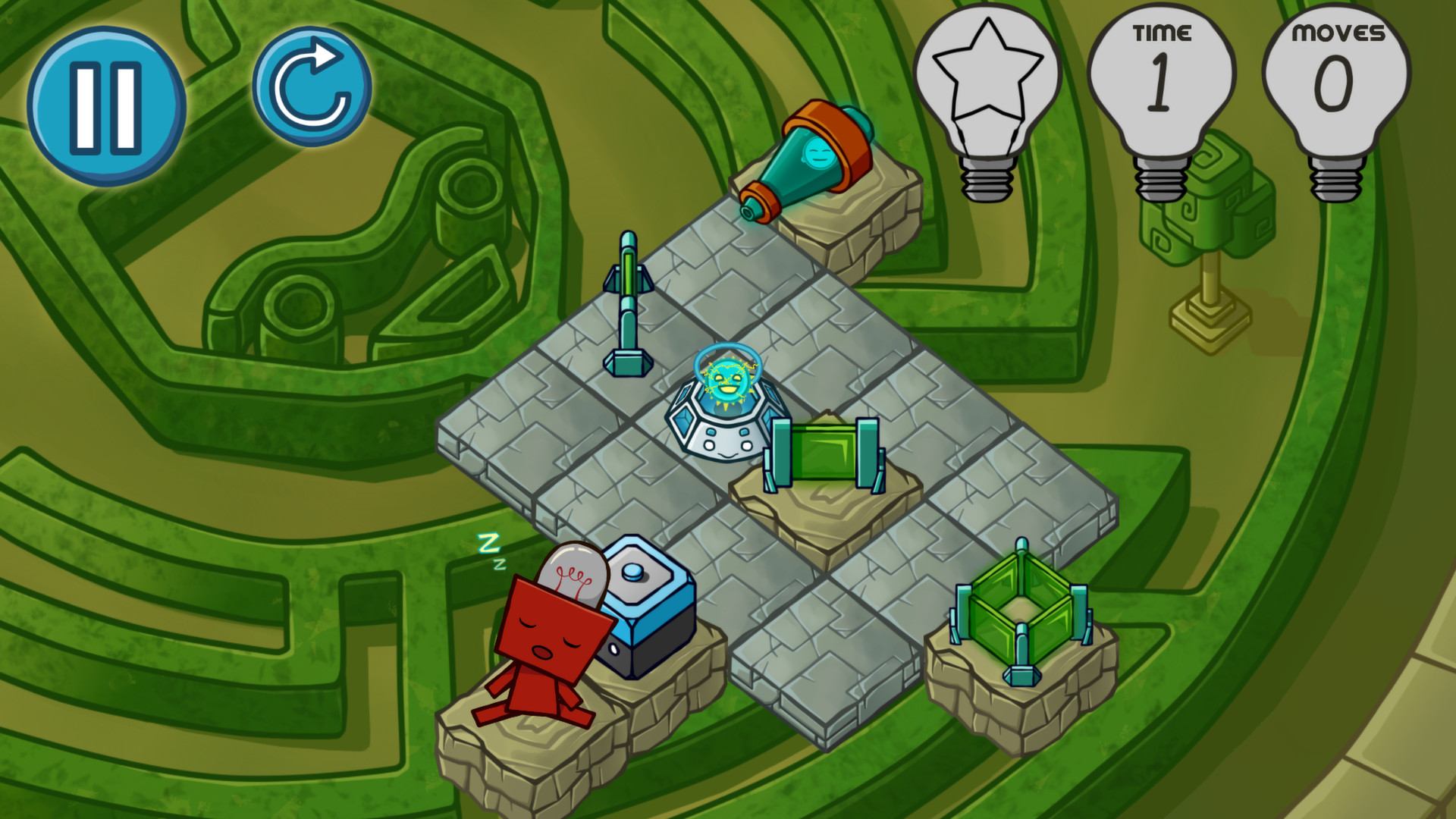
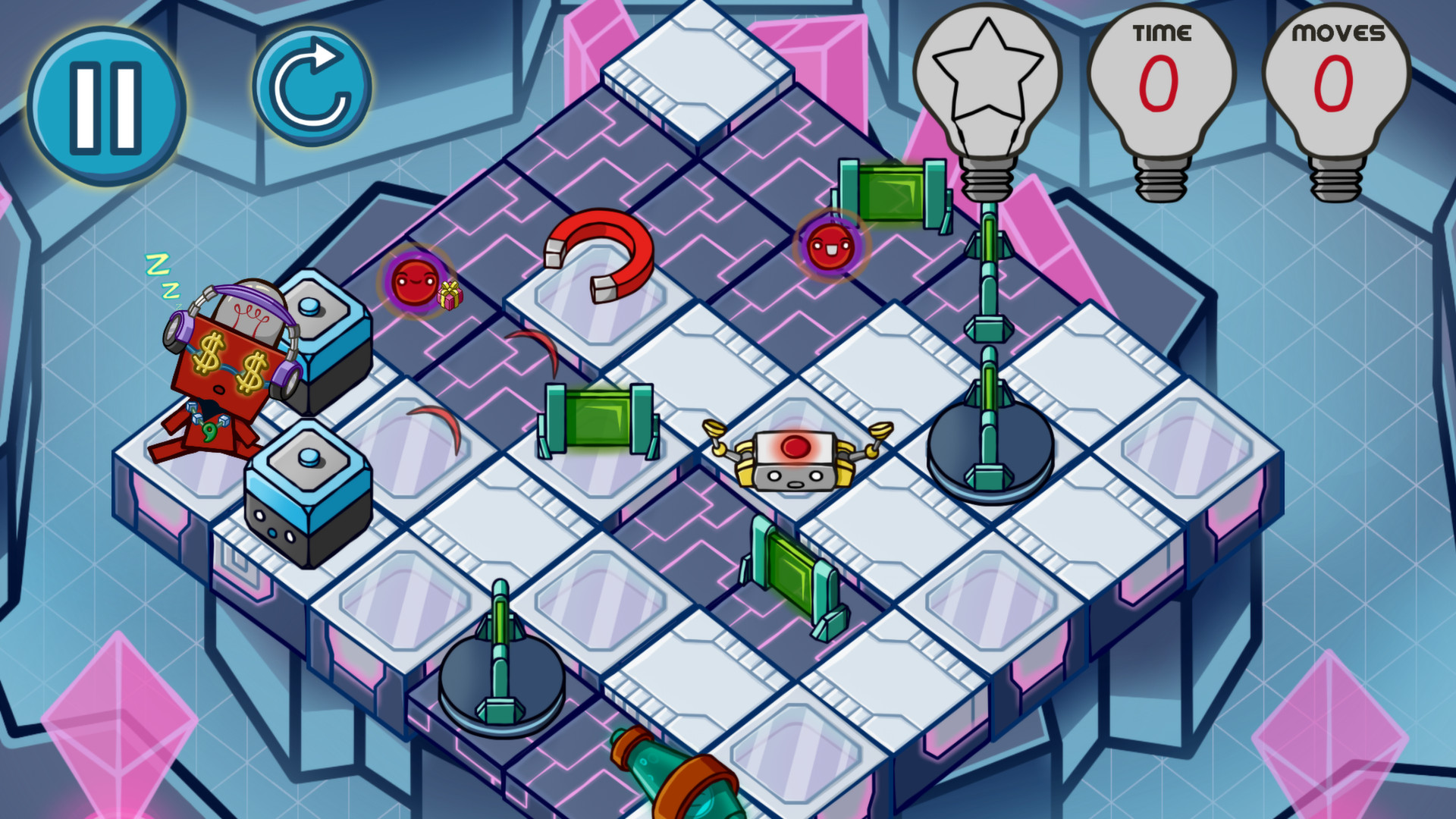
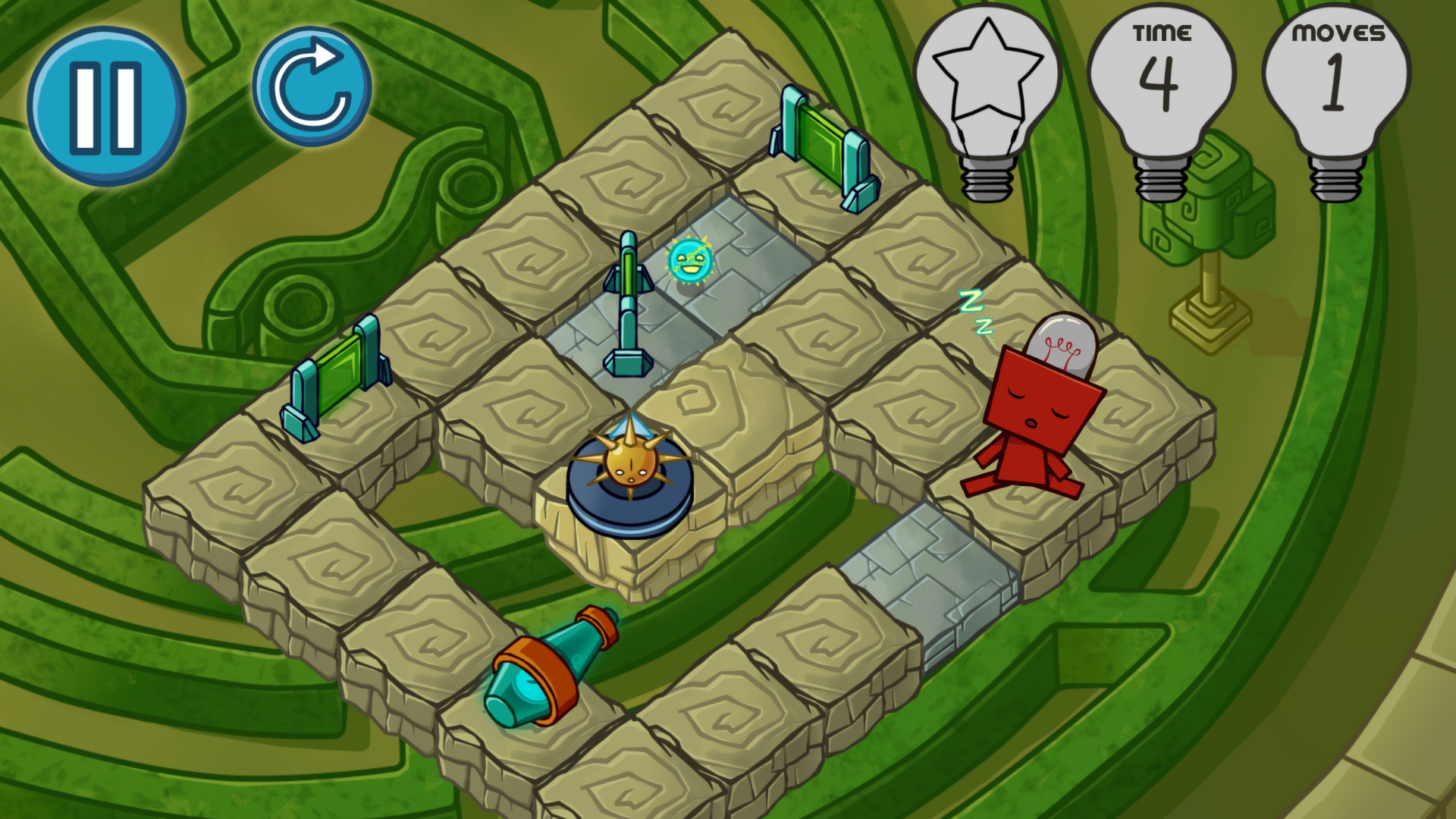
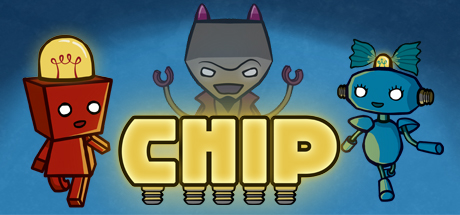
Chip is a cheerful and thoughtfully designed indie puzzle experience that thrives on clarity, creativity, and charm rather than complexity for its own sake. Developed and published by Coatsink, the game presents a lighthearted take on logic-based problem solving, wrapping its mechanics in a colorful isometric world that feels welcoming from the very first level. While its premise is simple, Chip demonstrates how carefully tuned puzzle design and strong presentation can elevate a modest idea into a consistently engaging experience. The game centers on a small, endearing robot named Chip, who has been left powerless and stranded by the villainous Rust. Each level tasks the player with restoring Chip’s energy by guiding a stream of electricity across the environment and into his body. This electricity does not move freely on its own; instead, players must manipulate a variety of interactive objects—such as cannons that fire energy, mirrors that redirect it, magnets that alter its path, and switches that control flow—to construct a viable route from source to target. Every stage functions as a contained logic puzzle, encouraging players to analyze the layout, experiment with object placement, and observe how the energy reacts to each adjustment. Mechanically, Chip is easy to understand but steadily ramps up in challenge. Early puzzles introduce concepts gently, ensuring players grasp how individual components work before combining them in more intricate configurations. Later levels demand careful sequencing and spatial awareness, asking players to think several steps ahead as they manipulate multiple elements in tandem. Despite this increasing complexity, the game avoids frustration by never penalizing experimentation. Players are free to test ideas, fail safely, and refine their approach without timers, scores, or harsh consequences, making the experience approachable for both casual players and dedicated puzzle fans. One of Chip’s greatest strengths is its visual presentation. The isometric environments are clean, vibrant, and easy to read, with clear visual cues that help players understand how objects interact. Animations are smooth and expressive, particularly Chip himself, whose reactions add personality and warmth to each successful solution. The game also includes collectible gift boxes hidden throughout levels, which unlock a range of whimsical costumes for Chip. While purely cosmetic, these outfits add a layer of personality and reward curiosity, encouraging players to revisit levels and explore alternative solutions. Audio design complements the visuals without overwhelming them. The soundtrack is upbeat and playful, reinforcing the game’s friendly tone, while sound effects provide clear feedback for player actions, such as redirecting electricity or activating objects. These audio cues help reinforce cause and effect, making it easier to understand why a particular setup succeeds or fails. The overall sensory presentation keeps the experience light and enjoyable, even during more challenging puzzles. Structurally, Chip offers a solid amount of content with dozens of handcrafted levels arranged in a steady progression. The pacing is consistent, and the game works well in short sessions, making it ideal for players who enjoy dipping in and out rather than committing to long playthroughs. That said, the core mechanics remain largely the same throughout the experience. While the puzzles grow more complex, the toolset does not expand dramatically, and players looking for constant mechanical innovation may find the later stages feel familiar rather than surprising. This consistency, however, is also part of Chip’s appeal. Rather than constantly introducing new systems, the game focuses on exploring the full potential of its existing mechanics. Each new puzzle feels like a refinement or remix of familiar ideas, emphasizing mastery and understanding over novelty. For many players, this creates a satisfying sense of flow and coherence, where progress feels earned through skill rather than memorization. In terms of replayability, Chip does not rely on procedural generation or multiple endings, but completionists will find value in hunting down all hidden collectibles and earning achievements. The absence of pressure or punishment makes revisiting levels relaxing rather than tedious, reinforcing the game’s role as a calming, thoughtful puzzle experience rather than a competitive one. Overall, Chip stands as a strong example of accessible puzzle design done right. It does not attempt to overwhelm players with complexity or abstraction, instead offering well-crafted challenges supported by clear visuals, gentle difficulty progression, and a charming sense of personality. While it may not redefine the puzzle genre, it succeeds in delivering a polished, enjoyable experience that respects the player’s time and intelligence. For anyone who appreciates logical problem solving wrapped in a friendly, colorful presentation, Chip is a rewarding and memorable indie title on Steam. Rating: 8/10
Expand the review