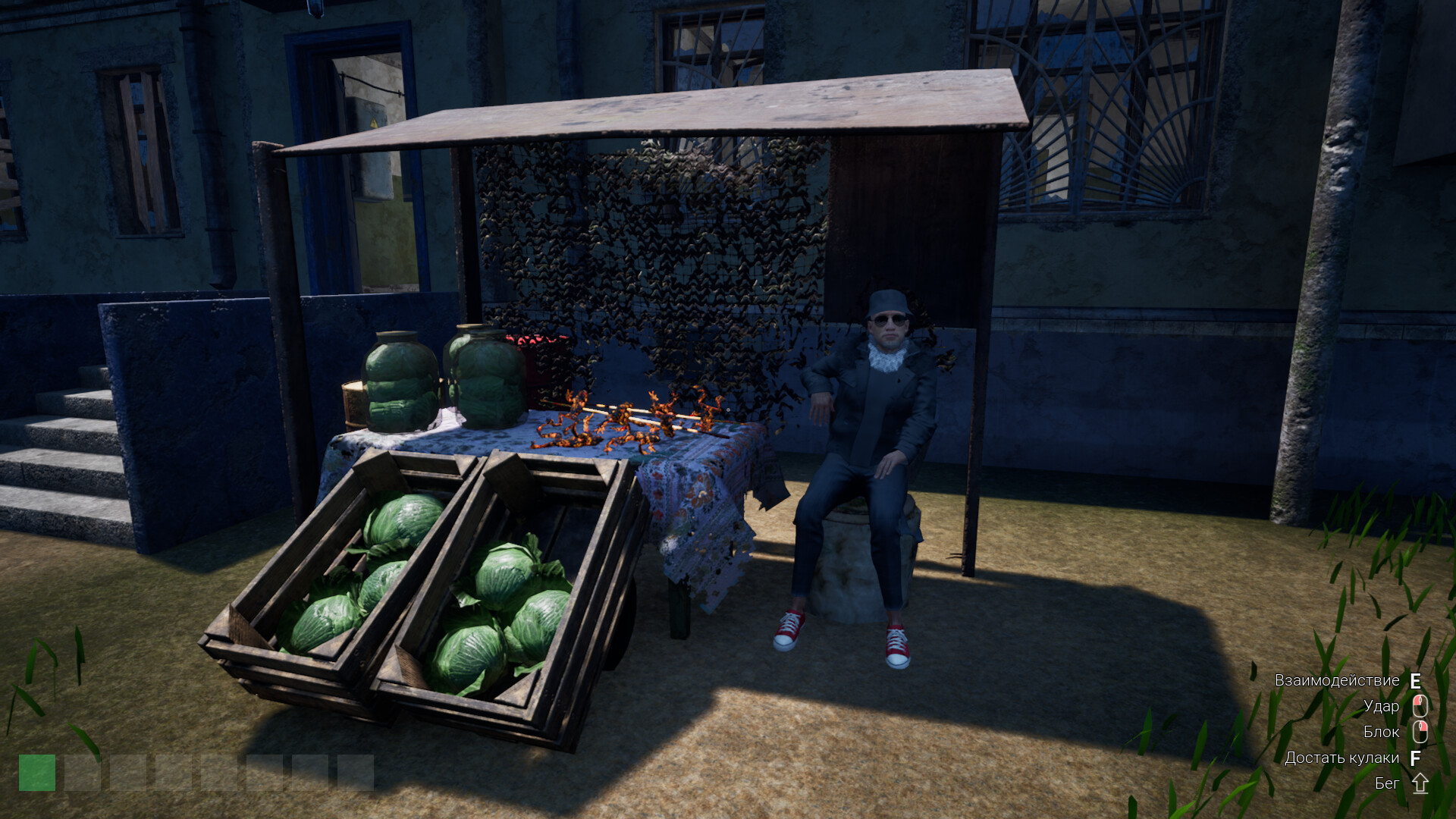
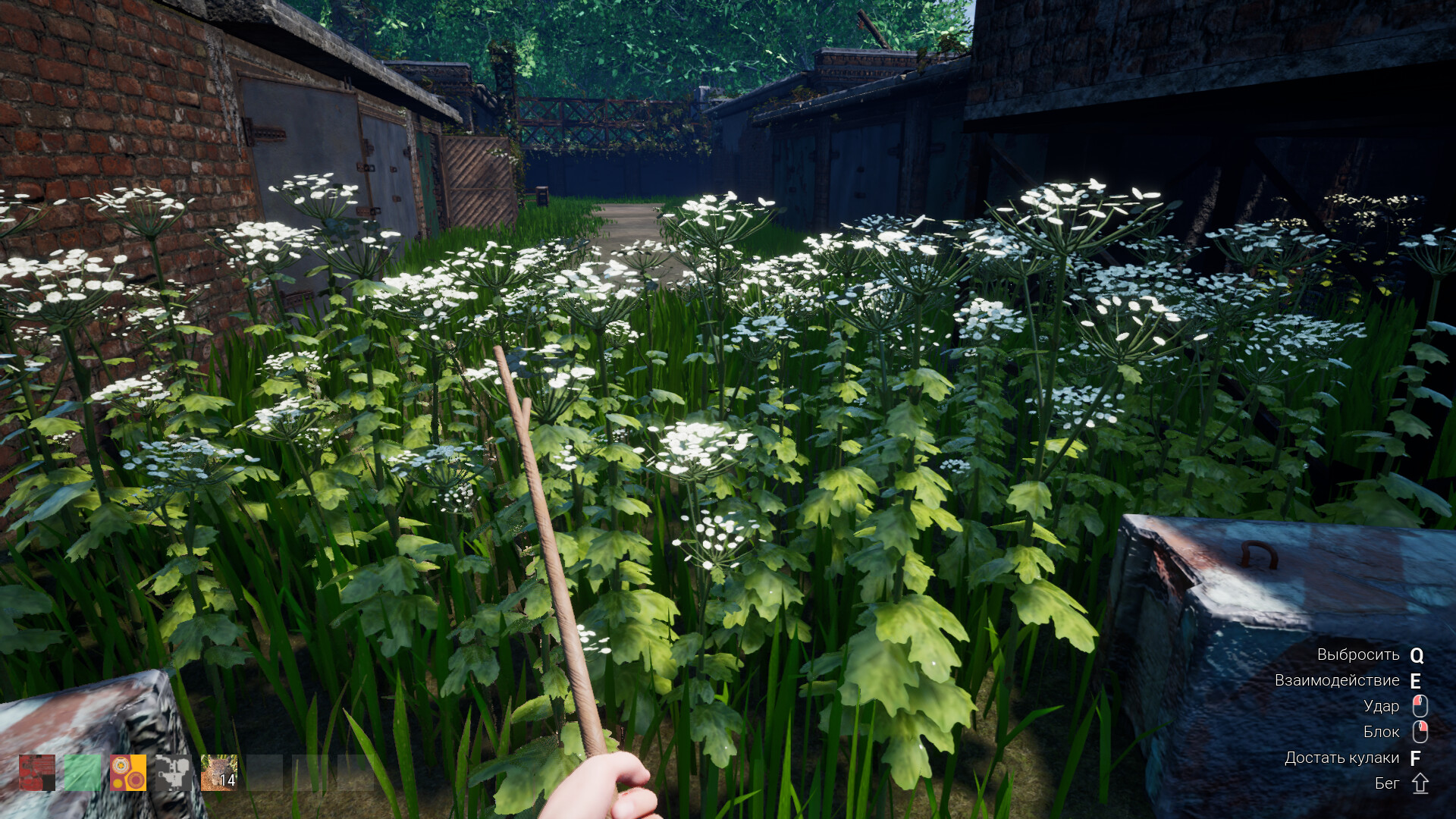
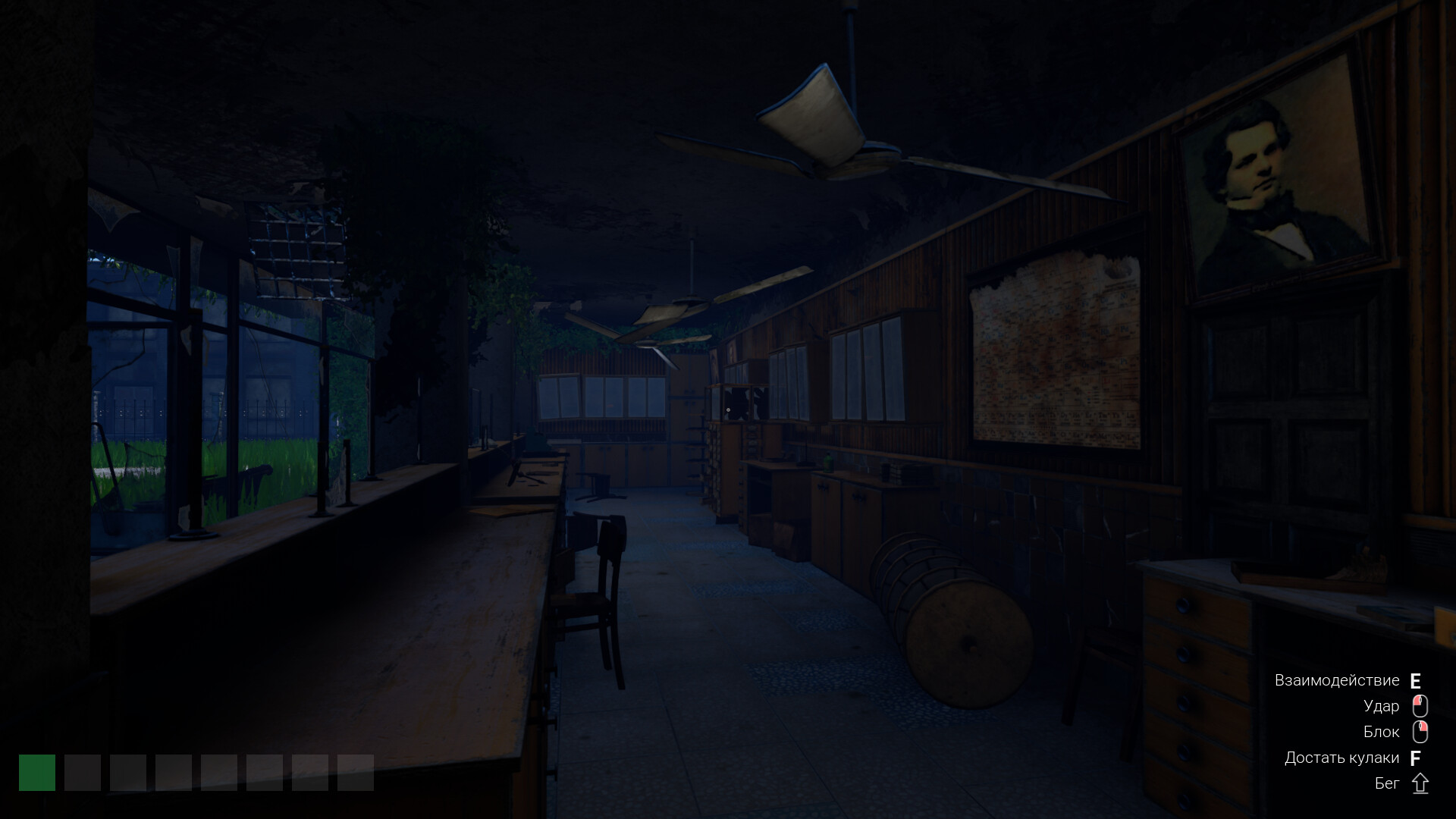
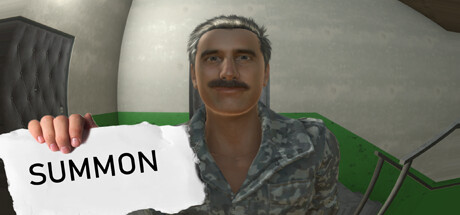
Chushpan Simulator 2 is an unconventional and eccentric indie game that defies easy categorization, blending open-world exploration, light RPG mechanics, and a tongue-in-cheek sense of humor into a grim yet oddly entertaining package. Developed and published by Sebasa Games, it continues the chaotic energy of its predecessor while expanding the scope of its world and the complexity of its choices. The story follows Egor, a rough-around-the-edges protagonist caught in the crossfire between two feuding gangs—the Pavers and the Glaziers—after a violent ambush leaves his companion Nastya kidnapped. The goal seems simple at first: survive the conflict and find a way to rescue her. Yet as the player ventures deeper into the Old City, the narrative unfolds into something stranger, a twisted mix of dark drama, absurd comedy, and social satire set in a crumbling urban landscape that feels both surreal and grounded in gritty realism. The game’s foundation lies in its open-world structure, where exploration and player choice take precedence. The Old City serves as the central playground—a decaying metropolis filled with gang hideouts, derelict buildings, secret alleys, and locked containers waiting to be hacked or looted. Missions are largely faction-driven, allowing the player to choose allegiances with the rival groups or play both sides for personal gain. Each decision shapes the story’s direction, affecting character relationships, available quests, and ultimately the game’s outcome. Egor’s moral flexibility becomes the player’s canvas; you can embody a ruthless opportunist, a reluctant antihero, or a quietly principled survivor. Despite the game’s small scale, this branching structure lends it an unexpected degree of replayability and narrative weight, ensuring that each playthrough can diverge in subtle but meaningful ways. Mechanically, Chushpan Simulator 2 combines exploration, combat, and simple hacking systems into a rough but functional gameplay loop. Combat is fast and brutal, ranging from brawling in the streets to firefights with makeshift weapons, while stealth and hacking offer alternatives for players who prefer a more cautious approach. Egor can interact with terminals to unlock safes, gather resources, and access hidden zones, which adds a small but satisfying strategic layer. The quests, though often repetitive in structure, are infused with personality thanks to the game’s bizarre tone and exaggerated dialogue. One moment you’re negotiating with gang leaders over a stolen shipment, and the next you’re tracking down bizarre side characters who feel ripped from a fever dream. Beneath the absurdity lies a genuine attempt to create a living, reactive world that reflects the consequences of your choices, and while the execution is uneven, the ambition is evident throughout. The game’s atmosphere is one of its strongest elements. The Old City feels alive in a grim, dystopian sort of way, with a distinctive Eastern European flavor that recalls the raw, unfiltered energy of low-budget crime dramas. The environments are filled with detail despite the limited resources—rusted cars, graffiti-covered walls, flickering neon lights, and crumbling high-rises all work together to create an oppressive but captivating setting. The moody soundtrack complements the tone perfectly, mixing ambient industrial sounds with dark electronic beats that evoke a sense of both tension and irony. It’s a world that manages to feel authentic even when it dips into absurdity, striking a balance between gritty realism and satirical exaggeration. However, Chushpan Simulator 2 is far from flawless. Its technical limitations are immediately apparent, from minor bugs and awkward animations to inconsistent optimization that can cause frame drops or crashes. The combat, while serviceable, lacks the polish and responsiveness found in more refined titles, and enemy AI can veer between overly aggressive and strangely oblivious. Some missions feel padded or repetitive, and the pacing can falter due to uneven quest distribution. The lack of full localization also makes it less accessible to non-Russian speakers, as the humor and dialogue often lose nuance through translation. These issues, though expected in a small indie project, can occasionally break immersion and remind players of the game’s modest budget and rough edges. Despite these flaws, there is an undeniable charm to Chushpan Simulator 2. Its eccentricity, self-awareness, and willingness to embrace chaos give it a personality that many larger games lack. It doesn’t take itself too seriously, and that’s part of its appeal. The combination of grim storytelling, absurd humor, and sandbox-style exploration makes for an experience that is as unpredictable as it is entertaining. Beneath the jank and the grit, there’s a sincerity in Sebasa Games’ design philosophy—a desire to create something distinct, something that captures the strangeness and moral ambiguity of life in a broken city. In the end, Chushpan Simulator 2 stands as a testament to the creative freedom of small indie developers. It’s messy, rough-edged, and occasionally nonsensical, but it’s also bold, funny, and strangely compelling. It may not reach the technical standards of a polished open-world RPG, but it offers a type of authenticity that can’t be replicated by big-budget studios. For players who enjoy quirky, offbeat games that balance dark storytelling with absurd humor, Chushpan Simulator 2 delivers a uniquely memorable experience—one that’s equal parts satire, survival, and chaos in the best possible way. Rating: 7/10
Expand the review