
Tametsi
Tametsi is a difficult logic game played on a set of tiles, in which you must use the clues provided to discover and mark hidden mines.
Sync your Steam wishlist to find the lowest game prices instantly. No login required, just paste your Steam profile URL!
⚡ Try Wishlist Radar!
Sync your Steam wishlist to find the lowest game prices instantly. No login required!
⚡ Try Wishlist Radar!
Close

Cypher on Steam
Quick menu
Cypher is a first person puzzle game about cryptography.
Cypher is a puzzle, indie and difficult game
developed and published by Matthew Brown.
Released on February 20th 2018 is available on Windows, Steam Deck and Steam Machine.
It has received 854 reviews of which 777 were positive and 77 were negative resulting in a rating of 8.6 out of 10. 😎
The game is currently priced at 4.99€ on Steam.
The Steam community has classified Cypher into these genres:
Media & Screenshots
Get an in-depth look at Cypher through various videos and screenshots.


System requirements
These are the minimum specifications needed to play the game. For the best experience, we recommend that you verify them.
Windows
- Requires a 64-bit processor and operating system
- OS *: Windows Vista (64-bit) or later
- Processor: 2.8 GHz+
- Memory: 4 GB RAM
- Graphics: Shader Model 3.0
- Storage: 250 MB available space
Steam Price & Best Deals
User reviews & Ratings
Explore reviews from Steam users sharing their experiences and what they love about the game.
You’ll be introduced to some of the best-known concepts and puzzles (ciphers) in cryptography, which I think are fairly accessible for beginners. However, since the difficulty is far from linear, you’ll quickly find yourself stuck. For experts, this game is a good refresher but may lacks content. A level editor and workshop would have been a nice adding, but for a game that costs 5€ there’s not much more to expect.
Cypher is a game that understands very well how to turn learning into something genuinely interesting. Instead of explaining everything directly, it makes you genuinely curious about how each system works. Solving a cipher here doesn’t feel like simply completing a puzzle, but like understanding the logic behind a hidden message. One of the best parts is how the game sparks a real interest in cryptography. While playing, I started learning more about the Vigenère cipher and the Enigma machine, not just as historical concepts, but as methods that genuinely required reasoning, interpretation, and attention to patterns. The game manages to teach without feeling like a lesson, and that makes all the difference. It’s also impossible not to think of the Zodiac Killer’s Z340 cipher, which was deciphered in 2020 by David Oranchak, Sam Blake, and Jarl Van Eycke after remaining unsolved for decades. The complete message read: “I HOPE YOU ARE HAVING LOTS OF FUN IN TRYING TO CATCH ME THAT WASN’T ME ON THE TV SHOW WHICH BRINGS UP A POINT ABOUT ME I AM NOT AFRAID OF THE GAS CHAMBER BECAUSE IT WILL SEND ME TO PARADICE ALL THE SOONER BECAUSE I NOW HAVE ENOUGH SLAVES TO WORK FOR ME WHERE EVERYONE ELSE HAS NOTHING WHEN THEY REACH PARADICE SO THEY ARE AFRAID OF DEATH I AM NOT AFRAID BECAUSE I KNOW THAT MY NEW LIFE WILL BE AN EASY ONE IN PARADICE DEATH” It’s interesting to see how real cases like this make cryptography even more fascinating once you start understanding the methods behind these ciphers. Cypher may look simple on the surface, but it is a very clever game in the way it sparks curiosity and turns knowledge into part of the gameplay itself.
Pre-game completion atm | ** Completed room 1,2,3,7- some puzzles I took screenshots of and did elsewhere in my free time & haven't been added to my total hours |, but I know what I'm in for Highly recommend for anyone that loves cryptography or ones that are interested in the idea. Mono gives a bit of nostalgia and is usually the area you'll find if you're in or out imo, willing to sit with your notepad and some patience I would plead the case to others or new people that it's worth sticking through to solve things out for yourself and the experience. Don't be pressured to expect to "just know" things and stress yourself out if it's not something you actively practice/do Generally no one is naturally incapable of learning anything, just be willing to break down and rebuild what you believe and think. Consider it a project, not a story game
Similar games
View all

Stephen's Sausage Roll
A simple 3d puzzle game.

Snakebird
Do you like puzzles, fruit and the notion of crossing a snake with a bird for no good reason? If the answer to at least one of those questions is yes, then Snakebird might be the game for you. Solve your way through this headscratcher of a puzzle game and help the snakebirds sate their hunger.
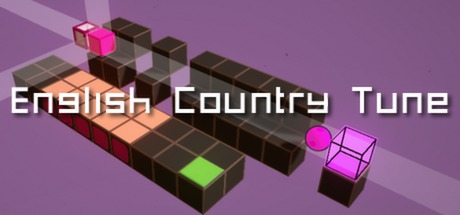
English Country Tune
English Country Tune is a luxuriant abstract 3D puzzle game containing more than a hundred levels situated throughout 17 worlds.

Yugo Puzzle
Yugo Puzzle is a minimalist, relaxing, and satisfying puzzle game. Move jelly blocks left and right to merge them with the same color. It may sound simple, but it’s deceptively challenging. Enjoy the satisfaction of solving each puzzle.

Disoriented
A first-person puzzle game. Simply walk to the door.


SquareCells
SquareCells is an ambient logic puzzle game.
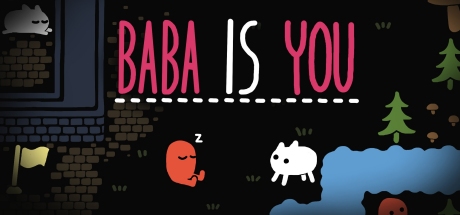
Baba Is You
Baba Is You is a puzzle game where the rules you have to follow are present as blocks you can interact with. By manipulating them, you can change how the game works, repurpose things you find in the levels and cause surprising interactions!

Frequently Asked Questions
Cypher is currently priced at 4.99€ on Steam.
No, Cypher is currently not on sale. You can purchase it for 4.99€ on Steam.
Yes, Cypher received 777 positive votes out of a total of 854 achieving a rating of 8.56.
😎
Cypher was developed and published by Matthew Brown.
Yes, Cypher is playable and fully supported on Windows.
No, Cypher is not playable on MacOS.
No, Cypher is not playable on Linux.
Yes, Cypher is playable on Steam Deck, though it might require a few minor tweaks. Make sure to check the Steam store page and community feedback on ProtonDB for exact compatibility details.
Yes, Cypher is playable on Steam Machine, though it might require a few minor tweaks. Make sure to check the Steam store page and community feedback on ProtonDB for exact compatibility details.
No, Cypher does not support VR.
Cypher is a single-player game.
No, Cypher does not currently offer any DLC.
No, Cypher does not support mods via Steam Workshop.
No, Cypher does not support Steam Remote Play.
Yes, Cypher is enabled for Steam Family Sharing. This means you can share the game with authorized users from your Steam Library, allowing them to play it on their own accounts. For more details on how the feature works, you can read the original Steam Family Sharing announcement or visit the Steam Family Sharing user guide and FAQ page.
You can find solutions or submit a support ticket by visiting the Steam Support page for Cypher.
Data sources
The information presented on this page is sourced from reliable APIs to ensure accuracy and relevance. We utilize the Steam API to gather data on game details, including titles, descriptions, prices, and user reviews. This allows us to provide you with the most up-to-date information directly from the Steam platform.
Additionally, we incorporate data from the SteamSpy API, which offers insights into game sales and player statistics. This helps us present a comprehensive view of each game's popularity and performance within the gaming community.
Last Updates| Steam data | 17 September 2026 20:06 UTC |
|---|---|
| SteamSpy data | 22 October 2026 18:37 UTC |
| Steam price | 26 October 2026 19:58 UTC |
| Steam reviews | 20 October 2026 09:57 UTC |
If you'd like to dive deeper into the details about Cypher, we invite you to check out a few dedicated websites that offer extensive information and insights. These platforms provide valuable data, analysis, and user-generated reports to enhance your understanding of the game and its performance.
- SteamDB - A comprehensive database of everything on Steam about Cypher
- SteamCharts - Analysis of Cypher concurrent players on Steam
- ProtonDB - Crowdsourced reports on Linux and Steam Deck Cypher compatibility

Game modes
Features
Online players
1
Developer
Matthew Brown
Publisher
Matthew Brown
Release
20 Feb 2018
Platforms