

STAR WARS Jedi: Fallen Order
A galaxy-spanning adventure awaits in Star Wars Jedi: Fallen Order, a 3rd person action-adventure title from Respawn. An abandoned Padawan must complete his training, develop new powerful Force abilities, and master the art of the lightsaber - all while staying one step ahead of the Empire.
Sync your Steam wishlist to find the lowest game prices instantly. No login required, just paste your Steam profile URL!
⚡ Try Wishlist Radar!
Sync your Steam wishlist to find the lowest game prices instantly. No login required!
⚡ Try Wishlist Radar!
Close

Dark PGT on Steam
Quick menu
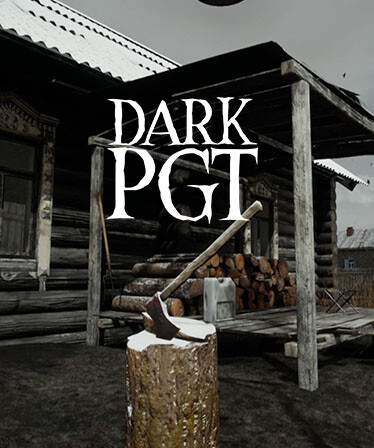
Dark PGT – A Souls-like game in an alternate universe of future USSR on Unreal Engine 5. You will play the role of alcoholic-schizophrenic experiencing psychological disorders and hallucinations. Travel to a village in 2030 to unravel all its secrets and solve all its problems.
Dark PGT is a souls-like, perma death and action-adventure game
developed and published by ZERO5GAMES.
Released on February 20th 2025 is available only on Windows
in 2 languages: English and Russian.
It has received 404 reviews of which 335 were positive and 69 were negative resulting in a rating of 7.8 out of 10. 😊
The game is currently priced at 4.99€ on Steam, but you can find it for 3.99€ on Eneba.
The Steam community has classified Dark PGT into these genres:
Souls-like
Perma Death
Action-Adventure
Third Person
Funny
Swordplay
Linear
Realistic
Medieval
Psychedelic
Survival
Adventure
1990's
Combat
Singleplayer
Indie
Gore
Violent
RPG
Action
Here is the detailed breakdown of supported languages for Dark PGT:
| UI | Subtitle | Audio | |
|---|---|---|---|
| English | |||
| Russian |
Media & Screenshots
Get an in-depth look at Dark PGT through various videos and screenshots.


Load More


System requirements
These are the minimum specifications needed to play the game. For the best experience, we recommend that you verify them.
Windows
- Requires a 64-bit processor and operating system
- OS: Windows 10 64bit
- Processor: AMD Ryzen 5 5500/Intel Core i5
- Memory: 8 GB RAM
- Graphics: AMD Radeon RX 560 4GB / NVIDIA GeForce GTX 960 4GB
- DirectX: Version 11
- Storage: 50 GB available space
Steam Price & Best Deals
User reviews & Ratings
Explore reviews from Steam users sharing their experiences and what they love about the game.
Dark PGT is a surreal action RPG developed and published by ZERO5GAMES that mixes psychological horror, Souls-like combat, dystopian satire, and bizarre dark comedy into an experience that feels completely unrestrained in both style and tone. Created by a solo developer using Unreal Engine 5, the game drops players into a decaying alternate-future Soviet setting where madness, paranoia, and grotesque violence dominate every corner of the world. It is not a polished mainstream RPG designed for broad appeal, but rather an experimental and deeply strange project that gains much of its appeal from its unpredictability and disturbing atmosphere. The story follows a mentally unstable military alcoholic suffering from schizophrenia who arrives in a cursed Soviet village sometime in the near future. From the moment the game begins, reality feels unreliable. Strange figures scream from apartment windows, ruined buildings hide grotesque enemies, and surreal hallucinations blur the line between truth and delusion. The narrative intentionally avoids clear structure, instead presenting fragmented scenes, disturbing imagery, and bizarre encounters that gradually build the impression of a collapsing mind trapped inside a collapsing society. The game rarely explains itself directly, forcing players to interpret its symbolism and psychological themes on their own. One of Dark PGT’s strongest qualities is its oppressive atmosphere. The world feels constantly hostile even during quieter moments. Rain-soaked streets, abandoned Soviet architecture, thick fog, and endless darkness combine to create an environment that feels emotionally exhausting in a deliberate way. The game’s interpretation of a ruined future USSR gives it a unique identity rarely seen in indie horror RPGs. Instead of relying entirely on cheap jump scares or constant combat, much of the horror comes from simply existing inside this decaying world and slowly realizing how unstable everything has become. The visual presentation is especially impressive considering the project’s small development scale. Unreal Engine 5 allows the game to create striking lighting effects, detailed environmental textures, and dense atmospheric fog that greatly enhance immersion. Certain locations genuinely look nightmarish, particularly during nighttime exploration where visibility becomes limited and the environment begins to feel dreamlike. The game often succeeds at creating scenes that feel simultaneously realistic and surreal, reinforcing the sense that reality itself may be breaking apart around the player. Combat takes heavy inspiration from Souls-like games, emphasizing deliberate timing, punishing enemy encounters, and brutal difficulty. Players must carefully observe enemy behavior, manage stamina, and avoid reckless attacks because mistakes are punished harshly. Encounters often feel tense and dangerous, especially when resources become limited or enemies overwhelm the player in narrow environments. While the combat mechanics can occasionally feel rough and unrefined compared to larger action RPGs, they still provide satisfying moments of tension and accomplishment when difficult enemies are finally defeated. The game’s use of dark humor also helps separate it from more traditional horror experiences. Strange dialogue, grotesque NPCs, absurd enemy behavior, and surreal environmental details constantly create moments that are disturbing and strangely funny at the same time. Dark PGT frequently feels like a twisted parody of Soviet dystopia, psychological horror, and hardcore action RPGs all blended together. This unpredictable tonal balance gives the game a unique personality that many indie horror projects struggle to achieve. Sound design contributes heavily to the overall atmosphere. Environmental noises echo through empty streets, unsettling ambient sounds create constant tension, and sudden bursts of disturbing audio reinforce the player character’s unstable mental state. Music is often minimal or completely absent during exploration, allowing silence itself to become unsettling. Combined with the surreal visual presentation, the audio design creates an experience that feels psychologically oppressive from beginning to end. At the same time, the game’s ambition clearly exceeds its technical polish. Combat animations occasionally feel stiff, enemy AI can behave unpredictably, and overall gameplay balance sometimes feels intentionally chaotic rather than carefully refined. Certain mechanics and encounters may frustrate players who expect the precision and consistency commonly found in larger Souls-like titles. The story’s fragmented structure can also become confusing because the game intentionally prioritizes atmosphere and symbolism over direct narrative clarity. Difficulty is another aspect that may divide players. Dark PGT frequently places players into uncomfortable and punishing situations with very little guidance. Some encounters feel unfair by design, and progression can occasionally depend more on persistence and experimentation than on pure mechanical mastery. However, for players who enjoy experimental indie projects and unconventional horror experiences, many of these rough edges become part of the game’s strange charm rather than major flaws. What ultimately makes Dark PGT memorable is how fearless it is in pursuing its bizarre vision. It constantly shifts between horror, satire, tragedy, psychological collapse, and absurd comedy without ever fully committing to a single genre. The experience often feels less like a commercial video game and more like an interactive fever dream created without creative restraint. While this chaotic approach will absolutely alienate some players, it also gives the game a level of originality that is difficult to ignore. Dark PGT ultimately stands as a strange, flawed, but fascinating indie RPG that successfully combines brutal action gameplay with surreal psychological horror and dystopian storytelling. Its haunting atmosphere, disturbing imagery, and bizarre sense of humor create an experience that feels deeply unsettling yet oddly captivating. While technical imperfections and intentionally chaotic design choices prevent it from achieving the refinement of larger action RPGs, players willing to embrace its madness will likely discover one of the more unusual and unforgettable indie horror experiences currently available. Rating: 8/10
Dark PGT - Not a Game, But a Twisted Soviet Psychedelic Art Object 🎮🧠 Folks, I just finished Dark PGT and I'm still processing what the hell I just experienced. This isn't really a game in the usual sense - it's more like a bizarre, one-man art installation dropped straight into Steam. A raw, unfiltered trip into an alternate 2030 where the USSR never ended, and everything is soaked in madness, blood and pitch-black humor. Made by a single developer on Unreal Engine 5, it feels like a personal fever dream you get to walk through. Atmosphere & Story You play as a military alcoholic with schizophrenia and heavy hallucinations. You arrive in a cursed village and immediately lose any grip on what's real. Enemies might be actual mutants or just your own broken mind playing tricks. Mutant grannies yelling from balconies, street prophets screaming prophecies, chunks of meat, severed limbs, rivers of blood - all wrapped in dark comedy that had me laughing out loud in the middle of pure chaos. The plot is full of wild twists and philosophical gut-punches about reality itself. Your brain gets thrown into a meat grinder, and somehow it feels... oddly satisfying. Gameplay Combat is pure souls-like hell, but even more unforgiving. No leveling, no safety net, no comfort shield - just you, your sword and raw reflexes. Enemies are ruthless, patterns are brutal but fair. Beating a boss after 30+ attempts feels like ascending to another plane of existence. The UE5 visuals are stunning in their grim beauty: constant rain, thick fog, blood everywhere, a decaying Soviet village that looks alive and wrong at the same time. Pros [*]✅- Graphics on Unreal Engine 5 look genuinely impressive for a solo project. [*]✅- Completely unique setting and black humor you won't find anywhere else. [*]✅- Atmosphere of pure chaos and madness that gives real chills. [*]✅- Everything is so broken, unpredictable and insane that it becomes strangely hilarious and mesmerizing. [*]✅- If you treat it as an art object rather than a regular game, the "flaws" suddenly make perfect sense. [*]✅- Tiny price (especially on discount) for an experience worth a million. Cons [*]❌- If you're looking for a normal, polished game - you'll probably be disappointed or even culturally shocked. [*]❌- Way too hard and confusing for casual players or anyone who doesn't enjoy black humor. [*]❌- There are bugs, optimization issues and not much content, but they honestly feel like part of the artistic concept. [*]❌- No progression at all - your only tools are skill and patience (the game literally tests how much you can take). Final Thoughts I've never seen anything like Dark PGT before, and I probably never will again. I can't even call it a "game" anymore - it's a unique, deranged art object made for a very specific audience of collectors and weird-fiction lovers. If you crave something completely new, you're not afraid of extreme difficulty, bugs or total mind-screw storytelling, and you appreciate black humor and unhinged narratives - grab it without hesitation. For such a tiny price you'll get a storm of impressions you'll remember for years. After this, every other game might suddenly feel too safe, too logical, too... normal. Highly recommended for the right kind of mad soul. 🔥
And so the game is about an extraordinary hero who up against everything bad for everything good, well, as usual, a very cool project, unusual and fresh, I advise everything, since this is a new experience, I think you will not regret it, because literally everything is good here, from graphics to gameplay
Similar games
View all

ALAA-MOGUS MUST DIE
This is a historical action game from 3rd person based on Yakut mythology. Alaa-Mogus the devil has come to seize our land! Uraankhai Sakha, let's take up our weapons and drive him back to the dungeon! Uruy-Aikhal!
Frequently Asked Questions
Dark PGT is currently priced at 4.99€ on Steam.
No, Dark PGT is currently not on sale. You can purchase it for 4.99€ on Steam.
Yes, Dark PGT received 335 positive votes out of a total of 404 achieving a rating of 7.75.
😊
Dark PGT was developed and published by ZERO5GAMES.
Yes, Dark PGT is playable and fully supported on Windows.
No, Dark PGT is not playable on MacOS.
No, Dark PGT is not playable on Linux.
This information about Dark PGT is not available yet.
This information about Dark PGT is not available yet.
No, Dark PGT does not support VR.
Dark PGT is a single-player game.
No, Dark PGT does not currently offer any DLC.
No, Dark PGT does not support mods via Steam Workshop.
No, Dark PGT does not support Steam Remote Play.
Yes, Dark PGT is enabled for Steam Family Sharing. This means you can share the game with authorized users from your Steam Library, allowing them to play it on their own accounts. For more details on how the feature works, you can read the original Steam Family Sharing announcement or visit the Steam Family Sharing user guide and FAQ page.
You can find solutions or submit a support ticket by visiting the Steam Support page for Dark PGT.
Data sources
The information presented on this page is sourced from reliable APIs to ensure accuracy and relevance. We utilize the Steam API to gather data on game details, including titles, descriptions, prices, and user reviews. This allows us to provide you with the most up-to-date information directly from the Steam platform.
Additionally, we incorporate data from the SteamSpy API, which offers insights into game sales and player statistics. This helps us present a comprehensive view of each game's popularity and performance within the gaming community.
Last Updates| Steam data | 26 September 2026 05:21 UTC |
|---|---|
| SteamSpy data | 19 October 2026 07:08 UTC |
| Steam price | 26 October 2026 20:23 UTC |
| Steam reviews | 19 October 2026 09:59 UTC |
If you'd like to dive deeper into the details about Dark PGT, we invite you to check out a few dedicated websites that offer extensive information and insights. These platforms provide valuable data, analysis, and user-generated reports to enhance your understanding of the game and its performance.
- SteamDB - A comprehensive database of everything on Steam about Dark PGT
- SteamCharts - Analysis of Dark PGT concurrent players on Steam
- ProtonDB - Crowdsourced reports on Linux and Steam Deck Dark PGT compatibility
Game modes
Features
Online players
0
Developer
ZERO5GAMES
Publisher
ZERO5GAMES
Release
20 Feb 2025
Platforms
Clicking and buying through these links helps us earn a commission to maintain our services.