
Zen of Sudoku
From the creators of Natural Selection comes Zen of Sudoku, a relaxing, easy to play version of Sudoku for your PC.Relax with hand-painted Japanese-styled backgrounds, no timer and lush natural soundscapes.Stimulates your brain to keep it healthy and alert.
Sync your Steam wishlist to find the lowest game prices instantly. No login required, just paste your Steam profile URL!
⚡ Try Wishlist Radar!
Sync your Steam wishlist to find the lowest game prices instantly. No login required!
⚡ Try Wishlist Radar!
Close

Hidden Objects on Steam
Quick menu
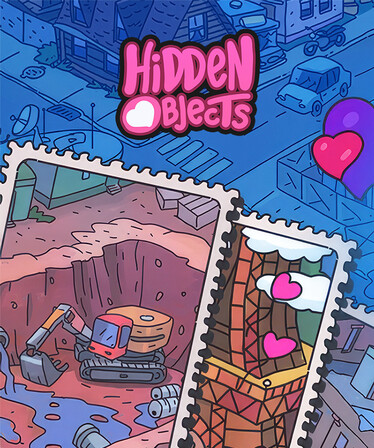
Immerse yourself in the world of hidden object search! In this exciting game you will find many unique locations hand-drawn by the artist. The game will give you positive emotions.
Hidden Objects is a casual, puzzle and 2.5d game
developed and published by Morion Studio.
Released on October 22nd 2024 is available on Windows, Steam Deck and Steam Machine
in 8 languages: English, French, Italian, German, Spanish - Spain, Korean, Russian and Japanese.
It has received 302 reviews of which 230 were positive and 72 were negative resulting in a rating of 7.2 out of 10. 😊
Among its top reviewers, the game has a median playtime of 15 hours, offering a realistic snapshot of how much time players typically invest rather than strict completion time.
The game is free to play on Steam.
The Steam community has classified Hidden Objects into these genres:
Here is the detailed breakdown of supported languages for Hidden Objects:
| UI | Subtitle | Audio | |
|---|---|---|---|
| English | |||
| German | |||
| French | |||
| Italian | |||
| Korean | |||
| Spanish - Spain | |||
| Russian | |||
| Japanese |
Media & Screenshots
Get an in-depth look at Hidden Objects through various videos and screenshots.


System requirements
These are the minimum specifications needed to play the game. For the best experience, we recommend that you verify them.
Windows
- Requires a 64-bit processor and operating system
- OS *: Windows 7+
- Processor: 1.5 GHz
- Memory: 2 GB RAM
- Graphics: 1 GB
- Storage: 500 MB available space
- Sound Card: Direct X
Steam Price & Best Deals
User reviews & Ratings
Explore reviews from Steam users sharing their experiences and what they love about the game.
This is a fun game but it gets so repetitive and starts to feel like a grind. The 4, 5, + stages per level gets old quickly. I finished about 1/3 of the game several years ago, got bored with the grind and didn't think about it again until now when I was looking at what games I've already got achievements for that I can finish. Came upon this one, thought maybe it would be a simple finish, its a hidden objects game after all lol Boy was I wrong haha another 3rd done and I, again, got tired of the grind and just hunted for the special gold items on each level/stage (finding those is what gives you achievements, not finishing a level or stage) just to get the 100% and move on from this. If there were fewer stages per level, like maybe 3-4 and take half the levels and make it into a separate game, this would be really fun. As it is, it can get boring after a bit and is one of those games you'll set aside for a long time before picking it back up again to finish it
I'd say it's' one of my favorite game mode, it really tests your agility. With every level, you're met with even more beautiful artwork, i love games like this, where you can truly see the hard work and dedication put into them. It's cute and relaxing, i higly recommend giving it a try, you won't regret it!!
OMgosh, excellent simple no stress enjoyment. I really like the moving artwork in Hidden Objects, makes this so much fun. I am shocked at the amount of negative feedback on this game. I got it for free and am enjoying it with no problems. Tons of maps and beautifully done. Mindless clicking to get objects to disappear which great sound effects is so satisfying. My wife had a stroke 2 years ago and luckily she made a full recovery. She is a non-gamer, but playing this type of game is an excellent way to exercise her cognitive abilities and stay sharp. Having a touch screen on the Steam Deck makes this particularly satisfying to play.
Hidden Object is a relaxing and enjoyable game that's perfect for short play sessions. The puzzles are well designed, the environments are detailed, and finding every object feels satisfying. It's a great choice if you enjoy casual puzzle games and want something to unwind with while enjoying a cup of coffee. Rating: ★★★★☆ (4/5)
This is not by any means a hidden object game but more of a trial of endurance by how many objects that barely hidden aside from very few well hidden but across 151 level i played they are incredibly far in between. This game should be categorized as solely a clicker game because if you plan to complete all levels the amout of clicking will either challenge your endurace or turn you insane. As for why i recommend it i don't really know maybe because for my self acclamation and sense of accomplishment for not going insane along the way.
Hidden Objects is a casual puzzle game developed and published by Morion Studio that focuses entirely on the classic search-and-find gameplay format. Built around a simple but widely popular concept, the game invites players to carefully explore detailed scenes and locate a variety of hidden items scattered throughout the environment. Rather than emphasizing fast reactions or complicated mechanics, the experience centers on patience, observation, and visual attention to detail. This design places the game firmly within the casual puzzle genre, making it accessible to players who prefer relaxing gameplay sessions rather than intense challenges. The premise of Hidden Objects is intentionally straightforward. Each level presents a large illustrated scene filled with a dense collection of objects and environmental details. The player is given a list of items that must be located somewhere within the scene. These items may include everyday objects such as tools, household items, decorative pieces, or other small objects that blend naturally into the background. The challenge lies in scanning the environment carefully and identifying where each listed object is hidden among the many visual distractions. The core gameplay loop remains consistent across the entire experience. Players move through different scenes, studying the environment piece by piece while searching for the required objects. When the correct item is found and selected, it is marked off the list and the player continues searching for the remaining items. This structure is simple but effective, relying on the satisfaction of gradually clearing the list as more objects are discovered. Because there are no strict time limits in most situations, players are free to explore each scene at their own pace. The visual presentation plays a crucial role in the gameplay experience. Each level is built around colorful illustrated environments designed to contain a large number of objects layered into the scenery. Items may be partially hidden behind other objects, placed in unusual angles, or designed to blend naturally into the background so that they are not immediately obvious. This design encourages players to look closely at every corner of the image and pay attention to small visual details that might otherwise be overlooked. The art style leans toward bright and slightly cartoonish imagery rather than realistic environments. This stylistic approach helps maintain a relaxed and friendly atmosphere while keeping the scenes visually clear enough for players to examine carefully. The colorful environments are filled with various decorative details that make each location feel lively, even though the gameplay itself remains focused on observation rather than movement or interaction. As players progress through the levels, the complexity of the scenes gradually increases. Early stages tend to contain fewer objects and more obvious placements, allowing players to become familiar with the mechanics. Later scenes introduce a much denser arrangement of items, making it harder to distinguish individual objects from the background. Some levels may also require players to locate multiple copies of the same item or search for particularly small objects hidden within crowded areas of the image. To prevent players from becoming stuck for too long, the game includes a hint system that can reveal the approximate location of a hidden object. Activating a hint highlights a section of the scene where the item can be found, allowing players to continue progressing through the level. While this feature can be helpful during difficult moments, relying on hints too frequently can reduce the sense of accomplishment that comes from discovering items independently. The game also includes basic progression features such as achievements and completion tracking. Players can attempt to finish levels quickly or complete all available challenges in order to unlock achievements. These systems add a small amount of replay value, encouraging players to revisit previously completed scenes and attempt to locate objects more efficiently. One of the main strengths of Hidden Objects is its accessibility. Because the gameplay requires only simple mouse controls and basic observation skills, it can be enjoyed by players of nearly any skill level. The relaxed pace makes it particularly suitable for short play sessions or casual gaming moments when players simply want a quiet and low-pressure activity. However, the simplicity of the mechanics also leads to some limitations. Since the core gameplay loop rarely changes beyond searching for objects in different scenes, the experience can become repetitive over longer play sessions. Without additional puzzle mechanics, story elements, or gameplay variations, the game relies heavily on the visual design of its environments to keep players engaged. Another minor issue lies in the object placement within certain scenes. Occasionally, items may feel somewhat disconnected from the environment in which they appear, making them seem randomly scattered rather than naturally integrated into the setting. In some cases, similar objects may appear repeatedly across different levels, which slightly reduces the sense of discovery as the player progresses. Despite these shortcomings, Hidden Objects succeeds in providing exactly the kind of experience it intends to deliver. Its simple mechanics, colorful environments, and relaxed pacing make it an easy game to pick up and enjoy without requiring significant commitment or concentration. Players who appreciate casual puzzle games focused on observation and exploration will likely find the gameplay satisfying. Ultimately, Hidden Objects is best viewed as a straightforward casual puzzle experience designed for players who enjoy the traditional hidden object format. While it may lack the complexity or narrative depth found in larger puzzle adventures, it offers a pleasant and accessible gameplay loop centered on visual discovery. For players looking for a calm and relaxing search-and-find challenge, the game delivers a simple but enjoyable experience that remains faithful to the classic hidden object formula. Rating: 7/10
Similar games
View all

KAMI
KAMI is deceptively simple: fold out coloured paper to fill the screen in as few moves as possible. Relaxing and easy to pick up, you'll soon find yourself deep in contemplation to perfect each puzzle. Created by State of Play, famous for their handcrafted aesthetic, KAMI has been created with real paper in an elegant Japanese theme.

Up Left Out
A puzzle game about unlocking stuff.


Sigils of Elohim
Sigils of Elohim is a free mini-game prelude to Croteam’s upcoming first-person puzzler The Talos Principle that challenges players to solve dozens of challenging sigil puzzles under the watchful eye of Elohim.
Pixel Puzzles: Japan
Pixel Puzzles: Japan combines traditional jigsaw puzzle style gameplay with light video-game interactivity.


RUSH
From the twisted puzzle minds behind the award winning Toki Tori comes a new game, simply called RUSH. Fortunately for fans of high quality puzzle games, RUSH is anything but simple. In the game's fully three dimensional levels, players need to guide cubes to color coded exit points using Conveyor belts, Warps, Stops Signs, Splits and...

Paint it Back
Use logic as your paintbrush to restore lost works of pixel art. Try the demo!

hexceed
A relaxing, hexagon based, puzzle game. An exciting new twist on a classic game without the element of guesswork! Use your critical thinking and our stimulating game mechanics to progress through hundreds of levels!

Access Denied
Access Denied is a puzzle game in the world where for storage of personal data are used special device in the form of protected boxes. Imagine yourself in the role of the professional cracker of such devices and test your skills for 36 different levels.
Frequently Asked Questions
Yes, Hidden Objects is free to play on Steam.
Hidden Objects is not on sale because is already free to play on Steam.
Yes, Hidden Objects received 230 positive votes out of a total of 302 achieving a rating of 7.15.
😊
Hidden Objects was developed and published by Morion Studio.
Yes, Hidden Objects is playable and fully supported on Windows.
No, Hidden Objects is not playable on MacOS.
No, Hidden Objects is not playable on Linux.
Yes, Hidden Objects is playable and fully supported on Steam Deck.
Yes, Hidden Objects is playable and fully supported on Steam Machine.
No, Hidden Objects does not support VR.
Hidden Objects is a single-player game.
No, Hidden Objects does not currently offer any DLC.
No, Hidden Objects does not support mods via Steam Workshop.
No, Hidden Objects does not support Steam Remote Play.
Yes, Hidden Objects is enabled for Steam Family Sharing. This means you can share the game with authorized users from your Steam Library, allowing them to play it on their own accounts. For more details on how the feature works, you can read the original Steam Family Sharing announcement or visit the Steam Family Sharing user guide and FAQ page.
You can find solutions or submit a support ticket by visiting the Steam Support page for Hidden Objects.
Data sources
The information presented on this page is sourced from reliable APIs to ensure accuracy and relevance. We utilize the Steam API to gather data on game details, including titles, descriptions, prices, and user reviews. This allows us to provide you with the most up-to-date information directly from the Steam platform.
Additionally, we incorporate data from the SteamSpy API, which offers insights into game sales and player statistics. This helps us present a comprehensive view of each game's popularity and performance within the gaming community.
Last Updates| Steam data | 27 November 2026 07:49 UTC |
|---|---|
| SteamSpy data | 16 November 2026 22:00 UTC |
| Steam price | 27 November 2026 07:49 UTC |
| Steam reviews | 27 November 2026 16:45 UTC |
If you'd like to dive deeper into the details about Hidden Objects, we invite you to check out a few dedicated websites that offer extensive information and insights. These platforms provide valuable data, analysis, and user-generated reports to enhance your understanding of the game and its performance.
- SteamDB - A comprehensive database of everything on Steam about Hidden Objects
- SteamCharts - Analysis of Hidden Objects concurrent players on Steam
- ProtonDB - Crowdsourced reports on Linux and Steam Deck Hidden Objects compatibility
Game modes
Features
Median playtime
15h
Online players
10
Developer
Morion Studio
Publisher
Morion Studio
Release
22 Oct 2024
Platforms