
HoloBall
HoloBall plunges players into an action-sports arcade arena inspired by one of the most iconic games of all time. Use your paddles to hit, smash and curve the HoloBall past your opponent to score. Learn and master skillshots to outmatch your increasingly difficult opponents.
Sync your Steam wishlist to find the lowest game prices instantly. No login required, just paste your Steam profile URL!
⚡ Try Wishlist Radar!
Sync your Steam wishlist to find the lowest game prices instantly. No login required!
⚡ Try Wishlist Radar!
Close

Holopoint on Steam
Quick menu
Holopoint is pure archery madness. Fight your way through waves of responsive targets, samurai, and highly dangerous ninjas - all while drawing, nocking, and shooting your arrows as quickly as possible.
Holopoint is a sports, vr and action game
developed and published by Alzan Studios and LLC.
Released on April 04th 2016 is available on Windows and VR.
It has received 704 reviews of which 631 were positive and 73 were negative resulting in a rating of 8.4 out of 10. 😎
The game is currently priced at 10.79€ on Steam.
The Steam community has classified Holopoint into these genres:
Media & Screenshots
Get an in-depth look at Holopoint through various videos and screenshots.


Load More


System requirements
These are the minimum specifications needed to play the game. For the best experience, we recommend that you verify them.
Windows
- OS: Windows 10
- Memory: 8 GB RAM
- Graphics: GTX 970
- VR Support: SteamVR. Standing or Room Scale
Steam Price & Best Deals
User reviews & Ratings
Explore reviews from Steam users sharing their experiences and what they love about the game.
Holopoint takes one of virtual reality’s most naturally satisfying activities, archery, and turns it into a demanding test of accuracy, reflexes, endurance, and spatial awareness. Developed and published by Alzan Studios, LLC, the game is deliberately straightforward in concept. There is no elaborate campaign, complicated equipment system, or lengthy storyline competing for attention. Instead, players enter a virtual arena, draw their bow, destroy targets, avoid incoming attacks, and attempt to survive increasingly difficult encounters. This focused approach makes the experience easy to understand while leaving plenty of room for mechanical improvement. Archery forms the heart of everything, and the physical interaction is what separates the experience from conventional shooting games. Players repeatedly reach for arrows, draw the bowstring, aim, release, and prepare another shot. At a relaxed pace these movements are simple, but the difficulty rises considerably when targets begin appearing from different directions. Accuracy alone is no longer enough. Fast reactions and efficient movements become essential, especially when a missed opportunity can quickly place the player under additional pressure. The challenge becomes more interesting because targets are not always passive objects waiting to be destroyed. Hostile encounters introduce threats capable of attacking the player, requiring physical dodging alongside accurate shooting. This creates a constant rhythm of aiming, firing, turning, ducking, and repositioning. The game can therefore become surprisingly strenuous. A lengthy session may leave the player's arms and upper body feeling as though they have completed a genuine workout, particularly when attempting rapid shots without sacrificing precision. Original mode represents the main endurance challenge and consists of sixty waves. Difficulty gradually increases as players progress, with additional target types appearing along the way. Rather than relying on character levels or stronger weapons to overcome later sections, advancement largely depends on personal improvement. Players learn how quickly they can draw, how accurately they can release under pressure, and how efficiently they can identify threats around them. This creates an arcade-like progression system where practice is more valuable than accumulated equipment. That philosophy gives the game considerable replay value for players who enjoy chasing higher scores or mastering mechanical challenges. Repeating waves feels meaningful when the objective is to improve accuracy, movement, and survival time. Steam leaderboards further complement this structure by providing a competitive reason to refine performance. Achievements and statistical tracking provide additional goals, while Steam Cloud support makes progress more convenient across compatible PC setups. Time-Trial mode offers a useful alternative for players who do not always want to commit to the longer wave progression. It allows sessions to be configured around selected targets and a chosen duration. Successful hits contribute to the score, while taking damage works against the player's performance. The format is particularly suitable for quick VR sessions or exercise routines because the player can decide how long the activity should last. It also provides a practical environment for practicing specific reactions without progressing through the complete main challenge. Visually, Holopoint favors clarity over elaborate spectacle. Its environments and targets are designed primarily around quickly communicating what the player needs to shoot or avoid. This simplicity benefits the frantic gameplay because excessive visual detail could make threats difficult to identify during rapid sequences. At the same time, anyone expecting highly detailed environments or cinematic VR presentation may find the visual design relatively modest. The emphasis remains firmly on responsive interaction rather than sightseeing. The limited scope is both one of the game's strengths and its most noticeable weakness. Players looking for extensive exploration, storytelling, character development, equipment collection, or numerous game modes may eventually find the repetition restrictive. Holopoint expects players to enjoy performing the same fundamental actions while becoming increasingly proficient at them. For someone motivated by mechanical mastery, that repetition can become addictive. For someone motivated mainly by discovering new content, the experience may lose momentum much sooner. Room-scale VR suits the design particularly well because dodging and turning are fundamental parts of play. Having sufficient physical space is important, since intense encounters can encourage sudden movements while the player's vision is completely occupied by the headset. A clear play area makes the experience safer and allows players to engage more naturally with the physical challenges. Steam Deck compatibility is effectively not applicable as a conventional handheld experience. Holopoint is a VR-only title requiring SteamVR and compatible virtual reality hardware, controllers, and tracking. A Steam Deck by itself cannot provide the required VR gameplay setup, so anyone purchasing specifically for ordinary handheld play should not expect it to function as a traditional Deck game. Holopoint remains an excellent example of a VR title succeeding through specialization rather than sheer quantity of content. Its archery is accessible enough for newcomers to understand immediately yet demanding enough to reward repeated practice. The combination of rapid shooting, physical dodging, escalating waves, score chasing, and genuine exercise creates an engaging challenge that can become remarkably intense. Its repetitive structure and limited variety prevent it from having universal appeal, but players who enjoy arcade-style mastery and physically active VR can find considerable longevity here. Rating: 8/10
Similar games
View all

Shufflepuck Cantina Deluxe
After jumping through a wormhole and landing onto this forsaken planet far from home, you are standing in front of a huge interstellar Casino where everyone plays air hockey for a living! Plug your Oculus Rift DK (or not!) and master the finest Shufflepucking techniques!

The Thrill of the Fight - VR Boxing
The Thrill of the Fight is a room-scale only VR boxing game focused on authenticity. Face off in the virtual ring where you'll jab, dodge, and sweat your way to the top of the boxing world. Grab your gloves, step through the ropes, and become a champion.


Speedball 2 HD
Speedball 2 HD is a modern reincarnation on the classic, futuristic cyberpunk sports game Speedball, originally developed by the Bitmap Brothers and first released for the Atari ST in 1990. A brutal mix of handball and ice hockey placed at break-neck pace.

Soccer Rage
Soccer Rage is a sport/action game that features: a hybrid engine of soccer and fighting. This game has a dynamic and fast paced soccer gameplay. There are no red cards, no off-sides, no outside balls, no substitutions, brutal fouls are allowed along with fighting.

Behold the Kickmen
BEHOLD THE KICKMEN is a football game made by someone who has no understanding of, or interest in, what is affectionately known as "The Wonderful Game". Start at the bottom of the Big Boring Football Spreadsheet and grind your way up to become the best at the football anyone's ever seen.

Eleven Table Tennis
We're obsessed with creating the most realistic VR table tennis simulator the world has ever seen. After 5 years and countless hours of hard work, we believe that we have accomplished that goal.: : : [Play over Oculus Link/AirLink/Virtual Desktop Not Recommended: the tracking will be much worse]

Creed: Rise to Glory
You are Adonis Creed, fighting toe-to-toe with the world’s top opponents to establish your boxing legacy. This intense cinematic experience features new Phantom Melee Technology for impactful VR melee combat so you can train, fight, and win like Creed.
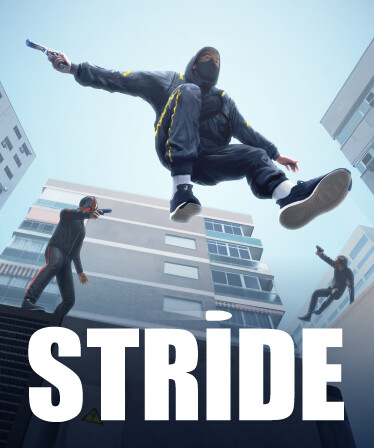
STRIDE
STRIDE is a high-octane parkour adventure in virtual reality. Fight for your life as you hurtle through the rooftops of a futuristic metropolis. Step into the shoes of a master freerunner as you vault, swing, and shoot your way through this action-packed adventure. Multiplayer now available!

PowerBeatsVR - VR Fitness
PowerBeatsVR is a high-intensity VR fitness game where you box, dodge, and squat to the rhythm of upbeat music. Choose between official songs with leaderboards and dozens of professional workouts or train with your own music using the generator. See those calories burn and your pulse racing.

Trials on Tatooine
Commence your Jedi training in this Star Wars virtual reality demo experience. Repair the Millennium Falcon, defend it from attack by Imperial Stormtroopers, and wield a LIGHTSABER.
Frequently Asked Questions
Holopoint is currently priced at 10.79€ on Steam.
No, Holopoint is currently not on sale. You can purchase it for 10.79€ on Steam.
Yes, Holopoint received 631 positive votes out of a total of 704 achieving a rating of 8.41.
😎
Holopoint was developed and published by Alzan Studios and LLC.
Yes, Holopoint is playable and fully supported on Windows.
No, Holopoint is not playable on MacOS.
No, Holopoint is not playable on Linux.
No, Holopoint is not playable on Steam Deck.
This information about Holopoint is not available yet.
Yes, Holopoint is a VR-only title. A compatible VR headset is required to play the game.
Holopoint is a single-player game.
No, Holopoint does not currently offer any DLC.
No, Holopoint does not support mods via Steam Workshop.
No, Holopoint does not support Steam Remote Play.
Yes, Holopoint is enabled for Steam Family Sharing. This means you can share the game with authorized users from your Steam Library, allowing them to play it on their own accounts. For more details on how the feature works, you can read the original Steam Family Sharing announcement or visit the Steam Family Sharing user guide and FAQ page.
You can find solutions or submit a support ticket by visiting the Steam Support page for Holopoint.
Data sources
The information presented on this page is sourced from reliable APIs to ensure accuracy and relevance. We utilize the Steam API to gather data on game details, including titles, descriptions, prices, and user reviews. This allows us to provide you with the most up-to-date information directly from the Steam platform.
Additionally, we incorporate data from the SteamSpy API, which offers insights into game sales and player statistics. This helps us present a comprehensive view of each game's popularity and performance within the gaming community.
Last Updates| Steam data | 26 October 2026 23:46 UTC |
|---|---|
| SteamSpy data | 14 October 2026 21:10 UTC |
| Steam price | 26 October 2026 20:05 UTC |
| Steam reviews | 22 October 2026 06:02 UTC |
If you'd like to dive deeper into the details about Holopoint, we invite you to check out a few dedicated websites that offer extensive information and insights. These platforms provide valuable data, analysis, and user-generated reports to enhance your understanding of the game and its performance.
- SteamDB - A comprehensive database of everything on Steam about Holopoint
- SteamCharts - Analysis of Holopoint concurrent players on Steam
- ProtonDB - Crowdsourced reports on Linux and Steam Deck Holopoint compatibility

Game modes
Features
Online players
1
Developer
Alzan Studios, LLC
Publisher
Alzan Studios, LLC
Release
04 Apr 2016
Platforms