
Climbey
Climbey is a VR-only climbing game! The goal is to climb to the finish as fast as you can, avoiding obstacles and trying not to fall along the way.
Sync your Steam wishlist to find the lowest game prices instantly. No login required, just paste your Steam profile URL!
⚡ Try Wishlist Radar!
Sync your Steam wishlist to find the lowest game prices instantly. No login required!
⚡ Try Wishlist Radar!
Close

Jetborne Racing on Steam
Quick menu
Put your flight skills to the test in the online multiplayer air racing game from the creator of VTOL VR. Pilot a high performance jet through challenging courses in a race to the finish. Fly in VR or on desktop with either virtual or physical HOTAS. Do you have what it takes for a podium position?
Jetborne Racing is a racing, simulation and flight game
developed and published by Boundless Dynamics and LLC.
Released on May 27th 2021 is available on Windows, VR, Steam Deck and Steam Machine.
It has received 507 reviews of which 448 were positive and 59 were negative resulting in a rating of 8.3 out of 10. 😎
The game is currently priced at 8.19€ on Steam.
The Steam community has classified Jetborne Racing into these genres:
Media & Screenshots
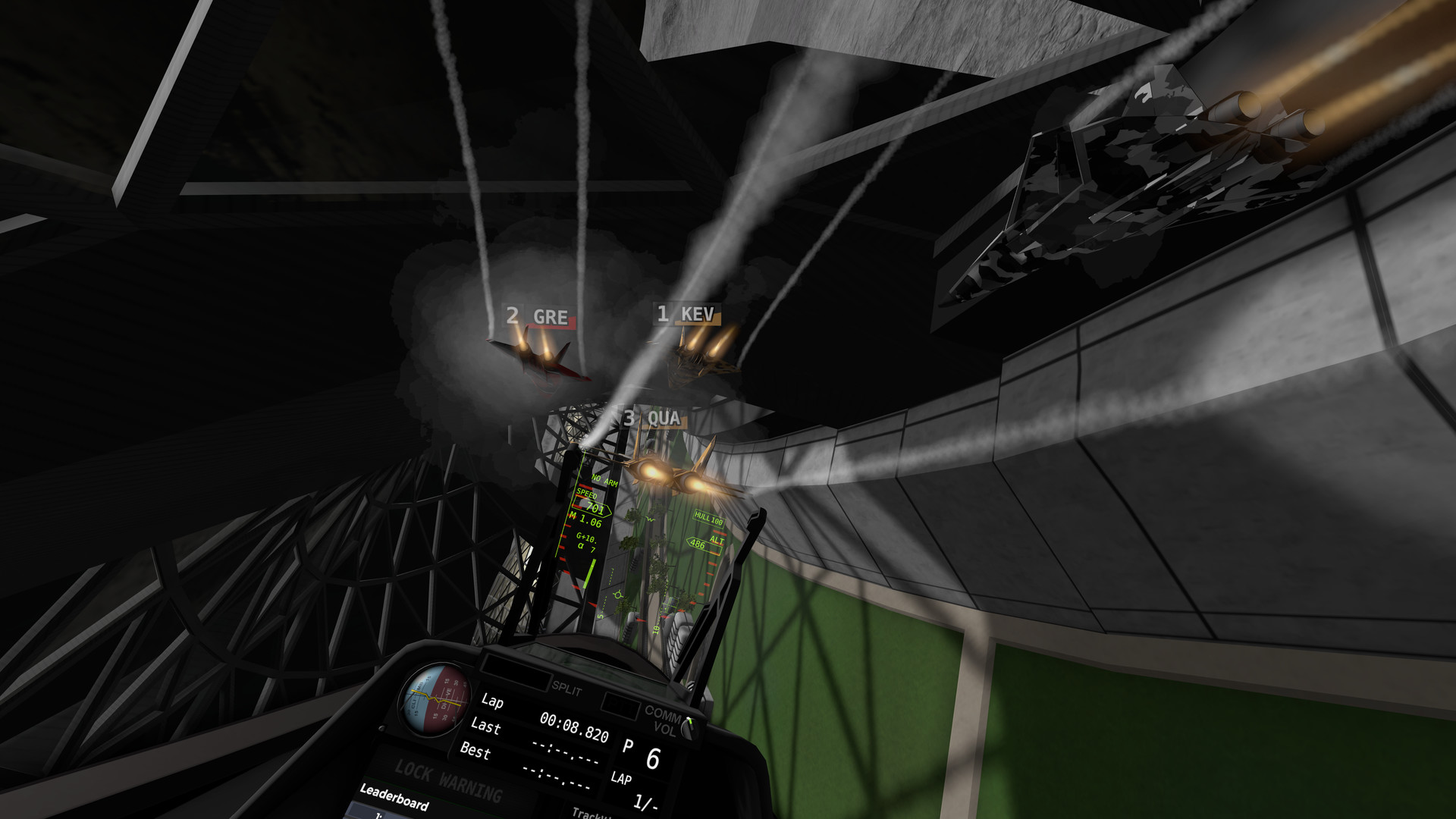
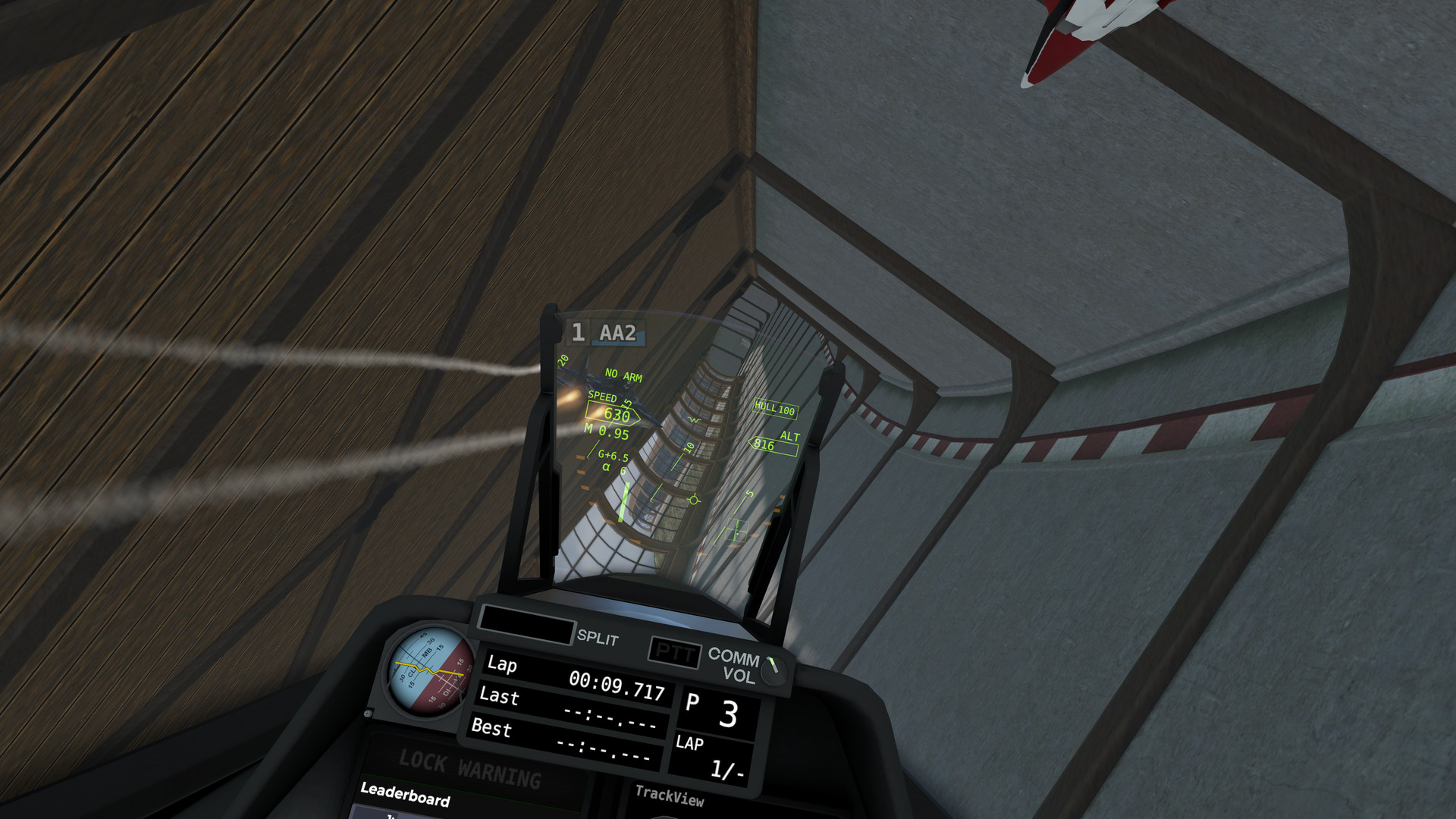
Get an in-depth look at Jetborne Racing through various videos and screenshots.


Load More


System requirements
These are the minimum specifications needed to play the game. For the best experience, we recommend that you verify them.
Windows
- Requires a 64-bit processor and operating system
- OS *: 64-bit Windows 10 or Windows 7 SP1
- Processor: Intel Core i5-4590/AMD FX 8350 or better
- Memory: 8 GB RAM
- Graphics: NVIDIA GeForce GTX 1060/AMD Radeon R9 480 or better
- DirectX: Version 11
- Network: Broadband Internet connection
- Storage: 3 GB available space
- VR Support: SteamVR
Steam Price & Best Deals
User reviews & Ratings
Explore reviews from Steam users sharing their experiences and what they love about the game.
Jetborne Racing delivers an exciting interpretation of competitive racing by replacing traditional vehicles with powerful jet aircraft capable of reaching supersonic speeds. Developed and published by Boundless Dynamics, LLC, the creators of VTOL VR, this aviation simulator combines realistic flight mechanics with the adrenaline of high-speed competition. Rather than emphasizing elaborate campaigns or extensive customization, it concentrates on precision flying, technical courses, and the satisfaction of mastering an aircraft under extreme conditions. Its specialized approach creates a distinctive experience that appeals particularly to flight simulation enthusiasts and competitive players seeking something beyond conventional racing games. The gameplay revolves around navigating demanding aerial circuits while maintaining control of a lightweight racing jet. Unlike automobile racing, where drivers primarily manage steering, braking, and traction, pilots must account for altitude, aircraft orientation, momentum, and aerodynamic forces. Every corner requires careful preparation because excessive speed can turn an otherwise manageable maneuver into a disastrous mistake. Finding the ideal racing line becomes a fascinating challenge, especially when navigating complicated sequences of turns at tremendous velocities. The three-dimensional nature of the courses adds considerable depth, rewarding players who understand how to balance acceleration with controlled movement. One of the most impressive mechanics is the realistic implementation of gravitational forces and their effects on the pilot. Performing aggressive maneuvers at excessive speeds can cause G-force-induced loss of consciousness, temporarily compromising visibility and control. This creates meaningful consequences for reckless flying and encourages a more calculated approach to competition. Players must recognize when to reduce speed, anticipate upcoming turns, and avoid pushing their aircraft beyond manageable limits. The resulting learning curve can be demanding, but successfully completing a difficult course without losing control provides tremendous satisfaction. This emphasis on technical mastery distinguishes the game from arcade-oriented alternatives. The control options contribute significantly to the overall experience. Virtual reality players can operate an immersive virtual flight stick and throttle using motion controllers, creating a convincing sense of piloting an actual aircraft. Physical HOTAS equipment is also supported, allowing dedicated simulation enthusiasts to use familiar hardware. Meanwhile, desktop mode ensures that a VR headset is not mandatory. Although the game remains enjoyable without virtual reality, VR offers a stronger sensation of altitude, speed, and spatial awareness. The controls require practice, particularly for beginners, but their responsiveness and simulation-oriented design make improvement feel rewarding. Multiplayer competition provides another major attraction, supporting online races with up to eight participants. Competing against human opponents introduces additional excitement because maintaining an efficient racing line becomes more complicated when other aircraft are fighting for position. Close races can produce memorable moments of calculated overtaking, narrow escapes, and last-second victories. Players can also customize race settings, including damage, respawns, lap counts, and power-up availability. However, the multiplayer experience depends on finding available opponents, and a smaller community can make spontaneous competitive sessions less convenient. Organizing races with friends may therefore provide a more consistent experience. For players who prefer practicing independently, offline hot laps and ghost racing offer worthwhile alternatives. Competing against previous personal records encourages experimentation with different approaches to difficult corners, while global leaderboards provide additional motivation to refine flying techniques. The progression is primarily skill-based rather than driven by unlockable content or elaborate rewards. This design works particularly well for competitive perfectionists who enjoy reducing lap times through repeated practice. However, players who expect a substantial career mode, narrative objectives, or extensive progression systems may find the available activities somewhat limited. The optional power-up system introduces an entertaining contrast to the realistic flight simulation. Weapons and defensive equipment, including missiles, cannons, shields, mines, and tractor beams, allow races to become more chaotic and unpredictable. These mechanics provide opportunities for tactical interference and dramatic reversals, making competition more accessible to players who enjoy arcade-style action. Importantly, customizable settings allow participants to disable these additions when they prefer traditional racing focused entirely on piloting ability. This flexibility accommodates different competitive preferences without sacrificing the game's underlying identity. Visually, the presentation emphasizes speed, functionality, and environmental readability rather than elaborate graphical spectacle. The aircraft cockpit and aerial courses effectively communicate the sensation of rapid movement, while the simulation mechanics remain the central attraction. VR considerably strengthens immersion, especially during sharp turns and high-speed descents. Nevertheless, the relatively straightforward presentation and specialized gameplay may disappoint players expecting cinematic visuals, numerous aircraft variations, or expansive environments. Its appeal ultimately depends more on mechanical depth than visual extravagance. Steam Deck compatibility is officially rated Playable, meaning the game can function on Valve's handheld but does not carry the fully Verified designation. Players may encounter control-related inconveniences or need to configure suitable inputs for comfortable operation. Since the game emphasizes precise aircraft handling and benefits from dedicated flight controls, the handheld experience may feel less natural than playing on a desktop with appropriate equipment. Additionally, the Steam Deck does not independently provide the complete VR experience. Desktop mode remains the practical option for portable play. Overall, Jetborne Racing is an engaging and technically satisfying aviation racer that successfully combines realistic aircraft physics with competitive excitement. Its strongest qualities include responsive flight mechanics, challenging aerial courses, immersive control options, and rewarding time-trial competition. Although limited conventional progression, demanding controls, and multiplayer population considerations prevent it from achieving broader appeal, its focused design makes it an excellent choice for players who appreciate precision and continuous improvement. Those willing to invest time mastering its demanding flight mechanics will discover a distinctive racing experience filled with speed, tension, and satisfying accomplishments. A thrilling and skill-intensive aerial racing simulator that excels through realistic flight mechanics, immersive controls, and competitive challenges, despite its relatively narrow content variety and demanding learning curve. Rating: 8/10
Similar games
View all
Aerofly FS 2 Flight Simulator
Aerofly FS 2 Flight Simulator lets you explore the world of flying in a quality never seen before. Fly a large selection of highly detailed aircraft or a helicopter with interactive 3D cockpits. Aerofly FS 2 currently features over 200 airports in the south western USA and global elevation and satellite imagery.
VRacer Hoverbike
VRACER HOVERBIKE is a fast-paced futuristic racing game in VR (any headset supporting OpenXR).

RC Plane 3
Learn to fly a large selection of RC Planes in huge and beautiful scenarios rich of detail. Grab an easy flier to enjoy a majestic sunset over the hills of Tuscany or hop in a fast stunt plane to fly through barns and high voltage pylons.
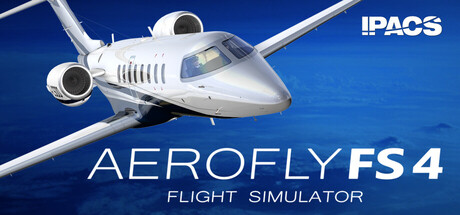
Aerofly FS 4 Flight Simulator
We promise you will feel like a pilot flying airliners, helicopters, fighters, gliders, historical and aerobatic aircraft in a photorealistic world! Over 10,000 real world flights, highly detailed cockpits and scenery are awaiting you.

AccuRC 2
AccuRC is an RC simulator mainly for helicopters, but also drones, fixed wing and cars, including racing, FPV in Photo and 3D sceneries. Our focus lies on flight dynamics realism and accurate recreation of the way different models feel. Our users say AccuRC is the most realistic sim they ever used.
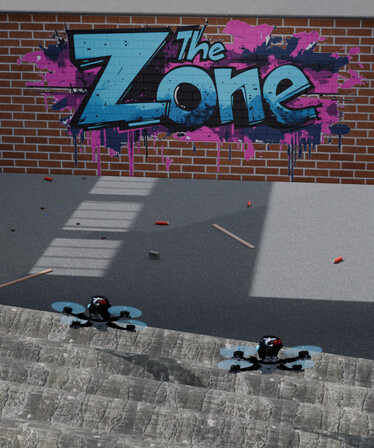
The Zone - FPV Drone Simulator
Learn new tricks, improve your freestyle flow, get inspiration by spectating other pilots, or learn to fly in the first place. The drone setup and physics are already dialed in by Pro pilots, so no need to mess with complicated settings.

Liftoff : FPV Drone Racing
Liftoff® is a drone simulator that translates the rush of first-person view drone flight to the digital world. Join the biggest community for virtual FPV racing and freestyle!

EA SPORTS WRC
Experience the thrill of the 2024 rally season with new locations, moments, stages, high-performance vehicles, new liveries, and licensed crews. Brace yourself to embark on your continued rally journey.

Kingspray Graffiti VR
Hanging out with friends, bombing walls, and smashing bottles would be much more fun with out the jail time.

Kart Racing Pro
Kart Racing Pro is a realistic karting simulator. The aim is to create a software useful as a training tool for real drivers, based on a scratch built physics engine that accurately simulates kart dynamics and setup options.

FlatOut 4: Total Insanity VR
FlatOut 4: Total Insanity VR is destructive arcade racing at windshield distance. Trade paint, survive pileups, and fly through the windshield when the impact hits. Race across remastered FlatOut 2 tracks, wreck rivals online, and fight to finish with your car still moving.
Frequently Asked Questions
Jetborne Racing is currently priced at 8.19€ on Steam.
No, Jetborne Racing is currently not on sale. You can purchase it for 8.19€ on Steam.
Yes, Jetborne Racing received 448 positive votes out of a total of 507 achieving a rating of 8.25.
😎
Jetborne Racing was developed and published by Boundless Dynamics and LLC.
Yes, Jetborne Racing is playable and fully supported on Windows.
No, Jetborne Racing is not playable on MacOS.
No, Jetborne Racing is not playable on Linux.
Yes, Jetborne Racing is playable on Steam Deck, though it might require a few minor tweaks. Make sure to check the Steam store page and community feedback on ProtonDB for exact compatibility details.
Yes, Jetborne Racing is playable on Steam Machine, though it might require a few minor tweaks. Make sure to check the Steam store page and community feedback on ProtonDB for exact compatibility details.
Yes, Jetborne Racing supports VR. You can play it using a compatible VR headset.
Jetborne Racing offers both single-player and multi-player modes.
Jetborne Racing offers both Co-op and PvP modes.
No, Jetborne Racing does not currently offer any DLC.
No, Jetborne Racing does not support mods via Steam Workshop.
No, Jetborne Racing does not support Steam Remote Play.
Yes, Jetborne Racing is enabled for Steam Family Sharing. This means you can share the game with authorized users from your Steam Library, allowing them to play it on their own accounts. For more details on how the feature works, you can read the original Steam Family Sharing announcement or visit the Steam Family Sharing user guide and FAQ page.
You can find solutions or submit a support ticket by visiting the Steam Support page for Jetborne Racing.
Data sources
The information presented on this page is sourced from reliable APIs to ensure accuracy and relevance. We utilize the Steam API to gather data on game details, including titles, descriptions, prices, and user reviews. This allows us to provide you with the most up-to-date information directly from the Steam platform.
Additionally, we incorporate data from the SteamSpy API, which offers insights into game sales and player statistics. This helps us present a comprehensive view of each game's popularity and performance within the gaming community.
Last Updates| Steam data | 16 September 2026 21:27 UTC |
|---|---|
| SteamSpy data | 20 October 2026 23:56 UTC |
| Steam price | 27 October 2026 03:52 UTC |
| Steam reviews | 20 October 2026 05:50 UTC |
If you'd like to dive deeper into the details about Jetborne Racing, we invite you to check out a few dedicated websites that offer extensive information and insights. These platforms provide valuable data, analysis, and user-generated reports to enhance your understanding of the game and its performance.
- SteamDB - A comprehensive database of everything on Steam about Jetborne Racing
- SteamCharts - Analysis of Jetborne Racing concurrent players on Steam
- ProtonDB - Crowdsourced reports on Linux and Steam Deck Jetborne Racing compatibility

Game modes
Multiplayer
Features
Online players
2
Developer
Boundless Dynamics, LLC
Publisher
Boundless Dynamics, LLC
Release
27 May 2021
Platforms