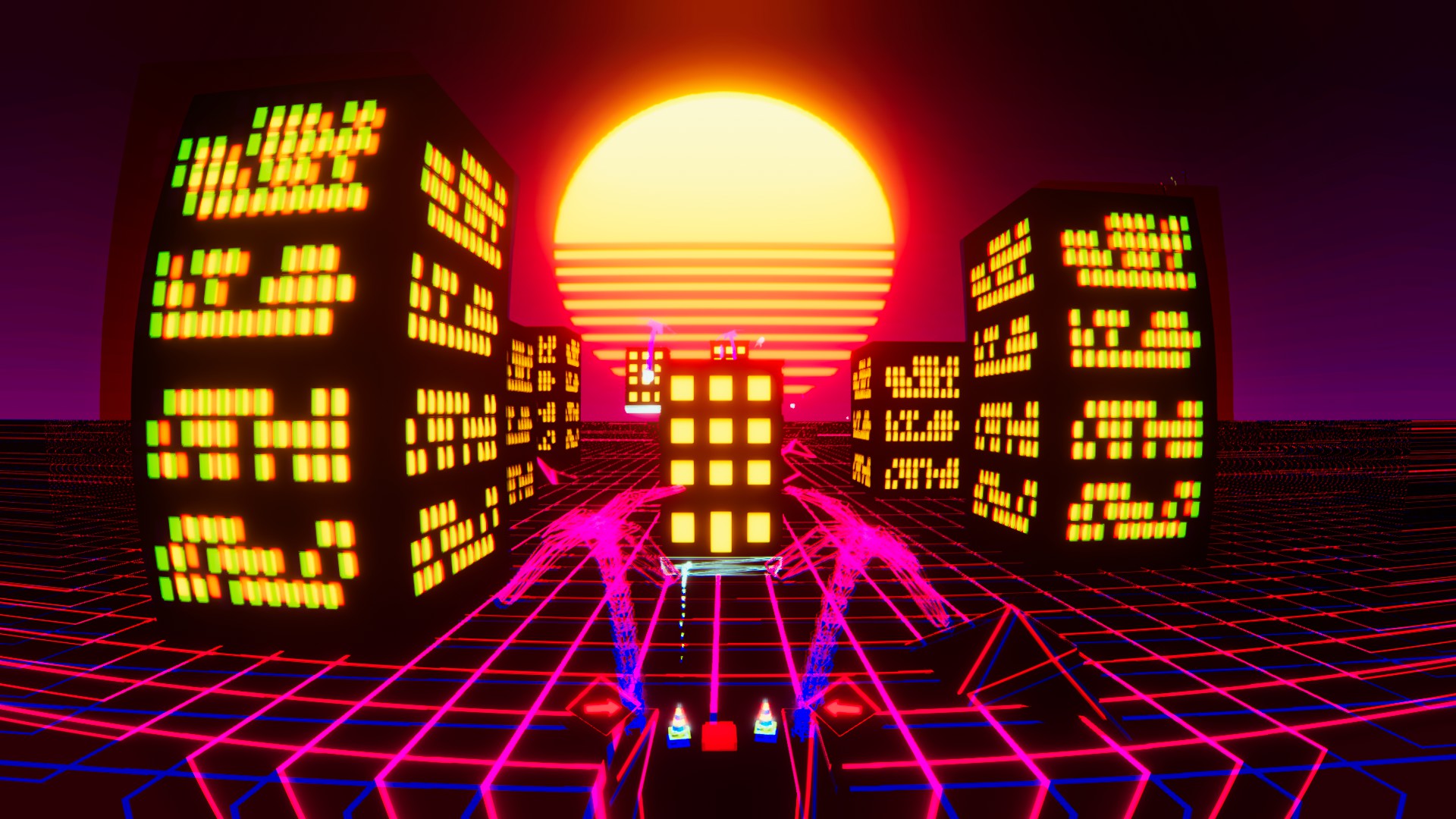
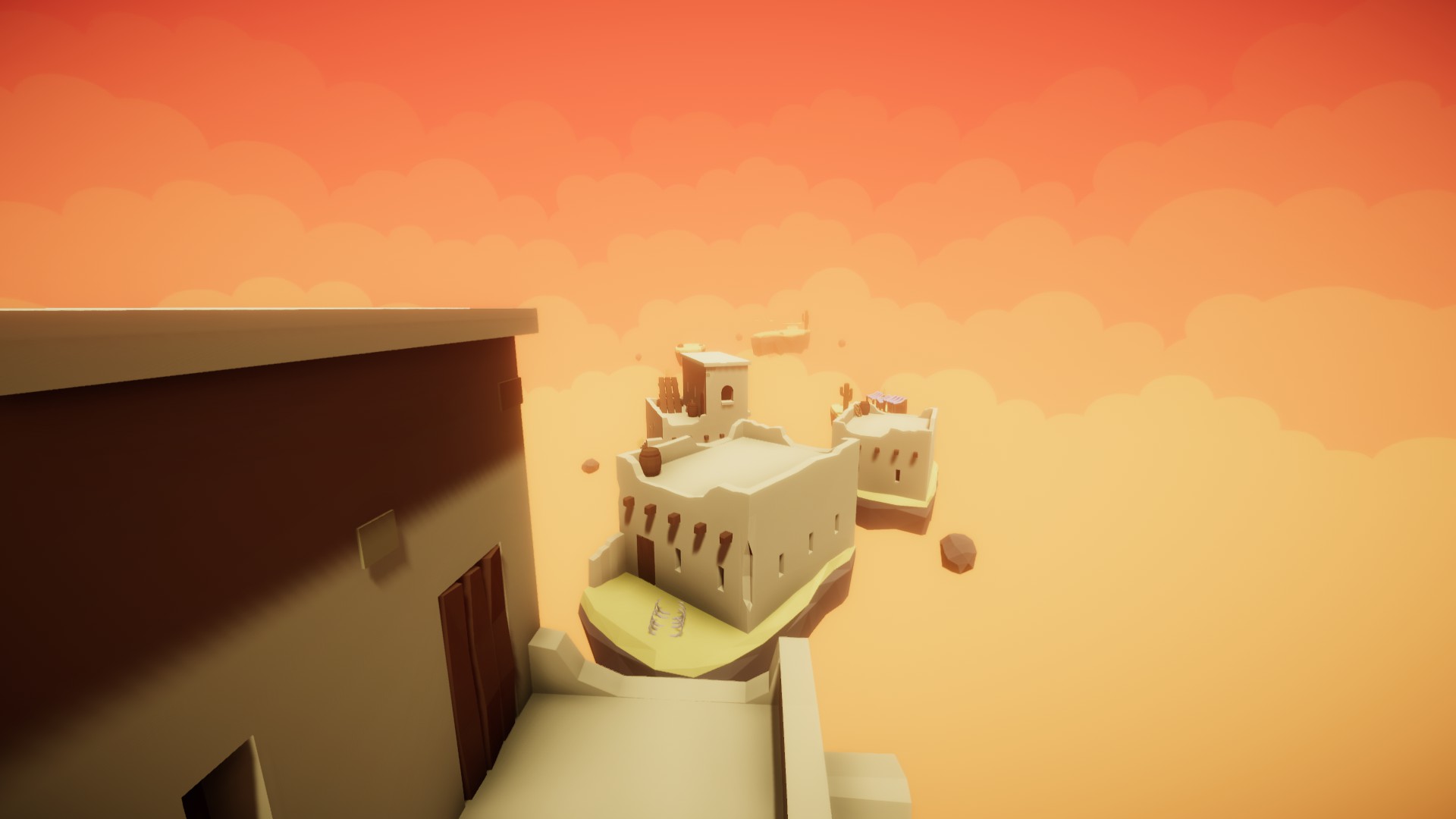
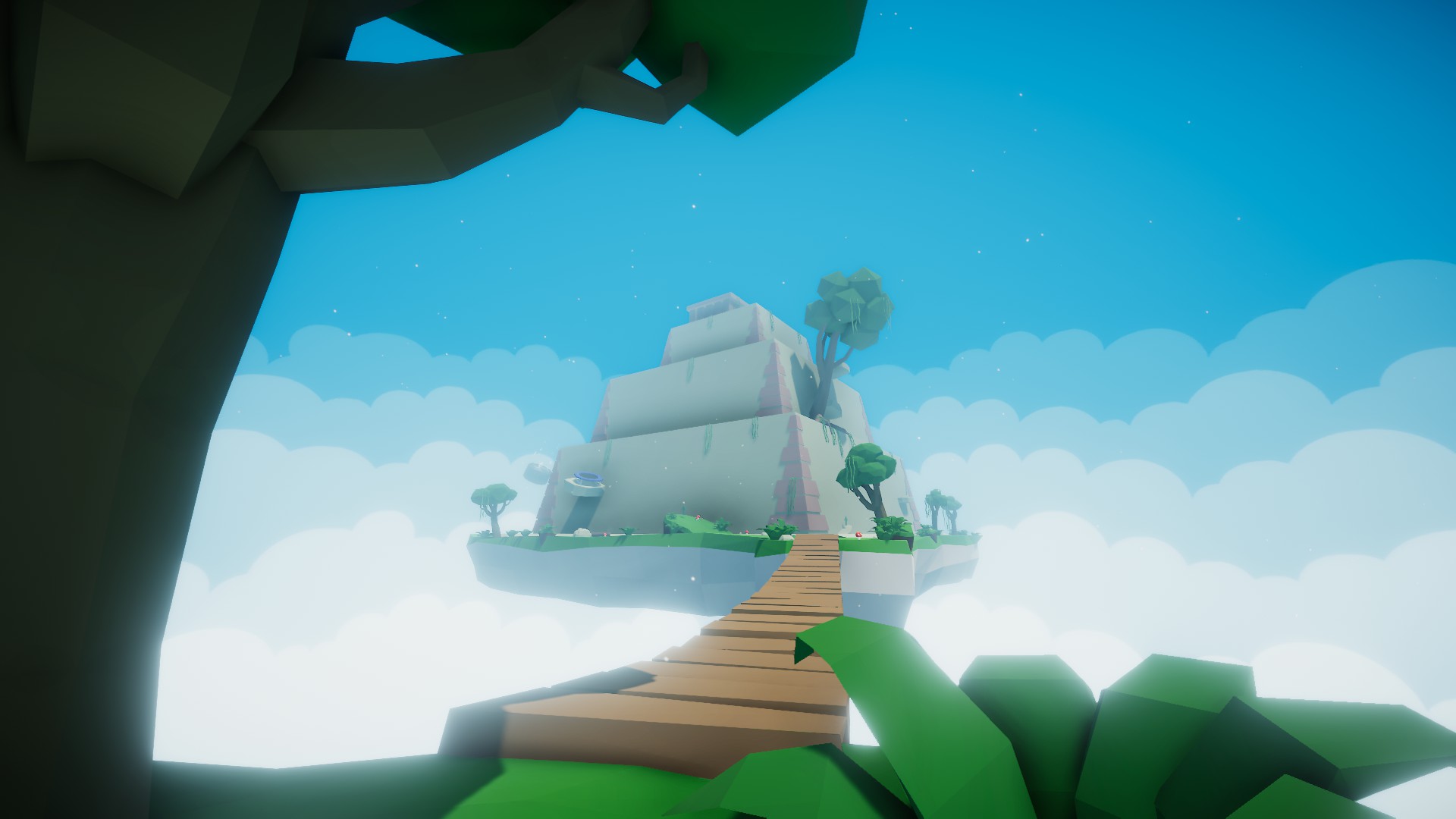
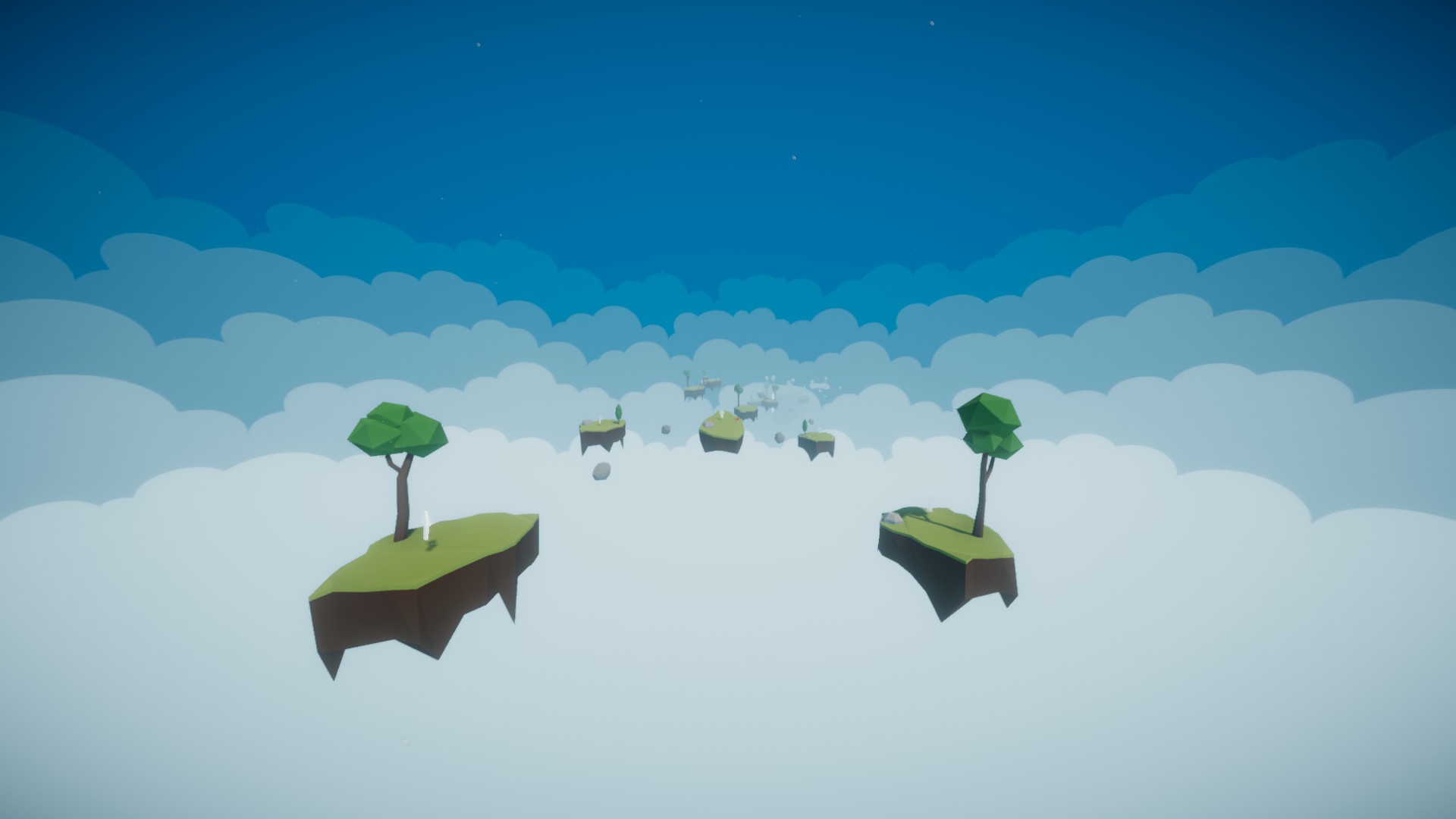
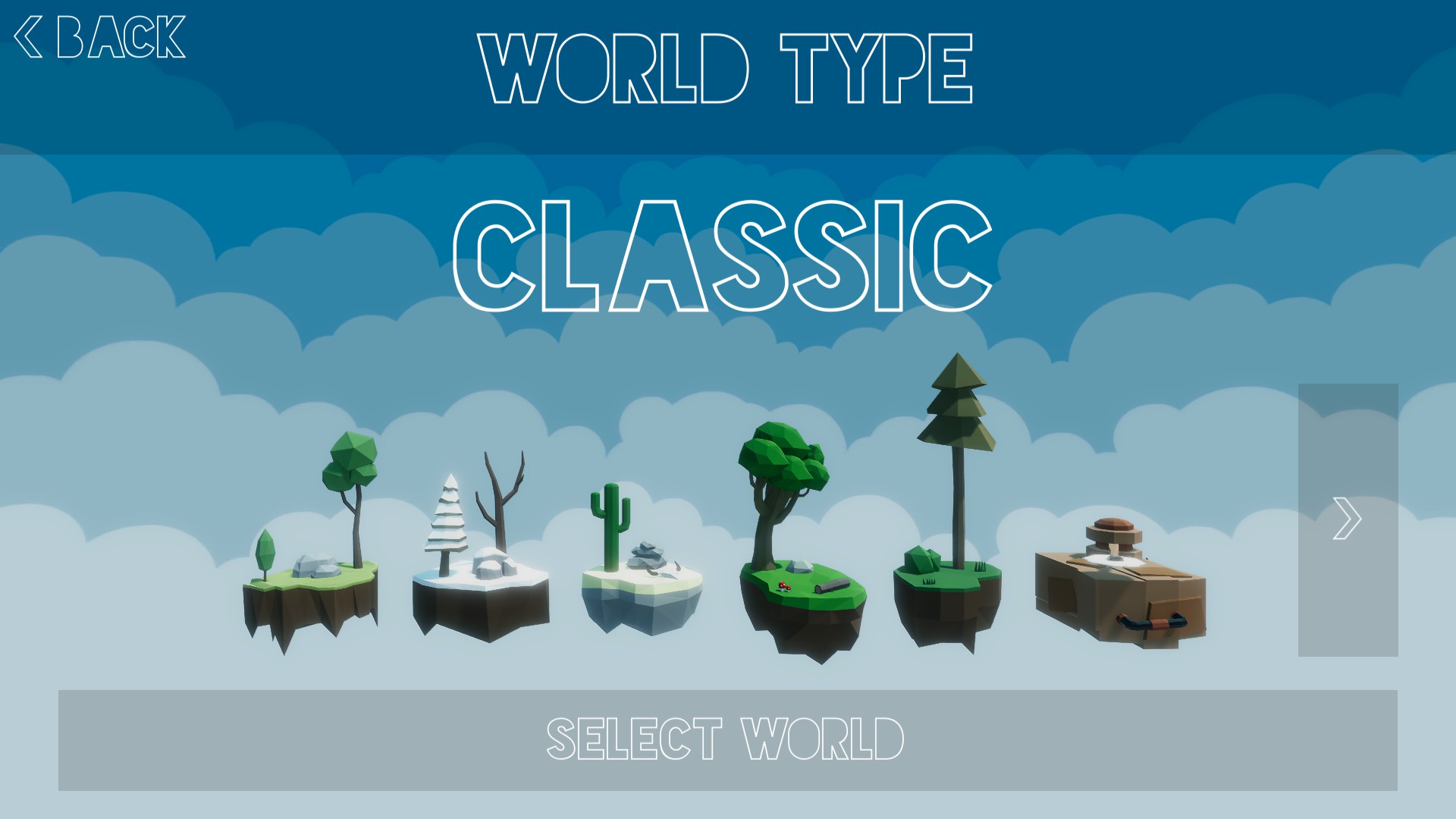
Jumps, developed and published by Kiwiforge and Timothy Vincent, is a minimalist first-person platformer that strips away narrative complexity and excess mechanics to focus entirely on the art of movement. It places players in a serene but perilous world of floating islands suspended in the sky, where the goal is deceptively simple: reach the end of each level before the timer runs out and without exceeding a set number of jumps. This simple premise hides a surprisingly tense and rewarding gameplay loop. Every leap feels deliberate, every step forward a small risk, and every completed run a moment of precision and timing executed perfectly. It’s a game that doesn’t rely on spectacle to engage the player, but instead on the satisfaction of mastering its elegant rules. At its core, Jumps is about discipline. The player must navigate through platforms, moving obstacles, trampolines, and environmental hazards while keeping an eye on two strict limitations: time and jump count. This dual constraint system adds an engaging layer of strategy to what could have otherwise been a straightforward parkour experience. Each level becomes a puzzle of efficiency, pushing players to plan routes, anticipate movements, and execute jumps with exact precision. A single unnecessary hop can spell failure, forcing restarts and demanding full concentration. The time limit compounds the tension, turning each run into a test of both mental calculation and reflexive coordination. This design philosophy rewards not just completion, but mastery—an element that will appeal especially to players who enjoy speedrunning or optimization challenges. Jumps unfolds across six worlds, each containing ten levels, and every new world introduces fresh mechanics to challenge the player’s understanding of momentum and space. Early levels ease players into the controls with simple platform layouts, while later ones add trampolines, cannons, rotating obstacles, and rocket-assisted propulsion that require precise control. The gradual escalation of difficulty ensures that each new concept feels earned, giving players time to adapt before throwing them into more demanding sequences. There’s a flow to the way Jumps teaches its mechanics: each level quietly communicates what it wants you to learn, often through failure. Missing a ledge or mistiming a launch isn’t just punishment; it’s part of the rhythm of discovery that defines the game’s pacing. The absence of complex tutorials or text pop-ups reinforces the game’s minimalist design ethos—learning comes through doing, and progress comes through persistence. Visually, Jumps adopts a clean, low-poly art style that prioritizes clarity and atmosphere over elaborate detail. Each world has its own visual identity, expressed through color palettes and lighting rather than intricate textures. The floating island landscapes are sparse but purposeful, their open skies and sharp contrasts giving a sense of freedom that complements the game’s emphasis on precision movement. The visuals also serve a functional purpose: clear silhouettes and consistent color cues help players judge distances and timing accurately, making each jump feel intuitive despite the first-person perspective. The soundtrack, composed of upbeat electronic and ambient tracks, drives the game’s energy without overwhelming the experience. It underscores the rhythm of motion—quietly motivating during early attempts and exhilarating when a perfect run begins to come together. From a gameplay perspective, Jumps is not a forgiving experience, but that’s part of its appeal. It demands patience, practice, and an appreciation for incremental progress. Missing a jump or misjudging a landing can lead to instant failure, and restarting a level becomes a familiar ritual. However, the quick restarts and compact level design prevent frustration from turning into fatigue. The brevity of each stage means that retrying doesn’t feel punishing but rather an opportunity for refinement. Over time, players internalize the flow of movement—when to conserve a jump, when to risk speed, and when to pause for precision. It’s a loop of repetition that never feels stagnant because the satisfaction of improvement is immediate and tangible. Every successful landing feels like a small personal victory, especially in the later worlds where even a single wasted motion can derail the entire attempt. While Jumps succeeds in its purity, it also risks alienating players who prefer more variety or narrative depth. Its single focus on platforming excellence means there’s little in the way of story, character, or environmental storytelling. The six worlds, though distinct in aesthetic tone, follow similar structural patterns. Some players might find the experience repetitive after extended play, as the game’s core loop relies heavily on mechanical challenge rather than discovery. Yet for those drawn to minimalist design and mastery-based gameplay, this repetition becomes meditative. The simplicity of the concept makes every success meaningful, and the restraint in its design highlights how much tension and satisfaction can emerge from a single well-executed idea. Technically, the game performs well, maintaining smooth framerates and crisp input response—an essential requirement for a platformer that depends so much on precision. Its modest system requirements make it accessible on a wide range of hardware, and the clean visual presentation ensures that performance never hinders gameplay. The developers’ attention to tight physics and collision detection gives every movement a reliable sense of control, which is vital for a game built entirely around timing and accuracy. The audio design complements the experience with subtle environmental cues and energetic tracks that mirror the pacing of the gameplay, keeping players in a steady rhythm of concentration and flow. In the end, Jumps is a distilled, skill-driven platformer that understands exactly what it wants to be and delivers that vision with confidence. It doesn’t rely on narrative or spectacle but instead on the pure satisfaction of movement and mastery. The simple mechanics belie a deep well of challenge, and the elegant level design encourages replayability for those seeking perfection. While its minimalist scope may not appeal to everyone, for players who find joy in precision and repetition, it offers an experience that feels both intense and meditative. Jumps is a celebration of motion, timing, and focus—a small but expertly crafted test of patience and skill that rewards persistence with moments of exhilarating triumph. Rating: 8/10
Expand the review