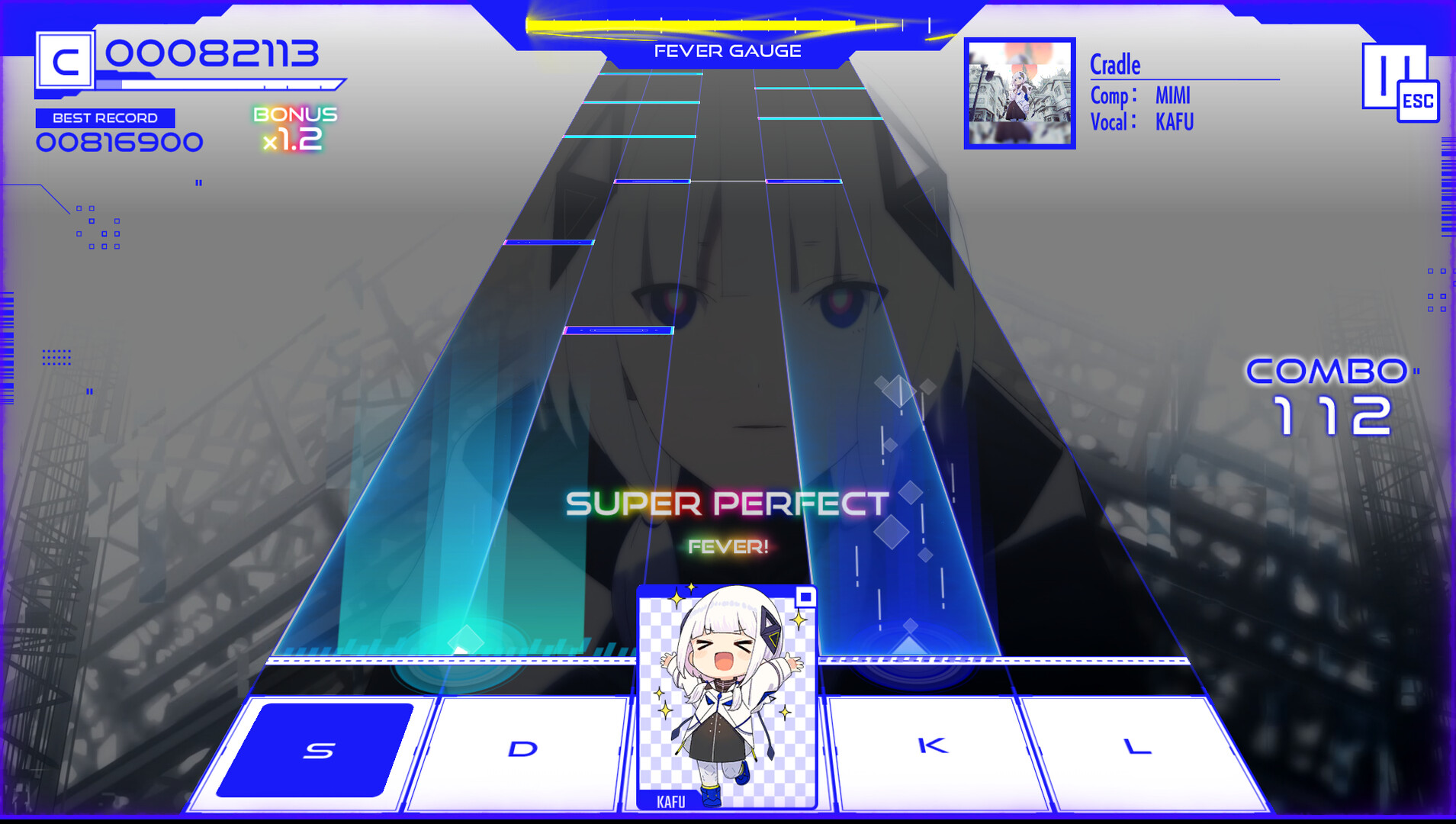
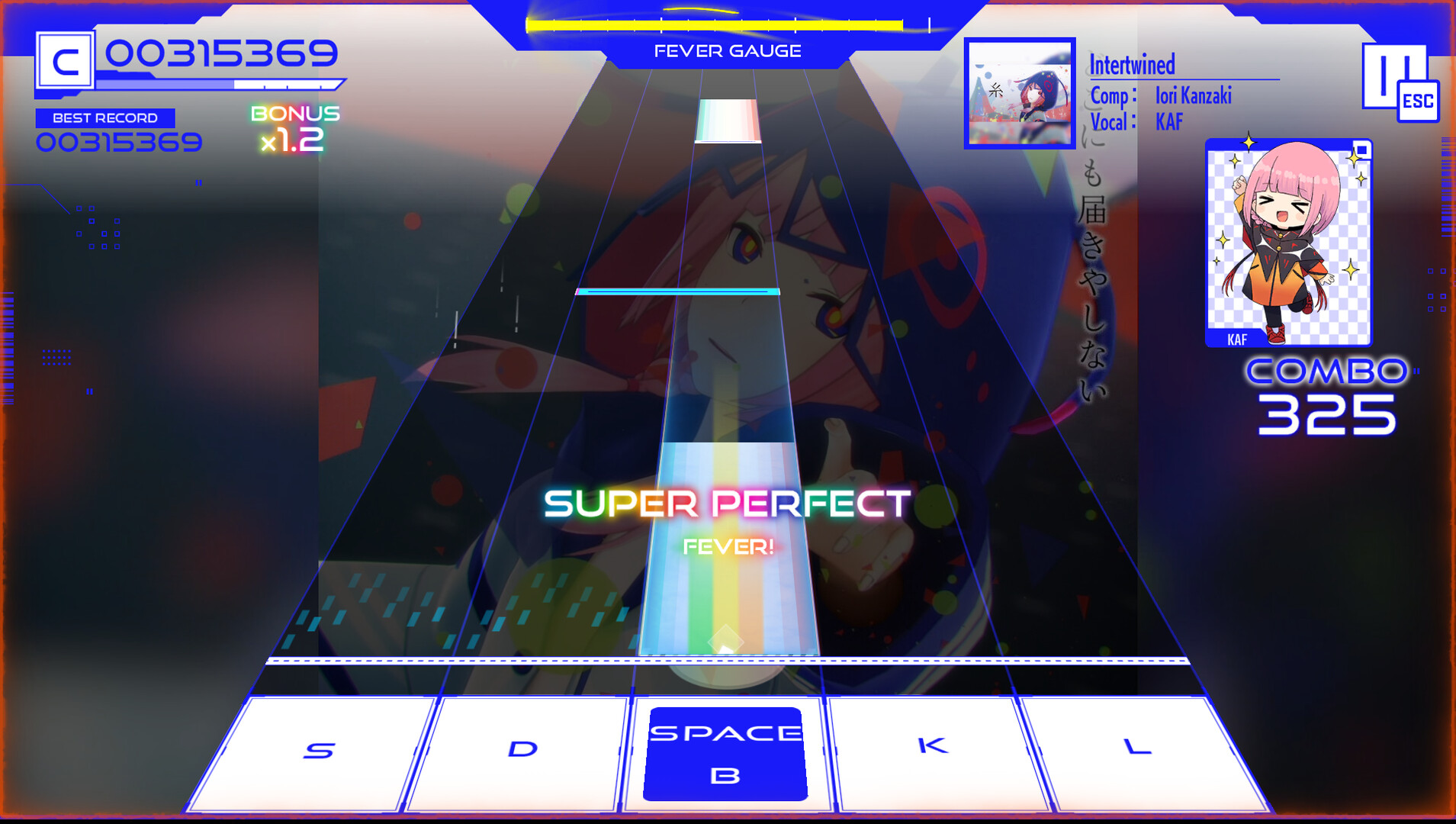
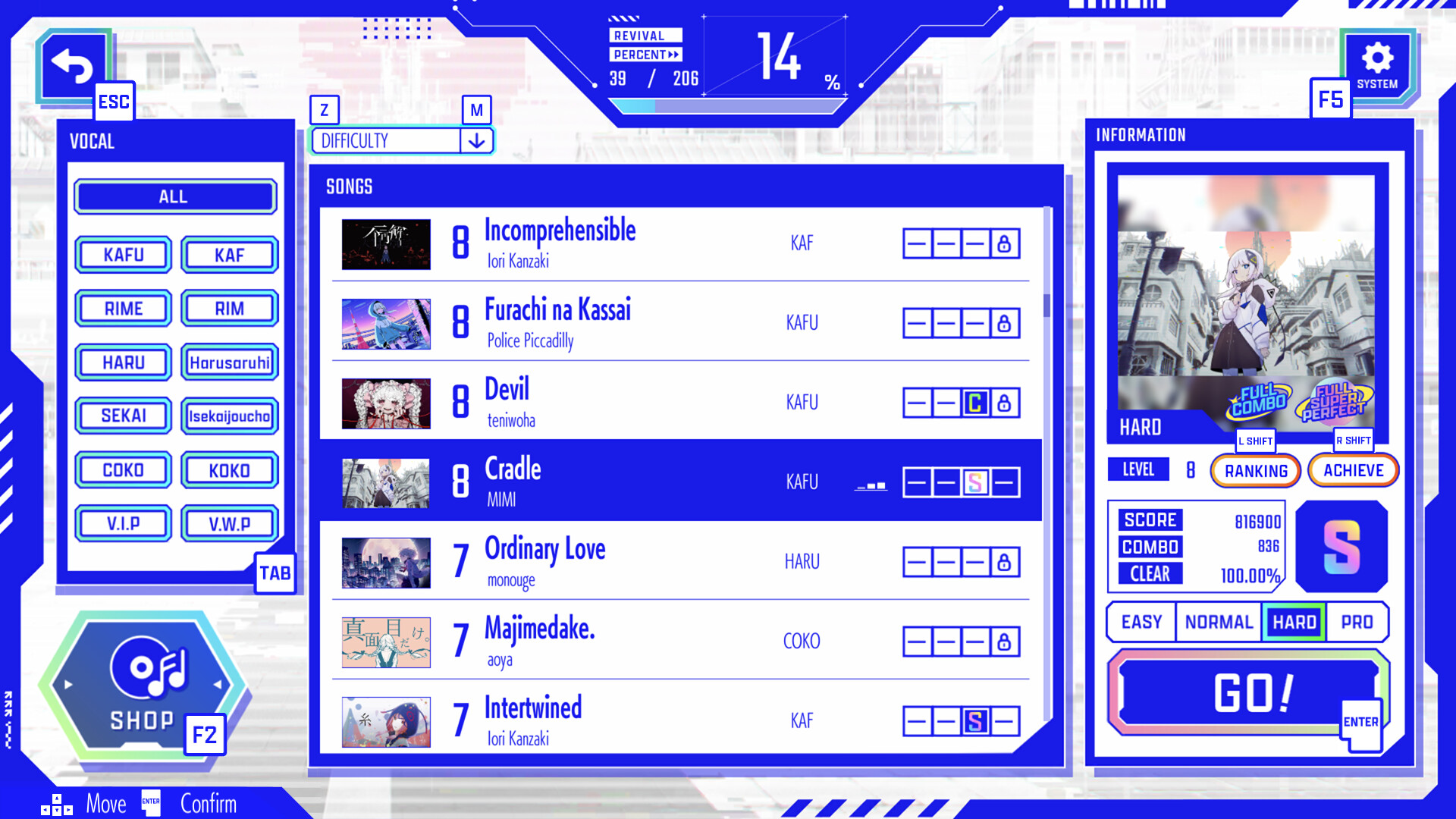
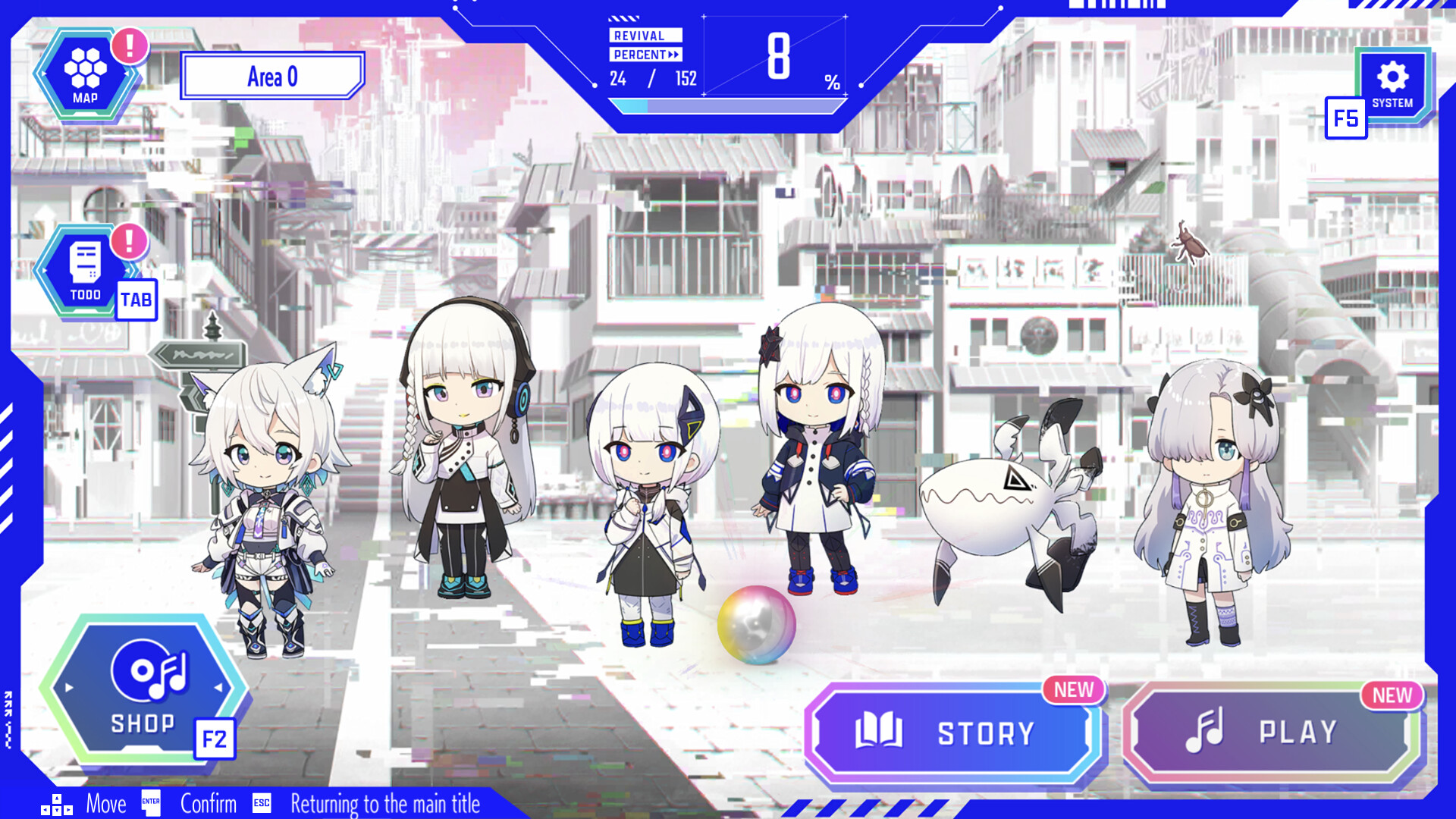
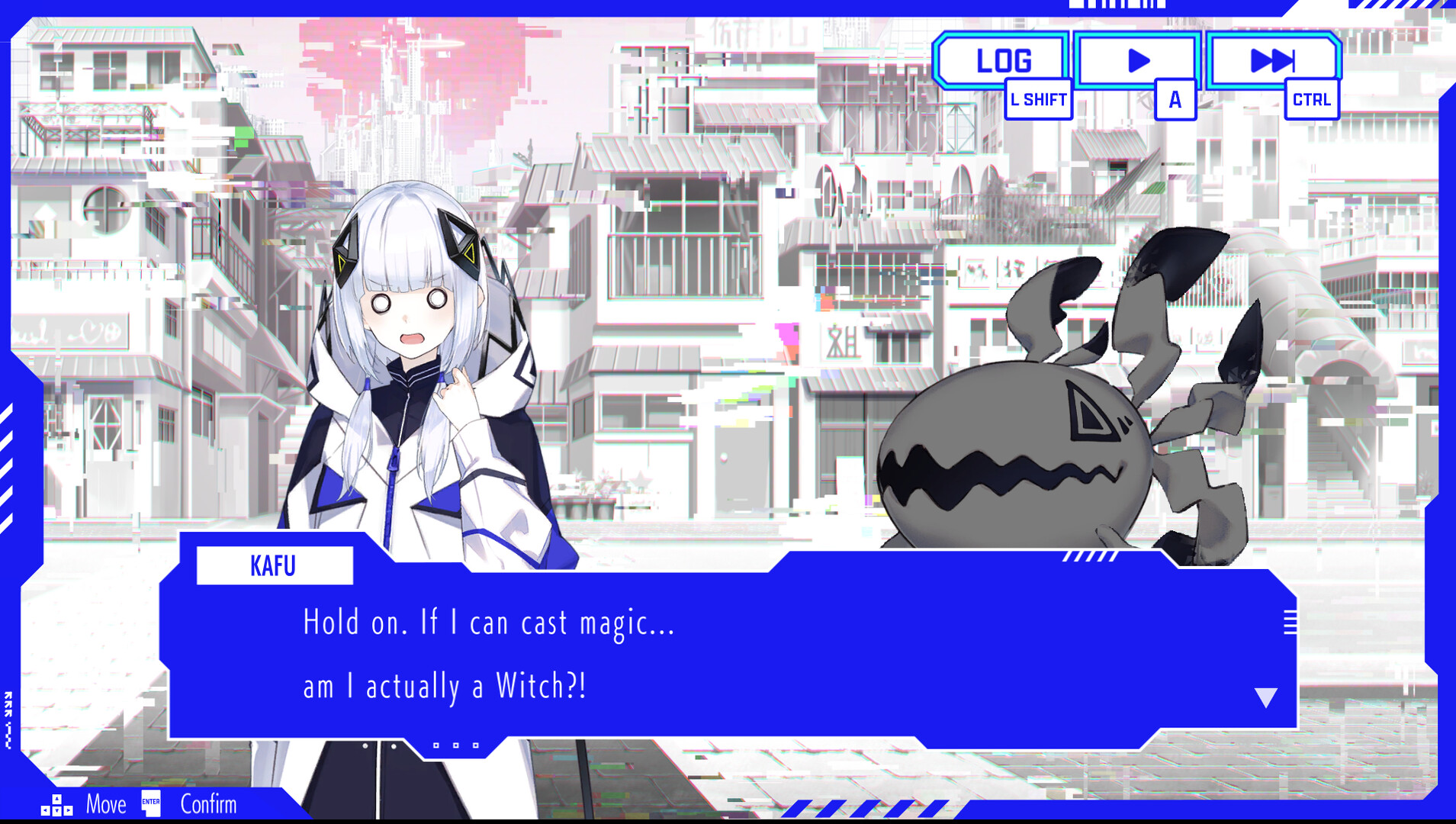
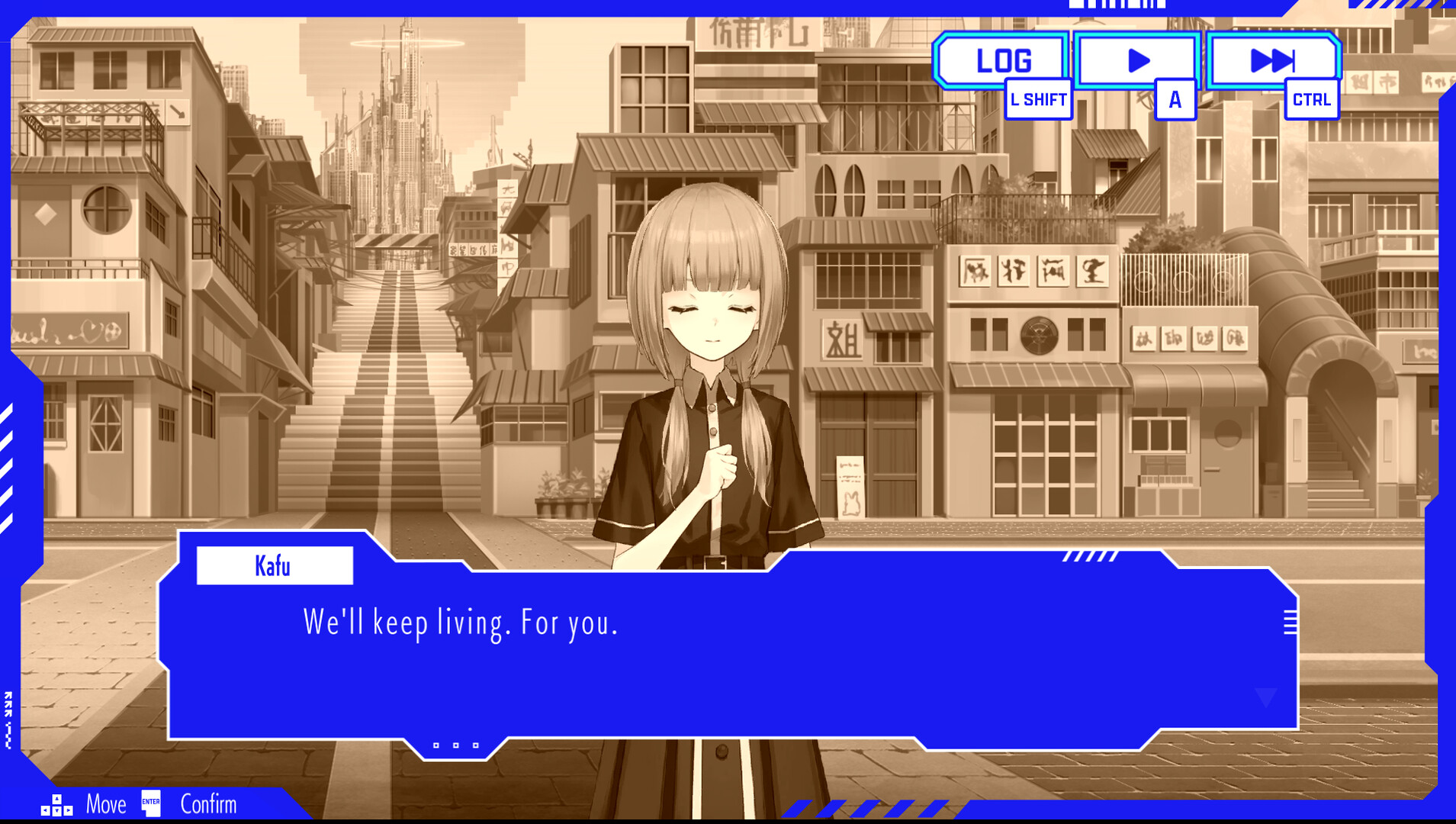
Kamitsubaki City Ensemble is an ambitious rhythm game from KAMITSUBAKI STUDIO and Studio Lalala that attempts to blend music, storytelling, and a post-apocalyptic setting into a cohesive and emotionally resonant experience. It’s not just a game about hitting notes to catchy beats—it’s a narrative-driven journey that uses music as a means of healing and rebuilding in a broken world. At its heart lies a group of AI girls—each with their own personality and voice—who awaken after an apocalyptic event with the ability to manipulate the world through song. You, the player, take on the role of their guide, helping them restore Kamitsubaki City by completing rhythm challenges that gradually piece the world back together. It’s a high-concept setup, and while it doesn’t always stick the landing narratively, the ambition behind it is admirable and gives the rhythm mechanics a deeper sense of purpose. The musical foundation of the game is one of its strongest aspects. The tracklist pulls heavily from Kamitsubaki Studio’s impressive music catalog, including songs from popular virtual singers and the “Musical Isotope” series. With over 48 tracks included in the base game and more than 100 available through season passes and monthly expansions, the variety on offer is substantial. The music spans a range of styles—emotional ballads, high-energy electronic tracks, and everything in between—making for a rhythm game that rarely feels sonically repetitive. Songs like "Devour the Past," "Carnivorous Plant," and "Sirius’s Heart" are not only fun to play but contribute thematically to the game’s narrative of survival and rebirth. There’s a lot of personality in the music, and it’s clear that great care went into curating a tracklist that reflects both the tone of the story and the distinct identities of the characters performing them. Gameplay-wise, Kamitsubaki City Ensemble offers a decent amount of flexibility. Players can choose from four difficulty levels (Easy, Normal, Hard, and Pro), and the number of lanes ranges from four to seven, which allows for gradual progression and accommodates both newcomers and seasoned rhythm game veterans. That said, the gameplay experience isn’t without its flaws. There have been reports of visual clarity issues, especially on higher difficulties, where the note colors and effects can become hard to distinguish—dark blue hold notes, for example, can blend into the background, making them frustrating to follow. Lane spacing can also become visually overwhelming in the seven-lane configuration, which is unfortunate since the game does try to position itself as suitable for competitive rhythm players as well. Still, when it works, it feels fast, fluid, and satisfying, especially when playing along to high-tempo songs or emotionally charged ballads. Visually, the game has moments of brilliance, though it's somewhat inconsistent. The opening animation is striking, the character designs are clean and appealing, and there’s a real sense of artistic cohesion throughout the menus, backdrops, and in-game overlays. The world of Kamitsubaki City itself is stylishly presented, leaning into an urban-fantasy dystopian aesthetic that complements the music and themes well. However, there are places where the production values feel more in line with a mobile game than a fully realized PC experience. Some of the in-game animations and UI elements feel flat or underdeveloped, and that can occasionally clash with the emotional weight the story is trying to carry. There’s a sense that the game’s reach exceeds its grasp at times, especially when it comes to marrying gameplay, narrative, and presentation in a way that feels seamless. From a performance standpoint, the game runs reasonably well on most PC setups, but there have been complaints regarding frame drops or lag during intensive segments, especially when multiple visual effects and notes overlap. These technical hiccups can be particularly annoying in a rhythm game, where timing and precision are everything. On mobile, the problems become more pronounced, with performance dips on mid-tier devices becoming more common as the screen fills with notes. These issues are frustrating, especially because the game demands such precision to truly enjoy its harder content. It’s clear the developers aimed high, but optimization is an area that still needs refinement. The pricing model is another aspect worth discussing. The base game is relatively affordable, priced around $4, which is generous considering the size of the initial tracklist. However, the cost of DLC adds up quickly. Season passes and monthly song packs push the full content experience well beyond the initial low price tag. For fans of Kamitsubaki Studio or those deeply invested in rhythm games, the investment may feel worthwhile, but casual players may find the paywall for full access a bit steep. Still, given the amount of content and the quality of the music, the pricing isn’t exploitative—just something to be aware of if you plan to stick with the game long-term. Perhaps the most polarizing aspect of Kamitsubaki City Ensemble is its story. On paper, the narrative is unique and emotionally rich: a devastated world, reborn through the voices of sentient AI girls, each coping with their own identity and place in a ruined society. In practice, however, the storytelling doesn’t always deliver. The pacing feels uneven, with emotional beats that either arrive too late or are undercut by the limitations of the rhythm-game format. Dialogue can feel sparse or superficial at times, and the worldbuilding—while visually compelling—lacks the depth needed to make the post-apocalyptic setting feel fully immersive. That said, for players who are already fans of Kamitsubaki Studio’s music universe, the lore and character backstories may hit harder, offering a kind of meta-layer of emotional resonance that newcomers might not immediately appreciate. In the end, Kamitsubaki City Ensemble is a game brimming with heart, creativity, and ambition. It’s a love letter to music’s transformative power, wrapped in the structure of a modern rhythm game and infused with the aesthetic and emotional DNA of Kamitsubaki Studio’s growing creative universe. While technical and structural issues hold it back from reaching its full potential, there’s still a lot to admire—and enjoy—here. For fans of Japanese rhythm games, vocaloid-inspired music, and hybrid narrative experiences, this title offers a fresh and heartfelt take on a genre that often plays it safe. It may not be perfect, but it’s full of soul—and in a game about saving the world through music, maybe that’s what matters most. Rating: 6/10
Expand the review