
Lingo
Lingo is a first person word puzzle game with a large, abstract world to explore. With its epiphany-driven gameplay and impossible geometry, Lingo provides a unique and nonlinear experience.
Sync your Steam wishlist to find the lowest game prices instantly. No login required, just paste your Steam profile URL!
⚡ Try Wishlist Radar!
Sync your Steam wishlist to find the lowest game prices instantly. No login required!
⚡ Try Wishlist Radar!
Close

Lingo 2 on Steam
Quick menu
Lingo 2 blends word puzzles and impossible geometry, with brand new puzzle mechanics and a large, colorful world to discover. Welcome back!
Lingo 2 is a puzzle, nonlinear and adventure game
developed and published by Brenton Wildes.
Released on March 13th 2025 is available on Windows, Steam Deck and Steam Machine.
It has received 448 reviews of which 412 were positive and 36 were negative resulting in a rating of 8.5 out of 10. 😎
The game is currently priced at 9.75€ on Steam.
The Steam community has classified Lingo 2 into these genres:
Puzzle
Nonlinear
Adventure
Exploration
Word Game
First-Person
Abstract
Logic
Multiple Endings
3D
Indie
Mystery
Surreal
Colorful
Stylized
Singleplayer
Minimalist
Difficult
Psychological Horror
Metroidvania
Here is the detailed breakdown of supported languages for Lingo 2:
| UI | Subtitle | Audio | |
|---|---|---|---|
| English |
Media & Screenshots
Get an in-depth look at Lingo 2 through various videos and screenshots.


Load More


System requirements
These are the minimum specifications needed to play the game. For the best experience, we recommend that you verify them.
Windows
- Requires a 64-bit processor and operating system
- OS: Windows 10
- Storage: 100 MB available space
Steam Price & Best Deals
User reviews & Ratings
Explore reviews from Steam users sharing their experiences and what they love about the game.
EDIT: much further in now, have all the letters and found a few of the achievements, I can say that i'm enjoying myself a lot more now. I now understand how things are different, and although my criticism of puzzle unlocks being arbitrary still stands (there was even an area where it felt like that was the entire gimmick), I do think later on they make it more clear when you've finished an area. I'd say its on par with 1 and both are really good games. Original review still below- I'm very much enjoying myself 8 hours in, but there's always a nagging feeling in my head that it's not as good as Lingo 1. If you haven't played either game, think of it as a combination between "The Witness" and "Antichamber", but entirely about word puzzles. You go through non-euclidean labyrinths and worlds to solve puzzles which require you to learn the rules of them via world-based tutorialization. A word is displayed on a monitor, you are given the number of letters the answer is, and you must type the answer based on both context clues and rules you've learned from previous puzzles. Both games are very fun and addicting if that sounds like your sort of thing, very exploration and curiosity driven. I would recommend both of them in a bundle, but start with 1 for sure! The music is a welcome addition, even if I sort of like the original game's strange atmosphere of silence. The graphics are better, the puzzles twist in different ways, and I am still being constantly amazed at the creativity required to pull off this series. Both Lingo 1 and 2 are quite large, so much so that I couldn't tell you which one is bigger since I haven't 100%'d either- but 2 definitely doesn't disappoint in the size department. I said this in my review of 1, but you kind of fall down a rabbit hole of delving further and further into nested secrets and puzzles, scouring the labyrinths for new places to go and things to explore. The non-euclidean nature was toned down from 1, but still heavily exists... this sounds like a negative, but 1 definitely went too far sometimes and some puzzles were really hard to get back to. You can also teleport to a few key locations at any time, which really really helps and makes the game feel a lot smoother. You can see the technical progression and gameplay considerations evolve from 1 to 2, with lots of small quality of life features like this making it a nicer game to play! My main issues with Lingo 2 don't even feel like the developer's fault, as they kind of come from the problem of Lingo 1 having so much content already that making new puzzles was probably pretty difficult. Am I saying Lingo 2 feels like a repetitive or stale rehash of 1? Not at all- it's a very, very different game. However, the differences don't feel as satisfying to play, even if they're still fun to experience. One major example of this is the progression at the start of the game. I don't think its a spoiler to say this as it literally starts as soon as you boot the game, but you need to find all 26 letters to be able to use them in the word puzzles. At first this is novel, but very quickly it makes the game feel a lot more linear as you know exactly the solution to three or four puzzles but cannot complete them because you couldn't find Q or something. You get hints at some point, but I found myself heavily relying on them since I just wanted the ability to solve more puzzles without being progression gated. Speaking of hints, I find myself using the caps-lock first letter hint a loooooooooooot more in this game, since there's more, er... "conceptual" puzzles in this game. Trying to word it carefully so I don't give anything away, there's a ton of puzzles where there's 2-4 totally valid solutions, and also require thinking in a way that can vary completely differently depending on how your region of the world uses the english language. This was a problem in Lingo 1 too (and honestly something unavoidable in a linguistics riddle game), but since this game focuses more on "concepts" I feel like its something I use way more often, and the second I use it I instantly know what the answer is. It doesn't feel as much like "cheating" as Lingo 1 though, only because the game actually teaches you about it directly and has a few minor mechanics around it. The last problem I have and honestly maybe the largest issue with the game in my eyes, is that completionism feels a lot less satisfying. That might sound dumb and like i'm only thinking about this from a "trophy hunter" viewpoint, but there are still plenty of puzzling steam achievements to collect and I don't have an issue with that. My problem is that there is no clear indicator in this game when you are done with an area, and what you get for finishing it. There are counters that tell you how many puzzles you have left- in Lingo 1 there was also something similar, without spoiling too much. But Lingo 1 had a clear sense of finality, clearly telling you that you could move on and not worry too much about that section anymore, and to look elsewhere. If you finish one of these indicators in 2 you don't get anything of the sort. Sometimes it does something right next to it which is ideal, sometimes it does something across the map and doesn't tell you, sometimes it might even do nothing but I have no actual clue since there's no clue for this sort of thing. You go through a huge room and solve 12+ puzzles then you kind of just think to yourself "okay so did I get anything from that?". It's a problem in the sense that I am never sure if the reward was learning more info from the puzzles, unlocking a random door somewhere, or simply for the enjoyment of it. The steam achievements aren't really tied to these like they were in 1... I think its interesting how they use them now, but it makes the game a lot more confusing. Despite these things, I still really like the game- I want to stress again that this is me comparing it to Lingo 1 rather than a game as a whole. Honestly if Lingo 2 was the only Lingo, I'd probably not even have some of these issues! So legitimately, I highly recommend you pick both of these games up. If the developer can't think of more puzzles to make that's fair, but I will also keep buying every game in this series as long as it goes on. It's less about the word puzzles and more about the raw exploration, excitement of discovery, and slow learning of new skills. Those things I think both Lingo 1 and 2 do fantastically, and are the biggest reasons I will recommend these games to anyone proficient in english and willing to solve puzzles.
This is, without question, the best puzzle game I have ever played. It is plain evil in its geometry, clever in its wordplay, and gives you just enough continuous progress to always feel like you're moving forward. This was my game of the year in a stacked 2025. Grab a thesaurus, maybe bookmark WordHippo, and get ready for a great ride.
My recommendation for this comes with a big asterisk; I have a love hate relationship with this game. On one hand, it's everything I've ever wanted in a game like this, from the presentation to the way rules and locations are set up and open outwards On the other hand, it's an intensely frustrating experience at times, for a number of reasons. The game falls into the same trappings as anything based on rhymes and such, being that it focuses on a specific accent (somewhere in America I believe) and so these were the words I had the most trouble with, nearly yelling at the screen "THAT DOES NOT RHYME WHAT ARE YOU TALKING ABOUT." I genuinely believe the game would be improved by removing the rhyming rule entirely. On the same thread it does also use American spellings for words, but that's not a big issue once you realise that. Additionally some puzzles require some pretty ridiculous context and I vehemently disagree with some of the word associations and synonyms being suggested, and again a few things rely on distinctly American concepts, which isn't a HUGE issue but I did have to look up a few terms that just don't get used in Europe. Other than that, this is a beautifully constructed and confounding experience that I do not regret my time with, despite the problems. The soundtrack is perfect for the game itself and some puzzles are absolutely astounding in their cleverness.
This is THE puzzle game. I've been an avid fan of all types of the 'figure-out-the-rules-on-your-own' genre like Tunic, The Witness, The Outer Wilds, Animal Well, Antichamber, etc. and love all puzzle games in general. Lingo 2 is the best of this genre from the very start. As a full disclaimer, after my 13 hours of playtime consisting of my wife and I struggling, making a bunch of progress, and struggling some more, we've only completed one(!) ending and are well aware that there is much more for us to do. I hope the community for this game grows, because online help/guides are a bit limited currently and this game does not hold your hand! Lateral thinking and creativity are an absolute requirement, along with a decent command of the English language. The notes we have taken on this game and its puzzles currently rival our Blue Prince notes (though we haven't finished that one either!) and I'd say are essential for playing, if only to spare your memory a bit of work. Navigating is hard enough as it is without keeping track of... well, everything else. If you liked any of the games I mentioned above, this one is an essential addition. I would be absolutely thrilled if a puzzle game of this caliber could come out even every few years. So yeah, I can't really think of any other good ways to express my praise for this game. It's challenging, and baffling, and at times frustrating but above all is deeply satisfying and a constant trail of new discoveries. This is the one! P.S. The game contains within it a helpful but still reasonably obscure hint 'hub' for obtaining letters. This hub is hidden behind a console teaching the use of more basic (first letter) hints. We, in our infinite wisdom, did not input anything into this console because we wanted to avoid getting first letter hints. This was a mistake. Behind this console is the hint 'hub' and it's incredibly useful to get a nudge in the general vicinity of the letter you're trying to find, along with info on whether that letter is actually attainable. It's amazing we got as many letters as we did without this. Notably, we still have a handful of letters we got hints for that we're STILL looking for! So it's definitely not overkill.
Similar games
View all
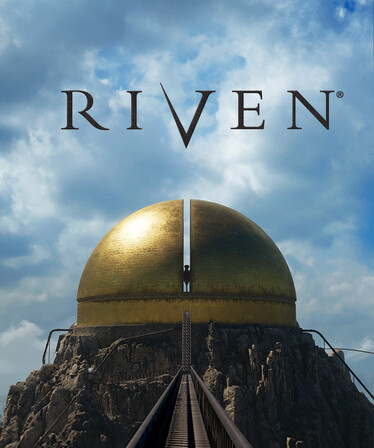
Riven
Uncover a story of intrigue, betrayal, and a civilization teetering on the brink of collapse as you solve intricate puzzles to unlock the secrets of Riven. Built from the ground-up and expanded from the award-winning original game released in 1997.

Eye of the Temple
Embark on a VR adventure to explore a vast and treacherous temple and uncover the ancient legend of the Eye. Keep your balance as you step between moving blocks, dodging hazardous traps and solving environmental puzzles with just your torch and whip in hand.

Kairo
Enter the lost world of Kairo. Explore vast abandoned monuments. Bring strange and ancient machinery back to life. Slowly uncover the true purpose of Kairo and fulfil a great destiny.Kairo is an atmospheric 3D exploration and puzzle solving game.

Antichamber
Antichamber is a mind-bending psychological exploration game where nothing can be taken for granted. Discover an Escher-like world where hallways wrap around upon each other, spaces reconfigure themselves, and accomplishing the impossible may just be the only way forward.

MirrorMoon EP
MirrorMoon EP is a game about mystery and exploration set in outer space. These space travels begin on a red planet and its unique moon and extend across galaxies. The single player part of MirrorMoon EP blends adventure and exploration with navigation-based puzzle solving.
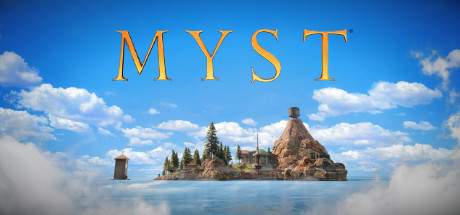
Myst
Welcome to Myst: a starkly beautiful island, eerily tinged with mystery and shrouded in intrigue. Built from the ground up to play in 2D & VR, explore Myst in a whole new dimension! Journey to the Ages, unravel puzzles, and be a part of the surrealistic adventure that will become your own.

Trikaya
Trikaya is an atmospheric first-person puzzle game where the player explores a long-forgotten temple and pieces together a mighty and mysterious artifact to master Wind, Earth, and Fire magic to solve puzzles and uncover the intriguing history of the extraordinary artifact.

The Unfinished Swan
From the creators of What Remains of Edith Finch. Enter the surreal world of The Unfinished Swan and explore a mysterious, hidden kingdom by splatting paint to reveal the world around you.

TRI: Of Friendship and Madness
Find a way through the towers and dungeons of TRI by solving puzzles, climbing impossible ascents and reflecting light-rays. The mystical TRI will let you create your own paths in this strange world – just try not to lose your mind when you're falling upside down!

realMyst: Masterpiece Edition
Released in 2014, experience one of the first 3D adaptations of the renowned puzzle-adventure game Myst! Each discovery you make, every puzzle you solve, will bring you closer to reversing a wrong that has gone unchecked for ages.
Frequently Asked Questions
Lingo 2 is currently priced at 9.75€ on Steam.
No, Lingo 2 is currently not on sale. You can purchase it for 9.75€ on Steam.
Yes, Lingo 2 received 412 positive votes out of a total of 448 achieving a rating of 8.53.
😎
Lingo 2 was developed and published by Brenton Wildes.
Yes, Lingo 2 is playable and fully supported on Windows.
No, Lingo 2 is not playable on MacOS.
No, Lingo 2 is not playable on Linux.
Yes, Lingo 2 is playable on Steam Deck, though it might require a few minor tweaks. Make sure to check the Steam store page and community feedback on ProtonDB for exact compatibility details.
Yes, Lingo 2 is playable on Steam Machine, though it might require a few minor tweaks. Make sure to check the Steam store page and community feedback on ProtonDB for exact compatibility details.
No, Lingo 2 does not support VR.
Lingo 2 is a single-player game.
No, Lingo 2 does not currently offer any DLC.
No, Lingo 2 does not support mods via Steam Workshop.
No, Lingo 2 does not support Steam Remote Play.
Yes, Lingo 2 is enabled for Steam Family Sharing. This means you can share the game with authorized users from your Steam Library, allowing them to play it on their own accounts. For more details on how the feature works, you can read the original Steam Family Sharing announcement or visit the Steam Family Sharing user guide and FAQ page.
You can find solutions or submit a support ticket by visiting the Steam Support page for Lingo 2.
Data sources
The information presented on this page is sourced from reliable APIs to ensure accuracy and relevance. We utilize the Steam API to gather data on game details, including titles, descriptions, prices, and user reviews. This allows us to provide you with the most up-to-date information directly from the Steam platform.
Additionally, we incorporate data from the SteamSpy API, which offers insights into game sales and player statistics. This helps us present a comprehensive view of each game's popularity and performance within the gaming community.
Last Updates| Steam data | 01 October 2026 05:10 UTC |
|---|---|
| SteamSpy data | 12 November 2026 08:48 UTC |
| Steam price | 15 November 2026 20:20 UTC |
| Steam reviews | 21 October 2026 10:03 UTC |
If you'd like to dive deeper into the details about Lingo 2, we invite you to check out a few dedicated websites that offer extensive information and insights. These platforms provide valuable data, analysis, and user-generated reports to enhance your understanding of the game and its performance.
- SteamDB - A comprehensive database of everything on Steam about Lingo 2
- SteamCharts - Analysis of Lingo 2 concurrent players on Steam
- ProtonDB - Crowdsourced reports on Linux and Steam Deck Lingo 2 compatibility
Game modes
Features
Online players
5
Developer
Brenton Wildes
Publisher
Brenton Wildes
Release
13 Mar 2025
Platforms