
Tower of Waifus
Tower of Waifu is a Tactical match 3 puzzle game. Learning spells, upgrading your stats and creating your own tactics, conquer the tower, defeat bosses.
Sync your Steam wishlist to find the lowest game prices instantly. No login required, just paste your Steam profile URL!
⚡ Try Wishlist Radar!
Sync your Steam wishlist to find the lowest game prices instantly. No login required!
⚡ Try Wishlist Radar!
Close

Love Fantasy on Steam
Quick menu
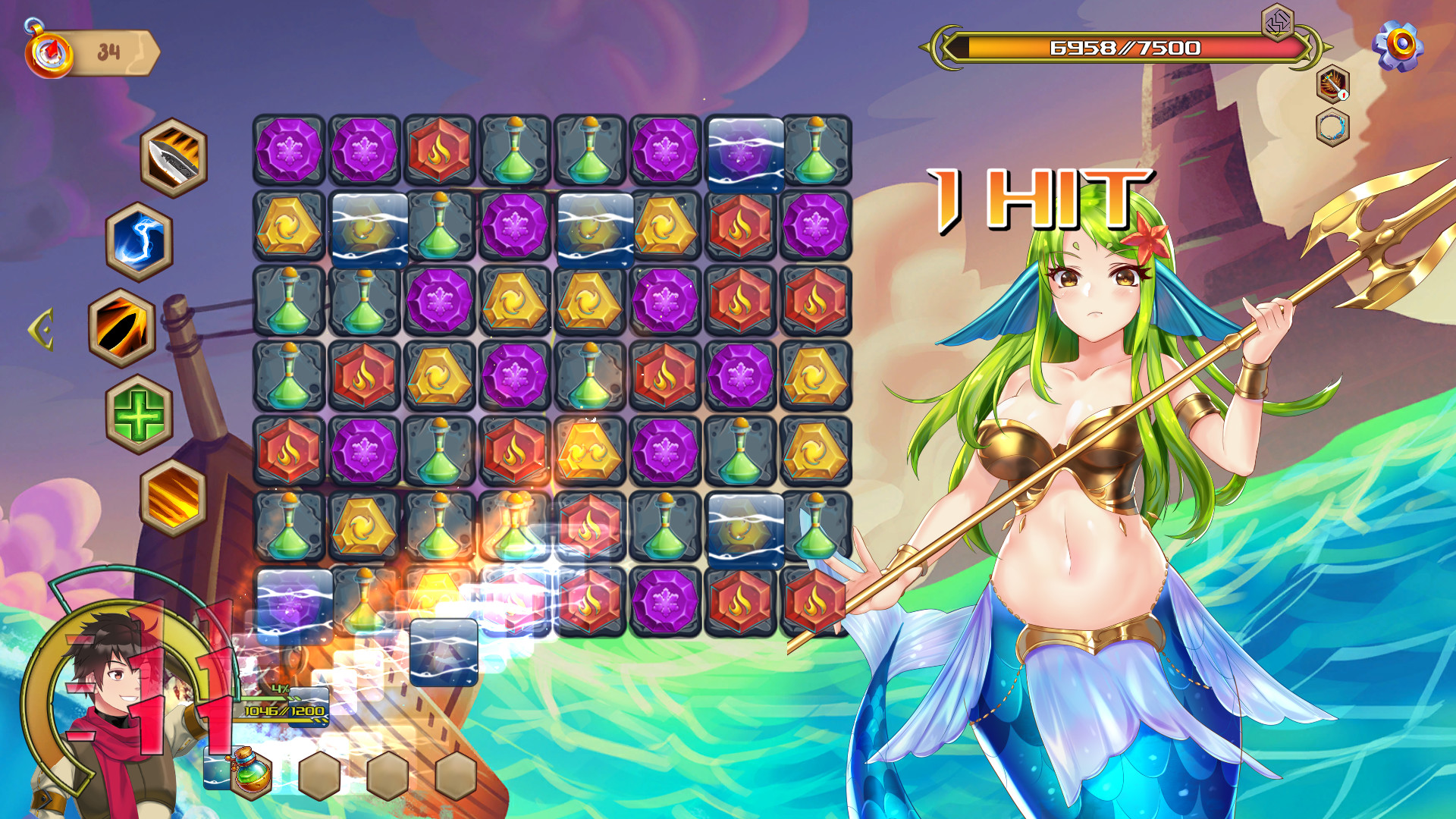
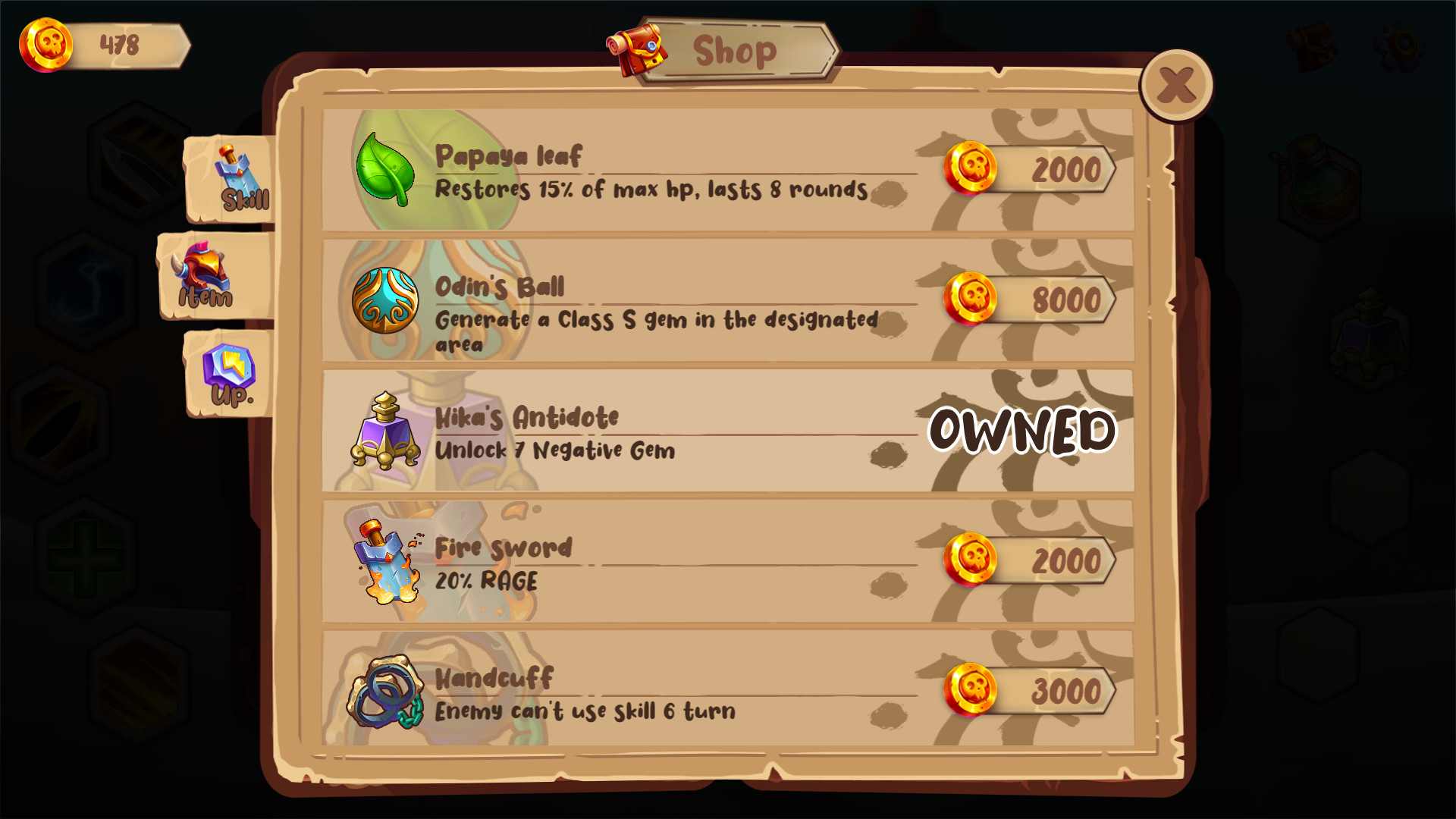
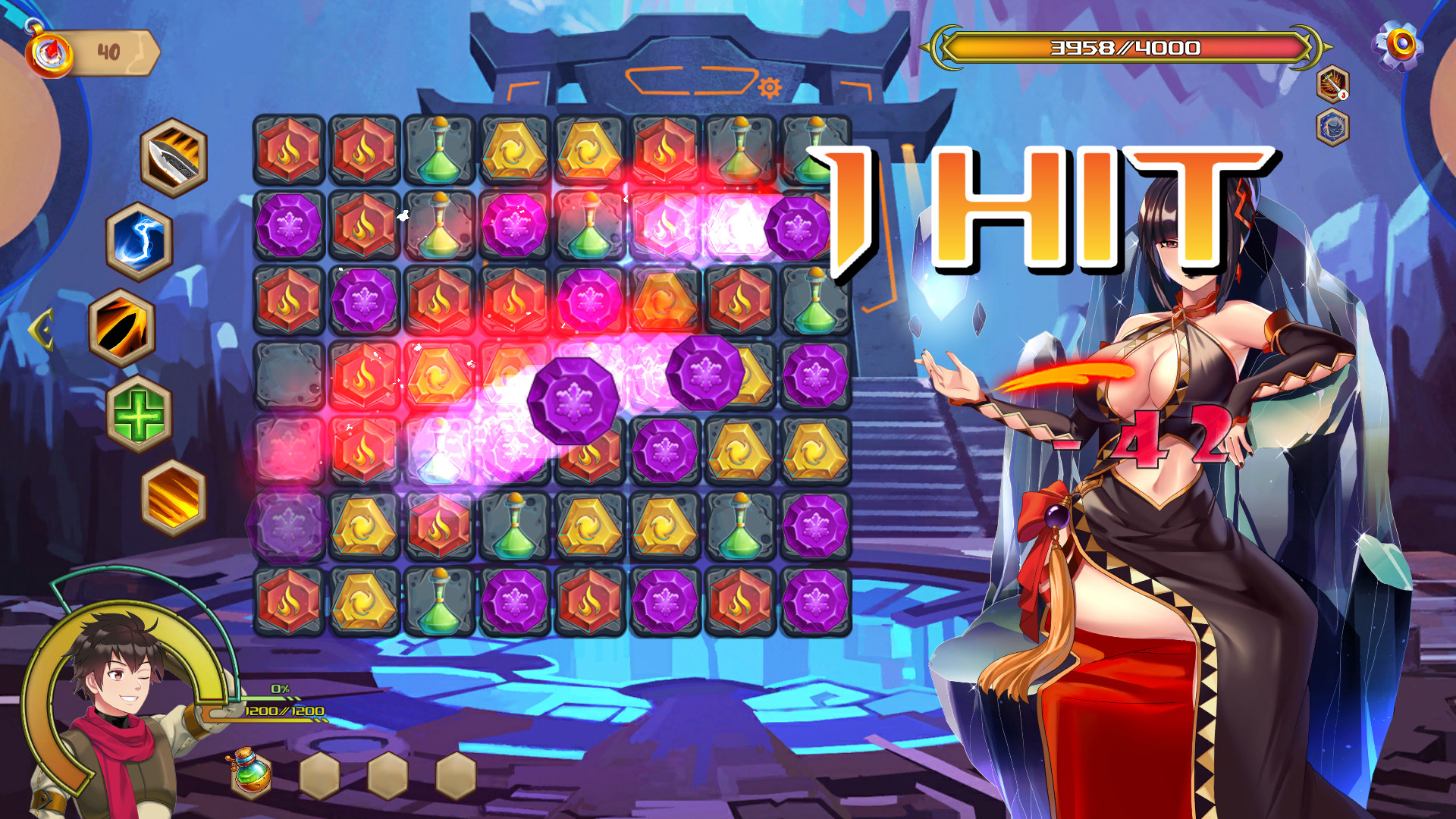
Love Fantasy combines match-3, beauties, and visual novel elements. Become a hero to save the beautiful goddesses whose tasks were to create and preserve lives. Learn skills, buy items, upgrade stats, and so on to defeat the enemies.
Love Fantasy is a match 3, puzzle and memes game
developed and published by Mature Games.
Released on March 06th 2021 is available on Windows, Steam Deck and Steam Machine
in 2 languages: English and Simplified Chinese.
It has received 303 reviews of which 233 were positive and 70 were negative resulting in a rating of 7.2 out of 10. 😊
The game is currently priced at 0.99€ on Steam with a 50% discount.
The Steam community has classified Love Fantasy into these genres:
Match 3
Puzzle
Memes
Visual Novel
Cute
Romance
2D
Anime
Story Rich
Choices Matter
Colorful
Relaxing
Atmospheric
Adventure
Casual
RPG
Arcade
Here is the detailed breakdown of supported languages for Love Fantasy:
| UI | Subtitle | Audio | |
|---|---|---|---|
| English | |||
| Simplified Chinese |
Media & Screenshots
Get an in-depth look at Love Fantasy through various videos and screenshots.



Load More

System requirements
These are the minimum specifications needed to play the game. For the best experience, we recommend that you verify them.
Windows
- OS *: Windows 7
- Processor: Intel Core 2 Dual or AMD Equivalent
- Graphics: HD Intel Graphics
- DirectX: Version 9.0
- Storage: 800 MB available space
Steam Price & Best Deals
User reviews & Ratings
Explore reviews from Steam users sharing their experiences and what they love about the game.
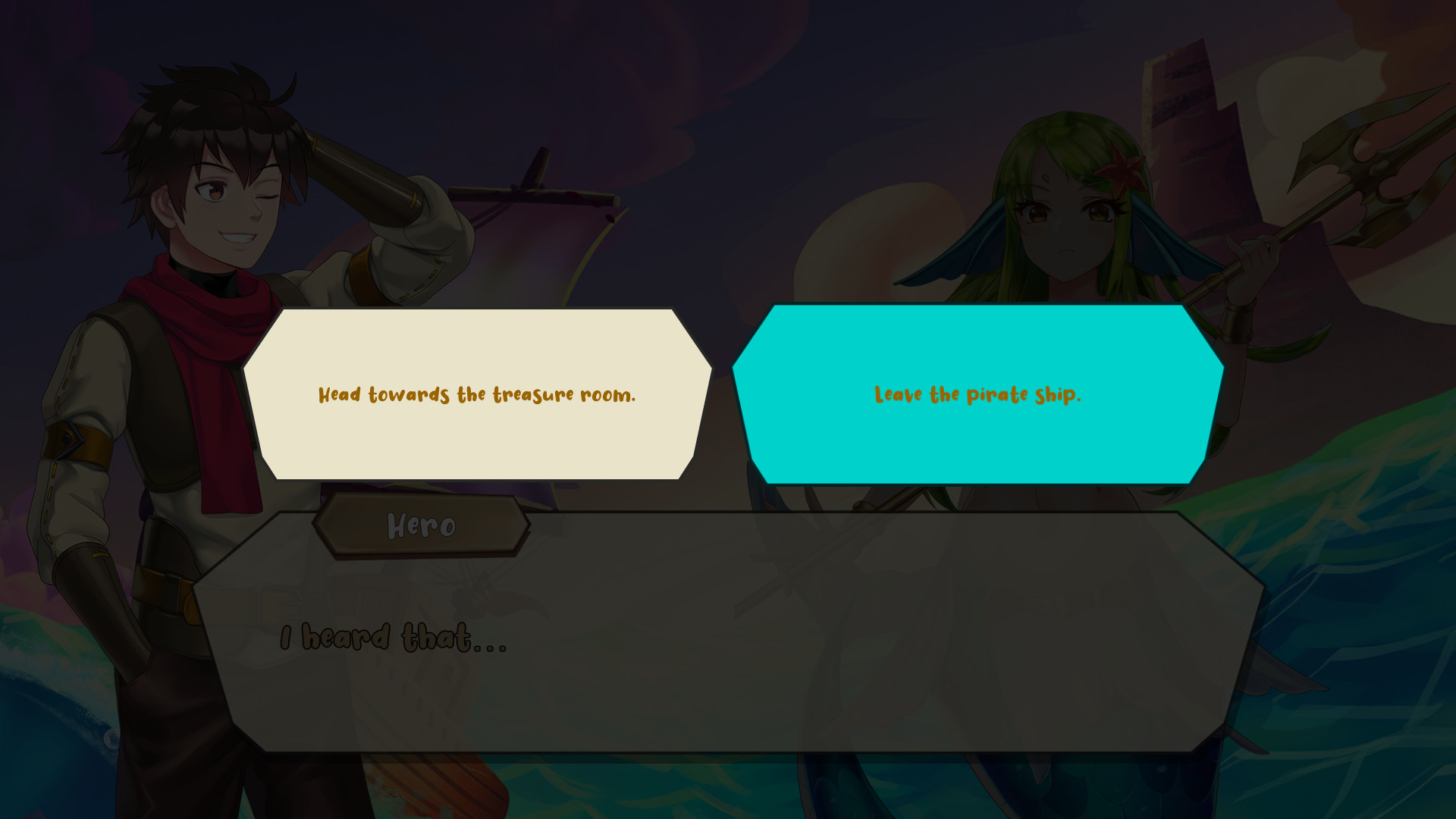
Love Fantasy is an adult-oriented combination of match-3 puzzle mechanics, visual novel storytelling, and lightweight RPG progression that understands the particular audience it wants to entertain. Developed and published by Mature Games, it uses a familiar transported-to-another-world premise as the foundation for an adventure involving goddesses, monsters, character interactions, and puzzle-driven battles. None of its individual systems are especially complicated, but their combination gives the game more structure than a basic match-3 title or largely passive visual novel. The premise places an ordinary person from the modern world into an unfamiliar fantasy realm, where circumstances quickly push the protagonist into becoming an unlikely hero. The central objective involves rescuing several goddesses, allowing the story to introduce a collection of characters with noticeably different personalities and personal concerns. The narrative also incorporates branching elements, giving players some influence over how interactions develop. It is not an exceptionally elaborate fantasy story, but it provides sufficient context for the puzzle battles and character-focused progression. A considerable portion of the game's personality comes from its goddesses. Hikaru is characterized by her fear of loneliness and strong need for companionship, while Iwe struggles with feeling that her efforts are insufficiently appreciated. Odine is more comfortable retreating into dreams and imagination, whereas Silvia has developed a strong dislike for greed and excessive desire. Chryseia offers a somewhat more conflicted outlook on humanity, having observed both admirable and unpleasant sides of human behavior. These characteristics help distinguish the cast rather than presenting every heroine as merely another visual reward. Match-3 gameplay serves as the main interactive component. Players manipulate pieces and create combinations while dealing with enemies, turning the familiar puzzle format into a simplified form of combat. The basic mechanics are easy to understand, making the game approachable even for people who rarely play puzzle titles. Battles are supplemented by special skills and usable items, which introduce some tactical considerations beyond simply searching for the largest available combination. The combat is still intentionally casual, however, and experienced match-3 players should not expect highly elaborate puzzle design. RPG elements provide another layer of progression. Statistics can be improved, new skills can be learned, and useful items can be purchased as the adventure continues. These features create a satisfying sense that the protagonist is gradually becoming more capable. They also help prevent the puzzle stages from feeling completely disconnected from one another. The RPG systems remain relatively light and accessible, so players interested in complex builds, extensive equipment management, or highly detailed character customization will find the progression comparatively simple. The visual presentation is arguably one of the game's most important attractions. Its anime-influenced character artwork is colorful and designed to emphasize the individual appearances of the goddesses, while illustrated backgrounds provide suitable scenery for the fantasy setting. Since the title includes mature themes, nudity, and sexual material, the artwork is naturally central to its intended appeal. The presentation generally complements the casual nature of the gameplay, creating an experience that places character illustrations and interactions alongside its puzzle mechanics rather than treating them as unrelated components. One potential weakness is that Love Fantasy spreads itself across several genres without developing any one of them particularly deeply. Visual novel enthusiasts may want richer characterization and substantially more intricate storytelling, dedicated RPG fans may find the progression too basic, and puzzle veterans could eventually find the match-3 encounters repetitive. At the same time, this simplicity can be considered an advantage for its intended audience. Players can move between story scenes, battles, upgrades, and character interactions without having to learn complicated systems or spend excessive time managing statistics. Steam Deck compatibility is officially categorized as Playable rather than fully Verified. Performance with the default graphics configuration is considered suitable, and the game can run successfully on SteamOS. However, handheld players should expect compromises. Some functionality is not fully accessible through the default controller configuration, touchscreen interaction or a community controller layout may occasionally be useful, and text entry can require manually opening the virtual keyboard. Some interface text may also appear small, while certain prompts can display keyboard, mouse, or non-Steam Deck controller icons. It is therefore functional on the Deck, but the experience is less seamless than a fully optimized handheld release. Overall, Love Fantasy is a modest but reasonably cohesive mixture of adult visual novel content, match-3 combat, branching interactions, and simplified RPG development. Its greatest appeal comes from the way these elements provide variety without making the experience unnecessarily complicated. The attractive character artwork and distinct heroine personalities provide the primary motivation, while puzzles and upgrades ensure that progressing through the story requires more participation than simply advancing dialogue. Its shallow individual systems keep it from being outstanding within any single genre, but players specifically looking for a casual adult fantasy game with puzzles and character progression should find a fair amount to enjoy. Rating: 6/10
Similar games
View all

Happy Puzzle
Happy Puzzle is a puzzle game that extra an interesting story. The main character is a servant, working in a noble family. After save his young lady. He want to go to the forest to find the magic water.


Mosaique Neko Waifus 4
Hentai puzzle with elements of RPG and meaningful dialogue choices. Flirt with all the Neko girls!

Catherine Classic
Catherine: a tale of love, betrayal, and the terror of commitment. Experience the mature action-adventure-puzzle game unlike any other from the makers of the Persona series, now enhanced for PC in all its Classic glory. Is love over? Climb to the top or die trying.

NEKOPARA Vol. 2
Business is booming for La Soleil, the patisserie run by Kashou Minaduki with his two catgirls, Chocola and Vanilla, his sister Shigure, and the Minaduki family's four catgirl sisters.

Furry Reich 🐺
Furry Reich 🐺 is a heartwarming romance game with Anti-war love story at the front. Fall in love with your fellow officer and navigate the challenges of military life hand-in-hand. Relaxing gameplay and cute atmosphere. Everyone is worthy of love. Make love Not War

9-nine-:Episode 1
Help Miyako and Kakeru track down a superpowered serial killer before they strike again.

WAGAMAMA HIGH SPEC
Narumi Kouki, our hapless protagonist, writes a risque romcom for a weekly manga magazine. Due to its content, he's kept it a secret from everyone except the two closest to him: Mihiro and Toa.

Sakura Angels
日本語バージョンダウンロード開始されました。Two girls, blessed with magical powers, are faced with the task of saving the lonely protagonist from the clutches of a mysterious witch and ancient evil, sealed away long ago by his ancestors. What does this sorceress want from our protagonist?

Riddle Joker
For decades, superpowers and psychic abilities were thought to be mere science fiction, but the discovery of a certain particle called the "Astron" at the end of the 20th century proved to the world that these wondrous phenomena were real.

Tropical Liquor
Welcome to Tropical Island.
Frequently Asked Questions
Love Fantasy is currently priced at 0.99€ on Steam.
Yes, Love Fantasy is currently available at a 50% discount. You can purchase it for 0.99€ on Steam.
Yes, Love Fantasy received 233 positive votes out of a total of 303 achieving a rating of 7.21.
😊
Love Fantasy was developed and published by Mature Games.
Yes, Love Fantasy is playable and fully supported on Windows.
No, Love Fantasy is not playable on MacOS.
No, Love Fantasy is not playable on Linux.
Yes, Love Fantasy is playable on Steam Deck, though it might require a few minor tweaks. Make sure to check the Steam store page and community feedback on ProtonDB for exact compatibility details.
Yes, Love Fantasy is playable on Steam Machine, though it might require a few minor tweaks. Make sure to check the Steam store page and community feedback on ProtonDB for exact compatibility details.
No, Love Fantasy does not support VR.
Love Fantasy is a single-player game.
Yes, there is a DLC available for Love Fantasy. Explore additional content available for Love Fantasy on Steam.
No, Love Fantasy does not support mods via Steam Workshop.
No, Love Fantasy does not support Steam Remote Play.
Yes, Love Fantasy is enabled for Steam Family Sharing. This means you can share the game with authorized users from your Steam Library, allowing them to play it on their own accounts. For more details on how the feature works, you can read the original Steam Family Sharing announcement or visit the Steam Family Sharing user guide and FAQ page.
You can find solutions or submit a support ticket by visiting the Steam Support page for Love Fantasy.
Data sources
The information presented on this page is sourced from reliable APIs to ensure accuracy and relevance. We utilize the Steam API to gather data on game details, including titles, descriptions, prices, and user reviews. This allows us to provide you with the most up-to-date information directly from the Steam platform.
Additionally, we incorporate data from the SteamSpy API, which offers insights into game sales and player statistics. This helps us present a comprehensive view of each game's popularity and performance within the gaming community.
Last Updates| Steam data | 13 October 2026 09:04 UTC |
|---|---|
| SteamSpy data | 06 October 2026 18:40 UTC |
| Steam price | 18 October 2026 02:50 UTC |
| Steam reviews | 13 October 2026 15:45 UTC |
If you'd like to dive deeper into the details about Love Fantasy, we invite you to check out a few dedicated websites that offer extensive information and insights. These platforms provide valuable data, analysis, and user-generated reports to enhance your understanding of the game and its performance.
- SteamDB - A comprehensive database of everything on Steam about Love Fantasy
- SteamCharts - Analysis of Love Fantasy concurrent players on Steam
- ProtonDB - Crowdsourced reports on Linux and Steam Deck Love Fantasy compatibility

Game modes
Features
Online players
0
Developer
Mature Games
Publisher
Mature Games
Release
06 Mar 2021
Platforms