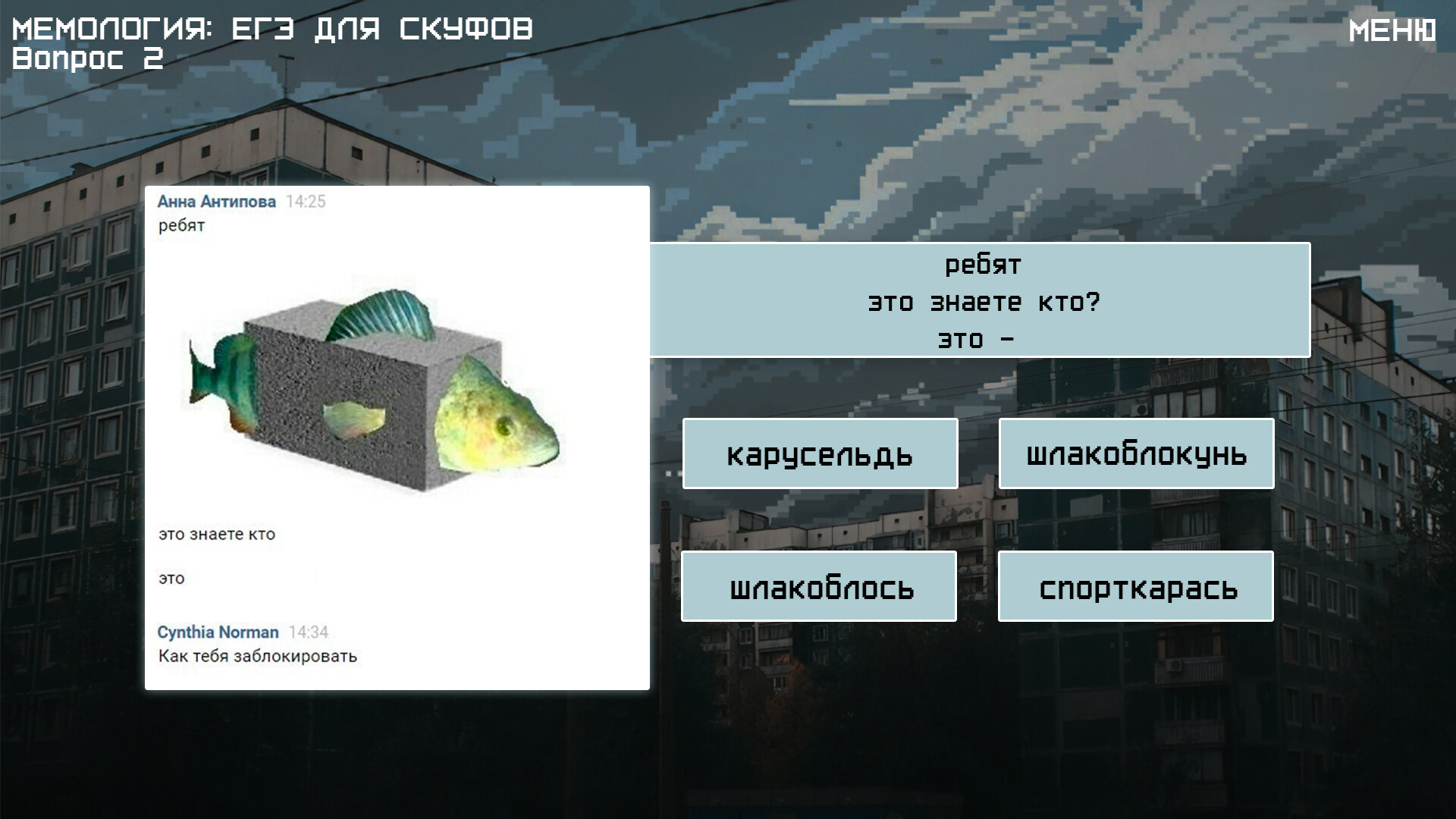
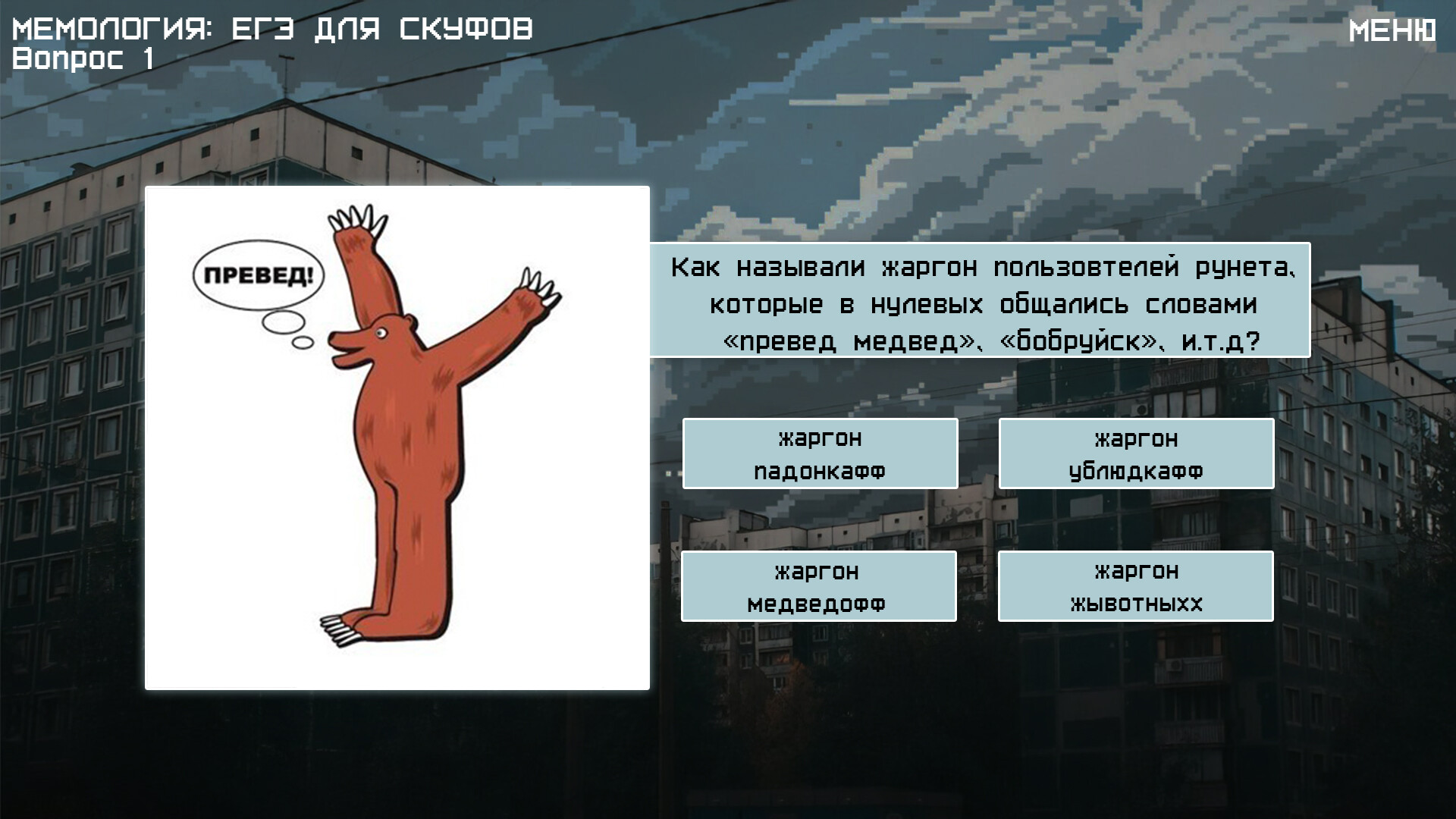
Memology 2: Old Times, developed by hannibalnotdead and Gamesforfarm and published by Gamesforfarm, is a lighthearted, nostalgia-driven quiz game that serves as both a tribute and a test of one’s knowledge of internet culture. It’s the kind of project that doesn’t take itself too seriously, instead thriving on humor, familiarity, and the shared language of memes that defined the early days of online life. The premise is simple yet effective: you’re challenged to answer questions about classic internet memes, recognize images, and recall cultural moments that shaped the humor of the web before the social media era transformed it. With over a hundred levels to complete, it’s both a celebration of the absurd and a reminder of how quickly digital culture evolves. From the outset, Memology 2 makes no attempt to disguise what it is—a meme quiz through and through. Its interface is simple and functional, emphasizing accessibility over complexity. The visuals rely on bright, cartoonish colors and instantly recognizable meme imagery that feels both chaotic and endearing. The minimalistic design ensures that players can jump straight into the fun without tutorials or complicated menus. Everything is designed to get you laughing or reminiscing as quickly as possible. Whether it’s identifying the face of a long-forgotten viral sensation or choosing the correct punchline to a classic image macro, the game thrives on those “I remember that!” moments. Each correct answer feels like a small victory for your long-term memory of internet absurdity. The gameplay is straightforward but satisfying. Players progress through 100 levels, each presenting a mix of image-based questions and textual trivia. The format borrows from traditional quiz games but injects it with the unpredictable humor of meme culture. The difficulty curve is smooth, allowing players to ease into the experience before throwing in some truly obscure references that only long-time internet veterans will recognize. The pacing is quick, with each level lasting only a few minutes, making it ideal for short bursts of entertainment. Steam achievements and progression tracking add a bit of motivation for completionists, though the main appeal lies in the sheer variety of references. It’s not unusual to find yourself chuckling at a question you got wrong simply because of how bizarre or outdated the meme in question feels today. The real strength of Memology 2 lies in its tone and intent. It’s less about competition and more about shared experience—a collective nod to the strange, unfiltered humor that once defined the internet. By focusing on older memes, the game taps into a sense of digital nostalgia that many players didn’t even realize they missed. There’s something oddly comforting about revisiting the simpler days of online culture, when badly edited images and nonsensical captions ruled forums and early social media platforms. In this sense, the game succeeds not just as a quiz but as a time capsule. It reminds players of how humor has evolved while highlighting the timeless silliness that continues to bind online communities together. The audio and visual presentation serve this purpose well. The soundtrack is cheerful and repetitive, designed to keep energy levels high without distracting from the questions themselves. The visuals are filled with bright colors, minimal transitions, and intentionally exaggerated meme aesthetics—everything feels slightly unpolished, as if it were pulled straight from the early 2010s, and that’s clearly by design. This roughness gives the game character, evoking the chaotic creativity of the very internet it celebrates. Even the typography and menus contribute to the overall comedic tone, never letting you forget that this is a game meant for fun above all else. That said, Memology 2’s simplicity can also be seen as its biggest limitation. Once you’ve gone through all 100 levels, there’s little incentive to return unless you want to relive the experience or chase 100% completion. Because it’s a quiz game based entirely on recognition, replay value depends largely on how much you enjoy the material rather than the challenge. For players unfamiliar with the memes being referenced—especially those deeply rooted in older internet subcultures—some questions may fall flat or seem overly specific. Likewise, those expecting variety beyond trivia may find the experience repetitive after extended play. However, these issues don’t detract from what the game sets out to achieve, which is a bite-sized, low-pressure dose of humor and nostalgia. What stands out most about Memology 2: Old Times is the sincerity with which it embraces its theme. It’s a game that revels in the absurdity of the internet without cynicism or irony. It understands that memes aren’t just jokes—they’re shared cultural artifacts, snapshots of a time when the web felt smaller, stranger, and more personal. The developers clearly have affection for the subject matter, and that affection comes through in every aspect of the design. Even though the game is simple, it feels handcrafted by people who genuinely love internet humor and want to preserve its chaotic energy in interactive form. As an indie project, Memology 2 succeeds where it counts. It’s funny, quick to play, and surprisingly charming in its earnestness. The idea of using a quiz format to explore the history of memes might sound silly, but it works because it respects the humor it draws from. Every correct answer feels like a shared laugh between player and developer, a moment of recognition that bridges generations of online users. It’s an experience that thrives on nostalgia but never feels cynical or exploitative. Instead, it’s a small but affectionate tribute to a form of humor that has defined digital life for nearly two decades. In the end, Memology 2: Old Times is exactly what its title suggests—a celebration of old memes and the joy of remembering them. It’s not a complex game, and it doesn’t try to be. Its strength lies in its honesty and its understanding of what makes memes timeless: their ability to make people laugh, connect, and recall where they were when they first saw something ridiculous online. For anyone who’s spent years scrolling through internet culture, it offers a refreshing and genuinely fun way to revisit those moments. It’s short, simple, and unapologetically silly—a perfect reminder that sometimes, the best games are the ones that just want to make you smile. Rating: 8/10
Expand the review