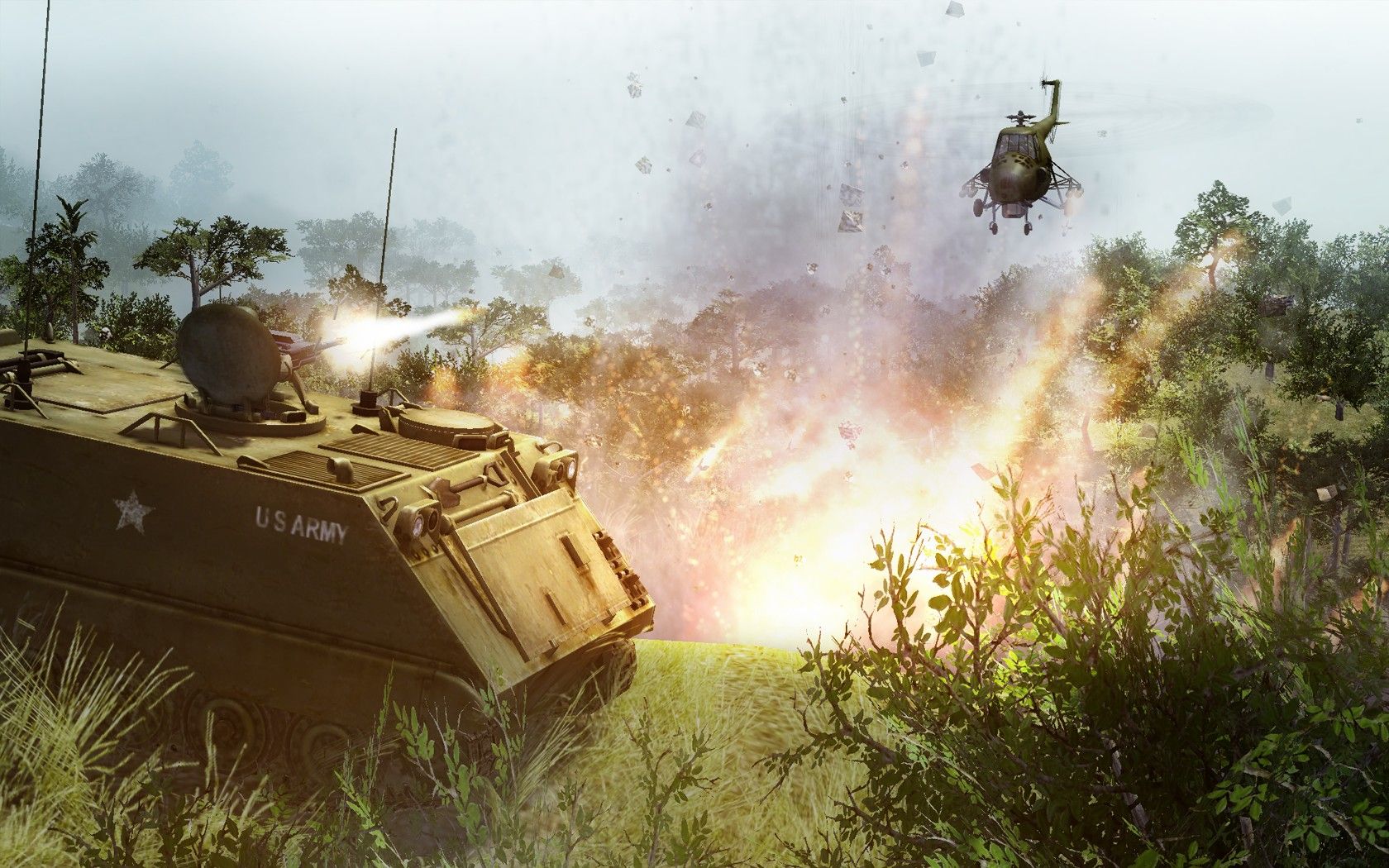
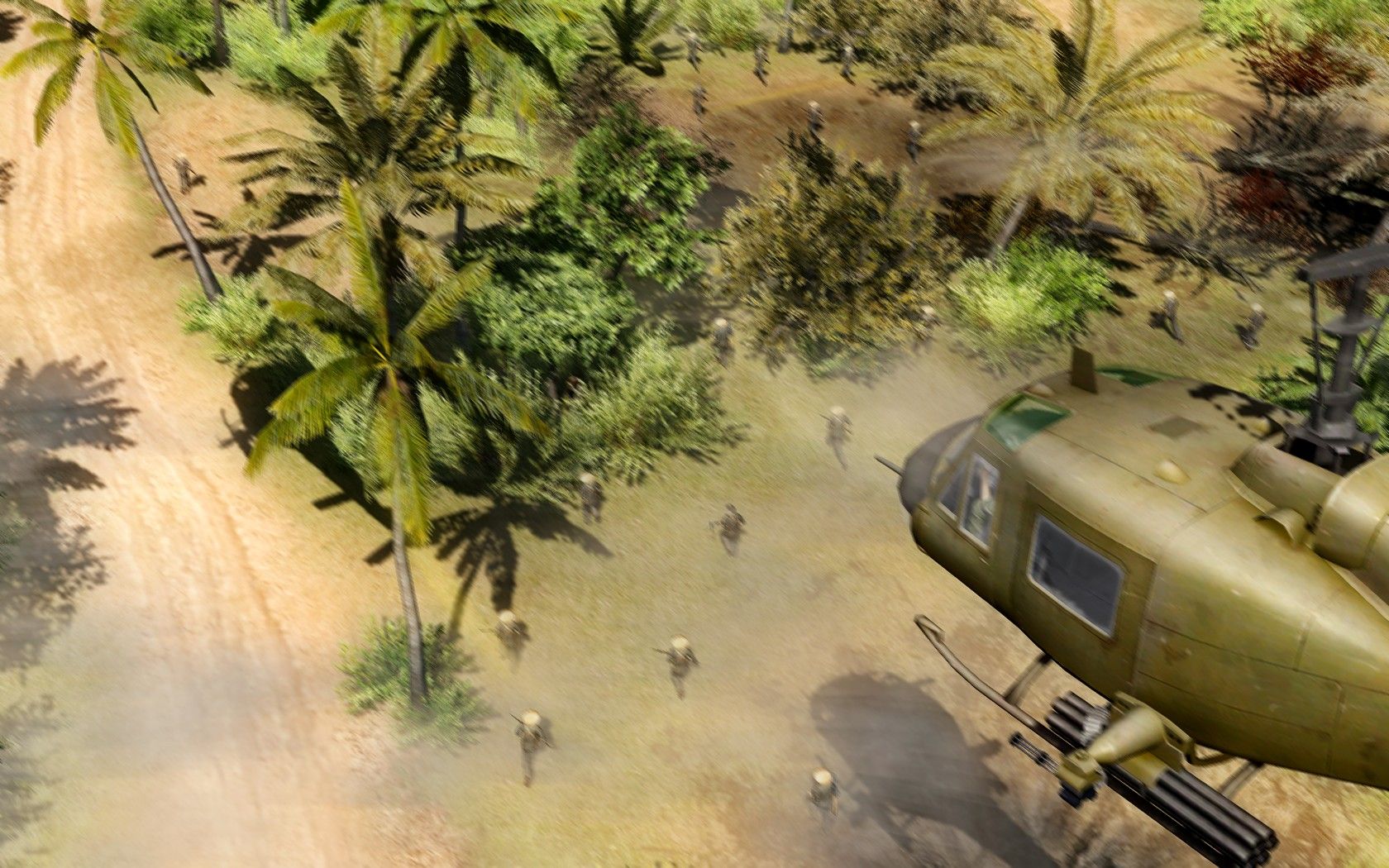
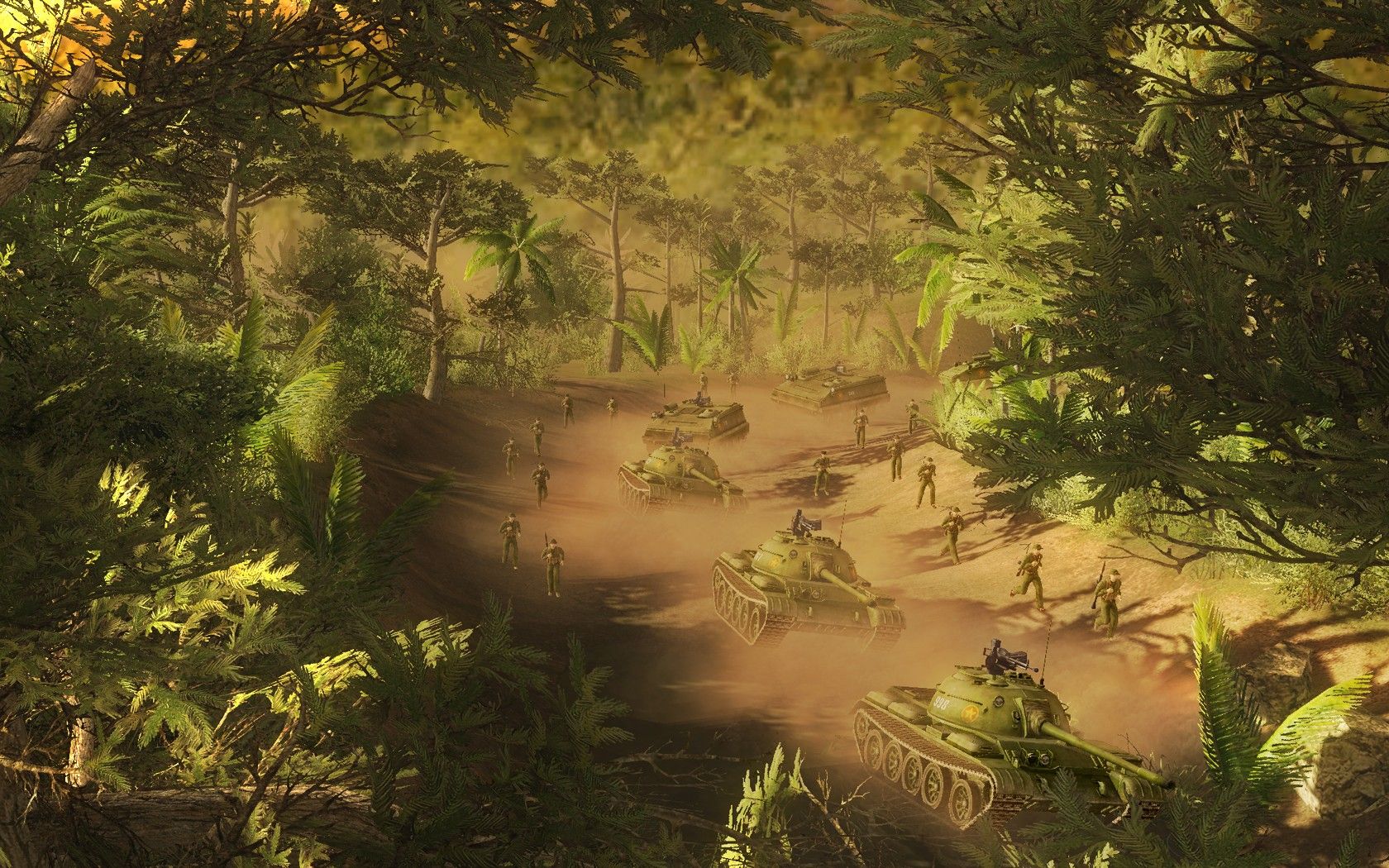
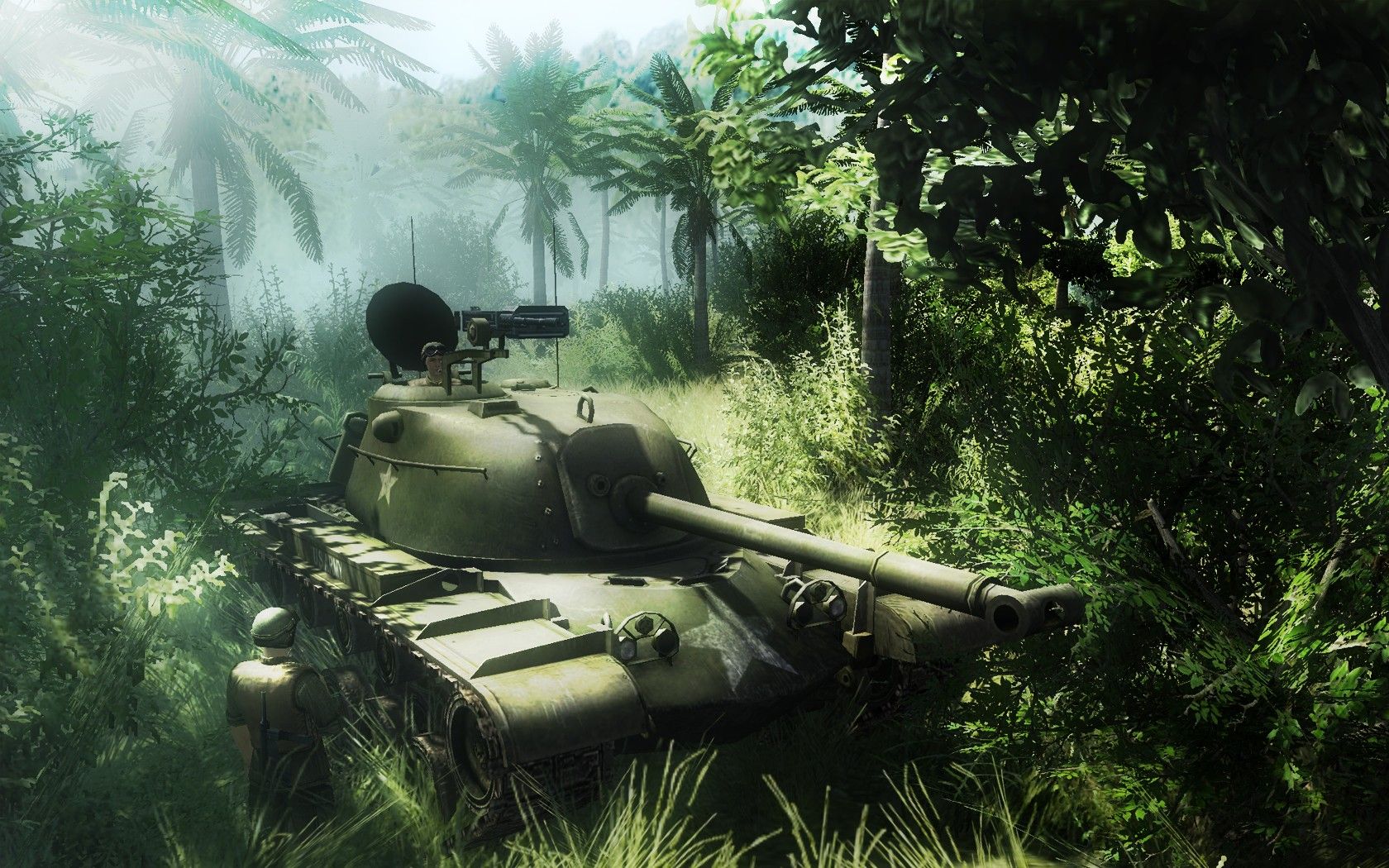
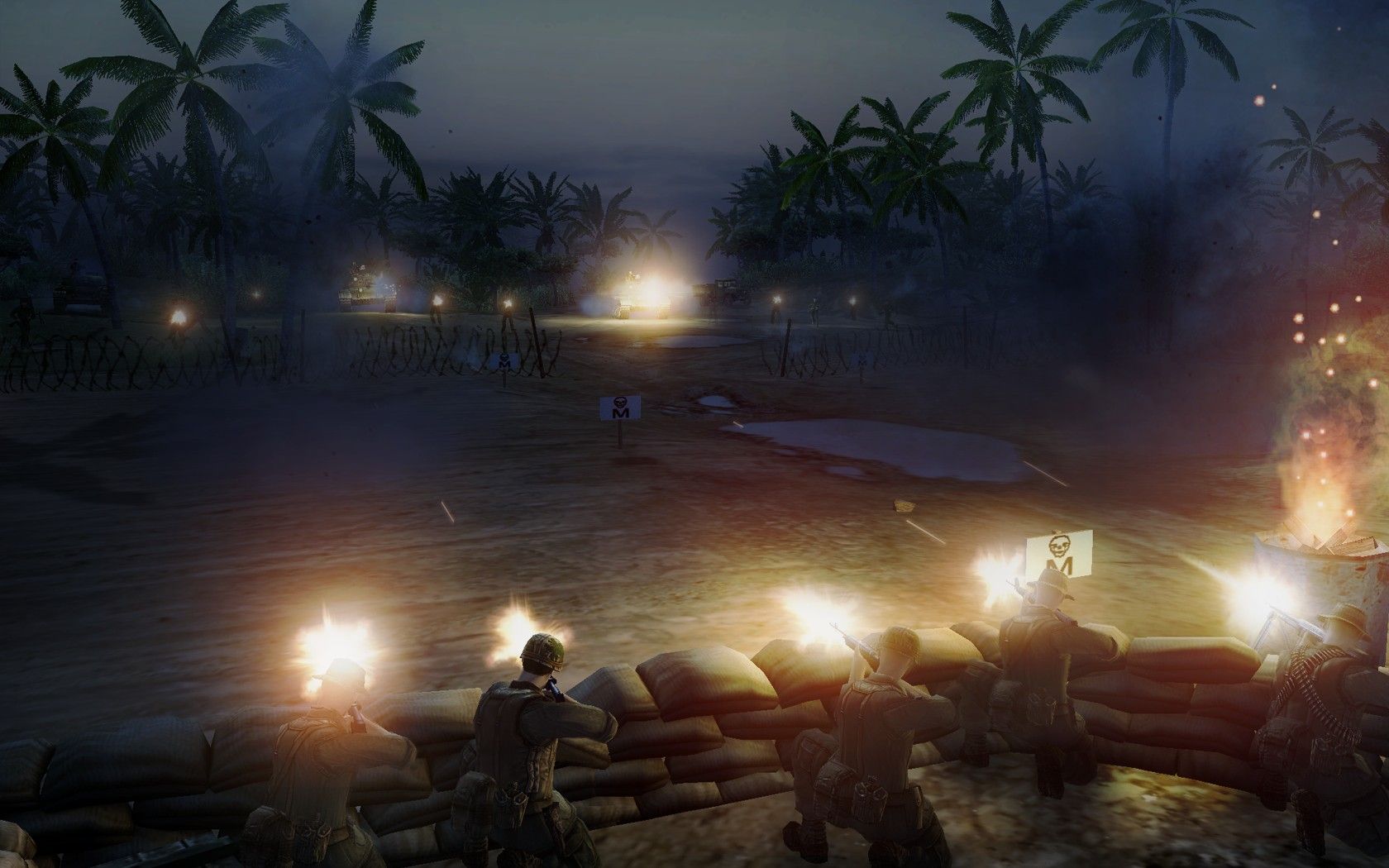
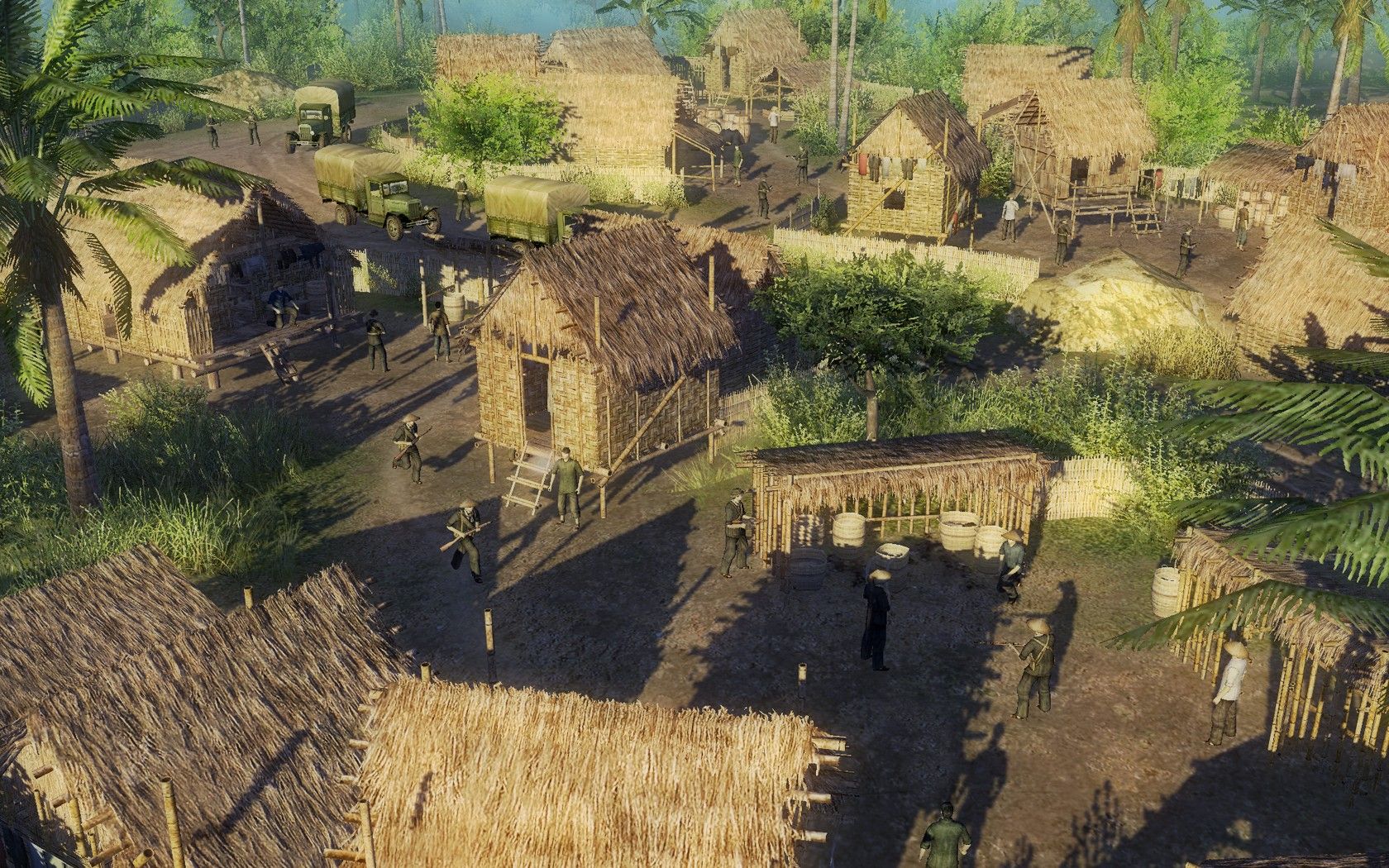
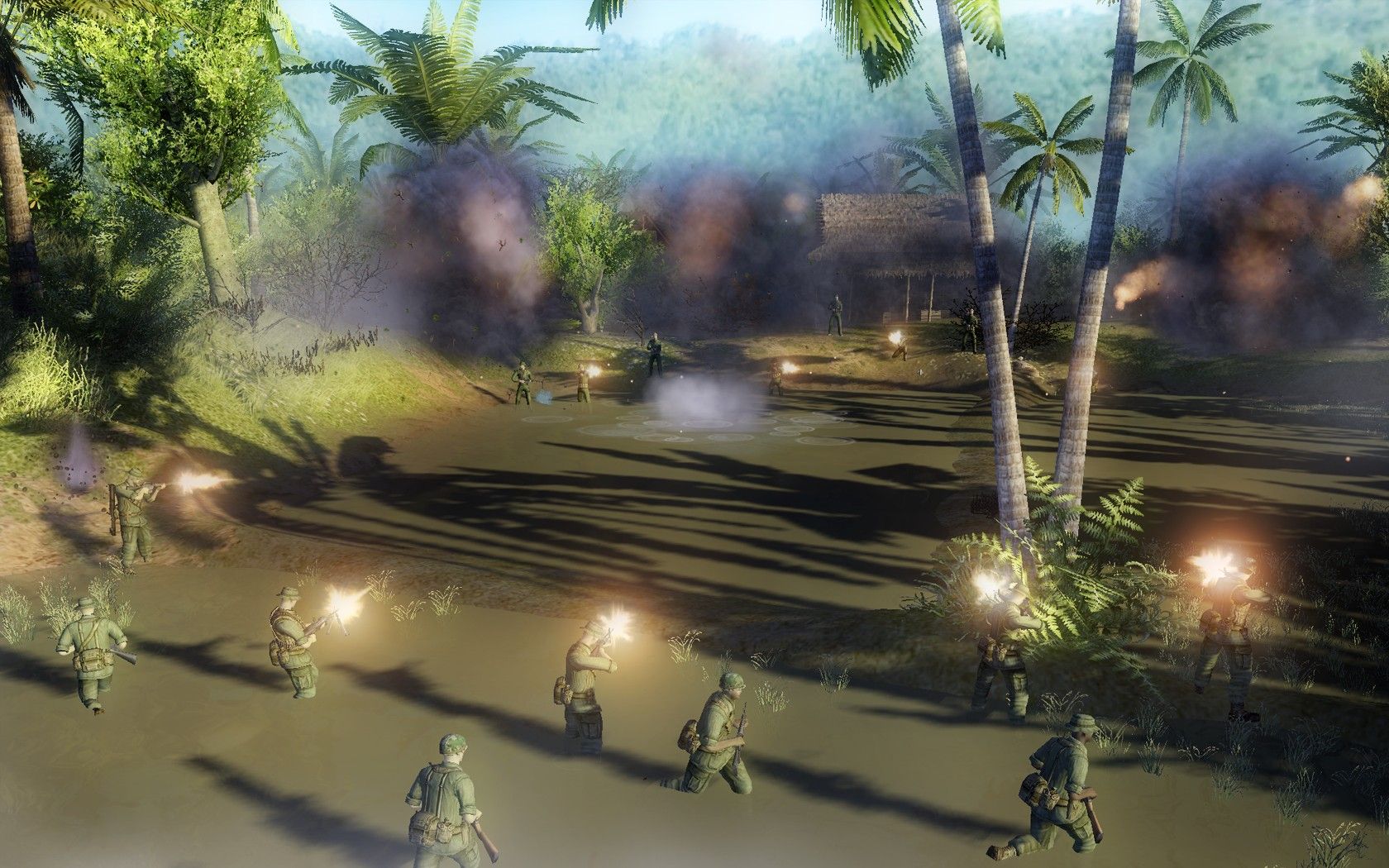
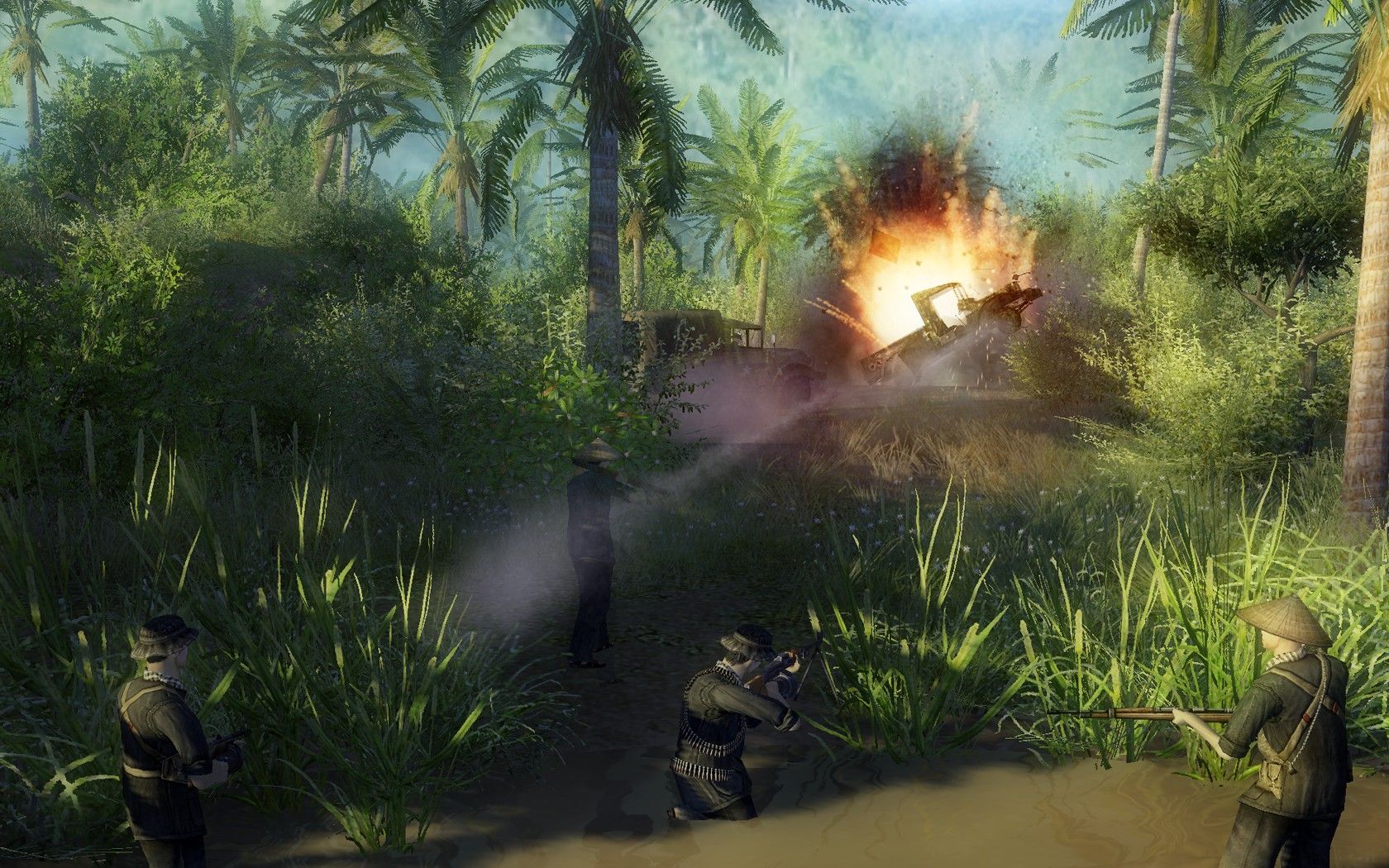
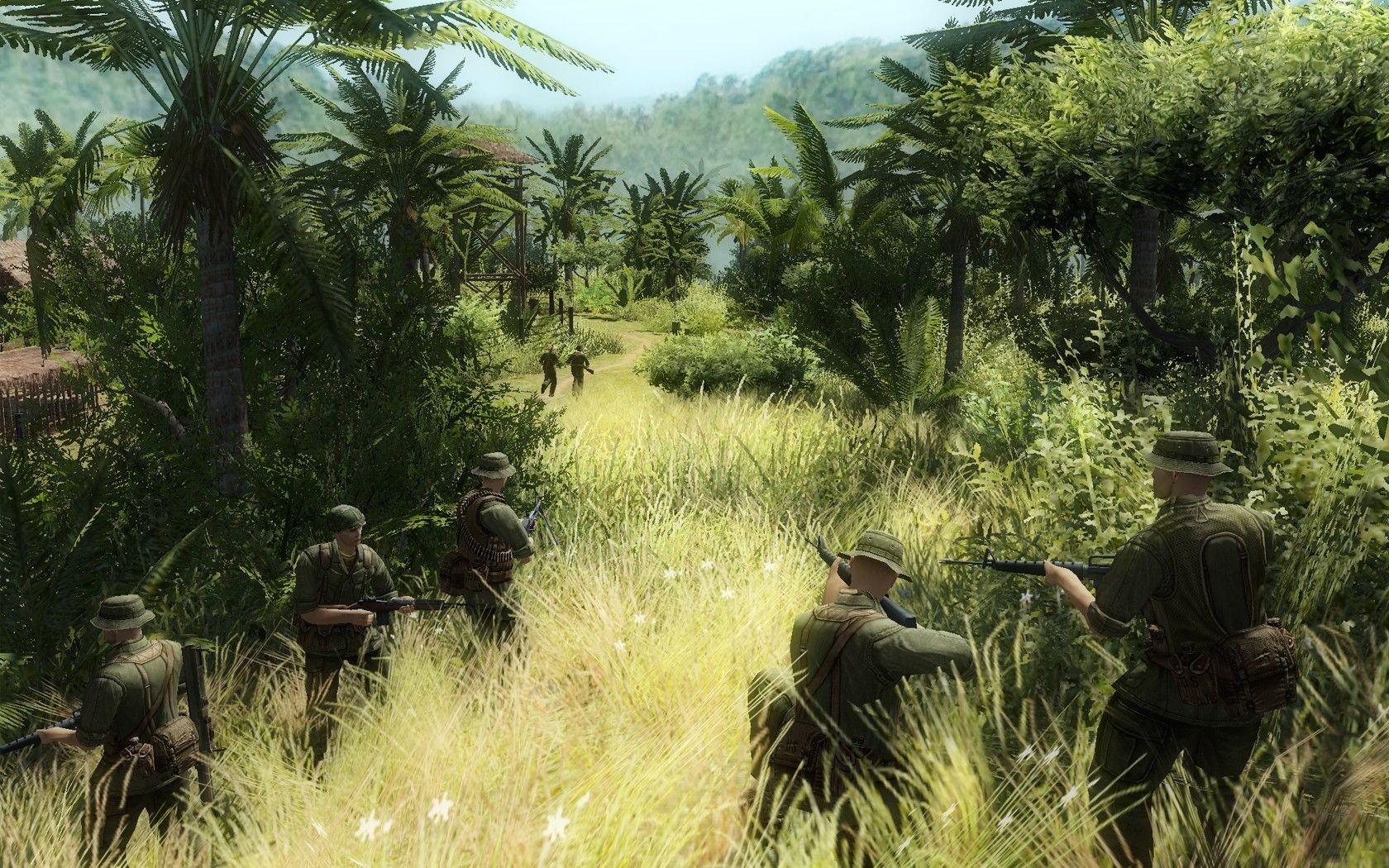
Men of War: Vietnam, developed and published by Fulqrum Publishing, is a brutal and highly detailed real-time tactics game that transports the Men of War series from the familiar battlefields of World War II into the dense jungles and harsh realities of the Vietnam War. Released in 2011, it attempts to adapt the series’ intricate squad-based mechanics to an era defined by asymmetric warfare, guerrilla tactics, and a completely different tone of combat. Rather than simply reskinning its predecessors, it aims to capture the chaotic and gritty atmosphere of one of the twentieth century’s most divisive conflicts, offering a blend of realism, tension, and unforgiving tactical gameplay that caters to veterans of the franchise. At its foundation, Men of War: Vietnam retains the complex tactical DNA that made the series both beloved and notorious for its steep learning curve. Players control small squads of soldiers in real time, managing every aspect of their performance—from ammunition and weapon swapping to vehicle maintenance and positional tactics. The signature direct-control feature, which allows players to manually take over individual units or vehicles, returns in full force, turning every skirmish into an intricate dance of micromanagement and improvisation. The game features two campaigns that allow players to experience both sides of the conflict: one following U.S. Special Forces on covert missions behind enemy lines, and the other focusing on North Vietnamese Army troops and Soviet advisors fighting against the Americans. Each campaign presents its own set of challenges, emphasizing stealth, survival, and resourcefulness over sheer firepower. The Vietnam War setting gives the game a distinctive personality that sets it apart from previous Men of War titles. Gone are the open plains and war-torn European villages—here, players are thrust into the claustrophobic jungles, muddy rivers, and booby-trapped paths of Southeast Asia. The environment itself becomes an enemy, limiting visibility and forcing players to rely on cover, ambushes, and reconnaissance. The inclusion of iconic elements such as Huey helicopters, M16 rifles, AK-47s, and improvised explosives reinforces the authenticity of the period. The level design, which often requires stealth and patience, reflects the nature of jungle warfare; battles are rarely about holding ground but about striking quickly and retreating before the enemy can retaliate. These missions feel tense and immersive, with moments where victory hinges on a single well-timed grenade or the survival of one remaining squad member. Graphically, Men of War: Vietnam maintains the detailed but utilitarian presentation characteristic of the series. The environments are lush and visually distinct, with dense vegetation, uneven terrain, and moody lighting that effectively capture the oppressive atmosphere of the setting. The sound design contributes significantly to immersion—the crackle of gunfire echoing through the jungle, the whir of helicopter blades, and the distant cries of combatants create a sense of immediacy that keeps players on edge. However, despite these strengths, the game also shows its technical limitations. The AI can be erratic, sometimes failing to take cover or respond intelligently to threats, and pathfinding issues occasionally disrupt carefully laid plans. The interface, though familiar to series veterans, can feel cumbersome to newcomers, and the camera controls often require manual adjustment to achieve optimal battlefield visibility. The difficulty level is perhaps the game’s defining feature, and it’s as much a blessing as it is a barrier. Men of War: Vietnam does not forgive mistakes—it demands patience, forethought, and a willingness to experiment. Players who expect a fast-paced strategy experience will quickly find themselves overwhelmed. Each mission requires meticulous planning and an understanding of unit capabilities. The smallest misstep, such as sending a soldier into open ground or misjudging an enemy’s firing arc, can spell disaster. This punishing realism can be exhilarating for those who thrive on tactical precision, but it can also alienate casual players who lack the time or patience for repeated trial and error. The first few missions in particular are notoriously brutal, serving as a gauntlet that tests one’s command of the mechanics before easing into a rhythm. While the game’s intensity and attention to detail are admirable, it’s not without flaws. The steep learning curve, combined with occasional technical frustrations, makes it difficult for new players to fully appreciate its depth. The lack of comprehensive tutorials or guided onboarding can leave players feeling lost, especially when compared to more accessible strategy titles. The narrative presentation, though functional, is thin, with voice acting and cutscenes that occasionally feel dated or unpolished. Additionally, the limited scope of its multiplayer offerings—restricted mostly to cooperative play through the campaigns—means that fans looking for large-scale online skirmishes will find the experience somewhat lacking. Despite these shortcomings, Men of War: Vietnam shines in its ability to create tension and authenticity. The sense of accomplishment after surviving an impossible mission or rescuing a stranded unit is immense, and the game’s adherence to realism ensures that every victory feels earned. Its commitment to portraying warfare not as spectacle but as a series of small, desperate struggles makes it stand out in a genre often dominated by large-scale battles. The Vietnam setting, while perhaps not as widely explored in strategy gaming as other historical periods, adds a refreshing and atmospheric change that feels both challenging and immersive. In the end, Men of War: Vietnam is a title that rewards persistence and punishes recklessness. It may not be as polished or accessible as mainstream strategy games, but for players who crave depth, realism, and an intense tactical challenge, it delivers a deeply satisfying experience. The blend of historical authenticity, demanding gameplay, and gritty atmosphere makes it a worthy—if occasionally frustrating—addition to the Men of War lineage. It’s a game that asks for commitment but gives back moments of genuine triumph and tension that few others in the genre can match. Rating: 6/10
Expand the review