
Succubus Affection
In a world of human-like monsters, a young man lives in a quiet, remote village with his sister. However, he is attacked by monsters when he leaves the village. Now he works hard to become stronger so he no longer burdens his sister.
Sync your Steam wishlist to find the lowest game prices instantly. No login required, just paste your Steam profile URL!
⚡ Try Wishlist Radar!
Sync your Steam wishlist to find the lowest game prices instantly. No login required!
⚡ Try Wishlist Radar!
Close

Milky Quest II on Steam
Quick menu
You find yourself in a world full of cute monster girls! The only problem is you lost your memories and all the monster girls want to eat you for nourishment! How will you survive!?
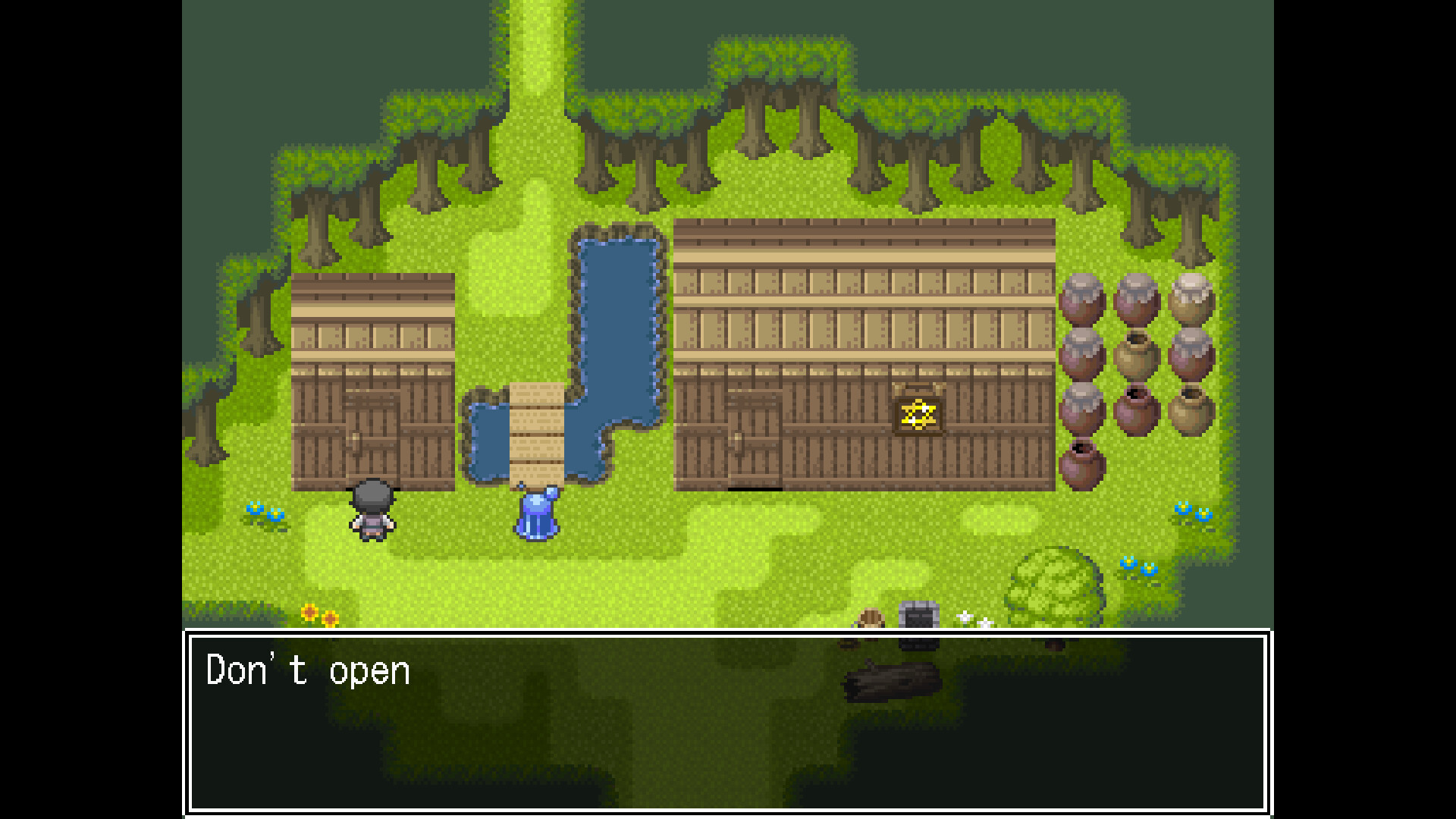
Milky Quest II is a rpg, pixel graphics and anime game
developed by Hack Dack Soft
and published by Kagura Games.
Released on January 27th 2023 is available on Windows, Steam Deck and Steam Machine.
It has received 314 reviews of which 243 were positive and 71 were negative resulting in a rating of 7.3 out of 10. 😊
The game is currently priced at 10.79€ on Steam.
The Steam community has classified Milky Quest II into these genres:
Media & Screenshots
Get an in-depth look at Milky Quest II through various videos and screenshots.


System requirements
These are the minimum specifications needed to play the game. For the best experience, we recommend that you verify them.
Windows
- OS *: Windows® 7/8/8.1/10
- Processor: Intel Core2 Duo or better
- Memory: 4 GB RAM
- Graphics: DirectX 9/OpenGL 4.1 capable GPU
- DirectX: Version 9.0
- Storage: 150 MB available space
- Additional Notes: 1280x768 or better Display. Lag may occur from loading menus or maps. Turn off other programs before running the game.
Steam Price & Best Deals
User reviews & Ratings
Explore reviews from Steam users sharing their experiences and what they love about the game.
Milky Quest II is a compact fantasy RPG built around classic exploration, turn-based combat, character progression, and a distinctly mature monster-girl theme. Developed by Hack Dack Soft and published by Kagura Games, it follows an amnesiac protagonist who suddenly finds himself in an unfamiliar and dangerous world. With no clear understanding of his identity or how he arrived there, survival quickly becomes the immediate concern. His fortunes change after meeting the purple-haired witch Lululouch, who rescues him and offers assistance in exchange for completing several tasks. The narrative provides a straightforward reason to venture deeper into the world without constantly interrupting the gameplay with lengthy exposition. Recovering the protagonist's memories provides an underlying mystery, but much of the adventure focuses on exploration, encounters with unusual inhabitants, completing objectives, gathering resources, and surviving hostile creatures. The tone mixes fantasy danger with comedy and mature themes, producing an adventure that rarely takes itself too seriously. Exploration has more purpose than simply traveling between story objectives. Materials scattered throughout the environments can be collected and exchanged for charms that improve character statistics. This creates a satisfying connection between investigating the map and becoming stronger. Players who thoroughly search their surroundings can acquire advantages that make later battles more manageable, while anyone rushing directly toward objectives may find themselves less prepared for tougher opponents. Combat follows a traditional RPG structure while introducing enough tactical considerations to keep encounters from becoming completely mechanical. Different enemies have particular characteristics and vulnerabilities, encouraging players to understand what their available abilities actually do instead of repeatedly relying on a single attack. Certain techniques can penetrate defenses or provide advantages under specific circumstances, making ability selection especially important against stronger enemies. Character development provides another layer of decision-making because experience can contribute to improving abilities rather than functioning purely as a conventional level progression mechanic. Players have multiple skills to consider, and deciding where to invest resources can influence how effectively the protagonist handles different encounters. Concentrating upgrades on a handful of reliable techniques can produce considerable power, while maintaining a broader collection of developed abilities provides more options when an enemy demands a different strategy. Boss battles are where these systems become particularly meaningful. Preparation, upgraded abilities, collected charms, and understanding an opponent's weaknesses can make the difference between an intimidating encounter and a manageable fight. The overall combat system is not extraordinarily complicated, but it offers enough interaction to prevent Milky Quest II from feeling like an RPG where statistics alone determine success. There can still be repetitive encounters and resource gathering, particularly for players who prefer faster progression, but the underlying systems provide a clear reason for engaging with them. Visually, the game embraces a colorful retro style rather than attempting elaborate modern graphics. Pixel-based environments and characters establish the appearance of a traditional 2D RPG, while enemy designs and battle presentation give encounters considerably more personality. The soundtrack similarly leans into an old-school aesthetic with music that complements the nostalgic presentation. Players accustomed to RPG Maker-style games will immediately recognize many aspects of the visual structure and interface. Its progression loop is one of its more appealing qualities. Exploring produces useful materials, materials contribute to statistical improvements, battles generate progression resources, and stronger abilities make previously difficult enemies easier to overcome. These interconnected mechanics create a simple but effective sense of advancement without introducing an excessive number of complicated subsystems. The relatively focused scope also works in the game's favor for players who want a smaller RPG rather than an enormous adventure requiring dozens of hours to understand. The mature content is an important part of the overall package rather than something that can be completely separated from the experience. Its suggestive monster-girl premise and adult-oriented material mean it is intended for an appropriate audience. Anyone primarily interested in traditional fantasy storytelling should consider whether that presentation suits their preferences, while players already comfortable with mature anime-style RPGs will find the thematic direction much easier to accept. Steam Deck compatibility is a notable advantage. The game is officially Steam Deck Verified, with its core functionality working through the handheld's controls and its interface remaining usable on the smaller display. Controller prompts and general navigation are appropriately supported, while the game can run using settings suitable for the device. Its viewpoint and methodical pacing also translate naturally to portable play, although demanding visual settings can still make sensible performance adjustments worthwhile for players prioritizing battery life or consistent performance. Milky Quest II ultimately delivers a focused combination of retro RPG exploration, tactical battles, resource collection, skill improvement, and mature fantasy content. It does not attempt to compete with enormous modern RPGs in presentation or complexity, instead concentrating on a smaller adventure where exploration and progression continuously feed into combat. The result is a specialized but reasonably engaging experience whose mechanical systems give it more substance than its playful premise initially suggests. Rating: 7/10
Similar games
View all


Kagura Survivors: Endless Night
Something is wrong in the Kaguraverse. An anomaly is creating tears in space-time and causing parallel worlds to converge! It falls upon Kagura-chan, the vessel of the Goddess's will, to get to the bottom of this crisis and return order to the various universes.

Enishia and the Binding Brand
Enishia is a simple nun and the sole manager of the last church in Megista. However, she must pay off a mountain of debt to prevent the demolition of the church and its attached orphanage. How can she make the money she needs?

Natsu no Sagashimono ~What We Found That Summer~
Summer vacation is finally here, and the next few weeks promise to be anything but uneventful! Natsu has just 30 days to acclimate to life in the countryside, help the locals face their demons, find that special someone, and gain the self-confidence to return home with his head held high!

And the Hero Was Never Seen Again
The Demon King lies defeated at the Hero's hand, but the Hero himself has changed... in more ways than one!

Island SAGA
It's time for an adventure!! Legends have it that there are mythical treasures lying deep within Valentine Island. Together with your four beautiful and well-stacked companions, will you be able to find it in this lighthearted and sometimes heart-pounding RPG?!

Noelle Does Her Best!
After an unfulfilling childhood in the countryside, Noelle jumps at the first opportunity to move out and live on her own. Little does she know, her new home comes with the world's worst housewarming gift: a debt to the tune of a million gold, which she only has 10 days to repay! It's time for Noelle to do her best!

Bound by Love
When Yokoshima finds out his office crush, Hazuki Ichinose, is transferring overseas, he realizes that he needs to act and finally ask her out.


False Myth
The story is set in the city of Lylan on an isolated island. Everything seems peaceful until a mysterious aura approaches...

Scars of Summer
A slice of life RPG. Due to family circumstances, Keita finds himself living with his childhood friend Ryoka for the summer. Explore a contemporary Japanese setting, and enjoy spending time with Ryoka.
Frequently Asked Questions
Milky Quest II is currently priced at 10.79€ on Steam.
No, Milky Quest II is currently not on sale. You can purchase it for 10.79€ on Steam.
Yes, Milky Quest II received 243 positive votes out of a total of 314 achieving a rating of 7.25.
😊
Milky Quest II was developed by Hack Dack Soft and published by Kagura Games.
Yes, Milky Quest II is playable and fully supported on Windows.
No, Milky Quest II is not playable on MacOS.
No, Milky Quest II is not playable on Linux.
Yes, Milky Quest II is playable and fully supported on Steam Deck.
Yes, Milky Quest II is playable and fully supported on Steam Machine.
No, Milky Quest II does not support VR.
Milky Quest II is a single-player game.
No, Milky Quest II does not currently offer any DLC.
No, Milky Quest II does not support mods via Steam Workshop.
No, Milky Quest II does not support Steam Remote Play.
Yes, Milky Quest II is enabled for Steam Family Sharing. This means you can share the game with authorized users from your Steam Library, allowing them to play it on their own accounts. For more details on how the feature works, you can read the original Steam Family Sharing announcement or visit the Steam Family Sharing user guide and FAQ page.
You can find solutions or submit a support ticket by visiting the Steam Support page for Milky Quest II.
Data sources
The information presented on this page is sourced from reliable APIs to ensure accuracy and relevance. We utilize the Steam API to gather data on game details, including titles, descriptions, prices, and user reviews. This allows us to provide you with the most up-to-date information directly from the Steam platform.
Additionally, we incorporate data from the SteamSpy API, which offers insights into game sales and player statistics. This helps us present a comprehensive view of each game's popularity and performance within the gaming community.
Last Updates| Steam data | 20 September 2026 12:03 UTC |
|---|---|
| SteamSpy data | 16 October 2026 11:01 UTC |
| Steam price | 26 October 2026 19:44 UTC |
| Steam reviews | 19 October 2026 21:45 UTC |
If you'd like to dive deeper into the details about Milky Quest II, we invite you to check out a few dedicated websites that offer extensive information and insights. These platforms provide valuable data, analysis, and user-generated reports to enhance your understanding of the game and its performance.
- SteamDB - A comprehensive database of everything on Steam about Milky Quest II
- SteamCharts - Analysis of Milky Quest II concurrent players on Steam
- ProtonDB - Crowdsourced reports on Linux and Steam Deck Milky Quest II compatibility

Game modes
Features
Online players
2
Developer
Hack Dack Soft
Publisher
Kagura Games
Release
27 Jan 2023
Platforms