


RUSH
From the twisted puzzle minds behind the award winning Toki Tori comes a new game, simply called RUSH. Fortunately for fans of high quality puzzle games, RUSH is anything but simple. In the game's fully three dimensional levels, players need to guide cubes to color coded exit points using Conveyor belts, Warps, Stops Signs, Splits and...
Sync your Steam wishlist to find the lowest game prices instantly. No login required, just paste your Steam profile URL!
⚡ Try Wishlist Radar!
Sync your Steam wishlist to find the lowest game prices instantly. No login required!
⚡ Try Wishlist Radar!
Close

Moncage on Steam
Quick menu
Moncage is a unique puzzle adventure game where you explore a fascinating world trapped inside a mysterious cube. With each face displaying a unique scene, you’ll have to leverage the illusions and discover the hidden links to solve the puzzle.
Moncage is a puzzle, casual and indie game
developed by Optillusion
and published by XD.
Released on November 15th 2021 is available only on Windows.
It has received 5,299 reviews of which 4,906 were positive and 393 were negative resulting in a rating of 8.9 out of 10. 😎
The game is currently priced at 14.99€ on Steam, but you can find it for 6.63€ on Eneba.
The Steam community has classified Moncage into these genres:
Media & Screenshots
Get an in-depth look at Moncage through various videos and screenshots.


System requirements
These are the minimum specifications needed to play the game. For the best experience, we recommend that you verify them.
Windows
- OS *: Windows 7/8/8.1/10(64bit)
- Processor: Intel Celeron G1820 | AMD A4-7300
- Memory: 6 GB RAM
- Graphics: NVIDIA GeForce GT 730
- DirectX: Version 11
- Storage: 2500 MB available space
Steam Price & Best Deals
User reviews & Ratings
Explore reviews from Steam users sharing their experiences and what they love about the game.
Moncage is a fascinating puzzle adventure that proves how a simple concept can become something extraordinary through imaginative design and clever execution. Developed by Optillusion and published by XD, the game places players in control of a mysterious cube containing several miniature worlds. Each side presents a different environment, yet these seemingly unrelated locations share hidden connections that must be discovered through observation and perspective manipulation. Instead of relying on traditional exploration or complicated controls, the experience challenges players to rethink how objects relate to one another. Its unusual approach to puzzle-solving creates an engaging combination of visual experimentation, logical reasoning, and artistic discovery. The central gameplay mechanic involves rotating the cube to examine its different faces and identifying objects that can interact across separate environments. Locations such as an abandoned factory, lighthouse, amusement park, and church initially appear independent, but their structures and mechanisms gradually reveal surprising relationships. A particular shape on one side might align perfectly with an object on another, creating a connection that changes the surrounding environment. These interactions produce satisfying moments of realization, especially when an apparently impossible puzzle suddenly becomes understandable through a simple adjustment in perspective. The brilliance of this design comes from making players question what they see rather than merely searching for conventional solutions. Puzzle progression maintains interest by introducing increasingly elaborate environmental relationships. Early challenges establish the importance of visual alignment, while later sections demand greater spatial awareness and an understanding of how actions influence multiple scenes. The game rarely needs complicated instructions because its mechanics are communicated through experimentation. However, not every puzzle achieves the same level of clarity. Some solutions depend on extremely precise positioning or obscure visual similarities, occasionally turning thoughtful deduction into frustrating trial and error. Although these moments can interrupt the otherwise smooth progression, the satisfaction of discovering a difficult connection generally compensates for the occasional confusion. The visual presentation is among the game's strongest qualities. Every miniature environment resembles a carefully constructed diorama, filled with distinctive architecture, atmospheric lighting, and charming details. The contrasting locations create visual variety while maintaining a cohesive artistic identity. More importantly, the environments are designed around the puzzle mechanics rather than existing merely as decoration. Buildings, machinery, pathways, and ordinary objects frequently serve multiple purposes depending on the viewing angle. Watching separate scenes merge into a functioning interaction is consistently impressive. The restrained soundtrack and subtle environmental audio further enhance the mysterious atmosphere, encouraging concentration without overwhelming the experience. Beyond its inventive puzzles, Moncage incorporates an emotional narrative that unfolds through collectible photographs hidden throughout the environments. These images gradually reveal connections between the miniature worlds and provide context for the mysterious events surrounding them. Rather than presenting its story through lengthy conversations or cinematic interruptions, the game allows players to reconstruct its meaning through exploration. This storytelling method complements the central mechanics remarkably well, since both involve assembling fragmented information into a coherent understanding. The narrative becomes increasingly meaningful as more photographs are discovered, although players who overlook these collectibles may miss important emotional details. Accessibility is another commendable aspect of the experience. The Focus feature helps identify objects relevant to the current puzzle, while additional textual hints provide guidance when progress becomes difficult. Video walkthroughs can also be unlocked for situations where conventional assistance proves insufficient. These options allow players to control how much help they receive without completely sacrificing the satisfaction of independent problem-solving. The assistance systems are especially valuable because some puzzles require recognizing connections that are not immediately obvious. Nevertheless, relying too heavily on hints can diminish the sense of discovery that makes the experience memorable. The game's relatively compact structure is both an advantage and a limitation. Its focused design prevents the central mechanic from becoming unnecessarily repetitive, making the adventure suitable for players who appreciate concise, carefully crafted experiences. However, those expecting extensive content or substantial replayability may find it somewhat limited. Once the puzzle solutions are understood, subsequent playthroughs lose much of their original challenge. Completionists can extend their involvement by collecting hidden photographs and pursuing all 15 Steam achievements, each associated with a distinctive in-game medal. Steam Cloud support provides additional convenience for maintaining progress across compatible systems. Regarding Steam Deck compatibility, Moncage carries an official Playable rating rather than Verified status. The game can be enjoyed on Valve's handheld, although certain interface prompts may display mouse, keyboard, or alternative controller icons instead of Steam Deck-specific instructions. Its deliberate pacing, compact environments, and straightforward interaction mechanics make it particularly suitable for portable puzzle-solving. The modest PC hardware requirements also contribute to its accessibility, although the handheld experience may require some adjustment to its control presentation. The greatest weakness of Moncage is that its creativity occasionally works against its accessibility. Players who struggle with spatial reasoning may encounter puzzles whose solutions feel excessively obscure, while those seeking action-oriented gameplay may find the experience too passive. Its limited duration and relatively low replay value also reduce its appeal for players prioritizing extensive content. Nevertheless, these shortcomings are outweighed by the consistency of its artistic direction, the originality of its central mechanic, and the thoughtful integration of environmental storytelling. Ultimately, Moncage delivers a distinctive and rewarding adventure that demonstrates the remarkable possibilities of perspective-based puzzle design. Its beautifully constructed miniature worlds, ingenious visual connections, and understated emotional narrative combine into an experience that feels both intellectually satisfying and artistically meaningful. Although occasional frustrating puzzles and limited replayability prevent it from achieving perfection, its originality makes it an excellent choice for anyone who appreciates imaginative challenges and unconventional storytelling. It is a memorable reminder that sometimes the most extraordinary discoveries come from viewing familiar things from an entirely different angle. An imaginative and beautifully presented puzzle adventure that transforms optical illusions into rewarding challenges. Rating: 9/10
Probably the most unique puzzle game I've ever played. The art style is beautiful, and the soundtrack is incredibly calming, making the whole experience relaxing from start to finish. The puzzle design is incredibly clever and creative, constantly making you think outside the box. Every solution feels satisfying without ever feeling unfair. On top of that, the game tells a touching story about family and memories that unfolds naturally as you progress, adding more meaning to the experience. If you enjoy puzzle games that offer something fresh and innovative, this is definitely worth playing. It's a short but memorable experience that I highly recommend.
I love when games take this niche and original concept and just fully run with it! I've never played a puzzle game like this one before and I'm honestly curious how they came up with such a unique gimmick! Visually stunning with mindbending puzzles to boot. Super impressive work here!
Similar games
View all

Access Denied
Access Denied is a puzzle game in the world where for storage of personal data are used special device in the form of protected boxes. Imagine yourself in the role of the professional cracker of such devices and test your skills for 36 different levels.

Paint it Back
Use logic as your paintbrush to restore lost works of pixel art. Try the demo!

Puzzle Dimension
Find solutions to 100 unique puzzles and experience the satisfaction of "Aha" moments!
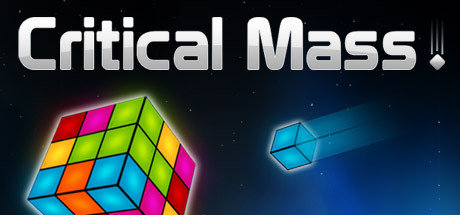
Critical Mass
Critical Mass is an action puzzle game that takes traditional match 3 and brings it into the world of 3D.


Engare
Engare is a game about motion and geometry. Part puzzle game, part drawing tool, Engare is all about your geometric imagination. It’s a meditation on the dynamics of simple machines and the beauty buried deep within repeating motion.



Fortix 2
Fortix 2 is best described as a reverse turret defense game. As Sir Fortix, the knight, you must conquer castles while dodging tower turrets and evil monsters. Fight your way across the shires of the island Artalom, storming from castle to castle.
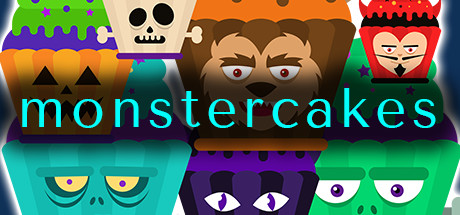
#monstercakes
Pretty simple game combination between 2048 and match-3 settings with awesome monster cakes. Put your monster cake in the good hole and combine them together to get higher monster cake. Combine them as high as you can and be on the top of the leaderboard!
Frequently Asked Questions
Moncage is currently priced at 14.99€ on Steam.
No, Moncage is currently not on sale. You can purchase it for 14.99€ on Steam.
Yes, Moncage received 4,906 positive votes out of a total of 5,299 achieving a rating of 8.94.
😎
Moncage was developed by Optillusion and published by XD.
Yes, Moncage is playable and fully supported on Windows.
No, Moncage is not playable on MacOS.
No, Moncage is not playable on Linux.
This information about Moncage is not available yet.
This information about Moncage is not available yet.
No, Moncage does not support VR.
Moncage is a single-player game.
Yes, there is a DLC available for Moncage. Explore additional content available for Moncage on Steam.
No, Moncage does not support mods via Steam Workshop.
No, Moncage does not support Steam Remote Play.
Yes, Moncage is enabled for Steam Family Sharing. This means you can share the game with authorized users from your Steam Library, allowing them to play it on their own accounts. For more details on how the feature works, you can read the original Steam Family Sharing announcement or visit the Steam Family Sharing user guide and FAQ page.
You can find solutions or submit a support ticket by visiting the Steam Support page for Moncage.
Data sources
The information presented on this page is sourced from reliable APIs to ensure accuracy and relevance. We utilize the Steam API to gather data on game details, including titles, descriptions, prices, and user reviews. This allows us to provide you with the most up-to-date information directly from the Steam platform.
Additionally, we incorporate data from the SteamSpy API, which offers insights into game sales and player statistics. This helps us present a comprehensive view of each game's popularity and performance within the gaming community.
Last Updates| Steam data | 23 September 2026 06:10 UTC |
|---|---|
| SteamSpy data | 23 October 2026 18:04 UTC |
| Steam price | 26 October 2026 19:33 UTC |
| Steam reviews | 19 October 2026 07:46 UTC |
If you'd like to dive deeper into the details about Moncage, we invite you to check out a few dedicated websites that offer extensive information and insights. These platforms provide valuable data, analysis, and user-generated reports to enhance your understanding of the game and its performance.
- SteamDB - A comprehensive database of everything on Steam about Moncage
- SteamCharts - Analysis of Moncage concurrent players on Steam
- ProtonDB - Crowdsourced reports on Linux and Steam Deck Moncage compatibility

Game modes
Features
Online players
17
Developer
Optillusion
Publisher
XD
Release
15 Nov 2021
Platforms
Clicking and buying through these links helps us earn a commission to maintain our services.