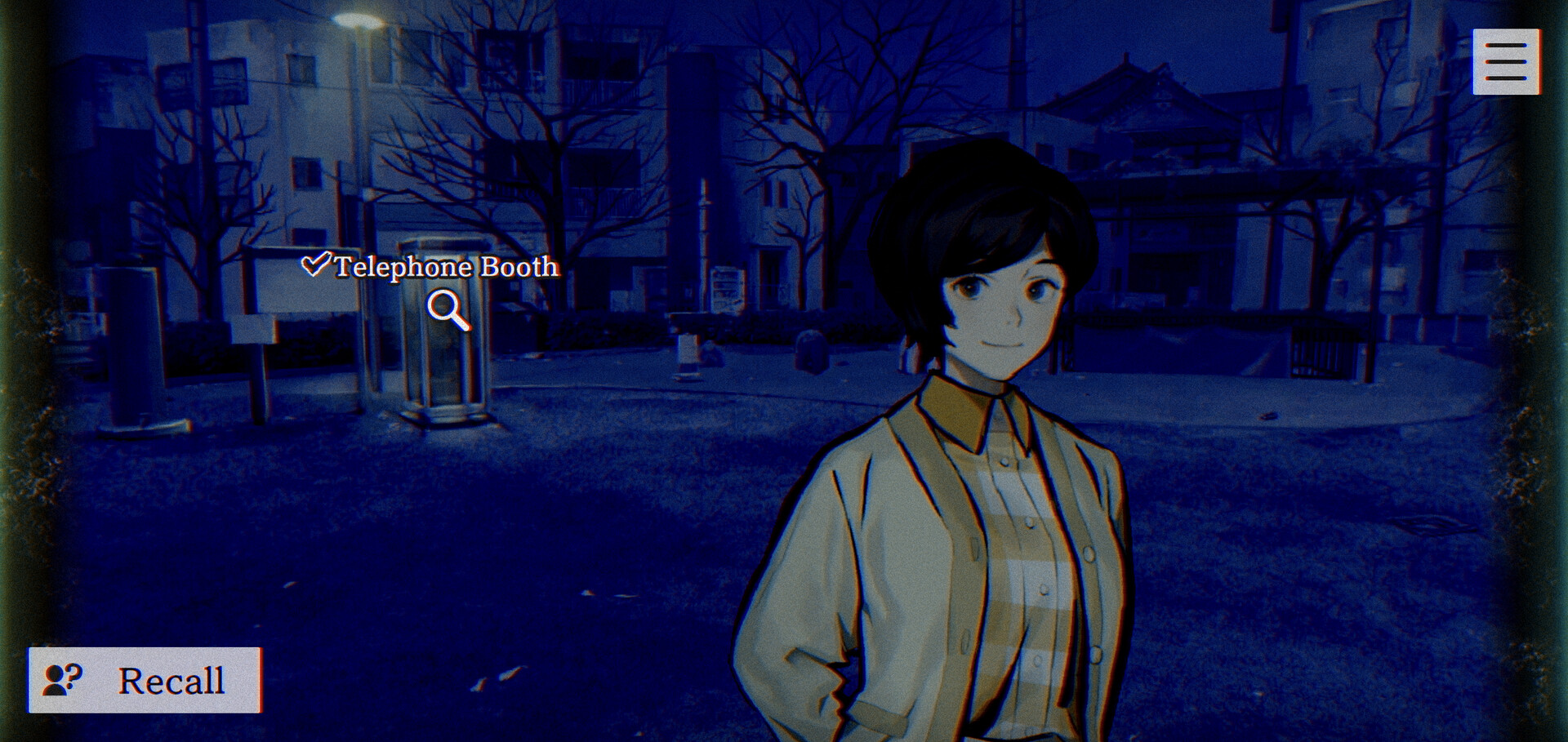
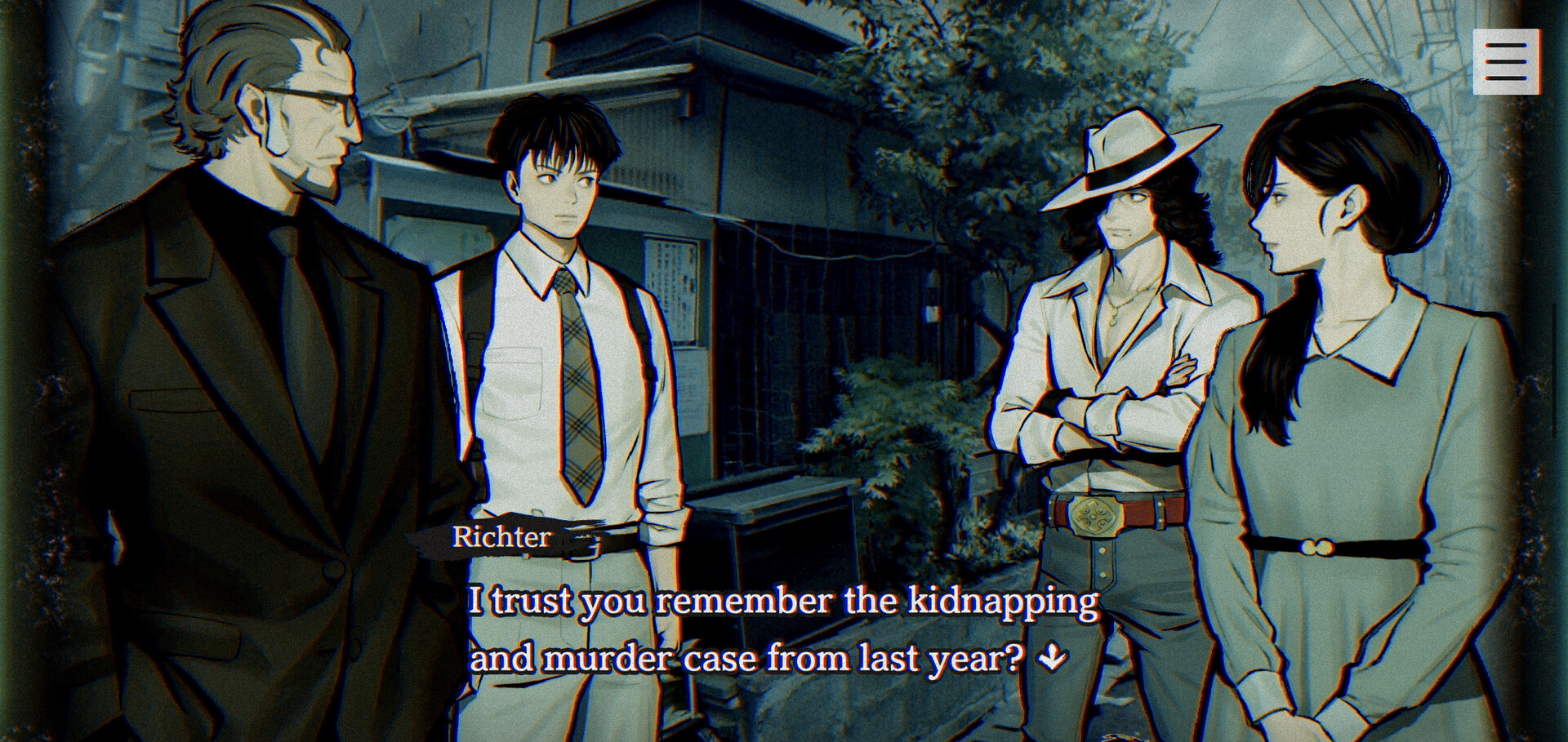
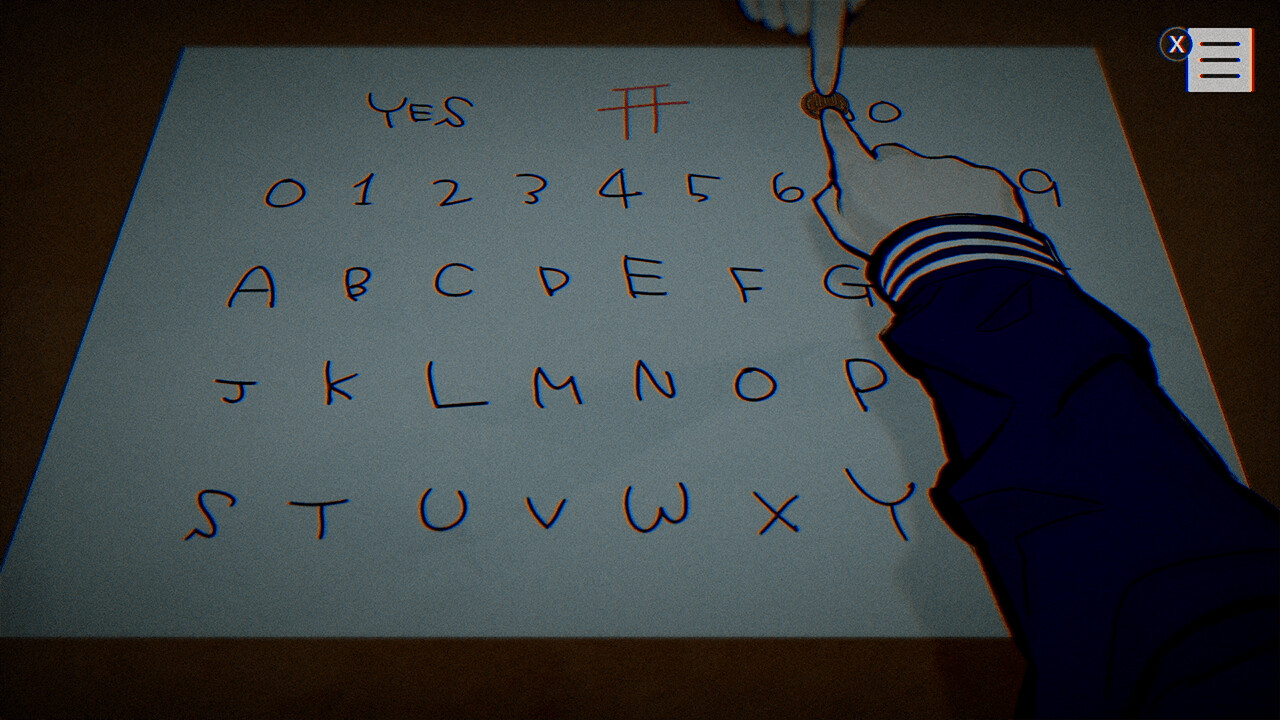
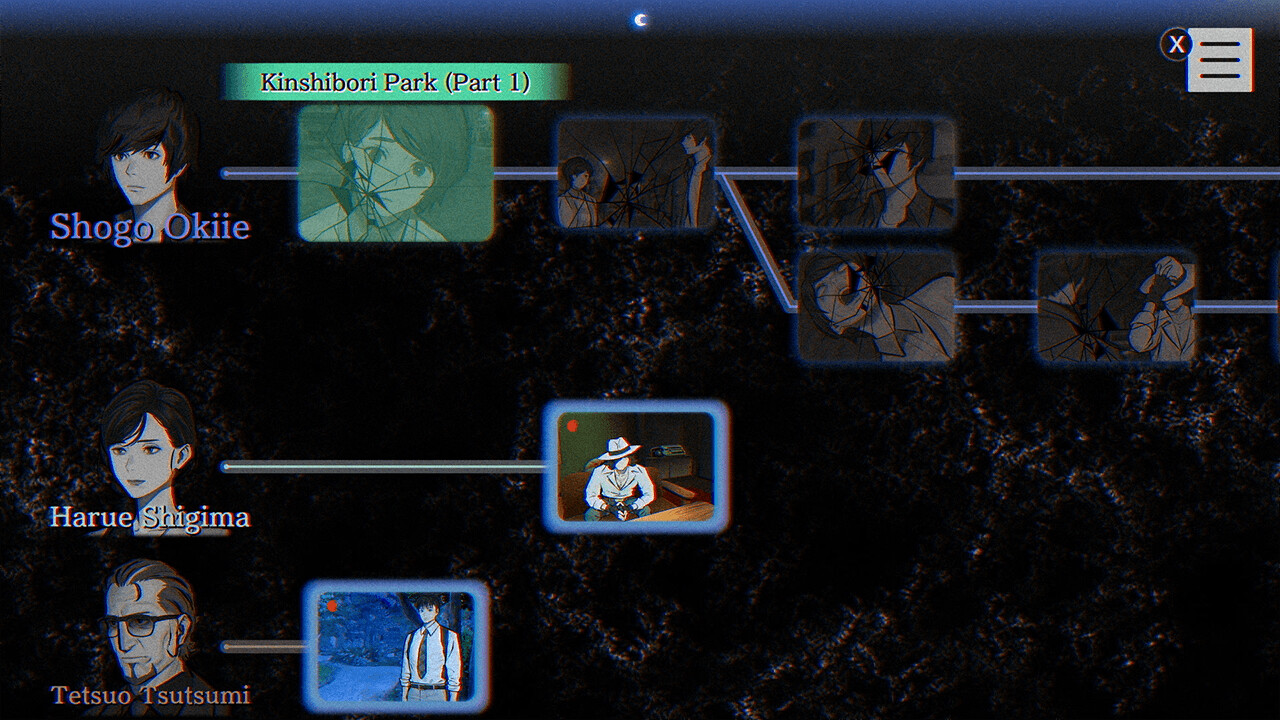
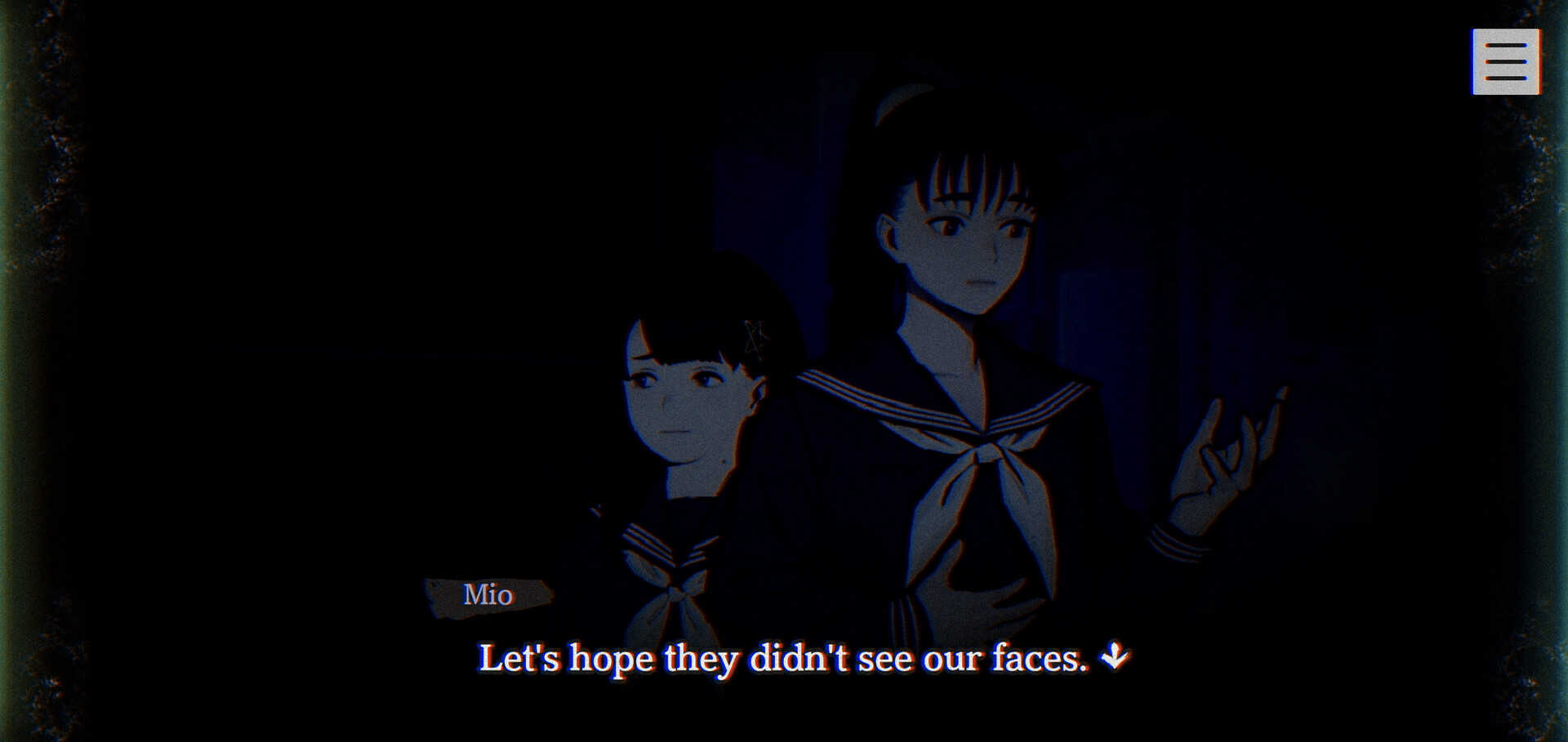
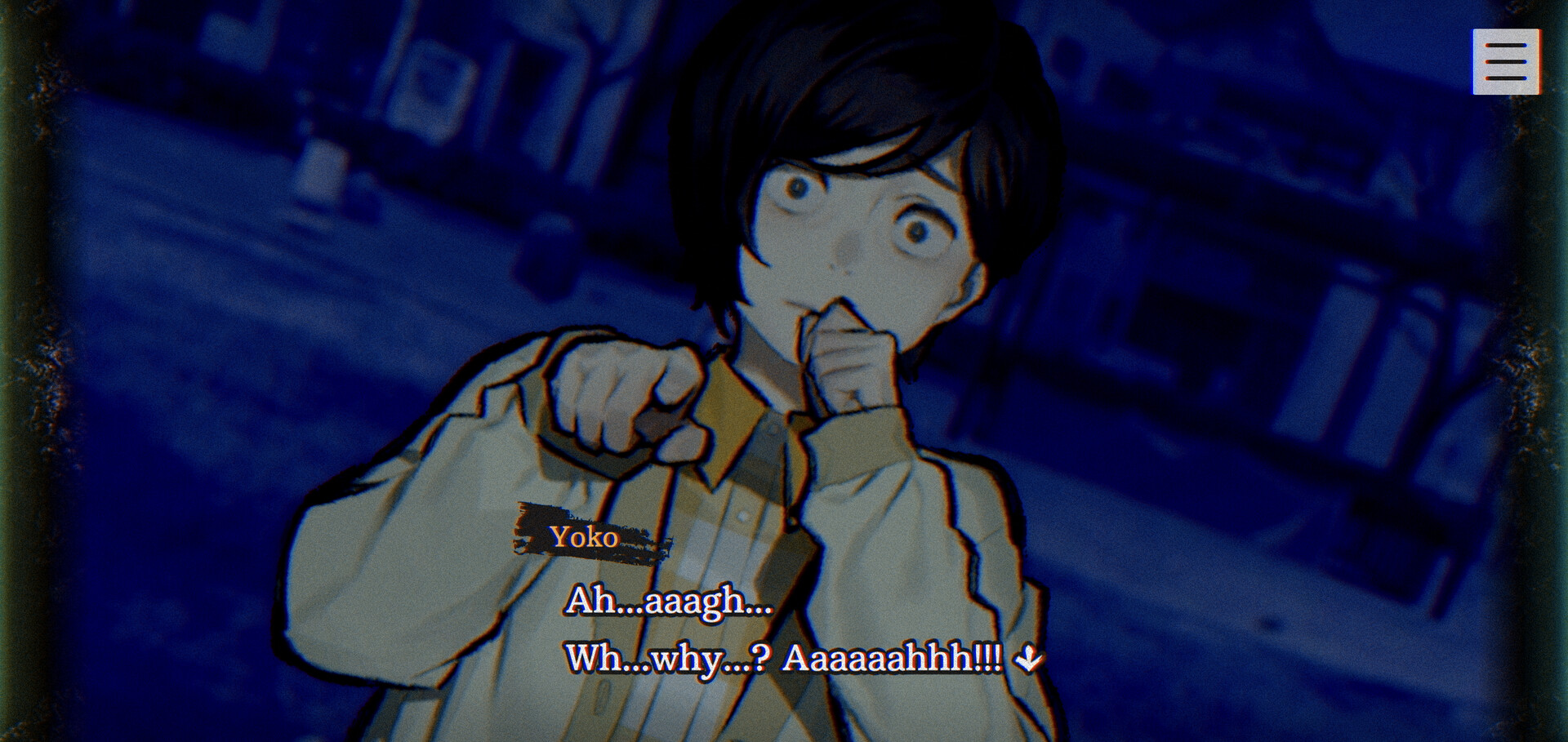
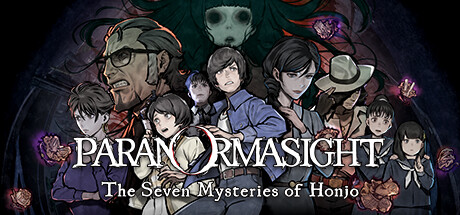
Of most companies, I did not expect this game to come out of Square Enix. Not that I think Square Enix are a bad company by any means, it’s just that – from my viewpoint – they have always made decisions that made me question their intention beyond trying to print more money for themselves. So when I picked this up, and finally loaded it up, it was when I wanted to expand my visual novel horizons to the horror genre to see what it could offer me. And I was delighted that this game scratched an itch that I’ve been needing it to. To start, the art and animation is extremely beautiful here. The ghouls, ghosts, and the gore hit when they need to. They’re not overt in the way that some horror games try to be and they don’t even seem to tantalize with some of the women characters (especially the underage ones) – because, let’s read the room here! In addition to the art, the atmosphere of the game is delightfully spooky where I made the mistake of playing it at night – and I actually got scared! The combination of the music, animation, and especially the most important in my opinion, the art direction of how the characters react to the events around them. Ultimately, though, while the presentation itself is already grand enough, I have to talk about the mechanics, which added to my (delighted) horror. When you play this game, there’s going to be quite a bit of information thrown at you – not just the curses or characters themselves but things that’s relevant to the story. Culturally and to society in the Showa era, there’s going to be a lot of contexts needed to better understand why things are like that and how certain viewpoints could even still permeate through the story that could help you, the player, put the pieces together for what’s going on in the story. Some players might find this a bit overbearing and easy to miss (especially since you may have to make the character talk about it in order to get those “files”) but if you’re like me, you’ll find that it adds more and makes the game feel more real than simply the characters on the screen. Speaking of which, one thing I can appreciate the most in this game are the game mechanics. On top of having the files easily accessible, the game play (however you wish to choose – I happened to play exclusively on my Steam Deck) gives the player more agency to explore the characters’ surroundings and learn more of what they know, which happens to be a significant amount. However, it’s not to say that you’re stuck in solely one character’s head; there’s a timeline feature that you get to jump through to make better informed decisions that way. In a way, the fourth wall breaking is very obviously intentional and it’s nice to feel as though it’s part of the game mechanic. There are times that you, the player, would have to fiddle with your device to affect the story and it is nice to have that sort of agency. Without too much spoiling, though, I have to say that I wish that there were more instances of this to really harden the point the game is trying to make. It’s a neat feature otherwise, but at times, it did feel as though it was only showing off just to show off that it can be done. Otherwise, I do like the timeline jumping; if you’re an achievement collector, it does make it easier to collect those different ones. In addition to the mystery, which I’ll get to in a little bit, there’s a collect-a-thon you can do! They call them Mockingbirds and they are fun to look for if you’re that type of person. I loved trying to find these birds! You can see your collection in the same menu as well along with the hints of any hidden ones. Truth to be told, they are a little too vague, but they’re fun to hunt and you get additional flavor text with the characters to hopefully create levity in the intense moments. So now it’s time to talk about the story itself. Especially in the beginning, it’s very strong on getting to know each character pair in their respective timelines along with the first major twist. I thought it was quite an effective way to do it by having us, the player, associate them by way of what I’d call “theme songs”, though that’s not exactly right either. Even if I can’t find the words to call it, I just know that when a certain track comes on, I’d actually leave it hanging on the scene just to hear more of it. Then again, there’s more than enough chances to listen to the music as it’ll come up over and over again to help set the mood. Definitely not a bad thing, but if you easily get tired of repeating music, this could be an issue. It isn’t for me, though, so the only thing I wish it had was a jukebox extra feature so I could listen to my favorite tracks all the time. Or better yet, if the OST were to be released… As I’ve mentioned before, there is an exploration element to the narrative that does reward the player, I feel like, the more you do it. There is quite a bit of backtracking and repeating conversation topics but it does give you much better visual cues for when that topic is “completed” versus guessing in some games. Although, it can be frustrating when that backtracking can include going from the different points of the timeline. Although, as much as I love the strong beginning and even stronger middle, it will begin to focus more on the male characters and the police procedurals more than the independent characters (especially if they’re the female characters). If you’re interested in that, then it shouldn’t be a problem but while I understood the connection for a few of the characters to the police characters, respectively, I wanted to learn more about them and their reactions. There are some characters that are clearly meant to be main characters but there’s not enough time to really bring them to full fruition. I think this is more evident in the school girl’s story which is where I felt the most frustration. Another thing that could frustrate players is the fact that there are some instances where the narrative can be a bit too subtle. On top of the backtracking, at times, there might be instances where you’ll see a key item but you can’t use it until later. When you do remember it, though, it does pay off but it can be a little frustrating unless you take independent notes. If that’s your jam, then this game is definitely for you. This is also a type of game where there were parts that felt like both it was too long (the police procedurals) and not long enough. And as a result of the strange pacing, it can be a bit difficult in terms of remembering what to do when it comes to playback after days. Thankfully for me, this game made me want to keep playing until I figured out the mystery for all the different characters anyway so I was able to go back and forth until I figured out what needed to be done. If you’re worried about jump scares, it does occur but it’s not too over-the-top, I thought. It fits the situation and, well, it’s a horror game; horrific things will happen. Just a fair warning, though, if you’re worried about jump scares. You should be fine though as it doesn’t occur too often, just enough to keep you on your toes. Despite my hang-ups, though, I do recommend this to people if you’re looking for something to sink your teeth into and to be scared in the process. Although I did have qualms with some of the plot and even the length, it’s still a fun enough game that I still think about certain situations over and over – and what it means to me. Again, I hope that there will be an OST release but maybe in the future (as of this review).
Expand the review