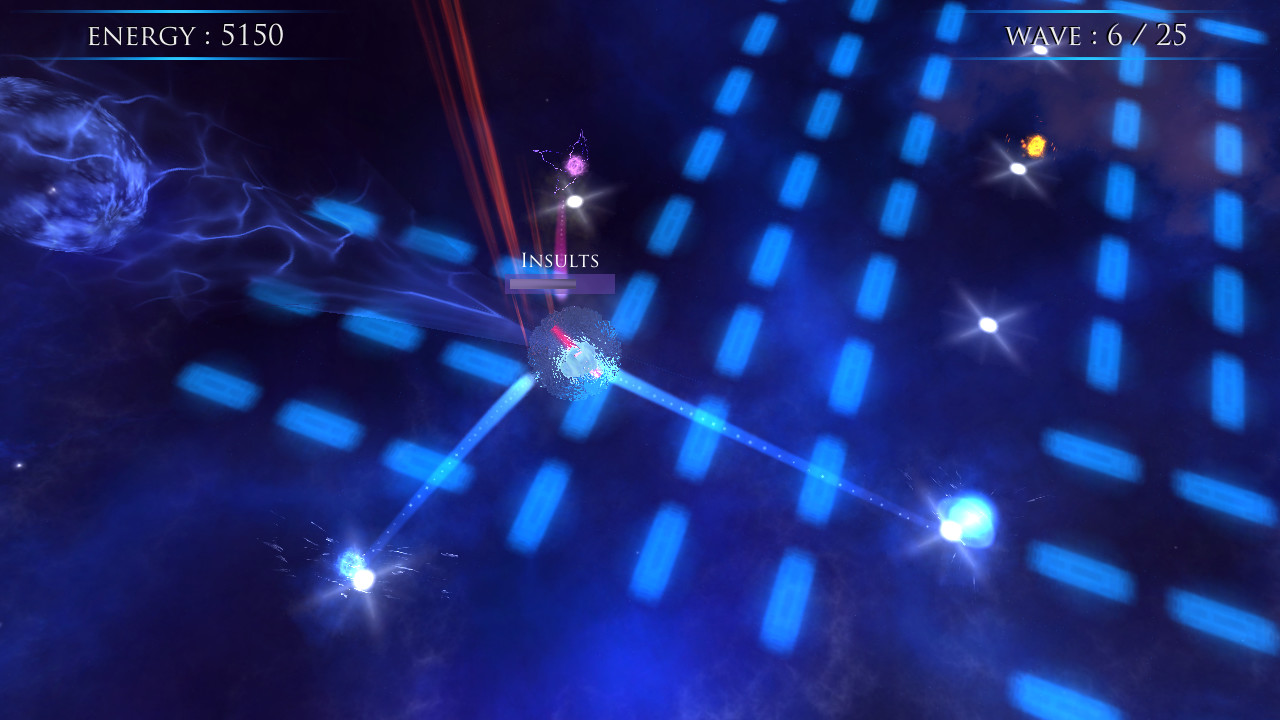
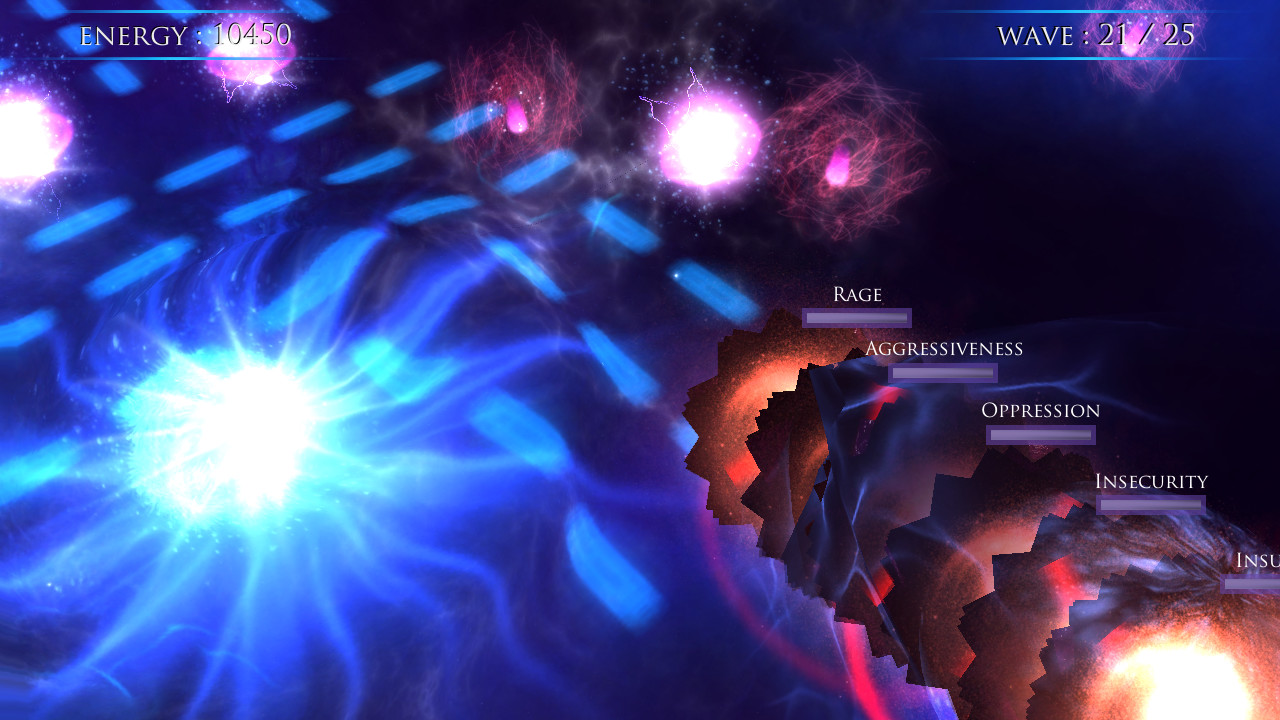
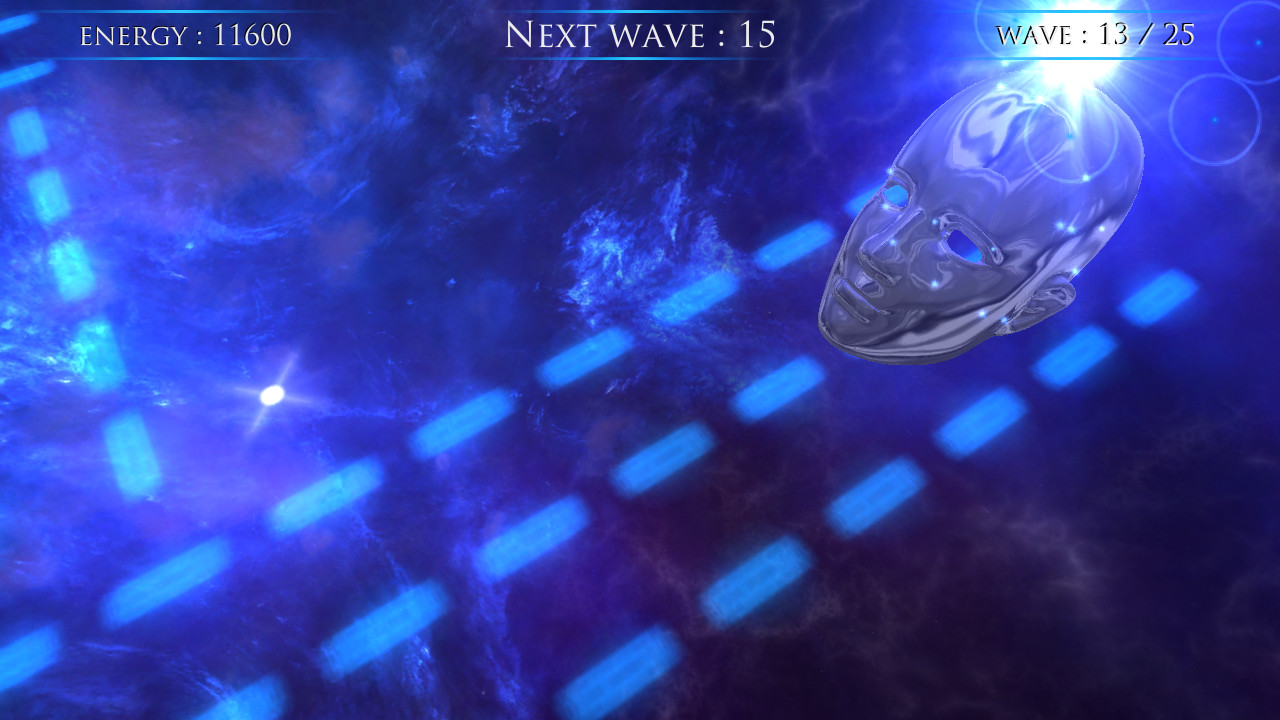
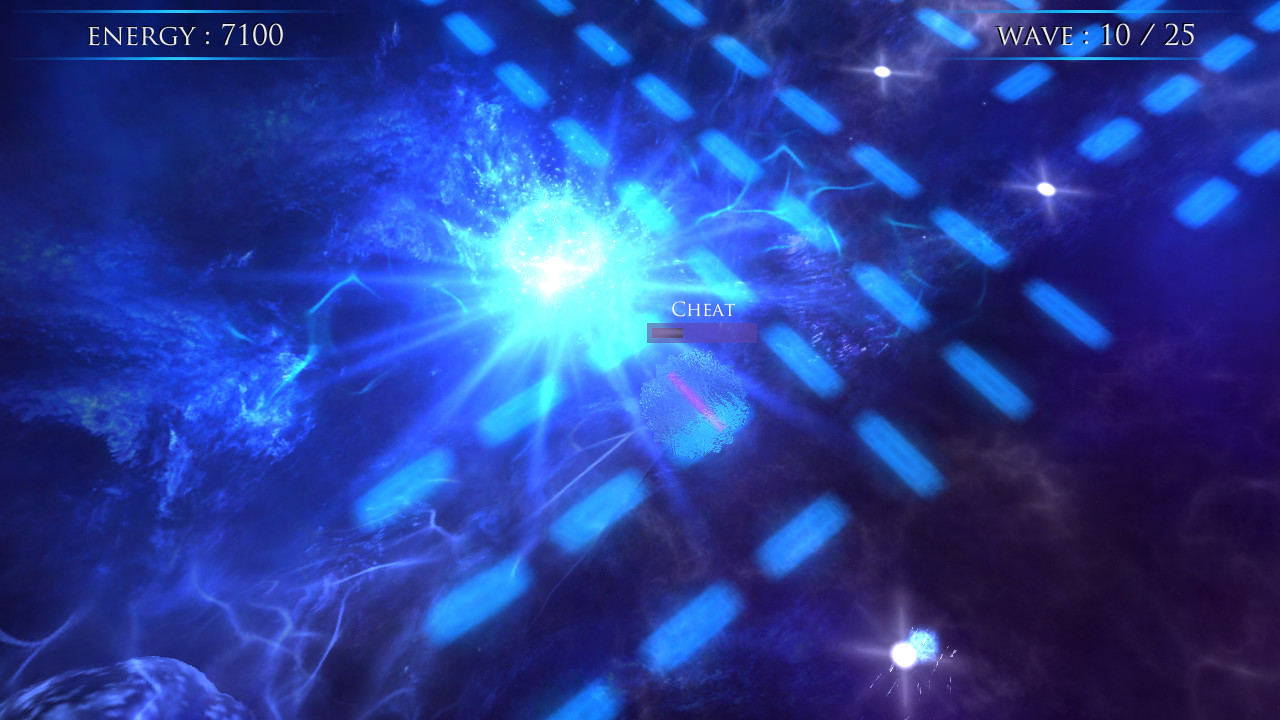
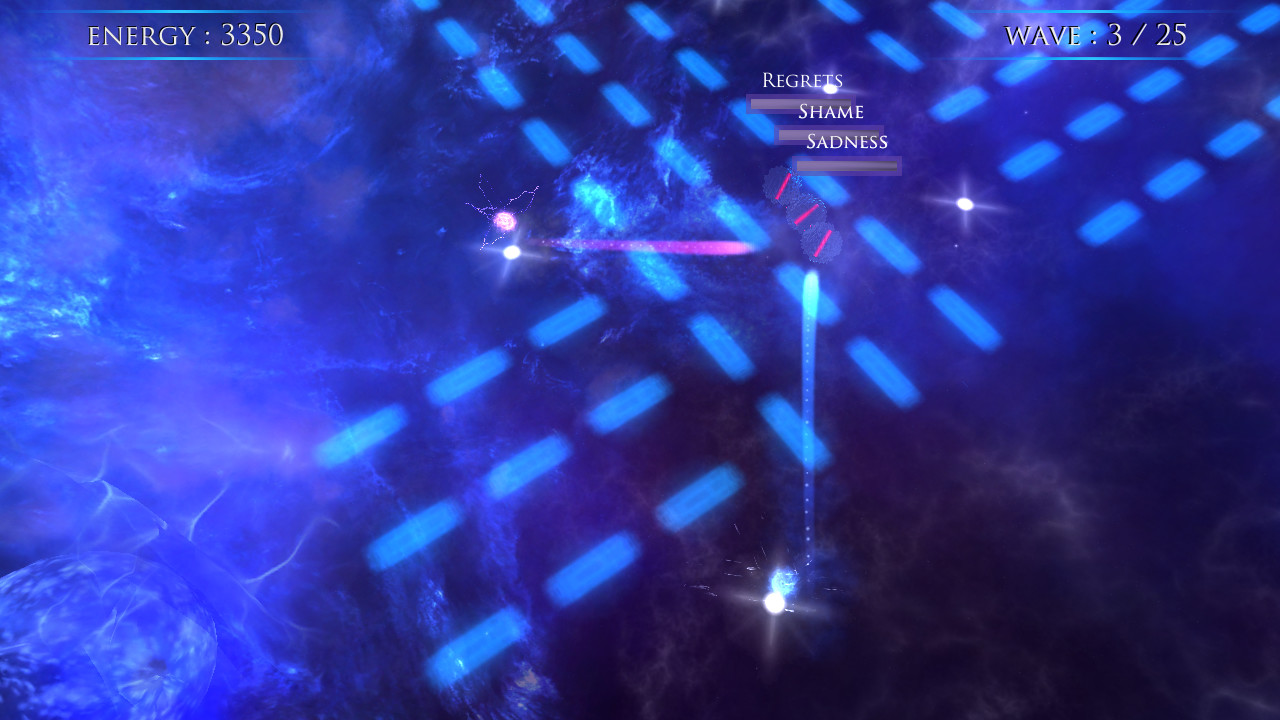
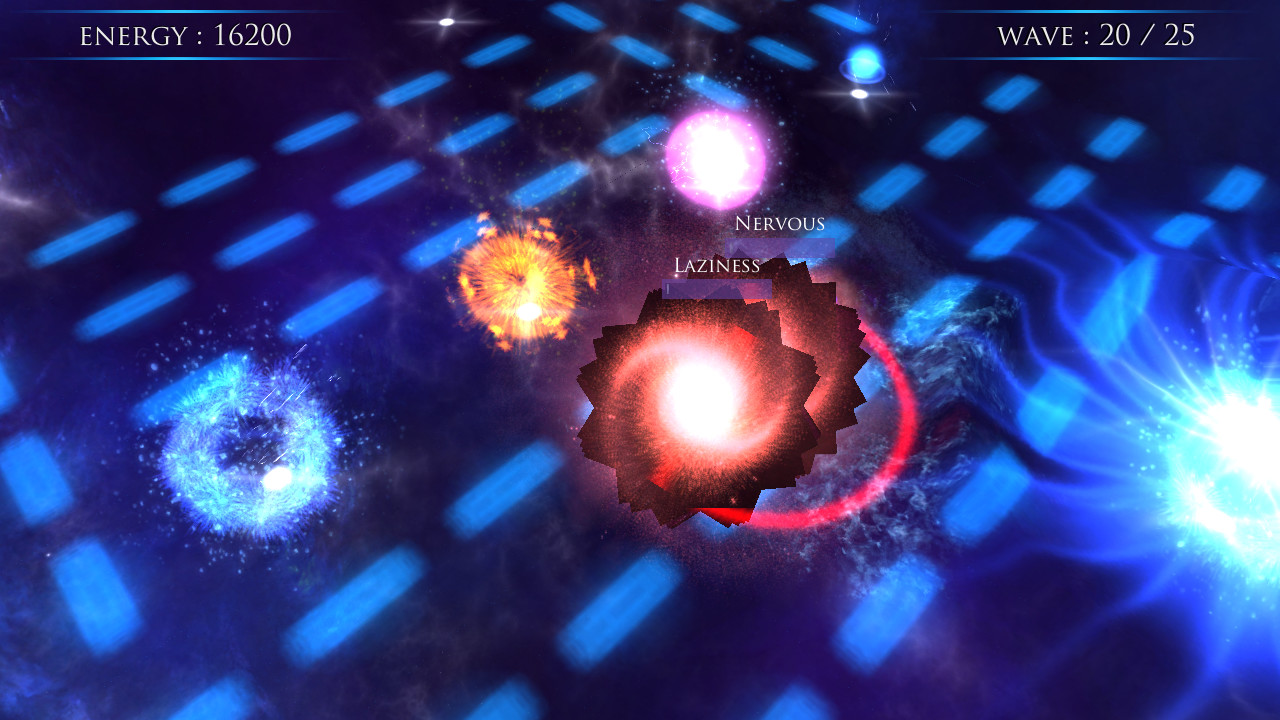
Particula, developed by Microblast Games and published by SA Industry, is a minimalist cooperative tower defense game that strives to merge the strategic structure of its genre with an unusually serene, almost meditative atmosphere. While many tower defense titles focus on intensity and high-stakes management, Particula positions itself as a calmer, more introspective experience, aiming to create a sense of flow rather than tension. Its concept revolves around clearing “negativity” from the mind—an abstract narrative device that doubles as both theme and metaphor. The result is a game that feels distinctively tranquil for its genre, though its simplicity and limited variety ultimately restrain its lasting appeal. At its foundation, Particula adheres to the traditional formula of the tower defense genre. Players are tasked with protecting a designated point on a map from waves of enemies that traverse fixed paths. Using a limited pool of resources, you strategically place towers at key locations, each possessing unique effects such as slowing enemies, burning them over time, or delivering direct high-impact damage. Success depends on careful planning and incremental optimization—deciding which towers to upgrade, where to place them, and when to adapt to new enemy types. However, unlike more elaborate strategy games that introduce complex upgrade trees or vast arrays of tower types, Particula keeps its mechanics streamlined. Only a handful of towers are available, each with simple but clearly defined roles. This design choice keeps the experience accessible to casual players but also means that veteran fans of the genre might find the game’s systems too shallow to sustain long-term engagement. The game’s presentation is one of its most distinctive features. Particula’s minimalist visual design uses clean lines, soft lighting, and abstract geometry to build an aesthetic that feels modern and otherworldly. The environments are stark yet elegant, consisting mostly of geometric pathways and glowing energy trails that contrast with the vibrant, particle-based effects of the towers and enemies. It is not a game that relies on texture or detail but rather on color and form. The glowing orbs that represent enemy units, for example, give each wave a hypnotic visual rhythm that pairs naturally with the game’s ambient electronic soundtrack. The music, a highlight for many players, creates a sense of tranquility even as waves grow in intensity. Rather than evoking adrenaline or panic, it cultivates a focused calm that encourages players to fall into a meditative rhythm as they manage defenses and watch their strategies unfold. The pacing complements this tone. Early levels progress gently, giving players ample time to learn mechanics and experiment with tower placement. The tempo increases gradually as new enemy patterns appear, but the difficulty curve remains forgiving compared to most tower defense games. This design allows Particula to serve as a more relaxing experience, one that prioritizes smooth progression over punishing challenge. Even when late-game waves introduce tougher enemies, the game never feels overwhelming. The downside to this gentleness is that it can become repetitive; without major shifts in mechanics or level design, each round starts to blur into the next. There are few surprises beyond occasional difficulty spikes, and once players establish an effective tower layout, the optimal strategy rarely changes. Cooperative play is one of the game’s more appealing inclusions. Up to three players can join together online to tackle waves, pooling resources and dividing responsibilities across the map. The addition of co-op adds a social layer that helps offset some of the repetitiveness of solo play. Coordinating with others to manage multiple routes or experiment with tower combinations introduces a sense of teamwork that gives the game a slightly different energy. However, this system doesn’t fundamentally alter the core gameplay loop. The cooperative experience largely mirrors the solo one, meaning that it functions as an enjoyable bonus feature rather than a transformative one. Nonetheless, the co-op mode remains a strong draw for players looking for a low-stress, shared strategic experience. Technically, Particula performs well given its modest scope. The Unity engine runs smoothly even on lower-end hardware, and the minimalistic art style ensures stable performance without unnecessary visual clutter. The user interface, while functional, can feel somewhat barebones, lacking the refinement of more polished titles. Some players have noted minor usability issues, such as unclear tower descriptions or limited feedback during intense moments, but these are small blemishes in an otherwise stable experience. The simplicity of the UI reflects the game’s minimalist philosophy: focus on the essentials, avoid distractions, and let the visuals and music carry the emotional tone. Despite its charm, Particula’s greatest limitation lies in its lack of variety. The tower roster is small, the number of maps limited, and enemy behaviors seldom deviate from predictable patterns. After several sessions, the sense of discovery fades, replaced by repetition. The absence of meaningful upgrades or distinct level objectives prevents the game from achieving the kind of strategic depth found in genre heavyweights like Defense Grid or Kingdom Rush. This isn’t to say the experience lacks satisfaction—there is a certain quiet pleasure in watching carefully arranged towers dissolve wave after wave of glowing foes—but without evolving mechanics or narrative progression, the sense of growth diminishes over time. The game feels best suited to short, focused sessions rather than marathon playthroughs. Particula’s soundscape deserves particular praise. The music and ambient audio elevate the otherwise simple gameplay into something more atmospheric and immersive. The soundtrack leans heavily on chill electronic melodies that flow seamlessly between stages, creating an emotional throughline that softens the mechanical edges of tower defense. The effect is almost therapeutic, and when combined with the clean visuals and slow pacing, it transforms what could have been a generic strategy game into a meditative experience. It may not be complex, but it achieves a kind of harmony between sound, movement, and rhythm that few games in the genre attempt. In the end, Particula is a quiet, unpretentious game that delivers what it promises: a relaxing take on tower defense that prioritizes atmosphere and accessibility over depth and difficulty. It succeeds as a calming exercise in focus and strategy, a digital space where players can unwind rather than compete. However, it is also a game with limited staying power, its minimalist design leaving little room for evolution or surprise. For players seeking a deep and intricate strategic experience, it may feel too simple and repetitive. But for those looking for something slower, gentler, and aesthetically soothing, Particula offers a surprisingly pleasant escape. It may not redefine the genre, but it carves out a small, serene niche within it—a space where strategy meets stillness and where the act of defense becomes a quiet form of reflection. Rating: 7/10
Expand the review