
Spark the Electric Jester
Spark the electric jester is an action/platformer video game heavily based on best classics from the 16-bit era from both sides of the aisle.
Sync your Steam wishlist to find the lowest game prices instantly. No login required, just paste your Steam profile URL!
⚡ Try Wishlist Radar!
Sync your Steam wishlist to find the lowest game prices instantly. No login required!
⚡ Try Wishlist Radar!
Close

Pizza Tower on Steam
Quick menu
Pizza Tower is a fast paced 2D platformer, with an emphasis on movement, exploration and score attack. Featuring highly stylized pixel art inspired by the cartoons from the '90s, and a highly energetic soundtrack.
Pizza Tower is a great soundtrack, 2d platformer and fast-paced game
developed and published by Tour De Pizza.
Released on January 26th 2023 is available on Windows, Steam Deck and Steam Machine.
It has received 66,693 reviews of which 65,599 were positive and 1,094 were negative resulting in an impressive rating of 9.7 out of 10. 😍
The game is currently priced at 19.50€ on Steam.
The Steam community has classified Pizza Tower into these genres:
Media & Screenshots
Get an in-depth look at Pizza Tower through various videos and screenshots.


Load More


System requirements
These are the minimum specifications needed to play the game. For the best experience, we recommend that you verify them.
Windows
- Requires a 64-bit processor and operating system
- OS *: Windows 7
- Processor: Intel or AMD Dual Core CPU
- Memory: 512 MB RAM
- Graphics: GeForce GT 1030 (2 GB) or equivalent
- DirectX: Version 11
- Storage: 300 MB available space
Steam Price & Best Deals
User reviews & Ratings
Explore reviews from Steam users sharing their experiences and what they love about the game.
Pizza Tower is one of those games that can give you a completely different impression depending on how you choose to play it. If you simply want to reach the ending, it is a good, weird, energetic platformer that is honestly not particularly difficult. You run through bizarre levels, smash everything in your path, fight some bosses, listen to excellent music and eventually finish the game. And if that is all you do, I can actually understand someone walking away wondering why people praise Pizza Tower so much. The game truly reveals itself when you decide to get P-ranks. But first, let's get something out of the way: Pizza Tower owes an enormous amount to Wario Land, especially Wario Land 4. I used to associate Pizza Tower much more with Sonic because of its speed, momentum and the process of learning a level until you can fly through it almost without stopping. After actually looking at Wario Land gameplay, though... yeah. Nintendo deserves a lot of credit for the skeleton here. Transformations, smashing through enemies and obstacles instead of carefully jumping on them, the structure of entering a level and later escaping from it, the general physicality of the protagonist — Pizza Tower takes an incredible amount from Wario. What Pizza Tower does with that foundation is effectively turn Wario Land into a speed game. Peppino has a fantastic moveset. Once you build momentum, you can charge through enemies, run up walls, dive, slide, grab things, chain actions together and generally turn yourself into a screaming Italian projectile. There is also the taunt, which doubles as a parry and gives Peppino another defensive option, but the most important addition is simply how strongly the entire game is built around maintaining movement. This is where the Sonic comparison still makes sense to me. The goal eventually stops being merely reaching the end of the level. You learn the route. You learn where you can preserve speed, which movement transitions are faster, where collectibles are located and how to move through the entire stage as one continuous sequence instead of a collection of individual platforming challenges. And this is also why I disagree with people describing Pizza Time as annoying backtracking. I am not even sure I would call it backtracking. A level effectively has two endpoints: the entrance and the pillar you destroy to start Pizza Time. But the route from the pillar back to the exit is not simply the same level played backwards. Sometimes you briefly travel through mirrored pieces of terrain, sure, but in the context of the whole escape route that is a tiny part of the experience. The return trip is designed as its own track. When you destroy the pillar, you are not really returning to the beginning of the level. You are continuing toward its actual ending. That distinction matters because Pizza Time is one of the reasons these levels work so well. You first experience the stage at a relatively normal pace, learn its gimmicks and layout, and then the game effectively says: "Good. Now run." And the geometry suddenly makes sense in a different way. The other major thing Pizza Tower does extremely well is making individual stages memorable. Almost every level has its own theme, visual joke or reference. Cowboys, a farm, Vietnam, aliens, pirates, movies, robots, FNAF-style horror and a ridiculous number of other ideas appear throughout the game. But the important part is that these are not just background changes. Most levels also introduce some kind of transformation or temporary mechanical gimmick that changes how Peppino moves or interacts with the stage. The transformation only lasts for a portion of the level, but you usually have to understand and use it properly to progress. That means stages are remembered not only because they looked different or had different music, but because they actually played differently for a while. This variety is one of the reasons Pizza Tower rarely feels repetitive despite asking you to replay levels. And you WILL replay them if you go for P-ranks. This is where the game goes from "good platformer" to something much more impressive. Getting through a stage normally does not require you to master Peppino's movement. You can make mistakes, stop, look around, take damage and generally brute-force your way through most situations. P-rank completely changes your relationship with the level. Now you need to understand the route. You need to collect everything required. You need to keep your combo alive. You need to avoid unnecessary interruptions. You need to use Peppino's moveset properly instead of treating half of it as optional tricks. Eventually you stop thinking about individual rooms and start thinking about the level as one continuous route. And this is where the level design becomes ♥♥♥♥♥♥♥ impressive. Sections that seemed like random platforms during your first run suddenly reveal themselves as perfectly placed transitions between moves. Obstacles that originally slowed you down become things you learn to destroy without losing momentum. You begin planning how to enter a room before you even reach it because you already know how you want to leave it. At that point Pizza Tower starts giving you something very close to a speedrunning experience without requiring you to actually become a competitive speedrunner. You are routing the stage. You are shaving off unnecessary movement. You are learning how to maintain momentum. You are restarting after tiny mistakes because you know you can do better. And finally getting the P-rank feels good not because the game gave you better equipment, more damage or a higher level. You got better. That is probably the single most important thing Pizza Tower does right. Its progression at the highest level is primarily player progression. The music deserves its own paragraph because it carries an absurd amount of this experience. Pizza Tower's soundtrack is a chaotic mixture of electronic music, samples, strange noises and melodies that somehow perfectly match the game's manic energy. It is fantastic. And this matters mechanically more than it might sound. When you are attempting the same P-rank again and again, restarting a stage stops being nearly as painful when you are listening to music this good. Pizza Time themes turn an already fast platformer into controlled panic. Boss themes are arguably even better. Honestly, some of the strongest music in the game appears during boss fights. Which is funny, because bosses are one area where my opinion became less positive the better I became at the game. During a normal first playthrough, bosses are great. They are expressive, funny, visually memorable and each has its own gimmicks. At that point they can easily seem like some of the best parts of Pizza Tower. But mechanically, most of them can eventually be simplified into something like: dodge dodge dodge attack Repeat. Obviously that is a simplification, but the point is that their movesets are not particularly deep. And the P-rank requirement exposes that limitation. Normal levels become MORE interesting when you chase P-ranks because the requirement forces you to fully engage with the movement system and level design. Bosses have almost the opposite problem. Chasing their P-ranks effectively turns them into no-hit fights. Instead of becoming faster and more expressive, you often become more cautious. You learn the patterns, avoid taking risks and repeat the correct responses until the boss is dead. The regular stages reward mastery with flow. The bosses reward mastery with memorization. That does not make them bad, especially on a first playthrough, but it is one of the few areas where Pizza Tower becomes less interesting rather than more interesting when you pursue perfect ranks. The visual style is another complicated subject for me. I understand what Pizza Tower is going for, and t
Similar games
View all
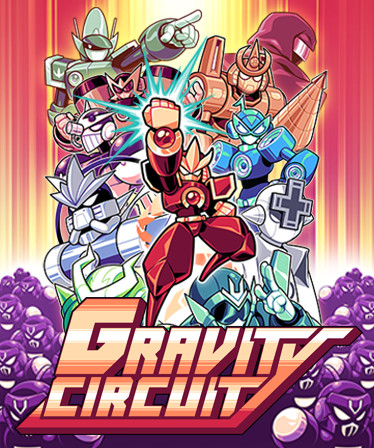
Gravity Circuit
Gravity Circuit is a flashy action packed 2D platformer in the spirit of console classics. Follow Kai, a lone operative war hero who harnesses the mysterious powers of the Gravity Circuit, on an adventure in a futuristic world inhabited by sentient robots.

Super Meat Boy
The infamous, tough-as-nails platformer comes to Steam with a playable Head Crab character (Steam-exclusive)!

Katana ZERO
Katana ZERO is a stylish neo-noir, action-platformer featuring breakneck action and instant-death combat. Slash, dash, and manipulate time to unravel your past in a beautifully brutal acrobatic display.


Slime-san: Superslime Edition
Slime-san was minding his own business when suddenly… A giant worm appeared and gobbled him up! Deep within the worm’s belly, Slime-san has to face a decision: Be digested by the incoming wall of stomach acid... Or jump, slide and slime his way through the worm and back out its mouth!

Freedom Planet
Fight your way across the celestial world of Avalice where cats are green, motorcycles drive up walls and monster girls do most of the buttkicking! Freedom Planet is a cartoony, combat-based platform adventure that pits a spunky dragonoid and her friends against an alien attack force.
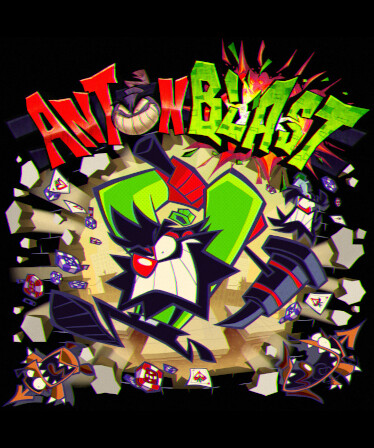
ANTONBLAST
ANTONBLAST is a fast-paced explosive action platformer that's all about destruction. Play as the enraged Dynamite Anton (or his cranked-out coworker Annie) and use your Mighty F’n Hammer to demolish bizarre worlds, tussle with screen-filling bosses, and steal your Spirits back from Satan!

Electronic Super Joy: Groove City
A Giant Robot Stripper called JoJo has smashed Groove City! She's angry because Dr Swinger stole her Laser-Nipples! Help JoJo reclaim her Laser-Nipples & defeat the Evil Plans of Dr.Swinger, with the help of Pope Boris the Super Sexy!
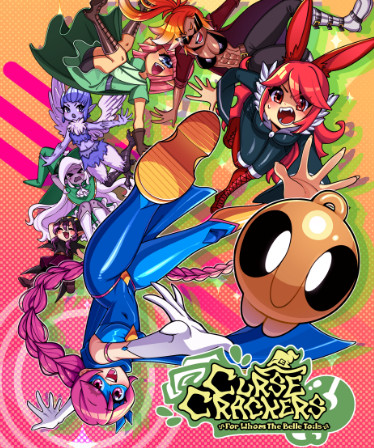
Curse Crackers: For Whom the Belle Toils
Bounce, vault, and fight your way through a whimsical world with the help of your loyal companion. Eat snacks, collect artifacts, and travel the world to stop Bonnie and her boney band of troublemakers!

Oozi: Earth Adventure
Oozi: Earth Adventure is a classic 2D platformer with old school gameplay - no puzzles, no punishment, just 100% pure classic platforming fun! Its most prominent features are HD visuals and beautiful hand-drawn art, but despite its visual style, it’s a good fit for all kinds of gamers!
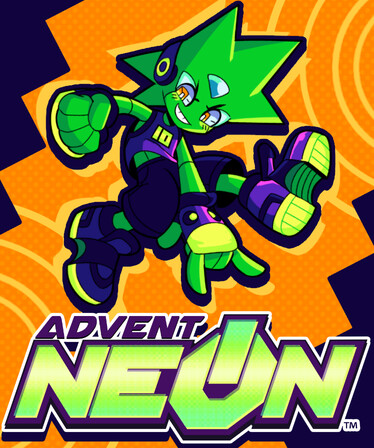
Advent NEON
Hyperactive 2D action platformer with wicked fast attacks, omnidirectional dashing, and time-freezing! Play well enough to transform and unleash 100% power!
Frequently Asked Questions
Pizza Tower is currently priced at 19.50€ on Steam.
No, Pizza Tower is currently not on sale. You can purchase it for 19.50€ on Steam.
Yes, Pizza Tower received 65,599 positive votes out of a total of 66,693 achieving an impressive rating of 9.67.
😍
Pizza Tower was developed and published by Tour De Pizza.
Yes, Pizza Tower is playable and fully supported on Windows.
No, Pizza Tower is not playable on MacOS.
No, Pizza Tower is not playable on Linux.
Yes, Pizza Tower is playable and fully supported on Steam Deck.
Yes, Pizza Tower is playable and fully supported on Steam Machine.
No, Pizza Tower does not support VR.
Pizza Tower offers both single-player and multi-player modes.
Pizza Tower includes Co-op mode where you can team up with friends.
Yes, there is a DLC available for Pizza Tower. Explore additional content available for Pizza Tower on Steam.
No, Pizza Tower does not support mods via Steam Workshop.
Yes, Pizza Tower supports Remote Play Together. Discover more about Steam Remote Play.
Yes, Pizza Tower is enabled for Steam Family Sharing. This means you can share the game with authorized users from your Steam Library, allowing them to play it on their own accounts. For more details on how the feature works, you can read the original Steam Family Sharing announcement or visit the Steam Family Sharing user guide and FAQ page.
You can find solutions or submit a support ticket by visiting the Steam Support page for Pizza Tower.
Data sources
The information presented on this page is sourced from reliable APIs to ensure accuracy and relevance. We utilize the Steam API to gather data on game details, including titles, descriptions, prices, and user reviews. This allows us to provide you with the most up-to-date information directly from the Steam platform.
Additionally, we incorporate data from the SteamSpy API, which offers insights into game sales and player statistics. This helps us present a comprehensive view of each game's popularity and performance within the gaming community.
Last Updates| Steam data | 06 October 2026 06:20 UTC |
|---|---|
| SteamSpy data | 27 October 2026 21:09 UTC |
| Steam price | 27 October 2026 20:06 UTC |
| Steam reviews | 22 October 2026 15:55 UTC |
If you'd like to dive deeper into the details about Pizza Tower, we invite you to check out a few dedicated websites that offer extensive information and insights. These platforms provide valuable data, analysis, and user-generated reports to enhance your understanding of the game and its performance.
- SteamDB - A comprehensive database of everything on Steam about Pizza Tower
- SteamCharts - Analysis of Pizza Tower concurrent players on Steam
- ProtonDB - Crowdsourced reports on Linux and Steam Deck Pizza Tower compatibility

Game modes
Multiplayer
Features
Online players
367
Developer
Tour De Pizza
Publisher
Tour De Pizza
Release
26 Jan 2023
Platforms
Remote Play