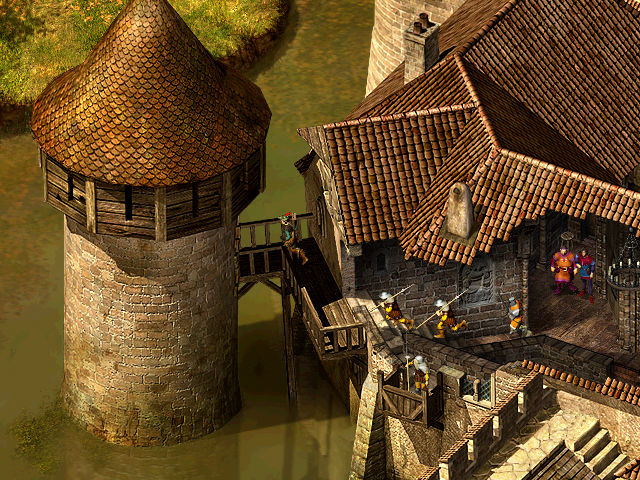
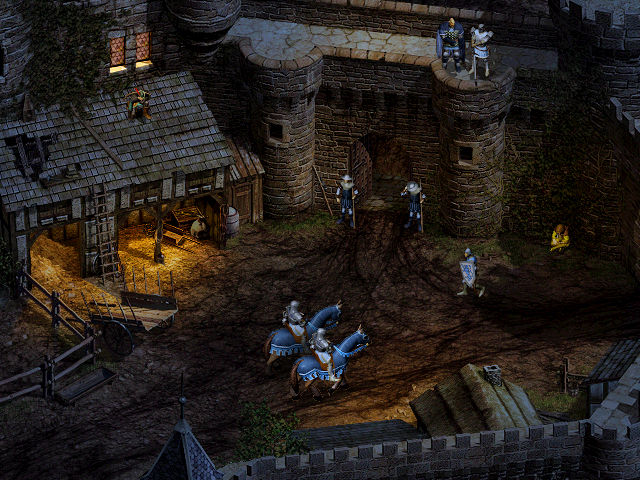
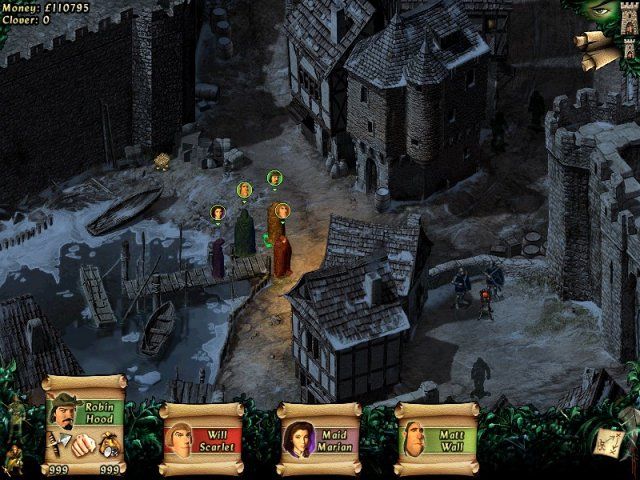
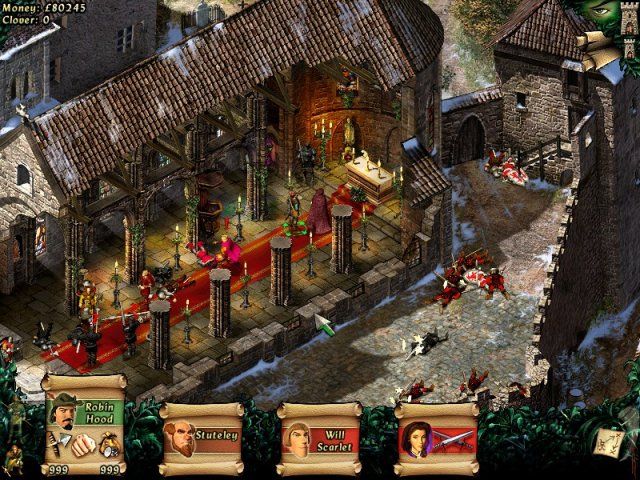
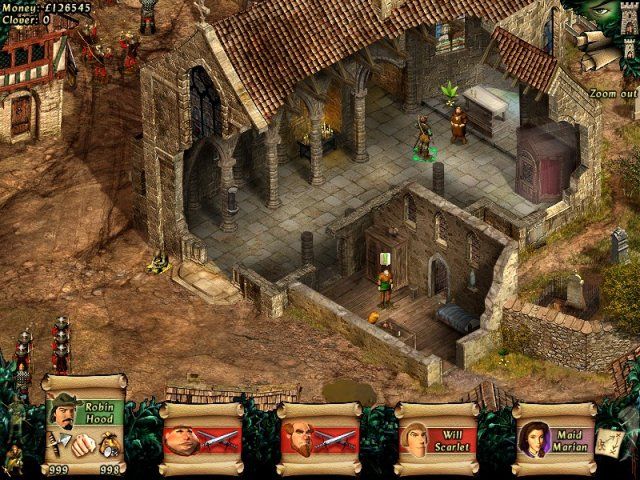
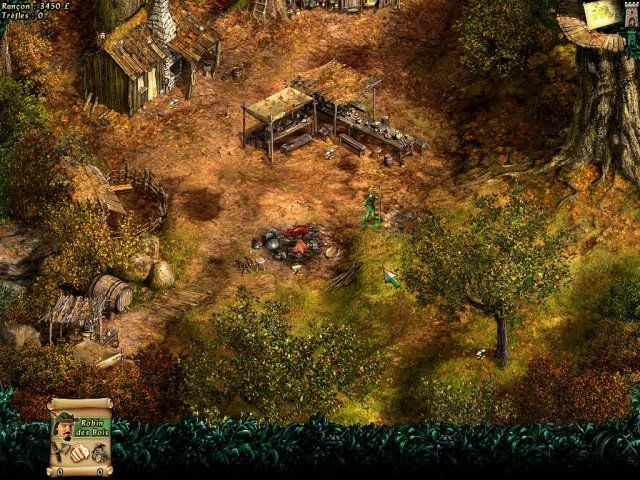
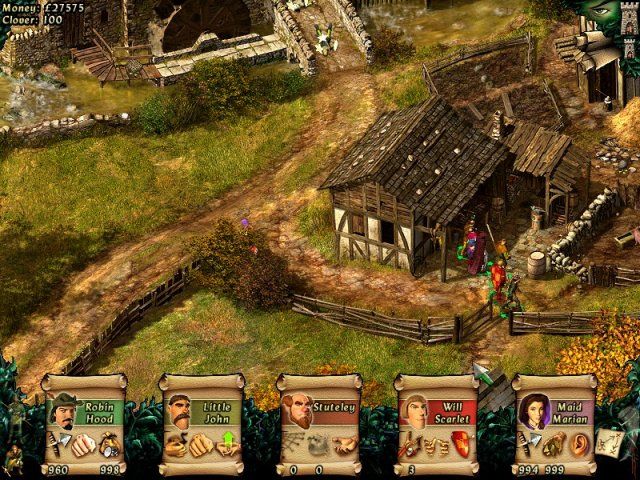
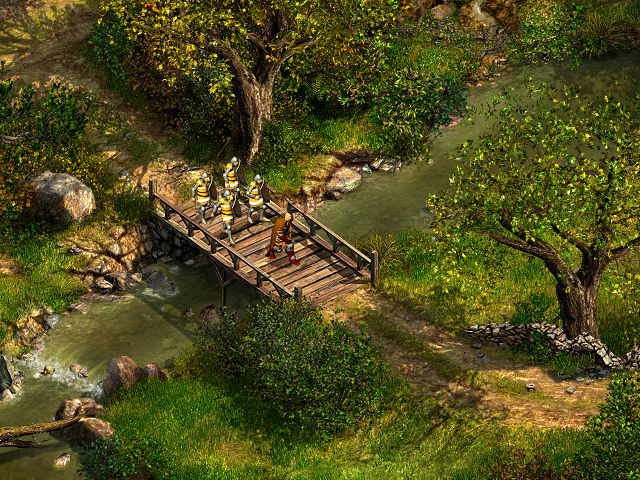
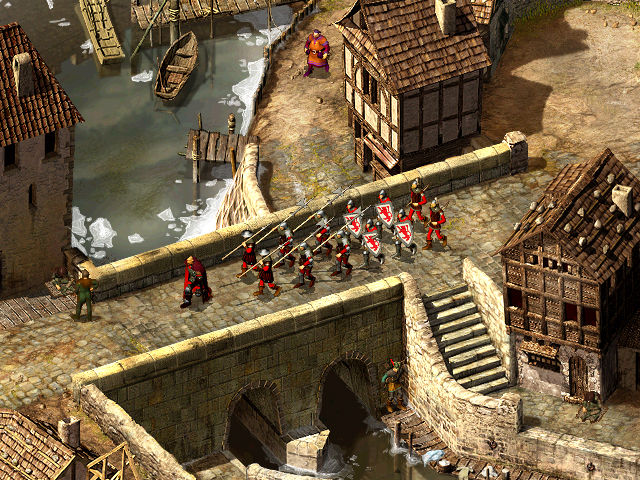
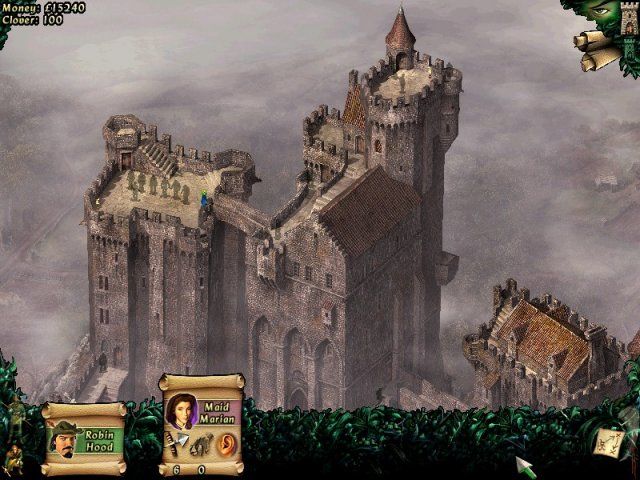
Robin Hood: The Legend of Sherwood, developed by Spellbound Entertainment and published by Microids, is a real-time tactics game that blends stealth, strategy, and medieval adventure into one of the most distinctive experiences of its era. Released in the early 2000s, it quickly earned a cult following for its combination of detailed mission design, charming presentation, and its faithful adaptation of the legendary tale of Robin Hood and his Merry Men. Rather than retelling the story through grand battles or cinematic cutscenes, the game captures the essence of the legend through small, tactical moments—sneaking past guards, ambushing patrols in Sherwood Forest, and liberating the oppressed one carefully planned move at a time. It stands as one of the rare strategy titles of its time to prioritize cunning and coordination over sheer firepower. Set against the backdrop of medieval England, the game opens as King Richard the Lionheart has been imprisoned during his crusades, and his treacherous brother Prince John seizes the throne. Robin Hood, now an outlaw, must rally his companions—Little John, Friar Tuck, Will Scarlet, and others—to wage a guerrilla campaign against the corrupt rulers and restore justice to the land. The narrative unfolds through a series of interconnected missions that combine stealth infiltration, ambushes, and open assaults on castles and outposts. Each mission serves as a puzzle of spatial awareness and resource management, where success depends on how well you read the map, exploit guard patterns, and utilize each character’s abilities. The gameplay draws clear inspiration from tactical classics like Commandos: Behind Enemy Lines, but it adapts the formula with its own medieval flair. Each member of Robin’s band possesses unique skills that encourage creative planning and teamwork. Robin himself excels at silent takedowns and archery, while Little John uses brute strength to subdue or move heavy objects. Friar Tuck can carry bodies or distract enemies, and Maid Marian brings agility and stealth, capable of scaling walls or luring foes into traps. Players must manage these differences carefully, often coordinating multiple characters simultaneously to pull off a mission cleanly. Every level offers multiple solutions—sometimes brute force is possible, but more often success relies on patience and stealth. The game rewards careful observation, as guards have distinct patrol routes, levels feature multiple access points, and environmental tools like alarm bells, doors, and ladders can be manipulated to your advantage. Stealth is the cornerstone of the experience. Direct confrontation is rarely ideal, and each mission challenges you to find clever ways to achieve objectives without triggering alarm. Knocking out enemies quietly, hiding bodies, and making use of disguises or distractions are central to success. A key strength of the game lies in how it gives weight to each small decision—rushing too early, leaving a body exposed, or drawing attention can quickly spiral into disaster. Villagers and civilians add another dynamic layer, as they may either aid or betray you depending on how you behave. Helping the poor and avoiding unnecessary violence not only fits the spirit of Robin Hood’s legend but also has gameplay rewards, reinforcing the connection between morality and strategy. Visually, Robin Hood: The Legend of Sherwood has aged gracefully thanks to its detailed isometric environments and charming hand-painted style. Each location—whether a dense woodland camp, a bustling town, or a fortified castle—feels distinct and atmospheric. The level of environmental detail was impressive for its time, with animated wildlife, flickering torches, and shifting weather effects that enhanced immersion. Despite the dated resolution and limited animation by modern standards, the game’s warm aesthetic and color palette capture the fairy-tale tone of the Robin Hood myth. The sound design complements the visuals with a memorable orchestral score that evokes both adventure and stealth, while voice acting, though somewhat exaggerated, lends personality to the characters and lightens the tension of otherwise meticulous missions. Where the game falters is largely in its technical and interface design. The controls can feel clunky by today’s standards, and character pathfinding is sometimes unreliable, leading to frustrating moments where carefully planned maneuvers unravel due to poor AI movement. The camera, limited by its fixed isometric angle, occasionally makes it difficult to spot enemies or interact with certain elements. The difficulty curve is steep, and some missions can feel punishingly long, requiring near-perfect execution. Yet, for all its occasional roughness, these challenges contribute to the satisfaction of mastering its systems. Each mission feels like a small victory earned through precision and patience rather than brute force or luck. Structurally, the campaign offers freedom that was rare for its time. Players can choose from a set of available missions rather than being locked into a strict linear progression, allowing for varied pacing and strategic flexibility. Between missions, the game returns you to Sherwood Forest, which acts as a central hub where you can manage your crew, assign tasks, and plan your next operation. These interludes add a sense of progression and camaraderie, making the Merry Men feel like a living group of allies rather than just interchangeable units. The game’s pacing can be deliberate, even slow at times, but it reflects its emphasis on strategy over speed. For players who value methodical gameplay, this slower tempo becomes a source of immersion rather than tedium. In the years since its release, Robin Hood: The Legend of Sherwood has earned a place as one of the hidden gems of early 2000s PC gaming. Its blend of tactical depth, historical charm, and environmental storytelling remains engaging, even if its mechanics show their age. Modern players may find the controls dated and the AI inconsistent, but beneath those surface issues lies a game built with care and craftsmanship. It rewards strategic thought, careful timing, and empathy for the characters it portrays. Rather than glorifying violence, it celebrates cleverness and teamwork—the true heart of the Robin Hood legend. Ultimately, Robin Hood: The Legend of Sherwood endures as a thoughtful and distinctive entry in the real-time tactics genre. It captures both the spirit of rebellion and the quiet dignity of outlaws fighting for justice. With its atmospheric design, intricate missions, and clever mechanics, it delivers an experience that feels both nostalgic and timeless. For players who appreciate the challenge of stealth, the satisfaction of planning a perfect infiltration, and the charm of classic PC strategy games, this journey through Sherwood Forest remains as rewarding today as it was two decades ago. Rating: 6/10
Expand the review