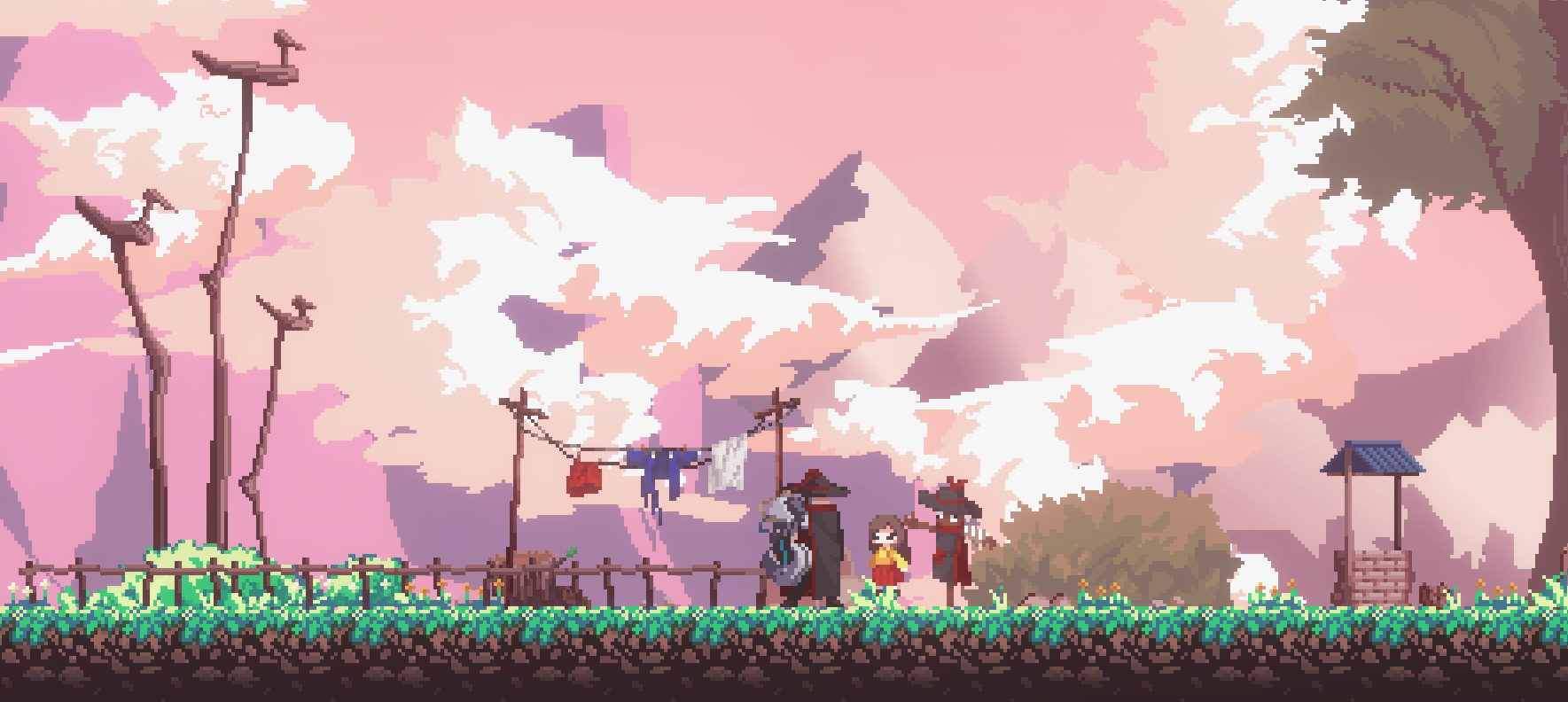
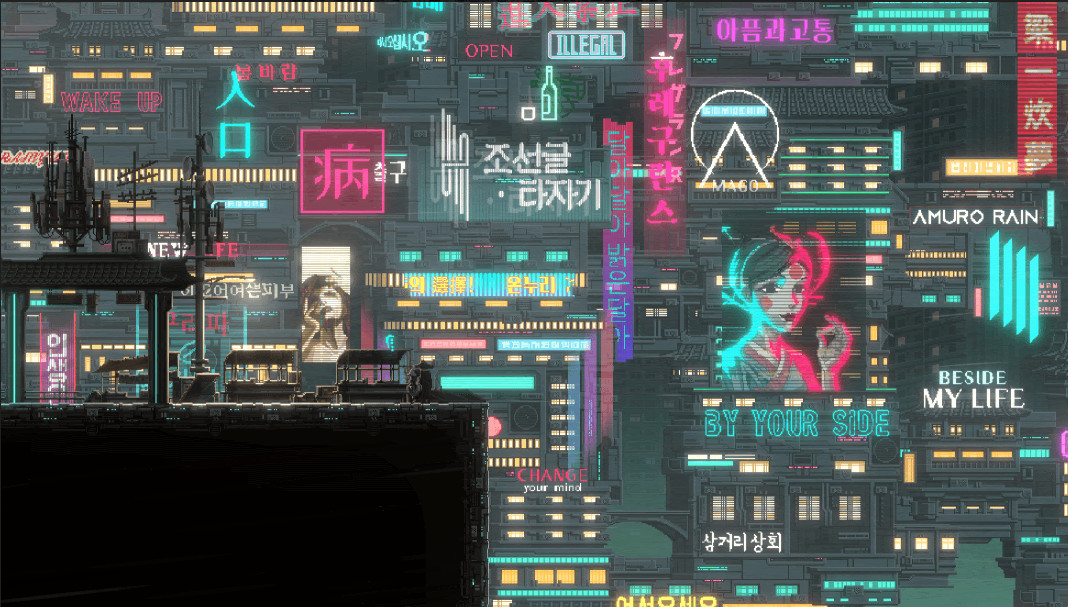
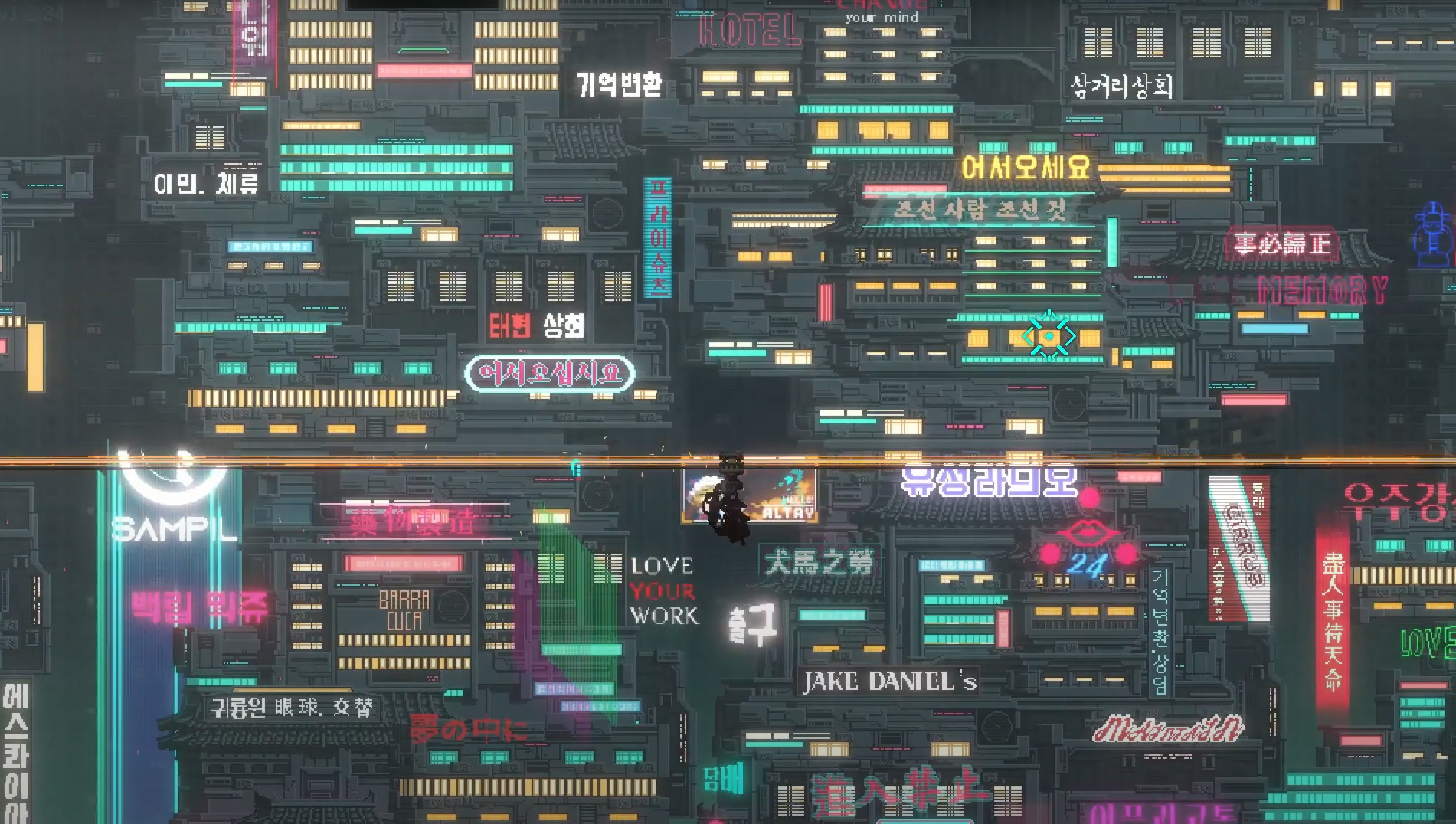
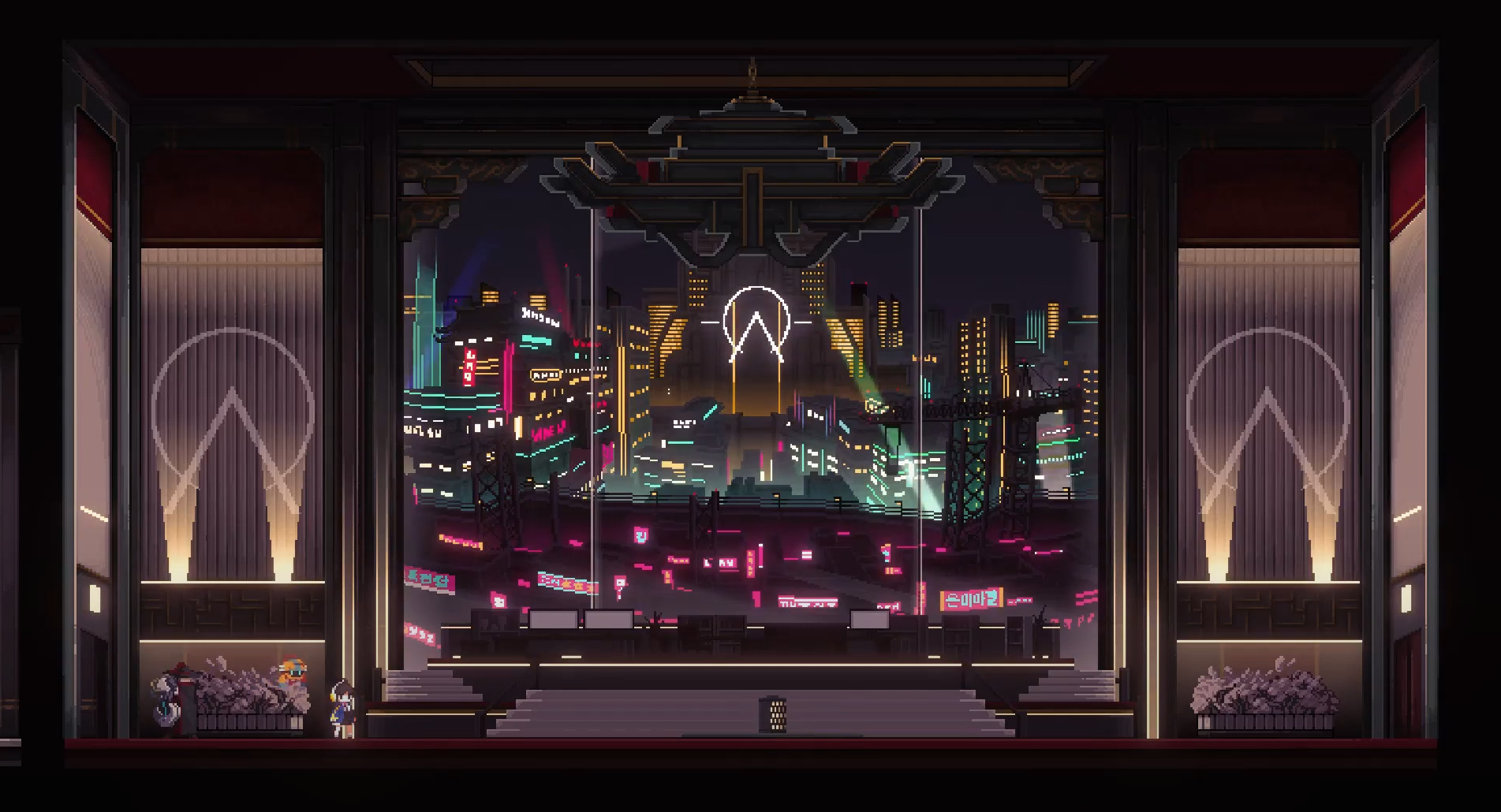
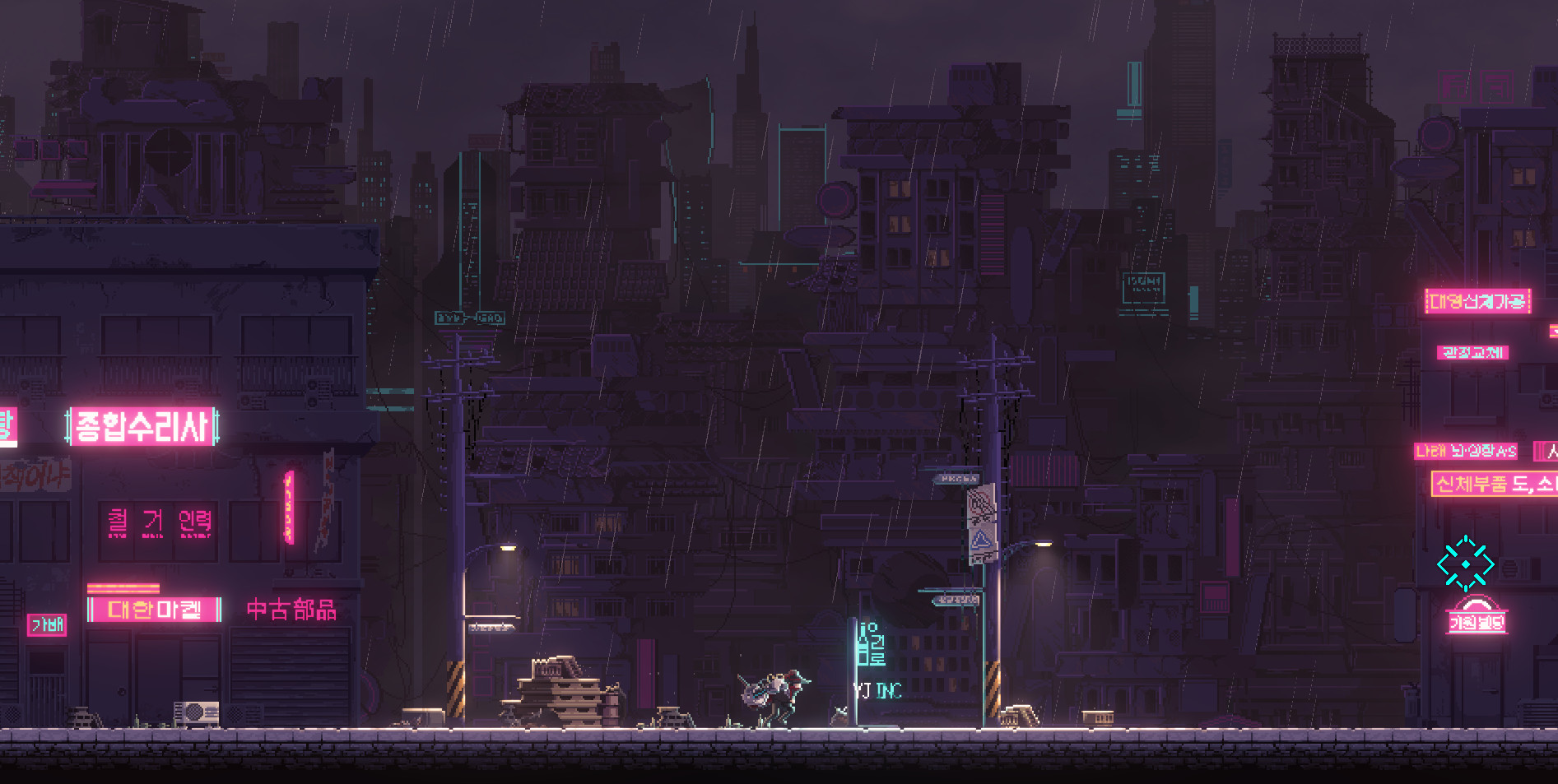
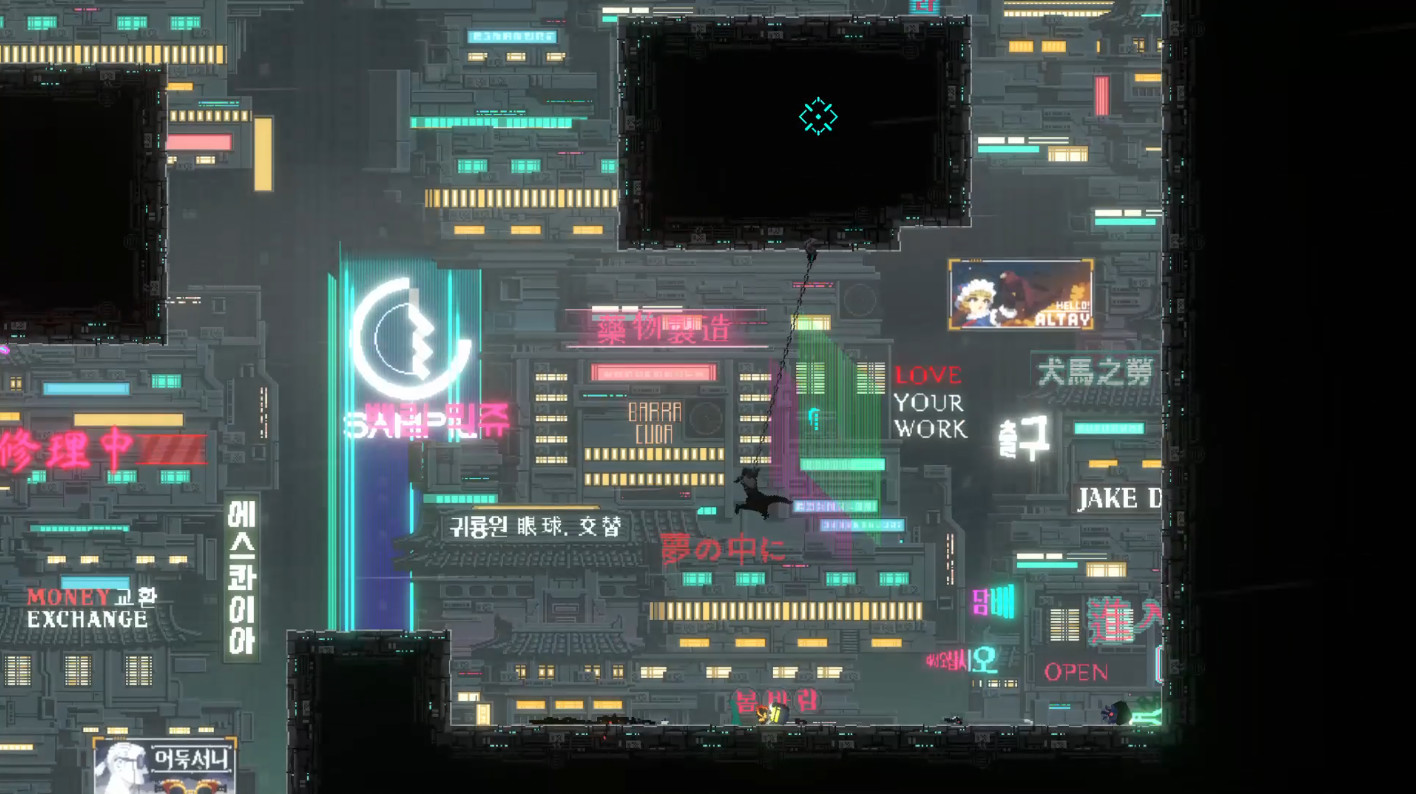
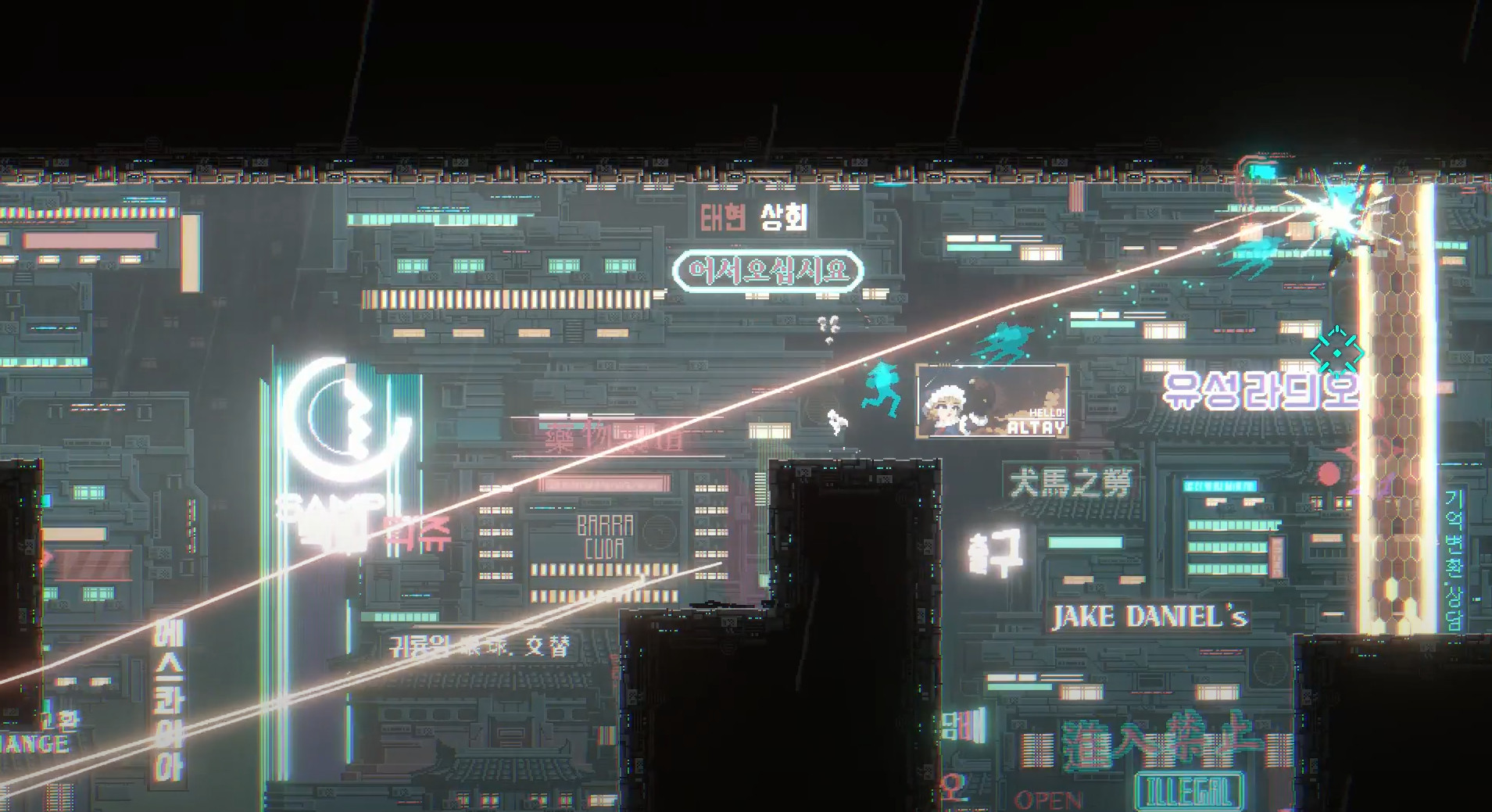
Sanabi combines fast 2D platforming action with a beautiful cyberpunk aesthetic and, quite rare for this type of game, a surprisingly large focus on its story. Through its unique plot and (literal) gameplay hook, Sanabi easily manages to stand out among similar indie titles On the surface, Sanabi – the first game by South-Korean developer WONDER POTION, might look like yet another generic indie title inspired by Blade Runner and Ghost in the Shell -aesthetics: After all, the screenshots on the Steam store page only make it look like yet another pixel-version of a dystopian futuristic city, paired with some probably-somewhat-okayish 2D platforming. Considering Steam currently lists a whopping 123 games tagged “cyberpunk”, “pixel art” and “platformer” at the same time, one might easily disregard Sanabi as a “one of many” type game. However, make no mistake: Despite its generic store appearance and new developer, Sanabi is easily worth your time as long as you’re interested in challenging grappling-hook platforming action – or a surprisingly unique sci-fi plot. Despite being a platformer, Sanabi actually features a surprisingly decent plot complete with meaningful story twists and charming characters – although it subsequently also showcases why it’s quite rare for games of the genre to focus on storytelling. In this review, I want to explore this unique combination of story and platforming sections that make up Sanabi and point out what works – and what doesn’t. Let’s focus on the gameplay of Sanabi first. Every good platforming game has a standout-feature that sets it apart from other games in the genre and in the case of Sanabi , it’s the “Chain Arm” of the protagonist. Despite not being called as such, it’s essentially a grappling hook, making Sanabi less about jumping from platform to platform but more about properly applying your grappling hook to walls and ceilings to swing around obstacles. What starts out reasonably simple gradually becomes more complex over the course of the game, offering a nice sense of progression, as various enemy types and additions to the move-set (such as mid-air dashes) are introduced at a decent rate. Thankfully, even at the end with a full move-set unlocked, I never found controlling the protagonist to be overwhelming or unprecise, even aiming your grappling hook on a controller as I did works reasonably well. As the game goes through its various chapters, you also get to explore new regions in the game that offer unique obstacles tied to the story – such as worm-like enemy early on, that continuously appears at your current position with a few seconds of delay, which results in the need to move around constantly to avoid getting hit. These obstacles help making the regions feel a little more unique, as they’re only differentiable by background art otherwise – the constant need for ceiling, walls and gaps limits the level design of Sanabi accordingly. The gameplay highlight of Sanabi lies in its boss fights however, of which few are spread across the different chapters. While I found the boss fights to be the most difficult part in the game due to a lack of checkpoints, I came away impressed with how unique each boss fight plays out. As bosses in platforming games can often be beaten using similar strategies, it’s a pleasant surprise to see that Sanabi requires the player to employ a different tactic in every fight to emerge successful. Just constantly swinging around is not going to help, with a different part of your grappling hook skills being tested with each boss, making victories quite satisfactory. Additionally, the game refrains from re-using boss fights at all, making sure you never know what’s coming! One flaw concerning Sanabi ’s gameplay that stuck out to me was its uneven difficulty, however. This is not about character controls or performing precise jumps - but about level design in the sense that Sanabi occasionally fails at adequately indicating what the player is supposed to do. While the levels are linear, some (gimmick) obstacles are placed in a way (e.g. out of screen) that the player has little time to react accordingly. For example, one section involves simultaneously running away and hiding from a giant enemy in certain locations – but as you’re not shown where exactly the next hiding spot is, it can be frustrating to figure out how to get where in the right time. Moving over to the story, Sanabi may not feature a world looking especially unique, as the aesthetic is clearly inspired by popular cyberpunk works. However, the story surprised me in the way that it does not only manage to properly build up its two main characters but also features plot developments that aren’t just common genre tropes. Although it shares the themes expected of the genre (e.g. unethical megacorporations, the borders between humanity and artificial intelligence/life), Sanabi offers a unique plot that thrives on character interactions in the beginning and relies on story developments and twists in the end. It’s an enjoyable tale, maybe a little too big on foreshadowing in the middle, and kept me invested throughout, even if it might not be the most memorable cyberpunk story of all time. Of course, this is also because of the noticeable limitations to the scope of Sanabi ’s worldbuilding and overall (character) depth. For one, while the game has an adequate length for a platformer, beating the game on “veteran” difficulty took me around 10h, it just doesn’t compare to RPGs, visual novels or other genres known for their storytelling. Second, the gameplay core of Sanabi – the platforming – isn’t very compatible with storytelling beyond the visuals of the game. As Sanabi doesn’t feature voice acting, it occasionally resorts to text messages during platforming sections – which is hard to focus on as players are simultaneously performing precise jumps. As such, WONDER POTION decided to include “story scenes” (mostly dialogues) between the platforming sections and the occasional boss fight instead. The problem here is that these lengthy story sequences do allow Sanabi to tell a much more complex story than a Super Mario game offers for example. But it also means that you spend a comparatively large amount of time just clicking through dialogues between the platforming action. This does unfortunately throw off the pace quite a bit: Players who want to experience the story must play almost story-less platforming sections in between while those mostly looking for platforming actions are continuously stopped through story developments. In the end, the balance between the “two souls” of Sanabi unfortunately doesn’t work out and while there’s a speedrun mode without any story elements, beating the story at least once is required to unlock it. Still, the smooth animations, the fitting adrenaline-pumping soundtrack for the enjoyable platforming action on screen as well as the surprisingly decent story make Sanabi a great recommendation for enjoyers of cyberpunk themes and more challenging 2D platformers. It might be a little rough around the edges when it comes to difficulty and pacing, but especially considering its low base price, Sanabi is an absolute steal if you’re among its target audience: Don’t let its unassuming store page distract you!
Expand the review