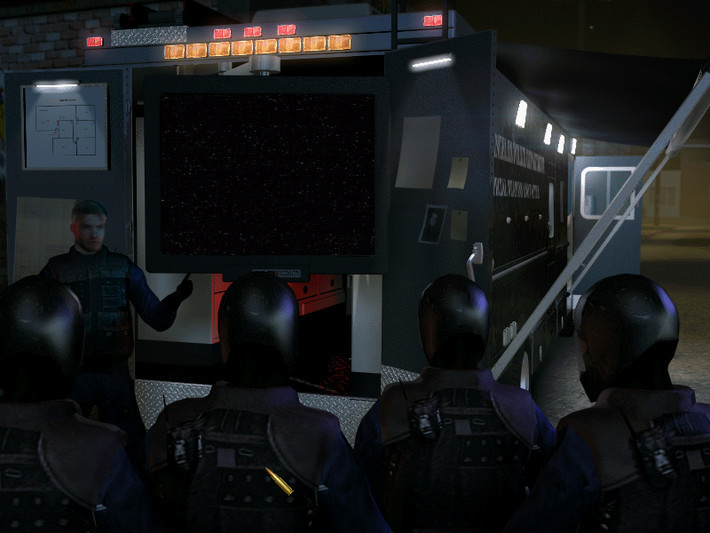
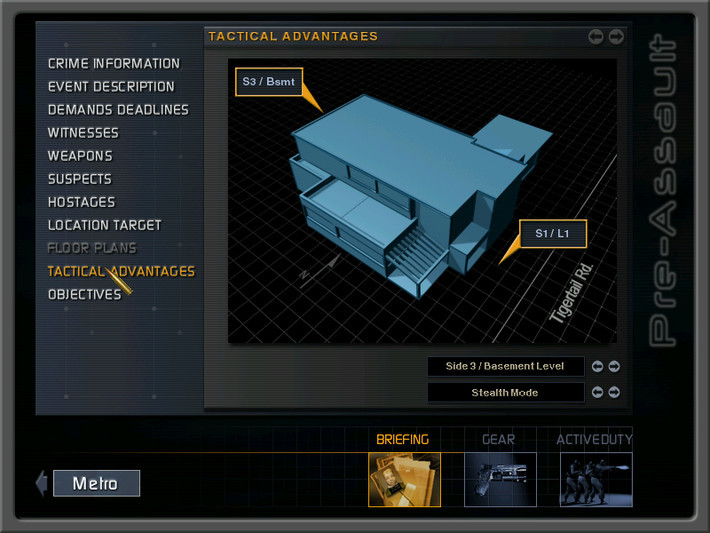
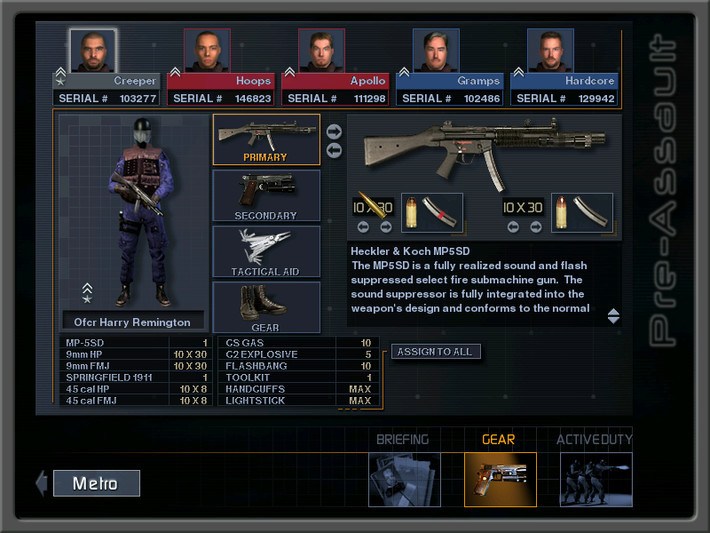
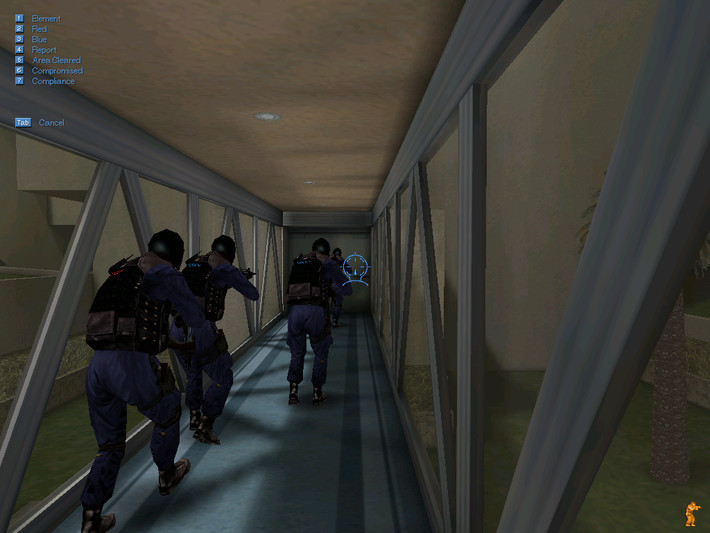
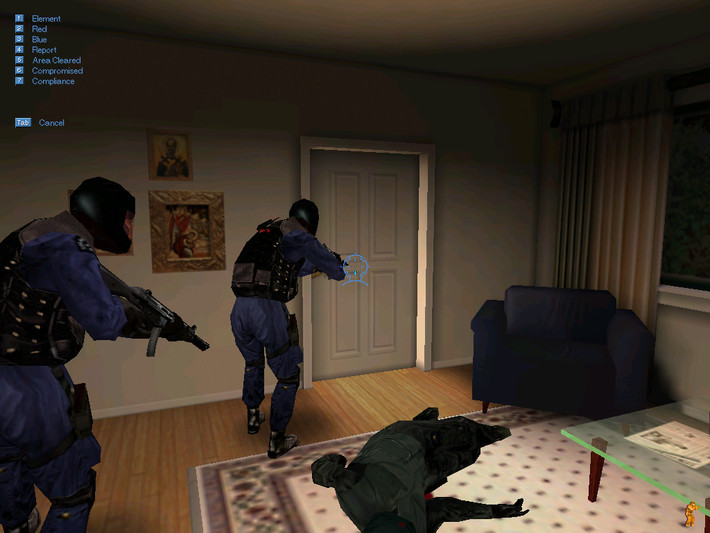
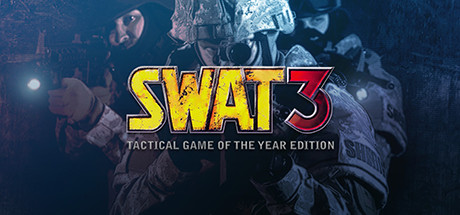
SWAT 3: Tactical Game of the Year Edition, developed by Sierra and published by Activision, remains one of the most defining examples of grounded tactical first-person design—a game that deliberately distances itself from the explosive, run-and-gun shooters that dominated its era. Set in a near-future Los Angeles on the eve of an international summit, the game frames its missions around realistic crisis scenarios: hostage situations, armed barricades, domestic disputes, and terrorist threats unfolding across believable civilian environments. Instead of constructing a dramatic narrative arc, it adopts the tone of a professional simulation, presenting each deployment as part of an ongoing public safety operation rather than a cinematic storyline. This grounded approach reinforces the idea that being a SWAT officer is less about heroics and more about responsibility, procedure, and restraint. The central philosophy of SWAT 3 is that violence is not the preferred solution, and the game successfully builds tension around that expectation. Every mission begins with a detailed briefing and blueprint-style floor plan, encouraging players to visualize potential points of entry, danger zones, and civilian locations before a single shot is fired. Equipment selection becomes meaningful—opting for less-lethal shotguns, pepper spray, flashbangs, breaching charges, or mirror cameras can dramatically influence how safely a situation is resolved. When the team finally enters a building, the pressure shifts from external threats to operational discipline. Officers must issue verbal commands, attempt arrests, and scan rooms methodically, because suspects will react unpredictably—sometimes surrendering immediately, sometimes fleeing, or sometimes ambushing careless players. That uncertainty transforms each encounter into a psychological contest rather than a firefight. Squad management is where the game’s tactical identity truly crystallizes. The player leads a team of highly trained officers who follow real-world SWAT procedures, stacking on doors, covering angles, clearing hallways, and communicating discoveries. Commands are issued through an interface that is surprisingly intuitive for its time, allowing synchronized breaches, silent entries, or coordinated movement formations. The AI, while not flawless, demonstrates far more tactical awareness than typical shooters of the late 1990s, reflecting training and teamwork rather than generic enemy scripting. Players can take the lead position or operate as a strategic coordinator, and both playstyles feel distinct and rewarding. When a mission concludes with all civilians safe and every suspect apprehended rather than killed, the sense of accomplishment is different from most shooters—measured not by body count, but by professionalism. The environments play a crucial role in shaping that experience. Instead of exaggerated military arenas, SWAT 3 takes place in ordinary but carefully constructed spaces—office towers, suburban homes, luxury penthouses, convenience stores, sewers, banks, embassies, and public transit stations. These locations are not designed for combat spectacle, but for realism, with believable layouts, line-of-sight obstructions, locked doors, blind corners, and choke points that force players to think like real operators. The subdued art direction, though dated in texture quality, still effectively conveys tension, and the game’s restrained color palette enhances its procedural feel. What truly gives these spaces life is the sound design: distant screams, muffled gunshots, police radio chatter, footsteps echoing through stairwells, and panicked civilians pleading for help. Every audio cue becomes tactical information, training players to listen as carefully as they observe. Despite its enduring strengths, SWAT 3 is not without limitations. Modern players accustomed to slick interfaces, highly customizable weaponry, or physics-driven destruction will notice its age immediately. Animations are rigid, character models simple, and environmental interaction limited. Some missions can feel abrupt or short, and because the game prioritizes realism over dramatization, there is no overarching plot or emotional payoff linking operations together. The AI occasionally misjudges angles or gets stuck navigating narrow spaces, and the control scheme may take time to adapt to. Yet these constraints do little to diminish the clarity of the game’s vision—they serve as reminders of both the era and the intentions behind its design. What has allowed SWAT 3 to maintain its legacy is the rarity of what it attempts: a tactical shooter built not around power fantasy, but around accountability, planning, and the preservation of life. The GOTY Edition’s additional missions and multiplayer support expanded its longevity, and modding communities have kept it accessible long after its original release window. More importantly, modern tactical games—including Rainbow Six Siege, Ready or Not, and the revered SWAT 4—owe pieces of their DNA to the framework SWAT 3 established. Its influence is not loud or flashy, but foundational. Revisiting the game today reveals why it remains so respected. It captures a type of tension no modern military blockbuster replicates—the quiet dread of opening a closed door, the relief of a peaceful surrender, the anxiety of knowing one wrong command could cost a civilian life. SWAT 3 is not designed to thrill through constant action, but to immerse through authenticity and discipline. For players who value methodical pacing, procedural challenge, and tactical decision-making grounded in reality, it continues to stand as one of the most thoughtful, mature, and influential entries the genre has ever produced. Rating: 6/10
Expand the review