
Space Hulk (Classic)
The legendary Space Hulk returns in this epic turn based strategy game. Set in the Warhammer 40,000 universe, an intriguing story of legendary battles and heroic actions unfolds.
Sync your Steam wishlist to find the lowest game prices instantly. No login required, just paste your Steam profile URL!
⚡ Try Wishlist Radar!
Sync your Steam wishlist to find the lowest game prices instantly. No login required!
⚡ Try Wishlist Radar!
Close

The Conquest of Go on Steam
Quick menu
Learn and play Go, the classic board game that has been played for thousands of years, and compete in the race to conquer the most land in the in-game world, or compete online against opponents around the real world.
The Conquest of Go is a early access, turn-based and strategy game
developed and published by Wolfey Studios.
Released on December 10th 2025 is available on Windows and MacOS.
It has received 479 reviews of which 450 were positive and 29 were negative resulting in a rating of 8.7 out of 10. 😎
The game is currently priced at 12.49€ on Steam.
The Steam community has classified The Conquest of Go into these genres:
Media & Screenshots
Get an in-depth look at The Conquest of Go through various videos and screenshots.


Load More


System requirements
These are the minimum specifications needed to play the game. For the best experience, we recommend that you verify them.
Windows
- Requires a 64-bit processor and operating system
- OS *: Windows 7 or later
- Processor: Intel Core i3
- Memory: 6 GB RAM
- Graphics: Intel HD Graphics
- DirectX: Version 10
- Storage: 1 GB available space
MacOS
- OS: macOS 10 or later
- Processor: Intel Core i3/M1
- Memory: 6 GB RAM
- Storage: 1 GB available space
Steam Price & Best Deals
User reviews & Ratings
Explore reviews from Steam users sharing their experiences and what they love about the game.
Great for learning Go from scratch — the AI progression teaches you the rules well, but doesn't explain the why behind good moves. The Workshop community fills that gap nicely (found a great problem set: "GO from Beginner to 9 dan, 10000 problems" by Bezlikii). Recommended if you're willing to supplement with extra material.
I'm at a very chinese time of my life. Nah but fr, this is an amzing Baduk client. Go play it now (pun intended) The tutorials are also very nice, and with the wide selection of CPU opponents and the campaign mode, it is also a very good learning resource for begginers. Not that it can replace a human teacher or even just Go books, but as a suplemental resource, and also an interactive board for use with Go literature, it's quite possibly the best there is.
Easily one of the best local Go clients. Useful for players of all skill levels, but especially useful to beginners since the game allows you to play 5x5 and 7x7 variants as well if you're struggling to wrap your head around even 9x9.. You can play vs. a variety of CPU opponents, or against ppl on OGS (free Go server, like Lichess) from within the game, while also working on the YUUGE COLLECTION of exercises collected by the community! I think, at this moment, it would be prudent to put the client aside, and instead explain why you should learn to play Go, and make it a part of your life! ______________________________________________ Go has been humbling people for a very long time. Born in China thousands of years ago, it's almost certainly the oldest board game still played in something close to its original form. Legend credits an emperor with inventing it to teach his wayward son patience and discipline, and if you've ever sat across a board from a quiet stranger who dismantles your entire strategy without breaking a sweat, that origin story will ring true. From China the game drifted across centuries and borders, taking root in Korea and Japan, where it evolved into something beyond a mere pastime—a way of seeing, a quiet art, a mirror for the mind. The fact that humans have been staring at this same simple grid, placing these same black and white stones for millennia, tells you everything you need to know. In ancient China, Go was not only a game you played when you were bored. It was one among the Four Arts of the Chinese scholar—the siyi—alongside playing the guqin (a silk-stringed zither), calligraphy, and painting. To be considered a true literati, you had to know your way around a Go board. These were the "Four Accomplishments"; they were the pillars of a refined soul, the measure of an educated and elegant mind. So when you sit down to play, you are not merely pushing stones around. You are stepping into a tradition that, for centuries, was considered as essential to a cultivated life as writing a poem or painting a mist-shrouded mountain. The rules are as elegant as they get. Two players, a grid, stones that never move. You place a stone, your opponent places a stone, and if you surround something completely, you capture it. That is essentially the entire rulebook. A child can learn in fifteen minutes, and countless children do. But from this tiny seed grows a universe so vast that even the finest players on the planet, after a lifetime of obsessive study, will tell you with a straight face that they are only just beginning to understand the game. The branching complexity makes chess look like a tidy little hedge maze, and yet the board itself remains an empty void, waiting for you to fill it with meaning. What makes Go genuinely worth your time, what sets it apart from almost every other strategy game on the shelf, is that it is not a fight. Chess is a duel to the death. Go is something else entirely. It is a conversation, a negotiation, a shared act of creation. The goal is not to annihilate your opponent but to end up with just a little more territory than they have. You can win a game of Go by half a point. You learn quickly that greed does not work. Try to grab everything, and your stones will suffocate. Play too timidly, and you will wake up to find your opponent has politely colonized three corners while you were busy building a fortress nobody asked for. The board becomes a mirror, and it teaches you, with quiet and implacable patience, about balance—about letting some things go to gain something more important, about lifting your eyes from the local brawl to see the whole, breathing landscape. And it is beautiful! Players speak of "good shape" and "flow" and "light" moves. A well-played sequence has an aesthetic quality, a visual poetry that makes perfect sense when you remember Go was once placed alongside painting and calligraphy as an art form. Two people, ostensibly trying to beat each other, are also making something together, a pattern that is at once a battle and a work of art. The benefits run deeper still. Science is beginning to catch up with what players have felt for centuries: Go is a profound workout for the brain, sharpening spatial reasoning, working memory, and executive function. Some studies even suggest it helps build resilience against cognitive decline. But the real prize might be emotional. Go teaches you to lose. There are no dice to curse, no bad luck to blame. A defeat is yours, clean and unadorned, and that makes every loss a genuine, if slightly uncomfortable, lesson. The board also reads your mood with unsettling accuracy. Approach it frustrated, and you will overreach and perish. Approach it with a clear, calm mind, and you might just make something beautiful. There is perhaps no better training for life than that. If any of this has stirred your curiosity, there are 4 steps worth taking immediately. First, watch this review of Go over at Shut Up & Sit Down (https://www.shutupandsitdown.com/videos/chess-month-go-review/), 2nd, watch the AlphaGo documentary on YouTube (https://youtu.be/WXuK6gekU1Y?si=cbLuSPCMLKwmF2B9), 3rd watch Hikaru No Go.. Finally, when the urge to play against other humans inevitably strikes, point your browser to the Online Go Server (available in-game as well as via browser and on Android - Sente Online Go). It is free, and it is filled with a lovely, global community of players at every skill level who will gently, relentlessly, and with great courtesy show you just how much you have left to learn. Go is a game you can play in ten-minute bursts on a phone or across six slow, thoughtful hours over a real wooden board with a pot of tea. It will meet you wherever you are. And if you let it, it will quietly teach you more than you ever expected.
I'm new to Go, but I've been wanting to learn for a long time. Unfortunately, none of my friends are interested in spending the time to learn it. SO, this brings me to this lovely steam game. It is basically a really well designed interface for all things Go. It seems like there are a lot of resources online, but this all-in-one and elegant UI is exactly what I hadn't realized that I needed.
Similar games
View all

Panzer Strategy
Panzer Strategy is a World War II wargame that combines classic turn-based strategy gameplay with modern looks. Command your armies and adapt your units to any objective using a huge selection of real-life military equipment and battle skills.

Carcassonne - Tiles & Tactics
The official adaptation of the famous board game Carcassonne! A modern classic tile-placement game based on the award winning game in which the players draw and place a tile with a piece of southern French landscape on it. The player can then decide to place one of his followers, called Meeples.

Scythe: Digital Edition
Scythe transports you to an alternate reality in 1920s Europa, one ravaged by the First World War. Take up the role of leader by assuming command of one of 5 factions, and set out to conquer the coveted "Factory". Lead your mechs to war and your people to victory!

Through the Ages
Legendary board game classic from award winning designer Vlaada Chvátil

Gremlins, Inc.
This is an intense strategy board game in a steampunk world of corrupt capitalist gremlins who compete for money, political power and prestige. Save and invest, steal and extort, arrest and get arrested – in single-player and multiplayer, with ranks and ladders, team mode and spectator mode.
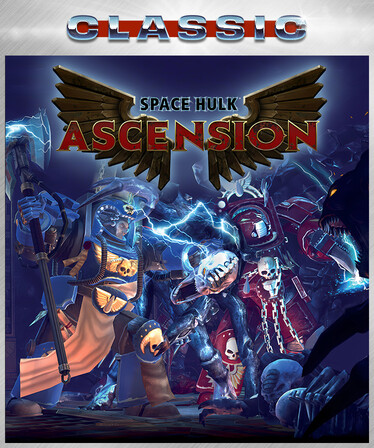
Space Hulk: Ascension (Classic)
Space Hulk: Ascension is a 3D, digital, turn based, strategy game, which re-interprets the classic board game experience, and adds new RPG style mechanics, new weapons and missions, new enemy types, 3 playable chapters and loads of other new features to the single player experience.

Warhammer 40,000: Sanctus Reach (Classic)
Warhammer 40,000: Sanctus Reach is a 3D turn-based strategy game like you’ve never seen before: fast, immediate, deep, impressive to look at and incredibly fun! Fight through a dark era of carnage and endless war and lead the Space Wolves in a struggle to defend the last bastion of mankind.
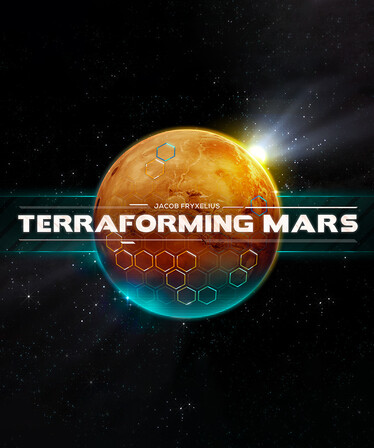
Terraforming Mars
The taming of the Red Planet has begun! Corporations are competing to transform Mars into a habitable planet by spending vast resources and using innovative technology to raise temperature, create a breathable atmosphere, and make oceans of water.

D&D Lords of Waterdeep
Lords of Waterdeep is an award winning strategy board game, set in the Dungeons & Dragons world of Waterdeep. Play as one of the masked Lords of the City of Splendor. Intrigue abounds as you recruit adventurers, via your agents, to quest on your behalf and spread your influence.

Hitman GO: Definitive Edition
Hitman GO is a simple to play, but difficult to master turn-based strategy game set in a stunning interpretation of the Hitman universe.

Lock 'n Load Tactical Digital: Core Game
Lock 'n Load Tactical is fast and Furious tactical combat that is fast to learn. In LnLT you get squads, weapon teams, armored vehicles, fixed-wing aircraft, and, in the modern-era games, helicopters. Individuals such as Leaders, Medics, Snipers, Chaplains, Advisors, and, of course, Heroes.
Frequently Asked Questions
The Conquest of Go is currently priced at 12.49€ on Steam.
No, The Conquest of Go is currently not on sale. You can purchase it for 12.49€ on Steam.
Yes, The Conquest of Go received 450 positive votes out of a total of 479 achieving a rating of 8.71.
😎
The Conquest of Go was developed and published by Wolfey Studios.
Yes, The Conquest of Go is playable and fully supported on Windows.
Yes, The Conquest of Go is playable and fully supported on MacOS.
No, The Conquest of Go is not playable on Linux.
This information about The Conquest of Go is not available yet.
This information about The Conquest of Go is not available yet.
No, The Conquest of Go does not support VR.
The Conquest of Go offers both single-player and multi-player modes.
The Conquest of Go offers both Co-op and PvP modes.
No, The Conquest of Go does not currently offer any DLC.
Yes, The Conquest of Go is fully integrated with Steam Workshop. Visit Steam Workshop.
Yes, The Conquest of Go supports Remote Play Together. Discover more about Steam Remote Play.
Yes, The Conquest of Go is enabled for Steam Family Sharing. This means you can share the game with authorized users from your Steam Library, allowing them to play it on their own accounts. For more details on how the feature works, you can read the original Steam Family Sharing announcement or visit the Steam Family Sharing user guide and FAQ page.
You can find solutions or submit a support ticket by visiting the Steam Support page for The Conquest of Go.
Data sources
The information presented on this page is sourced from reliable APIs to ensure accuracy and relevance. We utilize the Steam API to gather data on game details, including titles, descriptions, prices, and user reviews. This allows us to provide you with the most up-to-date information directly from the Steam platform.
Additionally, we incorporate data from the SteamSpy API, which offers insights into game sales and player statistics. This helps us present a comprehensive view of each game's popularity and performance within the gaming community.
Last Updates| Steam data | 18 September 2026 06:24 UTC |
|---|---|
| SteamSpy data | 23 October 2026 12:44 UTC |
| Steam price | 27 October 2026 03:31 UTC |
| Steam reviews | 19 October 2026 05:54 UTC |
If you'd like to dive deeper into the details about The Conquest of Go, we invite you to check out a few dedicated websites that offer extensive information and insights. These platforms provide valuable data, analysis, and user-generated reports to enhance your understanding of the game and its performance.
- SteamDB - A comprehensive database of everything on Steam about The Conquest of Go
- SteamCharts - Analysis of The Conquest of Go concurrent players on Steam
- ProtonDB - Crowdsourced reports on Linux and Steam Deck The Conquest of Go compatibility

Game modes
Multiplayer
Features
Online players
3
Developer
Wolfey Studios
Publisher
Wolfey Studios
Release
10 Dec 2025
Platforms
Remote Play