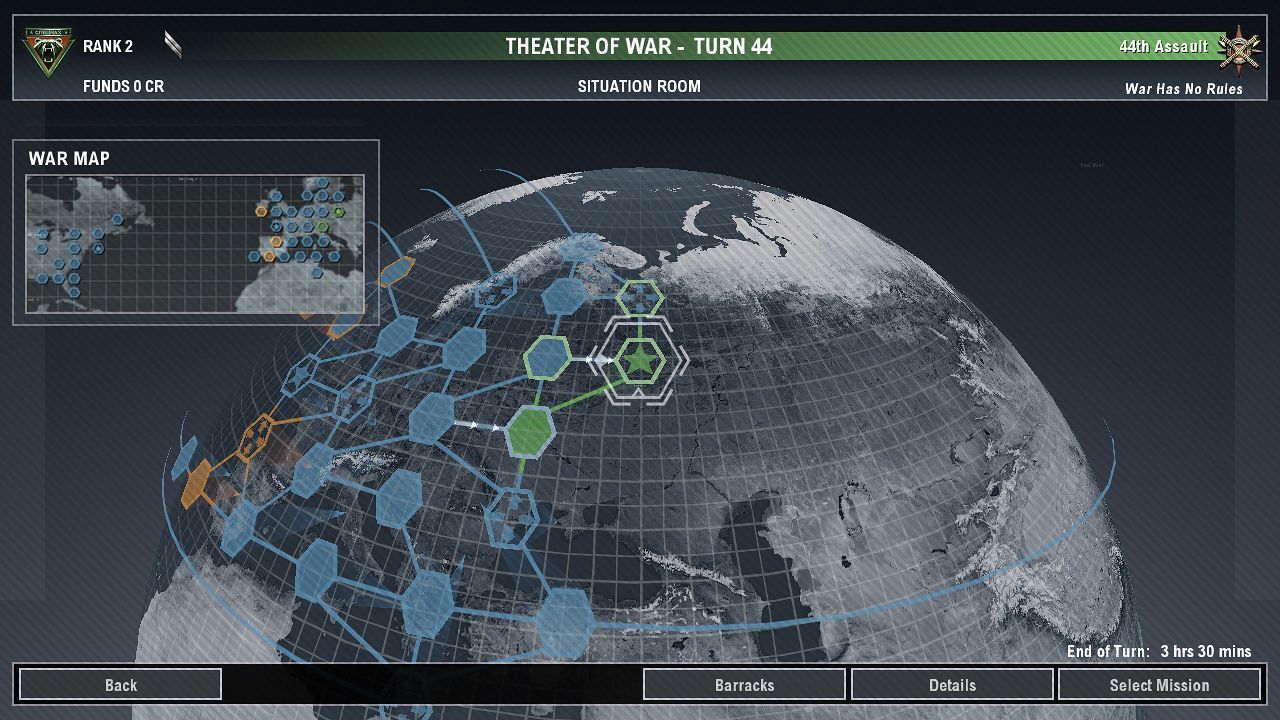
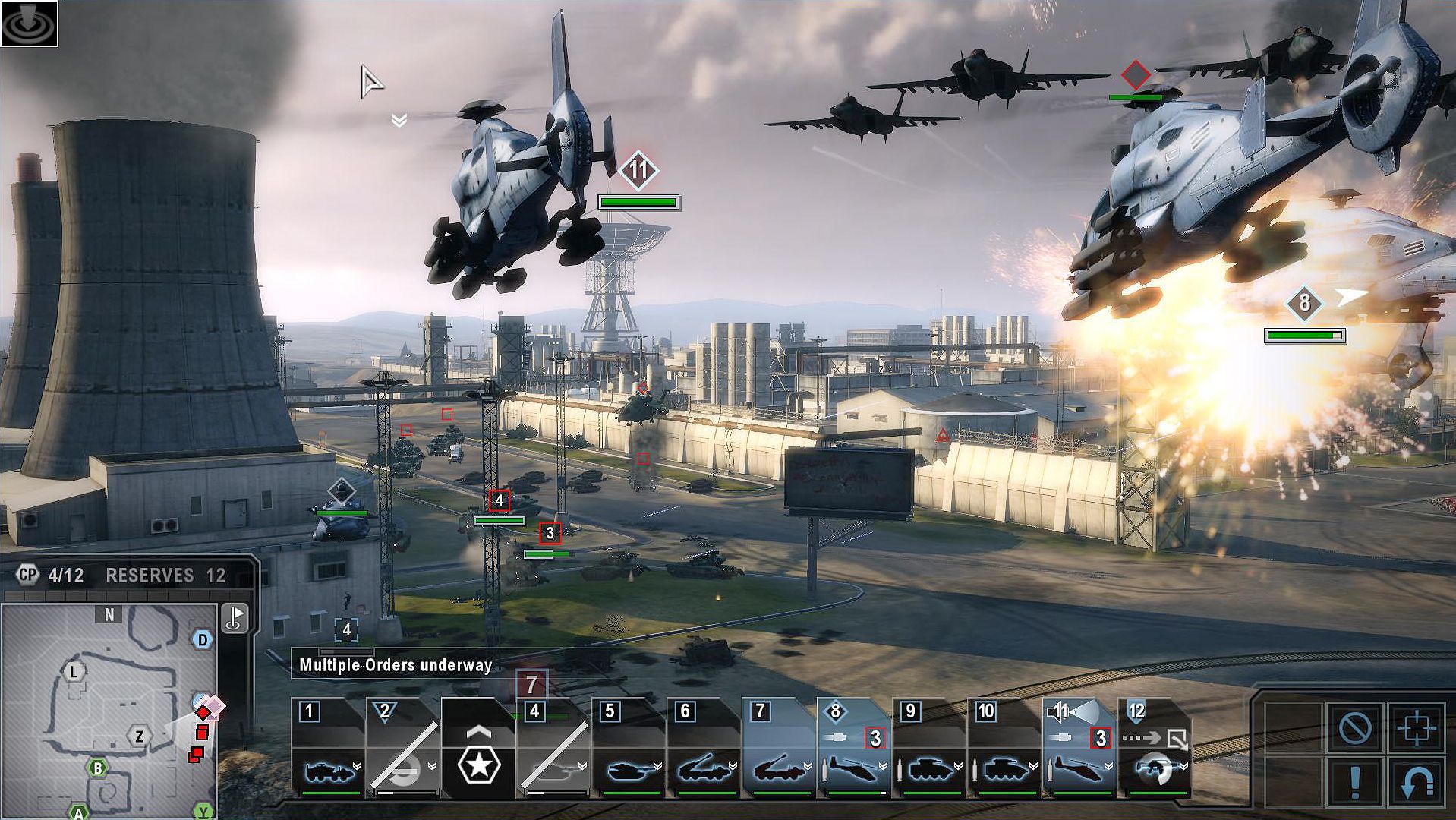
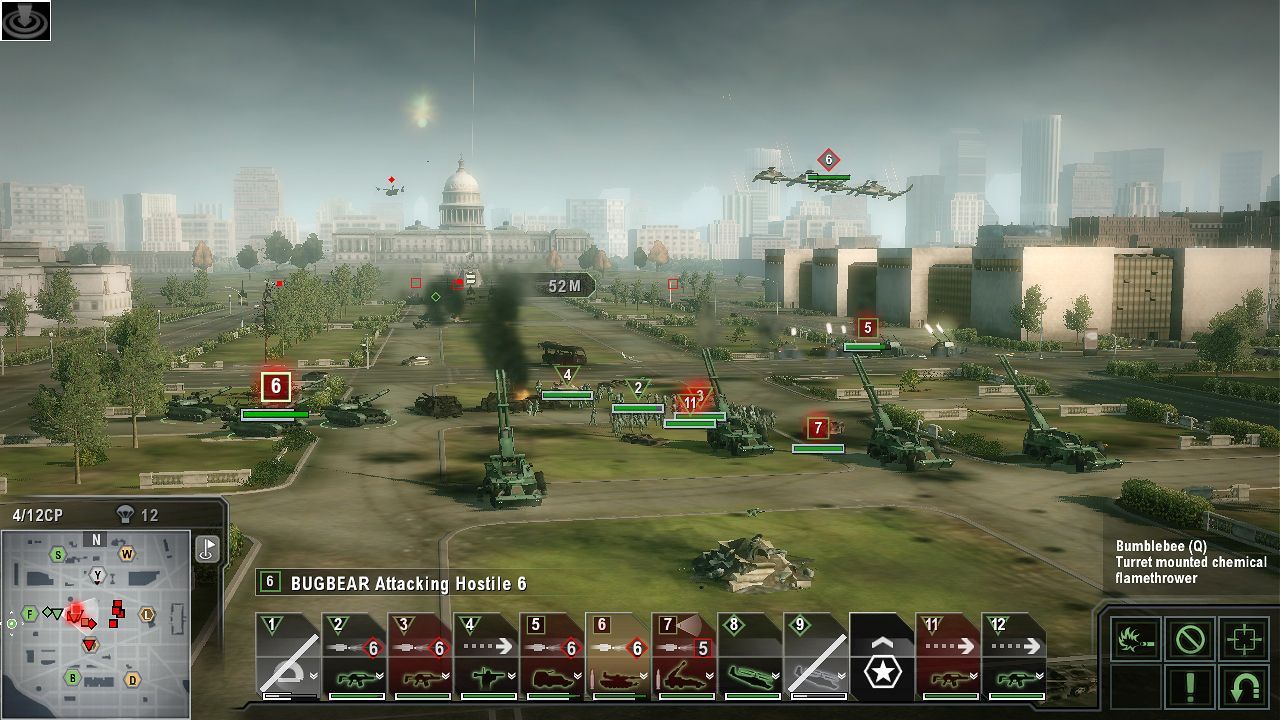
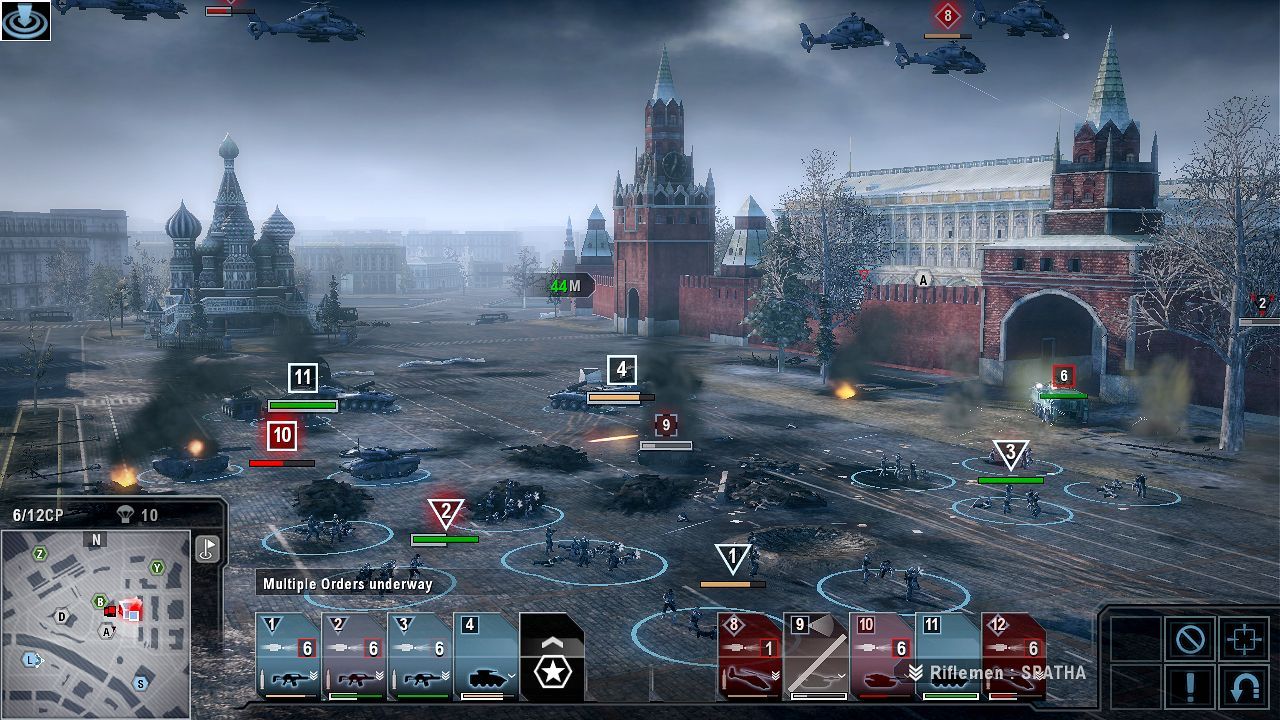
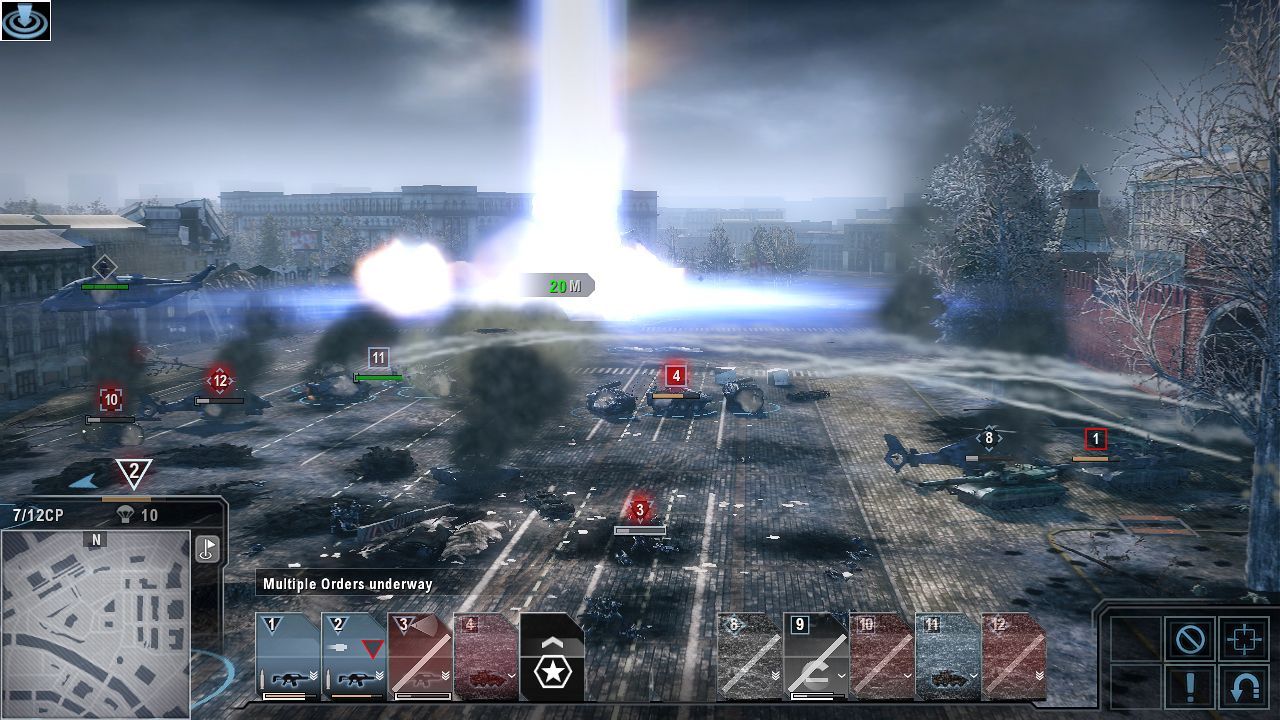
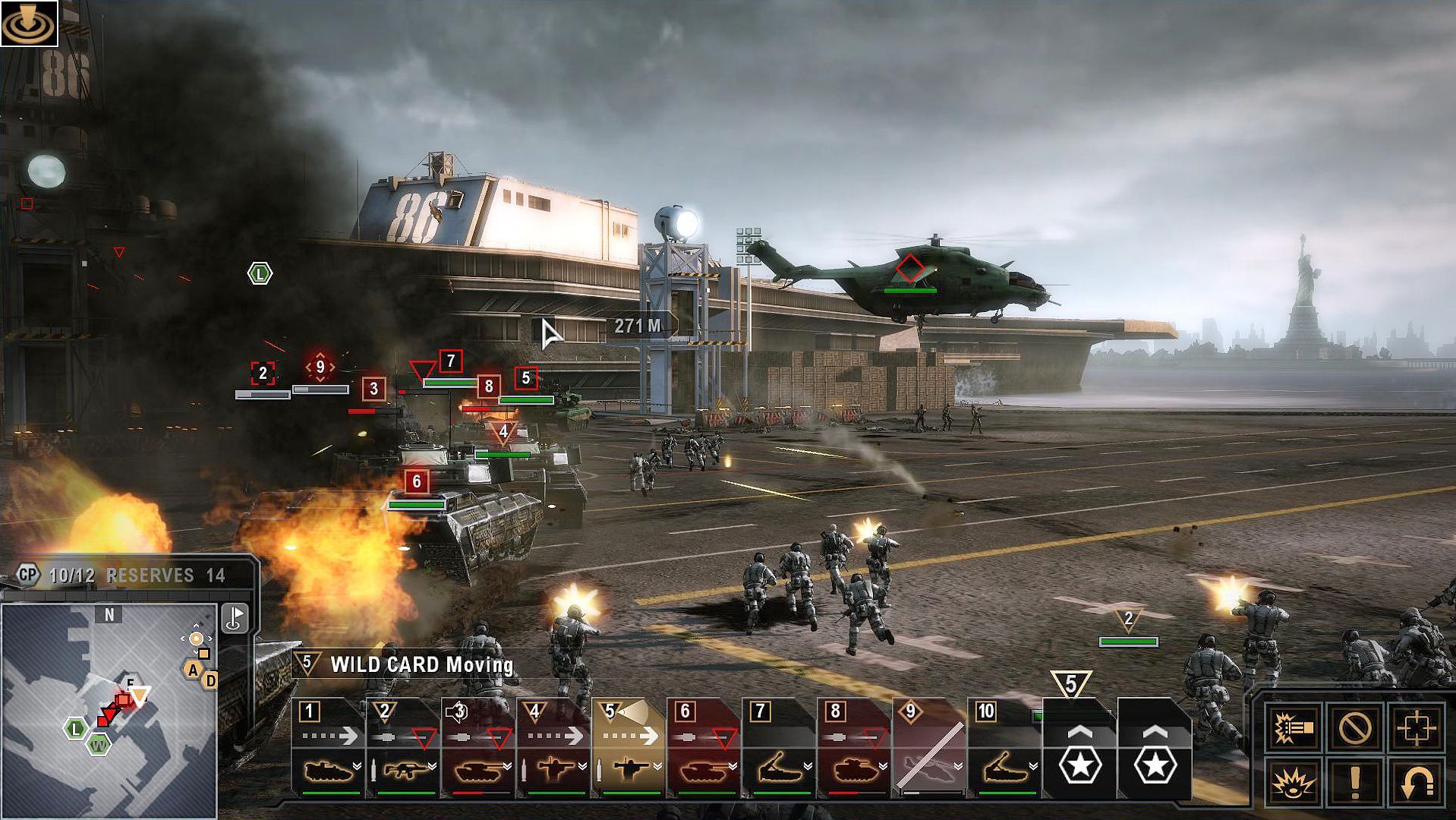
Is EndWar better than (insert strategy title here)? Probably not. Is EndWar revolutionary or did it push the RTT genre forward? Eh, maybe back in '08-'09? Is EndWar unique? Absolutely. Even now nearly 16 years later. And in my mind that alone is worthy of praise. EndWar by Tom Clancy is a sci-fi Real Time Tactical game taking place in the distant future of 2020. Strategic nuclear warfare has been rendered non viable by new anti-ballistics technology and a globe-spanning ECM network. With the nukes collecting dust, the price of oil skyrocketing, and the US moving ahead in their domination of space, global tensions rise to a breaking point, leading into World War III. The war to End all War. You command a battalion of Special Forces from one of 3 superpowers - the United States, the European Federation, and the Russian Federation. Each have fundamentally similar units with varying stats and special abilities. You choose your battalion based on its unit composition, and gradually upgrade it with credits you earn in battles. WWIII unfolds on a turn-based map, where you select from a few operations depending on where your nation is attacking and defending that week, how you perform in battle influences the outcome of other battles. On the tactical level, EndWar sees you deploy platoons from your battalion in several objective-based modes. Battles are fast and furious, fought around 15 minutes on average. Unlike nearly every other RTS, EndWar locks your camera view to one of your units at a time. Your view floats above them and you generally see what they see, though you still have access to a minimap (and a diegetic SITREP view if your CV is on the battlefield). This forces you to think more about positioning and rely on your instincts for battlefield awareness, but also means your camera is usually at the center of the action. You don't miss out on anything cool your units are doing unlike some modern RTS games that offer full strategic zoom. You select from just 7 unit types, the 3 most commonly used vehicle units adhere to a rock-paper-scissors balancing (though occasionally altered via the unit special abilities), while infantry and artillery act as wildcard units rewarding careful positioning. As units score kills they earn experience, making them more effective and allowing them to benefit from higher-level upgrades if you've bought them. Of course, veterancy implies survival, which is never guaranteed. Units fight using a combination of 'shields' (representing their countermeasures/survival training) that are weak but regenerate quickly out of combat, and a larger static health pool that cannot be replenished. This gives you a small window time to react when your unit runs into trouble (which the game gives audible warning for), by retreating them from a fight to regain shields, or evacuate from the battle entirely so you can call in a fresh replacement. A unit will also be evacuated by air if it is knocked-out by losing most of its health, rendering it helpless in the meantime, during which it (or its evacuation helicopter) can be finished off. Units that survive retain any experience earned, while killed units are reset to the lowest experience level. The overall strategic concepts in EndWar are straightforward and simplified compared to similar games. Battles are won by capturing/destroying objectives or enemy units. There is no resource-gathering mechanic: points for deploying units are rewarded regularly based on scenario conditions and how many objectives you hold, and most units cost the same. Support abilities can also be purchased with these points, provided you've upgraded your captured Uplinks, which can damage units, stun them, or call NPC units onto the battlefield to assist. Beyond this, each side gets a superweapon they can use starting when the battle reaches a decisive point (usually capturing more than half the objectives), giving the losing player a chance to use their WMD to regain the advantage - at the cost of the winning player getting a retaliatory WMD when they do. So, it's a fairly straightforward game at face value, with simplified mechanics, some interesting yet limited depth, and various twists but nothing that hasn't been seen in other RTS games. What makes EndWar special? Presentation, focus, attention to detail, and a few really cool features. Units in EndWar feel very lively. Infantry move slowly on foot, need to physically enter/exit transports and structures with choreographed animations that take a few seconds, and slip into any cover available in a believable fashion. Vehicles, for all their sci-fi elements, are clearly based on real-world designs or hypothetical technologies (even if they aren't realistically simulated). They also move and maneuver at believable speeds, can run over some obstacles or wreckage, and track their targets, while every weapon system they're equipped with is fully animated. Everything you call onto the battlefield is carried there by transport aircraft, which land and deploy them - riflemen can even forward deploy at higher veteran levels to any point on the battlefield this way. The aesthetics and background information hold a generous dose of lore and personality that clearly sets each faction apart and reflects its nation's ethos. Everything just feels believable and thought out, aside from some clipping/path-finding issues that occasionally surface. Voice acting is universally great, from your individual unit types to your battlefield advisors, and each has a vast array of contextual dialogue that immediately gives you feedback on their status even if they aren't onscreen. But what really changes EndWar is that you can talk back to your units, via the ingame voice commands! This is a feature that is core to the game's identity, you can simply tell your units (or support abilities) what to do, and where, and the game will handle all the rest. While the voice recognition can be hit-or-miss depending on your microphone and voice, EndWar to this day has the best voice commands of any strategy game I can think of. Music is also on point, with a rarely-seen feature (in this genre anyway) that the music's tempo actively changes with the pace of the battle! The upgrade system and overlying strategy layer between missions is compelling and makes your battalion feel all the more like "your dudes" in ways that few other RTS games do. You get invested in your special units that survive multiple battles, carry you through holdouts, and benefit from your hard-earned credits, and you genuinely feel something when they get killed off. The game also had multiplayer, including what was once a persistent online campaign. Support for it ended. I am uncertain of the state of it in the present, but I would guess Ubisoft doesn't give a damn. I have seen groups/communities that still play EndWar, so that might be worth seeking out. All in all, EndWar is a highly memorable RTS/RTT title that, for the price of only a few bucks on sale, is absolutely worth playing through at least once. The only real negatives I have against the game aside from the potentially grizzly state of multiplayer: the lack of controller support (should've been a no-brainer to include from the console version), the low unit variety, some issues with pathfinding, the AI being brainless at times, and the fact that some features just seem to have way more potential than the game actually squeezes out of them (like, imagine if you could side-grade your units into new types, apply unit-specific cosmetics or upgrades to further make your best guys stand out; or imagine if the strategic layer had more depth). There's still nothing like EndWar to this very day, much less anything that I could call a spiritual succession (World in Conflict is about the closest I can think of). You should pick it up if you're a fan of the genre, if only because we never know wen Ubislop will disappear it from the Steam store.
Expand the review