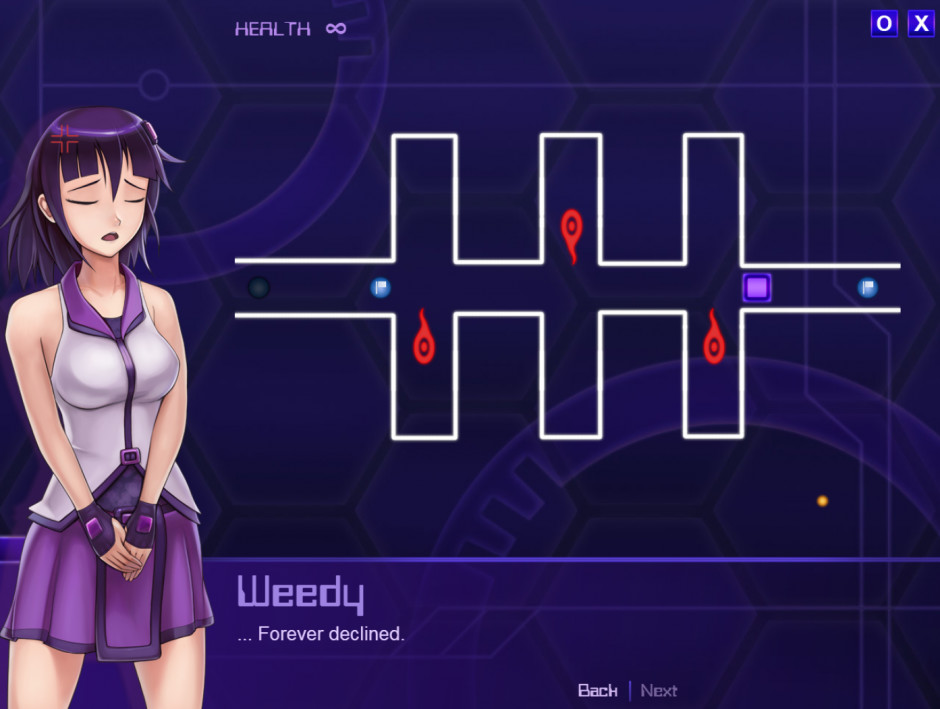
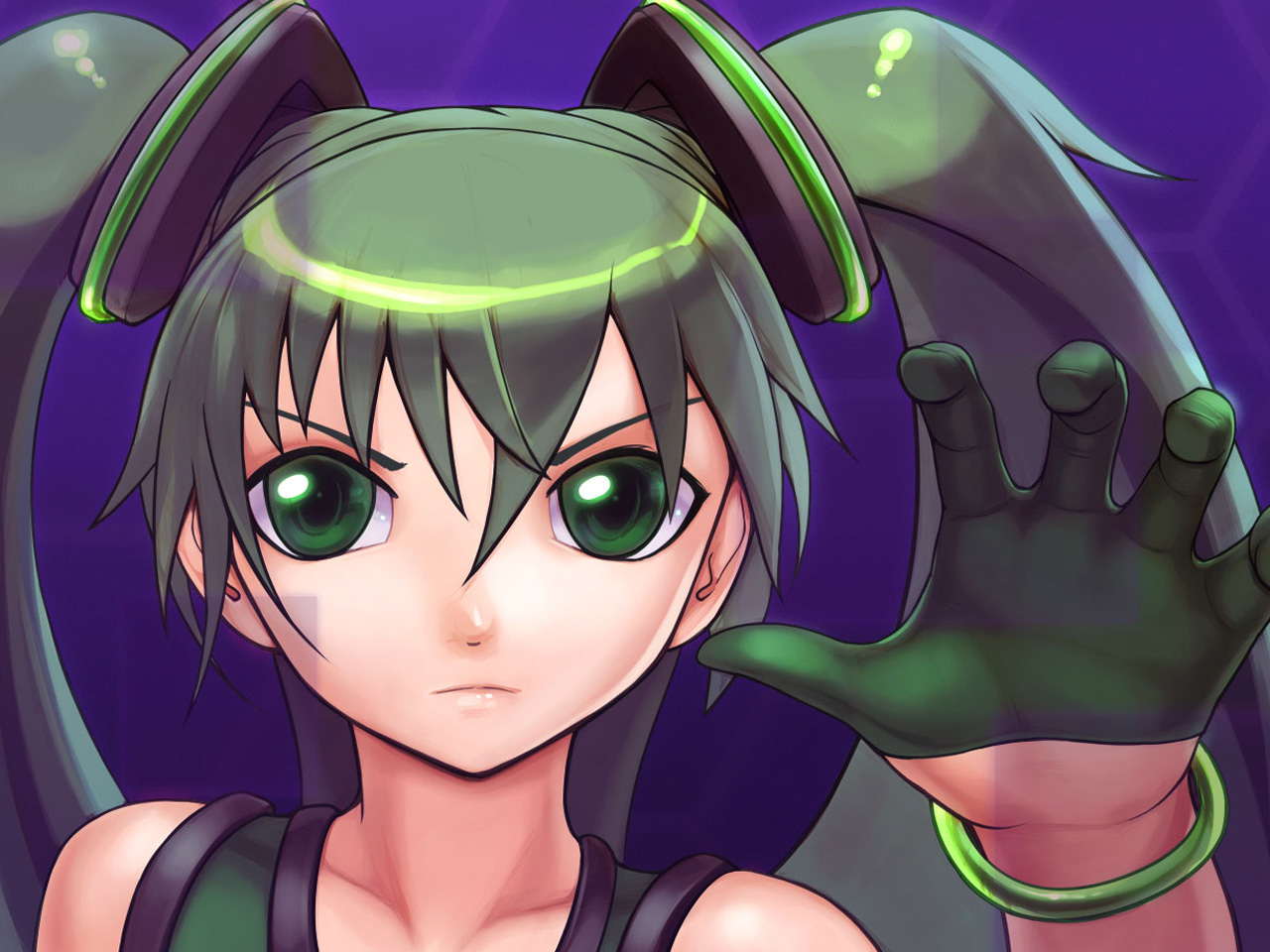
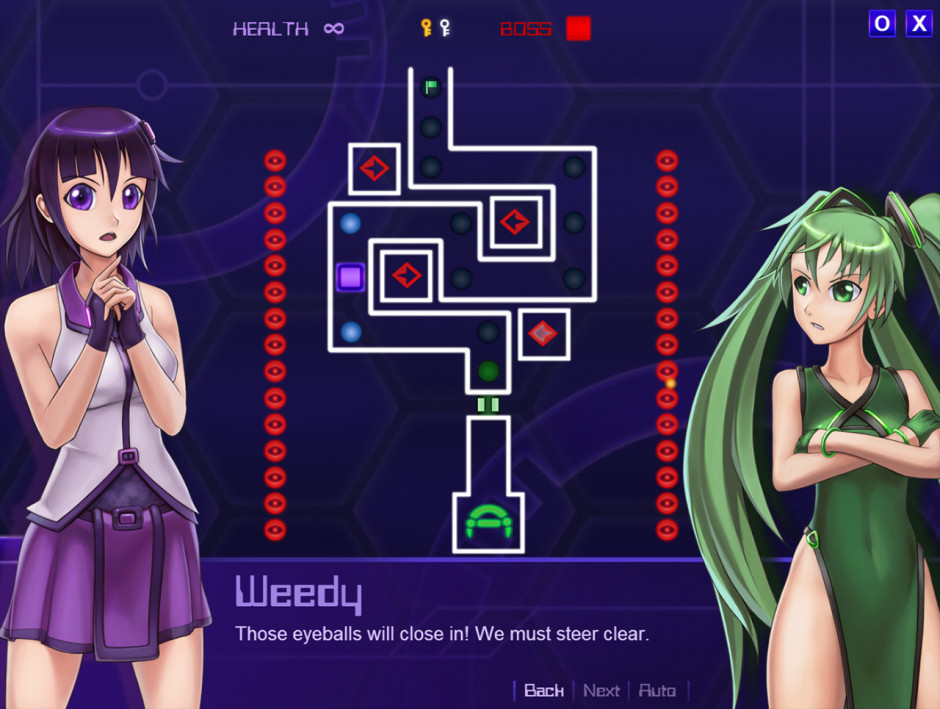
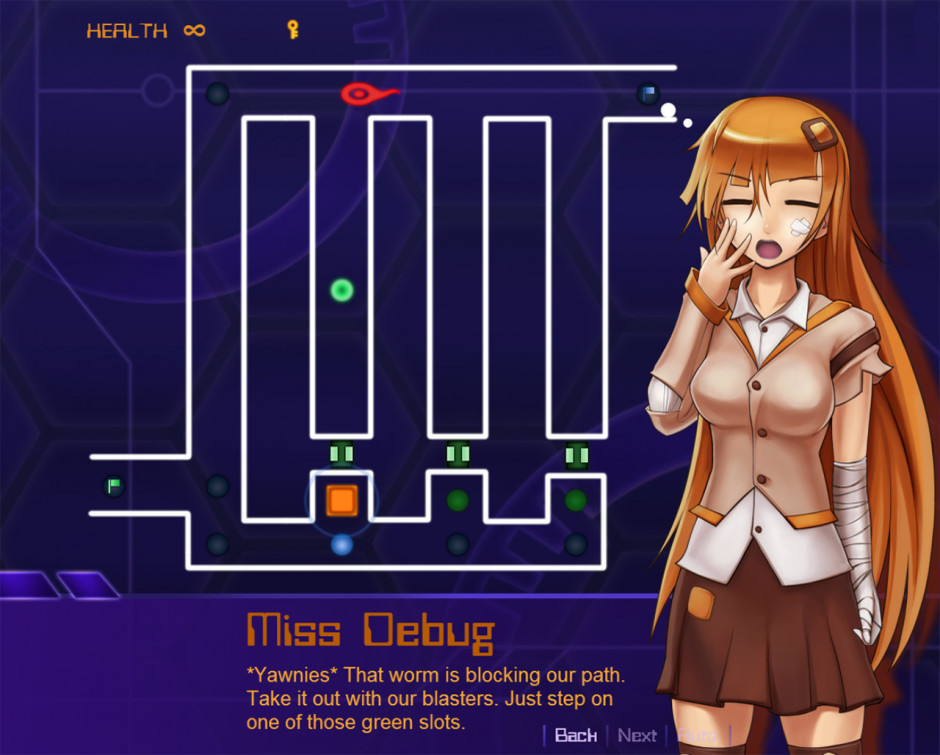
Unhack, developed and published by InvertMouse, is a creative fusion of visual novel storytelling and light puzzle gameplay that blends science fiction themes with a distinctive anime-inspired style. The game places players in the role of an “Unhacker,” a digital security expert tasked with combating a destructive virus known as the 5K Worm. Set in a futuristic cyberspace where artificial intelligence and human ingenuity coexist, Unhack tells a story that explores the ethics of technology, corporate greed, and the human relationship with digital consciousness. At its heart, it’s a compact but thoughtful experience that aims to deliver both emotional storytelling and gameplay engagement within a short runtime. From the first moments, Unhack establishes an energetic rhythm that sets it apart from typical visual novels. It intersperses dialogue-driven scenes with interactive puzzle segments that simulate the process of “unhacking” a corrupted system. These puzzles take the form of grid-based mazes, where players must guide a digital avatar through pathways filled with hazards, timing movements to avoid viruses, lasers, or other obstacles. The mechanics are simple and intuitive, relying on observation and timing rather than reflex-heavy gameplay. This structure creates a balance between passive reading and active engagement, preventing the narrative from becoming too static. Each completed level unlocks more story segments, making progress feel tangible while maintaining an approachable difficulty curve. The game’s visual presentation is minimalistic but expressive. Character designs are stylized in a clean, anime-inspired fashion, with sharp lines and vivid colors that contrast nicely against the darker digital backdrops. Although the environments are not highly detailed, the art direction succeeds in establishing a futuristic mood. Each scene feels like a glimpse into a glowing virtual world where data flows like rivers of light. The simplicity of the visuals also helps maintain clarity during the puzzle sections, ensuring the player’s focus remains on navigation and timing. The overall aesthetic feels cohesive, leaning into its indie roots while embracing the charm of an interactive anime episode. A major strength of Unhack lies in its voice acting and music. Every primary character is voiced, bringing personality and nuance to the dialogue. The protagonist’s AI companion, Weedy, is particularly memorable—her lively and sometimes naïve demeanor contrasts nicely with the colder, more pragmatic tone of other artificial intelligences encountered throughout the story. The performances lend weight to moments that might otherwise have felt flat on the page, adding warmth and tension to exchanges that reveal the story’s underlying moral questions. The soundtrack complements this dynamic well, alternating between calm electronic ambience and more urgent, fast-paced tracks that heighten tension during puzzle sequences. The synergy between sound and dialogue helps give the game an emotional core that transcends its technical simplicity. Narratively, Unhack delivers a concise but engaging tale about human ambition and the consequences of technological overreach. As the player digs deeper into the cyber warfare between Smash Security and the 5K Worm, the story introduces philosophical questions about identity and self-awareness in artificial intelligence. It explores the fine line between creation and control, as well as the moral cost of exploiting digital life for corporate gain. The writing isn’t overly complex, but it maintains enough intrigue and pacing to keep players invested from start to finish. What stands out most is its sincerity—the story feels written from a place of genuine curiosity and empathy rather than cynicism, making its themes more approachable than abstract. The gameplay, while engaging, remains limited in scope. The maze-based hacking sequences evolve only slightly over the course of the story, introducing minor variations but not enough to significantly alter the experience. They serve more as narrative devices than as standalone challenges, breaking up the flow of dialogue while reinforcing the theme of “repairing” digital corruption. For players accustomed to deep puzzle mechanics or long campaigns, the simplicity may feel underwhelming. Yet this restraint also works in the game’s favor, keeping the focus on character interaction and atmosphere rather than mechanical difficulty. It’s clear that the game’s primary ambition is emotional connection rather than technical mastery. Despite its brief length—lasting only a few hours—Unhack manages to create a satisfying arc. It doesn’t overstay its welcome, and its pacing ensures that each scene feels purposeful. The story’s emotional peaks come from moments of reflection rather than spectacle, particularly in the evolving bond between the protagonist and his AI companions. There’s a surprising amount of heart in the writing, and by the time the credits roll, the player is left with a sense of quiet contemplation rather than exhaustion. It’s an experience designed to linger in thought, not through complexity, but through its simple, human approach to science fiction storytelling. From a technical perspective, the game runs smoothly and is accessible to nearly any system. It loads quickly, saves reliably, and features a user interface that is clean and easy to navigate. While the visual novel framework is basic, it accomplishes its goals without distraction. The minimalist menus and clear visual feedback make it approachable even for those unfamiliar with the genre. This accessibility, combined with its short runtime and affordable price, makes Unhack an easy recommendation for players looking for a compact, narrative-driven experience that doesn’t demand heavy investment. Ultimately, Unhack succeeds by knowing exactly what it wants to be. It doesn’t aspire to be a sprawling epic or a deeply intricate puzzle game; instead, it delivers a focused, heartfelt experience that merges narrative and interactivity with elegance. Its charm lies in its sincerity—the way it invites players into a futuristic world not to overwhelm them, but to make them think about the relationship between human creators and their digital counterparts. Though its mechanics are simple and its runtime short, the story’s emotional resonance and presentation make it memorable long after completion. Unhack is a reminder that even small-scale games can explore big ideas, offering both warmth and reflection in a sleek, digital shell. Rating: 8/10
Expand the review