Sync your Steam wishlist to track the lowest game prices instantly. No login required, just paste your Steam profile URL! ⚡ Try Wishlist Radar!
Sync your Steam wishlist to track the lowest game prices instantly. No login required! ⚡ Try Wishlist Radar! Close

Urbek City Builder on Steam - User reviews, Price & Information

Quick menu

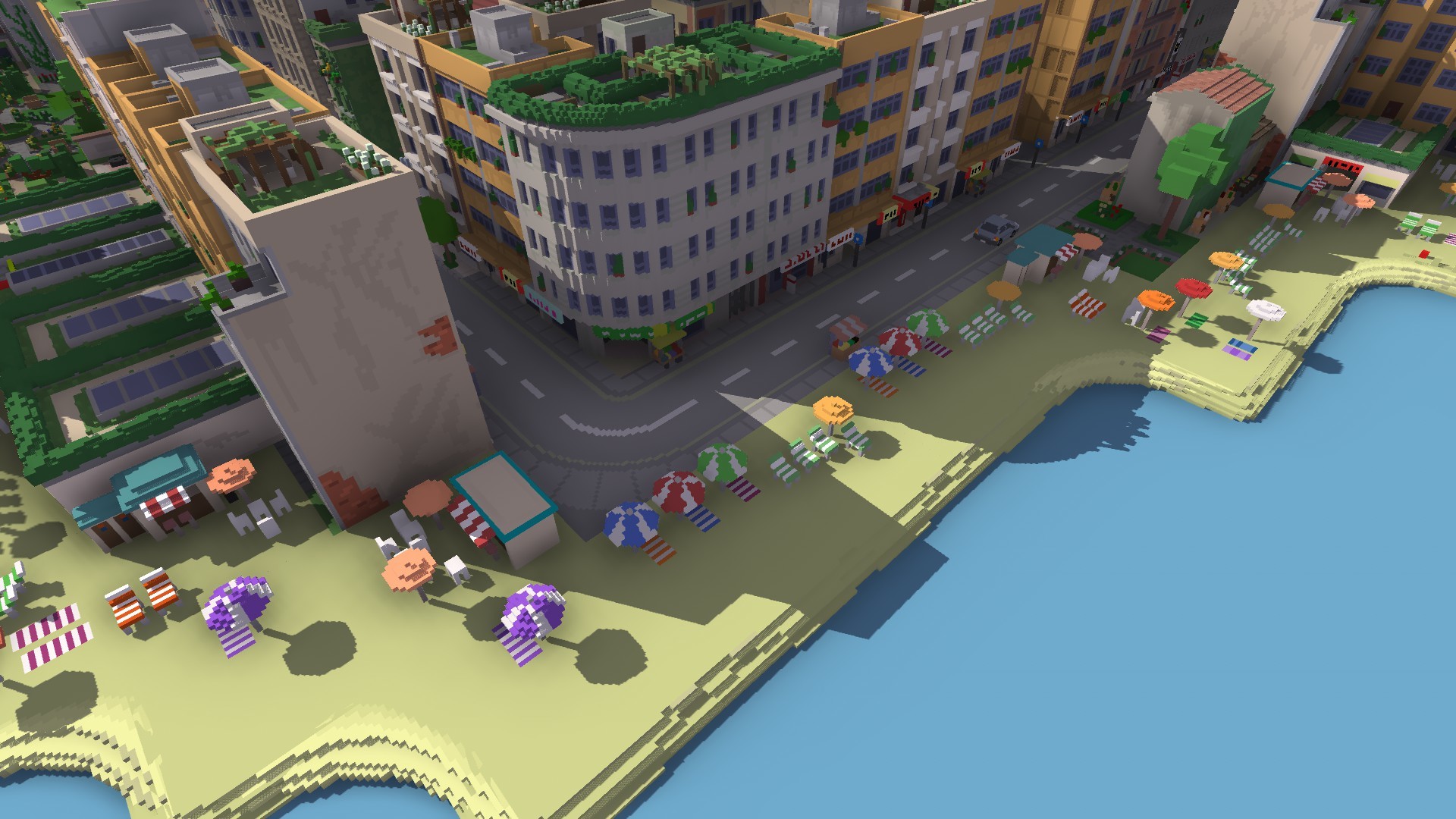
Urbek is a city building game where you can build your own neighbourhoods: from nightlife district to industrial district. Don't exhaust your natural resources before you have an educated population to build more efficient structures.

Urbek City Builder is a city builder, building and management game developed by Fridus and published by RockGame S.A..
Released on July 13th 2022 is available only on Windows in 11 languages: English, French, Spanish - Spain, German, Polish, Simplified Chinese, Russian, Portuguese - Portugal, Japanese, Korean and Italian.

It has received 1,573 reviews of which 1,427 were positive and 146 were negative resulting in a rating of 8.6 out of 10. 😎

The game is currently priced at 17.99€ on Steam, but you can find it for 0.86€ on Eneba.


The Steam community has classified Urbek City Builder into these genres:

Media & Screenshots

Get an in-depth look at Urbek City Builder through various videos and screenshots.

System requirements

These are the minimum specifications needed to play the game. For the best experience, we recommend that you verify them.

Windows
  • OS *: Windows 7 64 Bit / Windows 8 64 Bit / Windows 10 64 Bit
  • Processor: Intel Core i5-2500k or equivalent
  • Memory: 4 GB RAM
  • Graphics: NVIDIA GeForce GTX 770 2GB or equivalent
  • DirectX: Version 11
  • Storage: 2 GB available space

User reviews & Ratings

Explore reviews from Steam users sharing their experiences and what they love about the game.

88 hours played
Jan. 2026
Reading other reviews of this game makes me want to completely dismiss the entire city-builder genre and its community. There is something truly new and innovative in this game both in terms of how the dev views and understands what a city is and how they implement the various mechanics to express such views and ideas. A lot of people complain about the restrictions of this game, but I believe there is a serious misconception in those complaints. The various restrictions the game imposes on you are one of the most direct expressions of how the game understands what a city is, and crucially, all mechanics are restrictions, even if they are advertised to provide freedom. Cities: Skylines might seem to have great freedom in its gameplay, but it's still bound by how it inherently views and understands cities. For example, cities in C:S always start with a highway exit in a middle of nowhere, and you can never build a truly transit oriented city, or a mixed use city, or really anything that doesn't look like the United States in that game. No matter what you do, you will build a city with traffic jams and clearly separated zoning, and the end game is always about managing the nightmare traffic. It's an illusion of choice, and in my opinion, that is worse than just implementing said restrictions in a clear and upfront way. So, how does Urbek understand what cities are? A very good early-game example would be miner's houses you unlock alongside the mines. In Urbek, at least until you reach the endgame, the mines themselves do not produce much stuff they are supposed to be mining. Instead, in order to produce any meaningful amount of coal or iron, you have to basically flood the area around the mine with miner's houses. Those houses are terrible for the people living in them, which is made clear by their extremely low happiness score. But you have no choice. If you want a prosperous downtown, you need coal for power and iron for construction. Urbek correctly points out that the mine operations are very labor-intensive, and therefore you need an massive underclass to work in them for your city. Another, a little more humorous example would be the *parking lots*. In this game, the city, not you, decides what gets built where according to its own internal logic. And around the midgame part of its logic starts to include auto spawning parking lots. Basically, as you grow your city your residential area will go through a suburb phase, and in that phase, if you do not provide enough "connectivity" in the area, homes can randomly turn into parking lots to fill in that lack of connectivity. This phenomenon severely limits the density of your city, so if you want to move past the suburb phase and grow the neighborhood into a downtown, in which the game frequently requires certain density to be reached around the building for said building to upgrade, you *need* to get rid of those parking lots by either providing bus service or metro service to the area. Further underscoring the point of this mechanic is the existence of malls. You can build malls in this game, but the malls bring huge negative connectivity in the region, so you either spam like three metro stations around it or you give up and have the entire block next to the mall turned into a huge complex of parking lots. I can go on and on. The police vs anarchists dynamic and the religious neighborhood feature both indicates very interesting angles the dev takes for certain social issues. And all those ideas are surprisingly naturally expressed in the unique game mechanic of Urbek. Almost every restriction is local, while your resource management is implemented globally, so there is always a balancing act going on between the two, the tension, which mirrors the real social tensions present in our real cities between the city-wide planning and the local needs and identities. Urbek understands cities in ways no other city-builder does. No other big names can, in fact. Its UI can be awkward to use at times, and sure it's not the most polished game, but its radical critique of cities and an obvious love for the cities at the same time is something a big studio can never replicate, and that's why we celebrate indie games.
157 hours played
Dec. 2025
Great chill city builder/resource management game, reminds me of SimCity Societies in its approach and focus on balancing development. Several maps/biomes with unique mechanics keep things fresh. Pixel art is charming and watching the buildings evolve is super satisfying.
22 hours played
Oct. 2025
While I DO recommend the game, take a note that it is mostly a puzzle, than a city builder per se. In order to win the map you have 3 paths, which you choose by starting to follow one of them early. For each path for each map there is an achievement ingame. Each map provides unique features, such as in desert you need to water your houses and irrigate desert in order to plant, while on archipelago there is almost no land space, but you get houses that can be build on water and ferries(no bridges!) plus empowered fishing, and so on. Given that houses(and certain other buildings) do upgrade when they have specified needs satisfied in range(square by the way not even circle approx, but a normal square) and that happens instantaneously. Citizens are not present - cars are just for visuals, so you don't need to solve traffic or accessibility problems. Which means you just need to find out proper dispostion of game pieces on a map to "solve" it. Hence why I call it more of a puzzle than a city builder.
16 hours played
Oct. 2025
Urbek City Builder is a refreshing take on the city-building genre, developed by Fridus and published by RockGame S.A., that strips away the traditional focus on currency, taxation, and economic micromanagement in favor of a resource-based simulation centered on sustainable growth and logical planning. The game reimagines what it means to build a thriving city by asking the player to think in terms of ecology, balance, and community structure rather than profit margins. It uses a colorful voxel aesthetic that gives each district and building a distinctive charm, and its mechanics emphasize organic evolution, where neighborhoods and infrastructure develop naturally in response to the conditions you create. It feels less like playing the role of a mayor and more like acting as an urban gardener, cultivating your city through careful decisions about how its various systems interact. At the heart of Urbek’s design lies its resource-driven approach to progression. Instead of money, everything revolves around production, consumption, and the relationship between dozens of interconnected resources. Each building or structure requires specific inputs to function and contributes outputs that fuel other sectors of your city. For example, farms produce food, which sustains your population, while energy plants provide the electricity needed to support more advanced facilities. As your city grows, citizens begin to demand higher standards of living—education, entertainment, clean air, and security—which means your attention must constantly shift between meeting immediate needs and planning for long-term sustainability. Every success feels earned through careful foresight, and every failure provides a valuable lesson in how small imbalances can ripple through your system. This approach gives Urbek a uniquely organic rhythm; growth is not dictated by money or arbitrary milestones, but by how efficiently you balance the intricate web of production and demand. One of the game’s most distinctive features is its adjacency and influence system, which determines how buildings interact with one another. Placement matters far more than in most city builders. Factories generate pollution that can stunt residential development, while proximity to schools, parks, or cultural institutions encourages neighborhoods to evolve into higher-quality housing. Rather than manually upgrading buildings, you create the right conditions for them to transform on their own. A simple residential block can evolve into an elegant apartment complex or a run-down slum depending on what surrounds it. This system forces you to think spatially and strategically, turning the city into a living ecosystem where every structure influences the fate of those nearby. The satisfaction of seeing a district flourish because you planned its infrastructure perfectly is immense, but the same system can also be unforgiving. Poor placement or neglecting key services can easily stagnate entire sections of the city, leaving you to unravel the chain of dependencies that caused the breakdown. Urbek’s progression system reinforces its commitment to natural development. As your population grows and resource thresholds are met, new technologies, building types, and policies become available. These unlocks allow for gradual evolution, with the game encouraging experimentation and adaptation rather than rigid expansion. You are free to pursue different developmental paths—whether focusing on wealth and luxury, industrial output, or cultural and ecological balance—and each route alters the character of your city. This diversity ensures replayability and provides meaningful choices that shape the feel and identity of your metropolis. Unlike many games that rely on pre-defined goals or missions, Urbek gives you the freedom to define your own success, rewarding creativity within its structured rules. The lack of a traditional win condition might frustrate some players, but for others, the satisfaction comes from the process itself: watching the city breathe, change, and respond to your decisions. Visually, Urbek City Builder is both simple and striking. The voxel-based design gives it a handcrafted look that complements its methodical gameplay. Buildings are easy to identify, animations are smooth, and the color palette conveys a sense of warmth that makes the act of city building pleasant even when challenges arise. The user interface is intuitive, with tooltips and overlays that clearly explain the requirements for each structure and the impact of environmental factors. The game’s presentation encourages close observation, and the ability to zoom in to street level adds a personal touch, allowing you to see the daily life of your citizens unfold. The sound design supports this atmosphere with soft background music and ambient noise that enhances immersion without overwhelming the experience. The result is a city builder that feels relaxing and cerebral at the same time—a meditative puzzle disguised as urban management. While the game’s mechanics are elegantly interconnected, they also reveal its biggest challenges. The complexity of resource management means that even small mistakes can cascade into major setbacks. A shortage of energy might cripple production chains, while neglecting education can halt population growth. Since the game lacks a monetary cushion, there is little room for quick fixes; every problem must be solved through careful rebalancing of your ecosystem. This can make Urbek feel more like a logic puzzle than a traditional sandbox at times. Some players may find this level of precision restrictive, especially when creative expression is limited by mechanical constraints. Others, however, will appreciate the intellectual satisfaction of optimizing a system where every decision matters. The pacing can also be slow, with long stretches devoted to fine-tuning layouts and waiting for the effects of your decisions to materialize. Yet this deliberate tempo suits the game’s philosophy—it rewards patience, planning, and an eye for subtle cause-and-effect relationships. Despite its measured pace and demanding systems, Urbek City Builder is an engrossing and rewarding experience. It offers an alternative vision of urban simulation—one rooted in cooperation between systems rather than domination through capital. It captures the quiet satisfaction of nurturing something complex and watching it evolve under your guidance. The absence of traditional monetary management makes the gameplay feel cleaner and more strategic, emphasizing cause and consequence over bookkeeping. Though it may not appeal to everyone—particularly those who prefer the open-ended creative freedom of sandbox city builders—it stands out as a thoughtful, beautifully crafted experience that invites players to think differently about urban design. Urbek City Builder proves that complexity and calm can coexist, offering a city-building experience that is as intellectually engaging as it is aesthetically soothing. Rating: 9/10
40 hours played
Sept. 2025
This isn't a typical city-builder. Construction is free, demolition is without consequence. Traffic isn't part of the gameplay at all. Instead you place a few base-level building types, and depending on their surroundings, they upgrade on their own. Get enough density and commercial infrastructure around a suburb and it becomes a downtown district. Iron isn't produced by mines, but instead the houses built around them that automatically become homes to miners. If you want a sandbox city builder with ultimate control over your city and its citizens, this isn't the game for you. If you instead want a more puzzle focused game where space quickly becomes a premium and the difficulty level stays consistent, this is the game for you. Urbek doesn't tick all of the boxes for city builder lovers. It's best as a supplement to an existing catalog of games. Where almost all others fail to maintain a level of difficulty as you get sufficiently large enough, Urbek succeeds and thrives. Getting all the buildings unlocked on smaller maps is properly difficult. If that's the challenge you find missing from other games, this is the one for you.

Similar games

View all
Cities: Skylines Cities: Skylines is a modern take on the classic city simulation. The game introduces new game play elements to realize the thrill and hardships of creating and maintaining a real city whilst expanding on some well-established tropes of the city building experience.

Similarity 91%
Price -81% 5.38€
Rating 9.2
Release 10 Mar 2015
Mad Tower Tycoon Design your own skyscraper with more than 100 Floors. Rent offices, apartments or shops and build a financially lucrative skyscraper. Build cinemas, bars or a theater to satisfy your visitors and create an effective transport system with elevators and stairs.
Similarity 89%
Price 14.99€
Rating 7.4
Release 14 Jan 2020
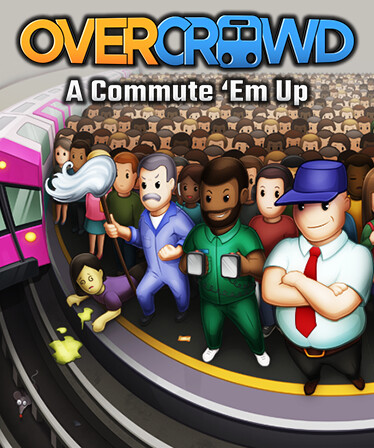
Overcrowd: A Commute 'Em Up Design and build the most efficient metro stations known to man! Excavate. Expand. Set staff priorities. And manage the commuter flow. Overcrowd is a 2.5D management/tycoon/simulator set below the bustling city of Lubdon Town.

Similarity 86%
Price 18.99€
Rating 7.8
Release 06 Oct 2020
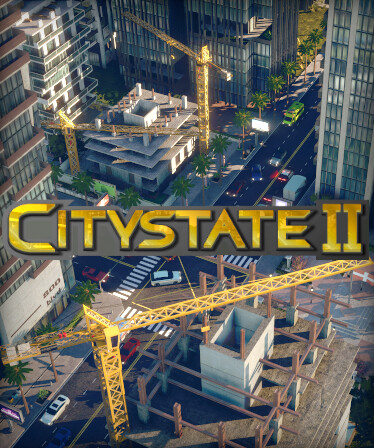
Citystate II Create your own Nation, build cities and bring prosperity to your people. Citystate II is a unique city-builder featuring realistic economics and complex political options. Slums or skyscrapers, experiment and bring about your vision of the ideal society.
Similarity 85%
Price 24.99€
Rating 7.1
Release 23 Sep 2021
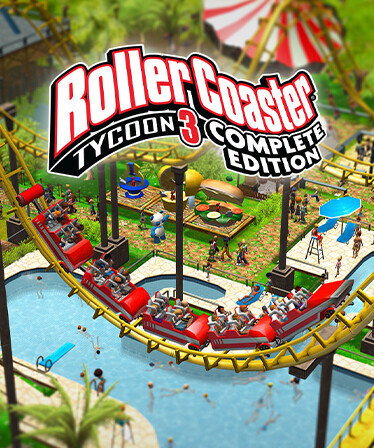
RollerCoaster Tycoon 3: Complete Edition Build the park of a lifetime and rediscover the critically acclaimed rollercoaster simulation bestseller. Feel the thrill of a genre-defining classic, complete with two huge expansion packs.

Similarity 83%
Price -88% 2.53€
Rating 8.4
Release 24 Sep 2020
Another Brick in The Mall Design, build and manage a giant shopping center. Open shops, supermarkets, restaurants, movie theaters, bowling alleys and more. Hire and manage the best staff for the job and milk your customers for all they're worth!

Similarity 83%
Price 14.99€
Rating 8.0
Release 30 Apr 2020
Jurassic World Evolution 2 Jurassic World Evolution 2 is the much-anticipated sequel to Frontier’s highly successful Jurassic World Evolution. This bold new era in the Jurassic World Evolution game franchise builds upon the ground-breaking and immersive 2018 management simulation.

Similarity 82%
Price -92% 6.25€
Rating 8.8
Release 09 Nov 2021
Jurassic World Evolution Place yourself at the heart of the Jurassic franchise and build your own Jurassic World. Bioengineer dinosaurs that think, feel and react intelligently to the world around them and face threats posed by espionage, breakouts and devastating tropical storms in an uncertain world where life always finds a way.
Similarity 82%
Price -93% 3.94€
Rating 8.6
Release 11 Jun 2018
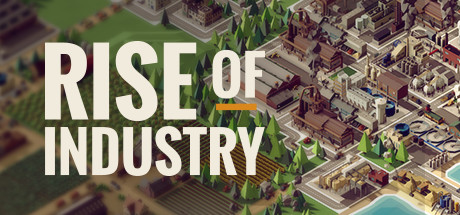
Rise of Industry Put your entrepreneurial skills to the test in the first title in the ROI series as you create & optimise intricate production lines. As an early 20th-Century industrialist, grow your empire & adapt to an ever-changing business landscape with unexpected events that could lead to boom…or bust.
Similarity 82%
Price -99% 0.44€
Rating 7.1
Release 02 May 2019
Tropico 6 El Presidente is back! Prove yourself once again as a feared dictator or peace-loving statesman on the island state of Tropico and shape the fate of your very own banana republic through four distinctive eras.

Similarity 82%
Price -86% 5.74€
Rating 8.6
Release 29 Mar 2019
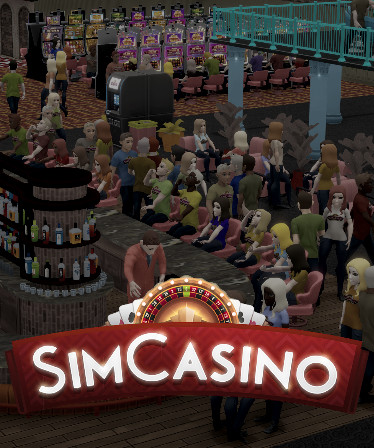
SimCasino Modern Casino Tycoon Simulation in full 3D glory. Build the casino. Set the odds. Expand into a luxury hotel/casino or go cheap & extract max profits. Keep the vault secure at all times, and beware of criminals & cheaters!!

Similarity 81%
Price -44% 13.89€
Rating 7.1
Release 16 Nov 2021
Planet Zoo Build a world for wildlife in Planet Zoo. From the developers of Planet Coaster and Zoo Tycoon comes the ultimate zoo sim. Construct detailed habitats, manage your zoo, and meet authentic living animals who think, feel and explore the world you create around them.

Similarity 81%
Price -89% 5.39€
Rating 9.0
Release 05 Nov 2019

Frequently Asked Questions

Urbek City Builder is currently priced at 17.99€ on Steam.

No, Urbek City Builder is currently not on sale. You can purchase it for 17.99€ on Steam.

Yes, Urbek City Builder received 1,427 positive votes out of a total of 1,573 achieving a rating of 8.63.
😎

Urbek City Builder was developed by Fridus and published by RockGame S.A..

Yes, Urbek City Builder is playable and fully supported on Windows.

No, Urbek City Builder is not playable on MacOS.

No, Urbek City Builder is not playable on Linux.

Urbek City Builder is a single-player game.

Yes, there are 2 DLCs available for Urbek City Builder. Explore additional content available for Urbek City Builder on Steam.

No, Urbek City Builder does not support mods via Steam Workshop.

No, Urbek City Builder does not support Steam Remote Play.

Yes, Urbek City Builder is enabled for Steam Family Sharing. This means you can share the game with authorized users from your Steam Library, allowing them to play it on their own accounts. For more details on how the feature works, you can read the original Steam Family Sharing announcement or visit the Steam Family Sharing user guide and FAQ page.

You can find solutions or submit a support ticket by visiting the Steam Support page for Urbek City Builder.

Data sources

The information presented on this page is sourced from reliable APIs to ensure accuracy and relevance. We utilize the Steam API to gather data on game details, including titles, descriptions, prices, and user reviews. This allows us to provide you with the most up-to-date information directly from the Steam platform.

Additionally, we incorporate data from the SteamSpy API, which offers insights into game sales and player statistics. This helps us present a comprehensive view of each game's popularity and performance within the gaming community.

Last Updates
Steam data 20 July 2026 12:11 UTC
SteamSpy data 26 July 2026 01:25 UTC
Steam price 29 July 2026 02:49 UTC
Steam reviews 26 July 2026 10:02 UTC

If you'd like to dive deeper into the details about Urbek City Builder, we invite you to check out a few dedicated websites that offer extensive information and insights. These platforms provide valuable data, analysis, and user-generated reports to enhance your understanding of the game and its performance.

  • SteamDB - A comprehensive database of everything on Steam about Urbek City Builder
  • SteamCharts - Analysis of Urbek City Builder concurrent players on Steam
  • ProtonDB - Crowdsourced reports on Linux and Steam Deck Urbek City Builder compatibility
Urbek City Builder
Rating
8.6
1,427
146
Game modes
Features
Online players
40
Developer
Fridus
Publisher
RockGame S.A.
Release 13 Jul 2022
Platforms
Clicking and buying through these links helps us earn a commission to maintain our services.