Particula
Destroy negativity, clear your mind! Particula brings you a new perspective in gaming, helping you to concentrate and relax. A three players co-op tower defense experience with a relaxing soundtrack, smooth visuals and gameplay.
Sync your Steam wishlist to find the lowest game prices instantly. No login required, just paste your Steam profile URL!
⚡ Try Wishlist Radar!
Sync your Steam wishlist to find the lowest game prices instantly. No login required!
⚡ Try Wishlist Radar!
Close

YORG.io 3 on Steam
Quick menu
Defend, Attack, Survive! Build up your base and defeat the zombies with this unique combination of tower defense, base building and supply chain management. Now with multiplayer, mods and loads of new content!
YORG.io 3 is a strategy, casual and tower defense game
developed by Tobias Springer
and published by tobspr Games.
Released on October 13th 2019 is available only on Windows.
It has received 310 reviews of which 207 were positive and 103 were negative resulting in a rating of 6.4 out of 10. 😐
The game is currently priced at 0.89€ on Steam with a 85% discount.
The Steam community has classified YORG.io 3 into these genres:
Media & Screenshots
Get an in-depth look at YORG.io 3 through various videos and screenshots.


Load More


System requirements
These are the minimum specifications needed to play the game. For the best experience, we recommend that you verify them.
Windows
- Requires a 64-bit processor and operating system
- OS *: Windows 7 64bit or later
- Processor: 1 Ghz or faster
- Memory: 2048 MB RAM
- Graphics: Any
- Network: Broadband Internet connection
- Storage: 300 MB available space
- Additional Notes: Can be played offline, but needs initial internet connection
Steam Price & Best Deals
User reviews & Ratings
Explore reviews from Steam users sharing their experiences and what they love about the game.
YORG.io 3 is a hybrid strategy game that merges tower defense with factory-style resource management, developed by Tobias Springer and published by tobspr Games. Released on Steam in 2019, it represents the most fully featured evolution of the YORG.io concept, which originally began as a browser-based strategy experiment. At first glance the game appears deceptively simple, presenting players with minimalist graphics and a straightforward objective: defend your base from waves of zombies. However, beneath that surface lies a surprisingly intricate strategic system where success depends not only on tower placement but also on the efficiency of complex production chains. By combining elements of base construction, logistics management, and defensive planning, YORG.io 3 creates a gameplay experience that feels closer to a blend of tower defense and automation simulators than a traditional strategy title. The core gameplay revolves around building and maintaining an industrial network capable of supplying defensive towers with the resources they need to operate. Players begin with a central base and a small amount of space to expand outward across a grid-based map. Scattered around this map are resource deposits such as crystals, iron, coal, and wood, which must be harvested using specialized mining structures. These raw materials cannot be used directly; they must be processed in factories that transform them into more advanced resources such as ammunition, energy cells, or other specialized components. These materials are then transported through conveyor-like connections between buildings, forming supply lines that feed defensive towers. If the production chain fails or becomes inefficient, towers will run out of ammunition and become useless against incoming enemies. This interconnected system of extraction, production, and distribution gives the game its distinctive strategic depth, forcing players to think carefully about how their infrastructure is designed. A defining mechanic in YORG.io 3 is the day-and-night cycle that governs the pacing of the game. During the daytime phase, players can expand their base, build new mines, upgrade factories, and develop their defensive infrastructure without immediate pressure. When night falls, however, waves of zombies begin to attack the base from the edges of the map. Early waves are relatively manageable, giving players time to learn the mechanics and refine their layouts. As the nights progress, enemy numbers increase and new types of zombies appear, each with unique characteristics that require specific defensive strategies. Some enemies move quickly, others possess heavy armor, and certain variants can bypass or overwhelm poorly planned defenses. Surviving these escalating attacks requires players to constantly improve both their defensive placements and their resource production chains. The variety of towers and upgrades adds another layer of tactical decision-making. Basic defensive towers provide a steady stream of damage against incoming enemies, but later technologies introduce more specialized options such as high-powered laser towers, artillery-style cannons, and advanced defensive structures capable of handling tougher enemies. Each tower consumes specific resources to function, which means players must ensure that their factories produce the correct types of ammunition. This requirement encourages careful planning of production routes and storage capacity. Expanding the base too aggressively can stretch supply lines too thin, while overly conservative expansion can leave the player underpowered against stronger enemies. Balancing these factors becomes a central challenge throughout the game. Compared to earlier entries in the series, YORG.io 3 significantly expands its scope by introducing competitive multiplayer modes. In these matches, players not only defend against waves of zombies but can also send enemy waves toward their opponents by constructing specialized zombie factories. This transforms the experience into a strategic duel where players must divide their attention between building their own defenses and disrupting their rivals. Multiplayer matches often become tense contests of efficiency, with victory determined by which player can build the most optimized resource network while simultaneously applying pressure to opposing bases. This addition greatly increases replayability, giving experienced players new ways to test their strategies against human opponents. The visual design of YORG.io 3 is intentionally minimalistic. Buildings, resources, and enemies are represented by simple shapes and bright colors, giving the game a clean and functional aesthetic. While the graphics are far from technically advanced, this simplicity serves an important gameplay purpose. Because the game revolves around monitoring complex production chains and defensive layouts, visual clarity is essential. The straightforward design makes it easy to understand how resources flow through the base and where potential bottlenecks may occur. This clarity becomes particularly valuable in later stages when the map is filled with dozens of structures and large waves of enemies. Audio design in the game remains understated but effective. The soundtrack focuses on calm, atmospheric music that supports the strategic pacing without becoming distracting. Sound effects for mining operations, tower firing, and enemy movement provide subtle feedback that helps players stay aware of what is happening across their base. While the audio presentation is not a major highlight, it complements the game’s minimalist approach and reinforces the feeling of overseeing a constantly operating industrial defense network. Despite its strengths, YORG.io 3 does have some limitations. Because the gameplay loop centers around building supply chains and defending against increasingly large waves, extended sessions can sometimes feel repetitive once players fully understand the optimal strategies. The learning curve can also be challenging for newcomers who are unfamiliar with automation-style mechanics, as inefficient layouts can lead to sudden collapses during later waves. Additionally, experienced players may eventually discover highly efficient base designs that reduce the need for experimentation, which can lessen the long-term challenge of the single-player mode. Even with these drawbacks, YORG.io 3 stands out as a creative and intellectually engaging strategy game that successfully merges two distinct genres. Its combination of tower defense combat and factory management creates a satisfying gameplay loop that rewards careful planning and efficient design. Every successful match feels like the result of a well-engineered system working perfectly under pressure, which can be immensely satisfying for players who enjoy optimization and strategic problem-solving. Ultimately, YORG.io 3 proves that complex and rewarding strategy experiences do not require elaborate visuals or cinematic storytelling. Its minimalist presentation hides a deeply strategic core that challenges players to build efficient production networks while surviving relentless enemy assaults. For fans of automation games, logistics puzzles, and tower defense strategy, the game offers a unique blend of mechanics that remains engaging long after the first few matches. Rating: 8/10
Similar games
View all

Evil Defenders
Evil Defenders is a fun, frenetic defense game: build and upgrade your towers, сast spells to repel enemy forces, use special landmarks and defend the Lands of Evil from invaders! Feel free to play the game in many different ways through unique tower upgrades, a deep skill tree and 100 in-game achievements.
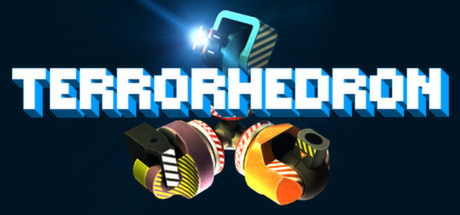
Terrorhedron Tower Defense
Terrorhedron is the 3D, cooperative tower defense game for the PC. Unmatched challenge and complexity is introduced to the genre through 3 dimensional gameplay, micro-strategy through programmable turrets and 'edge of seat' gameplay is extended to multiplayer with up to 8 players online co-op.

Fieldrunners
Fieldrunners is now available on Steam! Download it now to play the hit tower defense game critics and fans have been raving about. Descend into the world of Fieldrunners, the most anticipated and visually stunning game in tower defense history!

YORG.io
YORG.io is a game with an original twist on supply chains and zombies. Your goal is to build a base which survives the night which is when zombies attack. Build and upgrade defensive towers to protect your base and try to survive as long as possible.

One Troll Army
Play as a giant troll in One Troll Army - a defense game about building forts, upgrading your troll, and fighting off waves of enemies. Play Against The Twitch Chat!
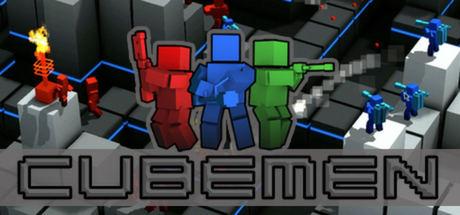

Ancient Planet Tower Defense
Ancient Planet is classic tower defense game. The stronghold of an ancient civilization has been invaded by hordes of alien raiders. Use powerful technologies of the Ancient and repel the attack of the enemy's armies!

Unstoppable Gorg
Defend the solar system from fearsome aliens by sending satellites into orbit in revolutionary tower defense action!
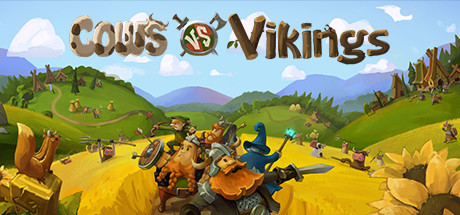
Cows VS Vikings
You think you’ve seen everything in Stream already?! No, buddy, you never saw anything like that before! The Vikings against the cows! Show them the strength of Odin and twist their horns off!

Go Home Dinosaurs!
Todd Rex wants steak. Todd Rex wants YOUR steak. Are you gonna let him take it? No way! Go Home, Dinosaurs!Prevent hordes of marauding Dinos from crashing your party in the world’s premier BBQ defense simulator! Unlock powerful towers that act like little weaponized puzzle pieces.

Defend Your Life: TD
Defend Your Life! Is tower defense set in human body where players are fighting against villain hordes of viruses and bacteria. Levels and units correspond to reality of human anatomy.
Frequently Asked Questions
YORG.io 3 is currently priced at 0.89€ on Steam.
Yes, YORG.io 3 is currently available at a 85% discount. You can purchase it for 0.89€ on Steam.
Yes, YORG.io 3 received 207 positive votes out of a total of 310 achieving a rating of 6.38.
😐
YORG.io 3 was developed by Tobias Springer and published by tobspr Games.
Yes, YORG.io 3 is playable and fully supported on Windows.
No, YORG.io 3 is not playable on MacOS.
No, YORG.io 3 is not playable on Linux.
This information about YORG.io 3 is not available yet.
This information about YORG.io 3 is not available yet.
No, YORG.io 3 does not support VR.
YORG.io 3 offers both single-player and multi-player modes.
YORG.io 3 offers both Co-op and PvP modes.
No, YORG.io 3 does not currently offer any DLC.
No, YORG.io 3 does not support mods via Steam Workshop.
No, YORG.io 3 does not support Steam Remote Play.
Yes, YORG.io 3 is enabled for Steam Family Sharing. This means you can share the game with authorized users from your Steam Library, allowing them to play it on their own accounts. For more details on how the feature works, you can read the original Steam Family Sharing announcement or visit the Steam Family Sharing user guide and FAQ page.
You can find solutions or submit a support ticket by visiting the Steam Support page for YORG.io 3.
Data sources
The information presented on this page is sourced from reliable APIs to ensure accuracy and relevance. We utilize the Steam API to gather data on game details, including titles, descriptions, prices, and user reviews. This allows us to provide you with the most up-to-date information directly from the Steam platform.
Additionally, we incorporate data from the SteamSpy API, which offers insights into game sales and player statistics. This helps us present a comprehensive view of each game's popularity and performance within the gaming community.
Last Updates| Steam data | 27 September 2026 06:09 UTC |
|---|---|
| SteamSpy data | 25 October 2026 12:06 UTC |
| Steam price | 26 October 2026 19:34 UTC |
| Steam reviews | 21 October 2026 07:57 UTC |
If you'd like to dive deeper into the details about YORG.io 3, we invite you to check out a few dedicated websites that offer extensive information and insights. These platforms provide valuable data, analysis, and user-generated reports to enhance your understanding of the game and its performance.
- SteamDB - A comprehensive database of everything on Steam about YORG.io 3
- SteamCharts - Analysis of YORG.io 3 concurrent players on Steam
- ProtonDB - Crowdsourced reports on Linux and Steam Deck YORG.io 3 compatibility

 🔥 Deal
-85%
5.99€
0.89€
Buy Now
🔥 Deal
-85%
5.99€
0.89€
Buy Now
 -68%
5.99€
1.96€
Visit Store
-68%
5.99€
1.96€
Visit Store
 -59%
5.99€
2.49€
Visit Store
-59%
5.99€
2.49€
Visit Store
 -52%
5.99€
2.88€
Visit Store
-52%
5.99€
2.88€
Visit Store
Game modes
Multiplayer
Features
Online players
3
Developer
Tobias Springer
Publisher
tobspr Games
Release
13 Oct 2019
Platforms
Clicking and buying through these links helps us earn a commission to maintain our services.