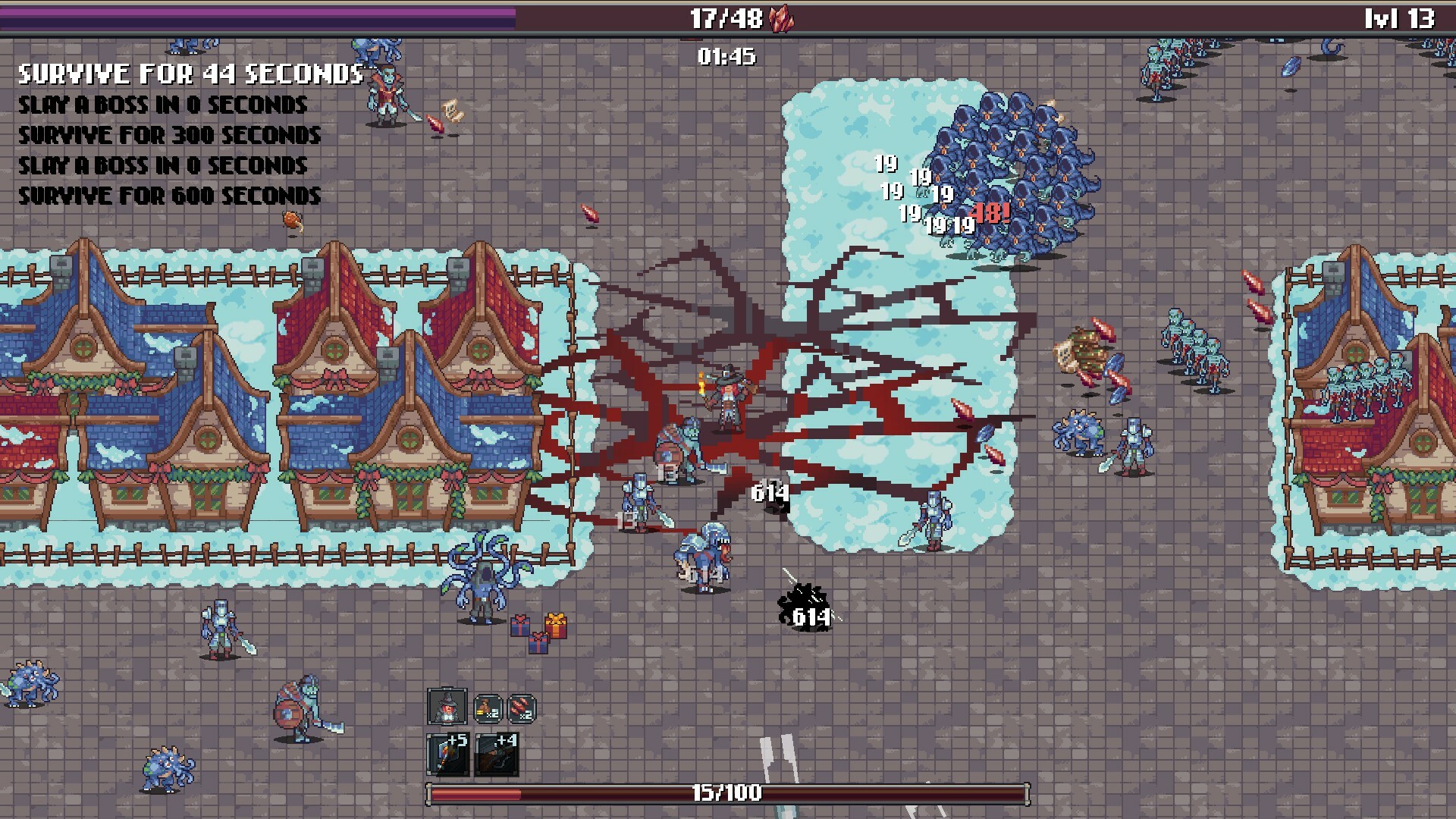
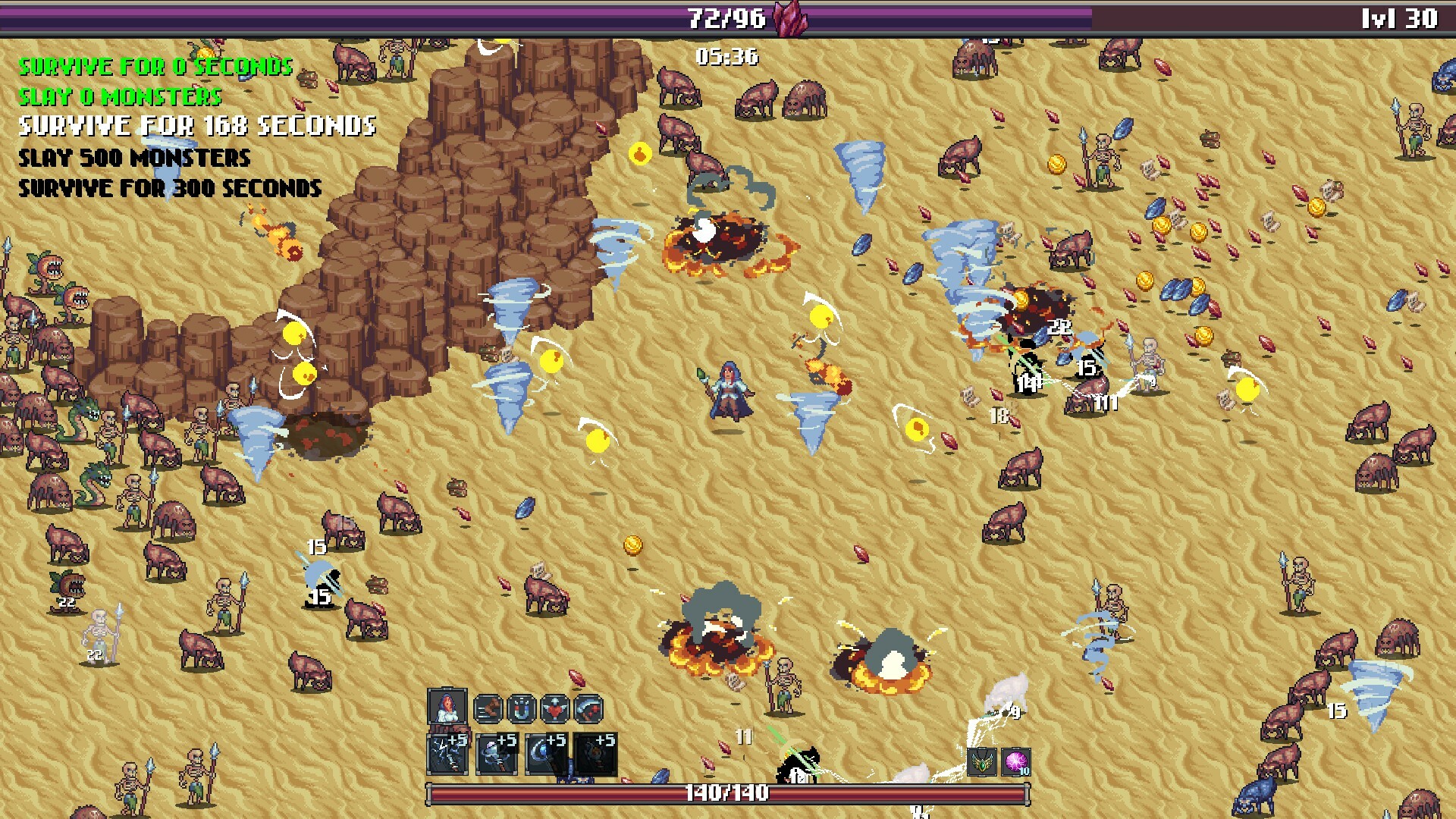
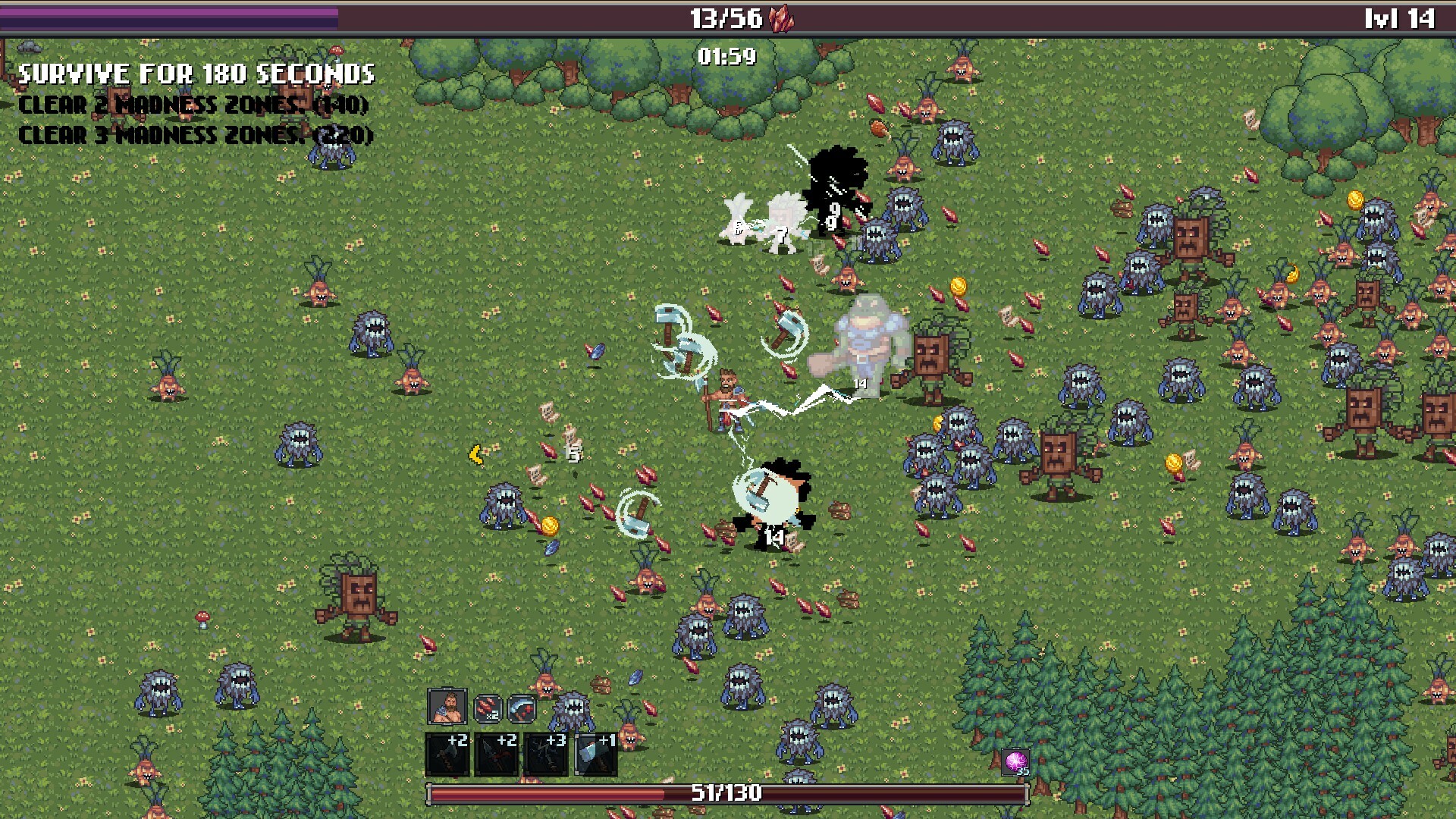
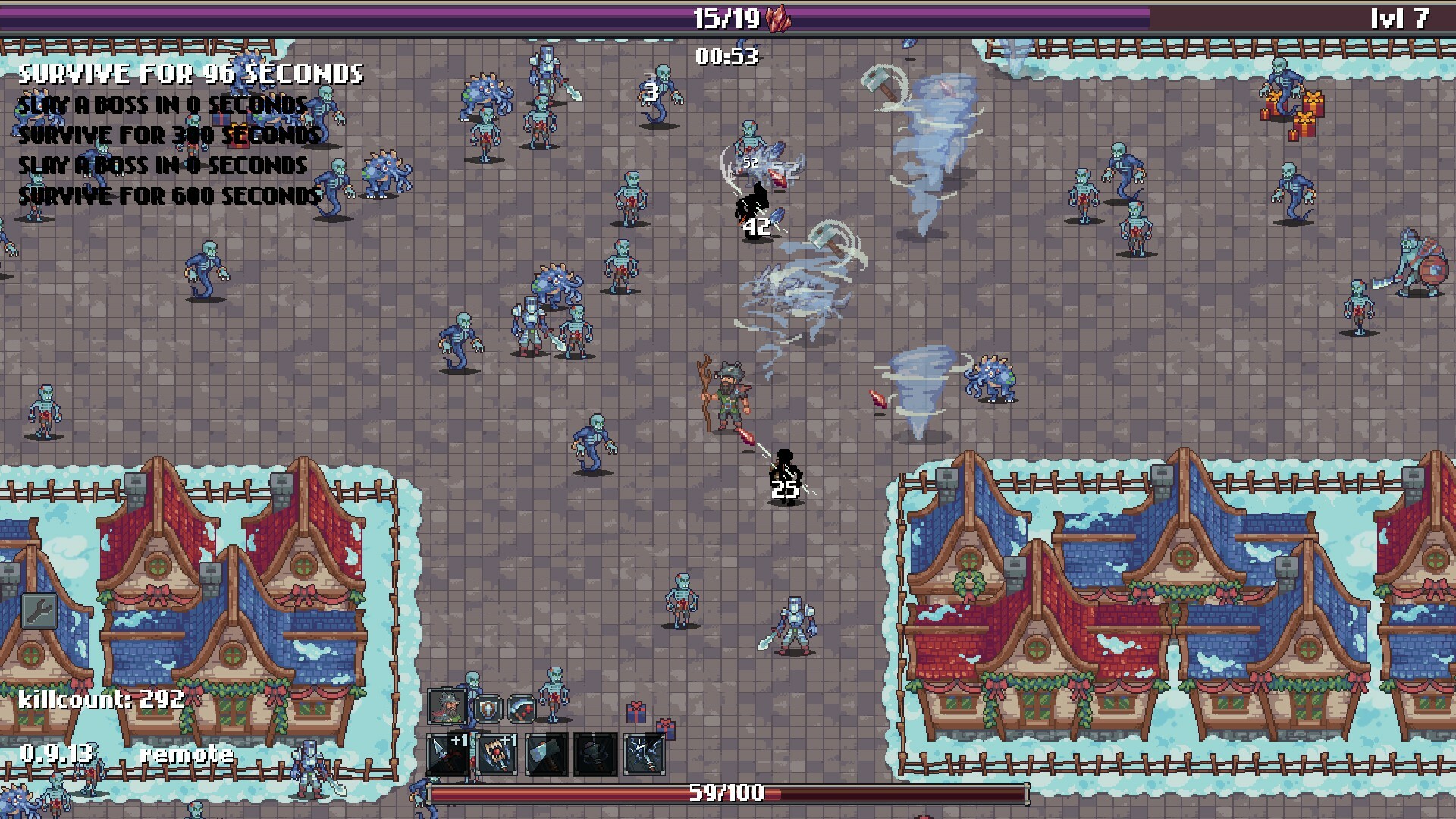
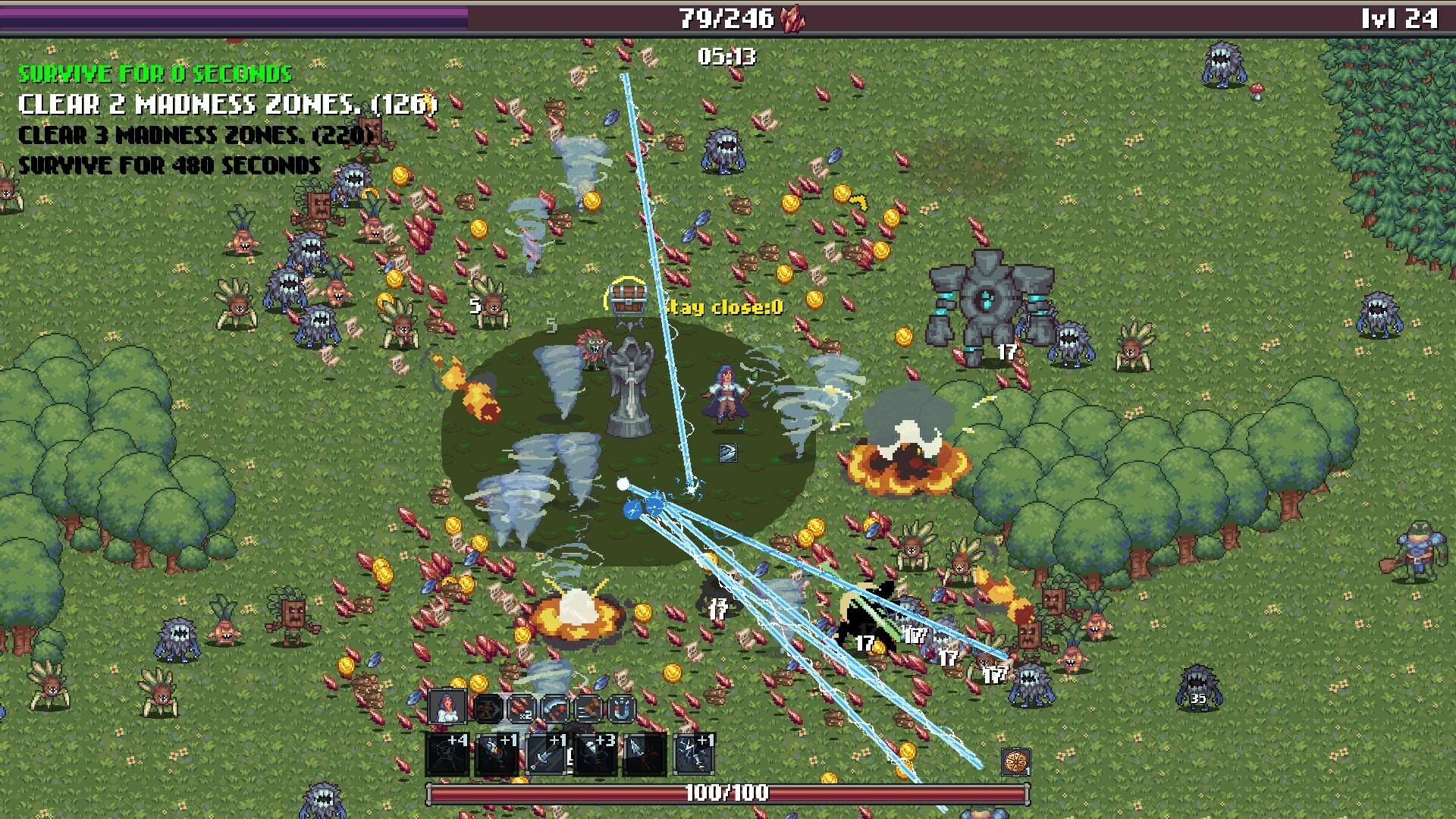
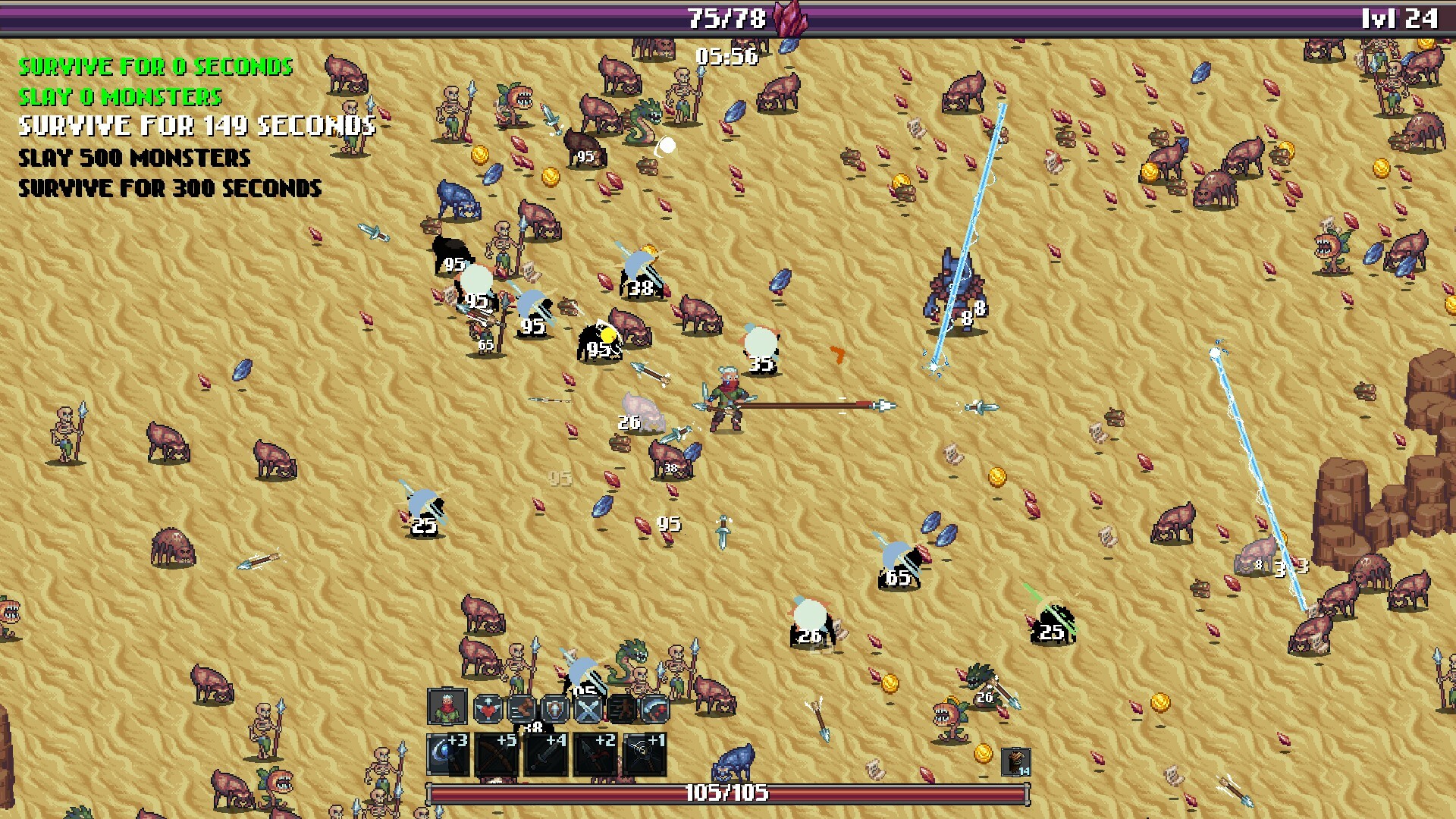
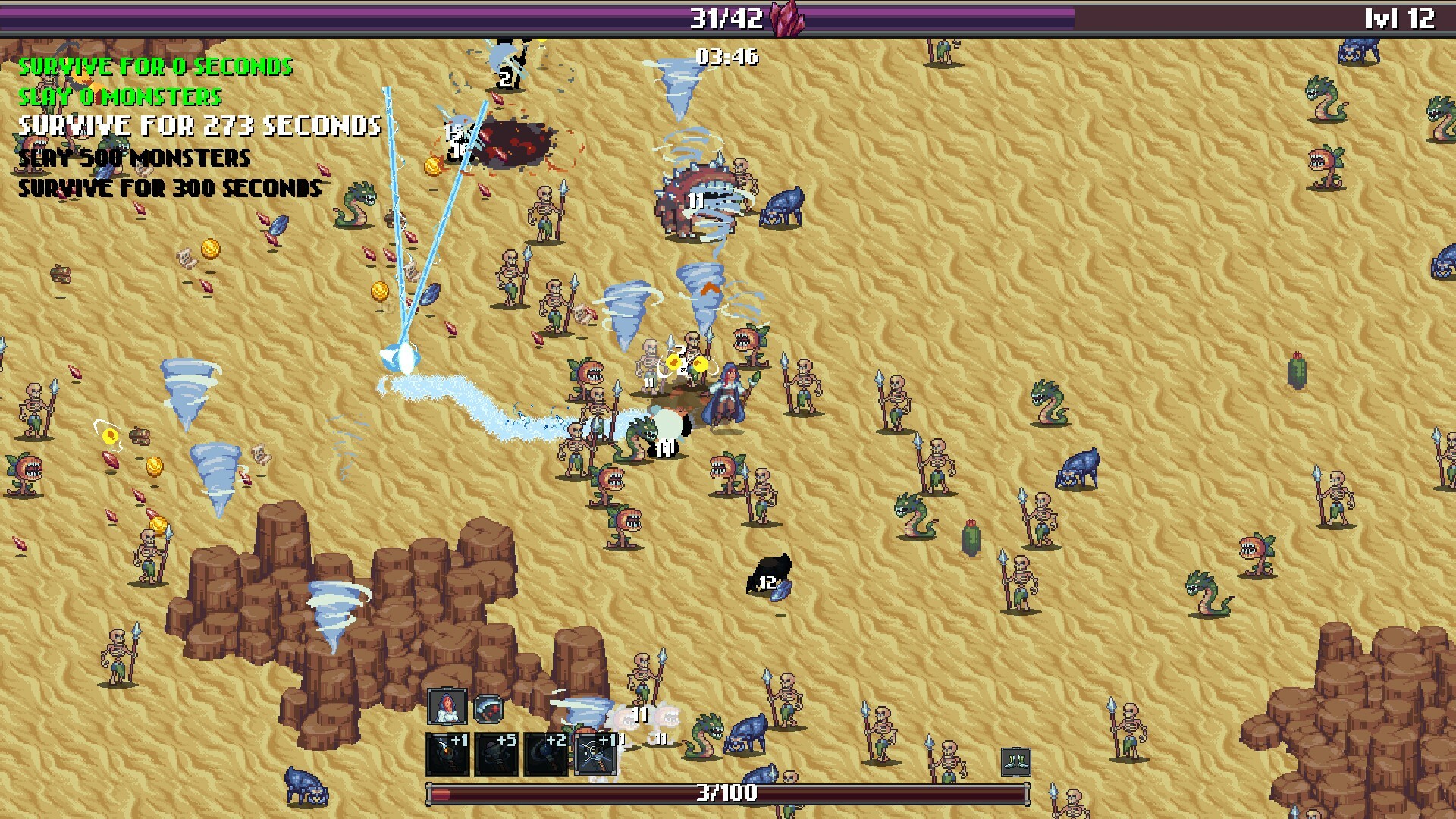
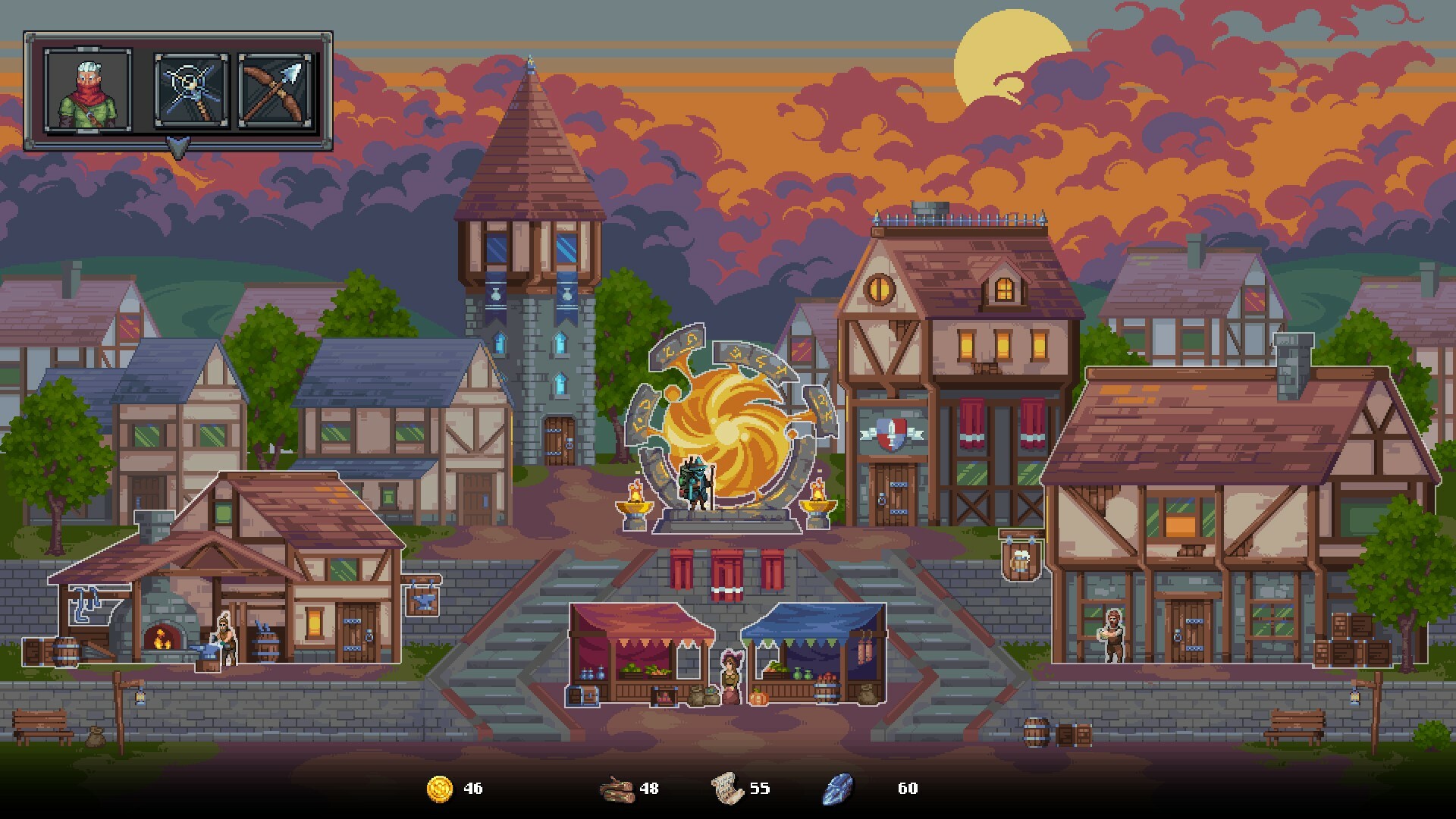
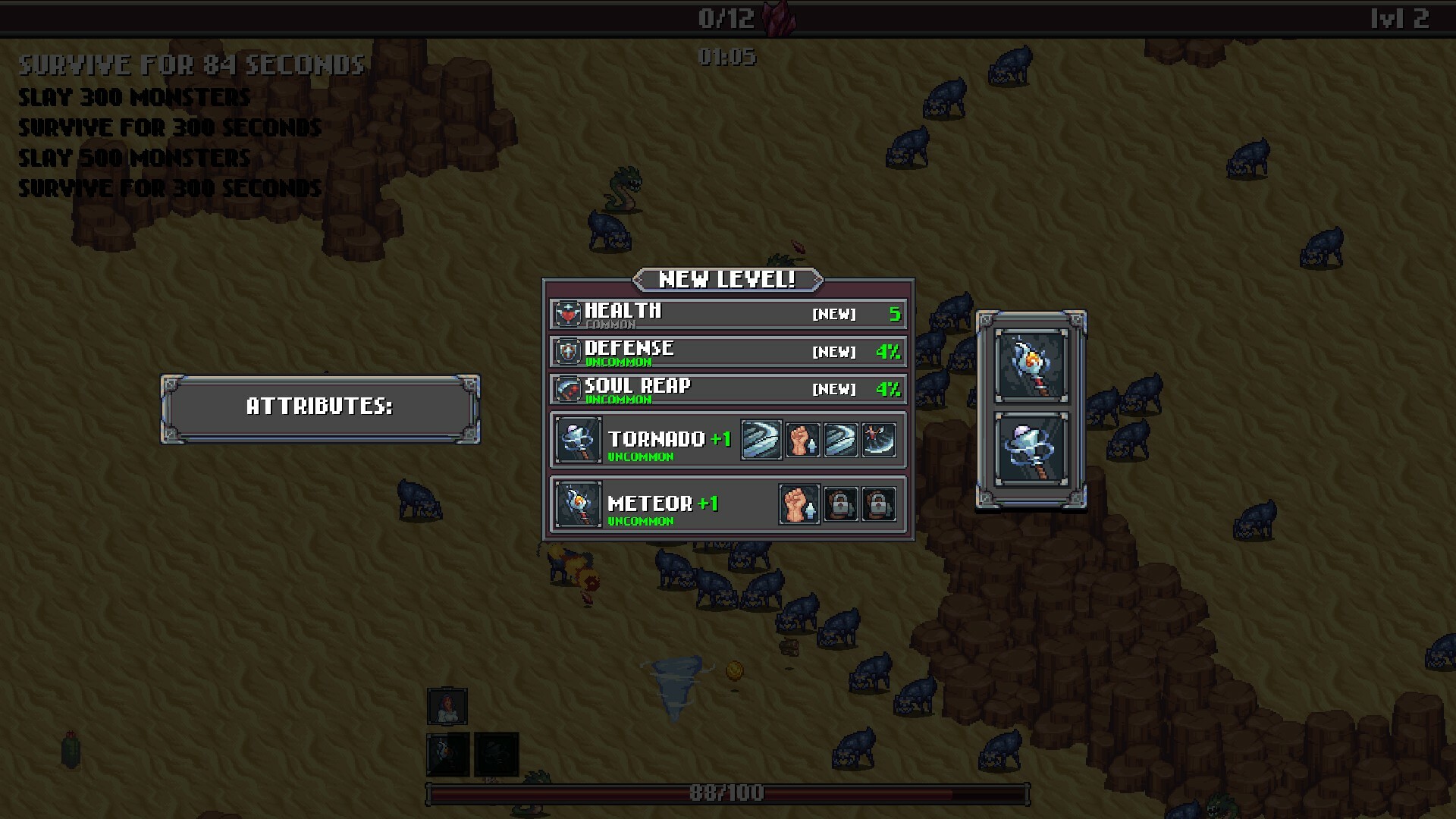
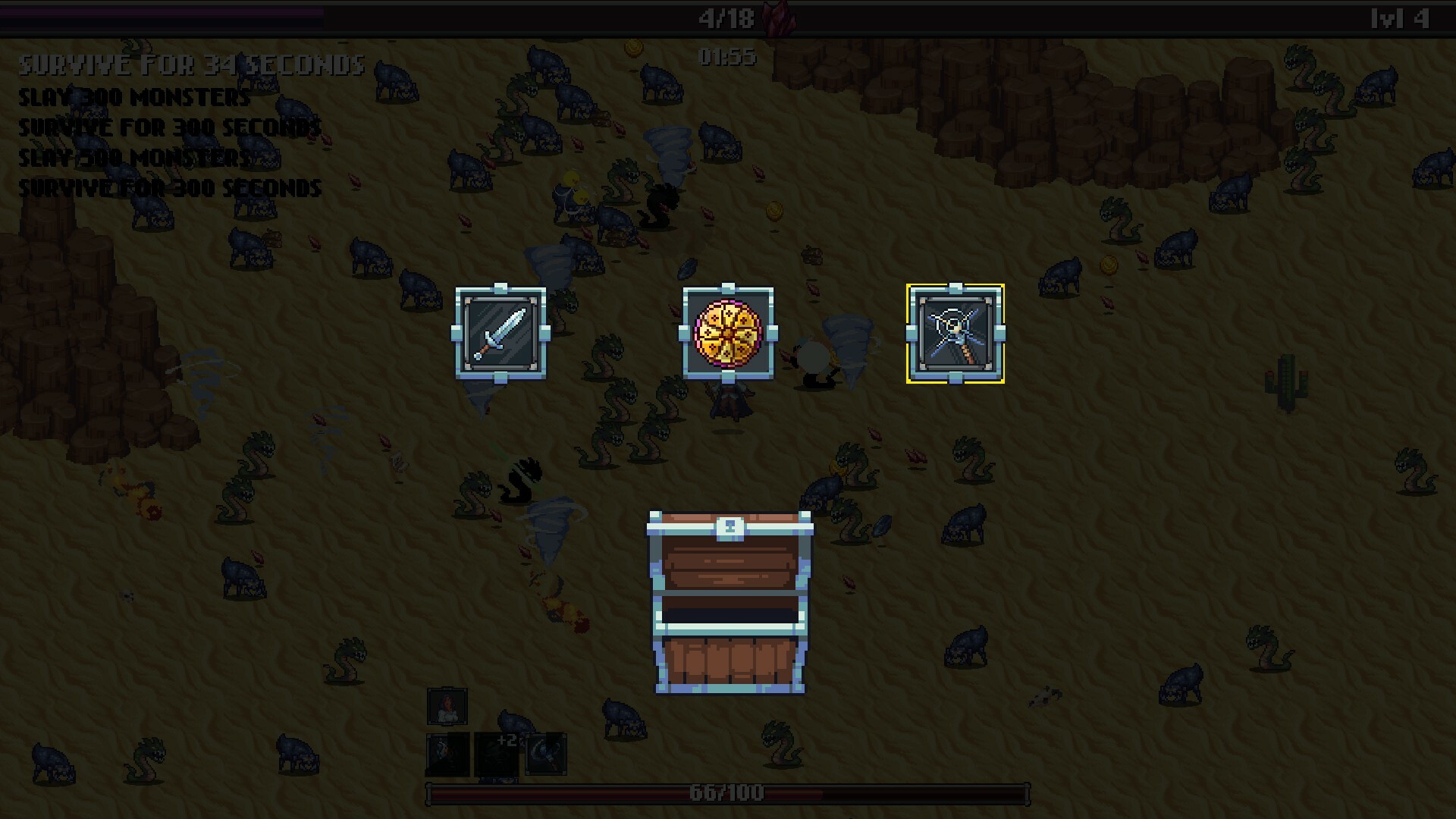
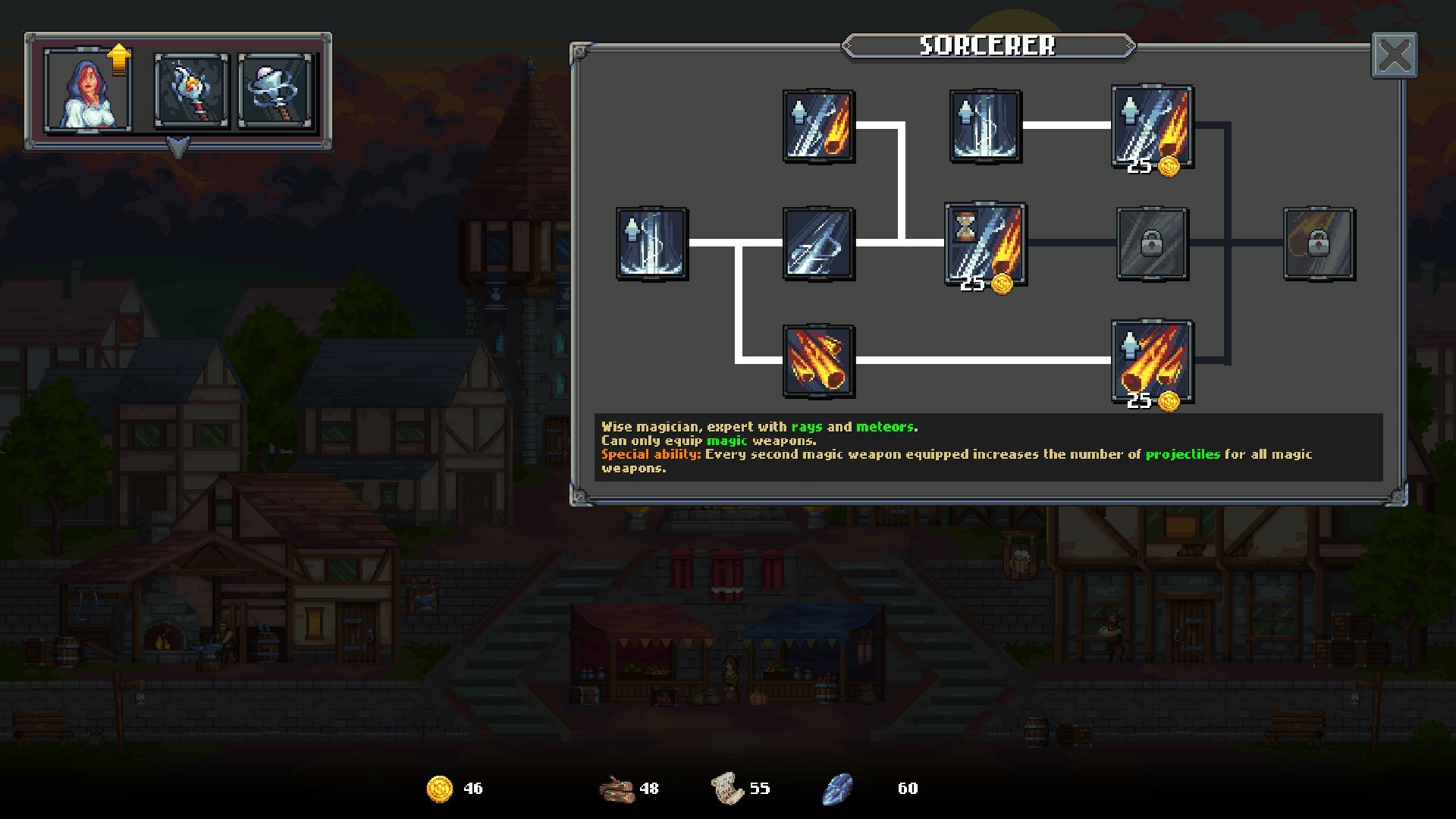
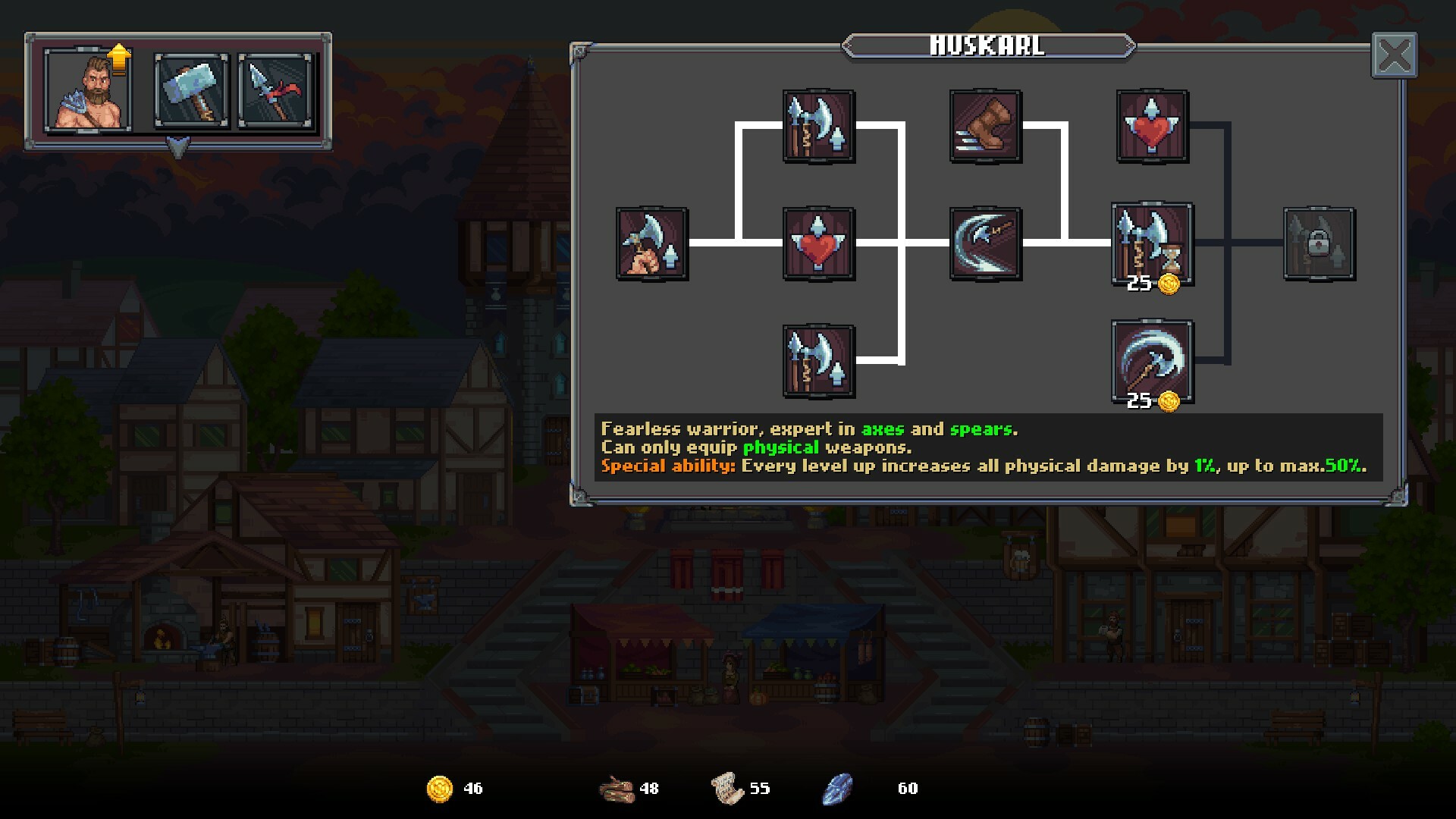
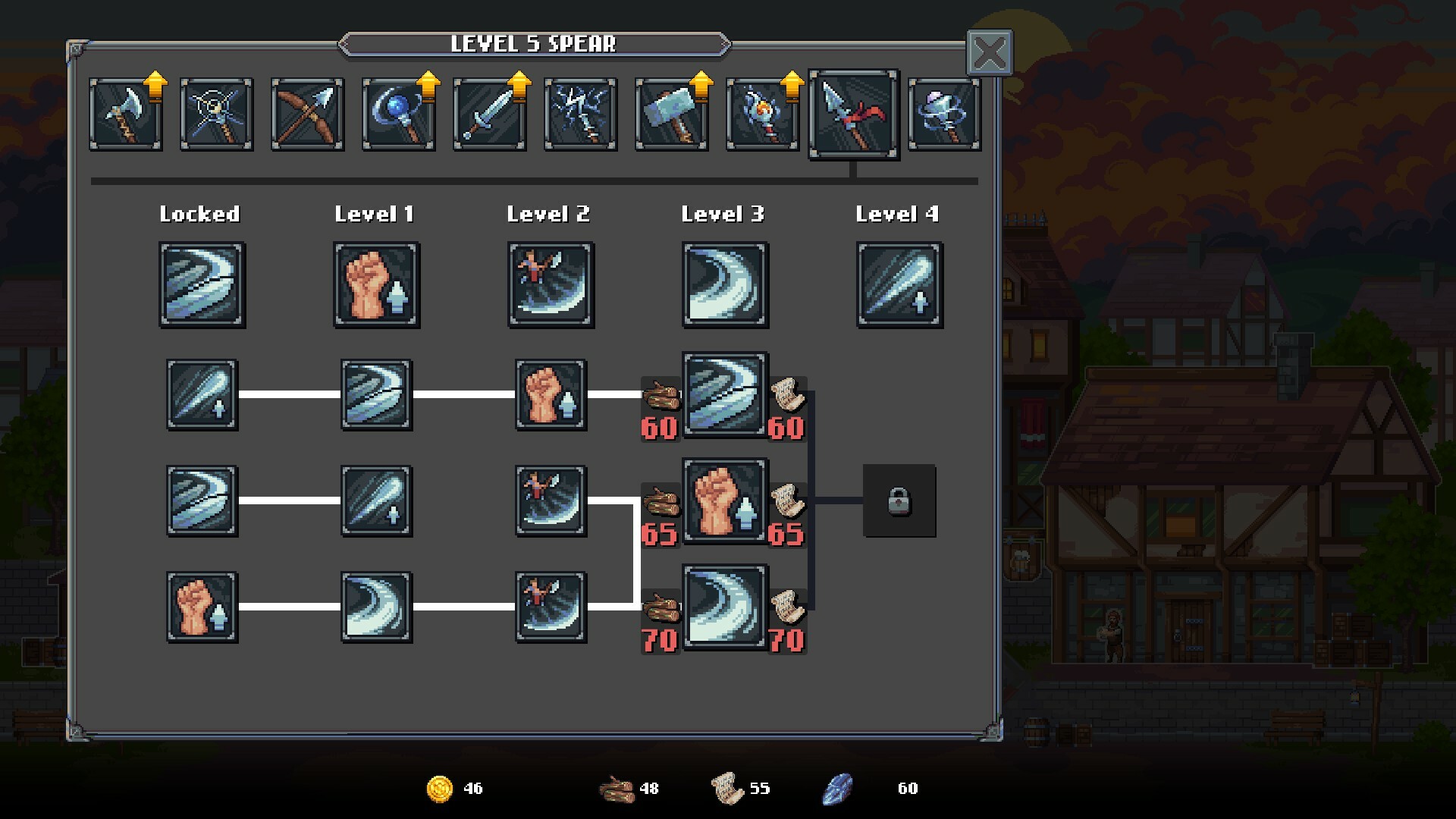
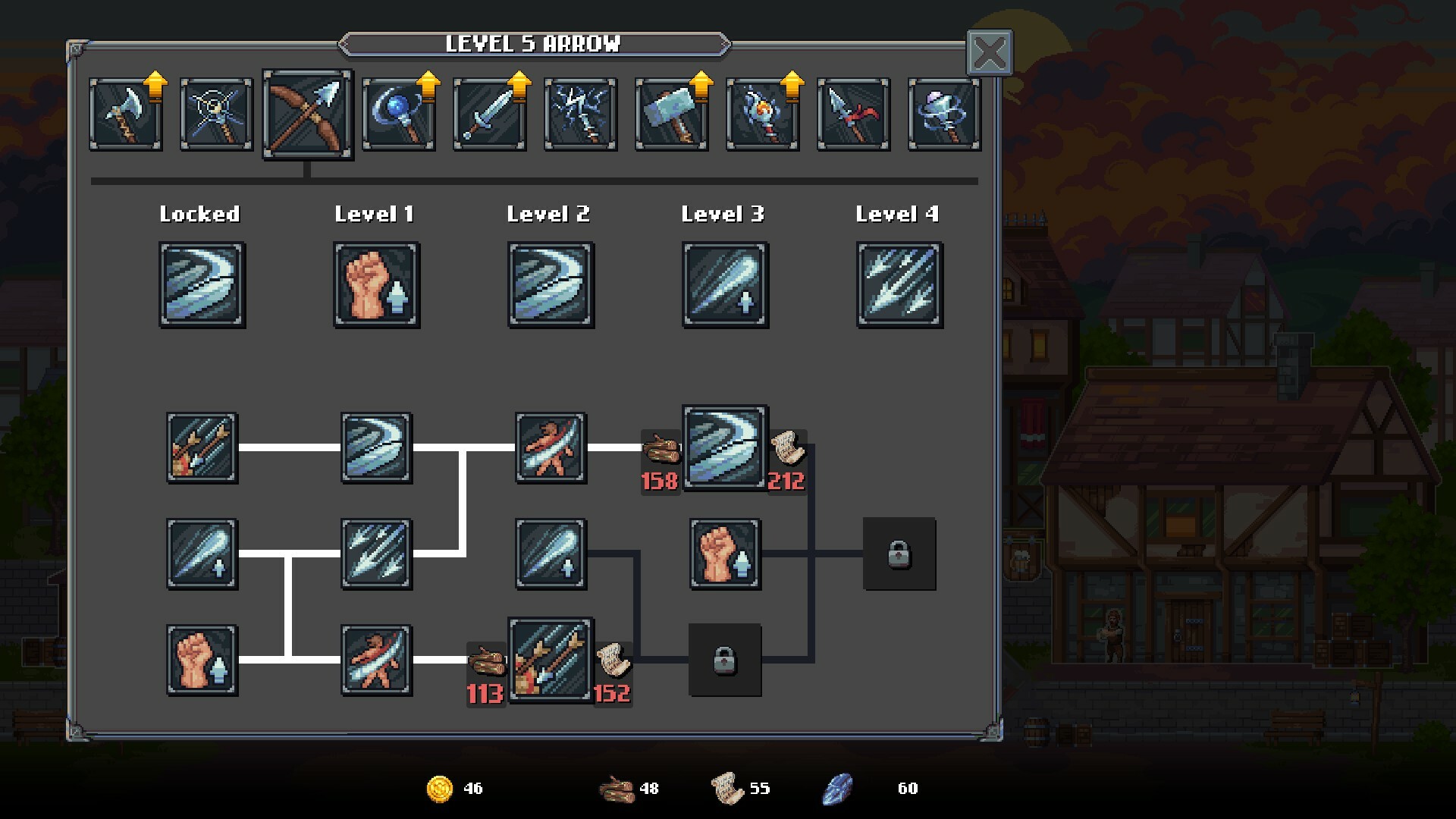
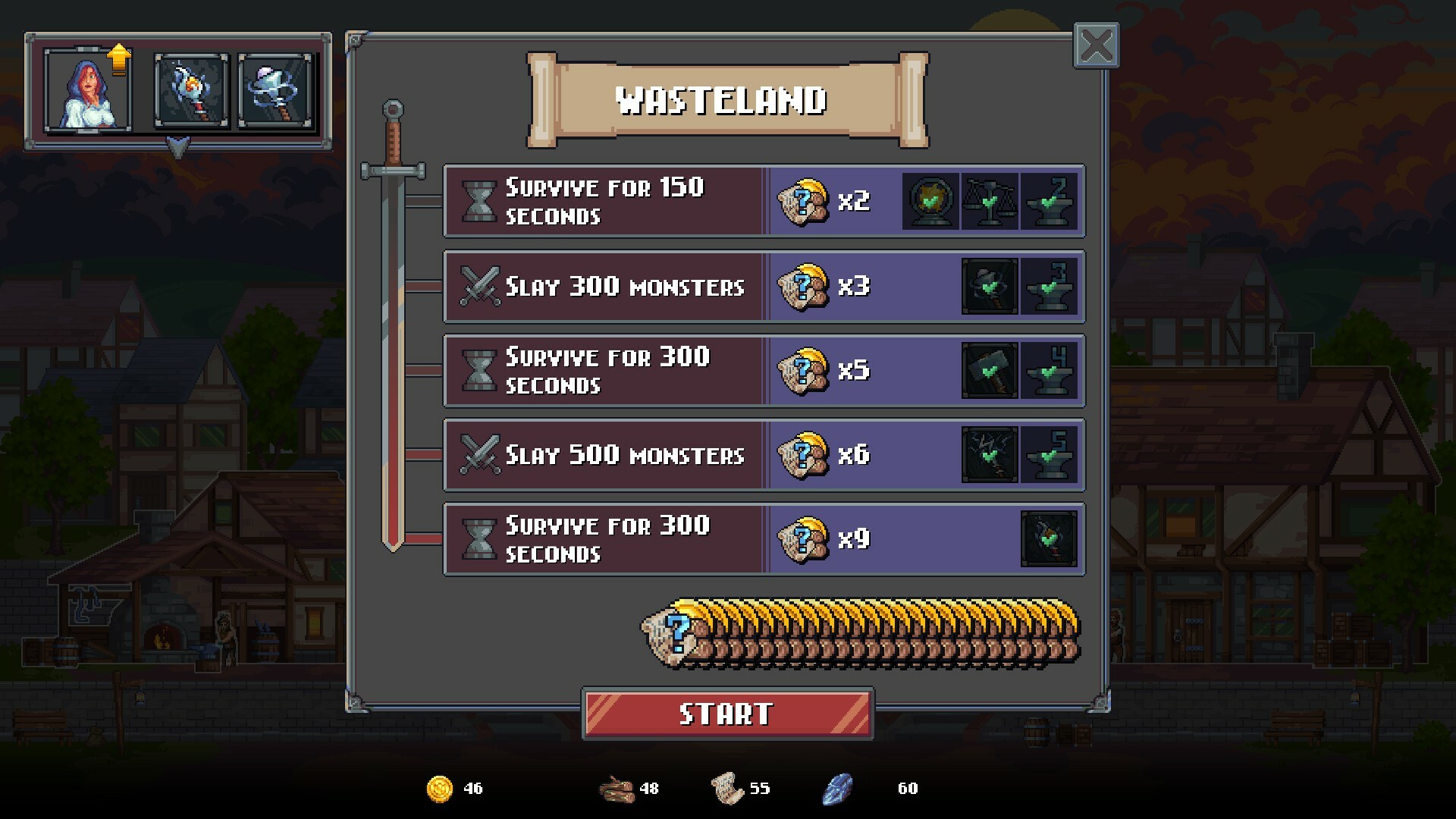
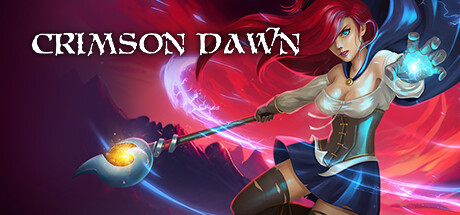
Crimson Dawn, developed and published by Purple Lake, is a roguelite action-survival game that leans into the increasingly popular "horde survival" formula, with a blend of RPG progression and minimal input combat. On the surface, the game is simple and immediately accessible: choose a character, drop into one of the available maps, survive waves of increasingly aggressive enemies, gather loot and upgrades, and repeat. Itโs a loop designed to be both low-maintenance and addictive, and while it doesnโt aim to revolutionize the genre, it offers a compact, budget-friendly take on familiar mechanics with just enough variety to keep players engagedโfor a while. The gameplay structure is heavily automated, with attacks firing on their own as long as enemies are nearby. The playerโs primary focus is movement, avoiding damage, and choosing upgrades as they level up during a run. This design choice removes the need for aiming or constant clicking, shifting the gameplay toward positioning, dodging, and strategic decision-making. Itโs a design philosophy that favors casual immersion over reflex-driven intensity. The spell and weapon systems tie neatly into this, allowing players to create builds on the fly as they collect new equipment and enhance their abilities. Over time, unlocking new weapons, spells, and characters adds more combinations, giving a small but noticeable sense of progression between runs. Crimson Dawnโs RPG elements come into play between missions, where players return to a hub area to manage their resources, upgrade equipment, unlock new characters, and access features like the blacksmith or market. These additions help to deepen the experience beyond the basic โsurvive and repeatโ loop, even if theyโre not especially complex. The game rewards incremental progression, where each failed run can still feel worthwhile due to the currency and unlockables you carry back. This sense of continuous improvement is one of the gameโs more satisfying elements, even if it eventually becomes predictable. Visually, the game opts for a pixel-art aesthetic that falls somewhere between functional and nostalgic. Itโs not especially stylized or detailed, but it communicates everything clearly and gets the job done without clutter. Enemy designs are generic but distinct enough to avoid confusion in the chaos of larger battles. The audio design is similarly modest, featuring background music that provides atmosphere but doesnโt stand out, and sound effects that are clear and functional but not particularly memorable. None of this holds the game back, but it also doesnโt elevate the experience beyond the expected baseline for a low-cost indie title. Where Crimson Dawn begins to falter is in its lack of depth and long-term variety. While five different maps are included, they donโt vary enough in terms of layout or enemy behavior to drastically change the feel of a run. After a few hours, most players will have seen the bulk of what the game offers in terms of enemy types, progression paths, and map events. Optional quests within levels offer increased difficulty, but the rewards for completing them can sometimes feel underwhelming, which discourages risk-taking and makes high-difficulty challenges feel more punishing than rewarding. Without a strong incentive to keep pushing those boundaries, some of the gameโs systems lose their appeal over time. Balance is another area that may divide players. Early on, Crimson Dawn feels appropriately challenging, especially as youโre building up your arsenal and character upgrades. But as you unlock stronger gear and build synergies, the game can swing in the other direction, with later runs sometimes feeling trivialโespecially when paired with the automated combat mechanics. The sense of danger that defines a good roguelite often fades as your power scaling outpaces the gameโs ability to challenge you. Conversely, some early runs may feel too punishing before enough upgrades are unlocked, creating a slight sense of grind in the midgame. In terms of overall polish, Crimson Dawn runs smoothly and demands little from your system. It performs well even on older machines and is optimized for quick startup and play sessions. It's clearly designed to be a pick-up-and-play experience, making it accessible to players who want to fit in short gaming sessions without a steep learning curve. On the other hand, this ease of entry can also feel like a lack of ambition. There are few surprises in how systems work, few moments of narrative or thematic depth, and little incentive beyond self-improvement or chasing higher kill counts. The reception from players has been mixed, which aligns with the gameโs strengths and limitations. Those looking for a short-term, affordable roguelite experience with low mechanical complexity generally find it satisfying, even if it doesnโt stick with them long. Players seeking a richer, more diverse experience with strong visual design, deeper mechanics, or long-term content may find Crimson Dawn comes up short. Still, its price point and accessibility make it a respectable option in the crowded survival-action space, especially for genre fans who donโt mind a smaller-scale offering. Ultimately, Crimson Dawn is a competent, compact roguelite that understands its limitations and delivers a focused gameplay loop without unnecessary fluff. Its biggest strengths lie in its simplicity, low barrier to entry, and steady if shallow progression system. But its limited variety, modest presentation, and lack of mechanical depth may leave some players disengaged after the initial novelty wears off. Itโs not a game that reinvents anything, but it delivers exactly what it promisesโa no-frills, horde-survival experience thatโs easy to dive into and moderately rewarding for the time you put in. Rating: 6/10