

Desynced
Desynced is a sci-fi strategy game with fully customizable units and behaviors. Gather, build, research, and explore the unknown. Alone or with friends, unveil the mystery of an AI on the edge of self-awareness and uncover the hidden truth in this blend of strategy, automation, and exploration.
Sync your Steam wishlist to find the lowest game prices instantly. No login required, just paste your Steam profile URL!
⚡ Try Wishlist Radar!
Sync your Steam wishlist to find the lowest game prices instantly. No login required!
⚡ Try Wishlist Radar!
Close

Dream Engines: Nomad Cities on Steam
Quick menu
A survival city-building game with flying cities. Build, automate, and defend a flying city that travels between procedurally generated maps to survive in a wacky, nightmare-infested, post-apocalyptic world full of strange science and dreams.
Dream Engines: Nomad Cities is a city builder, survival and automation game
developed by Suncrash
and published by Suncrash and Gamirror Games.
Released on May 09th 2024 is available only on Windows.
It has received 578 reviews of which 431 were positive and 147 were negative resulting in a rating of 7.1 out of 10. 😊
The game is currently priced at 29.99€ on Steam.
The Steam community has classified Dream Engines: Nomad Cities into these genres:
Media & Screenshots
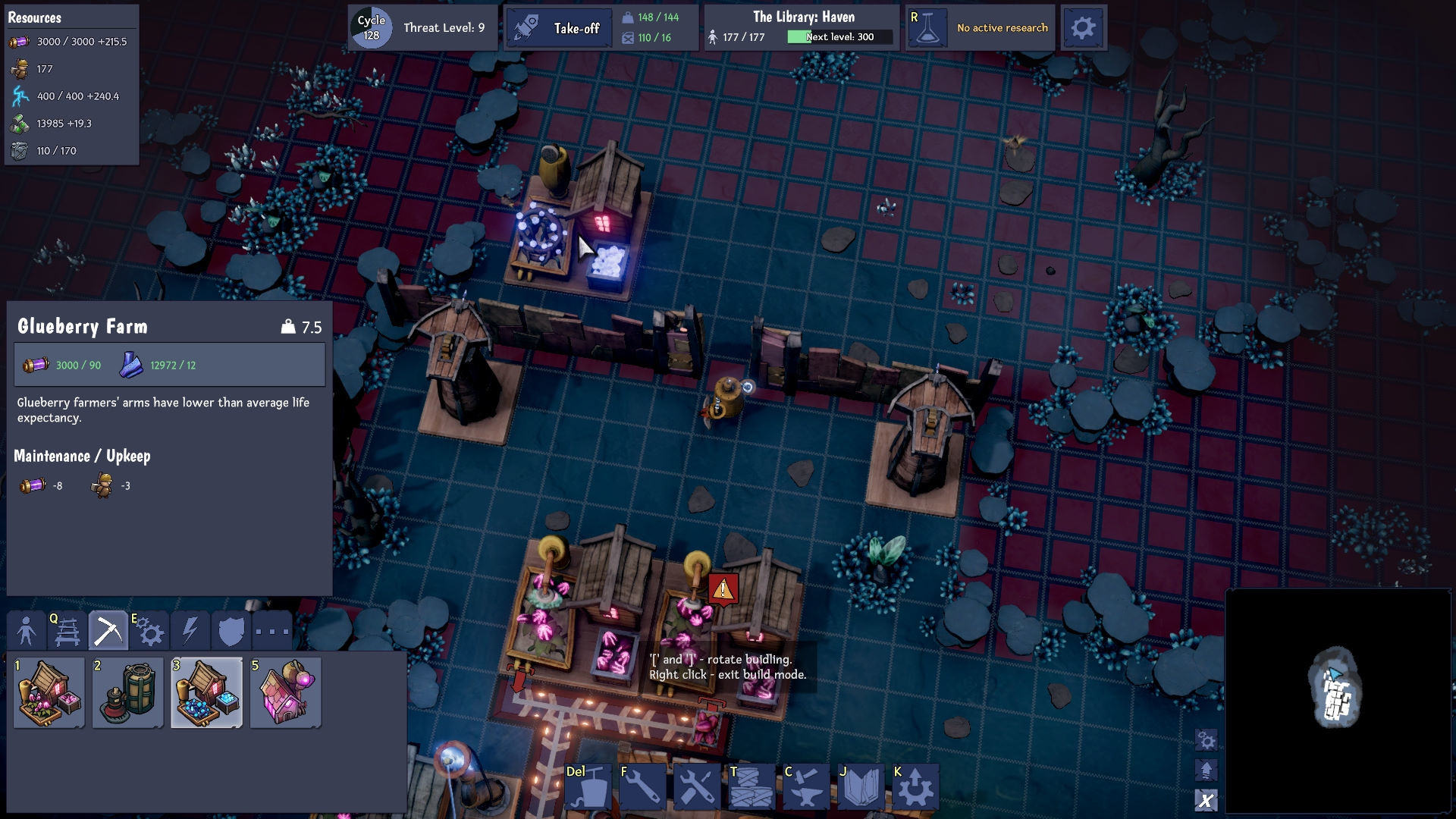
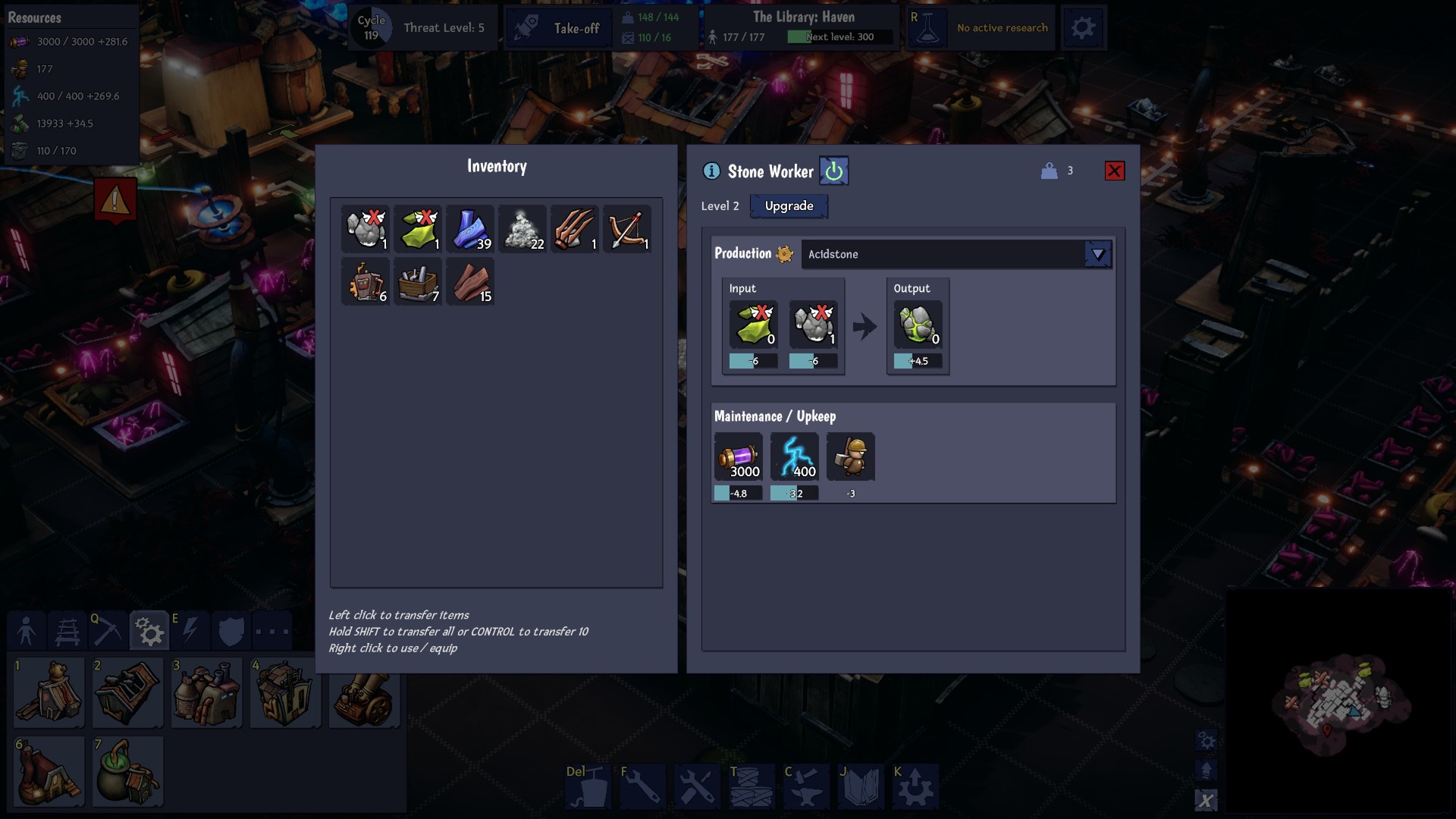
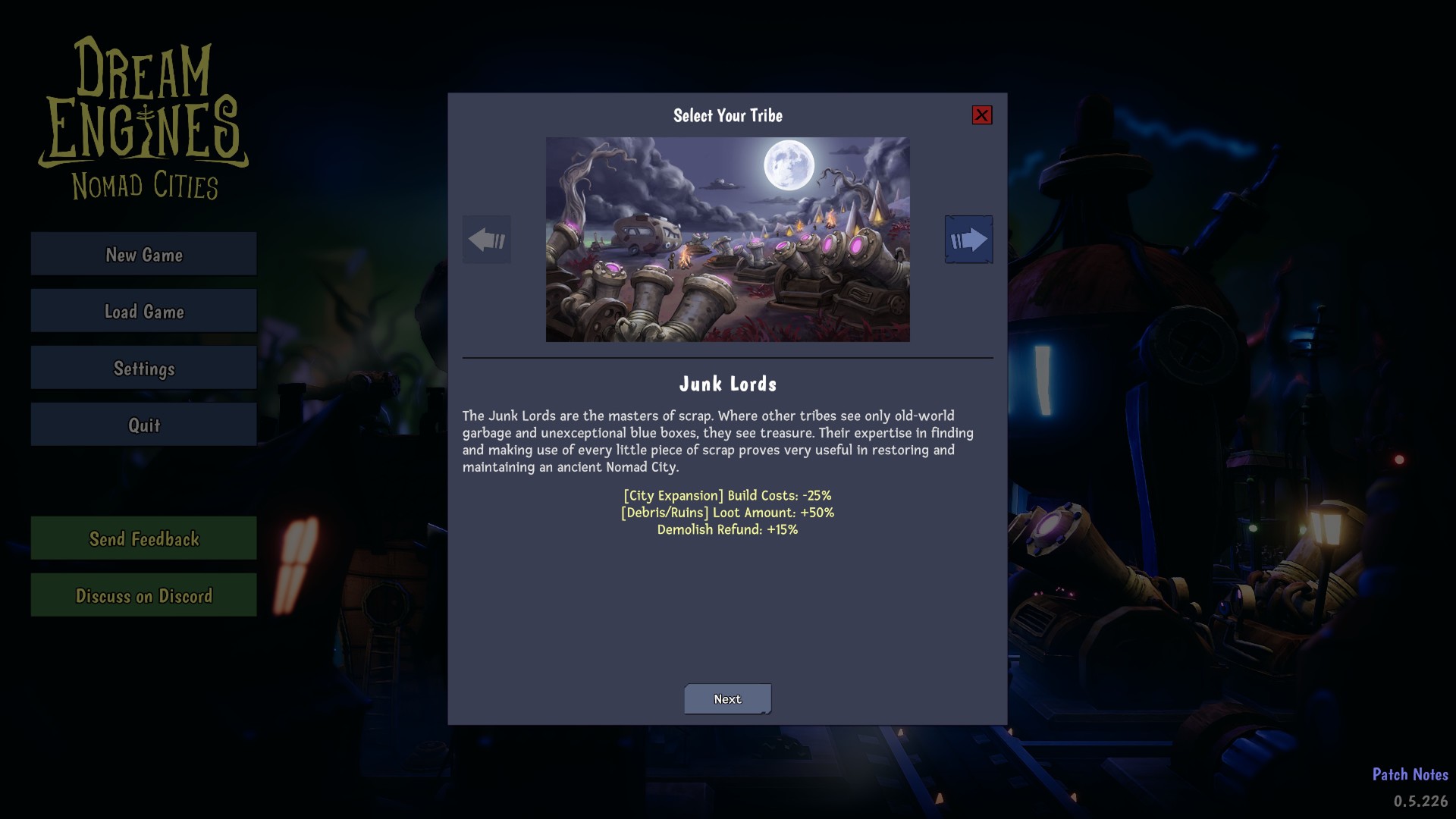
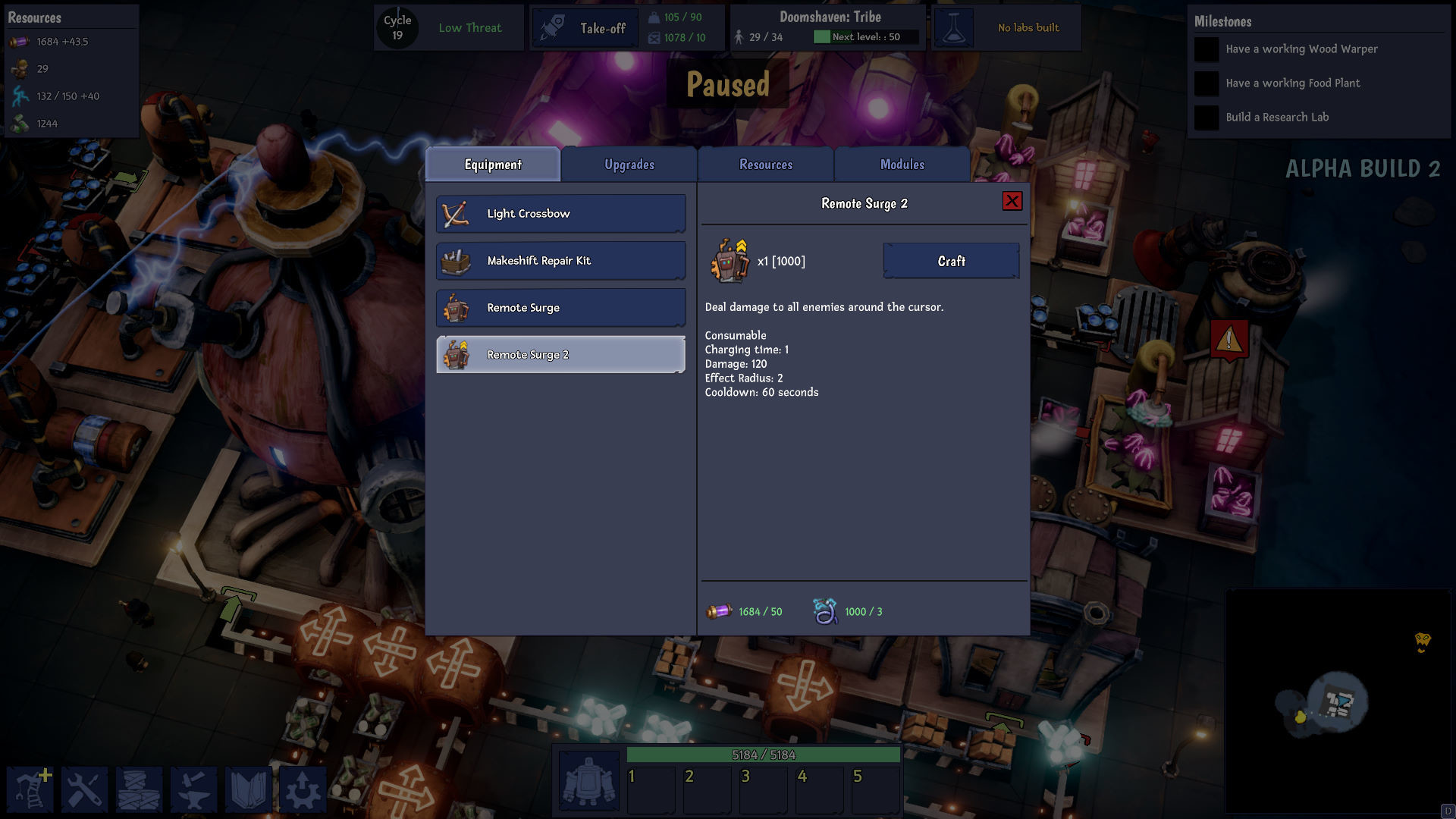
Get an in-depth look at Dream Engines: Nomad Cities through various videos and screenshots.



Load More








System requirements
These are the minimum specifications needed to play the game. For the best experience, we recommend that you verify them.
Windows
- Requires a 64-bit processor and operating system
- OS *: Windows 7/8/10 64-bit
- Processor: 3.0 Ghz Dual Core CPU
- Memory: 8 GB RAM
- Graphics: DirectX 11 GPU with 2GB of memory (GTX 660 or better)
- DirectX: Version 11
Steam Price & Best Deals
User reviews & Ratings
Explore reviews from Steam users sharing their experiences and what they love about the game.
While I would love to give this game glowing praise Since I do like it I would give it a 75/100 I can only highlight the positives and negatives and the issues with some of the reviews I read. The positive: -Unique, the concept of moving the base constantly to escape the increasing difficulty is a nice one that forces the player to adapt to new resources and redesign their micro factory to build the things that map can make. -Difficulty, is entirely player dictated with options for most features, you can set the classics like permadeath but also things like base map difficulty rising over time, production speed and much more. The difficulty also only really affects the score you get at the end of a successful or failed run. -The art style is nice, the 3D models look just like the splash art with a touch of Texturing that makes them look weathered or badly painted that reminds me of water colors. The buildings are animated like Factorio if slightly more cartoonishly and with a reliance on smoke for some. The Avatar "Tiny" fits the style of the buildings and enemies, the world looks like it fits to itself. -Tutorial explains what you need to know for basic play. -Story, the setting is interesting and the story follows the discovery of the city itself and research into why it was abandoned. It is interesting and fleshes out the world fairly well. -Factory building, this is genre specific, not everyone's cup of tea but because you have to engage with constant redesigns of your mobile base instead of being able to keep everything and expand endlessly I find it defeats issues games like Factorio and Satisfactory run into. They have to make the amount of resources you need grow endlessly because otherwise I could just build one factory producing each resource and be done with it. Dream Engines takes the approach of small amounts but you have limited time to produce them and which you can produce is location and chosen tribe/upgrades dependant. -The Tribes: lots of large changes created by which you pick, some will see you staying on a map for long periods but movement costs a lot while others will see you constantly map hopping to hover up bonuses from ruins. The Bad: -Combat is a little dry, enemies have a single pattern, close the distance and attack, ranged from further but otherwise no difference. I have read a review comparing it to RiftBreaker but I disagree with the review which said Riftbreaker is way better. I found Riftbreaker to equally fall into mostly endless kiting regardless of loadout choice since the more interesting weapons don't have enough variation to make them viable, damage types are more varied in it forcing you to switch between two types with small usage of elements but ultimately you can beat all of Rift breaker with Chainguns and missle launchers on hardest. Ammo limits and production was a good idea for that one to force melee fighting. Neither is your vampire survivors of infinite attack patterns and choice paralysis. Intelligent enemies forming battle lines instead of just endlessly increasing enemy strength would fix it. more variation of movement styles for non-intelligent and an overhaul of the turrets since I find myself just maxing preparing a big block of the cheapest turrets with a single wall piece around it while I dance Tiny in front as bait the enemies preferentially attack during raids. That said in Rift breaker I just cheesed each map by constructing a defense line around the entire perimeter. once I figured this out the game became such a slog, most of my "gameplay" was waiting around for things to produce. Because of the nomadic nature no such one and done tactic exists for Dream Engines. Sometimes I have to create multiple defense lines because there isn't enough space in one direction to build my death disco so enemies overwhelm me forcing a retreat and then they start breaking my walls. -Difficulty, yup the duality, the biggest issue with the difficult is also its greatest strength: open difficult. Since you can set any difficulty you want and the game defaults pretty high, you get people complaining about the difficulty even while accidentally selecting Normal which has growing difficulty set to on. This setting isn't really a beginner setting. If forces the player to be much more efficient then any other single option does. Since if I am not ready for the next base map difficulty, without it, I can just endlessly harvest resources and upgrades. With it I need a rare consumable that lowers 1 level every 200 cycles. With even short stays on a map being around 30 cycles. Otherwise I will be pushed into a difficulty I can't yet survive. -The lack of modularity while appearing to have modularity. While the tribes do a good job changing gameplay... there is no reason to, just find your preferred one and stick to it... if there was say a home base to return to and you made upgrades to improve your future runs with a wide variety of environments each tribe accelled with or were exclusive to and so exclusive resources. Then you would have reason to change but there isn't. While mods exist for buildings and Tiny, Tiny has a single port for mods and the selection basically limits you to speed, auto repair or a tiny area of splash damage. The defense and offense improving ones counter act each other making them basically non-choices since dodging is better then defense and Tiny is too squishy for melee. The city has very few mod slots and instead every single building gets at least one... in which to put your 1 or 2 mods per building type in dozens of turrets that could be destroyed or around 2-4 of each production building... That don't fundamentally change how well they perform. There is a general upkeep mod but the amount it reduces is so minimal of things you can easily get that it should have just been a crafting recipe of high expense item that would feel inferior to material need or personel reduction mods but ocassionally useful. There are a few that speed up production at material expense or lower material usage at production speed expense... none for more people but better production or material use or any mixture like that or specific material use... Giving you batches of 5 of those would make them much more worthwhile as would more affected stats at once and variety. The city mods are extremely useful but the mod slots are not particularly numerous, limit you to 1 per type and most of them have no drawbacks or secondary effects you could juggle and match together for slight improvements with no downsides. Instead you are most likely to use cart speed 1 and 2 or cart speed 2 and attention reduction. The weapons don't have modularity, most are rare finds from ruins and aren't seperated into tiers other then in material needs to produce them. The ones you can research and then produce are limited to certain effects while things like piercing are locked behind the lucky pulls. There are no enemy damage types so no armor types either, just how much health they give versus regen and speed. No attack or fire rate bonuses either. Tooltips of items and buildings don't say enough, in part this is because buildings have levels and mods can change them and multiple recipes but a quality of life that would also let you show some information would be to immediately build them at a specific level and mods and show selectable recipe production rate. While the negative reviews do the game a disservice from the ones I read they aren't wrong about issues that could be fixed with some work. The game is otherwise very solid for an indie studio with 3 people, I hope they are doing well! while both their games lack polish they are interesting and could be incredibly deep if given that polish.
Dream Engines: Nomad Cities is a city-building survival strategy game developed by Suncrash and published by Suncrash alongside Gamera Games, blending automation management, exploration, combat, and resource logistics into a distinctive experience centered around mobility. While many city builders focus on constructing massive settlements designed to stand permanently against hardship, this game approaches survival from an entirely different angle. Your city is not meant to remain in one place forever. Instead, it exists as a massive flying fortress capable of lifting off and traveling to safer territory when danger becomes too great. Set within a ruined world consumed by strange corruption and nightmarish threats, the game places players in control of one of humanity’s last hopes for survival. Civilization no longer thrives through expansion alone. Adaptation becomes the most important skill. The hostile landscape constantly pressures players to gather resources, establish production systems, defend citizens, and eventually relocate before overwhelming dangers arrive. That simple idea changes the entire rhythm of city building and creates a strategic identity that feels remarkably different from many competitors in the genre. The city management systems offer familiar foundations while introducing fresh complications. Food production, housing, workforce allocation, and industrial development all require careful attention. Building an efficient settlement involves creating resource chains that support long-term sustainability while maintaining enough flexibility to respond to emergencies. Factories convert raw materials into advanced products, infrastructure expands production capabilities, and workers must remain supplied if growth is going to continue. Automation becomes increasingly important as settlements expand. Early progression focuses heavily on survival and stability, but later stages demand efficient production networks capable of supporting larger populations and more demanding industries. Watching previously chaotic systems evolve into streamlined production lines creates the kind of satisfaction that management game enthusiasts often seek. Optimizing transportation routes, balancing supply demands, and refining industrial layouts become rewarding challenges that continually encourage improvement. The flying city mechanic elevates everything. Traditional city builders often revolve around maximizing a single location, but Dream Engines constantly asks players to think about movement and adaptation. Remaining too long in one region invites escalating danger. Resources eventually become limited. Hostile creatures grow more aggressive. Players must decide when to stay and strengthen defenses or when to abandon established territory entirely in pursuit of survival elsewhere. That constant pressure creates meaningful decisions throughout the entire experience. Expanding rapidly can accelerate progress but increase vulnerability. Overcommitting to one region may leave infrastructure exposed to threats that eventually become impossible to manage. The need to relocate turns city planning into a balancing act between efficiency and mobility, forcing players to think beyond immediate goals. Exploration introduces another valuable layer to progression. Outside the city itself, players can venture into dangerous environments to gather materials and uncover opportunities hidden throughout the world. A customizable Steam-Bot acts as an exploration tool and combat unit, allowing players to engage directly with hostile environments instead of managing everything entirely from a strategic overhead perspective. Combat systems create additional tension by ensuring survival never feels guaranteed. Nightmarish enemies regularly threaten settlements, forcing players to establish defenses and prepare for escalating attacks. Defensive planning becomes a necessity rather than an optional feature. Walls, fortifications, and intelligent layouts contribute heavily to long-term success. Even strong defenses eventually face limits, reinforcing the core philosophy that survival often depends on knowing when to escape rather than simply standing your ground. Progression systems continuously reward experimentation and specialization. New technologies improve infrastructure, strengthen defenses, and unlock increasingly advanced capabilities. Steam-Bot upgrades further expand player options by supporting different combat and exploration styles. These systems create satisfying long-term goals while allowing players to gradually shape strategies around personal preferences. Visually, Dream Engines succeeds in creating a memorable atmosphere. The combination of industrial machinery, floating settlements, ruined landscapes, and supernatural corruption gives the world a distinctive identity. The visual design supports the gameplay effectively by reinforcing the feeling of surviving within an unstable world where danger constantly exists beyond city walls. The game does ask players to invest time into understanding its systems. Newcomers to automation-heavy management titles may initially feel overwhelmed by balancing resource production, infrastructure planning, defense preparation, and exploration simultaneously. The number of moving parts increases substantially during later stages, creating complexity that rewards patience but may intimidate less experienced players. Despite those challenges, Dream Engines: Nomad Cities stands out because it fully embraces its central concept and builds meaningful mechanics around it. The flying city idea could have easily become a simple gimmick, but instead it influences nearly every aspect of gameplay. Resource planning, expansion decisions, defense strategies, and exploration priorities all revolve around mobility and survival. The result is a city-building experience that feels ambitious, creative, and consistently engaging. By combining automation systems with survival pressure and mobile settlement management, Dream Engines offers something refreshingly different within a crowded strategy genre. Players who enjoy logistics management, survival mechanics, and city builders that encourage adaptability will likely find considerable value in its unique design philosophy. Rating: 7/10
This game is good, and for some weird reason there is a lot of reviews complaining that its not like other games? Like yes, that's the whole point of it being a different game. There is 2 problems with this game, only 1 being permanent, other being a challenge. - Map exploration/clearing is extremely tedious and repetitive/boring/slow. There is practically no way to speed this up at any point in the game. - The learning curve is extremely steep and it does NOT ease you into it. You will find yourself having to start anew multiple times to get the optimal snowball required for how fast difficulty scales. The balance of this game is extremely poor in that respect. Seems most players have been expecting more passive/casual gameplay like factorio and Riftbreaker or like Against the Storm where theres 0 consequence for failing/taking too long on 1 Map to have consequences. Yeah not in this game. However once you get past that learning curve. You can have fun in this game.
Similar games
View all

Endzone - A World Apart
Endzone is a post-apocalyptic survival city builder, where you start a new civilization with a group of people after an ecological disaster. Build them a new home and ensure their survival in a shattered world, threatened by constant radiation, toxic rain, sandstorms and droughts.
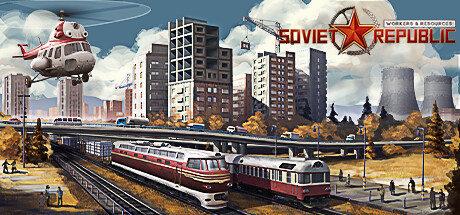
Workers & Resources: Soviet Republic
Build a soviet republic from an impoverished country into a rich industrial superpower in a city builder with intricate production chains and a fully simulated global economy. Manage the lives of your citizens from education to work and party loyalty to criminal activity.

Darfall
Darfall is a hero-based RPG city-building game that puts you in the role of a hero who must protect their home and help it grow! During the day, grow your hero’s might, find epic loot, master new abilities, and fortify your settlement. At night, survive the hordes of undead, until you triumph.

The Wandering Village
The Wandering Village is a city-building simulation game on the back of a giant, wandering creature. Build your settlement and form a symbiotic relationship with the colossus. Will you survive together in this hostile, yet beautiful post-apocalyptic world, contaminated by poisonous plants?

Oxygen
Oxygen is a survival city builder. Build your city around the Oxygen Center and ensure your people's survival in a post-apocalyptic future, threatened by crack explosions, deadly winds, droughts and frosts. Lead your people and more importantly keep the Oxygen Center running!

Factory Town
Build, automate, and optimize a giant factory on 3D terrain using conveyor belts, trains, chutes, pipes, and airships. Sell your goods to nearby villages to expand their borders, increase happiness, and unlock even better technology!
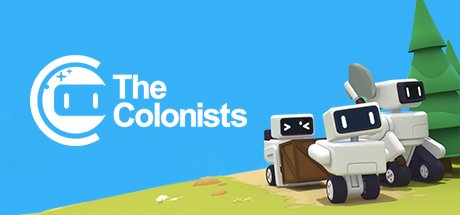
The Colonists
Build a new home for your team of robots as they begin a new life for themselves on a distant planet where they can fulfil their ultimate dream: to be human.
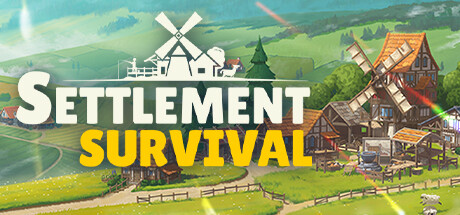
Settlement Survival
In this city-building game, you will lead a group of survivors in their search for a new home. Manipulate the landscape, manage limited supplies, plant crops, hunt wildlife, gather resources, and develop trade routes to build a bustling and unique town.
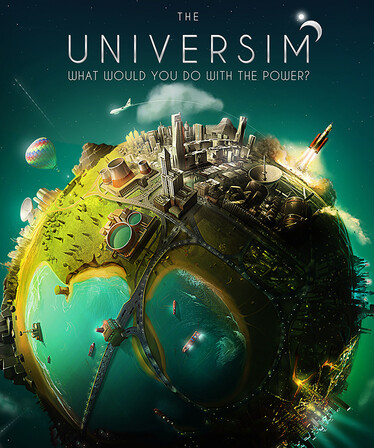
The Universim
Guide a civilization from the Stone Age to the Space Age in a city-building god game. Manage resources, research technology, survive natural disasters and alien threats, use godly powers to protect or punish your creations, and colonize distant planets.

Kenshi
A free-roaming squad based RPG. Focusing on open-ended sandbox gameplay features rather than a linear story. Be a trader, a thief, a rebel, a warlord, an adventurer, a farmer, a slave, or just food for the cannibals. Train your men up from puny victims to master warriors.
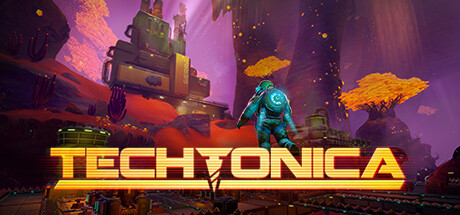
Techtonica
Techtonica is a first-person factory automation game with a gripping mystery about mining your way out from the depths of an alien planet. Explore bioluminescent caves, mold destructible terrain, construct a massive subterranean factory. Dig your way toward answers & discover the secrets of Calyx.
Frequently Asked Questions
Dream Engines: Nomad Cities is currently priced at 29.99€ on Steam.
No, Dream Engines: Nomad Cities is currently not on sale. You can purchase it for 29.99€ on Steam.
Yes, Dream Engines: Nomad Cities received 431 positive votes out of a total of 578 achieving a rating of 7.09.
😊
Dream Engines: Nomad Cities was developed by Suncrash and published by Suncrash and Gamirror Games.
Yes, Dream Engines: Nomad Cities is playable and fully supported on Windows.
No, Dream Engines: Nomad Cities is not playable on MacOS.
No, Dream Engines: Nomad Cities is not playable on Linux.
This information about Dream Engines: Nomad Cities is not available yet.
This information about Dream Engines: Nomad Cities is not available yet.
No, Dream Engines: Nomad Cities does not support VR.
Dream Engines: Nomad Cities is a single-player game.
Yes, there is a DLC available for Dream Engines: Nomad Cities. Explore additional content available for Dream Engines: Nomad Cities on Steam.
Yes, Dream Engines: Nomad Cities is fully integrated with Steam Workshop. Visit Steam Workshop.
No, Dream Engines: Nomad Cities does not support Steam Remote Play.
Yes, Dream Engines: Nomad Cities is enabled for Steam Family Sharing. This means you can share the game with authorized users from your Steam Library, allowing them to play it on their own accounts. For more details on how the feature works, you can read the original Steam Family Sharing announcement or visit the Steam Family Sharing user guide and FAQ page.
You can find solutions or submit a support ticket by visiting the Steam Support page for Dream Engines: Nomad Cities.
Data sources
The information presented on this page is sourced from reliable APIs to ensure accuracy and relevance. We utilize the Steam API to gather data on game details, including titles, descriptions, prices, and user reviews. This allows us to provide you with the most up-to-date information directly from the Steam platform.
Additionally, we incorporate data from the SteamSpy API, which offers insights into game sales and player statistics. This helps us present a comprehensive view of each game's popularity and performance within the gaming community.
Last Updates| Steam data | 01 October 2026 14:23 UTC |
|---|---|
| SteamSpy data | 18 October 2026 20:36 UTC |
| Steam price | 27 October 2026 03:36 UTC |
| Steam reviews | 19 October 2026 09:52 UTC |
If you'd like to dive deeper into the details about Dream Engines: Nomad Cities, we invite you to check out a few dedicated websites that offer extensive information and insights. These platforms provide valuable data, analysis, and user-generated reports to enhance your understanding of the game and its performance.
- SteamDB - A comprehensive database of everything on Steam about Dream Engines: Nomad Cities
- SteamCharts - Analysis of Dream Engines: Nomad Cities concurrent players on Steam
- ProtonDB - Crowdsourced reports on Linux and Steam Deck Dream Engines: Nomad Cities compatibility

Game modes
Features
Online players
5
Developer
Suncrash
Publisher
Suncrash,
Gamirror Games
Release
09 May 2024
Platforms
Clicking and buying through these links helps us earn a commission to maintain our services.