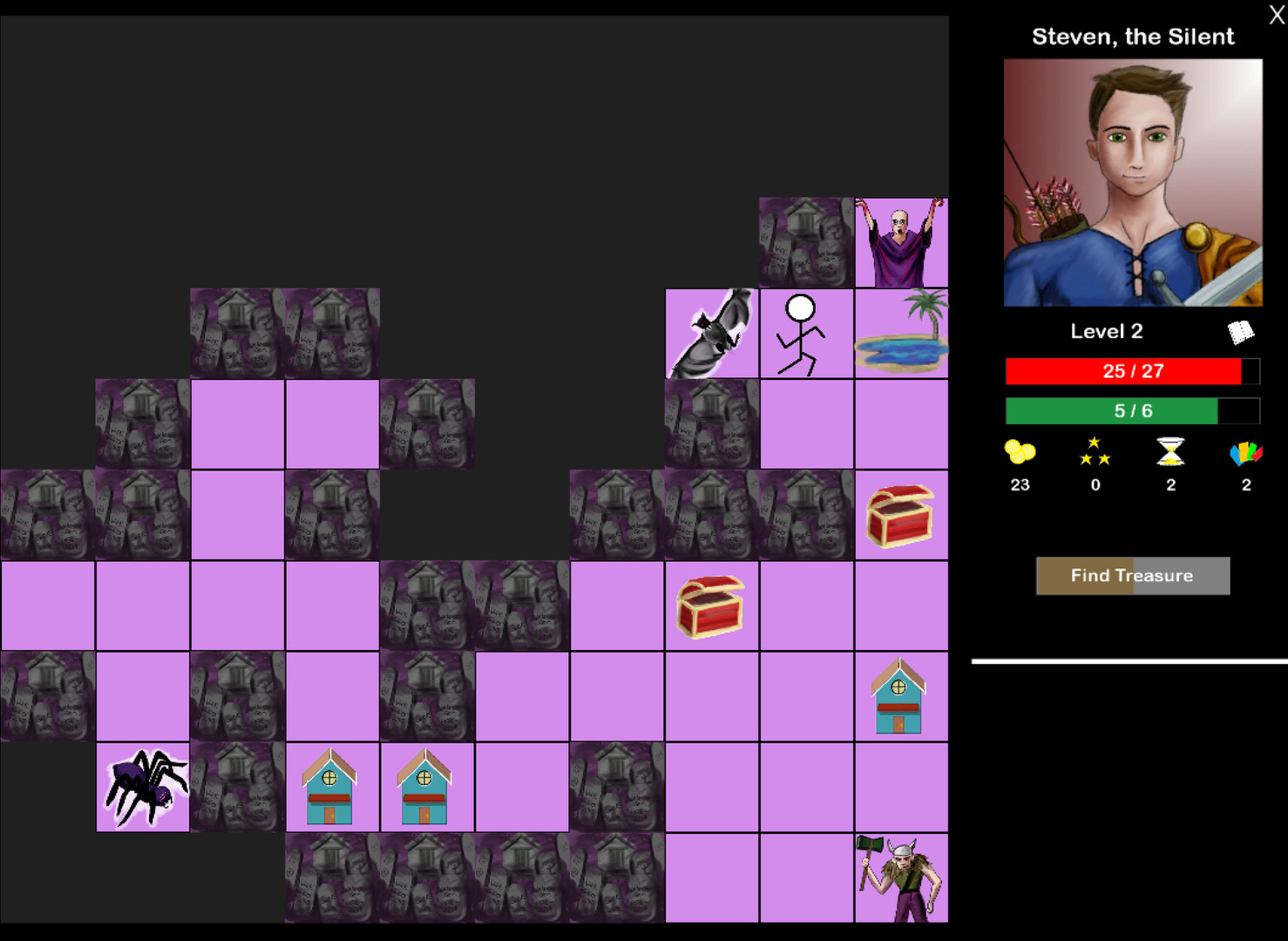
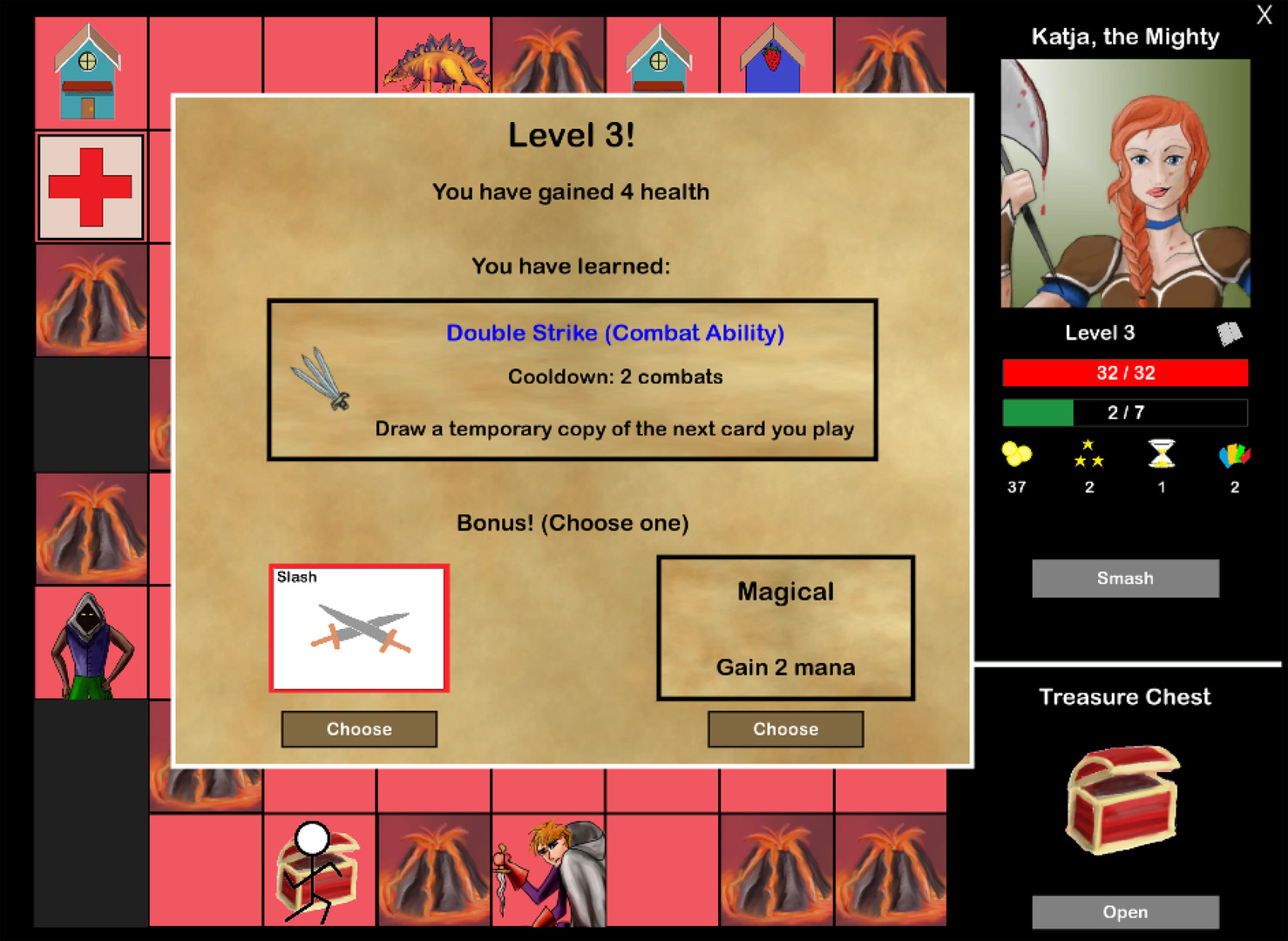
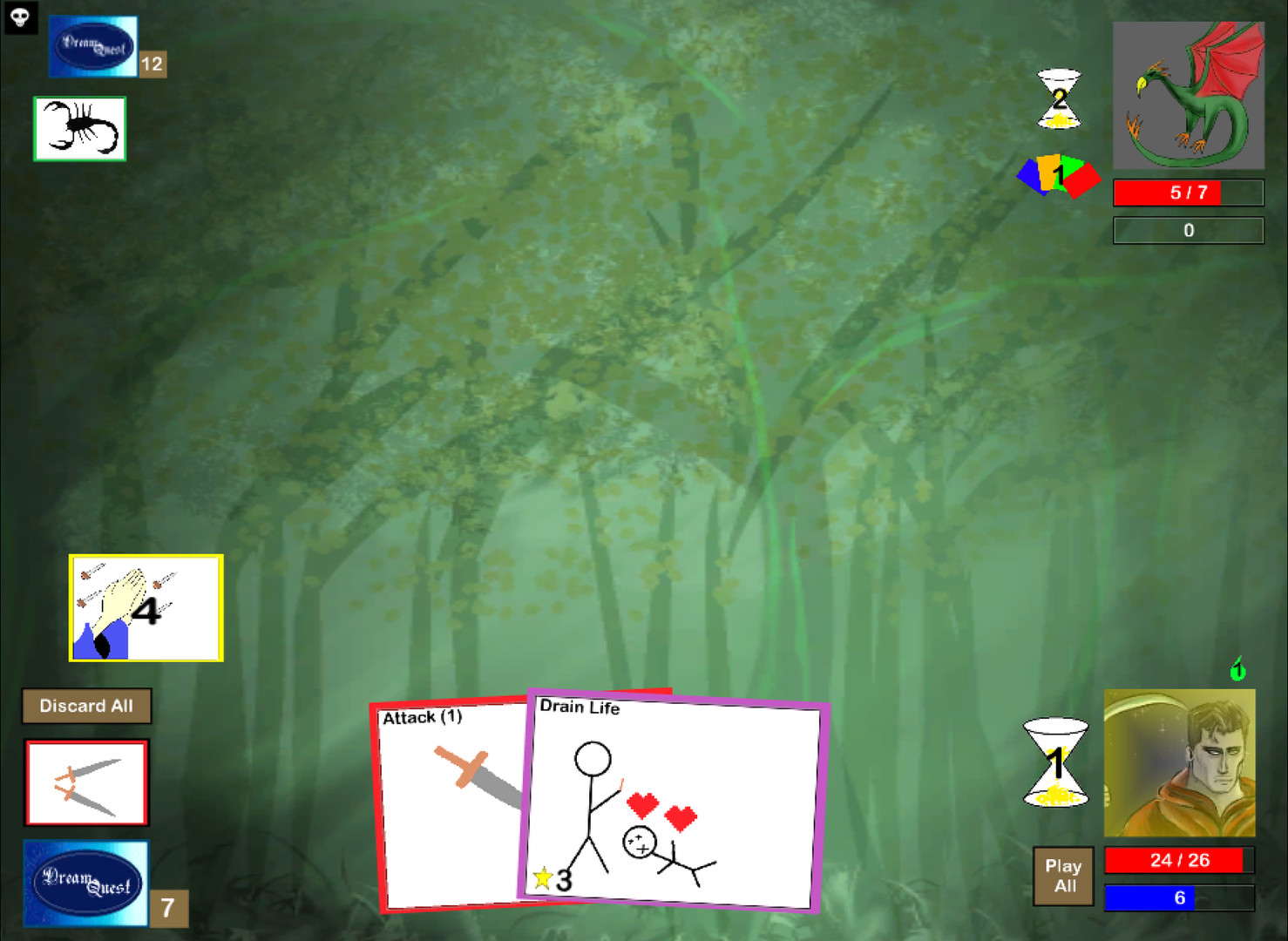
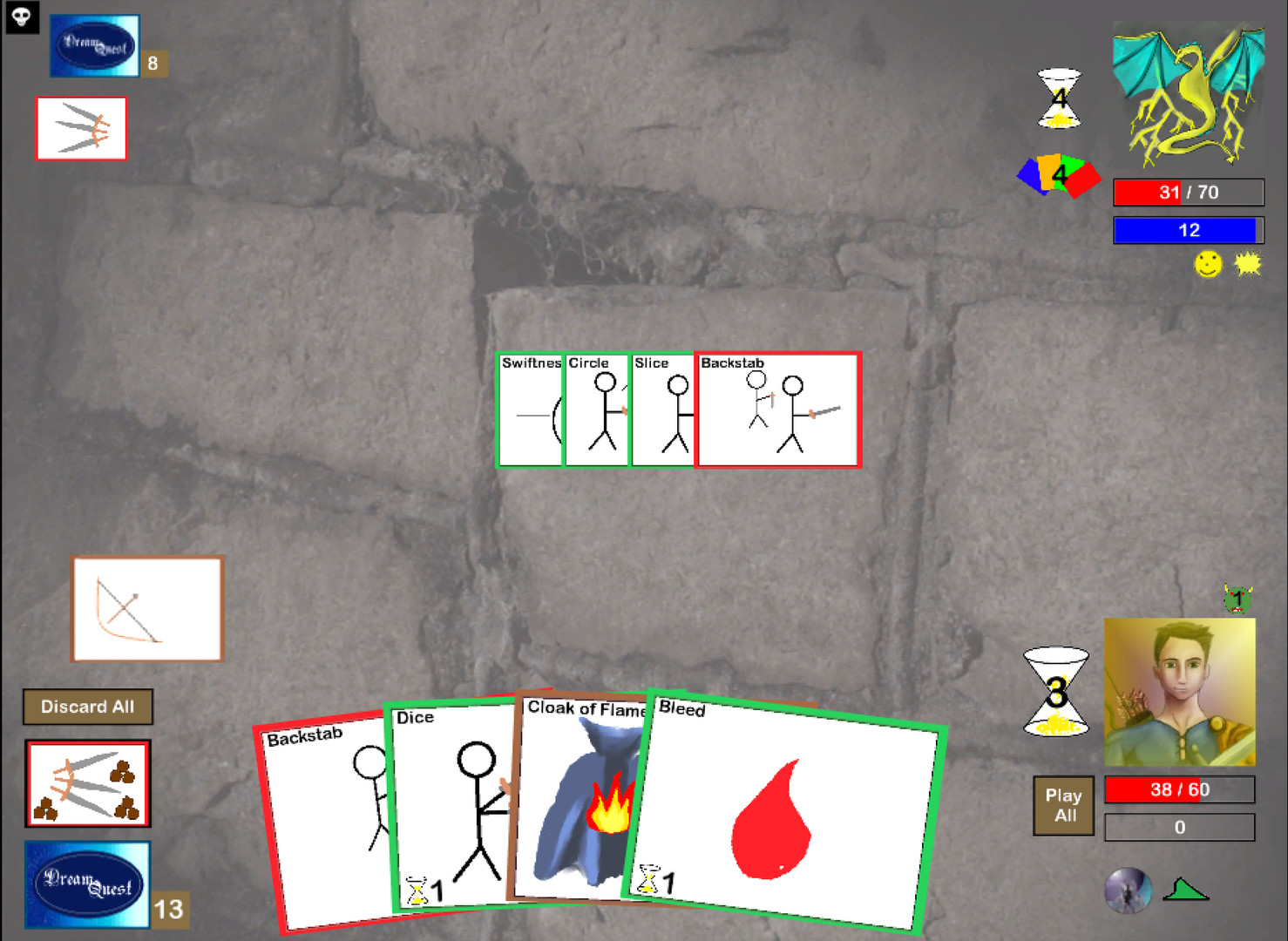
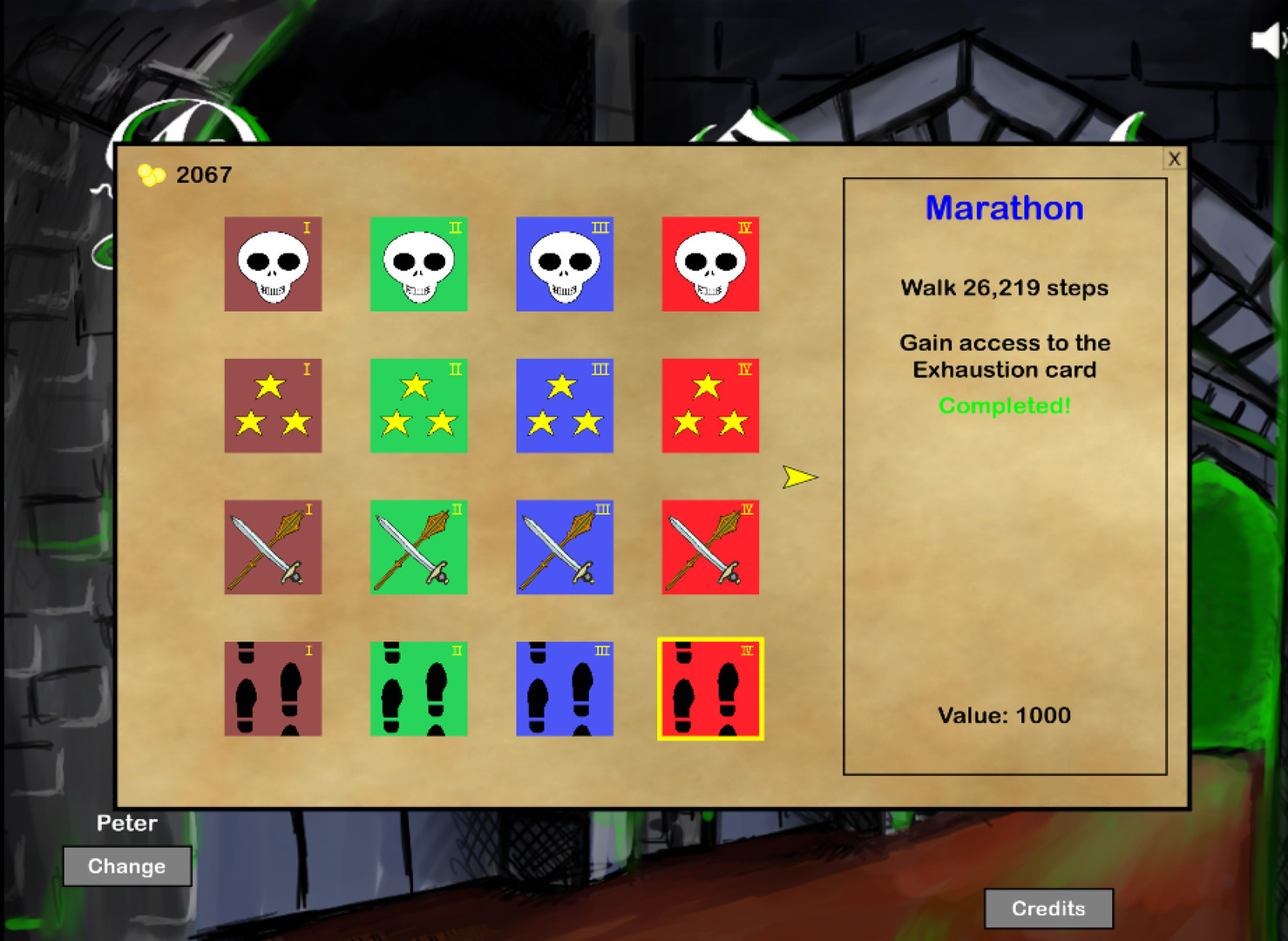
Disclaimer: I have put hundreds of hours into this game on IOS at the time of reviewing. Dream Quest is a game I've been singing the praises of for nearly a decade at this point. I recall stumbling into it around 2016, long before Slay the Spire ever existed. It's a strange game on the face of it, and was especially so back in the days before the "Deckbuilder Roguelike" was a popular concept. You must remember, this game predated (and directly inspired!) Slay the Spire. This is for all intents and purposes, Ground Zero for the hordes of Deckbuilding Rougelikes that infest the shelves of steam. Hell, I originally bought Slay the Spire because I saw it and went "oh, it's like Dream Quest!" And Slay the Spire is an excellent, genre defining title in it's own right. For most games, a game like Slay the Spire would effectively render all that came before it obsolete. And yet, I keep coming back to Dream Quest. Over, and over, and over again. So, why is that? I think it's rather simple; it's just that good. It's also very unique within the genre, at least as far as it handles many of the mechanics that have become it's staples. The common critique of the modern rougelike deckbuilder is that if you've played one, you've played them all. Dream Quest sidesteps this... by having been made before any of these conventions are established. It is a game stuffed with ideas, dreams of a genre that could one day exist. And those dreams come with a lot of different mechanics that have never really been replicated in their entirety since. Let's start with the obvious. The presentation. It's MS Paint art for cards done by a literal child, with all of the dungeon assets done by a middle schooler. Yes, the developers kids did all the art, and it shows. This game's graphics will always look bad by any conventional standard, but outside of that I actually find the presentation really solid. Outside of that, The UI is fairly well arranged (though clearly designed for mobile, it's original platform), and the process of playing cards is mostly snappy. I do wish I could disable the equipment trigger animation though. Which the game does do in certain situations, so I have no idea why it isn't an option. The poor art also does make it fairly easy to identify cards at a glance, and with larger hands, the names of cards are put in the top left where they can be picked out among the visual clutter. When it comes down to the gameplay mechanics, Dream Quest is a game that understands that complexity comes from simple mechanics interacting in nuanced ways. The game has only a few card types. Attacks, Actions, Spells, Mana, Equipment, and a few Reactions and Prayers for good measure. Of the cards I listed, only two of them require an actual resource, with Actions costing... Actions, and Spells requiring mana. Mana and Actions are fairly self explanatory. Mana is a resource you build with cards that persists between turns, and Actions act as Slay the Spire energy, regenerating up to a limit each turn. Whether you will actually be engaging with these resource systems depends heavily on your class, which is where the complexity comes in. There are four starting classes: Warrior, Thief, Priest, and Wizard, i.e. the basic D&D classes. While they technically share cards, the cards they find are heavily biased towards a specific pool of cards, with only minor overlap between each pool. Warriors and Thieves focus on Attacks and Actions, with warriors getting more singular high-impact cards, while Thieves focus on chaining actions that refund their play and draw cost before going for a big finisher, using equipment to supplement their defenses. The Priest and Wizard focus on spells and the mana cards required to play them. Priest spells are defensive and healing focused in nature, while wizard spells are heavily offensive, utilizing four primary elements with their own drawbacks and benefits. Priests also get a few Prayer cards, which reward their defensive play style with payoffs that get bigger the longer it takes to reach them. Each class also comes with their own set of two active abilities that are earned upon level up, which further emphasize their playstyles. They also have one ability they start with that only works on the world map, which is typically used to make the process of pathing more interesting. I'll get to that later. After you play with these basic classes, you'll eventually unlock the advanced classes. Each one takes two of the base classes, and combines their card pool along with a few new abilities to make something wholly unique. The Necromancer combines the divine and arcane spell pools to make an entirely mana focused character. The Samurai fuses the warrior's powerful attacks with the wizards focus on mana-based burst damage with a unique active ability that converts all of your MP into one giant burst of unblockable damage. Seriously, the class design in this game is genius; despite sharing card pools, they all play incredibly differently. That is a hard feat to pull off, and is honestly a bit more interesting to me than just giving every class their own entirely unique card pool. Pathing is also a lot more interesting than most games in the genre. You don't path from encounter to encounter, but explore a dungeon map to try and find as much information as you can, and then choose which monsters you fight in whatever order you can wring out. This is incredibly important for survival, as leveling up fully restores your HP in addition to make you stronger. Most of the classes have some sort of overworld movement ability to elaborate on this, such as smashing walls or moving enemies out of the way. This combined with the incredibly potent combat abilities that recharge after a certain number of fights makes dream quest a game of risk taking. You try to figure out which encounters are dangerous and need abilities, then take those out while weaving in weaker monsters you can steamroll in order to recharge your health and abilities for the next tough fight, culminating in a boss. This is helped extremely by the monster design; each monster usually has a few specific gimmicks it can do and not much else, so judging what you can handle is generally not too difficult once you have a handle on things. It's a very strong gameplay loop, and one who's pacing is very unique to the genre. With that said, it does come with some problems. As the genre has evolved, it's generally tended towards a more skill based, highly synergistic approach. Slay the Spire is known for it's top players having incredibly high win rates on the highest difficulty. The same is not true for Dream Quest. This is mostly because of the amount of hard counters in this game; many of the monsters counter certain deck types and playstyles about as hard as Time Eater counters a shiv deck in spire. It can be frustrating, and there are definetly times when a game just feels straight out impossible, especially with some of the more arcane boss gimmicks. But hey, that's the fun of Rougelikes. A run of Dream Quest is fairly short, 30 minutes at most. If you fail once, just jump right back in and see what the game gives you. It'll probably be something you haven't quite seen before. There's other flaws as well; there's some cards that just kind of suck, and a few cards that are outright broken on both the enemy and player side. I also find the Lord of the Dream (the game's Heart equivalent) to be a rather unfun fight because of just how overwhelmingly powerful he is. It's clearly taking inspiration from the final boss of the old MTG: Shandalar PC game where it's more about how much damage you can deal before dying rather than an actual fight you're supposed to win. You need very specific strategies to do this. But outside of that? It's a damn fine game, and one that still brings it's own unique ideas to the table. If you like this genre but are bored of it's conventions, give this game a shot.
Expand the review