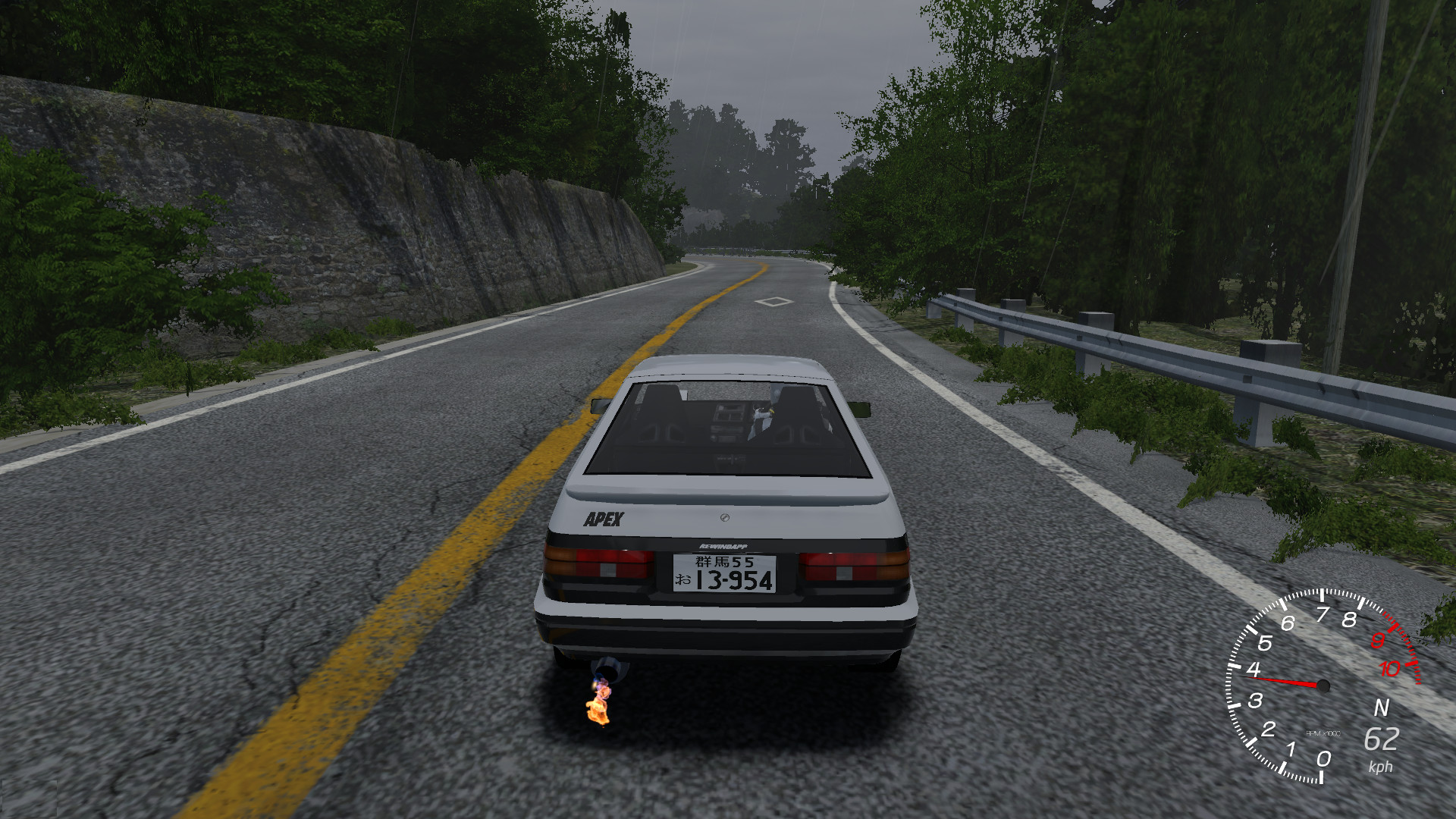
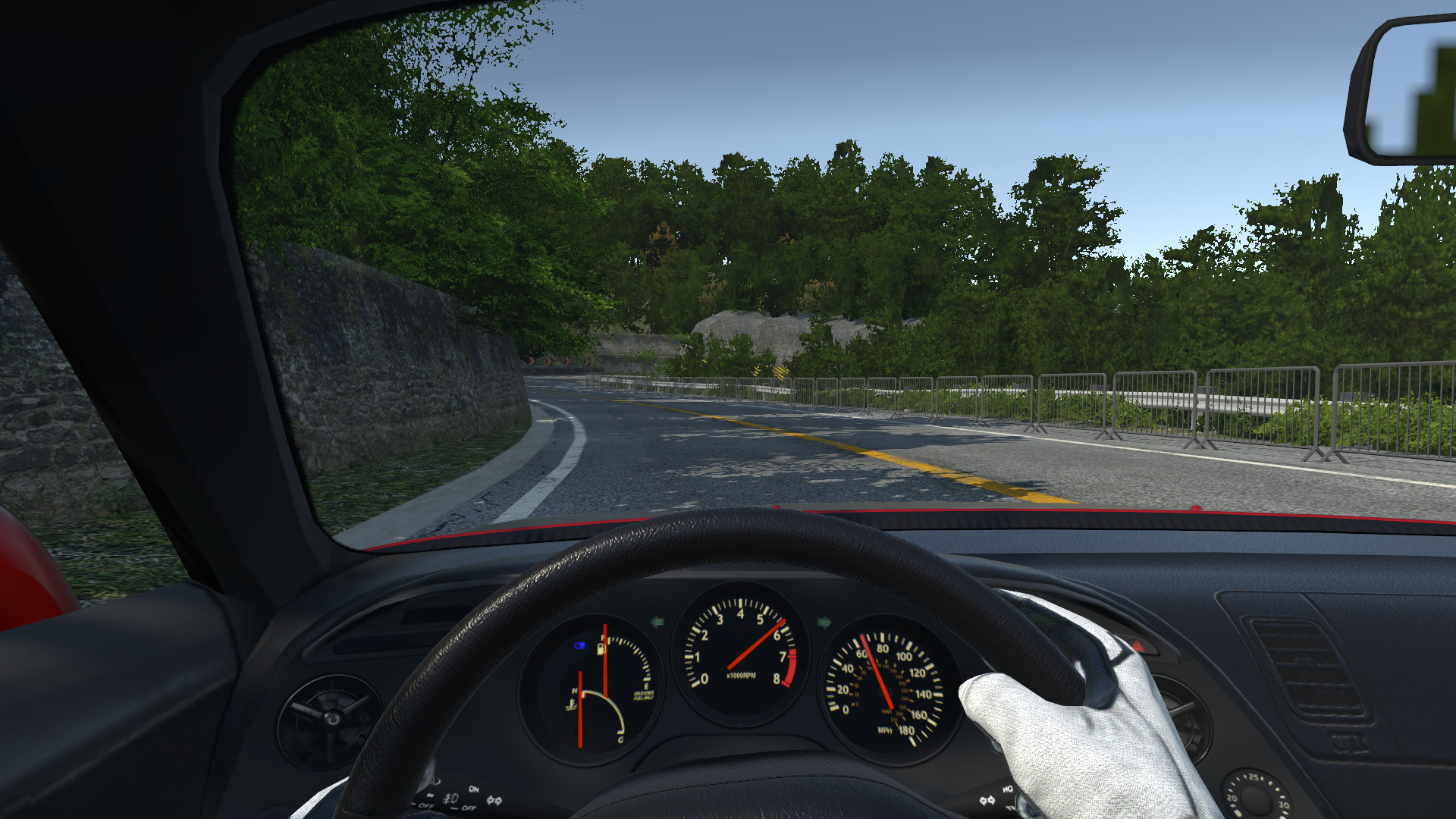
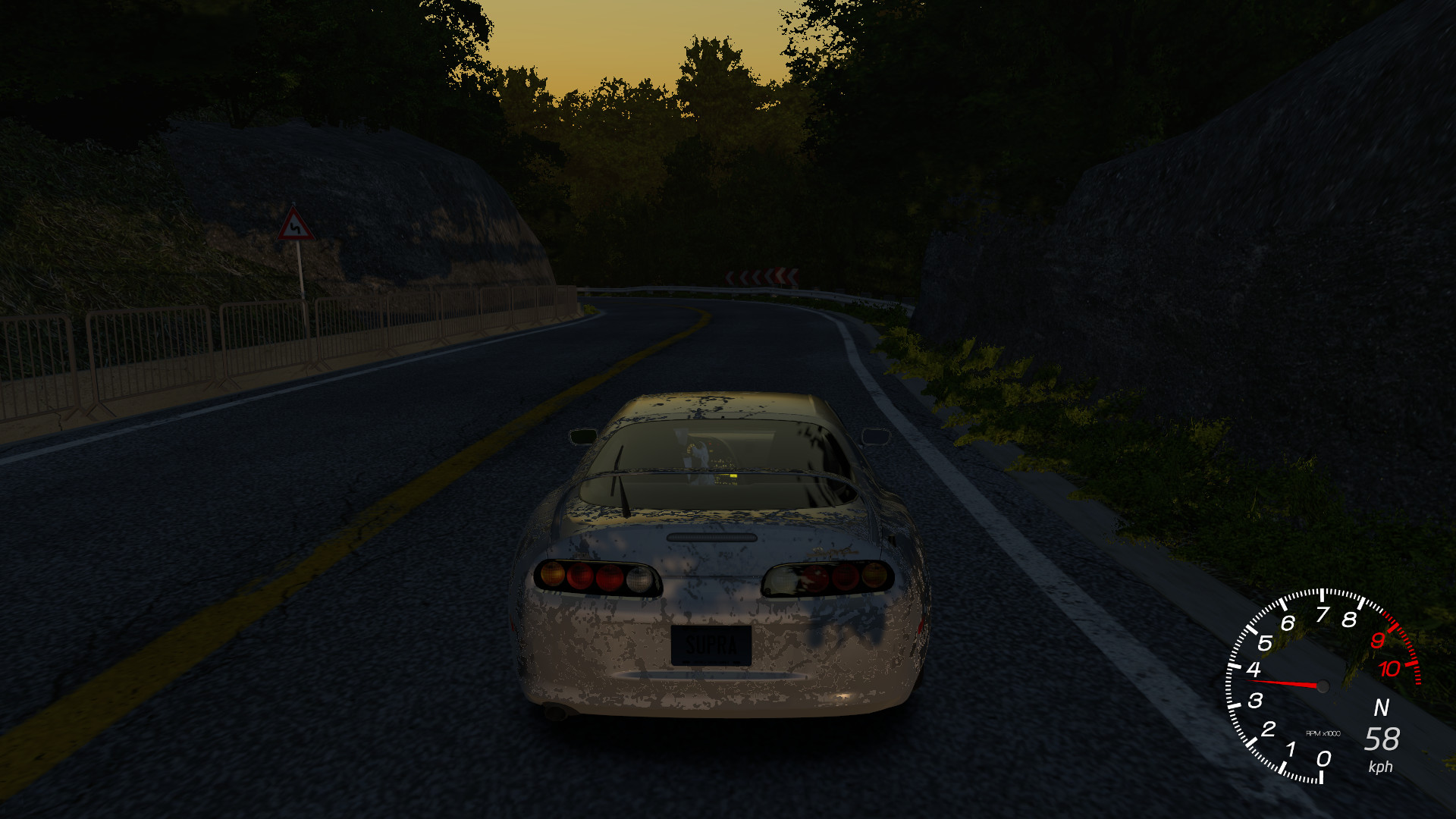
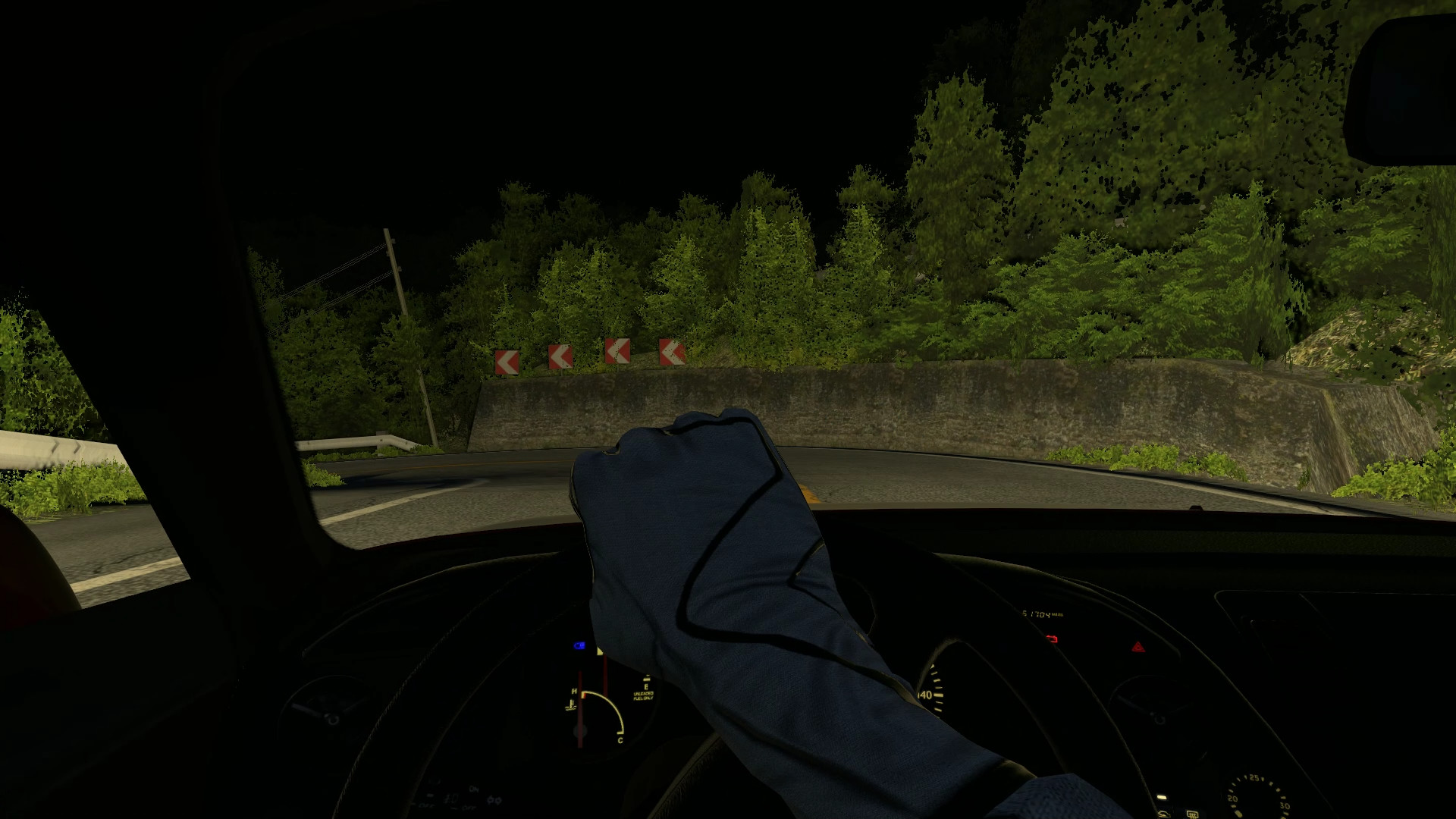
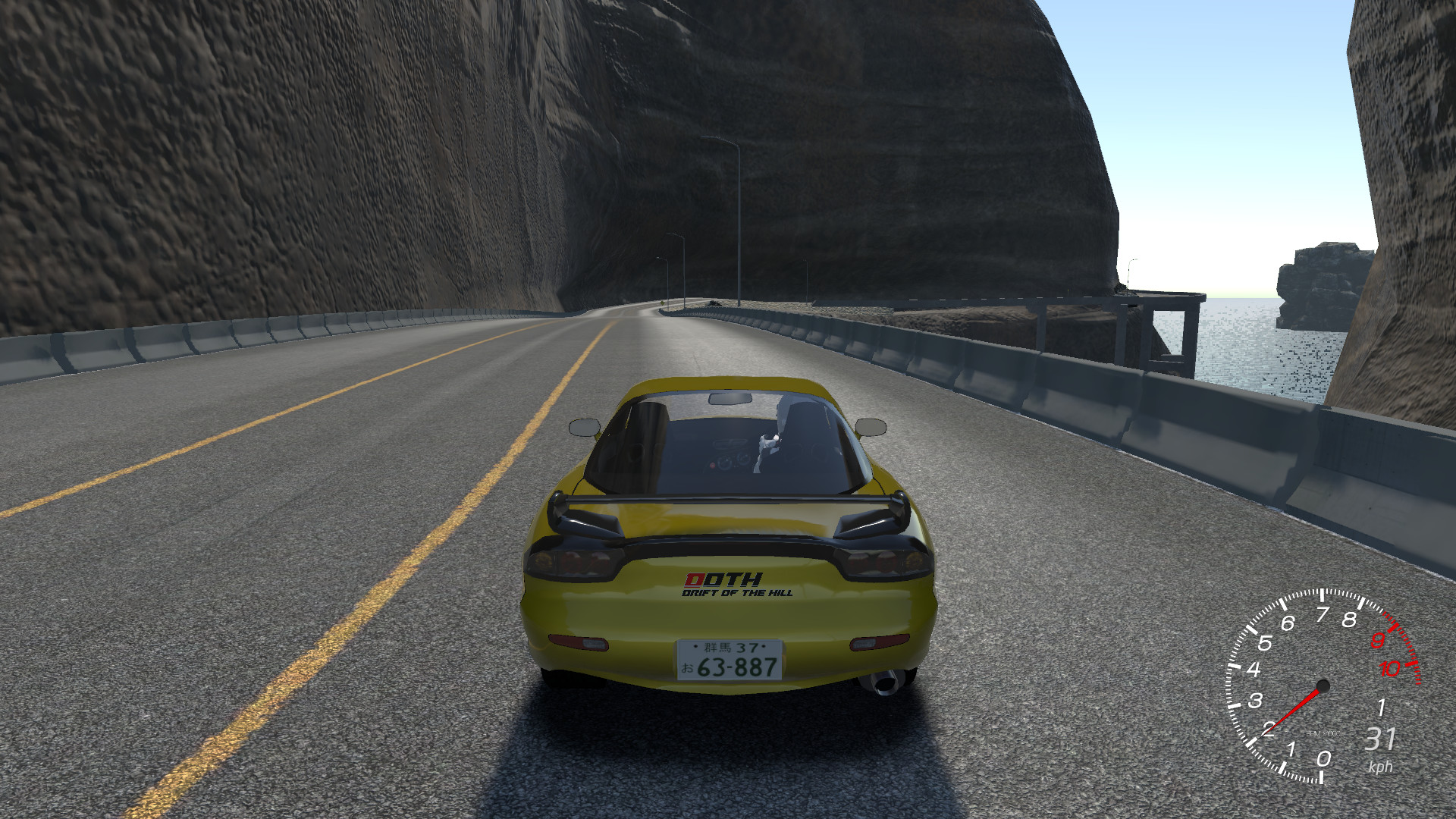
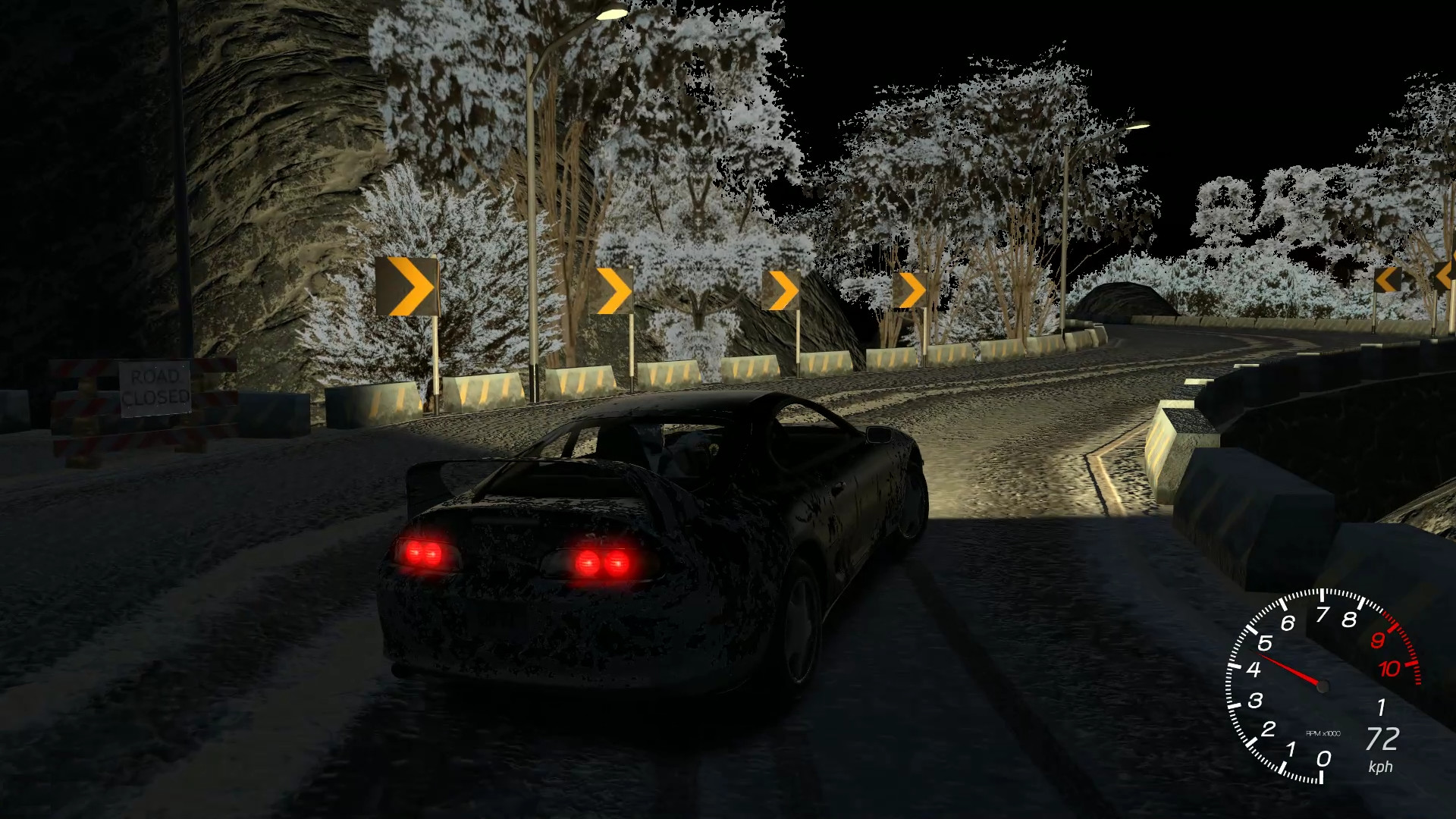
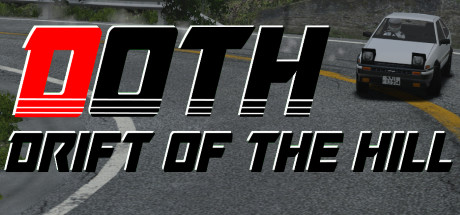
Drift of the Hill, developed and published by RewindApp, is a compact indie racing title that distills the essence of mountain drifting into a focused and straightforward experience. It doesn’t attempt to compete with high-end racing simulators or massive open-world driving games; instead, it narrows its scope to the thrill of carving through narrow downhill roads, where precision and rhythm matter more than speed. The game is clearly inspired by Japan’s touge culture and the underground drifting scene, embracing both the technical challenge of drifting and the aesthetic that surrounds it. It’s a game that aims to capture that familiar late-night drive feeling—headlights cutting through fog, tires squealing through hairpins, and eurobeat pumping through the speakers—as you fight both gravity and your own reflexes. At its core, Drift of the Hill is about simplicity. The player has access to a small selection of cars and a handful of mountain passes, each offering tight turns and steep slopes that test control rather than outright speed. The physics system is tuned to highlight momentum and countersteering, rewarding players who take the time to master its nuances. The drifting mechanics feel intuitive enough to grasp quickly but require finesse to perfect. Entering and sustaining a drift depends on subtle throttle adjustments and steering corrections, and when everything clicks—the right angle, the perfect slide through a corner—it produces a satisfying sense of flow. The feedback from the car, even with modest physics, is tangible enough to keep players experimenting for the best runs. It’s an experience built around short bursts of mastery, and when played in that spirit, it achieves its goal. Visually, the game captures the mood of downhill drifting rather than attempting realism. The environments, while limited in number, are designed with attention to atmosphere—mountain roads winding through misty forests or rocky passes illuminated by the glow of headlights and taillights. The day-and-night cycle enhances this tone, allowing players to drift under the sunset or through moonlit fog, evoking the ambiance of late-night races from classic car culture media. The lighting effects are simple but effective, and while the models and textures aren’t cutting-edge, they suit the game’s low-cost indie charm. What gives Drift of the Hill its personality is not its graphical fidelity but the way its visuals, music, and mechanics combine to create an almost nostalgic energy, one that recalls early-2000s racing games where the focus was purely on the joy of driving. The soundtrack plays a major role in defining the experience. The developers made a deliberate choice to include eurobeat tracks—an homage to the iconic music style synonymous with drifting subculture. The pulsing beats and fast tempo perfectly complement the intensity of hairpin turns and long drifts, reinforcing that sense of adrenaline and style. It’s a clever move that connects the game to its inspirations while giving each session a distinct rhythm. The audio design beyond the music is functional rather than impressive, with engine sounds that convey enough feedback to feel responsive but lack the depth or variation found in more advanced racing titles. Still, in the context of the game’s scale, the combination of sound and soundtrack succeeds in creating an energetic, arcade-like feel. In terms of content, Drift of the Hill is extremely limited, which is both its greatest weakness and its most defining trait. The game includes a small selection of vehicles and five primary maps, each with minor variations in layout and setting. There’s no campaign, progression system, or customization beyond basic car selection. Once you’ve mastered the tracks, there’s little incentive to keep playing beyond self-improvement and the sheer satisfaction of nailing perfect drifts. This minimalist approach can feel refreshing for players seeking short, focused gameplay sessions, but it will disappoint anyone looking for a robust or evolving experience. Without unlocks, leaderboards, or multiplayer modes, the replayability relies entirely on the player’s personal enjoyment of the driving mechanics. For some, that purity will be enough; for others, it will make the game feel like a prototype that stops just short of its full potential. Performance-wise, the game is optimized to run smoothly on even low-end PCs, which makes it accessible to nearly everyone. The controls respond well whether using a controller or keyboard, though the lack of advanced options or wheel support limits its appeal to serious sim-racing fans. Its small footprint and low price also make it easy to recommend as a casual diversion rather than a major investment. The overall presentation, while barebones, is cohesive: menus are straightforward, load times are quick, and there are few technical issues. It’s clear that the developer intended this as a short, polished slice of drifting rather than a sprawling experience, and within that narrow aim, it succeeds more often than it falters. Drift of the Hill ultimately thrives on its clarity of purpose. It’s not trying to reinvent the racing genre or deliver a complex career mode; it’s simply about the feeling of throwing your car sideways down a mountain and holding the drift until your tires scream. It’s a niche title, but one that knows exactly what it wants to be—an homage to touge drifting and the adrenaline of controlled chaos. The repetition, limited variety, and small scope prevent it from standing among the greats, yet for what it is, it delivers a compact and satisfying experience. For players who appreciate indie passion projects and the hypnotic loop of mastering a road one corner at a time, Drift of the Hill offers a brief but enjoyable ride down a winding, nostalgic slope. Rating: 7/10
Expand the review