


The Men of Yoshiwara: Kikuya
"The Men of Yoshiwara" is a popular romance game for women. At the end, to whom is it that you will be talking of love? Vocal opening song/English text
Sync your Steam wishlist to find the lowest game prices instantly. No login required, just paste your Steam profile URL!
⚡ Try Wishlist Radar!
Sync your Steam wishlist to find the lowest game prices instantly. No login required!
⚡ Try Wishlist Radar!
Close

Fashioning Little Miss Lonesome on Steam
Quick menu
When two handsome young men spot the perfect girl to be their first model and help make a name for themselves, they're determined to go for broke and make her shine—but first they'll have to get her out of her house! Can these two really give such an anti-social recluse the makeover she needs to be a star?
Fashioning Little Miss Lonesome is a otome, female protagonist and visual novel game
developed by kalmia8
and published by MangaGamer.
Released on September 08th 2017 is available only on Windows.
It has received 348 reviews of which 287 were positive and 61 were negative resulting in a rating of 7.7 out of 10. 😊
The game is currently priced at 22.99€ on Steam, but you can find it for 2.66€ on Eneba.
The Steam community has classified Fashioning Little Miss Lonesome into these genres:
Media & Screenshots
Get an in-depth look at Fashioning Little Miss Lonesome through various videos and screenshots.


Load More


System requirements
These are the minimum specifications needed to play the game. For the best experience, we recommend that you verify them.
Windows
- OS *: Windows7/8/8.1/10
- Processor: 1.3GHz or better
- Memory: 1 GB RAM
- Graphics: DirectX 9
- Storage: 3 GB available space
Steam Price & Best Deals
User reviews & Ratings
Explore reviews from Steam users sharing their experiences and what they love about the game.
Fashioning Little Miss Lonesome is an eccentric otome visual novel that takes the familiar makeover-romance concept and turns it into something far more chaotic, suggestive, and comedic. Developed by kalmia8 and published by MangaGamer, the game follows Ema Tachibana, a young woman who has little interest in popularity, romance, or becoming the center of anyone’s attention. Instead of portraying loneliness as something she desperately wants to escape, the story establishes that Ema is actually comfortable being ignored. Her intimidating expression, gloomy demeanor, tall stature, and lack of sociability keep classmates away, and she is perfectly prepared to remain invisible until graduation. That attitude immediately distinguishes her from the more accommodating protagonists commonly associated with romance-focused visual novels. Ema’s peaceful isolation collapses when Miki Hiraizumi and Saito Shinjou enter her life. Both men believe she has enormous potential and decide that transforming her appearance could help fulfill their own ambitions. The resulting situation becomes the foundation for a romantic comedy about fashion, confidence, attraction, and conflicting personalities. Importantly, Ema does not enthusiastically accept their attention. She questions why she should participate at all, producing a constant clash between two men determined to make her shine and a woman who never requested their assistance. This resistance gives the premise much of its personality because Ema feels less like a passive makeover project and more like an unwilling participant who continually challenges the people attempting to reinvent her. Miki is perhaps the more naturally appropriate character for the fashion-centered premise. Having returned to Japan after spending time abroad, he has been passionate about making clothes since childhood and wants to use his abilities to bring out the appeal of unconventional women. He quickly treats Ema as the muse he has been searching for. His enthusiastic personality is complemented by an explicitly masochistic streak, allowing the writing to push his interactions with Ema into exaggerated comedic territory. Rather than behaving like a restrained romantic gentleman, Miki contributes heavily to the story’s deliberately unusual sense of humor. Saito provides a very different source of tension. He is portrayed as someone who has become bored because success has generally come too easily to him. His ambition is consequently enormous: he wants to accomplish something significant enough to change the world. When he notices Ema’s potential, he approaches her transformation with confidence and an abrasive attitude. His sadistic tendencies contrast directly with Miki’s masochism, while Ema’s unwillingness to cooperate creates an amusing three-way collision of personalities. The game understands that these characters are exaggerated and uses their extremes as part of its identity rather than trying to disguise them beneath conventional romantic behavior. The fashion theme provides the narrative framework, but Fashioning Little Miss Lonesome should primarily be understood as a character-driven visual novel rather than a fashion-management game. Progress revolves around reading conversations, experiencing character scenes, making decisions, and following branching romantic developments. The makeover itself acts as the catalyst that forces Ema outside the secluded routine she prefers. As the relationships progress, the more interesting question becomes whether Miki and Saito will truly transform Ema or whether prolonged exposure to her stubborn personality will change them instead. This reciprocal aspect gives the story more substance than its intentionally silly premise initially suggests. Ema is certainly being pushed into unfamiliar situations, but she has enough personality to affect the people surrounding her. Her reluctance to conform prevents the story from becoming a simple fantasy about two handsome men discovering an overlooked woman and magically improving her life. Ema does not necessarily agree that her old life needed fixing. That distinction makes her personal development more interesting because any eventual emotional change has to compete with a personality that genuinely values independence and solitude. Comedy remains the dominant ingredient throughout the experience. The character archetypes, provocative jokes, confrontational exchanges, and absurd circumstances give the game a considerably more irreverent personality than a straightforward romantic drama. This can also be divisive. Miki and Saito possess deliberately extreme characteristics, while the humor frequently draws energy from uncomfortable or sexually charged situations. The game includes mature sexual content and nudity, so players expecting an innocent school romance based solely on the colorful anime presentation may be surprised by how adult the material becomes. The visual presentation complements the energetic tone through attractive anime-inspired character artwork and expressive illustrations. Character appearances are especially important in a story centered around fashion and transformation, and the polished designs help reinforce the contrast between Ema’s withdrawn personality and the glamorous possibilities that Miki and Saito imagine for her. Full Japanese voice acting is another notable strength. Combined with English interface text and subtitles, the original performances add personality to conversations and help the exaggerated comedy land more effectively. Replay value comes mainly from exploring the different romantic routes, choices, endings, and character outcomes. The two primary love interests offer contrasting dynamics rather than simply serving as cosmetic alternatives to one another. Players who become invested in Ema will therefore have an incentive to explore how her personality develops under different circumstances. Steam achievements provide an additional reason to investigate alternate outcomes, although the fundamental appeal remains narrative discovery rather than mechanical challenge. The game's greatest weakness is closely connected to its strongest quality: it is unapologetically strange. Players who enjoy eccentric otome stories may find Ema refreshing because she is sarcastic, antisocial, resistant, and far removed from a universally agreeable heroine. Others may struggle to connect with her. Similarly, Miki and Saito can be entertaining precisely because they are so exaggerated, but their masochistic and sadistic characteristics will not appeal to everyone. The comedy requires some willingness to accept provocative situations and deliberately excessive characterization. As a complete experience, Fashioning Little Miss Lonesome succeeds by refusing to turn its makeover premise into a predictable Cinderella story. Ema’s stubborn independence gives the narrative a strong center, while Miki and Saito provide distinctly different romantic and comedic energies. Fashion serves as the excuse for bringing these incompatible people together, but their evolving relationships become the real attraction. The Japanese voice acting, expressive artwork, branching romance, mature humor, memorable protagonist, and unusual character dynamics make it particularly appealing to players seeking an otome visual novel that does not take itself too seriously. it is a deliberately niche experience whose oddities ultimately give it considerable charm and identity. Rating: 8/10
Hello there, fellow VN enjoyers! I thought I'd share my thoughts and feelings on this game as well. I usually don't write many reviews (especially compared to how many video games, across all kinds of genres, I've played throughout my life). Also, English isn't my native language, so sorry in advance for any mistakes. Please be aware that this review may contain a few minor or bigger spoilers. Those will be marked as spoilers. TLDR: Fun comedy, decent art and music, but the story didn't really grab me. Some parts were genuinely hilarious, while others felt repetitive or boring. Romance is more of a side dish than the main course. I had fun with it, but I wouldn't pay full price for it. 2.5/5 Sounds ♫: The music fits well with what is happening on screen. I also liked the intro song. Most of the game is voiced, and the voice acting was mostly well done too. Graphics ☼: They're alright. I have to admit that this isn't really my preferred art style in the world, but it's still well made. Controls ✥: You have more or less the standard VN controls. You can skip parts you've already read and stop at the next choice or at unseen text. Since the story between choices can be really long, you can also directly skip to the next choice. This is especially helpful when going through the different routes. Story ❀: You are a loner that everybody is scared of. These guys want to make you into a model. Of course, you're not exactly happy about that, but if you want to find out whether they manage to get her out of her shell, you'll have to play the game :P The story is... okay. To be fair, the comedy ranges from okay to absolutely hilarious, but overall, the writing wasn't as engaging as I'm used to from other games. Replayability ∞: Having completed every route was enough for me. No real need to touch it again. :/ My Opinion ❤: The comedy in this game can be really fun. I would also mostly describe this as a comedy with some romance rather than a real romance-focused game. The guys weren't really much to my liking, but I've definitely seen far worse. If I have to be 100% honest, though, I'm really torn about how I feel about this game. On one hand, I had quite a bit of fun playing it. On the other hand, I was really bored during some parts. Negatives ✗: I think the story can feel a bit rushed at times. The comedy can also start feeling a little repetitive after a while. ~ I would recommend this game since there is no "middle" option, and I can definitely see it being more appealing to some people than others. If you're looking for a really deep romance, this probably won't do it for you. But if you're looking for a light romance with a lot of comedy, then I'd say give it a try. I might recommend waiting for a discount, though. Personally, I don't think the full price is worth it - sorry. The H content will have its own entry under the DLC section. 2.5/5 ✮
Similar games
View all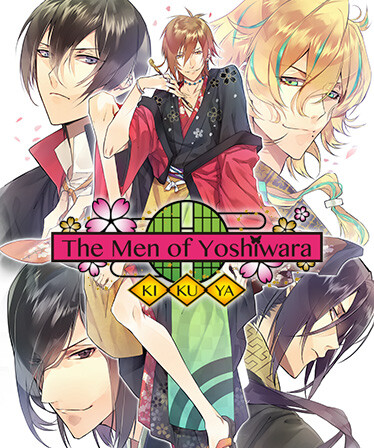
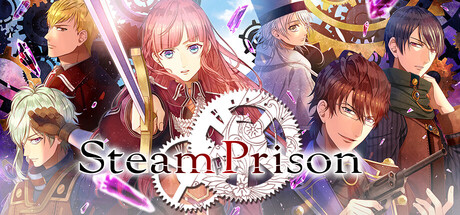
Steam Prison
Sentenced for a crime you didn't commit, you're cast out of your utopian home and exiled to the destitute steampunk districts below. As you seek to clear name in this otome visual novel, you'll learn about love, encounter handsome allies in low places, and confront the stigma both societies hold.

Hakuoki: Kyoto Winds
Romance 12 handsome warriors and the samurai of the Shinsengumi, uncover their dark secrets, and conquer your demons in this historical fantasy visual novel! Your narrative choices unlock multiple branching storylines and 30 different endings!
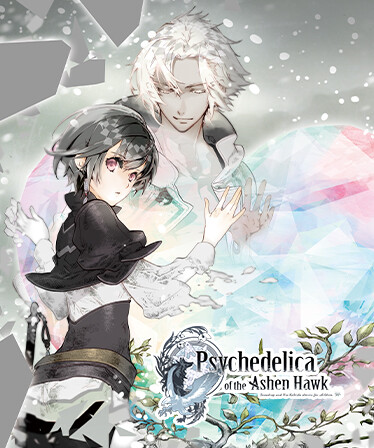
Psychedelica of the Ashen Hawk
Uncover the secret – Unite the clans In a town ruled by opposing clans and overshadowed by superstition and legend, a child is born with the dreaded mark of a witch. She conceals her identity until the theft of a mysterious relic brings to light a series of staggering revelations.

7'scarlet
The remote town of Okunezato is shaped like a crescent moon and shrouded in dark myths and legends. Take on the role of a brave young woman journeying into the unknown to uncover dangerous truths and locate her missing brother with her childhood friend.
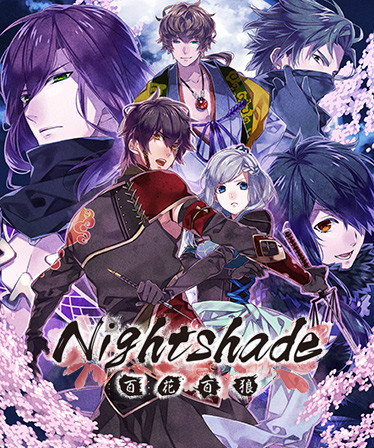
Nightshade/百花百狼
A romance visual novel game made in collaboration with D3P and Red Entertainment.Character design and illustrations are by the popular illustrator Teita. The romance revolves around Ninjas who have lived through the Sengoku Period. This game has published in 2016 as PS Vita in Japan.

OZMAFIA!!
Enjoy a dramatic romance in this fairytale otome visual novel. Who will you decide to trust and fall in love with in this mysterious town where fairytales have become warring mafia famiglia? Explore this exciting world through a dozen routes and 20+ endings!
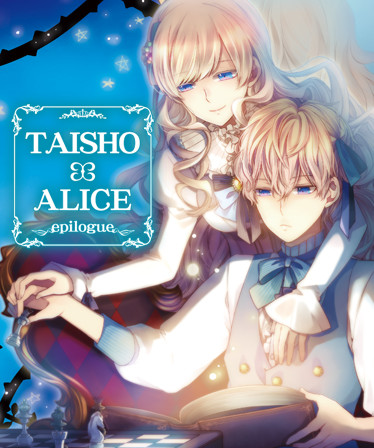
TAISHO x ALICE epilogue
This is the final installment of TAISHO x ALICE, a fairytale visual novel in which YOU must save your Prince Charming! Take on the role of the heroine in order to rehabilitate your chosen love interest and guide him to his "happily ever after" once and for all!
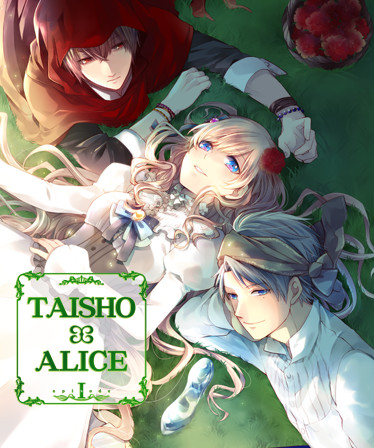
TAISHO x ALICE episode 1
DUALICE(TAISHO x ALICE episodeI) is a fairytale visual novel in which YOU must save your Prince Charming! You will take on the role of the fairytale heroine in order to rehabilitate your chosen love interest and guide him to his "happily ever after"!
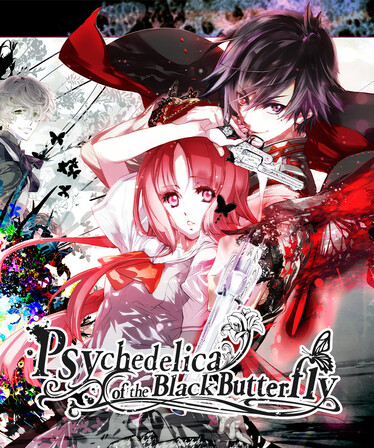
Psychedelica of the Black Butterfly
Awakening in a mysterious mansion, her first, frantic thoughts are: 'Where am I? And more importantly, WHO am I?'
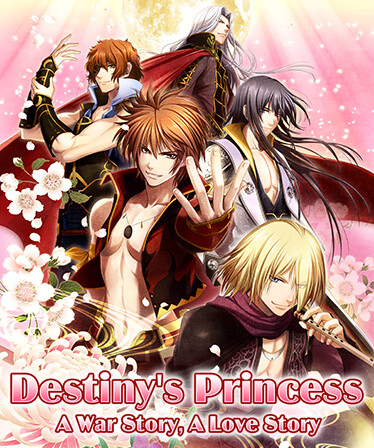
Destiny's Princess: A War Story, A Love Story
It's a game for girls designed with a dramatic storyline with an emphasis on an intriguing plot. You can fall in love with the well-known heroes of the Warring States Period!

Hakuoki: Edo Blossoms
Continue your journey to Edo in Hakuoki™: Edo Blossoms, where you play as the heroine Chizuru Yukimura. Romance the famous warriors of the Shinsengumi as you enter a fantasy drama of battles and self-discovery. Your narrative choices unlock multiple branching storylines and 30 different endings!
Frequently Asked Questions
Fashioning Little Miss Lonesome is currently priced at 22.99€ on Steam.
No, Fashioning Little Miss Lonesome is currently not on sale. You can purchase it for 22.99€ on Steam.
Yes, Fashioning Little Miss Lonesome received 287 positive votes out of a total of 348 achieving a rating of 7.69.
😊
Fashioning Little Miss Lonesome was developed by kalmia8 and published by MangaGamer.
Yes, Fashioning Little Miss Lonesome is playable and fully supported on Windows.
No, Fashioning Little Miss Lonesome is not playable on MacOS.
No, Fashioning Little Miss Lonesome is not playable on Linux.
This information about Fashioning Little Miss Lonesome is not available yet.
This information about Fashioning Little Miss Lonesome is not available yet.
No, Fashioning Little Miss Lonesome does not support VR.
Fashioning Little Miss Lonesome is a single-player game.
Yes, there is a DLC available for Fashioning Little Miss Lonesome. Explore additional content available for Fashioning Little Miss Lonesome on Steam.
No, Fashioning Little Miss Lonesome does not support mods via Steam Workshop.
No, Fashioning Little Miss Lonesome does not support Steam Remote Play.
Yes, Fashioning Little Miss Lonesome is enabled for Steam Family Sharing. This means you can share the game with authorized users from your Steam Library, allowing them to play it on their own accounts. For more details on how the feature works, you can read the original Steam Family Sharing announcement or visit the Steam Family Sharing user guide and FAQ page.
You can find solutions or submit a support ticket by visiting the Steam Support page for Fashioning Little Miss Lonesome.
Data sources
The information presented on this page is sourced from reliable APIs to ensure accuracy and relevance. We utilize the Steam API to gather data on game details, including titles, descriptions, prices, and user reviews. This allows us to provide you with the most up-to-date information directly from the Steam platform.
Additionally, we incorporate data from the SteamSpy API, which offers insights into game sales and player statistics. This helps us present a comprehensive view of each game's popularity and performance within the gaming community.
Last Updates| Steam data | 27 September 2026 06:26 UTC |
|---|---|
| SteamSpy data | 25 October 2026 11:15 UTC |
| Steam price | 27 October 2026 19:59 UTC |
| Steam reviews | 20 October 2026 17:45 UTC |
If you'd like to dive deeper into the details about Fashioning Little Miss Lonesome, we invite you to check out a few dedicated websites that offer extensive information and insights. These platforms provide valuable data, analysis, and user-generated reports to enhance your understanding of the game and its performance.
- SteamDB - A comprehensive database of everything on Steam about Fashioning Little Miss Lonesome
- SteamCharts - Analysis of Fashioning Little Miss Lonesome concurrent players on Steam
- ProtonDB - Crowdsourced reports on Linux and Steam Deck Fashioning Little Miss Lonesome compatibility

Game modes
Features
Online players
4
Developer
kalmia8
Publisher
MangaGamer
Release
08 Sep 2017
Platforms
Clicking and buying through these links helps us earn a commission to maintain our services.