
Arizona Sunshine VR 2
It's time to say hello to your old pal, Fred. Arizona Sunshine® 2, the next-gen sequel to the fan-favorite VR apocalypse, packs even more gore-geous zombie action! And what's better than braving the end of the f*cking world alone? Surviving it with your new best friend--Buddy.
Sync your Steam wishlist to find the lowest game prices instantly. No login required, just paste your Steam profile URL!
⚡ Try Wishlist Radar!
Sync your Steam wishlist to find the lowest game prices instantly. No login required!
⚡ Try Wishlist Radar!
Close

HordeZ on Steam
Quick menu
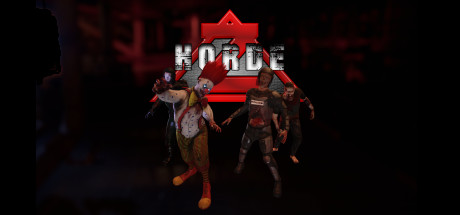
HordeZ is a fast VR rail shooter in the spirit of Doom and House of the Dead: blast waves of zombies and demons, survive each level and turn your VR headset into a full‑on arcade shooting range.
HordeZ is a vr, action and adventure game
developed and published by Zenz VR.
Released on April 29th 2016 is available on Windows and VR.
It has received 373 reviews of which 310 were positive and 63 were negative resulting in a rating of 7.8 out of 10. 😊
The game is currently priced at 3.39€ on Steam with a 80% discount.
The Steam community has classified HordeZ into these genres:
VR
Action
Adventure
Zombies
Action-Adventure
Shooter
FPS
3D
First-Person
Realistic
Atmospheric
Dark Humor
Dystopian
Funny
6DOF
Combat
Physics
PvE
Multiplayer
Local Co-Op
Here is the detailed breakdown of supported languages for HordeZ:
| UI | Subtitle | Audio | |
|---|---|---|---|
| English |
Media & Screenshots
Get an in-depth look at HordeZ through various videos and screenshots.


Load More


System requirements
These are the minimum specifications needed to play the game. For the best experience, we recommend that you verify them.
Windows
- OS: 7, 8, 8.1, 10
- Processor: Intel Core i5 4590 or AMD FX 8350 or greater
- Memory: 4 GB RAM
- Graphics: GeForce GTX 970 or AMD Radeon R9 290 or better
- Network: Broadband Internet connection
- Storage: 3 GB available space
- VR Support: SteamVR. Standing or Room Scale
Steam Price & Best Deals
User reviews & Ratings
Explore reviews from Steam users sharing their experiences and what they love about the game.
HordeZ is a compact virtual reality action game that embraces the uncomplicated excitement of an old-fashioned arcade shooting gallery. Developed and published by Zenz VR, it places considerably more importance on aiming, reflexes, and relentless combat than on exploration or storytelling. Its inspiration comes from the spirit of zombie shooters and rail shooters such as House of the Dead, with some of the demonic imagery and aggressive pacing associated with games like Doom. The result is a deliberately straightforward experience in which the main attraction is entering VR, grabbing weapons, and destroying increasingly threatening groups of enemies. The premise establishes a world being consumed by a demonic invasion. Humanity is being transformed into mindless servants by supernatural entities while portals continue opening between the human and demonic realms. The player belongs to an elite force sent to contain the disaster, close the portals, and eliminate whatever has been corrupted. This background gives the stages some context, but HordeZ never attempts to turn its premise into an elaborate narrative adventure. Storytelling remains secondary to action, which is appropriate for a game structured around short, intense shooting encounters. Combat is where HordeZ makes the strongest impression. Instead of relying on traditional mouse or controller aiming, the VR design makes accuracy dependent on the player's physical movements. Enemies continually approach while the player aims and fires using tracked controls, creating the feeling of standing inside an interactive shooting range. Headshots reward accuracy and become especially useful when the number of enemies increases. This physical approach makes even a relatively simple encounter more engaging because successfully placing shots is directly connected to the player's coordination rather than an abstract aiming mechanic. The weapon selection reinforces the arcade philosophy. Five weapon types are available, including pistols, machine guns, grenades, and a katana. Firearms provide the foundation for most encounters, while grenades are useful when groups become difficult to control and the katana adds a more immediate option for close-range situations. Four different pickups also appear throughout the experience. There is not enough equipment here to support complicated character builds or extensive experimentation, but that was clearly never the objective. HordeZ wants players concentrating on enemies rather than spending large amounts of time managing inventories. Its content is divided across eight levels featuring different scenes and enemy arrangements, with six monster types providing the opposition. The relatively small enemy roster means recognizable patterns eventually become apparent, and players expecting a lengthy campaign may find the overall selection modest. However, five difficulty levels significantly alter the challenge, ranging from an approachable beginner setting to a much more demanding hardcore experience. Increasing the difficulty makes quick aiming, efficient weapon use, and situational awareness considerably more important. Replayability also comes from the global leaderboard system. HordeZ is well suited to score chasing because its simple mechanics make improvement easy to understand. A better run comes from greater accuracy, quicker reactions, improved familiarity with enemy appearances, and more efficient survival. This creates an arcade mentality where finishing a stage does not necessarily represent the end goal. Players interested in mastering the shooting mechanics can repeatedly return to improve their performance rather than treating every level as something that only needs to be completed once. Cooperative multiplayer is one of the game's more attractive additions. Fighting the hordes with another player complements the chaotic nature of the action and makes repeated sessions more entertaining. Coordinating attacks while zombies and demons approach from the surrounding environment gives the otherwise simple combat additional energy. The game supports single-player as well, so cooperation is not mandatory, but its arcade structure arguably becomes more enjoyable when the carnage is shared. Visually and atmospherically, HordeZ favors darkness, gore, zombies, and demonic imagery instead of subtle horror. It is less concerned with frightening the player through carefully constructed suspense and more interested in surrounding them with threatening targets. VR nevertheless makes enemies feel more immediate because their scale and proximity are naturally more convincing inside a headset. The result sits somewhere between horror and exaggerated action, with the unsettling setting primarily serving the shooting mechanics. The game's greatest weakness is also a consequence of its focused design. Eight levels, six enemy types, and five weapon categories cannot provide the variety of a much larger shooter. There is little reason to expect extensive exploration, elaborate progression, sophisticated character development, or a deep narrative campaign. Players who enjoy mastering arcade-style challenges can get considerably more value from the difficulty settings and leaderboards, while those who primarily want constant new content may exhaust its possibilities much sooner. Steam Deck compatibility is particularly important to clarify because HordeZ is listed as a VR-only game. It requires a SteamVR environment and is designed around standing or room-scale virtual reality with tracked controller interaction. It therefore should not be considered a conventional Steam Deck game that can simply be installed and comfortably played using the handheld's built-in display and controls. Although a Steam Deck may be capable of unusual experimental setups through external hardware and software, HordeZ has no standard native handheld gameplay mode. Anyone buying it specifically for ordinary Steam Deck play should regard it as unsuitable. Ultimately, HordeZ works best when judged as a dedicated VR arcade shooter rather than as a full-scale FPS campaign. Its physical aiming, satisfying headshots, varied weapon functions, escalating difficulty, co-op support, and leaderboard competition form a solid foundation for repeated bursts of zombie and demon destruction. Its limited amount of content and narrow mechanical scope prevent it from becoming a particularly deep experience, but the simplicity is also part of its charm. For players who appreciate shooting galleries and early room-scale VR action games, HordeZ remains an entertaining example of how effectively a basic arcade formula can translate into virtual reality. Rating: 8/10
Similar games
View all
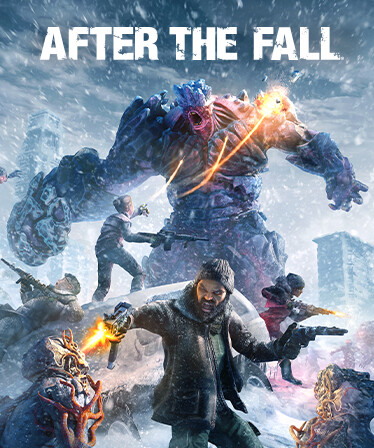
After the Fall
From the team that brought you Arizona Sunshine® comes an epic VR action FPS with intense co-op gameplay at its core. Team up with friends and take on a hostile VR world filled with ferocious undead--mutated and twisted by the relentless cold.

Arizona Sunshine VR Remake
Arizona Sunshine® Remake elevates the original, award-winning game, completely rebuilt with GORE-geous VR graphics and next-gen VR combat and weapons. Face the undead alone or with up to three fellow survivors in a post-apocalyptic southwestern America overrun by zombies.
The Walking Dead: Saints & Sinners - Chapter 2: Retribution
Hunted by the seemingly unstoppable Axeman and facing off against the Tower’s latest push for total dominance, discover what connects these new threats together before it’s too late. New faces, places, weapons and gear all await you on your journey to a final showdown for the city's fate.

REQUISITION VR
REQUISITION VR is a first physics-based co-op game where you can use duct tape to link any objects together to create a unique weapon. You can experiment with crafting, connecting any unthinkable combinations: a katana + a circular saw, or an axe + a ball. Inspired by Dead Rising & Walking Dead: S&S

Angry Angry Shark
Play with friends against endless waves of man eater sharks.
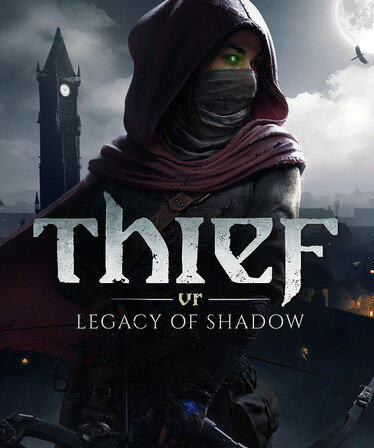
Thief VR: Legacy of Shadow
Step into the shadows in Thief VR. You are Magpie, a cunning thief orphaned by Baron Northcrest and shaped by the streets. Use VR mechanics to steal, evade, and outsmart the City's forces. Your goal? A relic in Northcrest's vault, which uncovers a far greater artifact with a powerful legacy.
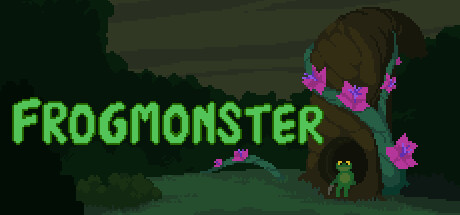
Frogmonster
Discover some of the most charming and challenging soulslike bosses in Frogmonster, a Metroidvania FPS adventure where you explore a lively world filled with creatures, bugs, and beasts.

Home - A VR Spacewalk
Home puts you at the center of the story, taking you on an emotional and personal journey while delivering beautiful, heart-stopping, and memorable moments.
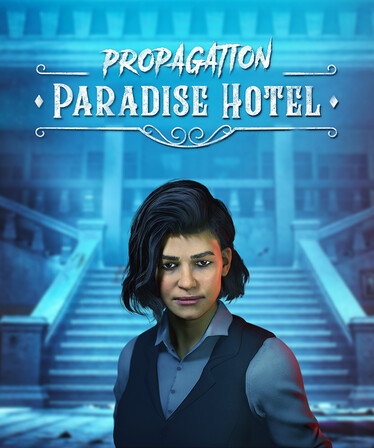
Propagation: Paradise Hotel
Trapped inside the Paradise Hotel, you are desperate to find your sister. Explore dark surroundings, gather resources, and survive terrifying encounters. This intense single-player VR survival horror game with great storytelling will get your adrenaline pumping.
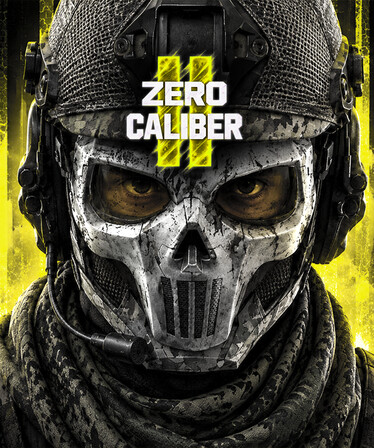
Zero Caliber 2 Remastered
Zero Caliber 2 Remastered brings the full VR shooter experience to PC - with intense, cinematic firefights, a full single player and Co-op campaign, PvP, a huge arsenal to unlock, and character customization to make you stand out. Jump in if you’re after a proper VR shooter. Out NOW!
Frequently Asked Questions
HordeZ is currently priced at 3.39€ on Steam.
Yes, HordeZ is currently available at a 80% discount. You can purchase it for 3.39€ on Steam.
Yes, HordeZ received 310 positive votes out of a total of 373 achieving a rating of 7.75.
😊
HordeZ was developed and published by Zenz VR.
Yes, HordeZ is playable and fully supported on Windows.
No, HordeZ is not playable on MacOS.
No, HordeZ is not playable on Linux.
This information about HordeZ is not available yet.
This information about HordeZ is not available yet.
Yes, HordeZ is a VR-only title. A compatible VR headset is required to play the game.
HordeZ offers both single-player and multi-player modes.
HordeZ offers both Co-op and PvP modes.
No, HordeZ does not currently offer any DLC.
No, HordeZ does not support mods via Steam Workshop.
Yes, HordeZ supports Remote Play Together. Discover more about Steam Remote Play.
Yes, HordeZ is enabled for Steam Family Sharing. This means you can share the game with authorized users from your Steam Library, allowing them to play it on their own accounts. For more details on how the feature works, you can read the original Steam Family Sharing announcement or visit the Steam Family Sharing user guide and FAQ page.
You can find solutions or submit a support ticket by visiting the Steam Support page for HordeZ.
Data sources
The information presented on this page is sourced from reliable APIs to ensure accuracy and relevance. We utilize the Steam API to gather data on game details, including titles, descriptions, prices, and user reviews. This allows us to provide you with the most up-to-date information directly from the Steam platform.
Additionally, we incorporate data from the SteamSpy API, which offers insights into game sales and player statistics. This helps us present a comprehensive view of each game's popularity and performance within the gaming community.
Last Updates| Steam data | 28 September 2026 21:08 UTC |
|---|---|
| SteamSpy data | 14 October 2026 23:20 UTC |
| Steam price | 27 October 2026 15:06 UTC |
| Steam reviews | 22 October 2026 07:46 UTC |
If you'd like to dive deeper into the details about HordeZ, we invite you to check out a few dedicated websites that offer extensive information and insights. These platforms provide valuable data, analysis, and user-generated reports to enhance your understanding of the game and its performance.
- SteamDB - A comprehensive database of everything on Steam about HordeZ
- SteamCharts - Analysis of HordeZ concurrent players on Steam
- ProtonDB - Crowdsourced reports on Linux and Steam Deck HordeZ compatibility
Game modes
Multiplayer
Features
Online players
0
Developer
Zenz VR
Publisher
Zenz VR
Release
29 Apr 2016
Platforms
Remote Play