

Startup Company
Startup Company is a business simulation sandbox game where you’re the CEO of a new company. Your job is to build your very own website and compete against the largest tech giants on the planet!
Sync your Steam wishlist to find the lowest game prices instantly. No login required, just paste your Steam profile URL!
⚡ Try Wishlist Radar!
Sync your Steam wishlist to find the lowest game prices instantly. No login required!
⚡ Try Wishlist Radar!
Close

Internet Cafe Evolution on Steam
Quick menu
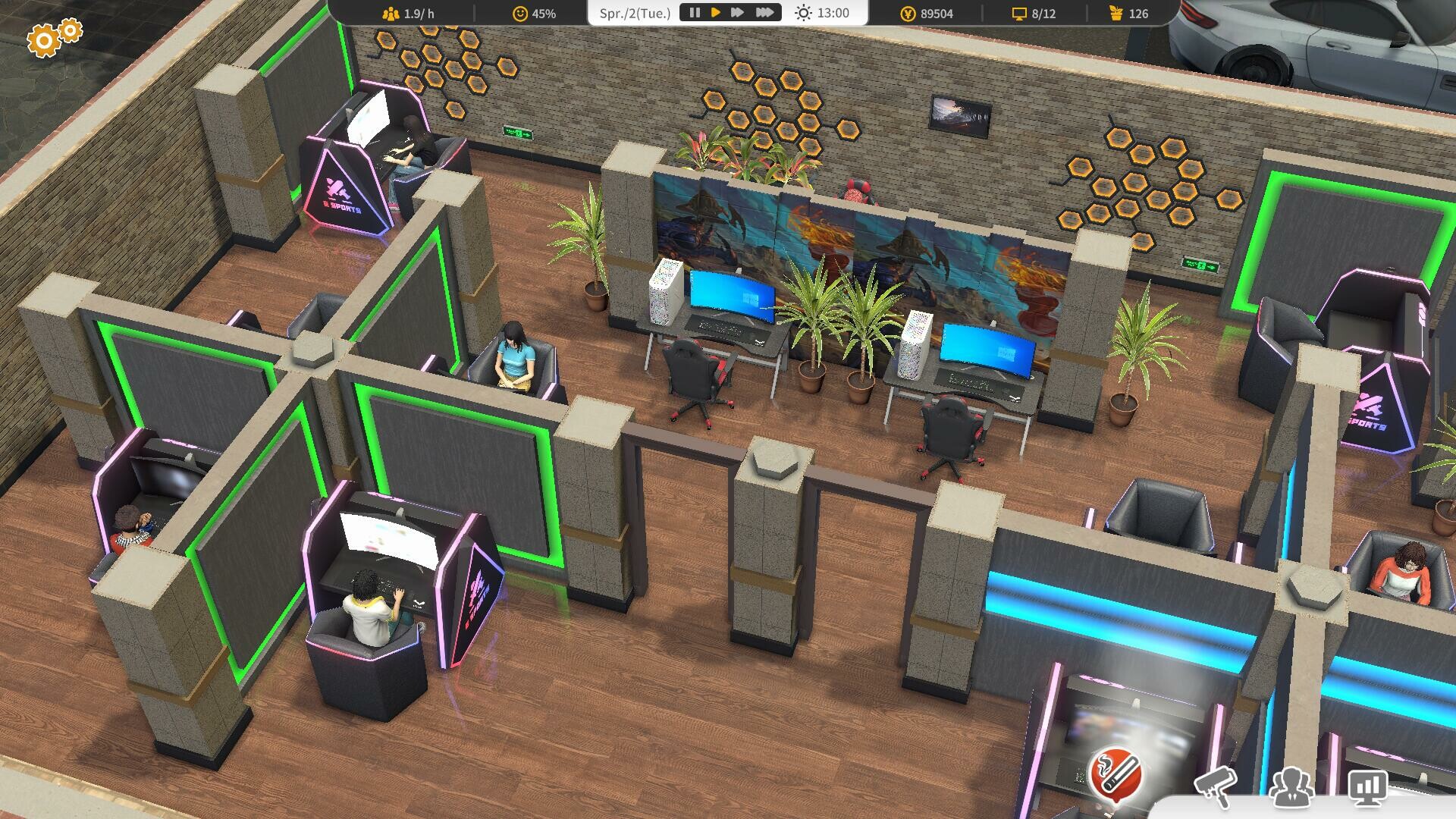
This is a business simulation + construction game. It tells the evolution history of Internet cafes that began in the 1990s, and imagines the future of internet cafes. There are also some small emotional stories.
Internet Cafe Evolution is a simulation, economy and management game
developed and published by Tiny Flame Games.
Released on April 19th 2024 is available on Windows, Steam Deck and Steam Machine.
It has received 679 reviews of which 516 were positive and 163 were negative resulting in a rating of 7.2 out of 10. 😊
The game is currently priced at 14.79€ on Steam, but you can find it for 10.61€ on G2A.
The Steam community has classified Internet Cafe Evolution into these genres:
Media & Screenshots
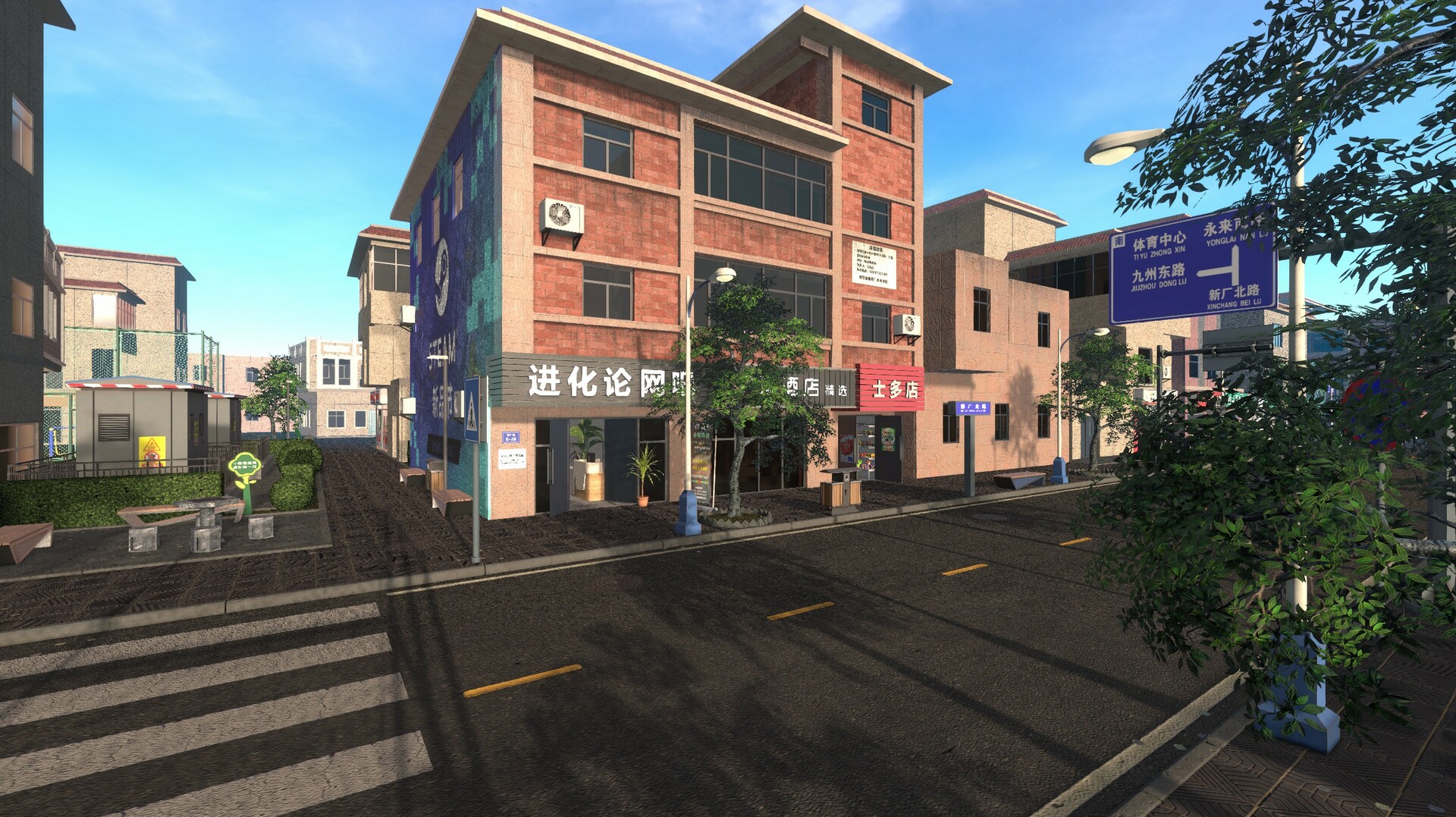
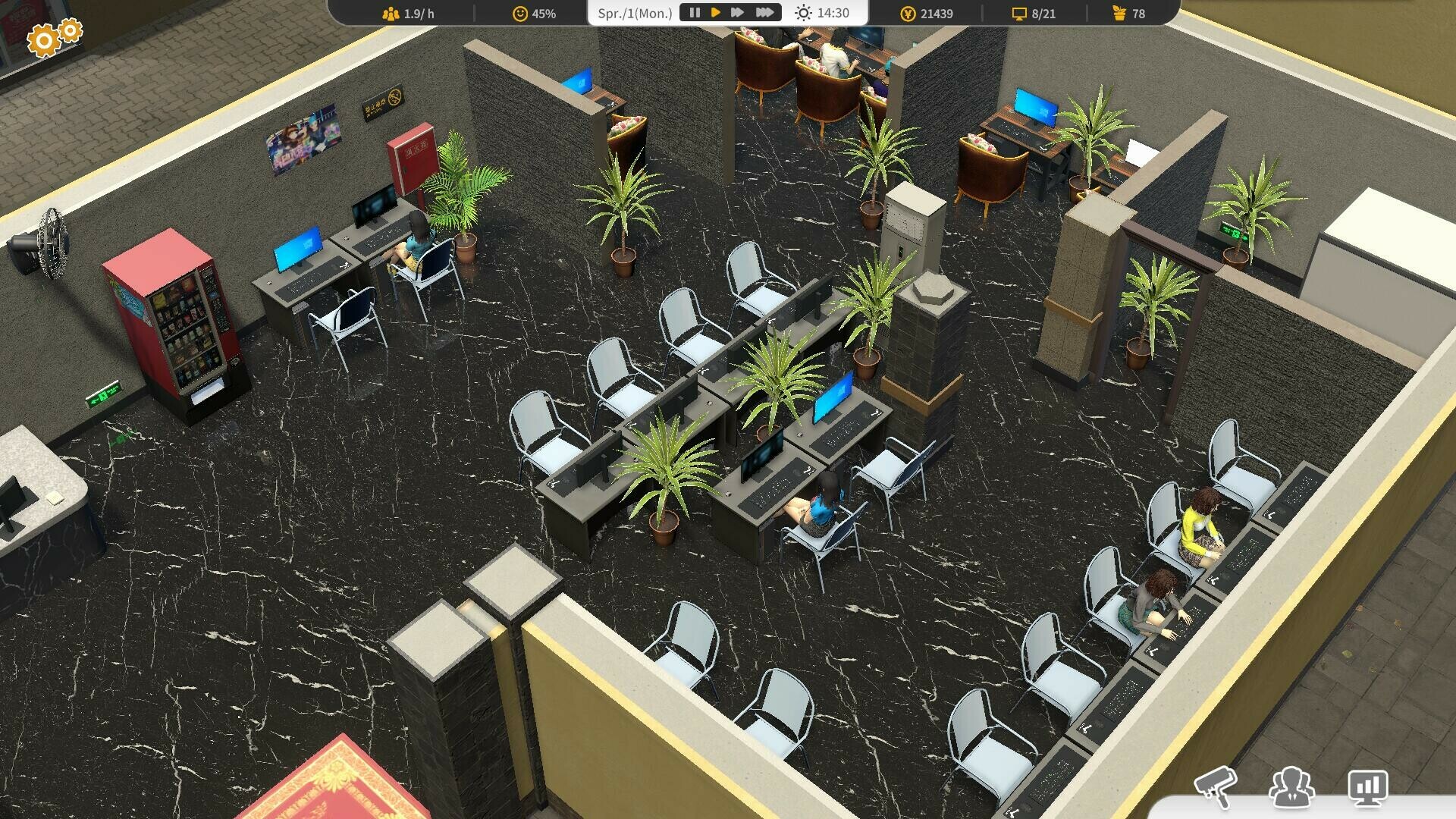
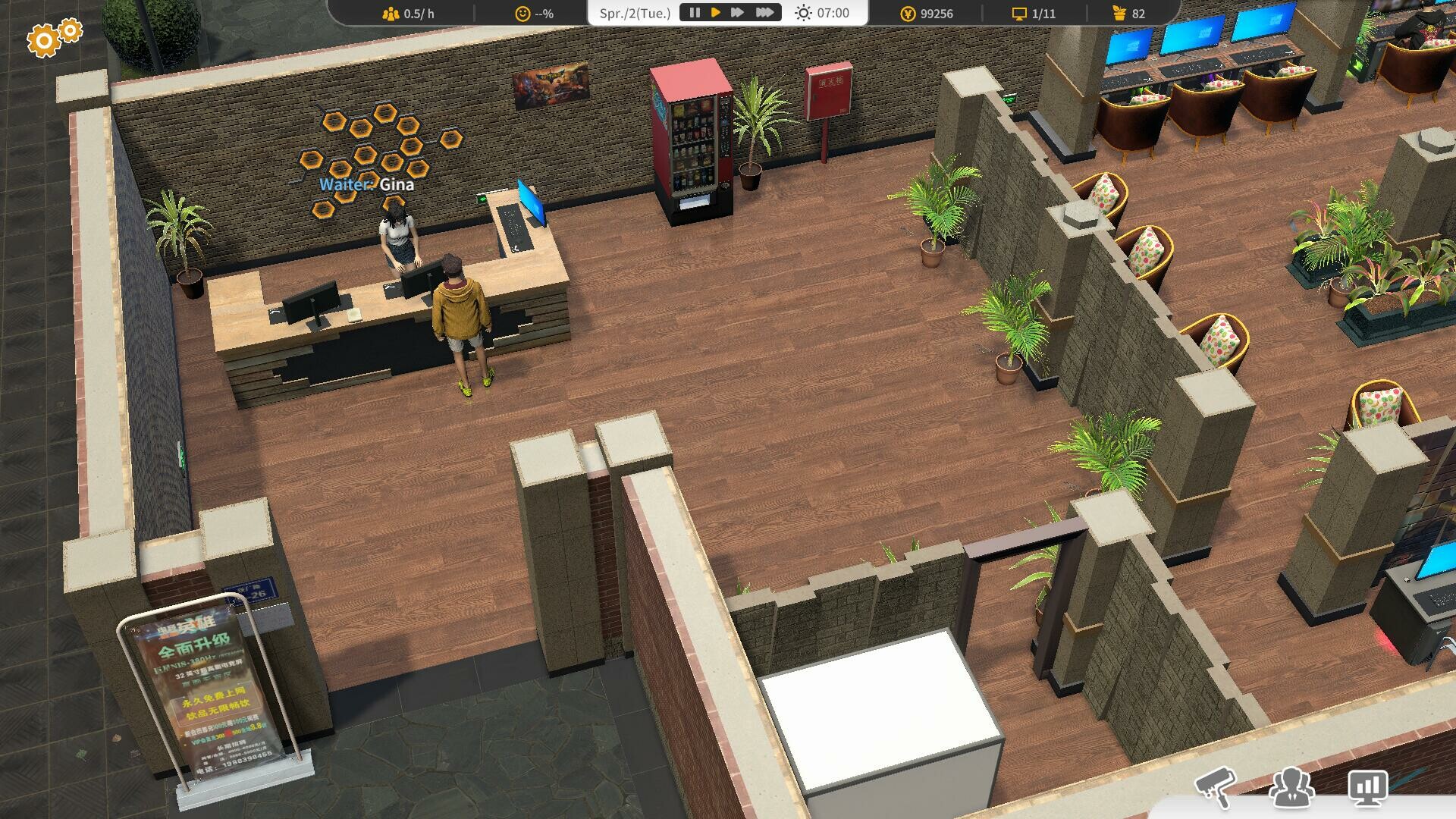
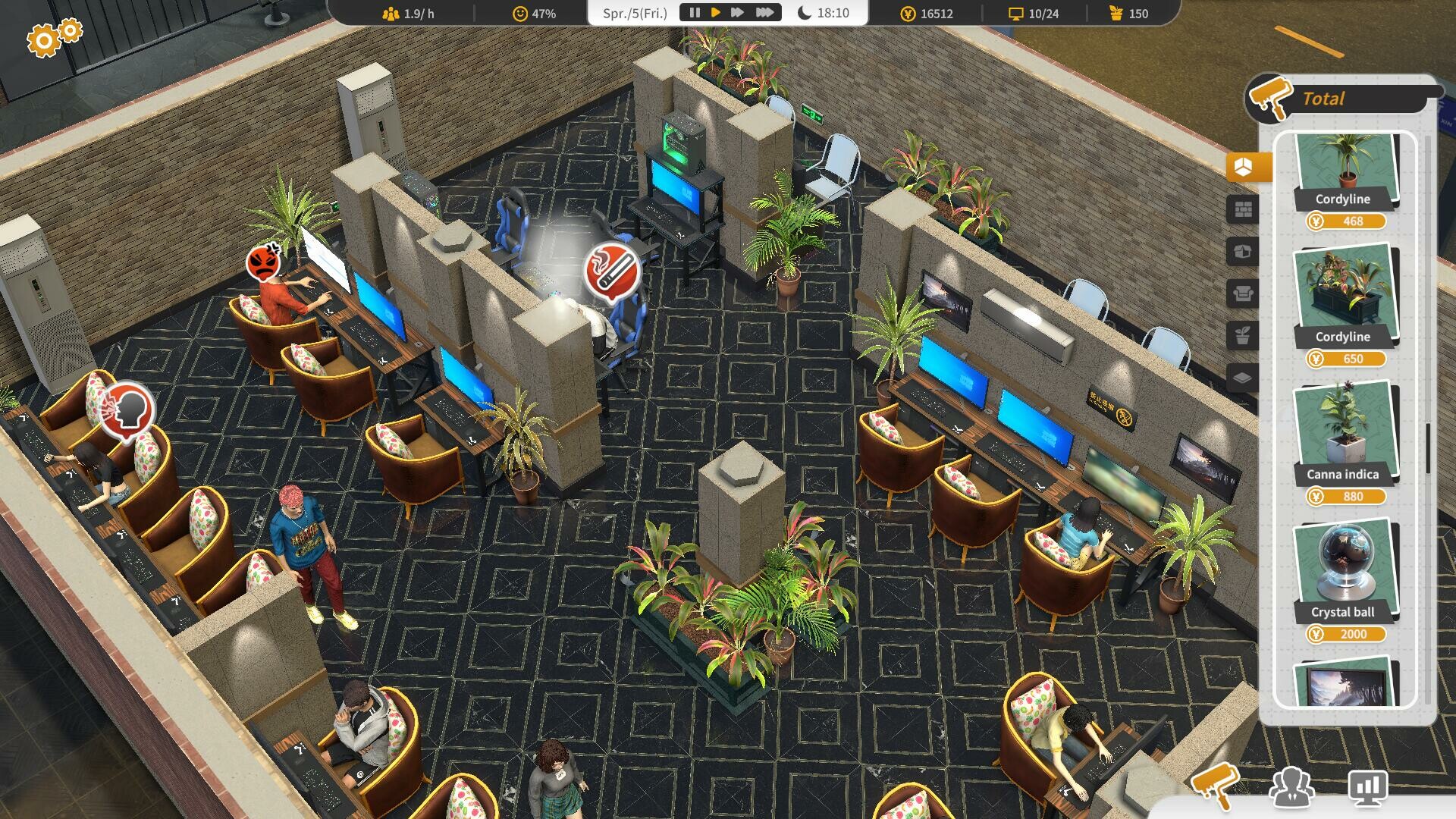
Get an in-depth look at Internet Cafe Evolution through various videos and screenshots.

System requirements
These are the minimum specifications needed to play the game. For the best experience, we recommend that you verify them.
Windows
- Requires a 64-bit processor and operating system
- OS *: Windows 7 x64
- Processor: Intel Core i3 6100 or AMD FX-4350
- Memory: 4 GB RAM
- Graphics: NVIDIA Geforce GT 1030,2GB(Old version:NVIDIA GeForce GTX 460)、AMD RX550,2GB(Old version:AMD Radeon HD 6850)Integrated Graphics:Intel HD Graphics 630
- DirectX: Version 11
- Storage: 6 GB available space
Steam Price & Best Deals
User reviews & Ratings
Explore reviews from Steam users sharing their experiences and what they love about the game.
Internet Cafe Evolution takes the familiar business-management formula and gives it a more distinctive identity by focusing on the changing culture and technology surrounding internet cafes. Developed and published by Tiny Flame Games, the game begins with the internet cafe boom of the 1990s and gradually moves through different technological periods while imagining how this type of entertainment business might evolve in the future. Rather than limiting the experience to buying computers and collecting money from customers, it combines construction, resource management, business strategy, hardware planning, staffing, and small character-driven stories into one simulation. Building the cafe forms the foundation of the experience. Players determine where computer stations and supporting facilities should be located while separating smoking, non-smoking, and private areas through partitions. There is more strategy involved than simply filling every available space with equipment. Walls can reduce undesirable interactions between customers, but they can also interfere with environmental benefits provided by decorations such as plants. This creates an interesting spatial puzzle where maximizing capacity is not necessarily the same thing as creating the most successful establishment. Computer configuration provides another important management layer. Instead of treating every machine as a generic upgradeable object, the game encourages players to consider compatibility, price, performance, and the hardware requirements of popular games. Expensive equipment can provide excellent performance, but spending heavily on every computer may not be economically sensible. A cheaper business strategy is also possible, allowing players to determine what market they want to serve. Hardware gradually becomes outdated as the years advance, meaning successful configurations eventually need replacement or improvement. Financial management complements the hardware systems. Business information and financial statements help players establish appropriate pricing, while membership programs provide another avenue for attracting and retaining customers. Partnerships with game companies and hardware manufacturers can further influence development. These mechanics make the cafe feel like a commercial operation rather than merely a building sandbox. The player must continuously consider whether investments will generate enough value to justify their expense. The passage of time is one of the game's most compelling ideas. Popular games change from one period to another, forcing the cafe to respond with suitable computers and revised business strategies. The game also introduces objectives and stories associated with different eras. This nostalgic approach helps distinguish Internet Cafe Evolution from more conventional management simulations because technological progression directly affects gameplay. Players are effectively managing a business that must survive changing consumer tastes instead of perfecting one successful formula and using it forever. The internet cafe administrator introduces a human component to the simulation. Players assign duties, issue instructions, monitor working conditions, and decide when salary adjustments are appropriate. Developing a closer relationship with the administrator can also unlock additional story developments. These interactions are not the primary focus, but they prevent the management experience from becoming entirely mechanical. Small emotional stories scattered throughout the game similarly reinforce the idea that an internet cafe is also a social environment where people develop memories and relationships. A particularly interesting feature is the ability to change the company's direction as time progresses. Players are not permanently restricted to operating a traditional internet cafe. The establishment can become a dedicated gaming hall with different business principles, substantially changing how the company operates. This flexibility fits the central theme of evolution and gives long-term progression a stronger sense of purpose. Livestreaming represents another possible direction. Players can recruit streamers, construct specialized rooms, and identify the types of content that best suit individual personalities. Eventually, the business can move away from internet cafe operations and become a dedicated livestreaming company. This transition reflects the broader transformation of digital entertainment, where gaming businesses increasingly expanded into broadcasting and online content creation. Competitive gaming offers another avenue for expansion. Skilled customers can potentially be discovered and assembled into an esports team, with their abilities matched in pursuit of competitive success. Even more dramatic transformations are available, including moving into KTV or private cinema operations. These options make the ultimate objective considerably broader than simply owning the largest internet cafe. The player can effectively attempt to construct an entertainment empire by adapting to new industries and their different operating rules. This breadth is simultaneously one of Internet Cafe Evolution's biggest strengths and weaknesses. There are many intriguing systems, but players expecting every business type to possess the complexity of an entire standalone simulation may find some mechanics less elaborate than others. The developer has also been transparent about plans to continue expanding the game while acknowledging that future development progress cannot be guaranteed. For that reason, the game is best evaluated according to what it currently provides rather than what future updates might eventually introduce. The presentation supports the management-oriented gameplay effectively, with a perspective that makes it relatively easy to inspect layouts, equipment, customers, and facilities. Its visual approach prioritizes readability and charm over realism, which suits the casual nature of much of the experience. The mixture of simulation and strategy also remains approachable enough for players who enjoy relaxed management games while still providing enough interconnected decisions to reward experimentation. Internet Cafe Evolution ultimately succeeds because it understands that the interesting part of running an internet cafe is not simply purchasing better computers. Its stronger idea is adaptation. New games become popular, hardware becomes obsolete, customers develop different expectations, and entirely new forms of digital entertainment emerge. Players must decide whether to preserve the traditional cafe model or pursue opportunities in gaming halls, livestreaming, esports, KTV, cinemas, and other entertainment businesses. Tiny Flame Games has created an unusually nostalgic management game that combines technological progression with business expansion and personal stories. Some of its ambitious ideas could benefit from additional depth, but the ability to watch a modest internet cafe transform alongside decades of technological and cultural change gives the experience considerable personality. For players interested in computer hardware, business optimization, internet cafe nostalgia, and gradually expanding simulation systems, Internet Cafe Evolution provides an engaging interpretation of an industry that has continually reinvented itself. Rating: 8/10
Love the game premise and design. Steam's system is thumbs up and down and I was torn whether to give it either because the game play and overall design is brilliant. But there are many game breaking bugs. 1) The game's system for progressing a character is grindy, which by itself would be okay if not for the game breaking bugs. And you can't just skip to sandbox because that takes all the grind out and its too easy. 1.1) The worst bugs are ones which rippoff the character's earned skill points. The worst of these is completing the Fantasy Cafe challenge and getting zero skill points. 1.2) Some of the skill points are not attributed properly in the story with a rollback of the achievement. I dont really want to reply to get the 7.8/8.0 back 1.3) The english text is incorrect for trainging 2 attendants to 60 of "service" skill and then the achievement is 4. An easy solution to this would be to allow a character to earn skill points, or buy skill points during company mode. Which is much better than sandbox mode. 2) It would be good to be allowed to ban "Gaming" from your quiet cafe by not allowing games to run or not installing them. And like smoking have gaming make some noise to annoy quiet users. Therefore if you have a "esports or gaming" cafe with no quiet spaces then writers would leave. Overall I would recommend the game, just be aware there are still game breaking bugs present.
Similar games
View all

Project Highrise
Project Highrise is a skyscraper construction and management sim...
Little Big Workshop
Manage your workers, stations, machines and create awesome stuff as your little big workshop grows into your dream factory!
Mad Tower Tycoon
Design your own skyscraper with more than 100 Floors. Rent offices, apartments or shops and build a financially lucrative skyscraper. Build cinemas, bars or a theater to satisfy your visitors and create an effective transport system with elevators and stairs.

Mad Games Tycoon
Form your own game studio set in the early 1980s in a small garage. Develop your own game ideas, create a team and develop megahit video games. Research new technologies, train your staff and upgrade your office space, going from a lowly garage to a huge building. Expand your business and dominate the world market for video games!

Production Line : Car factory simulation
Production line is the new car factory management/simulation/tycoon game that pushes your organisational and entrepreneurship skills to the limit. Can you build the ultimate optimised, free-flowing car production line whilst beating the competition and still turn a profit?
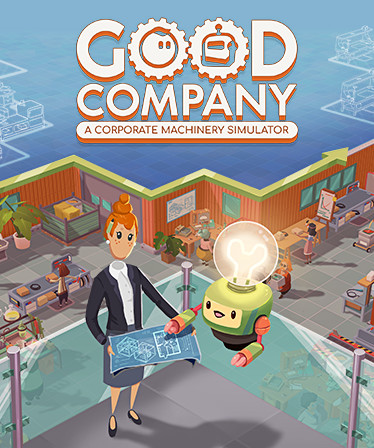
Good Company
Good Company is an in-depth management sim about building a trail-blazing tech corporation. Assemble complex production lines, manage employee logistics, and sell high-quality products on the market to become the best company in the whole county!

Rise of Industry
Put your entrepreneurial skills to the test in the first title in the ROI series as you create & optimise intricate production lines. As an early 20th-Century industrialist, grow your empire & adapt to an ever-changing business landscape with unexpected events that could lead to boom…or bust.

Planet Coaster
Planet Coaster® - the future of coaster park simulation games has arrived! Surprise, delight and thrill incredible crowds as you build your coaster park empire - let your imagination run wild, and share your success with the world.

The Executive - Movie Industry Tycoon
Shape the history of the Hollywood movie industry in this sandbox business simulation game. Create the movies you've always wanted to see, hire the best team, research cutting-edge technologies, and dominate the Box Office. Can you rise from a small studio to a Hollywood giant?

Tavern Manager Simulator 🍻
Restore your fantasy tavern to its full glory. Repair, improve and expand the establishment. Cook delicious food and keep an eye on the mood of the visitors. Create a unique atmosphere for unforgettable adventures!
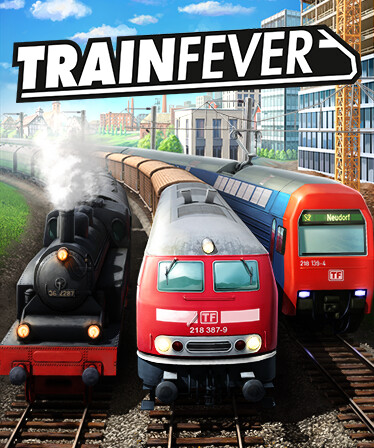
Train Fever
It’s the year 1850, and there are great times ahead! Establish a transport company and be its manager. Build infrastructure such as railways and stations, purchase transportation vehicles and manage lines. Fulfill the people’s needs and watch cities evolve dynamically.
Frequently Asked Questions
Internet Cafe Evolution is currently priced at 14.79€ on Steam.
No, Internet Cafe Evolution is currently not on sale. You can purchase it for 14.79€ on Steam.
Yes, Internet Cafe Evolution received 516 positive votes out of a total of 679 achieving a rating of 7.23.
😊
Internet Cafe Evolution was developed and published by Tiny Flame Games.
Yes, Internet Cafe Evolution is playable and fully supported on Windows.
No, Internet Cafe Evolution is not playable on MacOS.
No, Internet Cafe Evolution is not playable on Linux.
Yes, Internet Cafe Evolution is playable on Steam Deck, though it might require a few minor tweaks. Make sure to check the Steam store page and community feedback on ProtonDB for exact compatibility details.
Yes, Internet Cafe Evolution is playable on Steam Machine, though it might require a few minor tweaks. Make sure to check the Steam store page and community feedback on ProtonDB for exact compatibility details.
No, Internet Cafe Evolution does not support VR.
Internet Cafe Evolution is a single-player game.
No, Internet Cafe Evolution does not currently offer any DLC.
No, Internet Cafe Evolution does not support mods via Steam Workshop.
No, Internet Cafe Evolution does not support Steam Remote Play.
Yes, Internet Cafe Evolution is enabled for Steam Family Sharing. This means you can share the game with authorized users from your Steam Library, allowing them to play it on their own accounts. For more details on how the feature works, you can read the original Steam Family Sharing announcement or visit the Steam Family Sharing user guide and FAQ page.
You can find solutions or submit a support ticket by visiting the Steam Support page for Internet Cafe Evolution.
Data sources
The information presented on this page is sourced from reliable APIs to ensure accuracy and relevance. We utilize the Steam API to gather data on game details, including titles, descriptions, prices, and user reviews. This allows us to provide you with the most up-to-date information directly from the Steam platform.
Additionally, we incorporate data from the SteamSpy API, which offers insights into game sales and player statistics. This helps us present a comprehensive view of each game's popularity and performance within the gaming community.
Last Updates| Steam data | 16 September 2026 05:18 UTC |
|---|---|
| SteamSpy data | 23 October 2026 16:38 UTC |
| Steam price | 26 October 2026 20:07 UTC |
| Steam reviews | 22 October 2026 15:51 UTC |
If you'd like to dive deeper into the details about Internet Cafe Evolution, we invite you to check out a few dedicated websites that offer extensive information and insights. These platforms provide valuable data, analysis, and user-generated reports to enhance your understanding of the game and its performance.
- SteamDB - A comprehensive database of everything on Steam about Internet Cafe Evolution
- SteamCharts - Analysis of Internet Cafe Evolution concurrent players on Steam
- ProtonDB - Crowdsourced reports on Linux and Steam Deck Internet Cafe Evolution compatibility

Game modes
Features
Online players
2
Developer
Tiny Flame Games
Publisher
Tiny Flame Games
Release
19 Apr 2024
Platforms
Clicking and buying through these links helps us earn a commission to maintain our services.