


Hyper Light Drifter
Explore a beautiful, vast and ruined world riddled with dangers and lost technologies.
Sync your Steam wishlist to find the lowest game prices instantly. No login required, just paste your Steam profile URL!
⚡ Try Wishlist Radar!
Sync your Steam wishlist to find the lowest game prices instantly. No login required!
⚡ Try Wishlist Radar!
Close

Keep Driving on Steam
Quick menu
An atmospheric management RPG about life on the open road. Pick up hitchhikers, work odd jobs, customize and repair your car, and map your route across the country. Use upgrades, skills and items to overcome challenges. And remember to take it easy. You’re young. You have time.
Keep Driving is a pixel graphics, atmospheric and rpg game
developed by YCJY Games
and published by YCJY Games and Kepler Ghost.
Released on February 06th 2025 is available on Windows, Steam Deck and Steam Machine.
It has received 2,770 reviews of which 2,624 were positive and 146 were negative resulting in an impressive rating of 9.1 out of 10. 😍
The game is currently priced at 12.60€ on Steam with a 30% discount.
The Steam community has classified Keep Driving into these genres:
Media & Screenshots
Get an in-depth look at Keep Driving through various videos and screenshots.


Load More


System requirements
These are the minimum specifications needed to play the game. For the best experience, we recommend that you verify them.
Windows
- OS: Windows 10 64-bit
- Processor: Intel Core i3-3220 CPU @ 3.30GHz
- Memory: 8 GB RAM
- Graphics: Intel HD Graphics
- DirectX: Version 10
- Storage: 3 GB available space
- Additional Notes: Made with GameMaker Studio 2
Steam Price & Best Deals
User reviews & Ratings
Explore reviews from Steam users sharing their experiences and what they love about the game.
I keep struggling to write a review for Keep Driving, since the game means an awful lot to me. There's truly no game like it: no single game that can similarly capture that beautiful, strange, dust-beaten experience of 'wasting' your fleeting youth on the road like this. It's got this wonderful old-school indie game sensibility [read: early 2010s] that can't really be replicated anymore - in what must be some irony - and plays great, but it's the sheer painstakingly-crafted atmosphere of a bygone era that it absolutely crushes in a way nothing else ever hopes to. It's evocative of those feelings of cruising around during the tangerine twilight on a hot summer day, idling into adult life, windows open and wind beating at your shaggy holiday-hair. There's that warm sense of temporal liminality, of that middle-place between childhood and adulthood - it's the melancholic temporary escape of the cookie-cutter suburbia via Limewire'd indie music CDs and the futile promise that you won't become your parents. You're shuffling around aimlessly in some third-hand beater with fifty bucks in your pocket and a head foggy and full of promise. On scraps of paper you're trying to make sure the design of your first tattoo is something really 'meaningful' to you, whatever that means. Life will one day catch up with you. For now there's nothing to do but to just keep driving. My GOTY 2025 if not the decade. Play Keep Driving. it's something really special.
This game has been a constant companion for me as of late. Between the shaky political climate, and my own personal struggles navigating a divorce, I've wanted an escape that wasn't your typical power fantasy. This game transported me to a world of alt-rock, fun driving minigames and the personal freedom to drive wherever the roads took me. The character work is phenomenal, for having limited dialogue, and the quests are a great balance of flavorful and challenging. If you haven't tried this game out yet, I highly recommend you do. The memory invites you out again. It feels like nothing has changed. You're still looking for more. You were young, this life was yours, you had time... 11/10
Overall: 9/10 Story: On paper, the "goal" of the narrative is to get a tent, a ticket and arrive at a music festival before the Summer ends. However, in practice, this game is really a prime example of when the journey is sometimes more important than the destination. That's because the story is less about a traditional, tightly structured plot and more about the general experience of taking a long road trip during a transitional period in your life during the 2000's. For starters, before each run, you establish the protagonist through a handful of personal aspects like their name, whether they're male or female, what their background/occupation is, how their well their relationship with their parents is, and pick the starting kit that you'll take with you. The background choices you make are particularly significant because they give you different starting traits and help establish what your character's life was like before setting off. Still, the character creation choices are pretty small in number, and they only establish the base foundation for who this particular version of the protagonist is so you can easily switch things up between runs. It's also nice how the 'relationship with parents' feature is more than just flavor, since it can affect whether you can rely on your them for help if you get into financial trouble on the road. Furthermore, I like how the protagonist's real characterization comes mainly from your choices and interactions with hitchhikers. They're not presented as some exceptionally talented or heroic individual; they're essentially a young person who has a car, a little money, and a lot of open road ahead of them. It's a good fit for this game's coming-of-age themes and makes the experience feel much more personal, since the protagonist's personality and outlook are gradually shaped by the experiences you have along the way. Lastly, I really appreciate how although the "goal" is to make it to the 'Way Out Festival', that's not the only ending that you can reach. You're given the festival objective at the beginning every time, but as you meet hitchhikers and encounter new opportunities, you can pick up entirely different questlines that can eventually become the conclusion of that run. Some of these endings can even influence what becomes available to you in future runs, including new starting gear + background/occupation options, which makes the narrative feel like something that expands alongside the gameplay rather than repeating the same journey toward the same destination. Gameplay: I'll be honest, the gameplay took a while to click for me, and I think that's due to how I initially viewed it as a cozy driving game with weird turn-based combat before eventually accepting it as more of a road-trip management/strategy RPG kind of vibe. That's because the biggest part of the gameplay loop is the road-event system. As you travel between locations, things like potholes, traffic, animals, and other hazards all appear as turn-based encounters. However, each encounter presents different threats to things like your durability, fuel, cash, and energy depending on the nature of the obstacle, and you have to use skills or items purchased/obtained to clear those threats. Basically, you're figuring out how to minimize the damage taken each turn and make it to the next stop without completely draining any one specific resource. At first, you're mostly thinking, "How the hell am I supposed to deal with these icons?" Then you start thinking, "How do I preserve my resources?" And eventually, it's like, "Okay, if I pick this person up, take this route, stop here to work/buy stuff, save this item, etc. I can probably save this run from certain failure later." That's when the gameplay starts feeling less like a collection of disconnected mechanics and more like an actual road trip where you're improvising your way through whatever happens. Furthermore, you choose one of three cars at the start of each run, and I think it's really cool that each one is built around a different set of trade-offs, so choosing a vehicle (should) changes how you approach a run rather than being purely cosmetic preference. On top of that, it's really clutch how your car upgrades save across runs, so if you end up failing, at least it doesn't make you start all the way from scratch. Lastly, the hitchhiker mechanic is one of my personal favorite parts of the gameplay, as each person you pick up acts like a temporary party member who provides their own unique skills and passive effects during road encounters. However, they aren't just useful tools, and since their individual personalities and quirks can also create problems or impose additional challenges, it means you have to weigh their usefulness against the inconveniences they bring before letting them hop on in. World: I really like what the world design does with a relatively simple structure, because even though you're always moving from left to right, there's constantly changes in the background to keep the journey visually interesting. As you travel, you can pass through forests, deserts, mountains, cities etc. so the scenery rarely feels like it's repeating. A big part of that comes from how the backgrounds are procedurally stitched together based on the surrounding terrain and the type of road you're traveling on, meaning you're not simply driving past the same looping backdrop over and over again. The procedural map also means the actual world isn't identical between runs. Yeah, there are some consistent major landmarks/geography, but smaller towns, roads, and routes can change, which gives each trip a slightly different structure. So, despite the "always driving to the right" presentation, I wouldn't really call the level design linear since the navigation is separated from visual movement. The map gives you fair choices in every direction, while the side-scrolling road view provides a consistent, but constantly changing representation of that journey. It works really well, and it makes the world seem much more dense while also doing a surprisingly good job of making each road trip feel more immersive. Visuals: The atmospheric pixel-art style graphics/art direction is one of this game's strongest aspects, especially since there's a surprising amount of detail in the cars, characters, roadside objects, weather effects, and especially the backgrounds. The visuals also uses layered backgrounds, so things like the forests, mountains, cities, etc. move at different speeds as you drive, and it makes the simple side-scrolling perspective have way more depth due to how it dynamic and lively it is all presented. There's also a strong analog/early-2000s visual identity running through everything to stay true to the setting, which I appreciate. Pretty much every UI element reinforces that pre-smartphone era vibe, and it's just one more subtlety that makes the presentation feel cohesive and true to the era it's set in, rather than feeling like it's just using pixel art as a cool aesthetic. Music/Sound Design: I think the both the OST and the sound design are good, but I don't love either one in particular, to be honest. The sound design complements the overall experience very well and I respect it for making the car, dashboard, encounters, and world feel immersive and lived-in, but it simply never grabbed my attention or felt really noteworthy since it's more of a subtle glue to the whole experience too. Additionally, the music is objectively well-curated and fits the setting/vibes extremely well, but I wasn't the biggest fan overall as it leans heavily toward indie rock, shoegaze, and more mellow alternative stuff, which just isn't the kind of music I personally keep in my rotation. It doesn't ruin the game by any means, but if that's not you're flavor of music then it's obviously not going to add to the experience in any positive ways.
Similar games
View all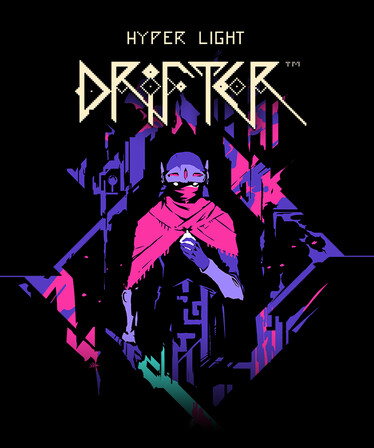


UNREAL LIFE
And now, for today's story.

Tinkertown
Gather your friends and come to Tinkertown - A refreshing new Multiplayer Sandbox Experience! Explore magical places filled with loot, danger, and creativity.
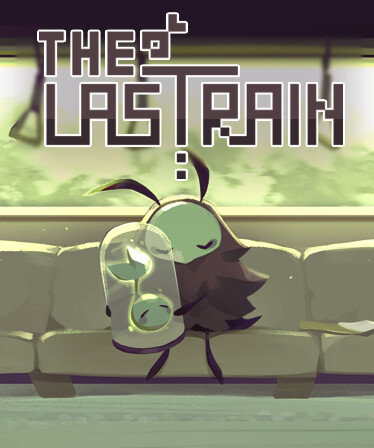
The Last Train
In the barren wasteland on the brink of extinction, the last Train departs, supposedly carrying its passengers in search of a place where they can survive. A creature named Eilf boards the Train, determined to travel to Spring - the station that has been said to have vanished.

Stuck In Time
A unique mix of adventure and idle game. Plan and optimise your loops carefully and let the grind happen automatically. Explore this unique world, meet strange characters and escape the loop. A high-quality idle game that elevate the mechanics through an old school pixel-art adventure.

Greyfox RPG
You play as a new arrival to a foggy and mysterious town. You find yourself waking up in the bodies of the town's inhabitants at pivotal moments of their lives. Make tough choices as you discover the truth about this town called Greyfox.

Why Am I Dead At Sea
Why Am I Dead At Sea is an adventure game where you solve the mystery of your own murder. As a ghost, you will have to possess people and use them to investigate your surroundings. But in this place no one is who they seem...and everyone has a secret.
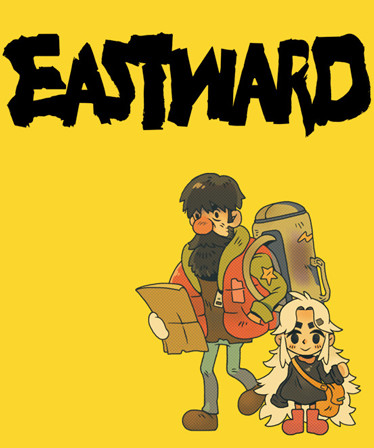
Eastward
Welcome to the charming world of Eastward - population declining! Journey through a society on the brink of collapse. Discover delightful towns, strange creatures and even stranger people! Wield a trusty frying pan and mystic powers on an adventure into the unknown…
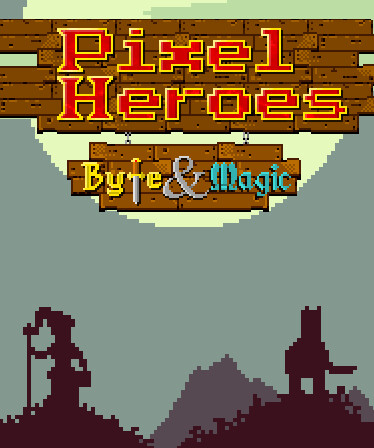
Pixel Heroes: Byte & Magic
Enter the world of PIXEL HEROES and prepare yourself for a thrilling RPG/Roguelike experience like you have never seen before!
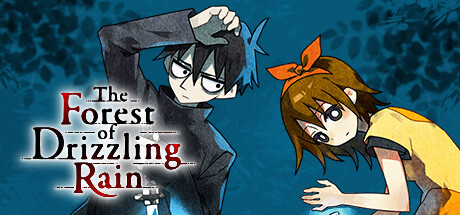
The Forest of Drizzling Rain
From the creator of Angels of Death: the multi-ending exploration horror game The Forest of Drizzling Rain. Includes Full Ver. (2022), completed nine years after the original release, and Original Ver. (2013), where it all began. Alas, it was the "promised place," where Shiori was never meant to go.
Frequently Asked Questions
Keep Driving is currently priced at 12.60€ on Steam.
Yes, Keep Driving is currently available at a 30% discount. You can purchase it for 12.60€ on Steam.
Yes, Keep Driving received 2,624 positive votes out of a total of 2,770 achieving an impressive rating of 9.06.
😍
Keep Driving was developed by YCJY Games and published by YCJY Games and Kepler Ghost.
Yes, Keep Driving is playable and fully supported on Windows.
No, Keep Driving is not playable on MacOS.
No, Keep Driving is not playable on Linux.
Yes, Keep Driving is playable and fully supported on Steam Deck.
Yes, Keep Driving is playable and fully supported on Steam Machine.
No, Keep Driving does not support VR.
Keep Driving is a single-player game.
No, Keep Driving does not currently offer any DLC.
No, Keep Driving does not support mods via Steam Workshop.
No, Keep Driving does not support Steam Remote Play.
Yes, Keep Driving is enabled for Steam Family Sharing. This means you can share the game with authorized users from your Steam Library, allowing them to play it on their own accounts. For more details on how the feature works, you can read the original Steam Family Sharing announcement or visit the Steam Family Sharing user guide and FAQ page.
You can find solutions or submit a support ticket by visiting the Steam Support page for Keep Driving.
Data sources
The information presented on this page is sourced from reliable APIs to ensure accuracy and relevance. We utilize the Steam API to gather data on game details, including titles, descriptions, prices, and user reviews. This allows us to provide you with the most up-to-date information directly from the Steam platform.
Additionally, we incorporate data from the SteamSpy API, which offers insights into game sales and player statistics. This helps us present a comprehensive view of each game's popularity and performance within the gaming community.
Last Updates| Steam data | 17 September 2026 04:08 UTC |
|---|---|
| SteamSpy data | 23 October 2026 13:06 UTC |
| Steam price | 27 October 2026 04:13 UTC |
| Steam reviews | 18 October 2026 22:04 UTC |
If you'd like to dive deeper into the details about Keep Driving, we invite you to check out a few dedicated websites that offer extensive information and insights. These platforms provide valuable data, analysis, and user-generated reports to enhance your understanding of the game and its performance.
- SteamDB - A comprehensive database of everything on Steam about Keep Driving
- SteamCharts - Analysis of Keep Driving concurrent players on Steam
- ProtonDB - Crowdsourced reports on Linux and Steam Deck Keep Driving compatibility

Game modes
Features
Online players
79
Developer
YCJY Games
Publisher
YCJY Games,
Kepler Ghost
Release
06 Feb 2025
Platforms
Clicking and buying through these links helps us earn a commission to maintain our services.