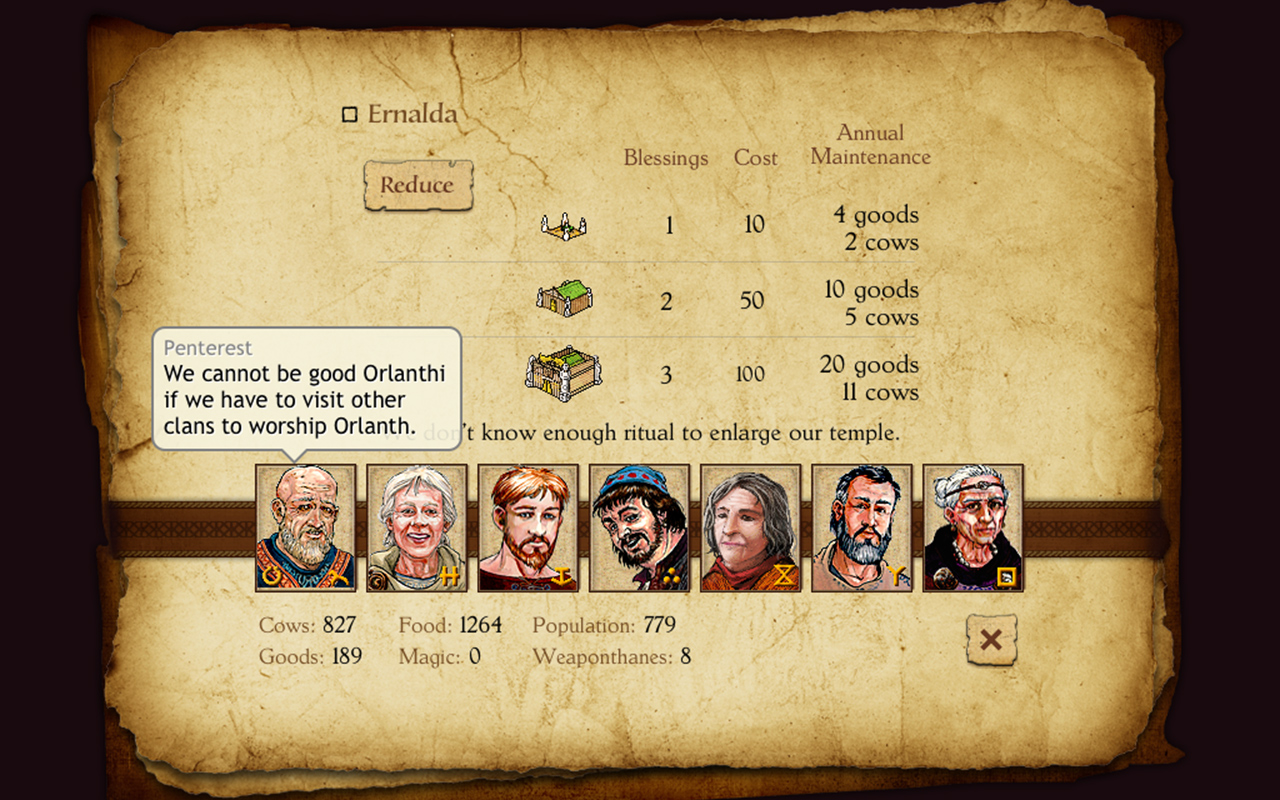
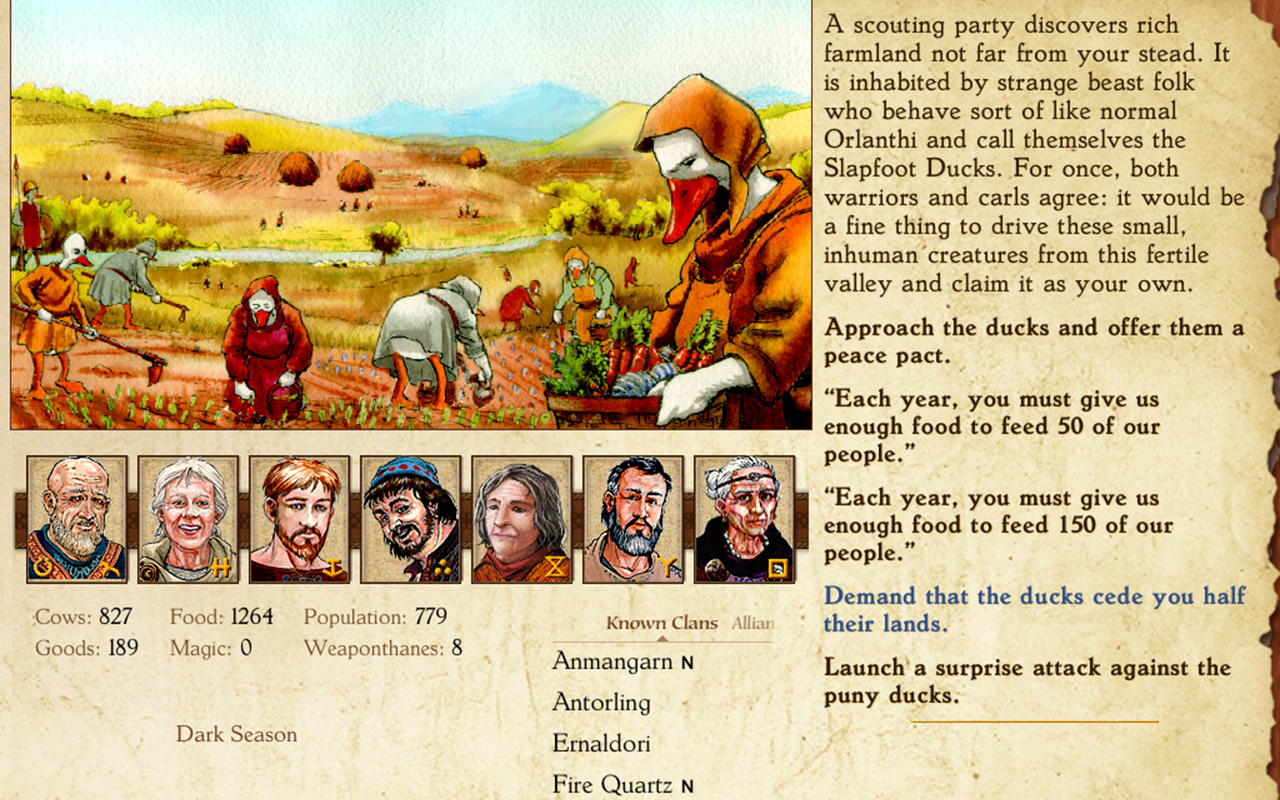
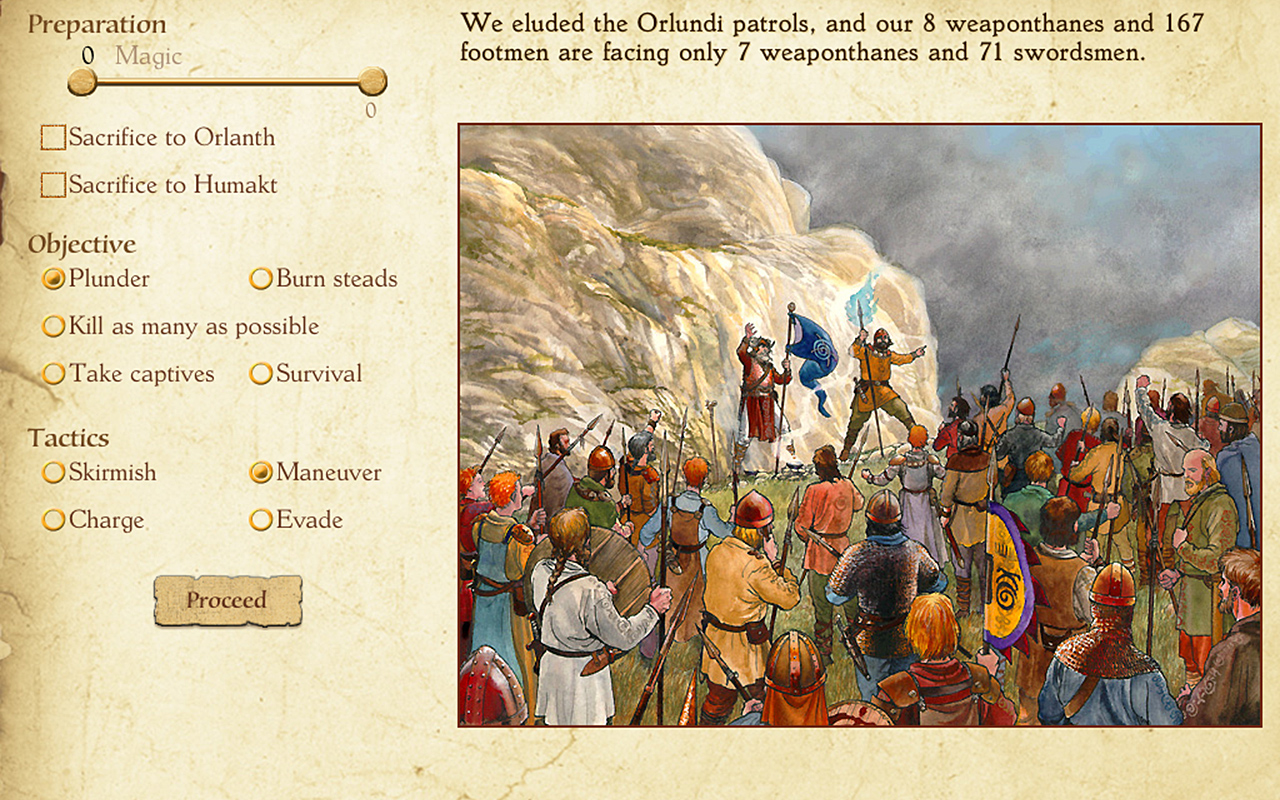
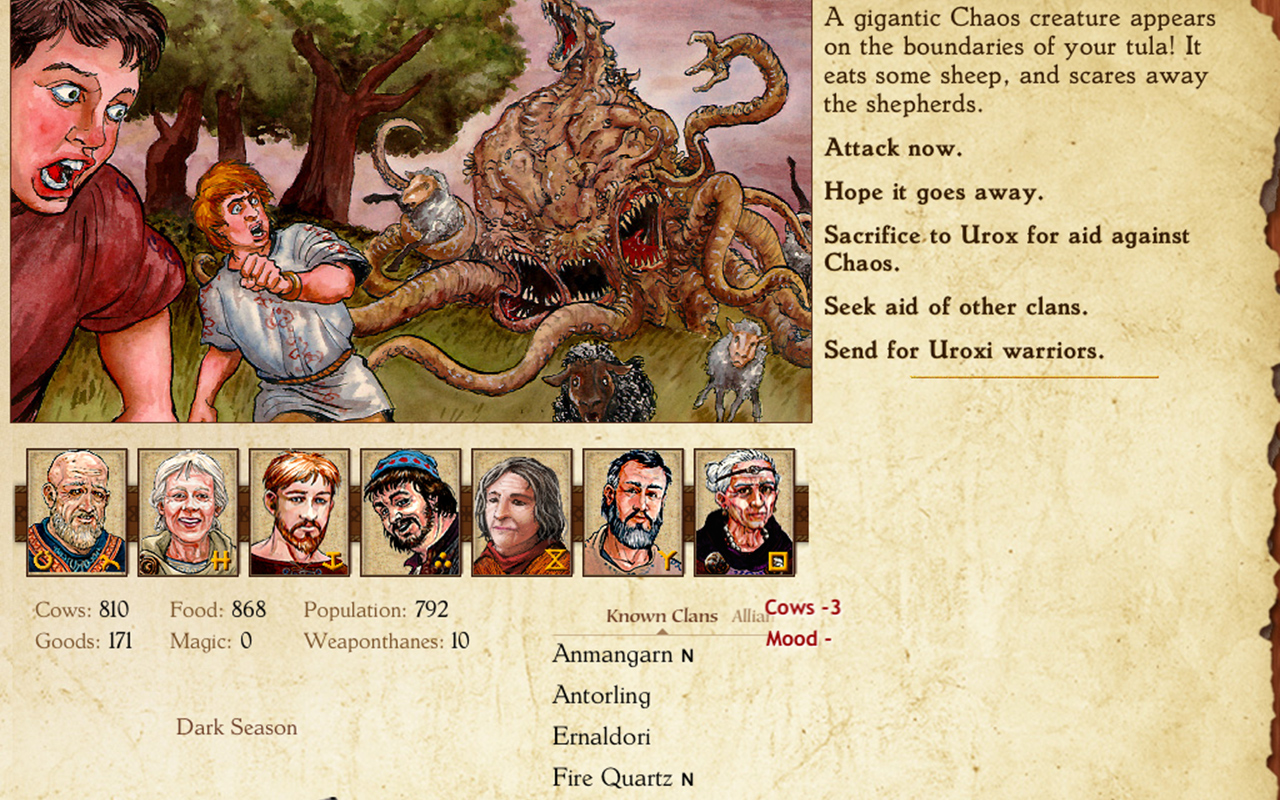
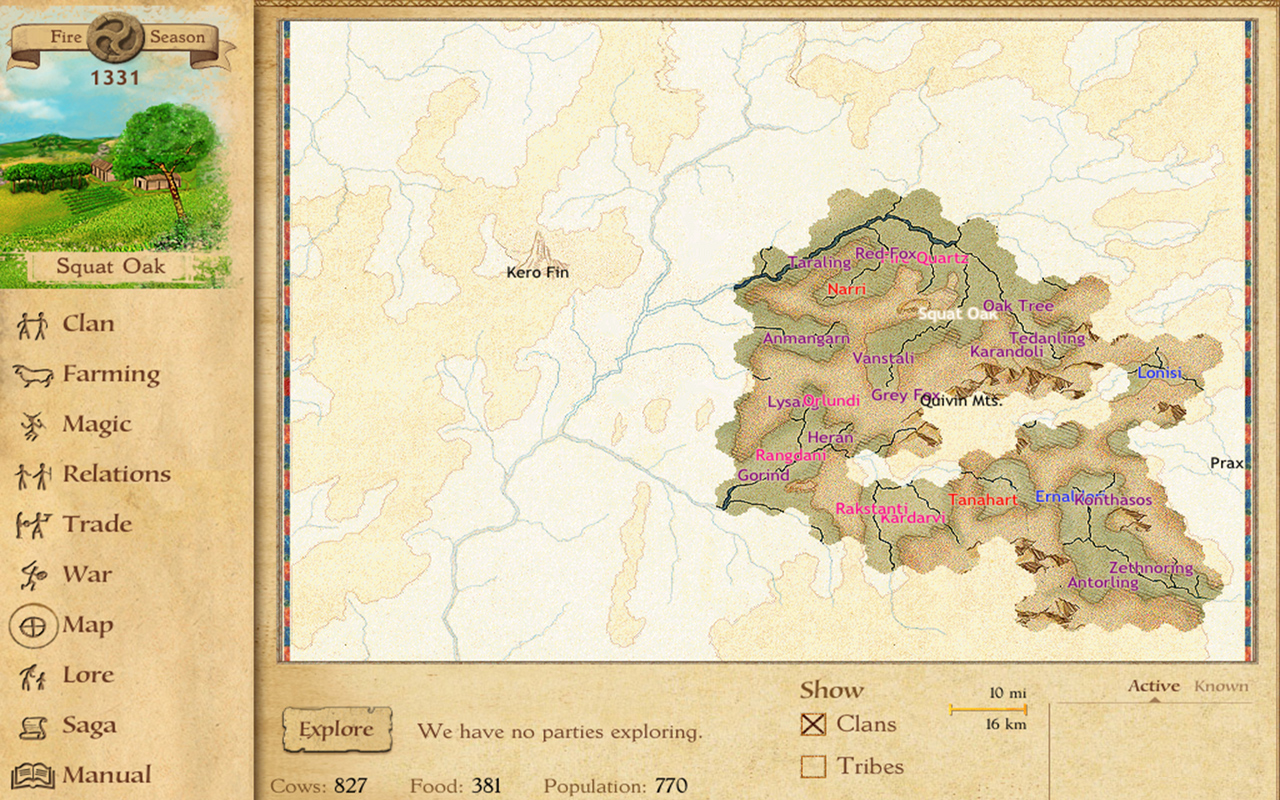
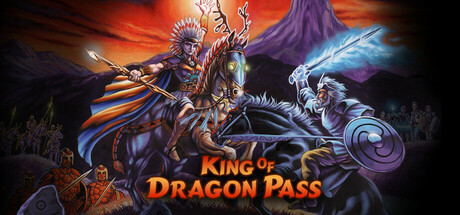
King of Dragon Pass is one of the most unique narrative-strategy hybrids ever released, a game that refuses to fit into traditional genre categories and instead builds an experience rooted in mythology, oral tradition, politics, and emergent storytelling. Developed by A Sharp and published on Steam by HeroCraft PC, it transports players to Glorantha, a richly constructed fantasy world steeped in ritual, supernatural forces, ancestral duty, and cultural memory. Rather than handing players a conquering army or a sprawling empire, the game places them in command of a single clan—small, vulnerable, idealistic, and deeply shaped by its gods. Every choice carries cultural significance, and survival hinges not on economic optimization alone but on understanding traditions, interpreting omens, negotiating with spirits, and maintaining the fragile bonds that sustain community life. The game immediately establishes that leadership in Glorantha is personal, moral, and spiritual, not merely mechanical. Gameplay unfolds through a blend of resource management, turn-based decision-making, council deliberation, exploration, and narrative-driven encounters. Each year in Dragon Pass brings harvests, raids, marriages, trade opportunities, diplomatic crises, and unpredictable mythological events. The player must balance food, livestock, magic, population, military strength, and social stability while respecting customs that govern everything from hospitality to justice. What truly defines the experience, however, is the constant stream of illustrated story events—situations that require judgment rather than calculation. A feuding family seeks mediation, a stranger offers a mysterious object, a rival clan spreads slander, or a god demands a ritual offering. Each event provides multiple responses, but there is rarely an obvious correct answer. Success depends on knowing your clan’s values, the personalities of council members, and the fickle nature of Gloranthan deities. The world feels alive because it responds not to numbers alone, but to identity, culture, and narrative continuity. The advisors form the beating heart of the experience. Each member of the clan ring comes with beliefs, talents, biases, histories, and political agendas, and they rarely agree unanimously. Some push caution, others aggression, some emphasize magic, others diplomacy. Their input isn’t simply statistical—sometimes the wisest-seeming advice leads to disaster, while the reckless suggestion succeeds due to luck or divine favor. This creates an incredibly human form of uncertainty, mirroring real governance rather than offering puzzle-like solutions. Over time, players grow attached to these characters, learning who can be trusted, who exaggerates, who hides their ambition, and who communicates with the gods most faithfully. Losing a beloved advisor to illness or battle can feel more devastating than losing troops or wealth, underscoring how deeply the game invests players in storytelling rather than conquest. Visually, King of Dragon Pass blends hand-painted art with evocative illustrations that resemble storybook panels rather than typical strategy-game graphics. Every event is paired with artwork that enhances atmosphere and reinforces Glorantha’s distinctive cultural texture. The music and sound design are restrained but effective, prioritizing mood and thematic immersion over spectacle. While the interface and presentation clearly reveal the game’s late-1990s origins, the aesthetic achieves something timeless—organic, mysterious, and grounded in myth rather than medieval-European fantasy clichés. The slow pacing, narrative framing, and deliberate decision structure invite contemplation rather than rapid action, making the world feel weighty and spiritually textured. Replayability is enormous because no two playthroughs unfold the same way. Randomized events, shifting alliances, evolving clan personalities, procedural crises, and subtle changes in divine temperament ensure that outcomes always vary. Success in one game may lead to ruin in another, even with identical strategies, because fate, interpretation, and unseen forces are fundamental aspects of Glorantha. The game encourages roleplaying—leaning into your clan’s beliefs, honoring oaths, and pursuing long-term mythic goals rather than merely chasing efficiency. Eventually, players may undertake heroquests, myth-reenacting rituals that require preparation, deep knowledge of oral history, and willingness to risk tragedy. These quests form the narrative climax of the game, transforming survival into legacy and giving the campaign an epic sense of culmination. However, the game is not without barriers. Its learning curve can be steep, especially for players accustomed to clearly defined optimization paths. Many actions offer ambiguous benefits or hidden risks, and the game rarely explains underlying systems directly, requiring experimentation or failure-based learning. Some may find the slow pacing difficult, particularly in early years when progress feels incremental. The interface, while functional, lacks modern conveniences and could overwhelm newcomers with text-heavy menus. Additionally, the reliance on random outcomes may frustrate players seeking guaranteed strategic determinism, though randomness serves thematic purpose—Glorantha is a world ruled by gods, luck, and competing myths rather than pure logic. Despite these challenges, King of Dragon Pass endures because it offers something few games attempt: leadership as storytelling, survival as cultural stewardship, and strategy as moral philosophy. It respects intelligence, patience, empathy, and imagination, rewarding players who engage with its world not as a system to exploit but as a society to understand. Even decades after its original release, no other game replicates its narrative depth, cultural design, mythic resonance, or emotional connection to community-building. For players interested in rich worldbuilding, branching narrative design, anthropological fantasy, and slow-burning strategic roleplay, it remains a masterpiece—a quiet, brilliant game that proves the most compelling victories are not achieved through domination, but through wisdom, tradition, and stories worth remembering. Rating: 7/10
Expand the review