
Go! Go! Nippon! ~My First Trip to Japan~
The week you spend in Japan will certainly be memorable!!! Get a taste of the foreign travel offered by printed guidebooks. Enjoy a tour around Japan from the comfort of your own home!
Sync your Steam wishlist to find the lowest game prices instantly. No login required, just paste your Steam profile URL!
⚡ Try Wishlist Radar!
Sync your Steam wishlist to find the lowest game prices instantly. No login required!
⚡ Try Wishlist Radar!
Close

Kinkoi: Golden Time on Steam
Quick menu
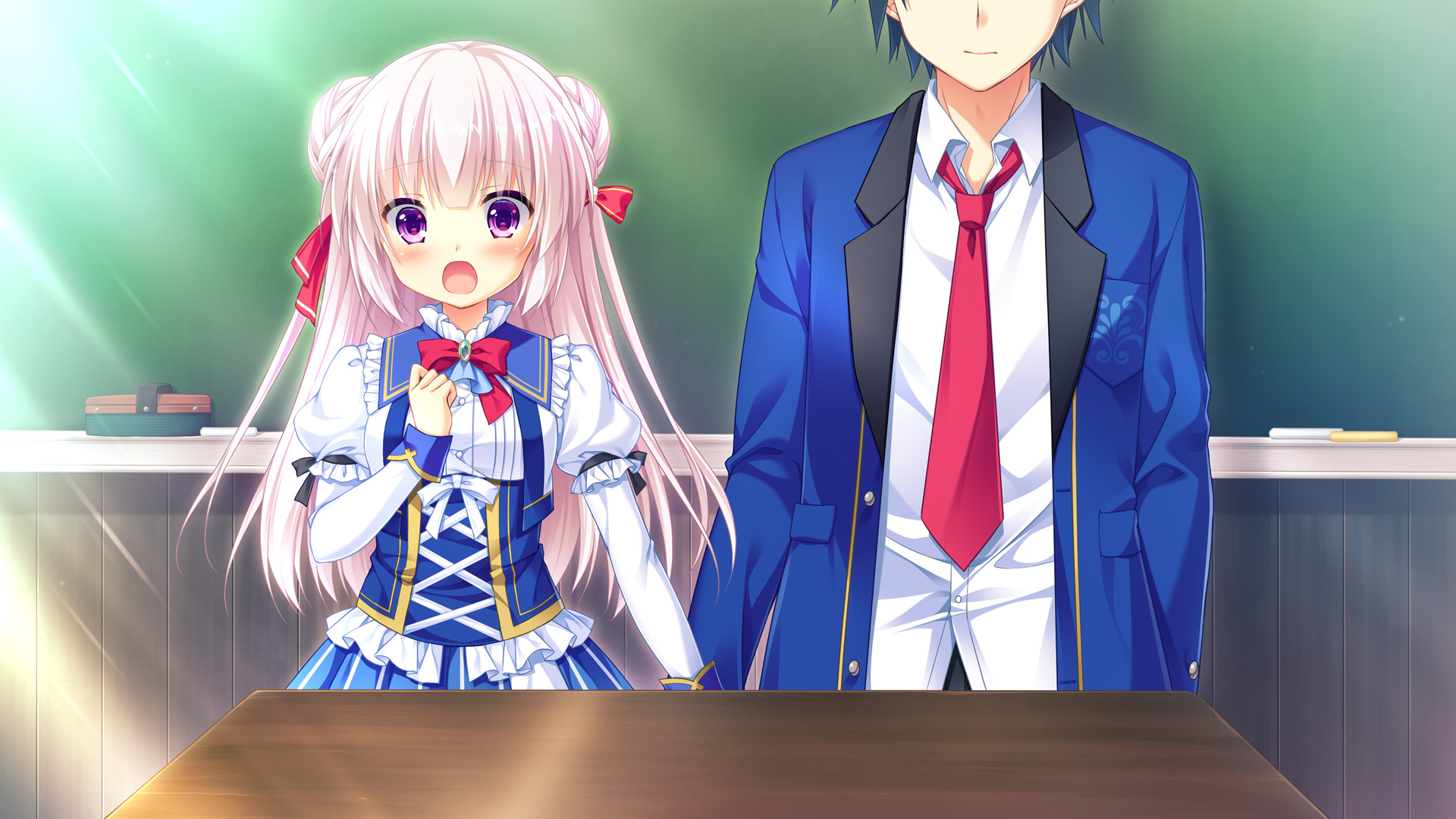
Welcome to Noble Private Academy, an institution that cultivates the wealthiest, most well-connected students in all of Japan! At this boarding school, one must be willing to accept all of its refined and dignified teachings or be met with strict opposition!
Kinkoi: Golden Time is a visual novel, adventure and romance game
developed by Saga Planets
and published by NekoNyan Ltd. and HIKARI FIELD.
Released on July 15th 2022 is available on Windows, Steam Deck and Steam Machine
in 4 languages: English, Japanese, Simplified Chinese and Traditional Chinese.
It has received 508 reviews of which 493 were positive and 15 were negative resulting in a rating of 9.0 out of 10. 😎
The game is currently priced at 28.99€ on Steam.
The Steam community has classified Kinkoi: Golden Time into these genres:
Visual Novel
Adventure
Romance
Cute
Anime
Multiple Endings
Simulation
Funny
Singleplayer
Story Rich
Choices Matter
Dating Sim
Here is the detailed breakdown of supported languages for Kinkoi: Golden Time:
| UI | Subtitle | Audio | |
|---|---|---|---|
| English | |||
| Simplified Chinese | |||
| Traditional Chinese | |||
| Japanese |
Media & Screenshots
Get an in-depth look at Kinkoi: Golden Time through various videos and screenshots.





Load More



System requirements
These are the minimum specifications needed to play the game. For the best experience, we recommend that you verify them.
Windows
- OS *: Windows 7 or newer
- Processor: 1.7 GHz or above
- Memory: 2 GB RAM
- Graphics: 1GB VRAM
- Storage: 5 GB available space
Steam Price & Best Deals
User reviews & Ratings
Explore reviews from Steam users sharing their experiences and what they love about the game.
Kinkoi: Golden Time is a romance-focused visual novel designed primarily for players who have already experienced Kinkoi: Golden Loveriche. Rather than attempting to introduce an entirely separate adventure, it expands the original game's world with new stories, additional romantic developments, and opportunities to reconnect with its established cast. Developed by Saga Planets and published on Steam by NekoNyan Ltd. and HIKARI FIELD, the game feels closer to a substantial continuation than a small collection of disposable bonus scenes. Familiarity with the previous title is strongly recommended because many of its most meaningful moments depend on relationships and events that have already been established. The story once again centers on Ichimatsu Ouro and his life at Noble Private Academy, where wealthy and influential students create an unusually extravagant backdrop for an otherwise character-driven romantic story. With several months having passed since Ouro entered the academy, Golden Time can move directly into familiar relationships rather than spending hours introducing its setting. The approaching New Year also gives the story a comfortable seasonal atmosphere, allowing everyday conversations, celebrations, romance, and personal developments to blend together naturally. There is a pleasant sense that the player is returning to an existing group of friends rather than meeting a collection of characters assembled specifically for another sequel. Most of the experience revolves around reading dialogue, following individual character stories, and making occasional choices that influence progression. Multiple endings provide some replay value, particularly for players interested in seeing the additional relationship material associated with different characters. Golden Time does not dramatically reinvent traditional visual novel mechanics, and there is little here for someone expecting exploration, combat, puzzles, or complicated management systems. Its interactive elements instead exist to support the narrative, leaving character development and romantic storytelling as the main attractions. The writing is particularly effective when shifting between comedy and sincere emotional material. Casual conversations and playful character interactions prevent the story from becoming excessively serious, while more personal scenes explore affection, uncertainty, relationships, and the characters' feelings about their futures. Since much of the cast already received significant development in Golden Loveriche, Golden Time can explore sides of these personalities that would have been difficult to accommodate during their original introductions. This makes the additional content feel rewarding for returning readers, especially when it provides greater closure or simply allows enjoyable relationships more time to develop. Visually, the game maintains the colorful and polished anime presentation expected from a high-quality Japanese visual novel. Character illustrations are expressive and attractive, and the refined appearance of Noble Private Academy gives many scenes an appropriately elegant atmosphere. The artwork is especially important during romantic or emotional sequences, where expressions help communicate details that dialogue alone might not capture. Japanese voice acting adds further personality to the cast, while the soundtrack moves comfortably between cheerful everyday scenes and more sentimental moments without overpowering the writing. Golden Time also contains mature romantic themes. Relationships and sexual topics can be referenced through dialogue, while kissing and suggestive situations may appear visually. The Steam version's presentation is nevertheless much more focused on romance, comedy, and character interaction than explicit material. All characters involved in this content are presented as adults. Players interested primarily in the narrative can therefore approach the game as a romance visual novel whose mature elements form only one aspect of its broader character relationships. The largest drawback is that Golden Time is not an ideal introduction to Kinkoi. Someone starting here can still appreciate the artwork, personalities, and general romantic atmosphere, but important emotional context will inevitably be missing. Established relationships, previous events, and familiar character dynamics are part of the foundation on which these additional stories are built. Playing Golden Loveriche first greatly improves the experience and transforms scenes that might otherwise seem like ordinary romantic interactions into meaningful continuations of earlier developments. Pacing is another consideration. Long conversations, everyday interactions, comedy, and slice-of-life sequences occupy substantial portions of the runtime. Readers who enjoy spending time with established characters will probably see this as a major advantage, while players who require frequent dramatic developments may consider certain sections slow. Golden Time deliberately prioritizes companionship and relationship development over constant narrative escalation, making patience and an appreciation for dialogue-heavy storytelling important. Steam Deck compatibility is officially categorized as Playable rather than fully Verified. Performance with the default graphics configuration is considered suitable, and the game can run successfully on SteamOS. However, handheld players should expect compromises. Some functionality is not fully accessible through the default controller configuration, touchscreen interaction or a community controller layout may occasionally be useful, and text entry can require manually opening the virtual keyboard. Some interface text may also appear small, while certain prompts can display keyboard, mouse, or non-Steam Deck controller icons. It is therefore functional on the Deck, but the experience is less seamless than a fully optimized handheld release. Taken as an expansion of an already established romantic story, Kinkoi: Golden Time accomplishes its purpose extremely well. It offers attractive artwork, strong voice performances, entertaining character chemistry, multiple endings, and additional emotional development without unnecessarily changing what made the original appealing. Its greatest value comes from returning to characters the player already cares about, which simultaneously makes prior experience almost essential. For fans of Golden Loveriche who wanted more time with its cast, this is a generous and polished continuation rather than a minor collection of extras. It is an easy recommendation for established Kinkoi fans and a strong example of how additional visual novel content can deepen existing relationships, though newcomers should experience Golden Loveriche first to get the full emotional impact. Rating: 9/10
Buy this one just to see Ayaka, but never expected for Mina to be so loveable Append is a bit longer than I thought, and it got plus point for this alone. Just... I did not expect 'her' route will pop up again, and I was like... "Do I need to get through this again?!" My heart are not ready. But I read it thought, Well...
This feels more like they wrapped an entire dumpling just for the vinegar of Ria's route from the last game, turning it into a sizable afterstory. It patches up the regrets left by the original for its fans, but loses the special spark that made the first game shine. The ending feels rushed, but it manages to land safely enough.
Similar games
View all

eden*
A tale of the planet's final love story told using the full force of minori's critically acclaimed illustrative style, engaging musical compositions, and the highly talented staff that has led fans coming back for more every single time!

Aokana - Four Rhythms Across the Blue - EXTRA1
Aokana - EXTRA1 is the official Mashiro afterstory for Aokana.Experience even more Aokana in 1440p!

The Fruit of Grisaia
SIX FRUITS BARE THEIR FANGS AT THE WORLD. --The academy was their orchard. In this place of learning, protected by high walls from the outside world, there arrived a single young man who'd lost his purpose in life. He'd lost sight of what he wanted to protect.

If My Heart Had Wings -Flight Diary-
While If My Heart Had Wings -Flight Diary- is technically a fan disc for If My Heart Had Wings, it includes six stories - including the prologue and epilogue to the main story - and acts as a sort of sequel to the original.
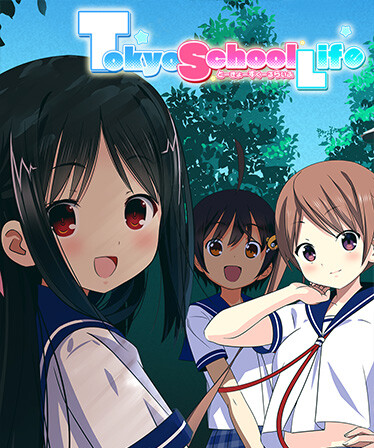
Tokyo School Life
"Tokyo School Life" is the story of your trip as an exchange student in Tokyo and the three girls you meet there. Live the everyday life you love from anime and manga! Vocal opening song/Japanese voices/English text
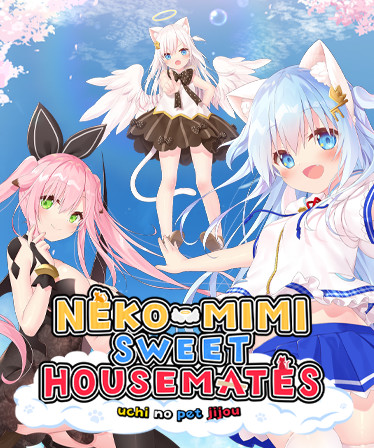
NEKO-MIMI SWEET HOUSEMATES Vol. 1
What is one to do when face to face with a cat-eared, winged angel? Life will never be the same when the angel, Mint, moves in and becomes your new housemate. Follow Mint, a popular girl from the doujin circle "Animal Herb," as she stars in this brand new, heart-warmingly comedic game!


Sakura no Mori † Dreamers
Who is the one hiding deeply in abyss? The Devil? The Killer? or—Yourself?
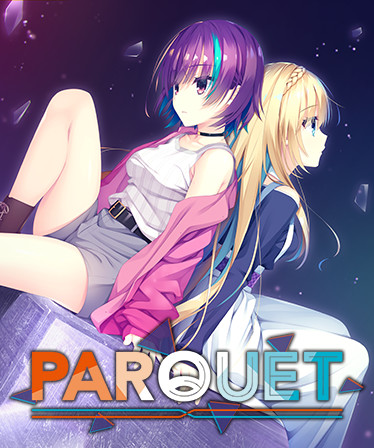
PARQUET
In the near future, a technology called Brain-Machine Interface connects the brain and machines. This technology brings about a new paradigm and opens the gates to the digitization of human memory itself. From these new discoveries, "he" is born.

Renai Karichaimashita: Koikari - Love For Hire
Due to family circumstances, Yuki has only one belief: money will make his little sister happy. And thus, he works part-time jobs late into the night. His plan is to start working full-time after graduation, but his little sister tells him that if he won't go to university, then she won't either.

YOU and ME and HER: A Love Story
YOU and ME and HER: A Love Story is the visual novel medium in its purest form. Will Shinichi choose Miyuki, the beautiful queen bee of the school, or the endearingly awkward misfit Aoi? With art by Tsuji Santa, these beautifully rendered romances will stay with you forever.
Frequently Asked Questions
Kinkoi: Golden Time is currently priced at 28.99€ on Steam.
No, Kinkoi: Golden Time is currently not on sale. You can purchase it for 28.99€ on Steam.
Yes, Kinkoi: Golden Time received 493 positive votes out of a total of 508 achieving a rating of 8.98.
😎
Kinkoi: Golden Time was developed by Saga Planets and published by NekoNyan Ltd. and HIKARI FIELD.
Yes, Kinkoi: Golden Time is playable and fully supported on Windows.
No, Kinkoi: Golden Time is not playable on MacOS.
No, Kinkoi: Golden Time is not playable on Linux.
Yes, Kinkoi: Golden Time is playable on Steam Deck, though it might require a few minor tweaks. Make sure to check the Steam store page and community feedback on ProtonDB for exact compatibility details.
Yes, Kinkoi: Golden Time is playable on Steam Machine, though it might require a few minor tweaks. Make sure to check the Steam store page and community feedback on ProtonDB for exact compatibility details.
No, Kinkoi: Golden Time does not support VR.
Kinkoi: Golden Time is a single-player game.
No, Kinkoi: Golden Time does not currently offer any DLC.
No, Kinkoi: Golden Time does not support mods via Steam Workshop.
No, Kinkoi: Golden Time does not support Steam Remote Play.
Yes, Kinkoi: Golden Time is enabled for Steam Family Sharing. This means you can share the game with authorized users from your Steam Library, allowing them to play it on their own accounts. For more details on how the feature works, you can read the original Steam Family Sharing announcement or visit the Steam Family Sharing user guide and FAQ page.
You can find solutions or submit a support ticket by visiting the Steam Support page for Kinkoi: Golden Time.
Data sources
The information presented on this page is sourced from reliable APIs to ensure accuracy and relevance. We utilize the Steam API to gather data on game details, including titles, descriptions, prices, and user reviews. This allows us to provide you with the most up-to-date information directly from the Steam platform.
Additionally, we incorporate data from the SteamSpy API, which offers insights into game sales and player statistics. This helps us present a comprehensive view of each game's popularity and performance within the gaming community.
Last Updates| Steam data | 05 October 2026 13:11 UTC |
|---|---|
| SteamSpy data | 16 October 2026 15:37 UTC |
| Steam price | 27 October 2026 03:40 UTC |
| Steam reviews | 19 October 2026 16:07 UTC |
If you'd like to dive deeper into the details about Kinkoi: Golden Time, we invite you to check out a few dedicated websites that offer extensive information and insights. These platforms provide valuable data, analysis, and user-generated reports to enhance your understanding of the game and its performance.
- SteamDB - A comprehensive database of everything on Steam about Kinkoi: Golden Time
- SteamCharts - Analysis of Kinkoi: Golden Time concurrent players on Steam
- ProtonDB - Crowdsourced reports on Linux and Steam Deck Kinkoi: Golden Time compatibility

Game modes
Features
Online players
2
Developer
Saga Planets
Publisher
NekoNyan Ltd.,
HIKARI FIELD
Release
15 Jul 2022
Platforms