Yotsume God -Reunion-
In September of my third year in junior high school, I went with my father to my grandparents' house in the mountains. The place we arrived at was Yotsu Village. It was a small village that had long believed in "Yotsume God". There I meet a mysterious boy.
Sync your Steam wishlist to find the lowest game prices instantly. No login required, just paste your Steam profile URL!
⚡ Try Wishlist Radar!
Sync your Steam wishlist to find the lowest game prices instantly. No login required!
⚡ Try Wishlist Radar!
Close

Kujlevka on Steam
Quick menu
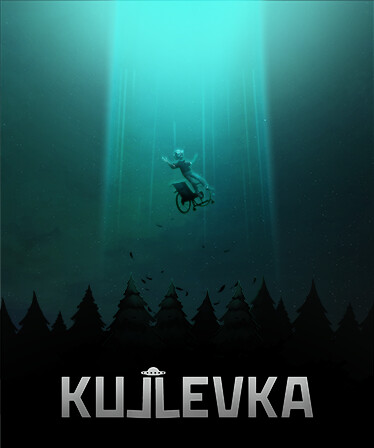
A flying saucer crash-lands in a distant Russian village, turning a rundown kolkhoz into the first, thin bridge between civilizations. As the first point of contact, you must dictate how this encounter unfolds and ultimately determine history’s outcome.
Kujlevka is a adventure, exploration and character action game game
developed by Callback
and published by Crytivo.
Released on April 06th 2023 is available on Windows, Linux, Steam Deck and Steam Machine
in 2 languages: English and Russian.
It has received 593 reviews of which 540 were positive and 53 were negative resulting in a rating of 8.5 out of 10. 😎
The game is currently priced at 19.50€ on Steam, but you can find it for 3.40€ on Eneba.
The Steam community has classified Kujlevka into these genres:
Adventure
Exploration
Character Action Game
Visual Novel
Management
Choose Your Own Adventure
3D
Immersive Sim
Cartoon
Cute
First-Person
1990's
Atmospheric
Funny
Family Friendly
Retro
Story Rich
Choices Matter
Multiple Endings
Text-Based
Here is the detailed breakdown of supported languages for Kujlevka:
| UI | Subtitle | Audio | |
|---|---|---|---|
| English | |||
| Russian |
Media & Screenshots
Get an in-depth look at Kujlevka through various videos and screenshots.


Load More


System requirements
These are the minimum specifications needed to play the game. For the best experience, we recommend that you verify them.
Windows
- Requires a 64-bit processor and operating system
- OS *: Windows 7 and higher, 64 bit
- Processor: Intel Core i5
- Memory: 4 GB RAM
- Graphics: GeForce GTX 650
- DirectX: Version 11
- Storage: 3 GB available space
Linux
- OS: Linux 32-bit
- Processor: Pentium® 4 1.5 GHz / Athlon® XP
- Memory: 2 GB RAM
- Graphics: DirectX® 11 compatible
- Storage: 3 GB available space
Steam Price & Best Deals
User reviews & Ratings
Explore reviews from Steam users sharing their experiences and what they love about the game.
There is a montage of scenes from the events of 1989 to 1993 in the former Soviet Union, serving as a music video to Kino’s harrowing song, Кончится лето or Summer is ending . When the song was released Tsoi was already dead and republics of the union already breaking away. This montage haunted me for many nights, often accompanied by a drink or two, seldom accompanied by tears—mind-numbingly swift dissolution of this corrupted worker’s state, this union of deserters of internationalism, this bureaucratic mass of apparatchiks, this social-chauvinist refuse, this greatest achievement of humanity, this shining beacon of hope, this possibility of salvation on earth. Kujlevka takes place in this period. And it kept reminding me of лето . Summer is ending, and thus one year after another will slip away and thus life itself will go by, and for the hundredth time the sandwich will fall butter-side-down. Unlike us who are doomed to live in a world where the collapse of the Soviet Union actually happened as it did, Kujlevka offers a door out of this mess, a flying saucer collapsing right into a kolkhoz chairman’s office. The premise is, the saucer operates as a wish-granter and hearing what is the one thing that people desire the most is a perfect foil device to understanding the people of an era where confusion was the primary modus operandi. Vasily, the kolkhoz chairman, acts as a translator layer between the people and the saucer. We can either translate verbatim what they claim to want, or blunt their wants to ensure that their wants are in line with our wants, or understand people to understand their actual wants. If you think the process sounds rudimentary, as if it is just applying Papers Please formula to the Soviet collapse era, you would be as wrong as Gorbachev. Kujlevka is something much more. The saucer, the alien visitation is a foil, not only to the wishers themselves but also for Vasily who is far from a blank slate. Each wish, each chapter brings out what we want for Vasily into materialization, his dreams in between guiding us to make, not the right choices, but the informed choices. You, the individualist, may think the right choice for Vasily is to get back his family, his loved ones. You, the capitalist, may think the right choice for Vasily is to be filthy-insanely rich. I think the right choice for Vasily is the glorious restoration of Soviet Union, red flags adorning every facet of life, and the people are guided by the loving but firm hand of the party, just not corrupt this time. You and I may be adamant in our decisions, but this voice that guides us in our surreal dreams will subject our beliefs to a ruthless and affectionate critique. Being challenged in the dream state, in the real space material conditions will sow doubts in each turn, we will see if our choices hold up then. The apparition of Stalin visits me in my dreams, I tell him that I hate him, not because I think he was a dictator, on the contrary I think he was not a dictator, he asks me what I think communism is, I tell him it is ultimate freedom, he agrees with me, and Yeltsin starts blabbing on the TV, I turn off the TV, summer is ending, Vasily is waiting for an answer and there is no more hope. In a part of my brain лето’s opening riff keeps blasting, I keep humming, and think to myself this is the only game Lunacharsky would have loved. I understand as wishes pile up, the ordinary people of the Kujlevka village and eventually the world, wish for nothing more than an immediate relief to all their problems. A woman wants more milk from her goat, a man wants vodka, a cripple wants a better wheelchair and the saucer brings this relief they desperately need. Then, what was the Soviet state if nothing but a wish-granter? Dilapidated, hollowed out, neglected by the late 80’s and early 90’s maybe, but while the cogs were new and the whole machine was well oiled, it was granting homes, dachas, maternity leaves, summer camps, and pride to the Soviet citizen, and only the Soviet state and aliens could have done that. The fact that there was such a state, the fact that it collapsed in the manner it did, I do not know if our past is more surreal or more magical realist. Kujlevka itself has its feet planted on both shores. Sometimes it is haunting and oneiric, sometimes it is heartfelt and didactic. Sometimes matters pertaining to Vasily’s own past feel surreal, sometimes the world itself. There is no great barrier of perception between introspection and extrospection, we evaluate matters by applying the same dreamlike but real lens on both. Sometimes Vasily and I shivered at the sight of an intergalactic express, sometimes we shivered at how material our compatriots’ desires are. Despite my late-night drinking sessions to лето , I would not call glasnost and perestroika emotional affairs, but as the game lays out, what else could be so dramatic? There is a video on Youtube about a couple of guys exploring Baikonur, where remnants of the Buran programme reside. Buran sitting in the background, unmaintained, its outer plaques falling off and some even being sold on Ebay, they go on a solemn but brief explanation about how, after a couple of successful missions, the programme was cancelled by Yeltsin. I cannot help but compare Buran, just a small part in the greater story of dissolution, to tragedies, such as Hamlet or Oedipus , and think about which is more emotionally devastating. So this is Kujlevka, a playful, real, soulful, surreal lamentation for a beacon and season long faded. Not faded out of memory though, and I don’t know if the yearning will ever cease for this object of terrible love and hate. Even if what I wrote here does not solely belong to the domain of Kujlevka, I believe art is often as strong as the connotations it recalls. On the day I started playing Kujlevka I received the Summer Eternal anthology on my doorstep, created by one faction of ZA/UM exiles and it starts with Abimael Guzman’s lines: “Now comes the new humanity, The humanity of joy, the proletariat, The only blaze that will never be extinguished! We are one of its sparks. We are a small part of This immense bonfire, it is our turn to set them on fire. The sparks are fanned by storm winds.” And I think to myself, maybe this is just a blip in the long summer. Summer is ending and summer eternal/10
A wonderful game in a great setting and atmosphere, also with colorful characters. It was recommended to me as similar to Disco Elysium. It is somewhat similar when it comes to certain themes, style and humor (and I suppose gameplay). As I enjoyed DE, I enjoyed Kujlevka. It was a great experience and I definitely felt that a lot of love and thought was used for its creation. I had a great time and I cannot recommend it enough.
This is a surprisngly polished and rich game that deceptively looks simple. It is humorous and surreal, I'm not sure I understood the ending, but it's quite alright, there's multiple of them depending on your choices. The alien communication mechanic wasn't immediately obvious. Spent maybe half the game not calibrating my responses. I loved the pop-culture and political references. I also loved how the game isn't sci-fi focused, it's more of a philosophical take on facing the unknown. The game is really worth it. 8/10
Kujlevka is a narrative experience that thrives on atmosphere, ambiguity, and the quietly surreal, presenting a story that unfolds more like a dream than a traditional adventure. Developed by Callback and published by Crytivo, the game situates you in a remote Russian village in the early 1990s, a time defined by uncertainty and post-Soviet disillusionment. You play as Valery Potikhonchenkov, a wounded veteran whose solitary existence is upended when a UFO crashes directly into his home. From this unlikely premise, the game builds a meditative journey through personal trauma, societal collapse, and the ineffable strangeness of first contact. Rather than leaning into science fiction spectacle, Kujlevka uses the alien encounter as a prism through which to explore human fears, desires, and contradictions. The moment the UFO lands, the village becomes an improvised visitation center, and Valery, by virtue of circumstance, becomes its gatekeeper. Much of the gameplay unfolds at a simple wooden desk, where villagers approach you with their hopes, grievances, and delusions. You decide who gets to enter the spacecraft, supposedly to commune with the extraterrestrial visitors. These scenes reveal a community staggered by poverty, superstition, and political change, each character carrying their own blend of desperation and eccentricity. The choices you make are not grand moral dilemmas but subtle judgments shaped by personal instinct and interpretation. It is in this understated decision-making that the game’s narrative quietly deepens, portraying a society trying to grasp meaning amid chaos. Communication with the aliens becomes another peculiar ritual. You form messages by choosing a limited collection of words — fragments of meaning cobbled together into rough approximations of intent. This constraint mirrors the game’s broader themes of miscommunication and uncertainty. You are never entirely sure how the aliens interpret your words or how your choices will influence the villagers’ fates once they step inside the mysterious ship. Instead of clear causality, Kujlevka offers a haze of partial understanding, encouraging you to rely on intuition rather than logic. There is an almost bureaucratic absurdity to the process, reminiscent of satirical takes on authority and governance, yet the tone remains contemplative rather than comedic. As the days pass, the boundaries between reality and imagination begin to blur. The game shifts into haunting dream sequences that reflect Valery’s internal struggles — ghostly trains carrying skeletal soldiers, barren landscapes steeped in symbolism, and cryptic dialogues with strange entities. These visions are often unsettling but never gratuitous, instead acting as emotional mirrors to Valery’s past and the larger philosophical questions underlining the story. Kujlevka becomes as much a psychological portrait as it is a tale about aliens, using surreal imagery to expose sorrow, regret, and the remnants of wartime trauma. These sections elevate the experience beyond a simple narrative experiment, offering moments of introspective resonance that linger long after they end. The village itself, rendered in muted palettes and simple models, feels like a place suspended between decay and nostalgia. Its quiet streets, peeling buildings, and lingering Soviet iconography create a mood of stagnation that contrasts starkly with the cosmic presence lodged in Valery’s home. Dialogue is delivered with subdued performances that enhance the sense of isolation, capturing a community struggling to orient itself in a shifting world. The soundscape — understated, melancholic, and atmospheric — underscores the emotional weight of every encounter and dream. Rather than relying on spectacle, the game’s strength lies in its restraint, allowing its tone to wash over you gradually. Kujlevka’s slow pace and limited mechanical variety may deter players looking for more traditional structure. Its choices occasionally feel more thematic than consequential, and the gameplay often prioritizes mood over interactivity. Yet these qualities serve the narrative’s purpose. The game is about uncertainty, about trying to create meaning in a world that refuses to give clear answers. It invites contemplation instead of mastery, reflection instead of efficiency. For those willing to embrace its deliberate pacing and abstract sensibilities, the experience feels uniquely intimate and emotionally heavy. Ultimately, Kujlevka succeeds as a quietly powerful story about the human condition, using the fantastical to illuminate the ordinary rather than overshadow it. Its blend of surrealism, melancholy, and grounded rural life creates a narrative that feels both alien and familiar, a dreamlike meditation on community, identity, and existential longing. It leaves you with more questions than answers, but those questions feel purposeful — a reminder that understanding, whether of oneself or the cosmos, often resides in the spaces between certainty and doubt. Rating: 9/10
Similar games
View all

Backrooms: Found Footage
Backrooms: Found Footage is a single-player horror game where you are the main character trying to survive the Backrooms. Curiosity wins and you decide to explore this weird place that you got trapped in. What could go wrong?

Road 96: Mile 0
The prequel to Road 96. Play Zoe and Kaito where it all started. Change their destinies!
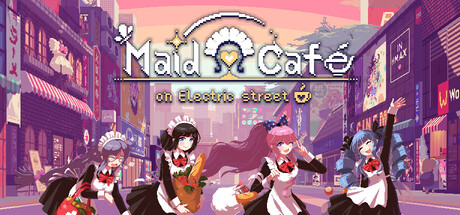
Maid Cafe on Electric Street
Maid Cafe on Electric Street is a leisurely maid cafe adventure set in the otaku haven of Nipponbashi, Osaka.
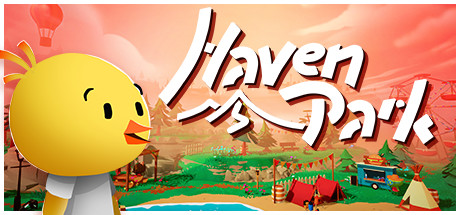
Haven Park
Be Flint, who is doing his best to keep his grandma's park up and running and make it a place for the campers to enjoy. Learn the camper's wishes and build whatever their hearts desire to attract even more quirky characters and look forward to whimsical conversations and quests.

natsuno-kanata - beyond the summer
── In the summer of the world that has ended, the girl travels aimlessly. "natsuno-kanata - beyond the summer" is a text adventure game that depicts girls traveling in apocalypse. Through talking to the girls, we get to know them and approach the mysteries of the world ──

The Mildew Children: Chapter 1
Featuring a blend of 2D adventure and visual novel. Chapter 1 is the very beginning of the grim tale about a village inhabited only by children who follow savage pagan traditions. A young witch Kyrphel, along with her sisters, are bound to perform a macabre Ritual in order to save their village.

No Sleep For Kaname Date - From AI: THE SOMNIUM FILES
Iris has been abducted by aliens?! Finding herself on board a mysterious UFO and tasked with completing a bizarre escape game, Iris knows there's one person who she can always count on for help: Kaname Date, Psyncer!
Frequently Asked Questions
Kujlevka is currently priced at 19.50€ on Steam.
No, Kujlevka is currently not on sale. You can purchase it for 19.50€ on Steam.
Yes, Kujlevka received 540 positive votes out of a total of 593 achieving a rating of 8.51.
😎
Kujlevka was developed by Callback and published by Crytivo.
Yes, Kujlevka is playable and fully supported on Windows.
No, Kujlevka is not playable on MacOS.
Yes, Kujlevka is playable and fully supported on Linux.
Yes, Kujlevka is playable and fully supported on Steam Deck.
Yes, Kujlevka is playable and fully supported on Steam Machine.
No, Kujlevka does not support VR.
Kujlevka is a single-player game.
Yes, there is a DLC available for Kujlevka. Explore additional content available for Kujlevka on Steam.
No, Kujlevka does not support mods via Steam Workshop.
No, Kujlevka does not support Steam Remote Play.
Yes, Kujlevka is enabled for Steam Family Sharing. This means you can share the game with authorized users from your Steam Library, allowing them to play it on their own accounts. For more details on how the feature works, you can read the original Steam Family Sharing announcement or visit the Steam Family Sharing user guide and FAQ page.
You can find solutions or submit a support ticket by visiting the Steam Support page for Kujlevka.
Data sources
The information presented on this page is sourced from reliable APIs to ensure accuracy and relevance. We utilize the Steam API to gather data on game details, including titles, descriptions, prices, and user reviews. This allows us to provide you with the most up-to-date information directly from the Steam platform.
Additionally, we incorporate data from the SteamSpy API, which offers insights into game sales and player statistics. This helps us present a comprehensive view of each game's popularity and performance within the gaming community.
Last Updates| Steam data | 27 September 2026 09:26 UTC |
|---|---|
| SteamSpy data | 20 October 2026 04:14 UTC |
| Steam price | 26 October 2026 19:50 UTC |
| Steam reviews | 21 October 2026 09:54 UTC |
If you'd like to dive deeper into the details about Kujlevka, we invite you to check out a few dedicated websites that offer extensive information and insights. These platforms provide valuable data, analysis, and user-generated reports to enhance your understanding of the game and its performance.
- SteamDB - A comprehensive database of everything on Steam about Kujlevka
- SteamCharts - Analysis of Kujlevka concurrent players on Steam
- ProtonDB - Crowdsourced reports on Linux and Steam Deck Kujlevka compatibility
 19.50€
Visit Store
 🔥 Deal
-83%
19.50€
3.40€
Buy Now
 -79%
19.50€
4.13€
Visit Store
 -77%
19.50€
4.52€
Visit Store
 -20%
19.50€
15.79€
Visit Store
Game modes
Features
Online players
1
Developer
Callback
Publisher
Crytivo
Release
06 Apr 2023
Platforms
Clicking and buying through these links helps us earn a commission to maintain our services.