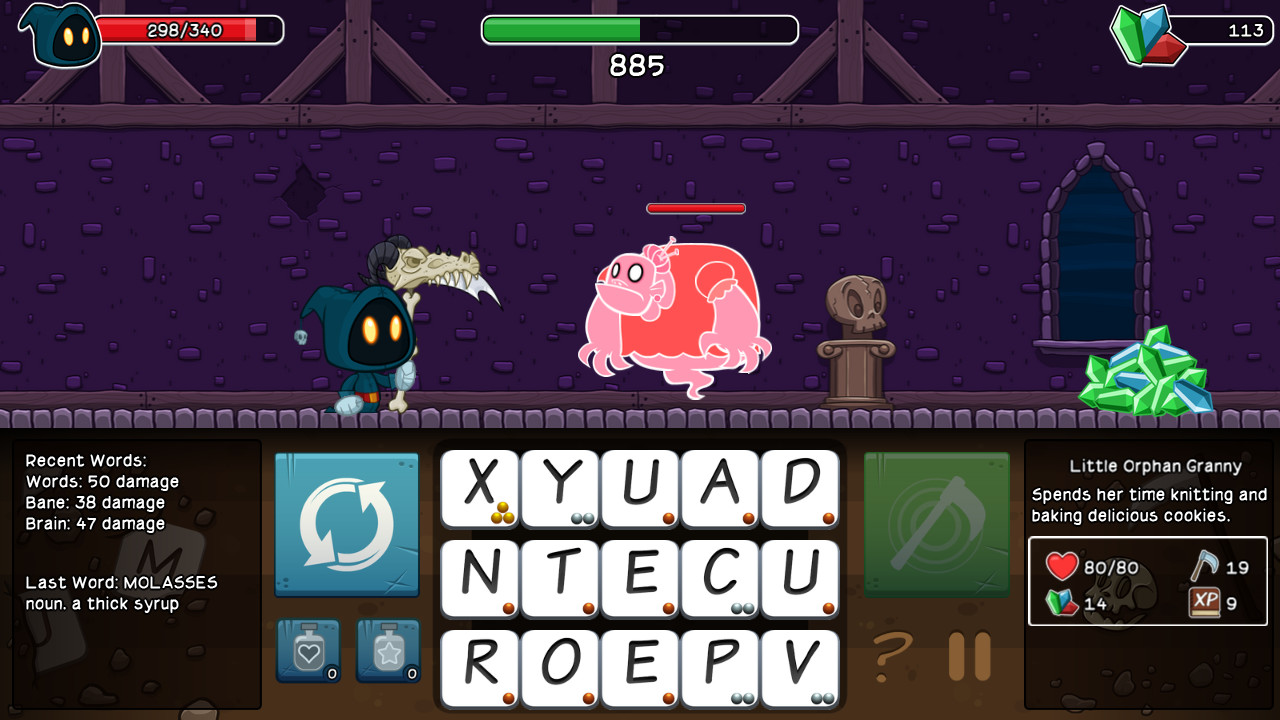
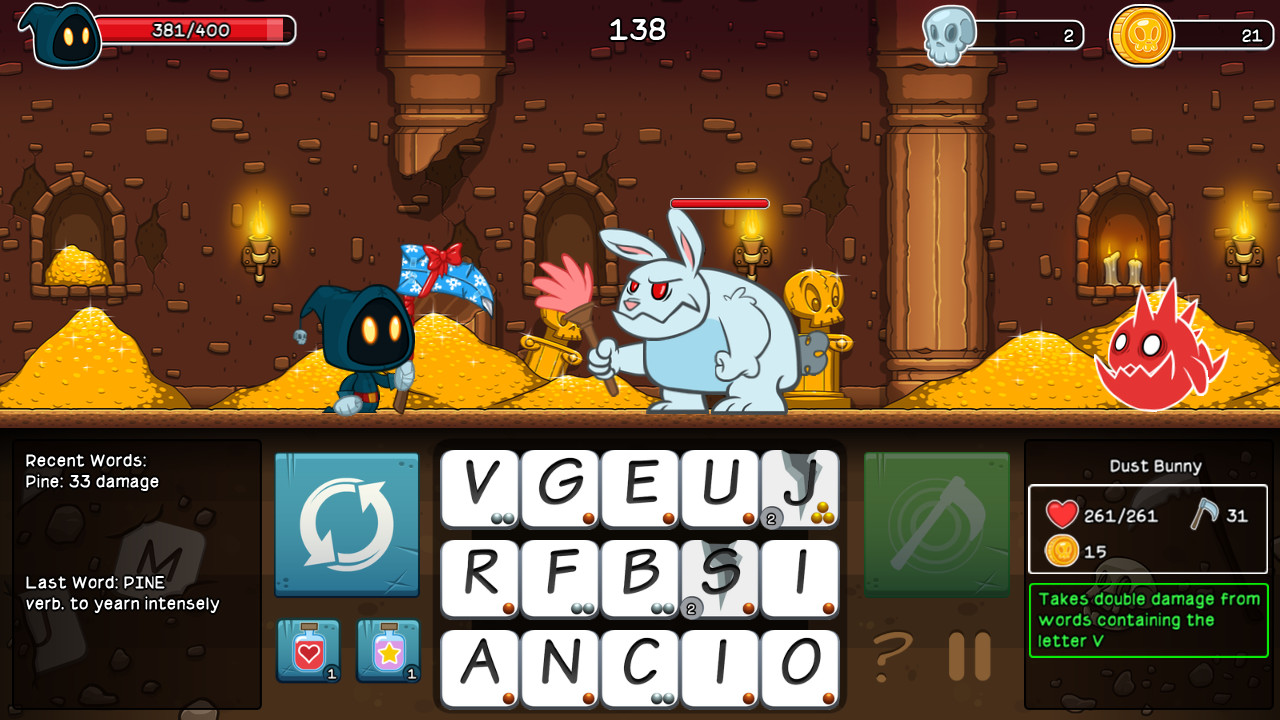
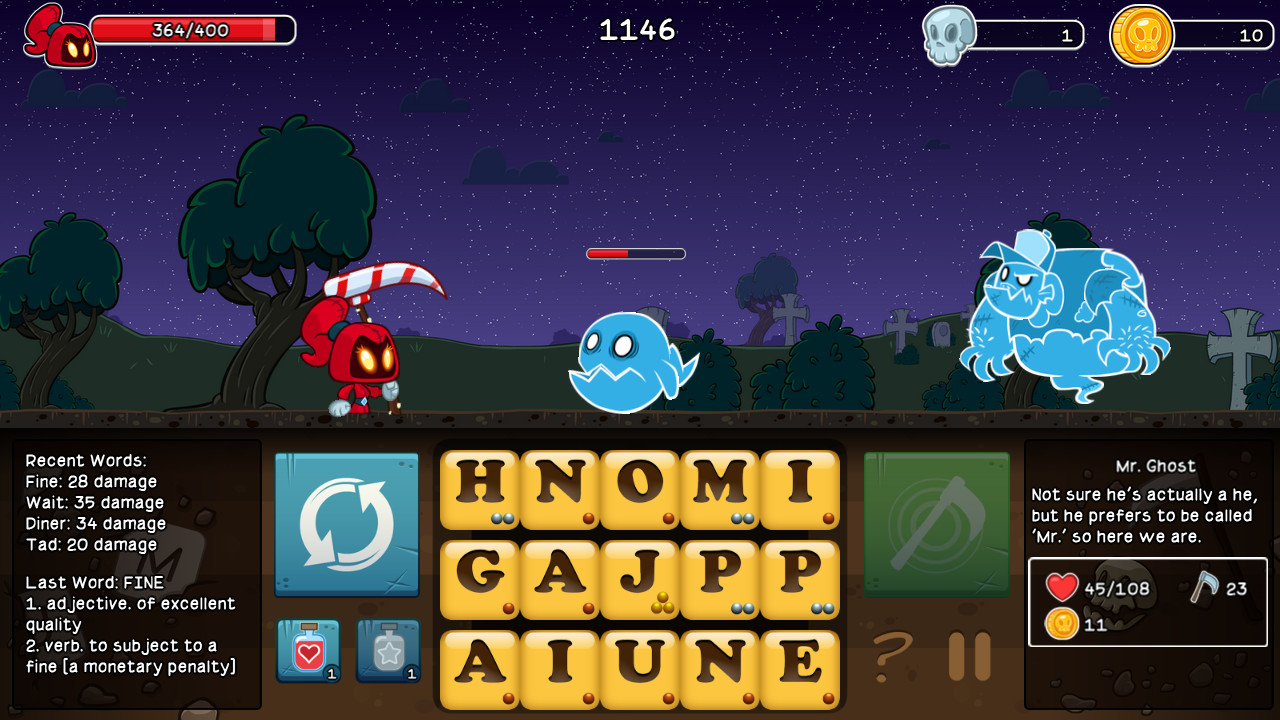
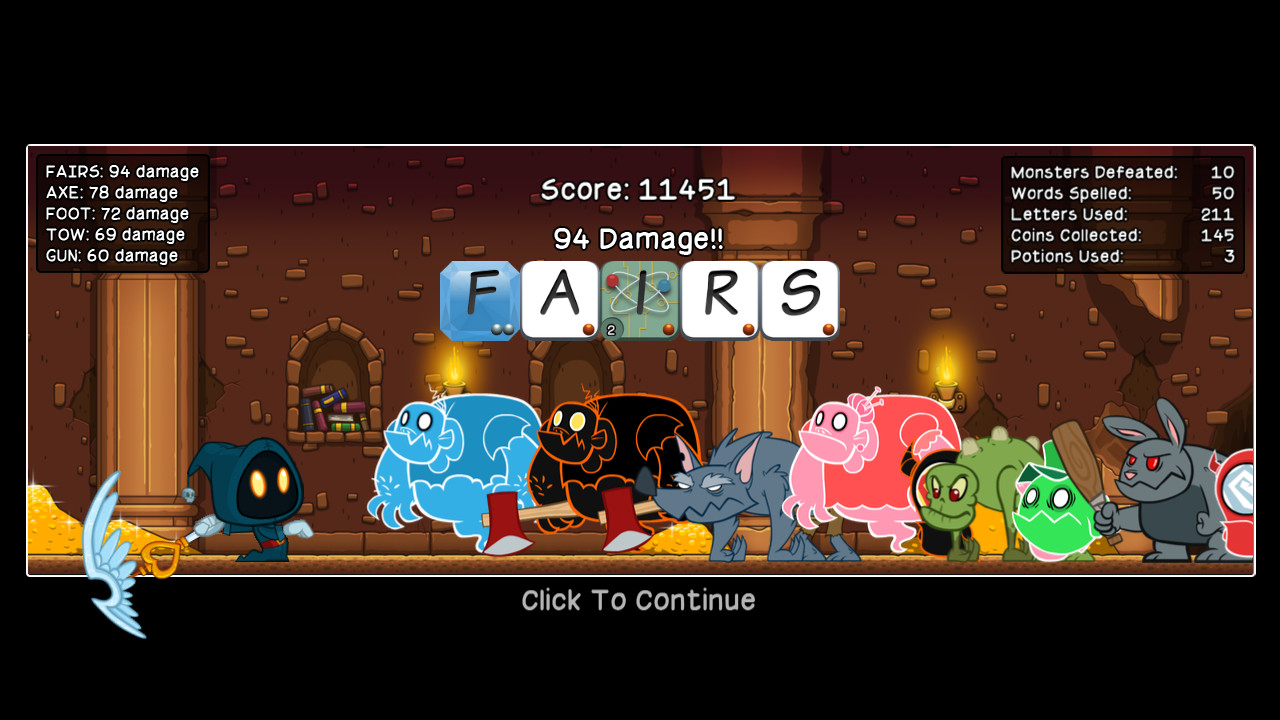
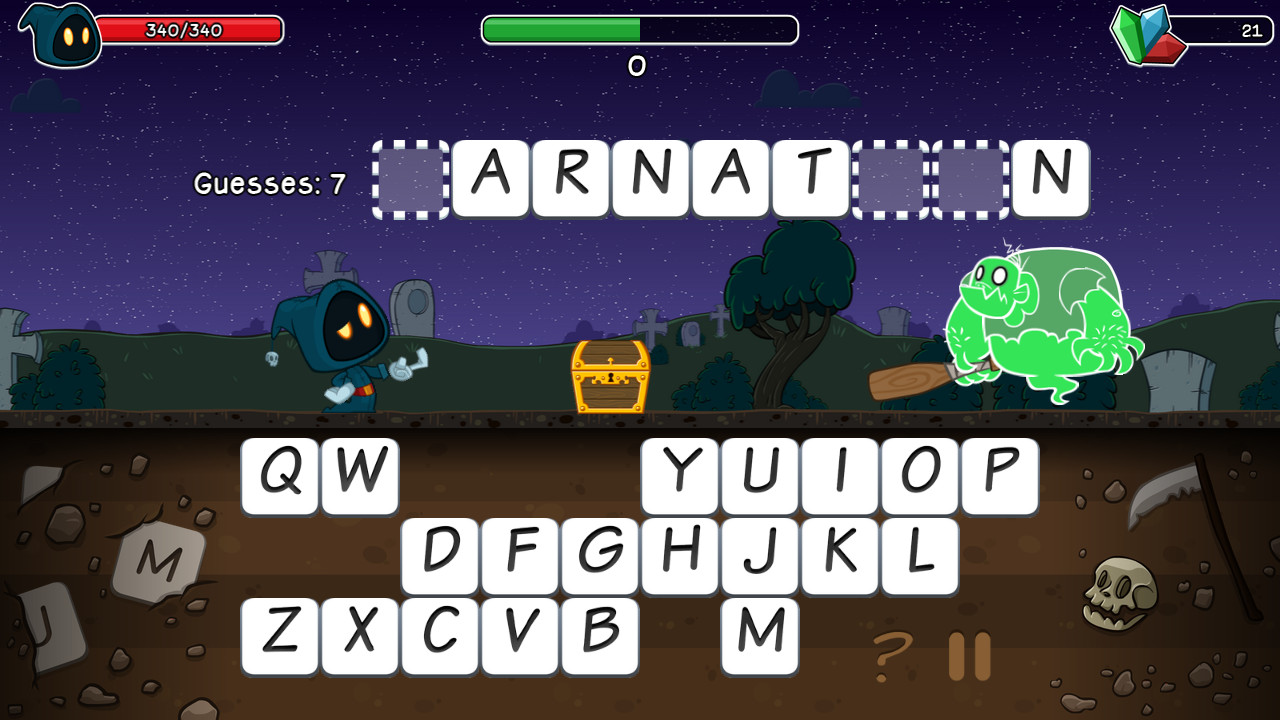
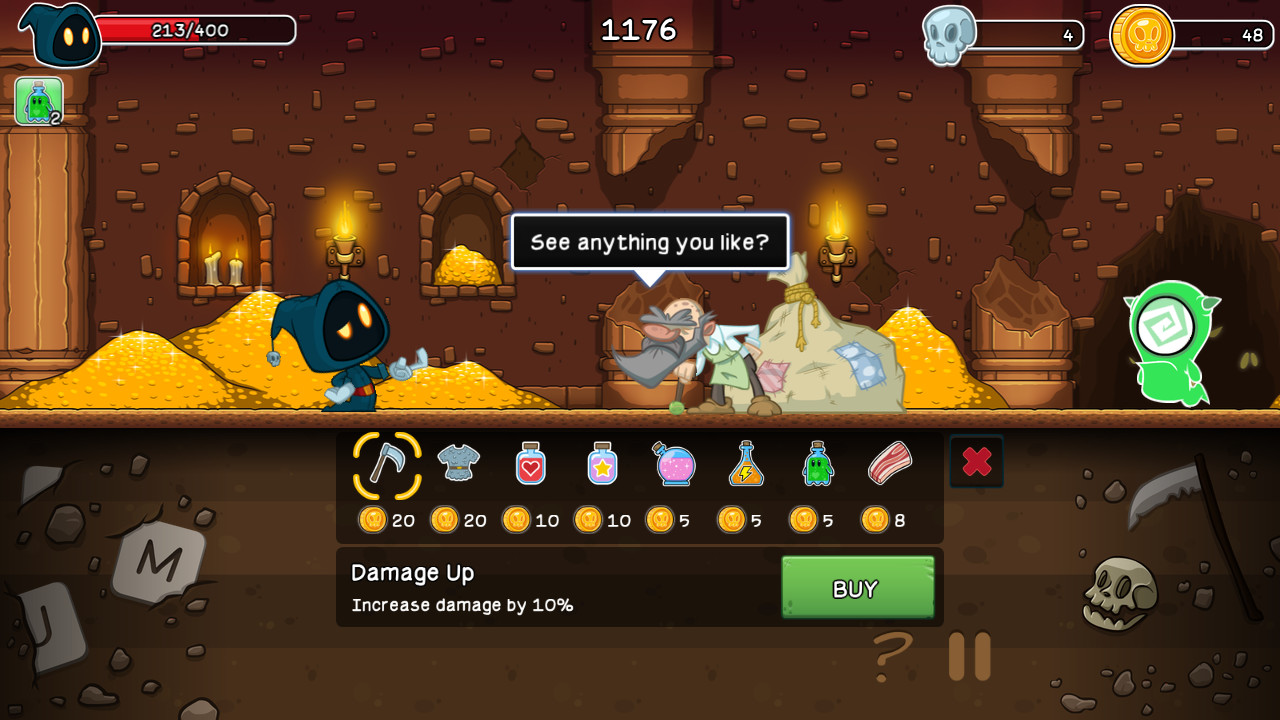
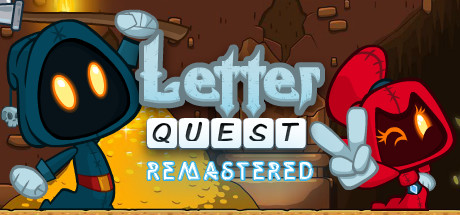
Letter Quest: Grimm’s Journey Remastered, developed by Bacon Bandit Games and published by Digerati, is a charming and inventive hybrid of word puzzle mechanics and light RPG combat. It takes the foundation of classic word-building games and transforms it into an adventure about a scythe-wielding reaper named Grimm who battles monsters, ghosts, and other quirky enemies not with weapons, but with vocabulary. At first glance, it appears deceptively simple—combine letters on a grid to form words that deal damage to enemies—but as you progress, the game reveals surprising layers of strategy and depth. By merging the analytical thinking of a word puzzle with the resource management and progression systems of an RPG, it creates an experience that is both intellectually stimulating and mechanically satisfying. The basic gameplay loop revolves around spelling words from a random set of letters to attack enemies. Each tile represents a letter, and longer or more complex words inflict greater damage. High-value letters like Q, Z, or X carry more power but are harder to work into combinations, rewarding creativity and word knowledge. Every encounter functions as a small puzzle in itself, where the player must balance word length, letter positioning, and potential modifiers on the board. The game’s structure is turn-based, so there’s no rush to make a move, but each word you form gives enemies an opportunity to retaliate. This encourages thoughtful decision-making rather than frantic input. As Grimm progresses, new tile effects and enemy abilities are introduced—poisoned letters that harm you if used, cracked tiles that can’t be reused, and special enemies that resist words containing certain letters or lengths. These small variations ensure that each battle feels distinct and that the player is always adjusting their approach. Between stages, the RPG elements come into play. Gems earned from victories serve as currency that can be used to upgrade Grimm’s health, attack strength, or critical hit chances. There are also books that grant passive bonuses—like increased damage when using certain letters or faster recovery after battle—and weapons with unique properties that can influence your playstyle. The inclusion of these systems transforms what could have been a repetitive word game into something with progression and customization. The shop and upgrade systems give players a reason to revisit earlier levels and grind for better stats, much like a traditional RPG. The sense of forward momentum keeps the game engaging over the long term, and because the difficulty scales gradually, the learning curve remains satisfying without becoming punishing. The remastered version refines the presentation and performance of the original, offering smoother animations, higher-resolution visuals, and a more responsive interface. The art style is colorful and whimsical, using a cartoonish aesthetic that perfectly complements the game’s humor and lighthearted tone. Grimm and his foes are drawn with exaggerated expressions, and the world he explores feels bright and approachable, even when filled with spooky enemies. The remastered edition also features an improved soundtrack that adds charm to the experience, alternating between playful tunes during exploration and more energetic tracks during combat. Small touches—like the popping animation when a monster explodes in a burst of defeated letters—make the experience feel polished and cohesive. The overall atmosphere is one of cozy challenge, a balance between intellectual engagement and cheerful simplicity. Despite its friendliness, Letter Quest is not without challenge. As you progress through the campaign, new gameplay modifiers increase the difficulty of previously completed levels. Enemies gain more health, letters become more restricted, and status effects stack in ways that demand more strategic thinking. You’ll often find yourself pausing to consider whether to use a weaker word to conserve better letters for later or to risk everything on a high-damage play. This constant balance of short-term gain versus long-term resource management gives the game a surprising amount of depth. Additionally, each level can be replayed under different conditions—such as timed runs or harder versions of enemies—allowing for significant replayability. For completionists, there are stars to earn, achievements to unlock, and endless modes that test endurance and vocabulary skill. What keeps the game engaging over time is its variety of mechanics and steady progression. There’s a tangible sense of growth as you acquire new upgrades and become better at spotting high-value words under pressure. The addition of books and special equipment provides minor but meaningful tweaks to your strategy, giving the game a sense of personalization. Still, the repetition inherent in its structure may wear on some players after extended play sessions. The core mechanics don’t evolve drastically beyond the introduction of new modifiers, and the reliance on replaying earlier levels to earn gems can feel grindy. Yet, much like other casual strategy or puzzle games, its charm lies in the rhythm of steady improvement rather than in constant reinvention. Letter Quest: Grimm’s Journey Remastered also stands out for its accessibility. It’s a game that can appeal to a wide range of players—those who love word puzzles, fans of RPG progression systems, and even younger audiences learning to spell and think strategically. Its design never punishes players harshly for mistakes, and the option to take as much time as needed on each turn makes it relaxing rather than stressful. It’s equally well-suited for short bursts of play or longer sessions, offering just enough structure and reward to keep you coming back. The combination of word-building and RPG elements feels seamless, as though the two genres were always meant to complement one another. In the end, Letter Quest: Grimm’s Journey Remastered succeeds not because of complexity, but because of clarity. It takes two familiar forms of gameplay—puzzle-solving and leveling up—and fuses them into something fresh, funny, and unexpectedly strategic. Its cheerful presentation and clever design make it easy to underestimate, but behind the adorable visuals lies a game that rewards intelligence, patience, and creativity. It’s the kind of title that manages to be educational without feeling didactic, challenging without being punishing, and nostalgic without being dated. For those looking for a game that engages both vocabulary and imagination, Letter Quest stands as a delightful example of how simplicity, when executed with care and humor, can lead to something genuinely memorable. Rating: 8/10
Expand the review